Get Premium
Dark mode theme is available exclusively for premium users. Learn more about the benefits of subscribing.
No fees, cancel anytime.

 Dark Mode Ad-Free Browsing Unlimited Content
 Ad-Free Browsing Unlimited Content Dark Mode
Join 1.2 million Panda readers who get the best art, memes, and fun stories every week!

Remote working sounds like the dream. No commute, no dress code from the waist down, no colleague who heats up fish in the microwave at 9am. Just you, your laptop, your carefully curated home office setup, and the quiet, dignified peace of a professional life conducted entirely on your own terms. Beautiful. Serene. And, if we are being completely honest, absolutely starving for content.
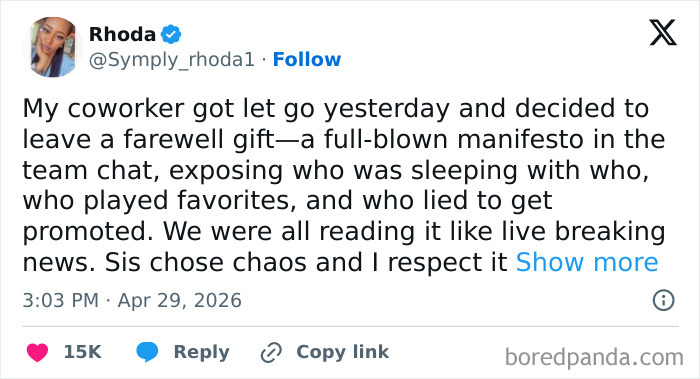
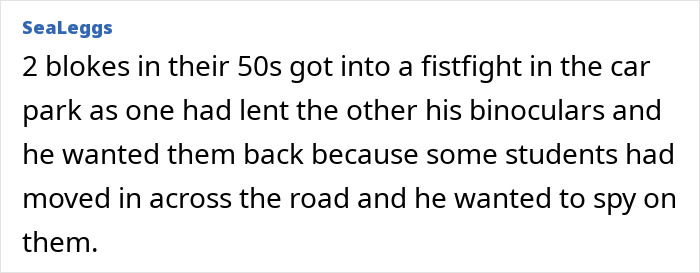
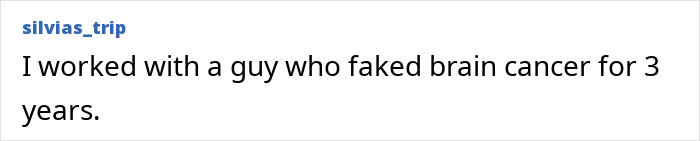
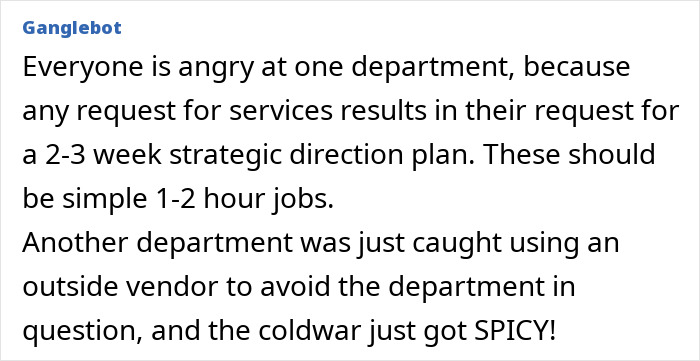
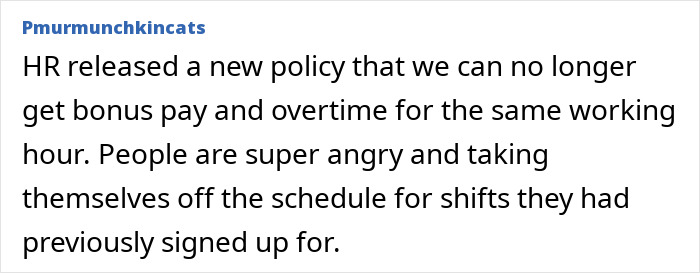
Because here is what nobody tells you about working from home. You are missing everything. Every bit of drama, gossip, chaos, and HR violation. That is the tax you pay for the quiet life, and it is a steep one. These stories were submitted by people who were there, in the building, witnessing history unfold in real time between the hours of nine and five. Grab your sad desk lunch, this is going to be a doozy!
This post may include affiliate links.

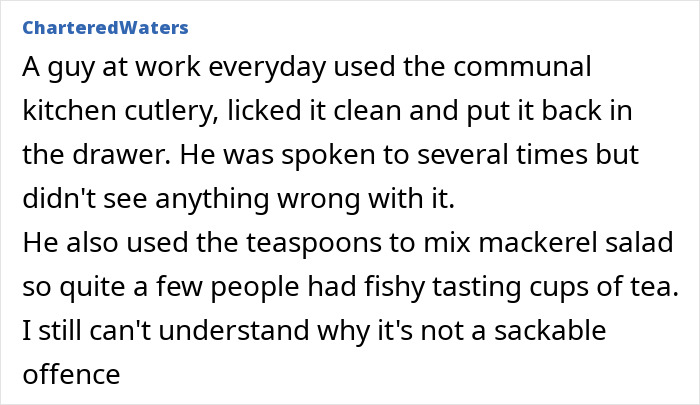
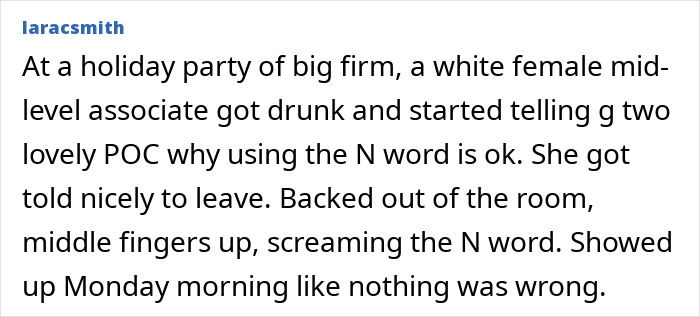
Should not only be a sackable offense, but deserves criminal charges. 😅

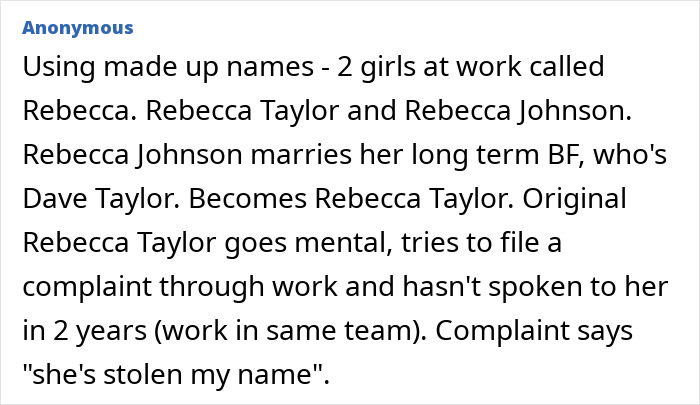
I once had two Rebeccas in class, so I began calling one "Beckaroo" to distinguish them. She liked it and now uses it as her name in her email address.

Sounds like 'tall poppy syndrome.' “Tall poppy syndrome is a term that originated in Australia and New Zealand in the 1980s that refers to people with notable public success or achievements that are ostracized by others as a form of egalitarianism. Intense scrutiny and criticism of such a person is termed as ‘cutting down the tall poppy’.” (Tall poppy syndrome, Wikipedia)
Author and lawyer Josh Bornstein put it best when he said that "work is an endless source of theatre – comic, tragic or absurdist." He is not wrong. The workplace throws together wildly incompatible humans, gives them shared resources, a communal fridge, and a performance review cycle, and then acts surprised when things get theatrical.
He also notes that we spend more time with our coworkers than we do with our own families, so the potential for drama is tenfold. Maybe it's time some of us rethink this whole work-life balance thing, because the scale seems to be tipping way too far in one direction.
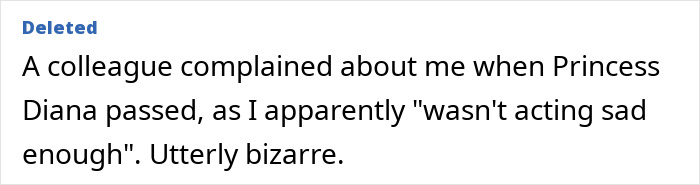
"Wait till you see how I react when you d*e. Then you'll have something to complain about."
If you think workplace drama is just gossip and hurt feelings, the statistics would like a word. According to HR Acuity, human resource managers spend between 24 and 60% of their time resolving workplace conflicts. Nearly 60% of HR managers have witnessed violent incidents resulting from those conflicts.
Furthermore, 22% of employees report being less engaged at work because of ongoing tension with colleagues. The office is not just a place of work. It is, statistically speaking, a pressure cooker with a dress code and a deeply inadequate ventilation system.

This is like the HR staffer who printed out (and left on the printer for others to find) a spreadsheet showing the salary and benefits package for every single employee in the company. (Its also why many companies have security walk you from the room you got fired in straight out of the building, not even letting you pack up your belongings. I had no juicy knowledge whatsoever, but when I got fired once my supervisor went to my desk and brought me my bag before walking me out, and then packed everything else up into a box and shipped it to me. I actually knew that I was being forced out, too, so I'd actually preemptively wrapped up some delicate decorative objects so they wouldn't be damaged by careless packing.)
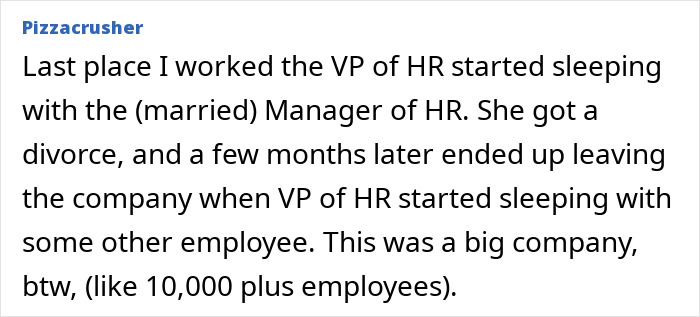
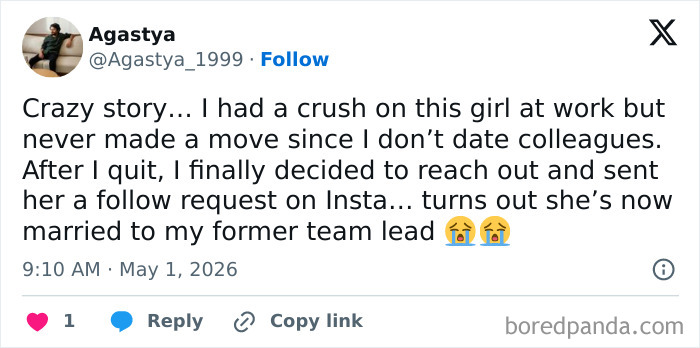
The workplace romance pipeline is also more active than most companies would like to officially acknowledge. A study published in Forbes found that 43% of employees have married someone they met at work, which is lovely. Less lovely is that 40% have cheated on their current partner with a coworker, and 35% who did not disclose their relationship to their employer.
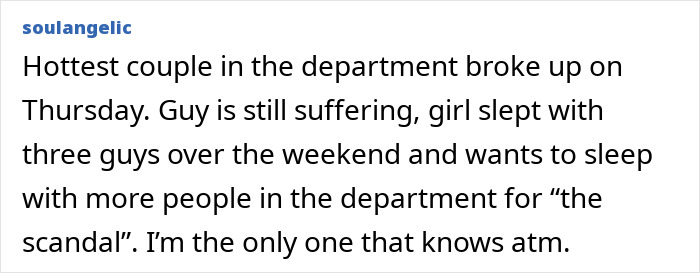
Half of the people admit to flirting with colleagues, which is quite problematic in this climate. Every office has a love story. Several offices have a love catastrophe. Sometimes they are the same story. But we are equally here to read every juicy detail.
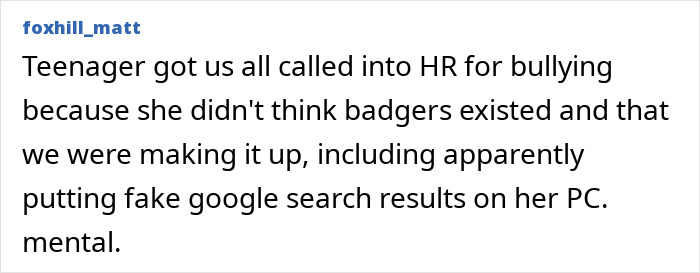
"What do you mean, the other employees are badgering you? Badgers don't exist, remember?"

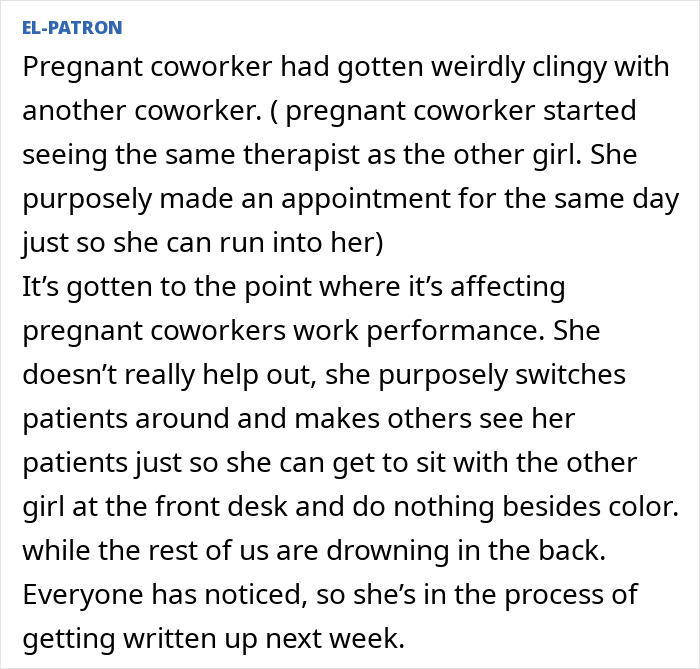
She needs actual psychiatric help - someone needs to call a welfare check. And if she then denies it all and says she's fine, present the evidence. If she admits to making it up, fire her. If she keeps lying, she will get sectioned. Either way is a "win".
The office Christmas party is not a party. It is an annual HR risk assessment camouflaged with a buffet and a free bar, and the numbers make that very clear. Since 2017, 322 employment tribunal claims in the UK have referenced incidents at Christmas parties, roughly 40 cases every festive season.
Alcohol fuelled conflict was the leading cause, followed by inappropriate remarks and manager versus employee friction. HR consultant Matt Davies described it perfectly, warning that mixing colleagues in unfamiliar social settings with high anxiety and excitement creates "a cocktail for disaster." The open bar is not free. Someone always pays for it in January.
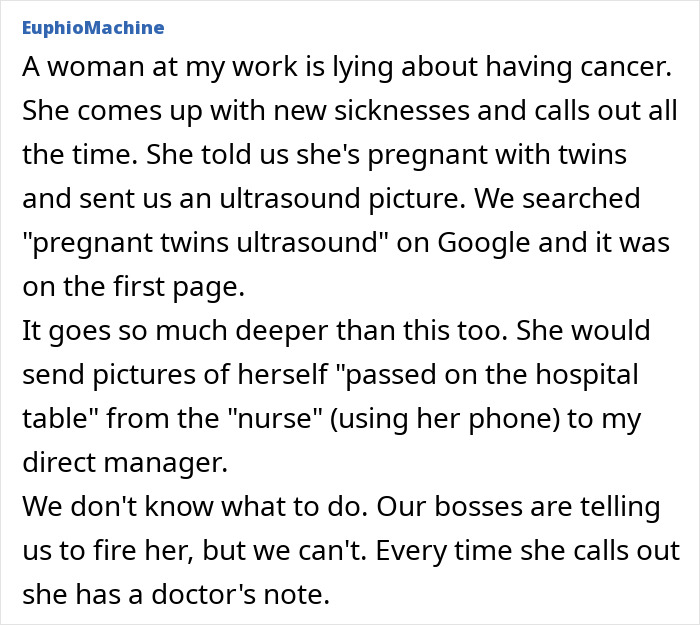
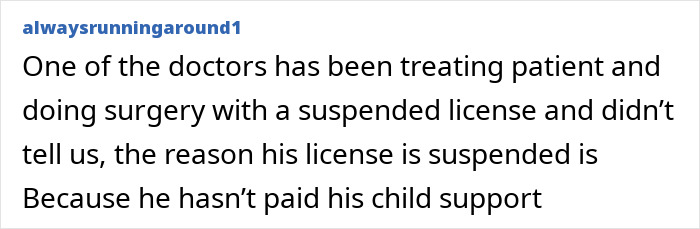
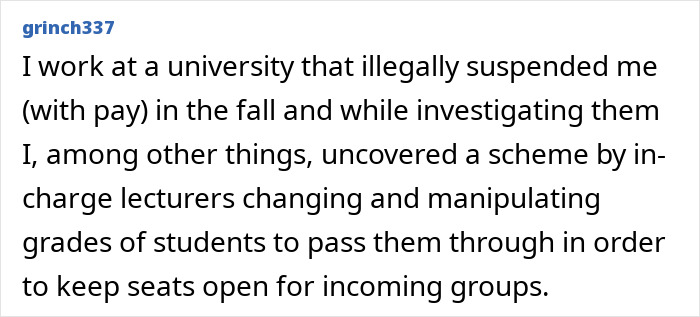
Shouldn't the entity doing the suspending have informed the hospitals in the area the doctor practiced?
It turns out that removing someone from their home country, their routine, and any immediate social accountability is a reliable recipe for questionable decisions. A global survey by World Travel Protection found that 79% of business travelers admit to engaging in risky behavior on work trips that they would never consider at home.
Younger professionals under 34 are nearly four times more likely to ignore local safety and health advice than colleagues over 55. What happens on the work trip does not always stay on the work trip, but everyone involved is banking very hard on the assumption that it will.

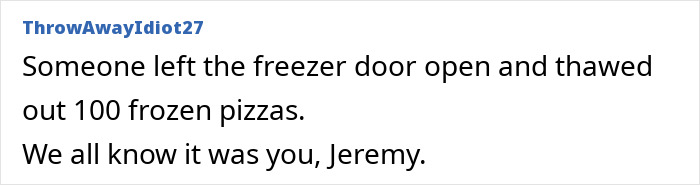
I quit my first job, at a fast food restaurant I won't name, after a freezer incident. A customer had ordered a strawberry shortcake, but we'd run out of strawberry preserves in the front. So I ran back to get a new vat from the walk-in, and found that they all had a thick layer of mold on top. I told the store director and she said to scrape it off and serve it anyway. All so we didn't miss the opportunity to sell a single $1.50 item.
But which generation is causing all of this? A survey produced findings about Gen Z in the workplace that are either deeply concerning or completely understandable, depending on which generation you belong to. Two-thirds found Gen Z harder to work with than other generations, and 65% percent said they fire Gen Z employees more than any other age group.
A shocking figure is that 12% had to let a Gen Z hire go within the first week. Respondents cited a lack of motivation, poor communication, and a tendency to openly tell managers they are smarter and more capable than they are to their face. Whether that is a problem or just honesty is, frankly, a matter of perspective. But one thing is for sure: Gen Z will bring the office drama with all the trimmings.
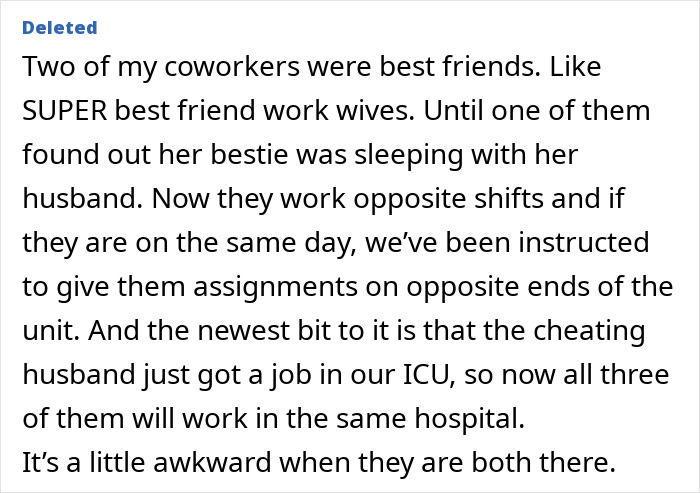
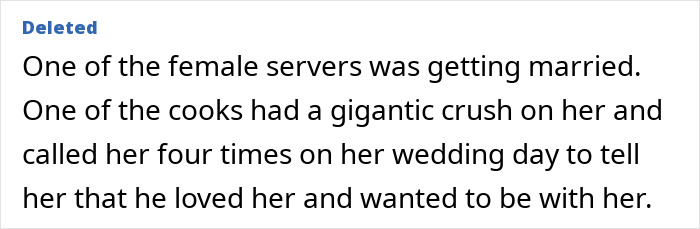
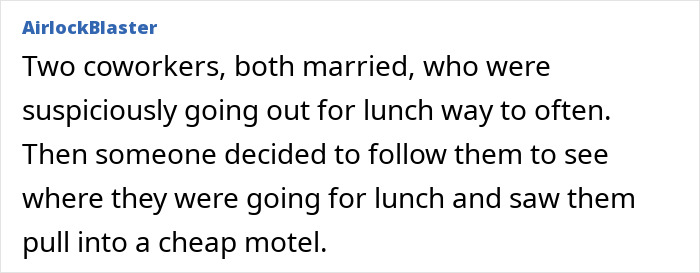
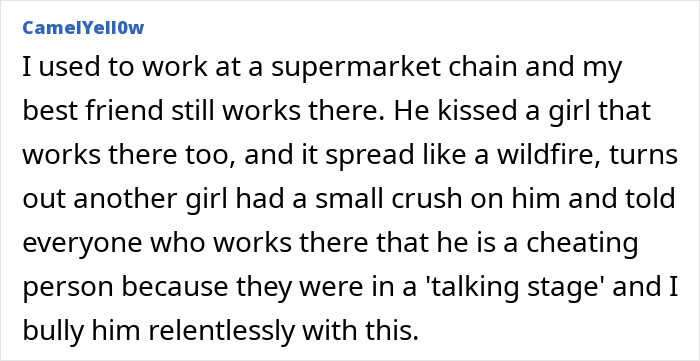
If they will cheat with you, they will cheat on you - why do so many not understand this?
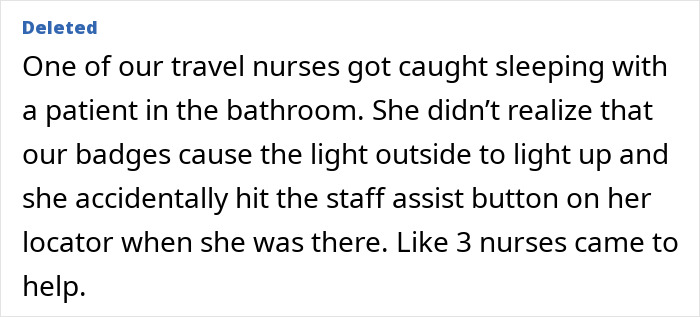
Not all workplaces are created equal when it comes to drama, and some industries are essentially structurally designed for conflict. Healthcare environments, particularly nursing, combine crazy pressure with rigid hierarchies and emotional exhaustion in ways that make interpersonal tension almost inevitable.
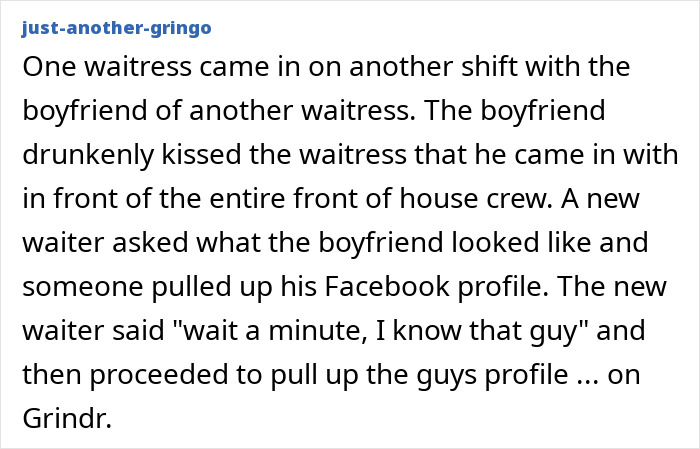
Sales floors run on commission, which means every colleague is also technically a competitor. Restaurant kitchens are hot, cramped, and running at full speed for hours at a time, which is apparently the perfect environment for explosive interpersonal events. The common ingredients across all of them are stress, competition, and humans placed too close together for too long.

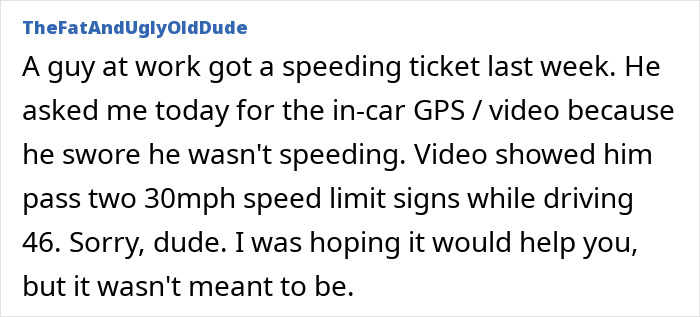
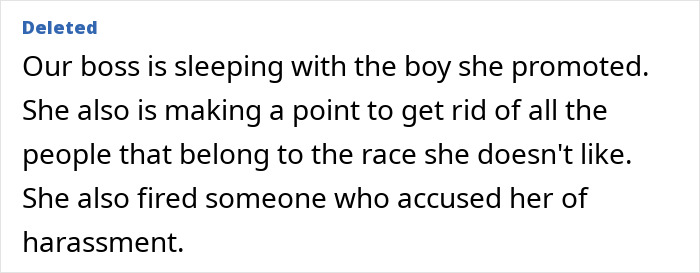
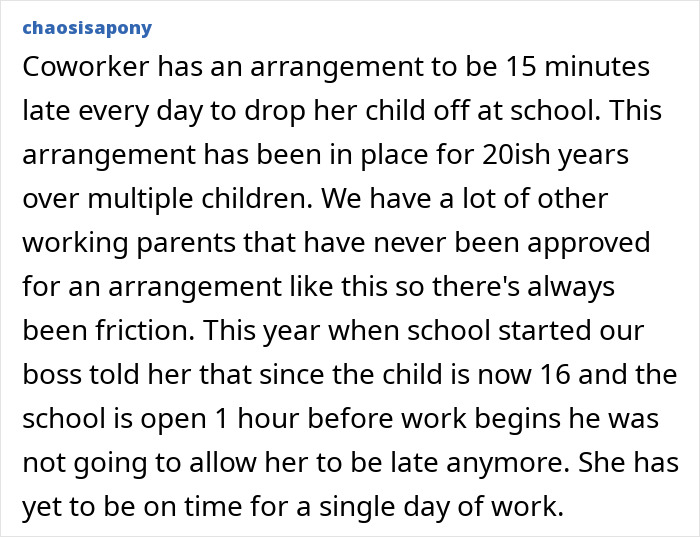
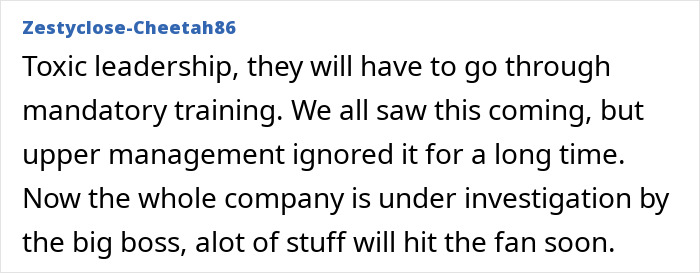
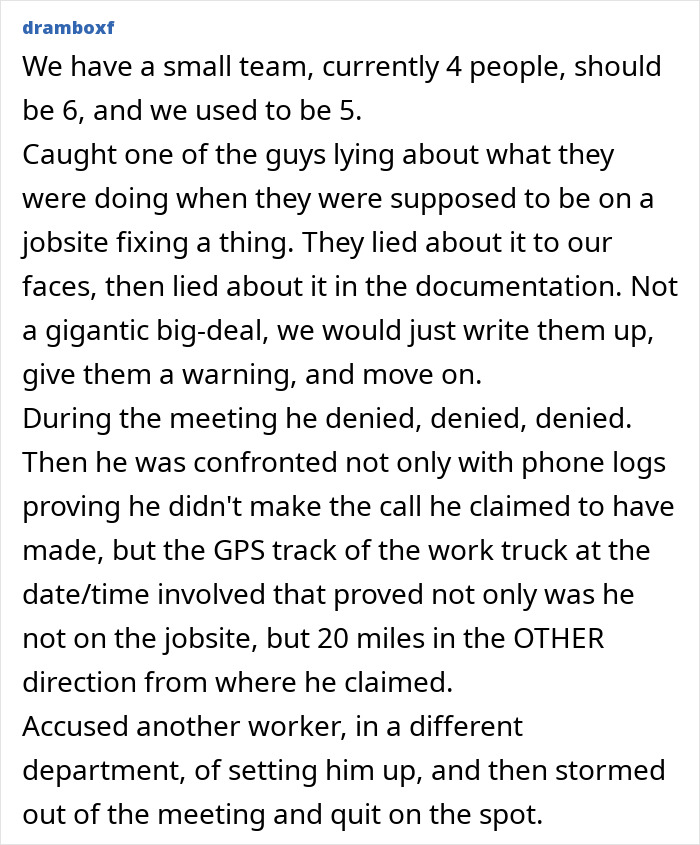
That’s when you start writing her up for being 1 minute late or leaving early, and find any other reasons to write her up… like writing her up for missing the meeting.
If this list has made your home office feel slightly emptier than it did an hour ago, that was entirely the point. Remote work is productive, comfortable, and genuinely good for your mental health in many documented ways. It is also completely devoid of Karl's HR complaint, the Christmas party tribunal, and the colleagues whose entire relationship arc played out over eighteen months in the break room.
The office is chaotic, exhausting, and frequently unhinged. It is also undeniably where all the best stories come from. You can have the quiet life. But you cannot have both.
What is the juiciest piece of workplace drama you have ever seen unfold? Share it in the comments, and don't worry, HR isn't watching!
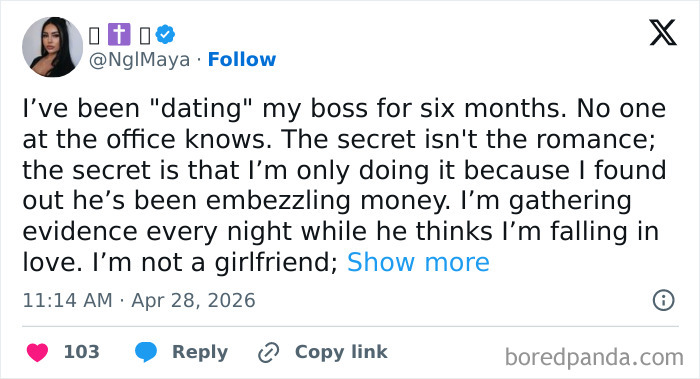
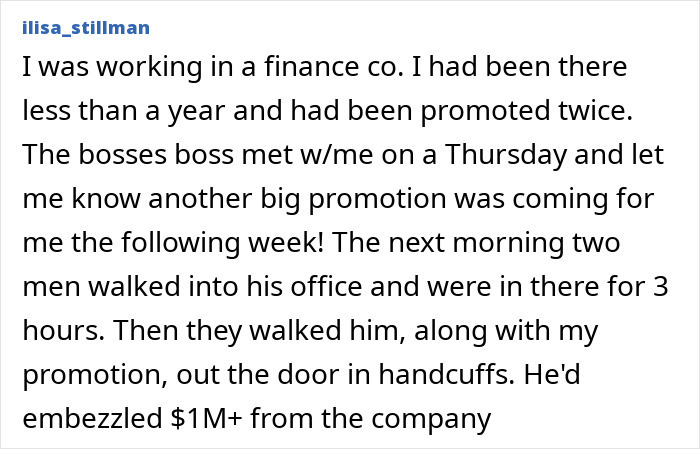
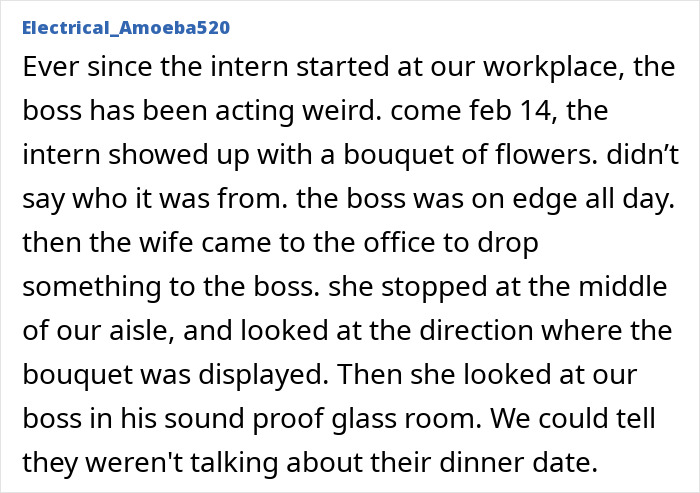
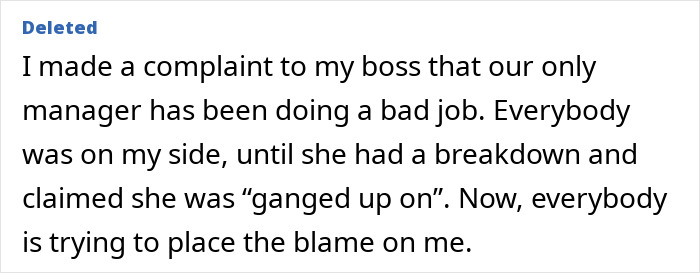
Possible scenario: someone else uncovers the boss's embezzlement, and the OP gets fired because she had known for months and said nothing. No one can support her "girlfriend" story because no one knew they were dating.
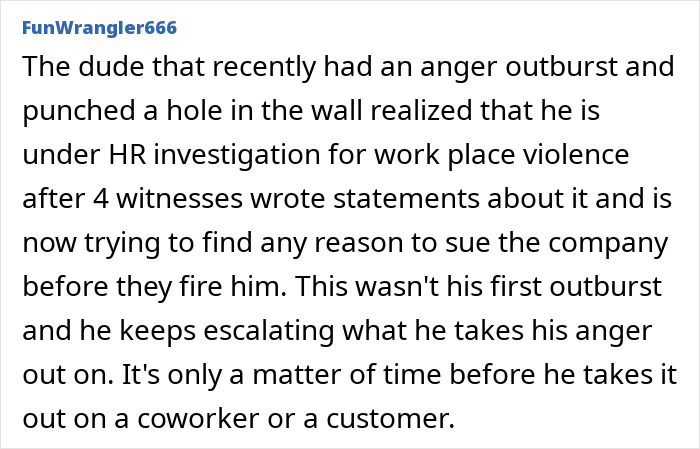
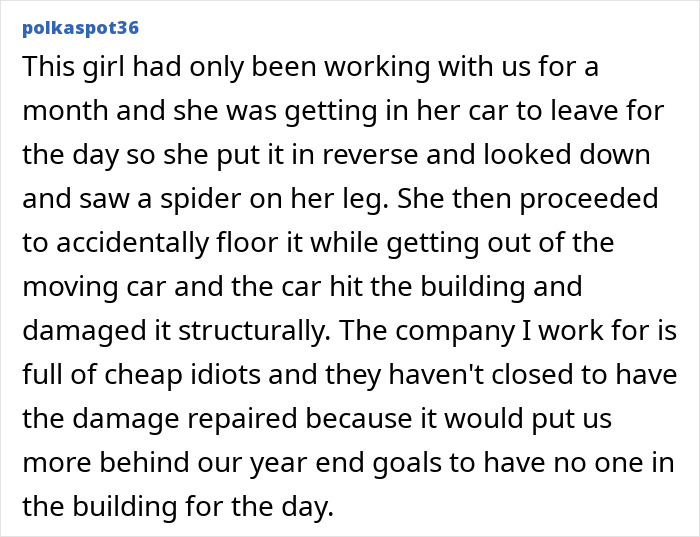
"My client was only trying to demonstrate the lack of structural integrity in the workplace infrastructure in preparation for a complaint to OSHA."
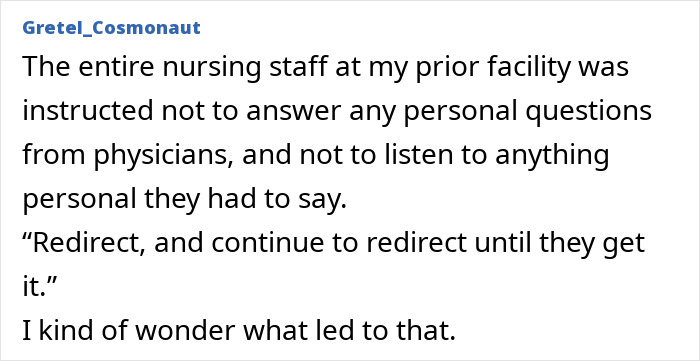
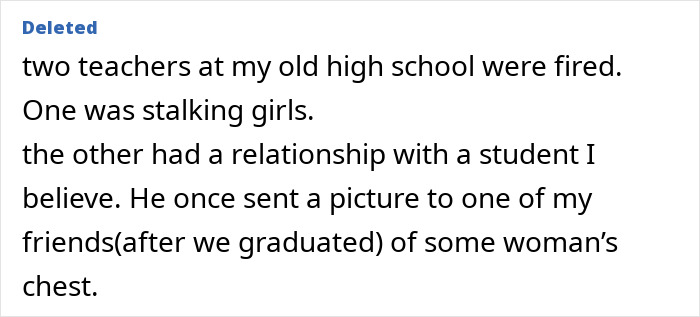
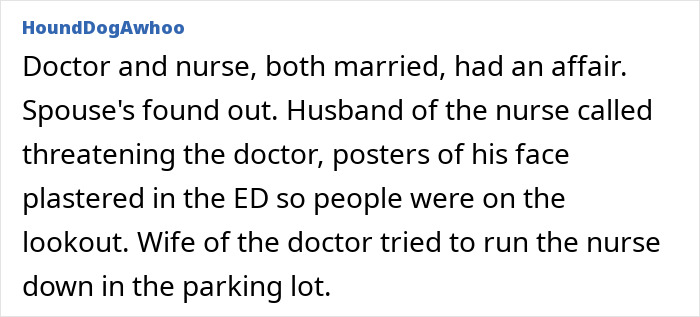
Probably because the management got repeated allegations of s****l harassment because some doctors were trying to date the nurses, and specifically applied pressure and unwelcome persistence when refused. Rather than fire the problematic guys, they opted to blame any nurses who fail to stonewall ANY personal conversation at all.
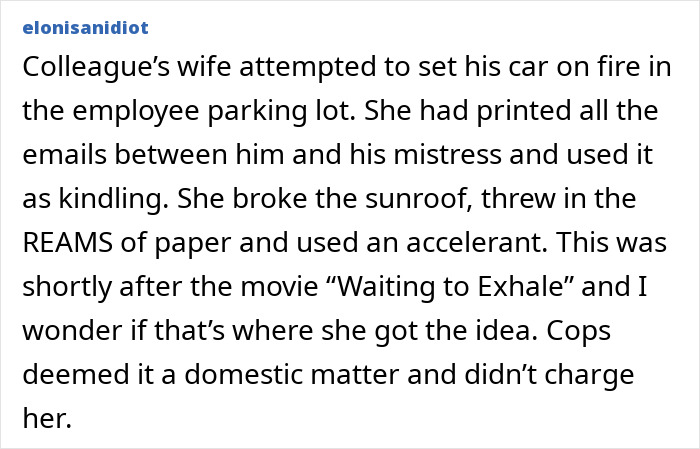
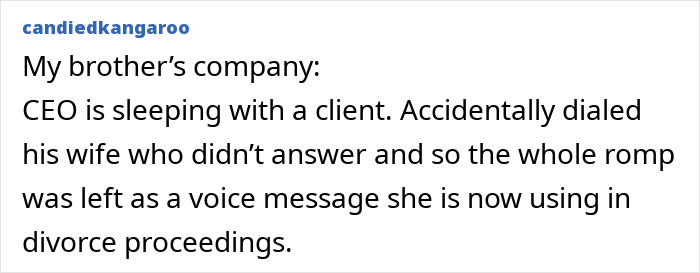
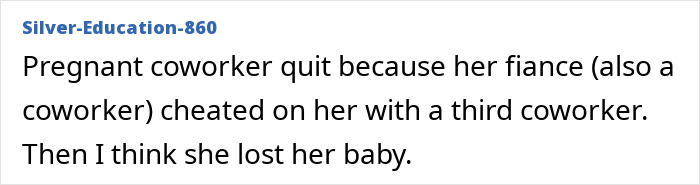
Oh it definitely is. Depending on the state the person that cheated might have to pay more in alimony.
A and B should start carpooling with C and D. They all have so much in common.
One disadvantage of having your boss live close to the office is that it lessens the chance they will leave early to avoid traffic.

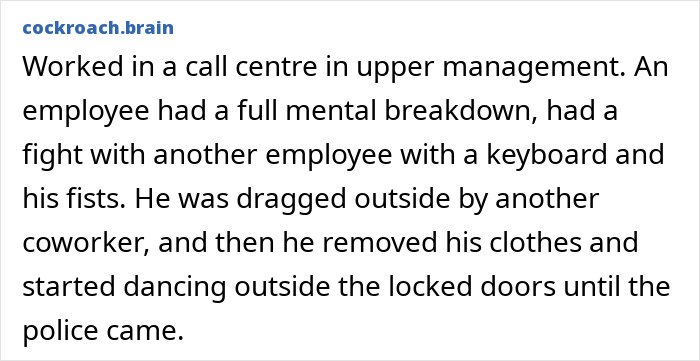
Poor guy, he just cracked. Cracked like a tiny hollow plastic ball, under the heel of a disgruntled employee...
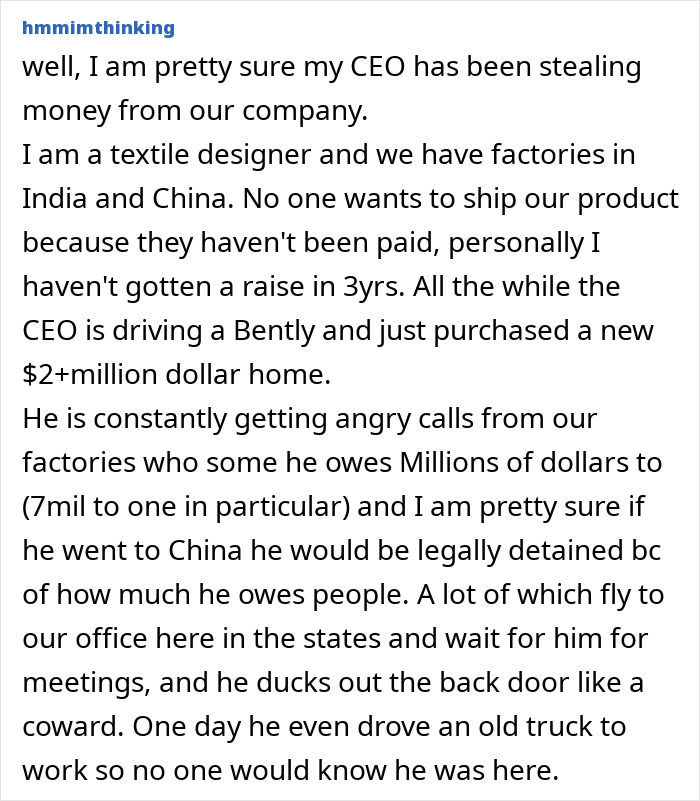
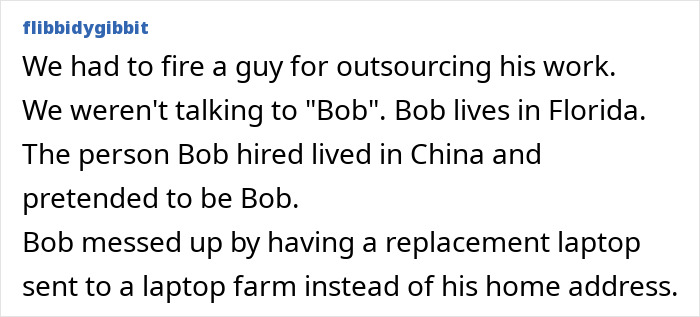
Profiting by outsourcing work to a foreign country is reserved as a corporate privilege.
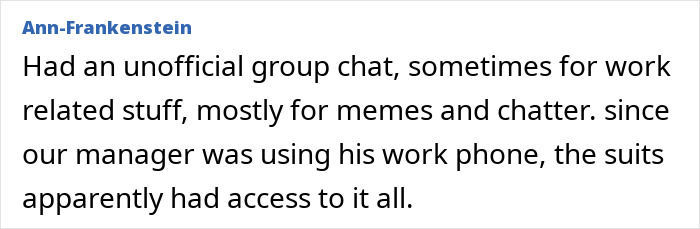
Always assume that ANYTHING you type or view (or file/image that you store) on any electronic device that belongs to your employer can, and often will, be used against you. Even if the device doesn't secretly have monitoring software like key-loggers installed (which you might have even technically been informed of in the fine print of any contracts or nondisclosures that you signed), a forensic IT examination of the device can uncover pretty much everything, even if you tried to delete it.
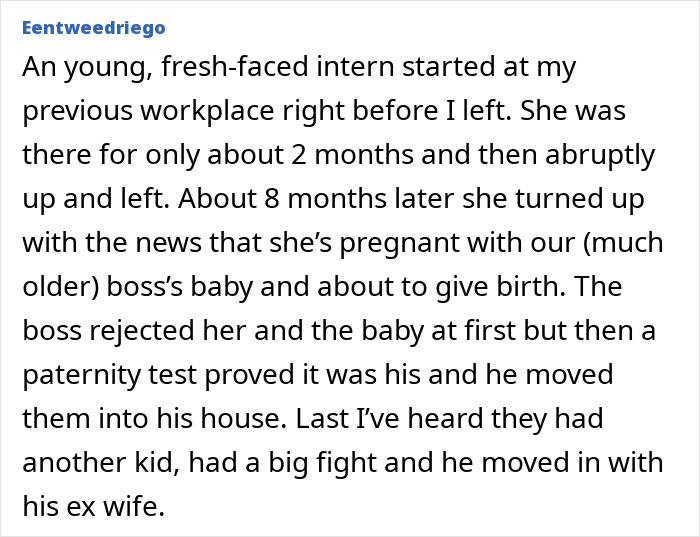
Is his ex wife completely stupid for letting him move in with her????.
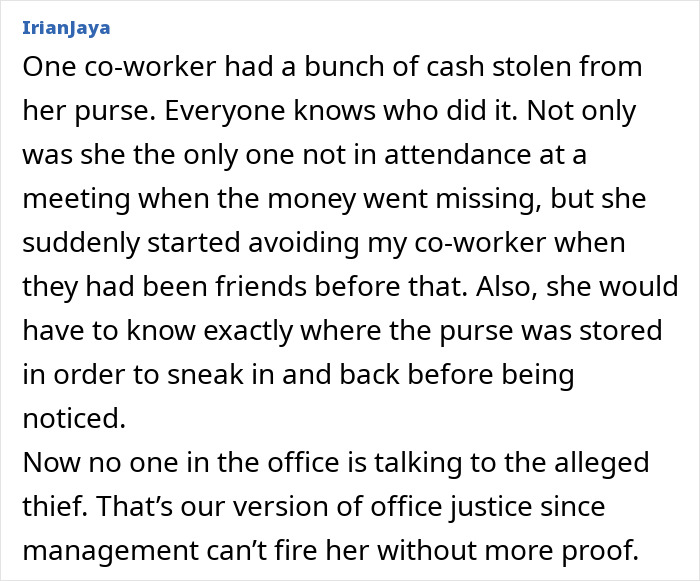
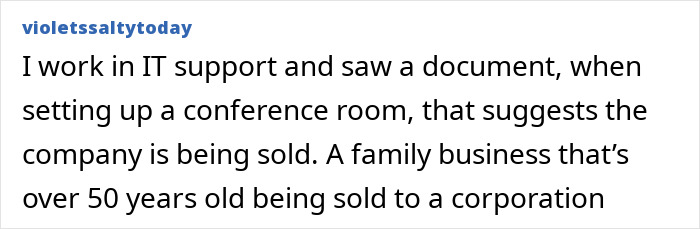
Or it was stolen by a current employee who realized that the new one would be immediately suspected.
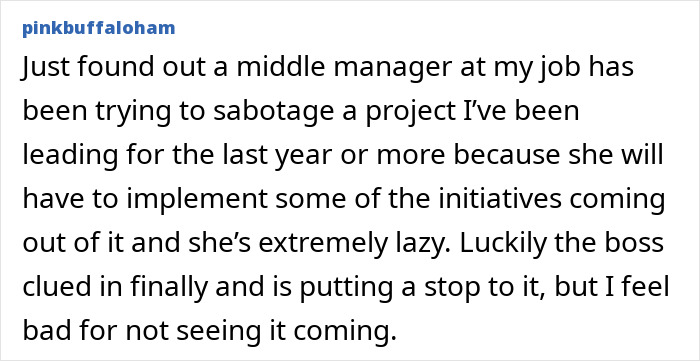
If the current owning family has no clue how to run the business, the sale might be a good thing for the employees - depending on who buys it, of course.
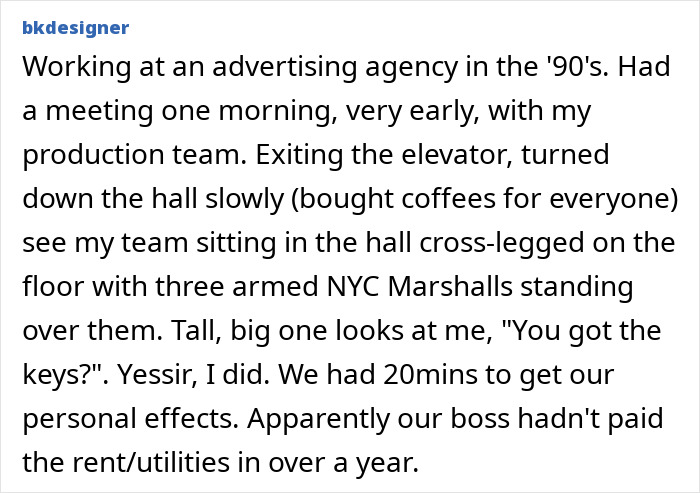
That's when you call the city or county and report it. Always a chance that the building isn't structurally safe.
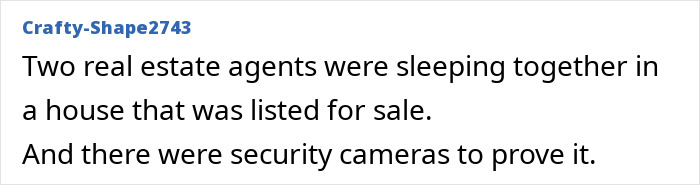
As they say, there's three key elements in real estate - Location, Location, and Fornication.
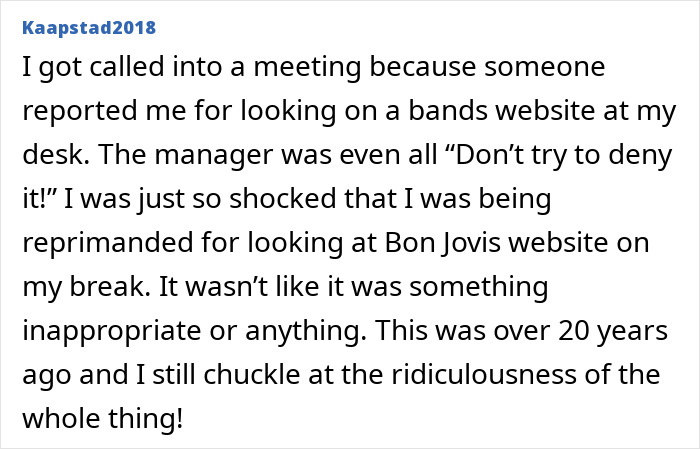
Gotta love Bon Jovi! I got to go to a concert about 10 years ago with friends. The hospital they work at gets free tickets sometimes. Each employee can get 2 tickets, their daughter's b/f got sick and couldn't go so they gave me his ticket. My son gave me tickets for Mother's Day to go see Journey Thurs night, it was a great concert! They sang about 25 songs through about 50 years. This is their final tour.


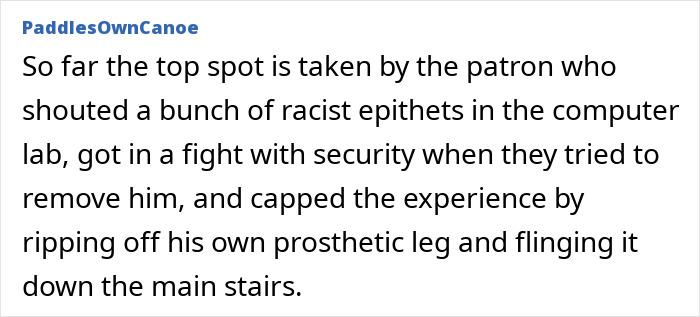
I work at a public library and we take staff and patron privacy very seriously. Our IT guy got fired for accessing our email accounts and reading all our emails. How did his boss find out? He read about Joanna's (fake name) eminent firing and asked his boss why Joanna was going to be canned. He was let go within a couple hours.

I work at a public library and we take staff and patron privacy very seriously. Our IT guy got fired for accessing our email accounts and reading all our emails. How did his boss find out? He read about Joanna's (fake name) eminent firing and asked his boss why Joanna was going to be canned. He was let go within a couple hours.

























 No fees, cancel anytime