Get Premium
Dark mode theme is available exclusively for premium users. Learn more about the benefits of subscribing.
No fees, cancel anytime.

 Dark Mode Ad-Free Browsing Unlimited Content
 Ad-Free Browsing Unlimited Content Dark Mode
Join 1.2 million Panda readers who get the best art, memes, and fun stories every week!

The first months after giving birth tend to be the toughest, as even entirely normal newborns need a lot of attention. So this can often be a pretty good test of how couples manage splitting responsibilities and helping each other.
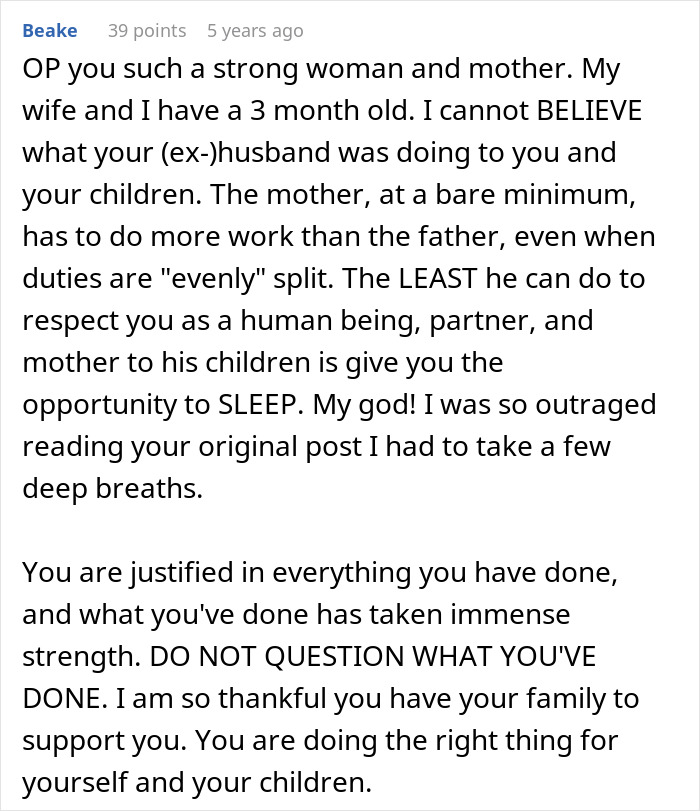
A woman asked the internet if she was wrong to demand to be allowed to take naps during the day, as childcare meant she couldn’t sleep during the night. Her husband thought it was unfair, but was entirely unwilling to pay for a nanny or quit his job to help with childcare. Later, after reading through the comments, she shared what happened next.
Image credits: Slaapwijsheid.nl / unsplash (not the actual photo)
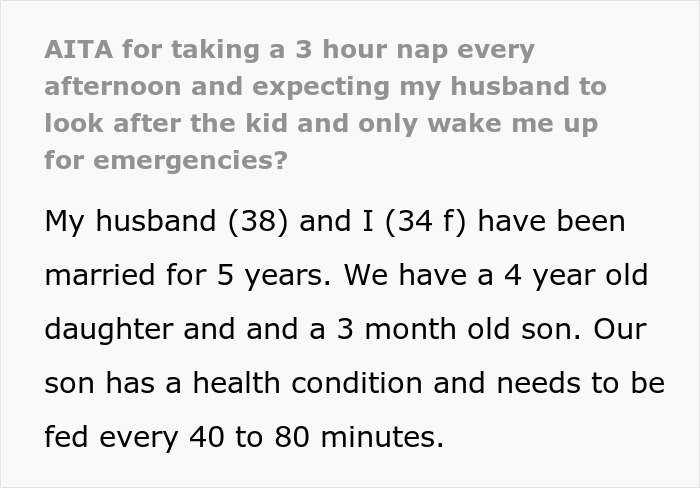
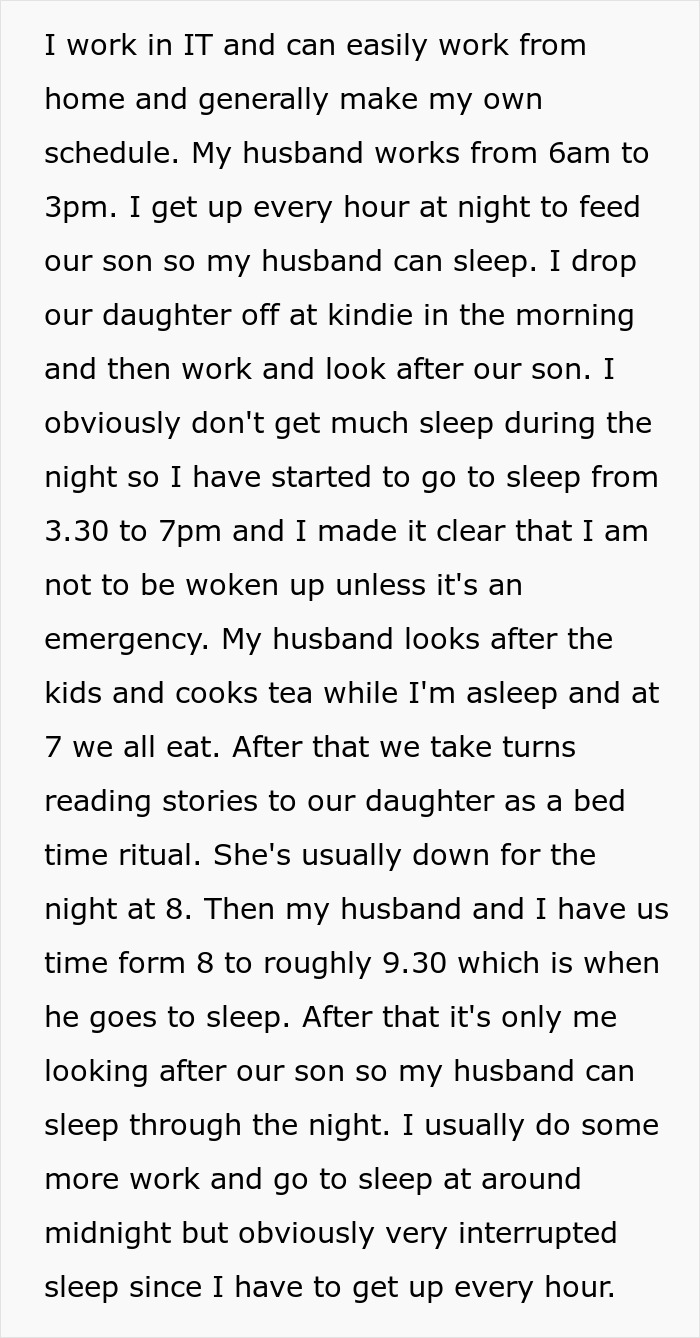
Image credits: Getty Images / unsplash (not the actual photo)

Image credits: theroomum
When a family faces the relentless pressure of a medical condition requiring around the clock care, the traditional definitions of balance and fairness often fall away. In this specific scenario, the biological necessity for sleep has become a point of contention rather than a shared priority. Sleep is a fundamental biological requirement that underpins every aspect of human cognitive function and emotional regulation.
When a parent operates on fragmented rest for months on end, the brain begins to enter a state of chronic sleep deprivation, which can lead to impaired judgment, heightened irritability, and significant long term health risks. For a mother managing a high stakes career in technology while providing medical level care every hour of the night, a dedicated block of rest is not a luxury. It is a vital health intervention that allows her to remain a safe and effective caregiver for both of her children.
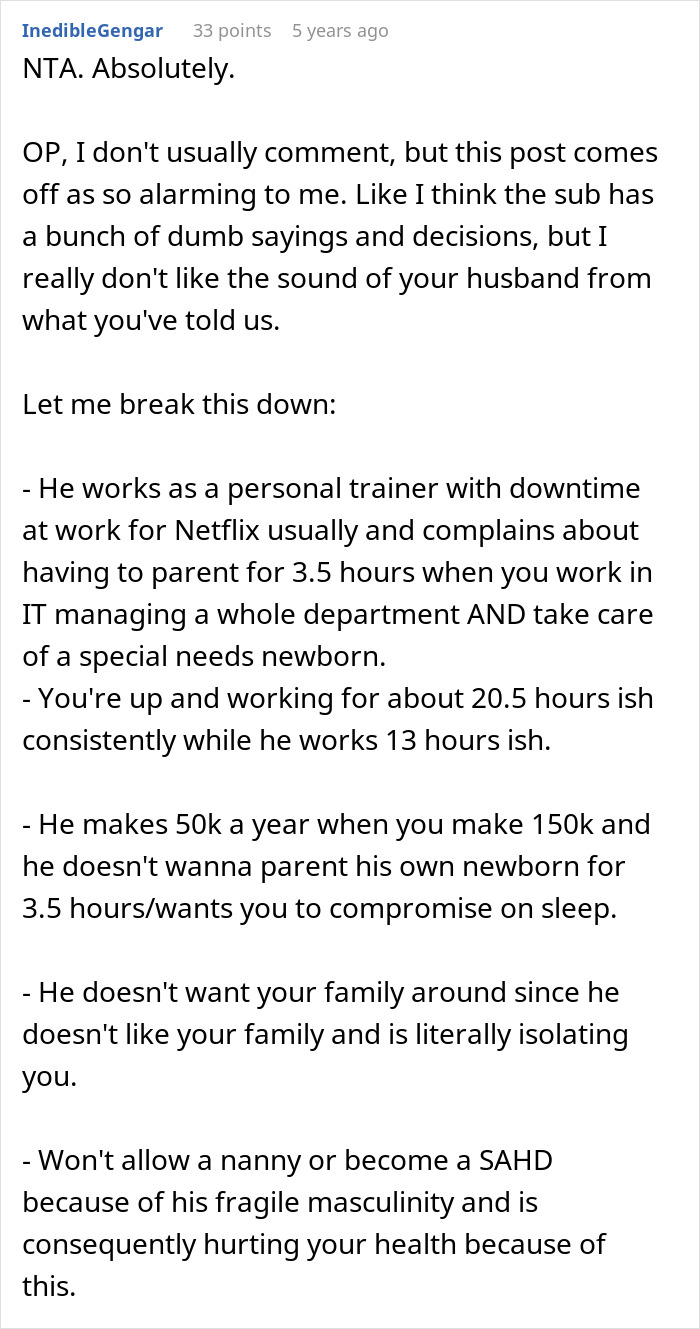
The friction in this household highlights a common issue in modern marriages where the division of labor is measured by hours spent working rather than the intensity of the tasks performed. While the husband fulfills a standard workday, the wife is essentially working a triple shift that includes professional duties, daytime childcare, and the entirety of the nighttime medical routine. This creates an environment where the mental load is heavily skewed toward one partner. The request for relaxation time upon returning from a job is understandable in a vacuum, but in the context of a family crisis, it overlooks the fact that the other partner has not had a moment of true disconnection in weeks or months. When one person is fighting for their basic sanity through a three hour nap, the other partner seeking leisure time can create a deep sense of resentment in the relationship.
True partnership during the infant stage requires a shift from viewing time as a personal asset to viewing it as a communal resource. If the current schedule leaves one parent completely exhausted and the other feeling deprived of hobbies, the system is failing the family unit as a whole. Experts often suggest using tools like a relationship contract or a fair play system to visually map out every responsibility from laundry to midnight feedings. This often reveals that the invisible labor of managing a child with a health condition is far more taxing than a predictable nine to five job. If the husband is unwilling to bring in outside help like a nanny or a night nurse, he must accept that the labor deficit must be filled by him. Choosing to reject both external assistance and internal sacrifice places the entire burden of the family survival on the mother, which is an unsustainable path toward parental burnout.
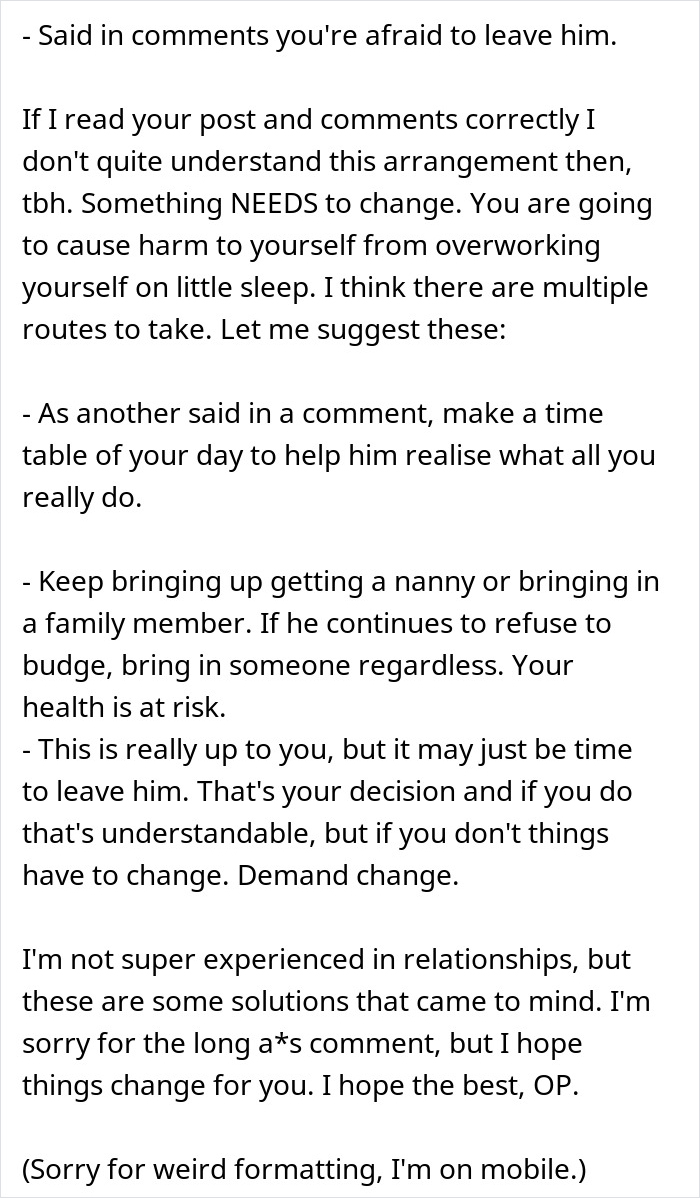
To move forward, the couple must acknowledge that this is a temporary season of life with a defined end point. With the son expected to outgrow his condition by eighteen months, the family is currently in a marathon rather than a sprint. Negotiating a compromise might involve the husband having specific nights where he takes over the early evening shift so the wife can sleep, or perhaps finding a middle ground where he gets a small window of rest before taking over the childcare duties.
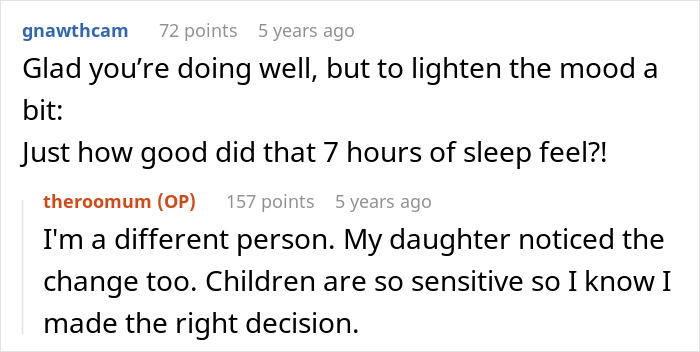
However, the foundational truth remains that human beings cannot function without consolidated sleep. Expecting a spouse to manage twenty hours of continuous responsibility without a break is not a matter of different parenting styles, but a matter of physical health and safety. Prioritizing the mother’s nap is a protective measure for the entire family, ensuring that the person responsible for the baby’s health at two in the morning is actually alert enough to provide it.
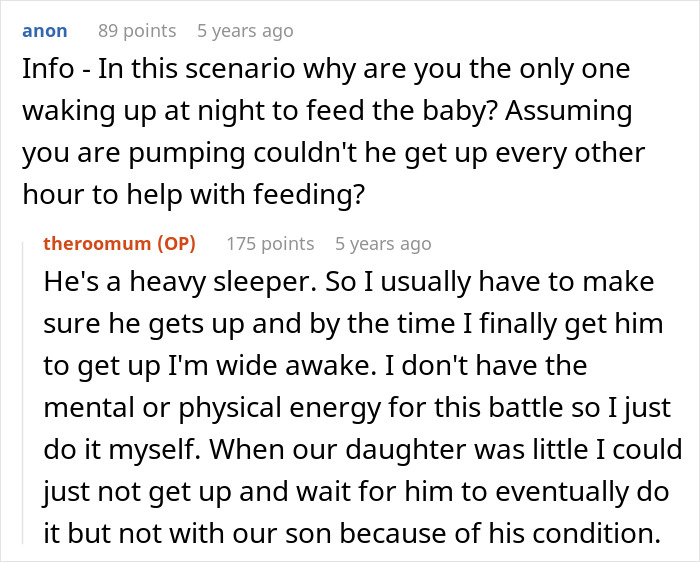






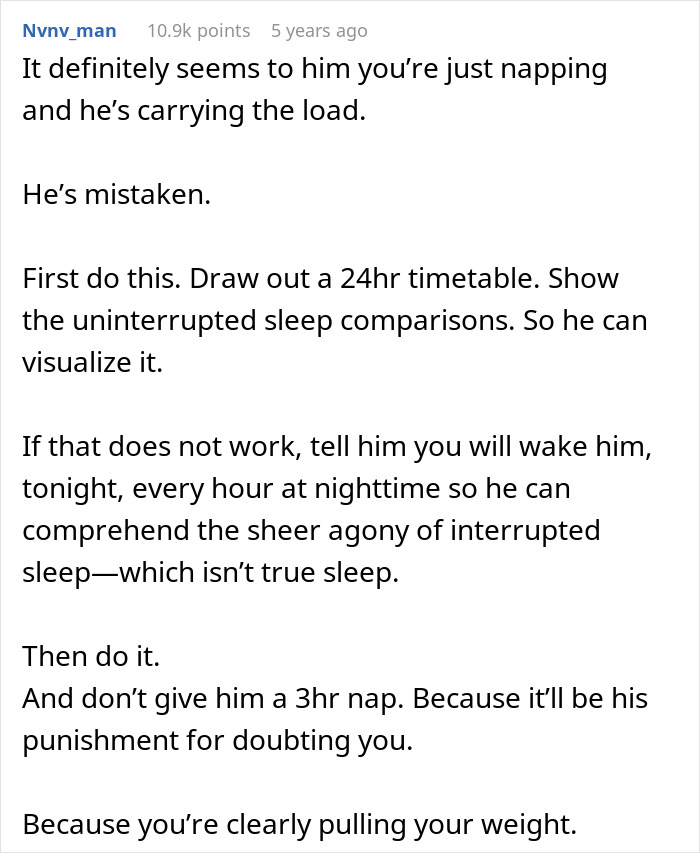

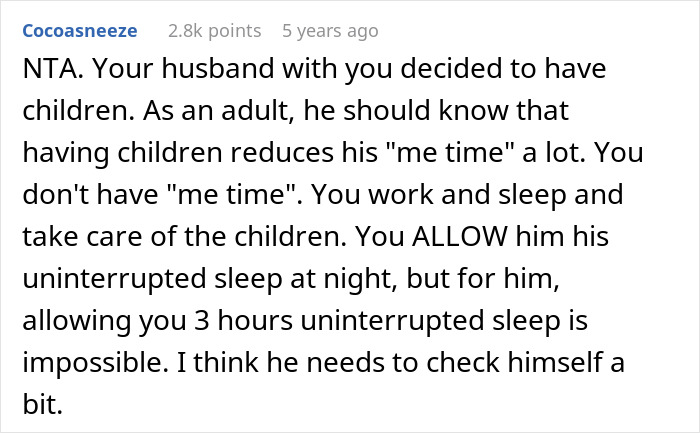

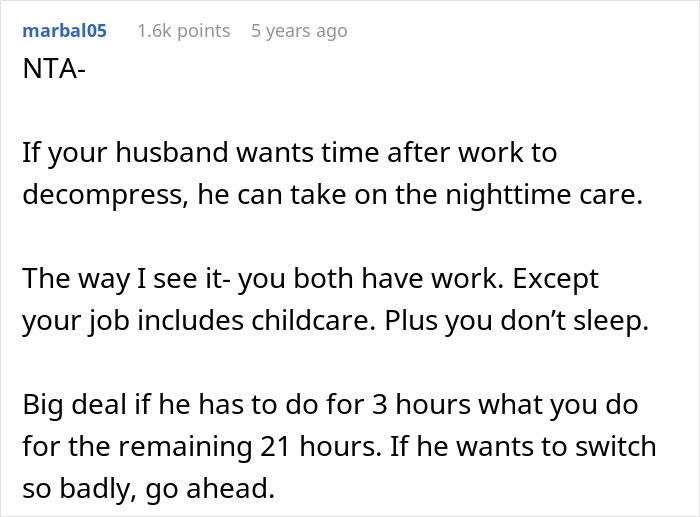
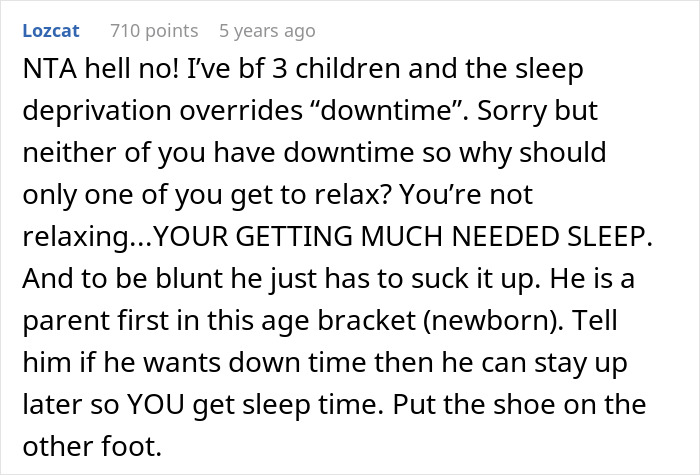
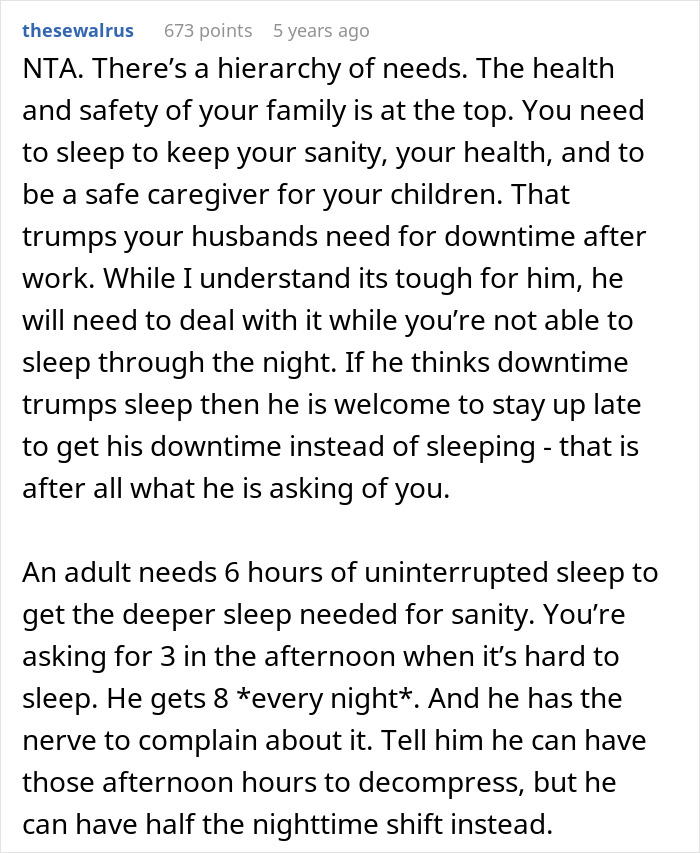


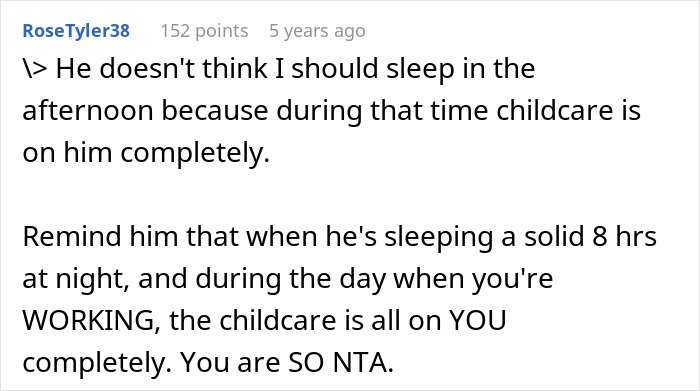


Image credits: Curated Lifestyle / unspalsh (not the actual photo)
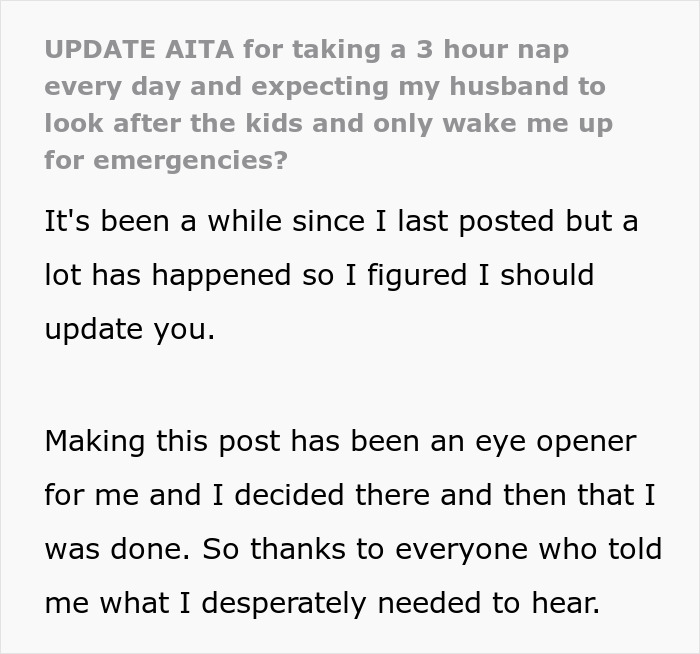
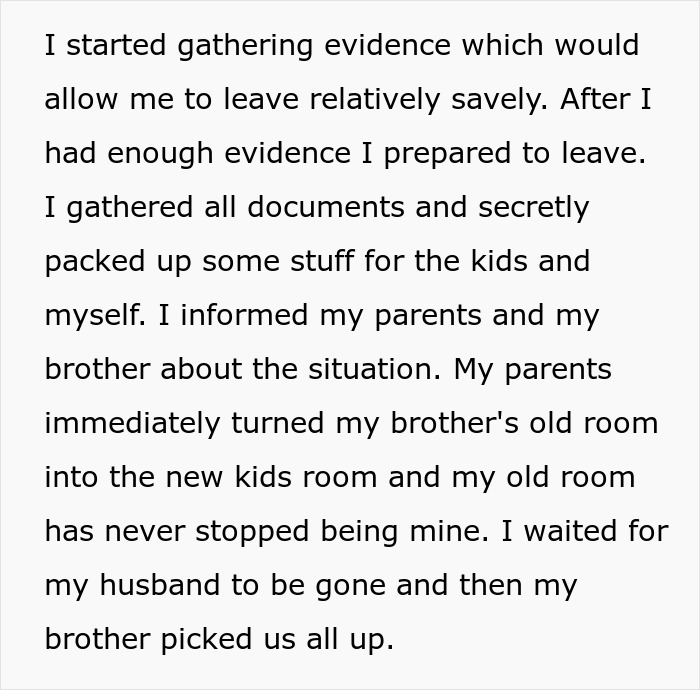



Image credits: theroomum














By entering your email and clicking Subscribe, you're agreeing to let us send you customized marketing messages about us and our advertising partners. You are also agreeing to our Privacy Policy.
Thank you! You've successfully subscribed to newsletters!






































 No fees, cancel anytime








30
0