Get Premium
Dark mode theme is available exclusively for premium users. Learn more about the benefits of subscribing.
No fees, cancel anytime.

 Dark Mode Ad-Free Browsing Unlimited Content
 Ad-Free Browsing Unlimited Content Dark Mode
Join 1.2 million Panda readers who get the best art, memes, and fun stories every week!
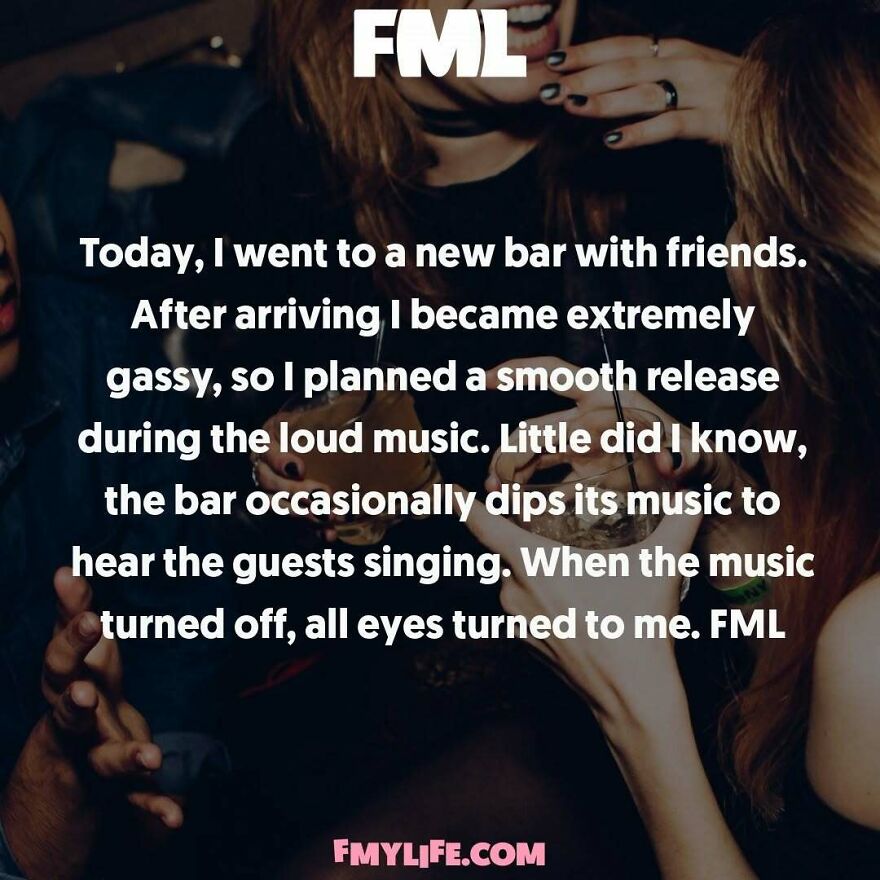
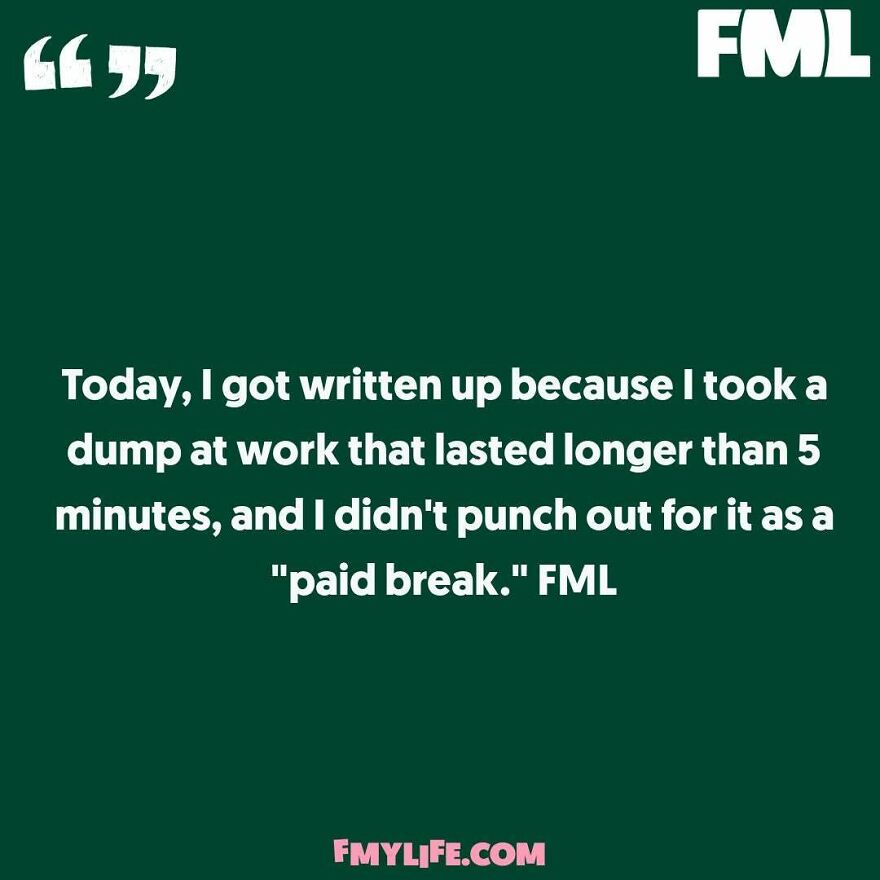
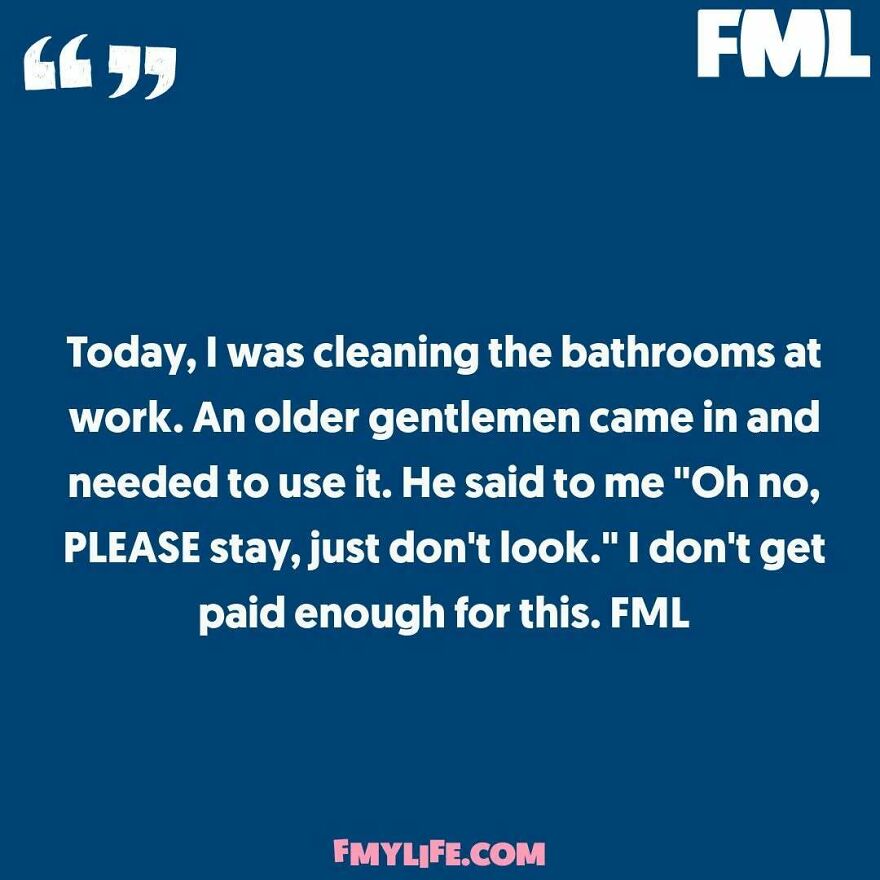
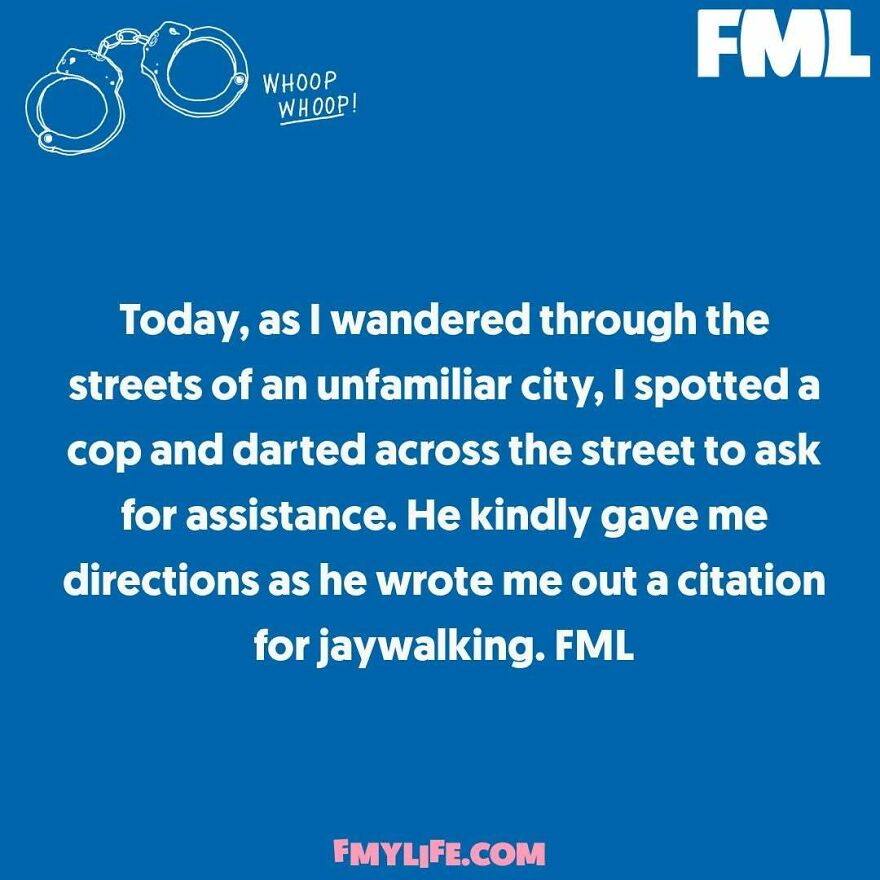
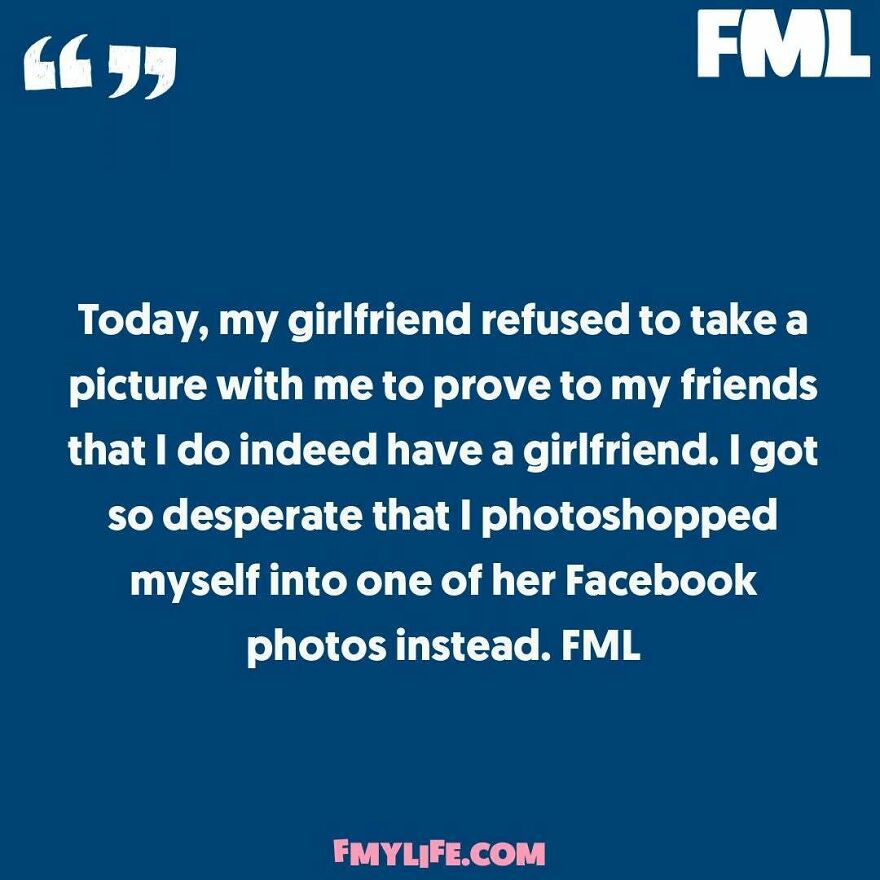
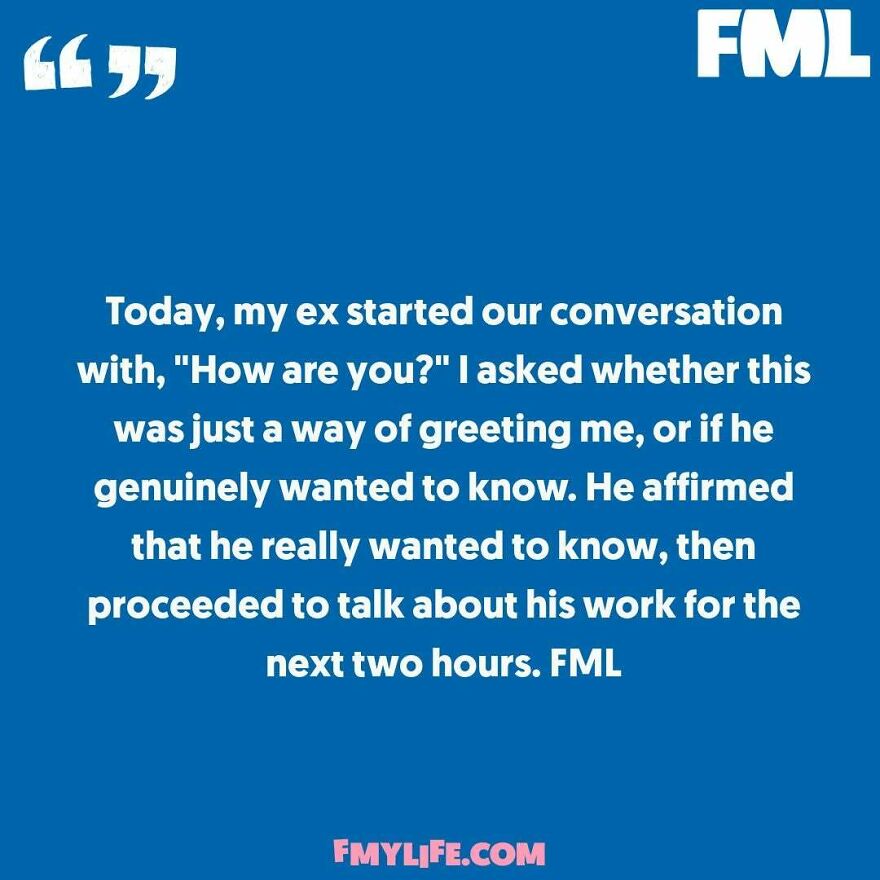
Everyone has a bad day sometimes, you spill your coffee on the way out the door, you forgot to fill up the tank of your car, maybe you ripped your favorite shirt. One netizen's tragedy is, of course, another's comedy.
The “FML” Instagram page is a dedicated space for folks who had something bad happen to them and just need to anonymously vent. The results are often somewhat funny. So get comfortable as you scroll through, upvote your favorites and be sure to share your own examples in the comments down below.
More info: Instagram
This post may include affiliate links.
There is actually a word for what happens when you smile a little watching someone else's day fall apart, and it comes from German. Schadenfreude combines "schaden," meaning harm, and "freude," meaning joy, and psychologists describe it as the pleasure people feel watching another person's misfortune.
It sounds harsh written out like that, but it turns out to be one of the most universal emotions we have. Researchers have found equivalents in cultures all over the world, including a Chinese phrase that translates roughly to enjoying the troubles of others, so this is not some uniquely petty modern internet habit. Humans have been quietly enjoying each other's bad luck for a very long time.
jerky is jerky :) when i had dogs i used to try most of their food and treats before giving to them and some of it was pretty decent. i've developed a strange habit of sitting on the floor and scratching my ears with my feet, but i'm sure that's completely unrelated
Part of the explanation comes down to something called social comparison theory, an idea developed by psychologist Leon Festinger back in the 1950s. The basic concept is that people constantly measure themselves against everyone around them, often without realizing it.

If you're gonna drunk clean, make out a check-list in advance. Leave it on a table or posted to the fridge, so you know what the hell it is you cleaned. That way you can later say to self "Oh yeah! Whew!"

They are making sure that you never, ever accept an invitation to join them again.
So when you read about a stranger locking their keys in the car with the engine running, or sending a text complaining about their boss directly to their boss, your own morning suddenly looks a lot more manageable. A Forbes piece on the subject notes that this feeling tends to show up most strongly when someone else's stumble gives our own self worth a little boost, even if we would never admit that out loud.

Someone had to come last. Someone always loses the Olympic event, for example. That doesn't necessarily mean they're bad, just that everyone else is better. If it's the 100m sprint, the loser is still one of the top eight fastest people in the world!
There is also a physical side to all this. Some research has linked the experience of schadenfreude to activity in the brain's reward system, the same general area that lights up with things like good food or a bit of unexpected cash. That does not mean people are wired to be cruel. It means the brain treats "at least that's not me" as a small reward, and it does this automatically, often before a person has consciously registered why they are smiling.
Evolutionary psychologists point out that humans are intensely social creatures who are constantly tracking status and belonging, so any information that makes us feel a little more secure in our own standing gets flagged as good news, as the BBC Science Focus explainer on the topic lays out.
Here is the important distinction for something like an anonymous confessions page, though. The classic, slightly uncomfortable version of schadenfreude usually involves a rival or someone we already resent getting their comeuppance. That is not really what is happening when people scroll through a feed of strangers spilling soup on themselves or forgetting their own anniversary. Nobody reading those posts thinks the person deserved it.
The appeal is closer to recognition than judgment. It is the relief of realizing that everyone, everywhere, is constantly one distracted moment away from tripping in public, and that thought is oddly comforting rather than mean.
The people posting benefit from this too. Talking openly about embarrassing moments has been shown to actually make people seem more likeable rather than less. One widely cited study covered by NBC News found that visible embarrassment reads as a sign of trustworthiness and warmth, since it shows someone cares about social norms even when they have just violated one by accident. There is also a quieter benefit for the person confessing.
Naming an embarrassing moment out loud tends to shrink it. As one breakdown of the psychology behind this puts it, keeping cringeworthy moments bottled up tends to make them feel heavier and more isolating than they actually are, while saying them out loud, even to strangers on the internet, tends to drain a lot of that power away.
My answer to an employer telling me to cut my hair or shave my beard would be "no."
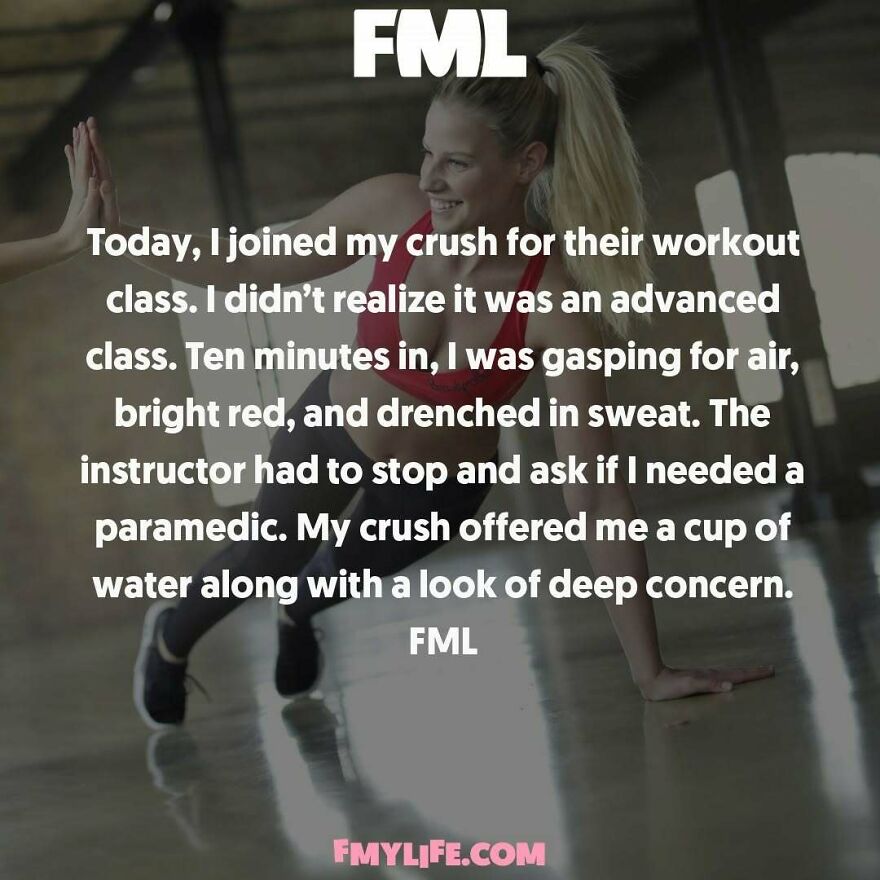
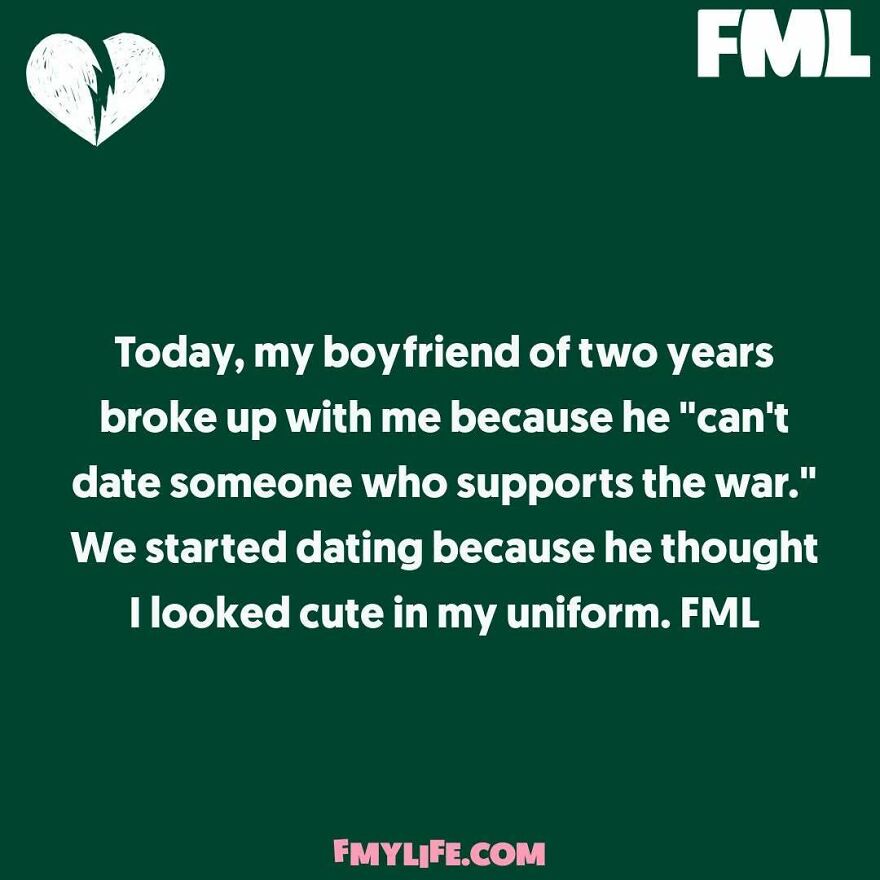
Yikes. If he has a thing for uniforms, maybe he should have been trying to date a paramedic or someone in the fire service...
So really, none of this is about wishing bad things on anyone. It is about the strange comfort of shared chaos, the reminder that dignity is optional and temporary for absolutely everyone, and the fact that laughing at your own disaster with a crowd of equally disaster prone strangers feels a lot better than sitting with it alone.

"i wonder why my child never visit me in the nursing home"

I keep using "John Jacob Jingleheimer Schmidt" on the remote possibility someone will yell, "Hey, that's my name too!"

I feel sad for OP that she has to prove to her husband that she can be s**y while pregnant by waxing her pubic hair while pregnant. If there's ever a time that women should have a little grace on not keeping up with artificial beauty standards I'd hope it's while she's pregnant!

I am genuinely concerned for this coworker over the last bit especially... that can be a sign of a few disorders... hope shes ok

I mean to be fair, WoW is better than real life most of the time lol. I've been playing it since TBC launched.
I got a big frownie face because my out of office for internal use only message said, "Just put a bandaid on it until I get back."

hmmm he kinda doesent seem a very good friend. Unless he meant homely as "a domestic godess far beyond human understanding"

BMI is based entirely around what's healthy for an average white male. It's a reasonable baseline in many cases but is absolutely not the be all end all and there are plenty of people who would be classed as clinically obese or clinically underweight who absolutely aren't based on their actual, individual physiology. Medical professionals using it blindly are concerning.
if you're going to fire someone, they're presumably not doing a very good job. Why then would you ask them to train their replacement? Sounds like this boss isn't the sharpest sandwich in the shed :)
This is a bit sad and sounds unhealthy. Pizza is not shameful and having one day of eating higher caloric content food is not "cheating" at anything. Food is morally neutral and guilt is not an ingredient. I hope the mother and sister are not shaming this person, because she makes it sound like she got caught pïssing in the fridge, not eating a completely normal food item.
















 No fees, cancel anytime