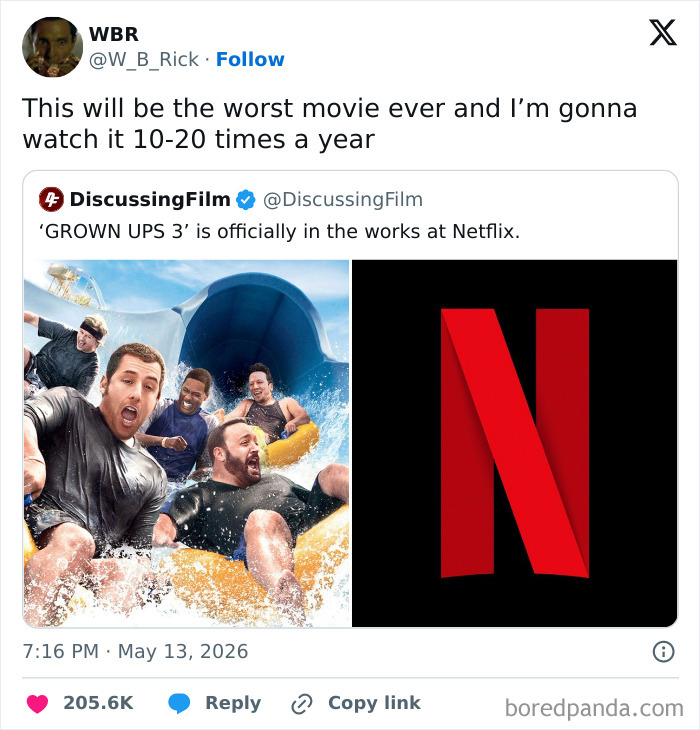
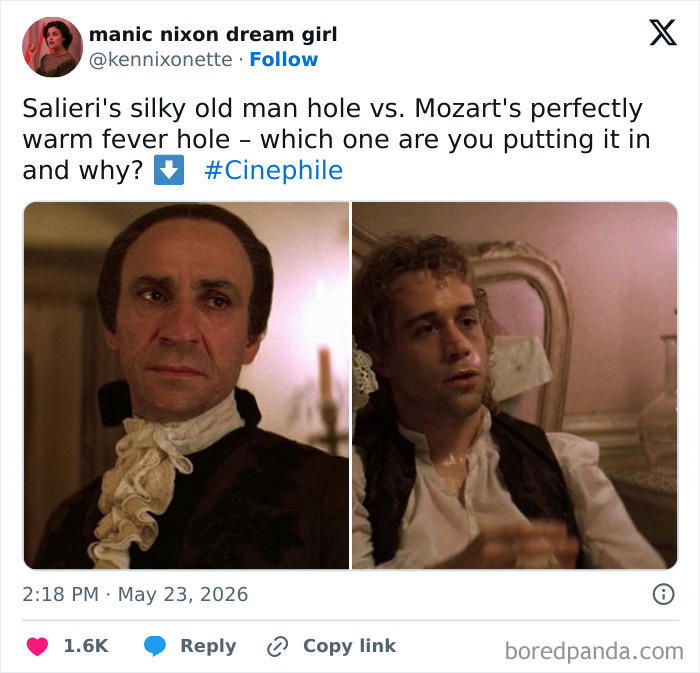
80 Hilarious Cinephile Tweets That Prove Movie People Are A Very Special Kind Of Unhinged
Cinephiles are not regular people, and they will be the first to tell you that. These are people who have strong opinions about aspect ratios at dinner, who rate their own life experiences on Letterboxd as a bit, and who will genuinely grieve a director's career pivot like a personal loss.
They cry at the Criterion Collection sales. They have walked out of a Marvel movie and immediately tweeted about it. They use the word "cinema" as both a compliment and a weapon. And on Twitter, completely unsupervised and chronically online, they are absolutely hilarious. These tweets are proof. Dim the lights.
This post may include affiliate links.

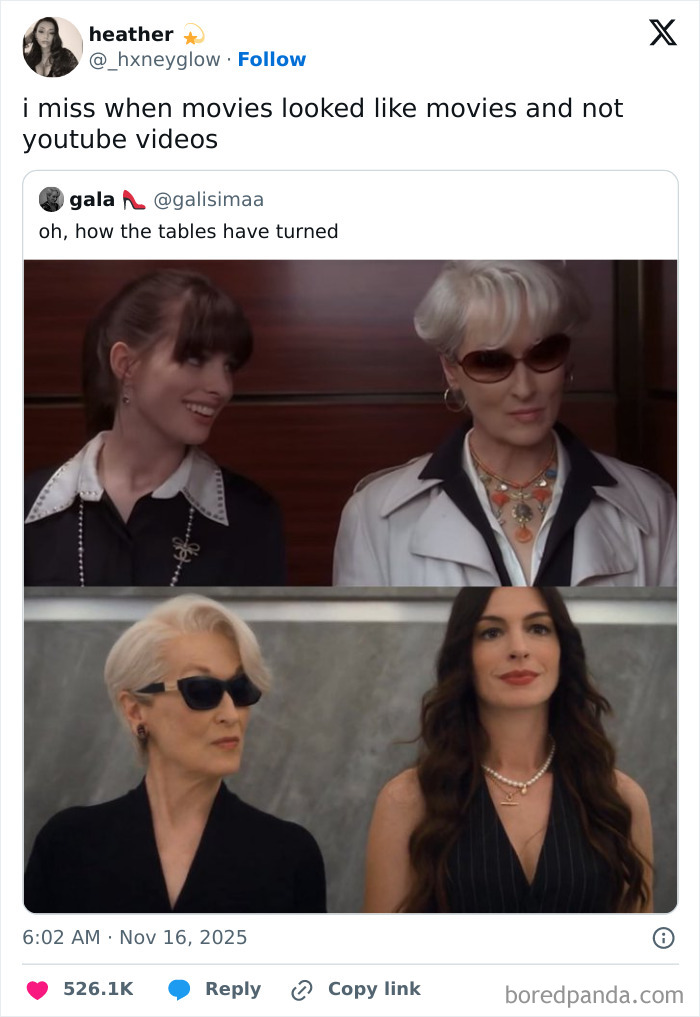
They still make those type movies, but they're in the Documentary section now.

The cinephile lifestyle can be put into proper perspective with a number that will make you want to lie down. The average person will spend over 78,000 hours of their life in front of a screen, watching approximately 3,639 movies and 31,507 television episodes over the course of a lifetime.
78,000 hours. That is nearly nine years of continuous viewing. And the cinephiles in this list are looking at that figure not with horror but with the quiet, competitive energy of someone who thinks they can do better.
For all the discourse about the end of cinema, the numbers tell a more complicated story. Overall attendance has remained relatively steady, but the percentage of people who go to the cinema at least once every month or two has dropped from around 40% before the pandemic to somewhere between 17% and 25% today.
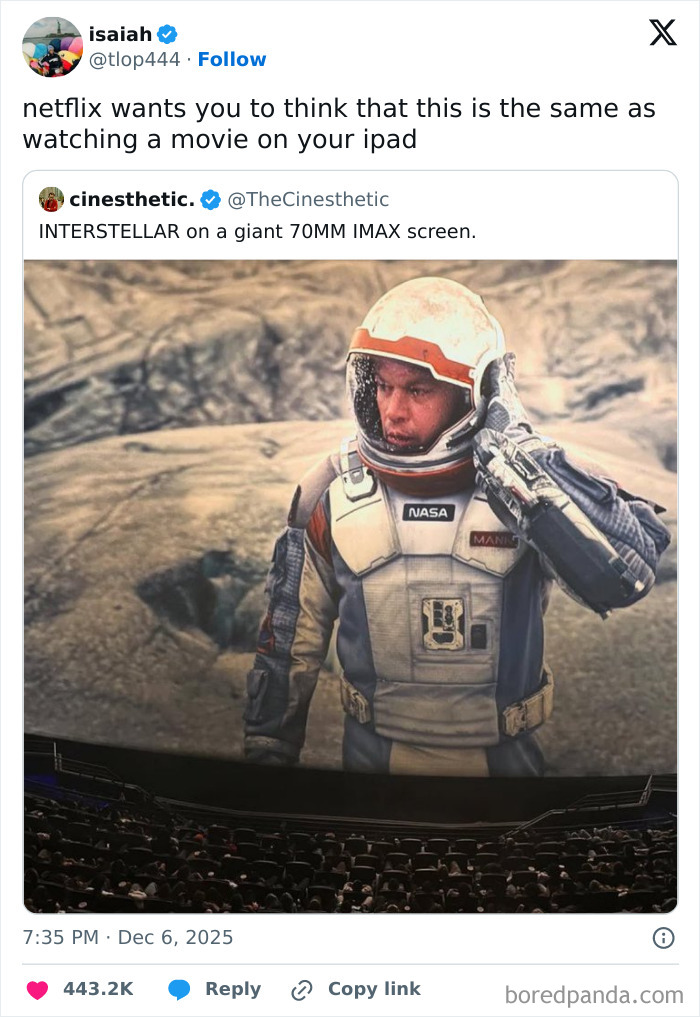
Which means the theatrical experience is increasingly becoming the domain of the truly committed, the people who will drive twenty minutes, pay $14 for a drink, and sit through fifteen minutes of trailers without checking their phone, because they believe, deeply and sincerely, that some films simply must be seen on a large screen. These are the people in this list. Respect them. They are holding the line.
Every cinephile eventually arrives at the Citizen Kane conversation, usually uninvited and at an inconvenient moment. Roger Ebert, the most influential film critic in American history, considered Orson Welles's 1941 masterpiece the ultimate movie, the greatest film ever made, a monumental achievement that fundamentally changed the grammar of filmmaking.
He wrote that it contains "all the answers" and that its strangeness and magnificent beauty reward endless revisiting. And he wasn't wrong. Citizen Kane did reshape cinema in ways that still echo today. The only problem is that every person who has watched it for the first time after hearing all of this has sat back at the end and thought: "That was great, but I also just watched a two-hour black and white film about a sled."
There is actual science behind why people lose entire weeks of their lives to a single film, and it is both fascinating and slightly alarming. When you watch a movie, your brain mimics real emotional responses as though the events are actually happening to you, producing dopamine surges that are, neurologically speaking, not entirely unlike being high.
This is before we even get to parasocial relationships, in which your brain quietly develops a one-sided bond with a fictional character that provides a real sense of belonging and community. Your brain, in other words, cannot fully tell the difference between a real friend and a character you've watched for two hours. Which explains a lot about the people on this list...
That's Erling Haaland the Norwegian football (soccer) player. I don't think he would be an American teenage bully.
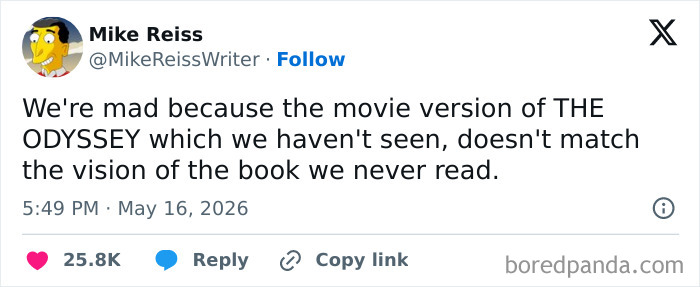
The most anticipated film event in recent cinema history is Christopher Nolan's adaptation of The Odyssey, and naturally, before a single frame has been publicly screened, it is already causing arguments. The casting has ruffled a very specific set of feathers: Elliot Page and Travis Scott have been cast in undisclosed and musical roles, respectively.
This has sent a certain corner of the internet into a spiral of concern that has very little to do with Homer and a great deal to do with everything else. Nobody has seen it, and yet, the arguments are already exhausting. Christopher Nolan, a man who made a three-hour film about an explosive device and had people applauding, is probably fine.
The gap between what critics think and what audiences actually feel is one of cinema's most entertaining features. Warcraft sits at 29% with critics and 76% with audiences, a gap so wide you could drive a fantasy army through it. Venom scored 30% critically and 80% with the public, largely because Tom Hardy committed to that film with an unhinged energy that reviewers found messy and audiences found epic.
Man on Fire landed at 39% critically and 89% with audiences, because Denzel Washington and Dakota Fanning produced a kind of emotional chemistry that apparently bypassed the critical nervous system entirely. And The Super Mario Bros. Movie sat at a perfectly respectable 59% with critics while audiences handed it over a billion dollars at the box office, which is its own kind of review.
The opposite phenomenon is equally illuminating. Uncut Gems, Adam Sandler at his most terrifying, was celebrated by critics as a masterpiece and quietly despised by a large portion of audiences who found ninety minutes of escalating anxiety without a single moment of relief to be less of a cinematic experience and more of a medical event.
The Witch received near-universal critical praise for its slow, creeping dread and was met with widespread audience frustration from horror fans who showed up expecting jump scares and left having watched a goat. And the Coen Brothers' Hail, Caesar! was praised as a sophisticated love letter to Hollywood's golden age and resented by everyone who was misled by the trailer into expecting a fun comedy.

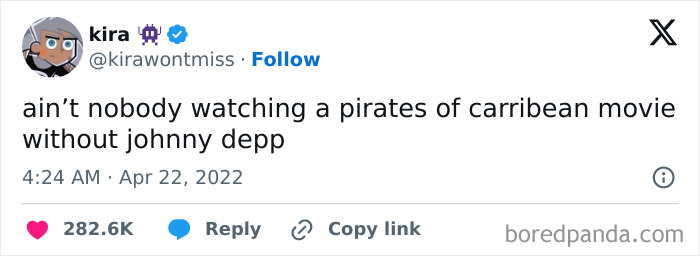
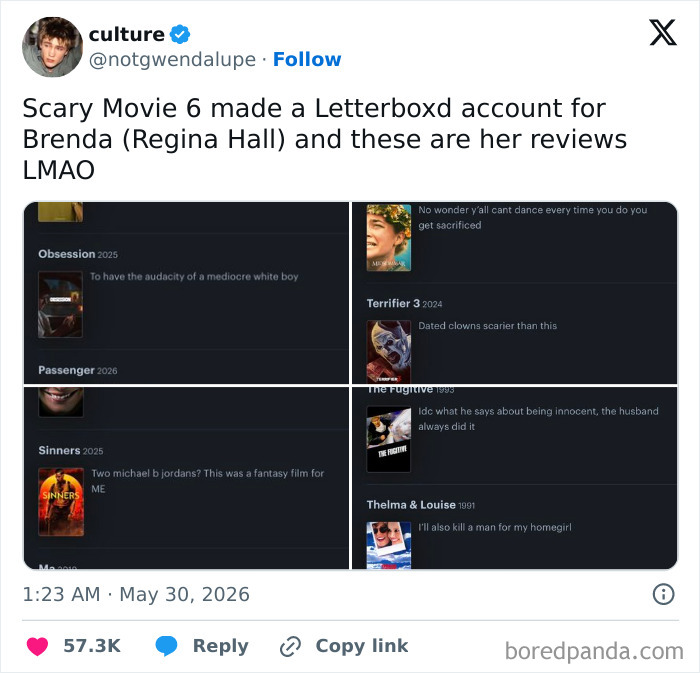
Film does something to people that is hard to explain to anyone who hasn't felt it. The specific, irrational, full-body investment in a story that isn't real, told by people you've never met, about things that never happened. It produces opinions so strong they survive decades. Relationships forged entirely around a shared favourite director. Tweets written at 1am about a film from 1941 that somehow still feels urgent.
The cinephiles in this list are not normal, and they are wonderful, and they are keeping something important alive: the belief that how a story is told matters as much as the story itself, that the right film at the right moment can genuinely change a person, and that bad takes must be publicly corrected immediately regardless of the hour. Cinema, as they would say. Just cinema.