Get Premium
Dark mode theme is available exclusively for premium users. Learn more about the benefits of subscribing.
No fees, cancel anytime.

 Dark Mode Ad-Free Browsing Unlimited Content
 Ad-Free Browsing Unlimited Content Dark Mode
Join 1.2 million Panda readers who get the best art, memes, and fun stories every week!
The world of business is far more complex than it seems. Behind the products and services people use every day lie countless industries with intricate structures and markets that are constantly changing and evolving. Some sectors depend on advanced technology or highly specialized knowledge, making them difficult for us common mortals to understand.
However, there are also businesses operating far from the public eye. Some remain unknown because they work behind the scenes, while others stay hidden due to their informal or clandestine nature. From invisible labor to underground markets, these industries quietly influence economies and reveal a side of commerce that most people rarely see.
More info: Reddit
This post may include affiliate links.

 Semiconductors, 90 percent of the people in a fab know nothing about it either.
Every year they used to haul us in to a conference room to a watch a how semiconductors work video and nobody ever left more knowledgeable lol.
A wafer becoming a computer chip is many many steps and billions in infrastructure and logistics.
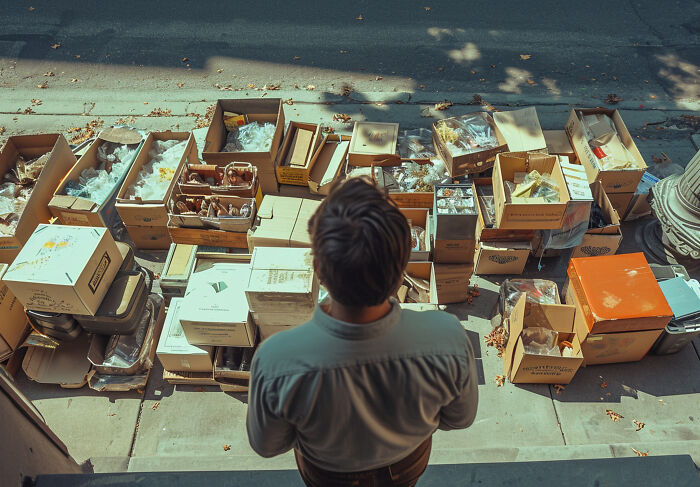 They call it Salvage.
When a truck tips over on the highway, there is a secondary market that sells the salvageable inventory.
Huge hidden market.

In my senior year of college, we (an athletic team) were following a Hershey's tractor-trailer that tipped over and the trailer split open, spilling thousands of candy bars over the field it was in. After we'd pulled the driver to safety, he told us to take all the bars we could carry. We filled a van and a station wagon. It was almost midnight, New Year's Eve, and a salvage company arrived before the police. Never understood how they knew... This was well before cellphones.
 Tradeshows. I knew nothing about the industry when I started 16 years ago other than knowing a couple big ones like SEMA and CES but there is a tradeshow for EVERYTHING. Companies like ours that design, build, and install these are one of the few types of companies that touch all of corners of the market. Every city you've been to has a convention center of some type.
Netizens were curious and eager to know about the most lucrative industries that few people know about. The original conversation received more than 5k upvotes in just a few days and sparked a flood of comments, proving that hidden markets and lesser-known businesses strongly interest people.
First of all, secret work, or work known to only a few, is not a new thing. Throughout history, many activities have remained unnoticed because they happen away from public attention. From unpaid responsibilities to underground economies, these unseen forms of work have always played a role in shaping societies and markets.
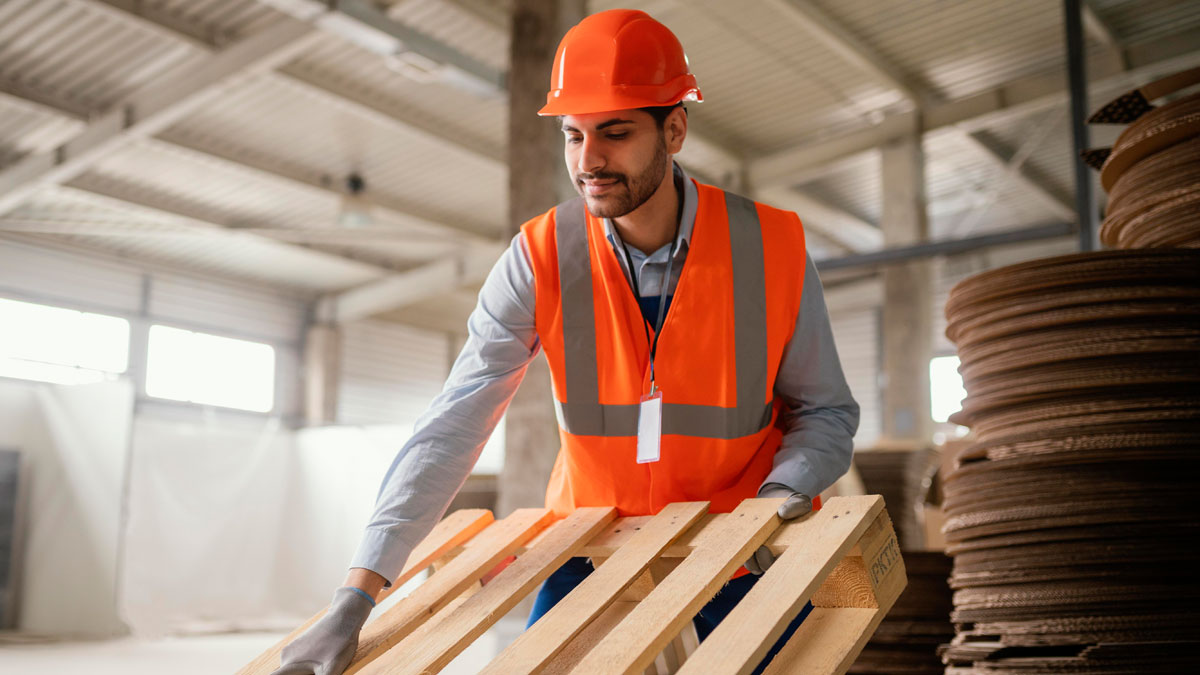
 Pallet logistics. There's a company that owns hundreds of millions of blue wooden pallets and basically rents them out to the entire supply chain. Almost everything you buy sat on one at some point. Multi-billion dollar business and nobody's ever heard of it.

Generally the cost of the pallet is included in the cost of the shipping. Alternative material pallets may be reused if the shipping company bothers to collect them or they get reused when shipping empties back.
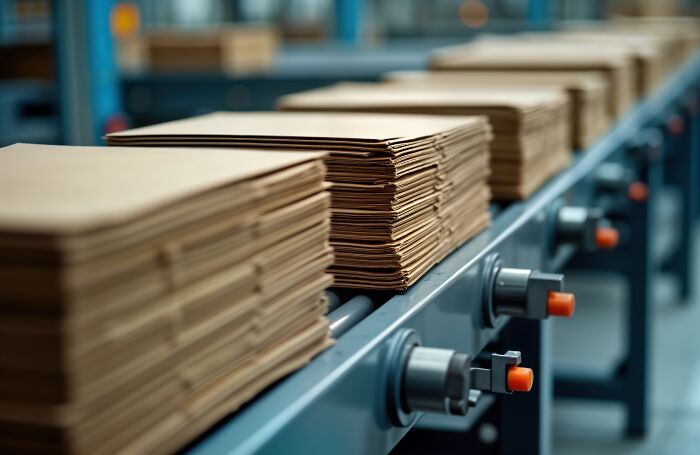 The corrugated box industry. There are around 3000 box factories in the US and everything you buy has been in one.
My grandfather was an engineer in a box factory for most of his life. As a kid I was disappointed to find out that he wasn't the kind of engineer that drove a train. 😂
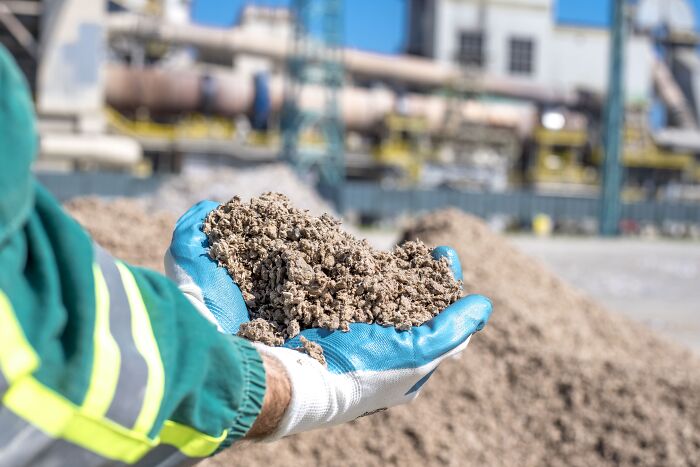 Sand.
Sand.
It's essential for making concrete and cement. And you'd think we have deserts full of it, but sand that's suitable for construction is in high demand and relatively scarce. Saudi Arabia imports sand. Indonesia put a ban on sand exports for a few years, because 26 islands had vanished because of it. There are violent sand mafias, illegally mining sand and smuggling it.

The “crazy market for sand” is one of factors that’s driving the demise of the citrus industry in Florida, since citrus groves need to be planted in sandy soil. It’s mentioned in an interesting long-read article published by Mother Jones, “Who Kılled the Florida Orange?” [April 26, 2026] (I don’t know how to put in links without them. being hidden by BP)
Some of the world’s most profitable industries are also the ones people rarely think about. Waste management, for example, has become a trillion-dollar global market, while private security has grown into a powerful sector. These industries often remain unnoticed simply because they operate in the background, solving problems most people never see.
Other hidden markets exist in the digital and industrial worlds. Data brokers quietly collect and sell a crazy amount of information, creating a market worth hundreds of billions of dollars. Meanwhile, industrial recycling has become a crucial part of global supply chains, turning discarded materials into valuable resources.
 The company that makes zippers...seriously, they make like 95% of all the zippers in the world!
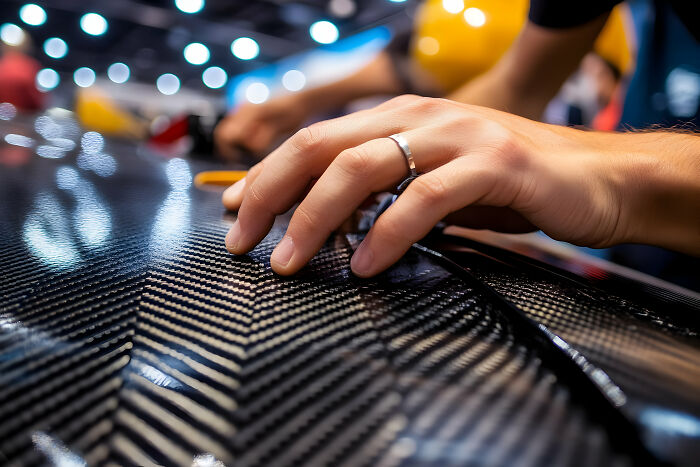 Composite manufacturing.
Carbon Fiber is everywhere these days. So are composites in one form or another.
 Making those tiny metal balls that go into the tip of ballpoint pens. Up until 2017, the technology required to make those things was so precise that Germany, Switzerland, and Japan had a corner on the market.

Although, not every hidden industry is a bright one. A similar pattern is evident in what experts call the shadow economy. In this case, activities move away from official systems, especially when businesses feel that formal structures are too restrictive, costly, or simply too difficult to navigate.
The shadow economy represents a wide range of economic activities outside official regulations, including undeclared work and informal businesses. Research shows that factors such as excessive bureaucracy, weak institutions, high taxes, and low trust in authorities can contribute to its growth. Some forms of shadow economy also reveal deeper economic and social secrets within formal systems.
 Eyewear is mostly owned by Luxottica. Doesn't really matter what "brand" of frames you buy, be it Ray-Ban, Oakley, etc, it's all going back to the same Italian conglomerate.
 Commercial refrigeration keeps food supply chains operating worldwide, though most people never think about the industry behind supermarkets.
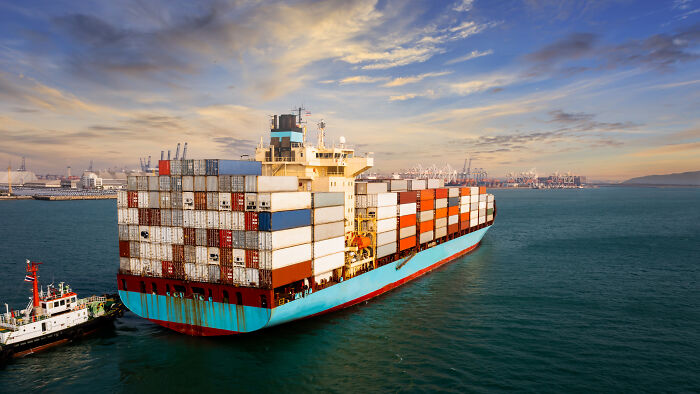 Shipping.
Up to 90% of the world’s goods move at least partially by ship, and most people don’t know anything about the industry. Your TV, lumber, concrete, food, car, gasoline, clothing, medical supplies, etc all very likely spent some time on a ship before it got to you, and you have it because of a relatively small group of people brought it to you!

I’m one of those small groups of people and I tell ya, it can be complicated AF.
However, hidden industries are not always about secrecy or illegality. Sometimes, they exist because reality is more complicated than it seems. Saudi Arabia, despite being covered by deserts, imports certain types of sand because desert sand grains are too smooth and rounded for high-quality concrete production. Construction requires sand with different properties.
 Basically, any support structure/service for everyday products. Peel-off plastic film for electronics, packing peanuts, zip ties, rubber coating of wires/cables etc. The amount of money in "boring" businesses is massive.
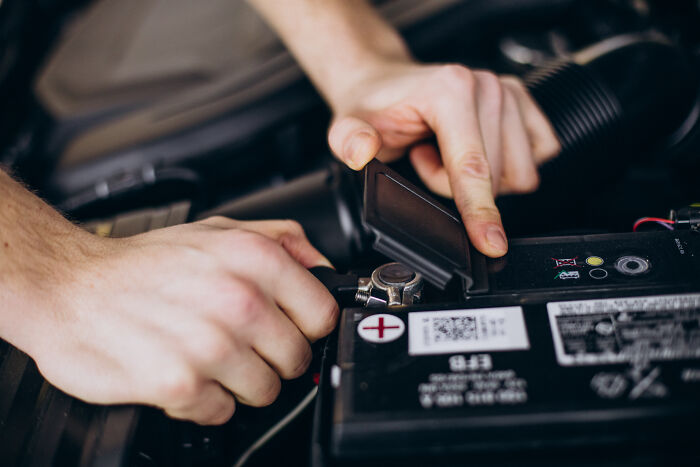 The lead acid battery industry. A lead acid battery is the one that goes into a non-electric car and is used to start the engine. They’re in millions of vehicles, forklifts, cell phone towers when there’s a quick power disruption, and even submarines.
The industry is heavily reliant on lead. So the old battery you exchange when you buy a new one is incredibly valuable. 99% of lead is recycled. If the price of lead goes up, those companies are very much negatively affected, even to the point of bankruptcy.
People who work at lead acid battery companies have to take a yearly blood test to make sure they didn’t get too much contact with lead. There’s a blood testing van that pulls up where everyone gets their blood tested.
The factories often have bad reputations for environmental issues. And the factories themselves aren’t the safest because of all the lead, hence the blood testing. They also smell pretty bad. .
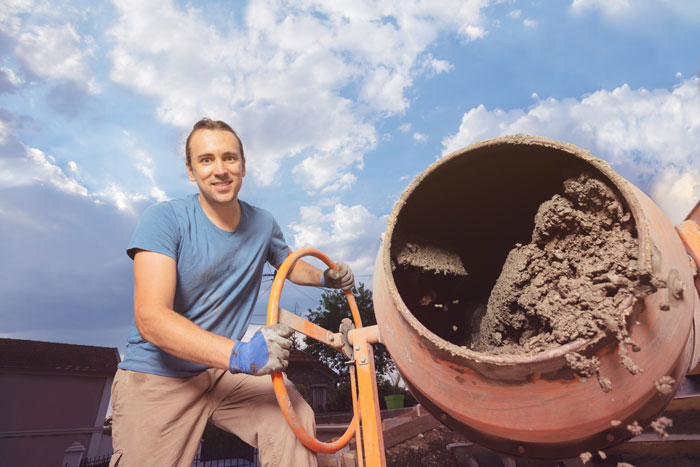 Concrete. Ya, concrete and the supporting industries. The building block of modern society. Houses, schools, infrastructure, concrete is everywhere yet most people do not give it a second thought. Quarries, cement manufacturing, concrete plants, concrete trucks not counting all of the placement people and equipment.
I live in a metro area of about 1 million. On any given day there is about 10,000+ cubic yards placed per DAY here. Expand that worldwide and the # is huge.

Near Peth Western Australia they bought back a whole suburb that was built around a cement factory due to the pollution it caused. They streets and driveways are still there.
Another surprising example is ship recycling. When massive vessels reach the end of their lives, they become part of a global industry focused on recovering steel and valuable materials. The sector generates billions, but much of it operates in countries where lower costs create ongoing debates about worker safety and environmental impacts.
 One of my customers is an international sprinkle dealer. You know the coloured sprinkles you get on cakes and iced creams etc. He goes to F*****G SPRINKLE CONVENTIONS! I turned up at his house to fit a new toilet and he gave me a rice crispy cake that had his new sprinkles on.

International sprinkle dealer is not an occupation I'd want to explain to the authorities
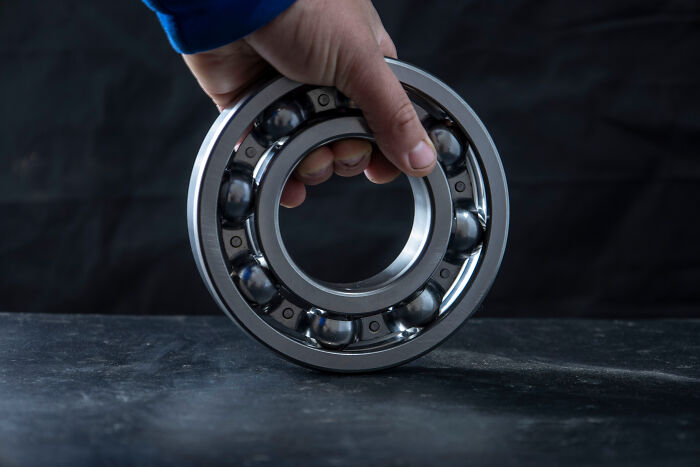 Bearings. Literally just about anything that rotates or has a rotating part requires a bearing. Wheels, motors, pumps, fans, engines, turbines, conveyors, gearboxes, robots and then all your big industrial equipment that makes everything you consume. It’s a massive business that makes something no one physically sees.

I found them very confusing until I went to Alaska and got my bearings straight.
 Reinsurance, it's basically insurance for insurance companies and it quietly underwrites the entire global financial system.
Understanding these hidden worlds reveals that the global economy is shaped by far more than the industries we see every day. Behind every product, service, and market are invisible workers, unexpected supply chains, and complex systems that quietly influence modern life.
Did you know any of these industries? Did the community miss any million-dollar industry? Don’t hesitate to add more to the list in the comments!
 Incontinence Care Products Market.The global incontinence care products market size stood at US$ 14.04 billion in 2024, grew to US$ 15.02 billion in 2025, and is forecast to reach US$ 27.25 billion by 2034.
Stole the details from the web but dang adult diapers are the real deal.
Umm… items pictured are not incontinence products, Our Dear AI-Overlord.
 Payment Processing. Companies take slivers of every card or online payment transactions to facilitate the delivery of money between your bank account and the store you're buying from. They charge a tiny percentage of the transaction total and usually a flat fee of a couple cents.
Multiply that by how many times a card is swiped in a minute.
VISA has an annual contest to guess when the Christmas peak will hit. Hundreds of thousands of transactions a second.
 Banking has so many tiers of complexity.
Asset management. Finding things to invest in that provide stable returns over the long term, to then offer to bonds and pension funds. Private equity has been competing with asset management in recent years trying to extract value from formerly stable things like housing, real estate, railways, etc but in the past asset managers invested in these companies with the express purpose of keeping them stable and viable long term -- not extracted for short term profit.
Commercial banking. Retail banking.
Foreign exchange.
Payment systems. Settlement.
Insurance. Reinsurance. Title insurance.
The mortgage business is insanely complex behind the scenes. its not as simple as 'government issues $ at 2%, banks mark it up to 3-4% and make margin'. there's complexities of risk, terms, diversification, etc
"Banks" are really a set of 50-100 different competing internal businesses.
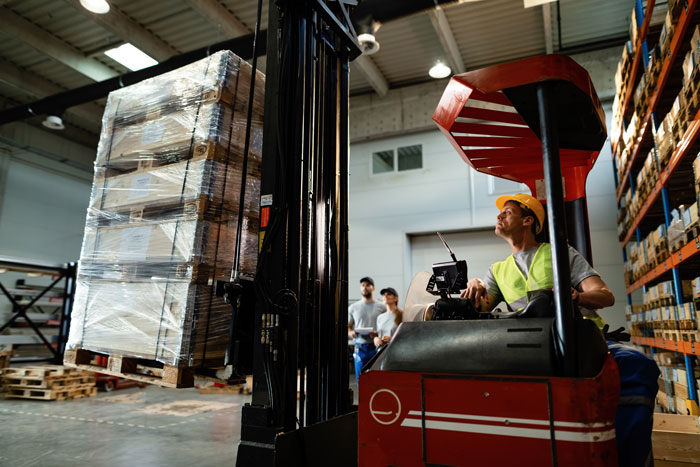 The material handling industry - or in other words the forklift industry.
Over 90% of EVERYTHING in your home, supermarkets, shops, schools, hospitals etc etc etc gets handled at least once (and more often than not several times) by a forklift, before it reaches its destination.
Forklifts are so much fun to drive especially when the boss isn't around!
 Cut Potatoes.
Back in the day when I was managing inventories and supplies for a decent sized company I learned how fragile (at the time) that the potato’s industry was.
Every year we would have to plan out our projected usage of a specific cut or we would be sol for that year. If not enough demand existed for a cut it would be left out of the manufacturing for that year. Those cuts that were popular of course took priority.
This sounds like a no duh moment but to what degree was crazy. We had to align with common cuts from large buyers like fast food places and restaurant chains for a chance to get a desirable product.
That’s why during Covid you didn’t get potato hash brown cakes for about a year. They literally didn’t get produced in enough volume so that places like McDonalds got theirs and basically no one else.
The basic truth was there was only so much to go around and only so many processing centers that could produce it. The second point really is the one that was shaky.
It goes further back into the supply chain to, so farmers will get orders for a certain variety of potatoes to meet those cut orders, So they grow the correct amount and beyond that the seed growers need to know how much to plant so they send the potato growers the correct amount of seed potatoes. They seed growers need to tell the amount on gen 0 they need to the labs. Its like years of planning that goes into potato products.
 Ad space, there are whole markets where you can buy ad space and and outbid each other. It is insane
How much money goes around in this market.
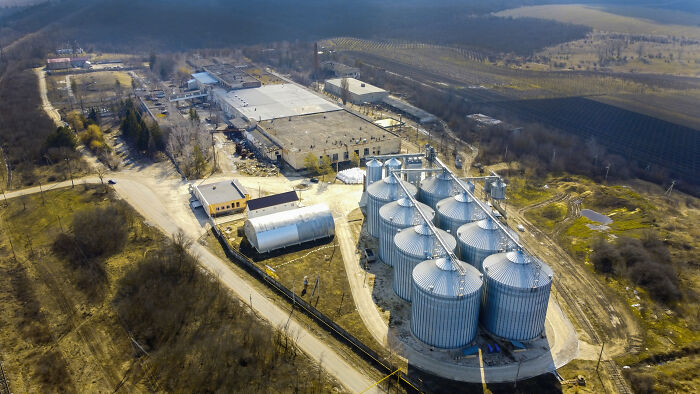 Commodities firms. Companies like Cargill and Louis Dreyfus (Yes, as in Julia), Glencore, Trafigura, Bunge etc are far from household names, but move billions (trillions of dollars across the industry as a whole) in resources like grain, sugar, metals, energy etc, both on paper as a financial commodity and the physical products too.
These firms underpin the global economy and are responsible for a whole range of environmental and human rights catastrophes but the average person would struggle to recognise any of the names in the industry.
(The one with some recognition in the US would likely be Koch Industries due to the founders' extensive political involvement but even then a certain degree of political awareness is required).
 Logistics. Everything you wear, eat, and own was moved on a ship, train, plane, or truck. Likely multiple.
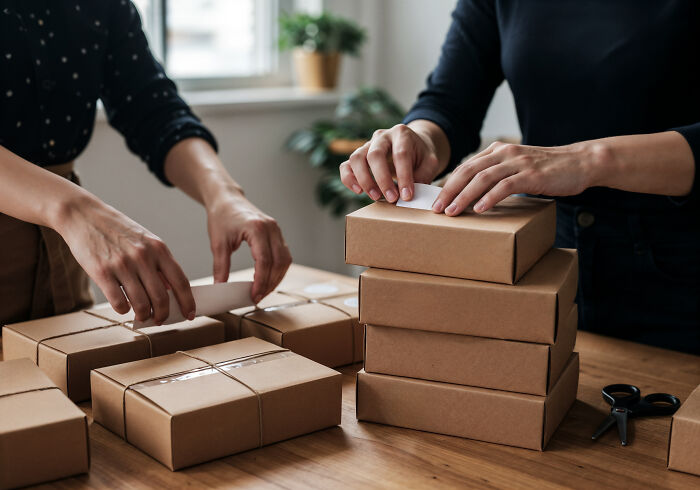 Packaging - absolutely everything is packed in various forms at some stage. And it is mostly repeating business.
 Pension fees.
When you pay into your pension, some of that money goes to me, or people like me.
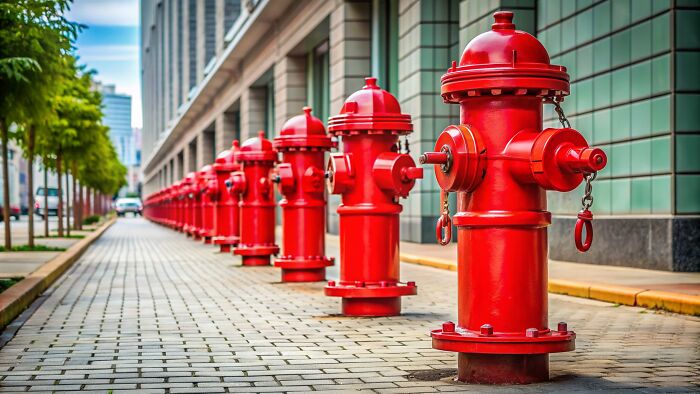 Waterworks. I specifically worked for a fire hydrant manufacturer. Everyone that I had ever met said, " s**t I guess someone has to sell them".
Supplied with safe drinking water, but the business behind them receives very little attention.
There are a lot more middlemen businesses than you would ever expect. I audited a company once who's entire job was to watch the oil market and time contracts between the oil producers and oil buyers to either get a high or low price depending on who's paying them. They took some absurdly low sounding percentage of sale, like 2%, but the billions of dollars that flowed through them every year meant this office of 4 dudes was racking in money.
I was thinking paper-clips or rubber bands. I’ve never seen an ad for either, yet they are in every store in the world.
B2B sales.
Essentially middle men suppliers of things that final assemblers and raw material manufacturers rely on to keep everything flowing.
Import export is kinda the same thing.. but you are handling the physical logistics of getting something from point a to b.
Great, so these industries are all around us. Now, what are some of the positions they offer, what is the pay, how do you get into them, and what educational degrees are required to work for them? If you can't address those questions, they why even put this up?

I met someone who owned several factories, all he did was take the raw cotton, wool, etc, and produce weaved rolls that were then sold to companies that made clothing, carpets, etc. He just had tons of materials in different colors or blank to be colored in later, all different grades, etc, and companies would call him and he would have his factories in Thailand just ship the stuff to China, Vietnam, Bangladesh or ever the USA. He's super rich (has a $70million rare books and documents collection for example), in a niche area people dont think about in the supply chain for products.
Great, so these industries are all around us. Now, what are some of the positions they offer, what is the pay, how do you get into them, and what educational degrees are required to work for them? If you can't address those questions, they why even put this up?
I met someone who owned several factories, all he did was take the raw cotton, wool, etc, and produce weaved rolls that were then sold to companies that made clothing, carpets, etc. He just had tons of materials in different colors or blank to be colored in later, all different grades, etc, and companies would call him and he would have his factories in Thailand just ship the stuff to China, Vietnam, Bangladesh or ever the USA. He's super rich (has a $70million rare books and documents collection for example), in a niche area people dont think about in the supply chain for products.

























 No fees, cancel anytime