Get Premium
Dark mode theme is available exclusively for premium users. Learn more about the benefits of subscribing.
No fees, cancel anytime.

 Dark Mode Ad-Free Browsing Unlimited Content
 Ad-Free Browsing Unlimited Content Dark Mode
Join 1.2 million Panda readers who get the best art, memes, and fun stories every week!
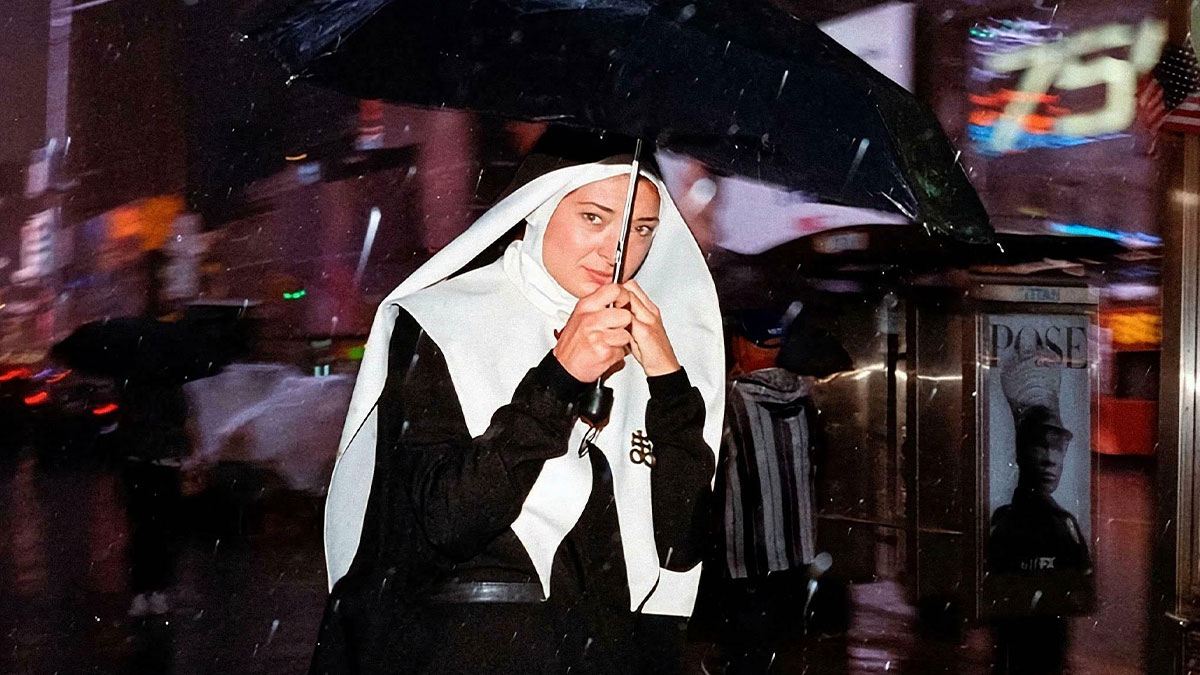


Sometimes, the spectacular moments of history aren’t found in grand events, but in the weird, eerie, or poetic interactions of everyday people at a bus stop or a storefront.
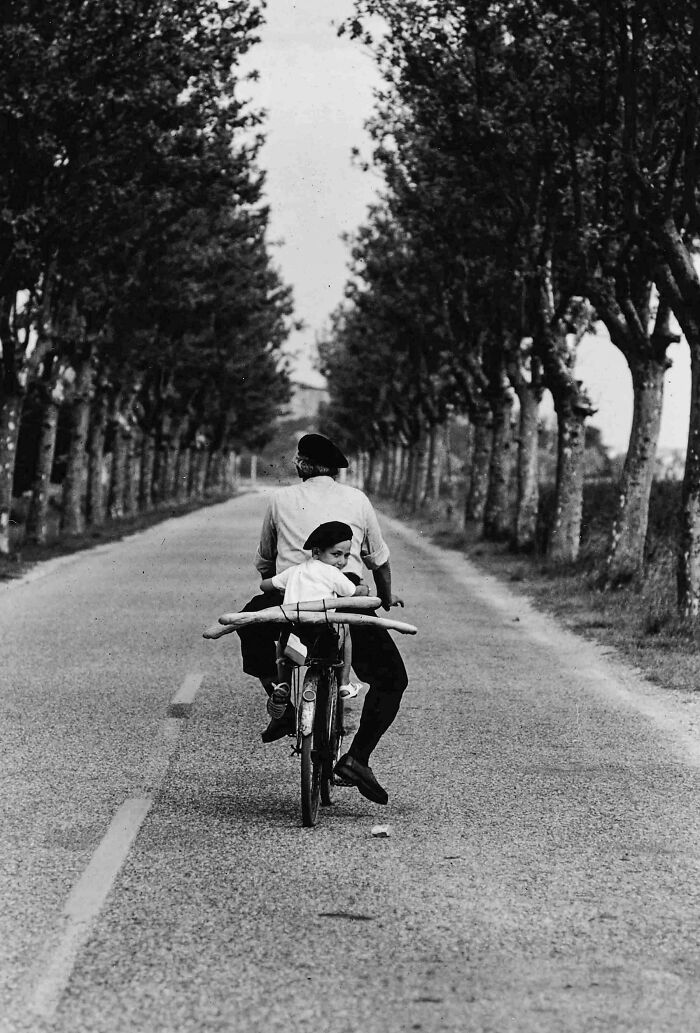
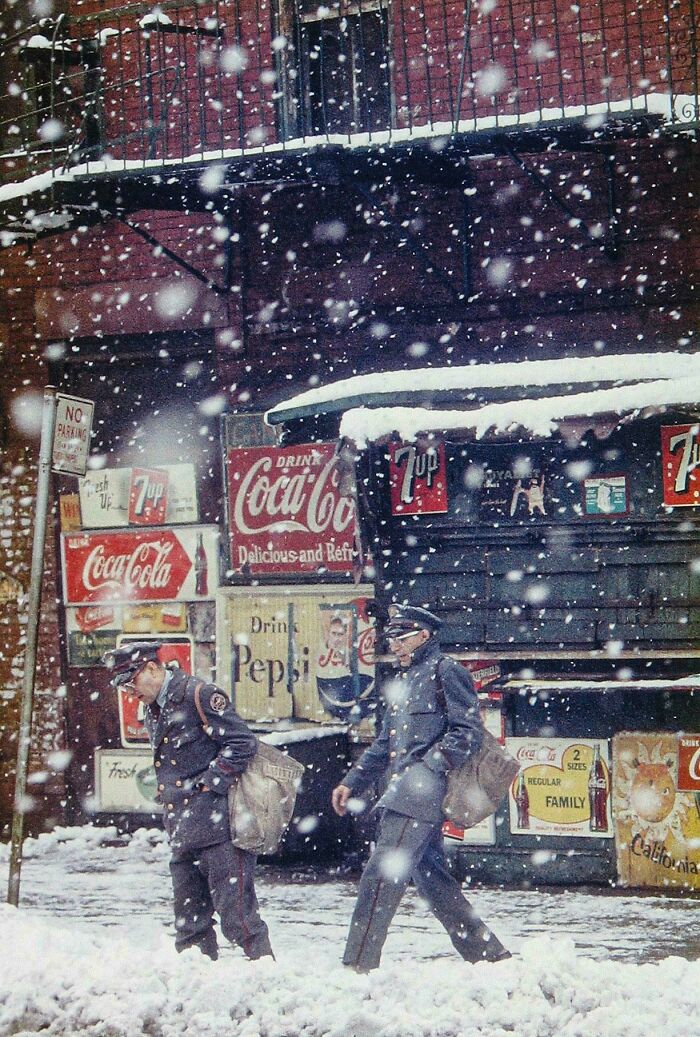
Such a moment can be found in a father and his child pedaling down a French country road in the 1950s with two fresh baguettes strapped to the bike rack, or in two mail carriers trudging through a blinding blizzard just to deliver the morning post.
All of these incredible visual stories are woven together in this collection, which we’ve curated directly from the r/GreatestPhotos community.
Each photo is memorable, helping us understand both the importance and the beautiful weirdness of the past.
Get ready to scroll through a version of history that most of our school textbooks didn’t have enough space for.
This post may include affiliate links.
From the Great Ongoing Series " The Pillar "

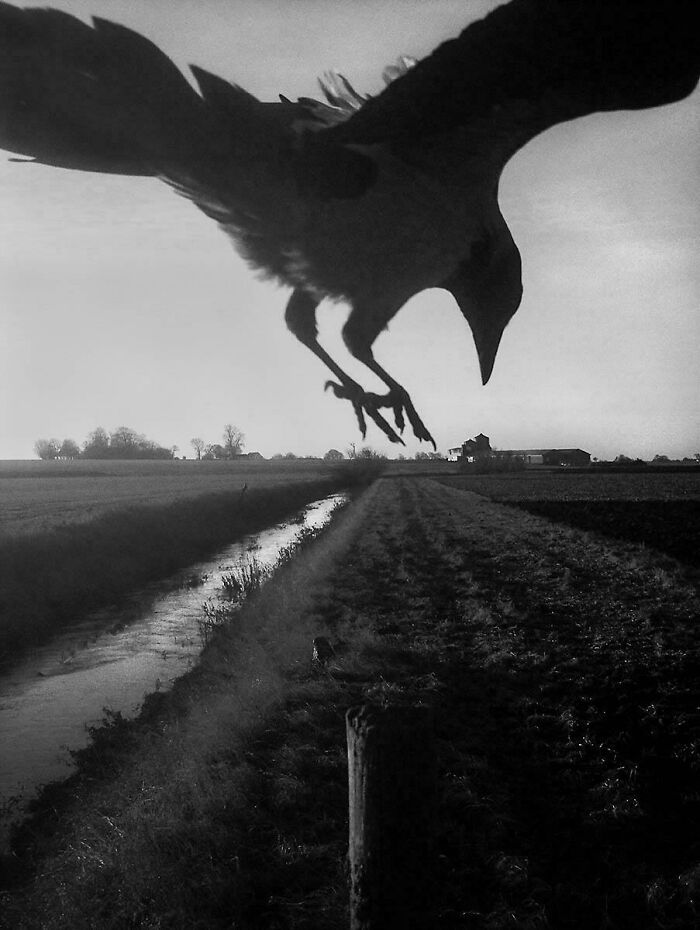
Exceptional! - (and how on Earth do you catch a photo like this? Perhaps the way most wildlife photographers do it - with a great deal of careful preparation and patient waiting.)
" You have to devote yourself totally to be successful at it "
~ Elliott Erwitt
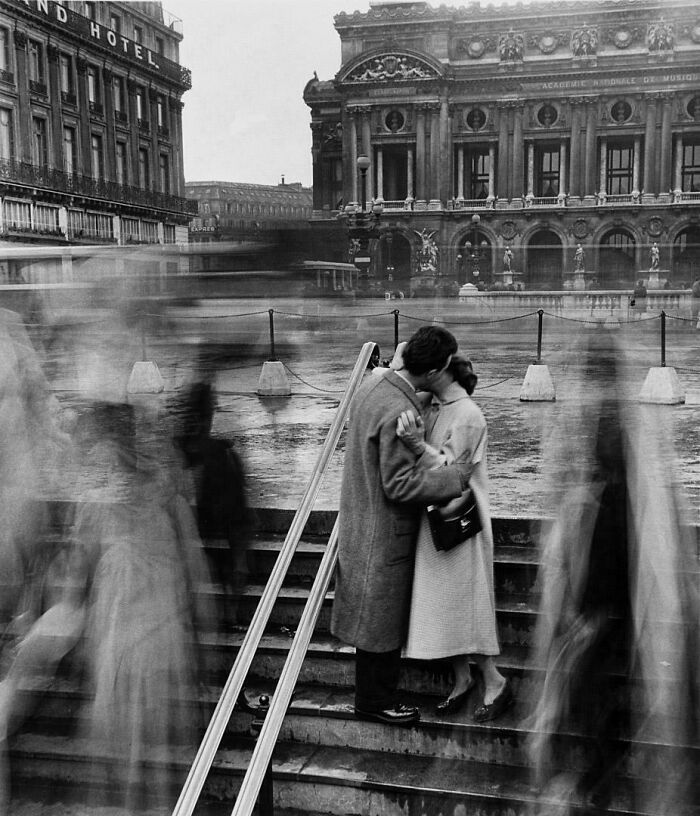
" Life is short. Break the rules. Forgive quickly. Kiss slowly. Love truly. Laugh uncontrollably and never regret anything that made you smile ! "
~ Robert Doisneau
Every image in this list is iconic in its own right, having been taken by photojournalists and by passionate amateurs who had a rare gift for freezing time.
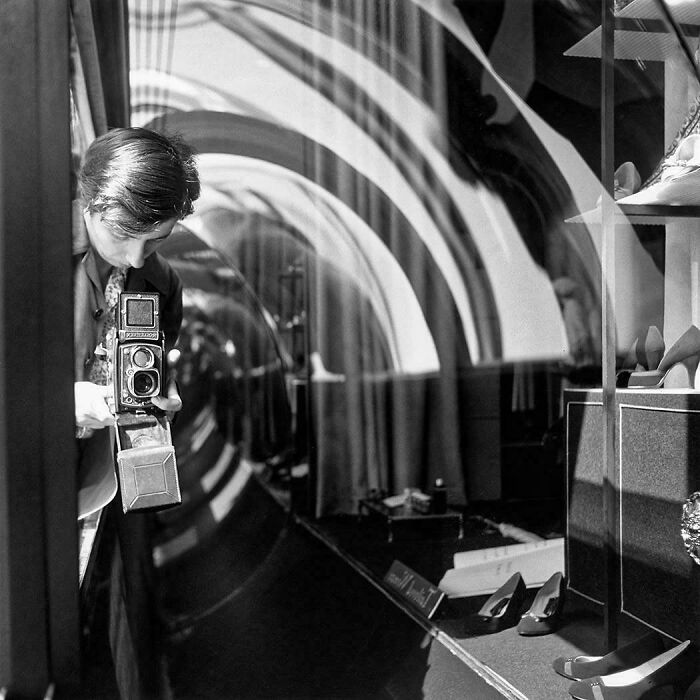
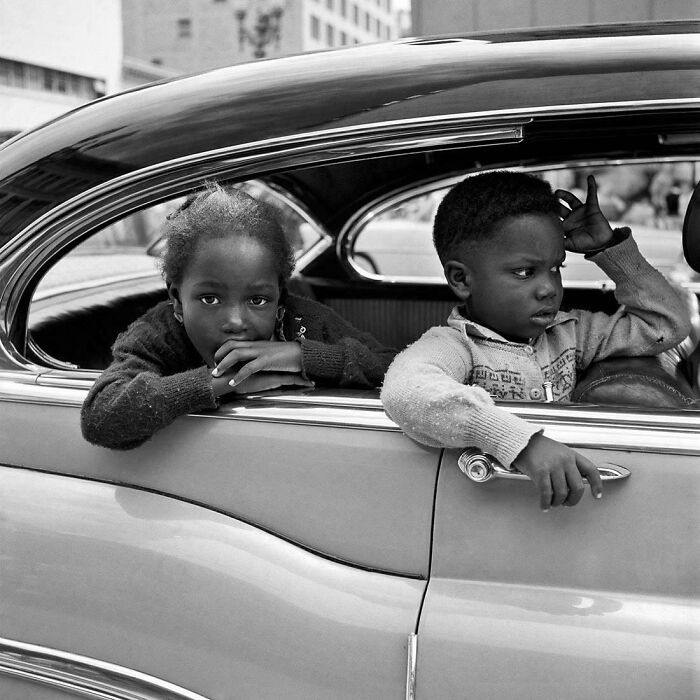
One such photographer was American street photographer Vivian Maier, a professional nanny, who left hundreds of thousands of negatives behind, only to be discovered after she passed away.
She is known for her portraits of people in cities, including the homeless, the eccentrically dressed, the children that she was looking after, and the Black people who were still under much discrimination at the time.
By looking at the photographs, the viewers can get an authentic glimpse of what mundane life was like in 1930s-1940s New York.
From the Book " All That Life Can Afford "
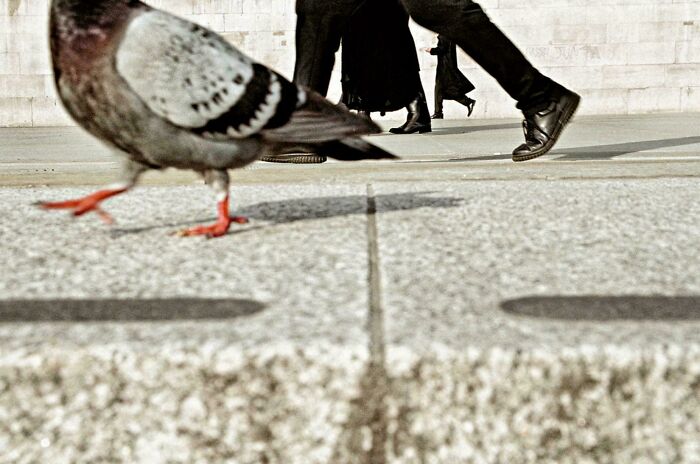
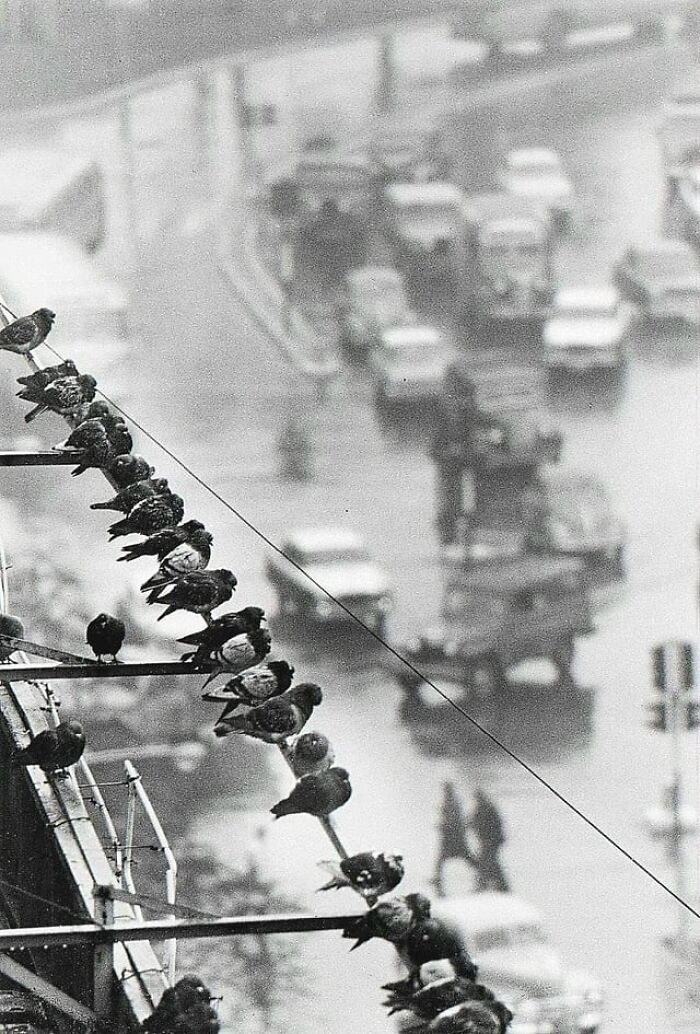
I used to enjoy the huge flocks of pigeons in Trafalgar Square, but that was when I was little and unaware of the problems that accompanied them. Part of me still objects to Red Ken deciding they had to go... (Ken Livingstone, head of the GLC as was; later elected mayor of the GLA in a blow to Mrs T who abolished the GLC specifically to stop him being in charge of London. 😂 . He mostly got it right. 🤷♂️ )
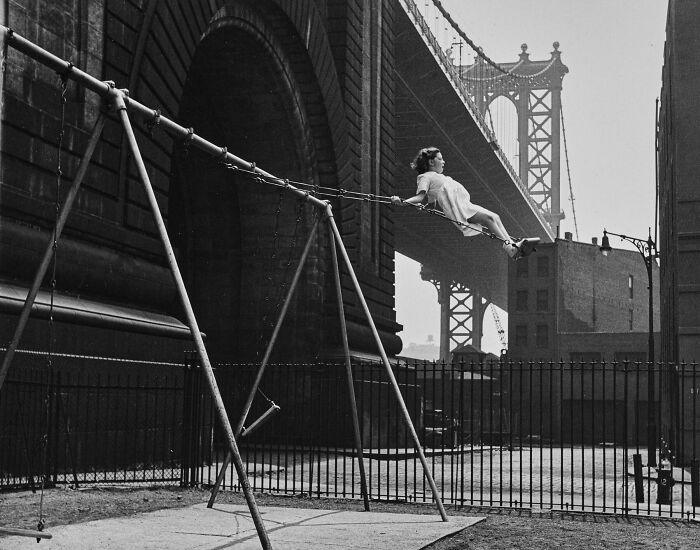
Girl on a Swing
Fab! (but how did children survive in those days? At least I can see bare earth inside the railings, so flying off the swing wouldn't *necessarily* result in catastrophe... Only, yeah, playgrounds were no safer when I was young, so.)
This focus on the everyday is exactly why these images remain deeply relatable today.
Street photography often documents the simple realities of daily life. It preserves the quiet and unscripted moments of the past. Examples include commuters waiting for a morning tram or street vendors setting up their stalls.
There are no deep metaphors to unlock or abstract concepts to decipher.
You do not need historical expertise to understand a stranger’s exhaustion on an evening commute or the shared warmth of friends hanging out together.
Yet, research proves that these photographs unintentionally became valuable historical evidence and documentation, shedding light on the economic development of that time.
These images also reflect cultural absorption, societal norms, and lifestyle changes over the years, as seen through the continuous documentation by photographers.
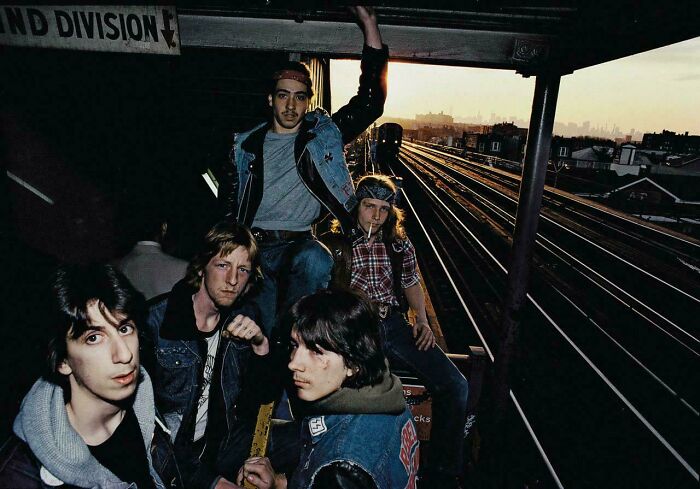
From the book " The Bikeriders "
" Only a fraction of the camera's possibilities interests me - the marvellous mixture of emotion and geometry, together in a single instant "
~ Henri Cartier-Bresson
Even when photography was gaining prominence across the globe, early technology made it practically impossible to capture life on the move.
During the mid-19th century, chemical exposures took several minutes. Because cameras were so slow, anything in motion, like horses or busy pedestrians, simply vanished from the frame. The only elements that remained were the heavy buildings and empty roads.
These early long exposures turned vibrant, bustling cities into silent ghost towns. It accidentally created a false narrative of rigid Victorian stillness, painting a picture of a past that was far quieter than it actually was.
" I have been told that some of my photographs maybe indicate that I am a painter "
~ Saul Leiter
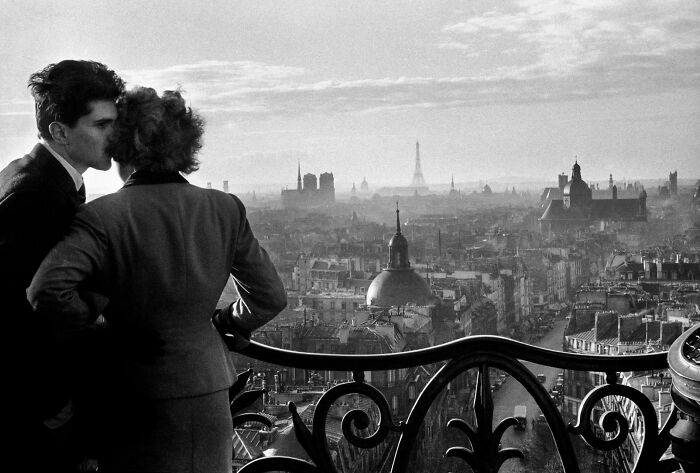
" A fine image is geometry, modulated by the heart "
~ Willy Ronis
In the early 1800s, photography was a specialized luxury. It was reserved for the wealthy elite who could afford expensive chemicals, bulky equipment, and heavy glass plates.
In the 1890s, the Kodak camera revolutionized the photographic market. Its simplicity of use made photography a tool and hobby for everyone.
With more advancements, the historical narrative shifted away from formal and staged studio portraits of high society. The new, fast, portable devices allowed everyday life to be documented in real time.
The genre of street photography truly exploded during the Industrial Revolution. As cities like Paris and London ballooned in size, observing and capturing the crowd became a trend.
" One of these days, I'm going to publish a book of all the pictures I did not take. It is going to be a huge hit "
~ René Burri
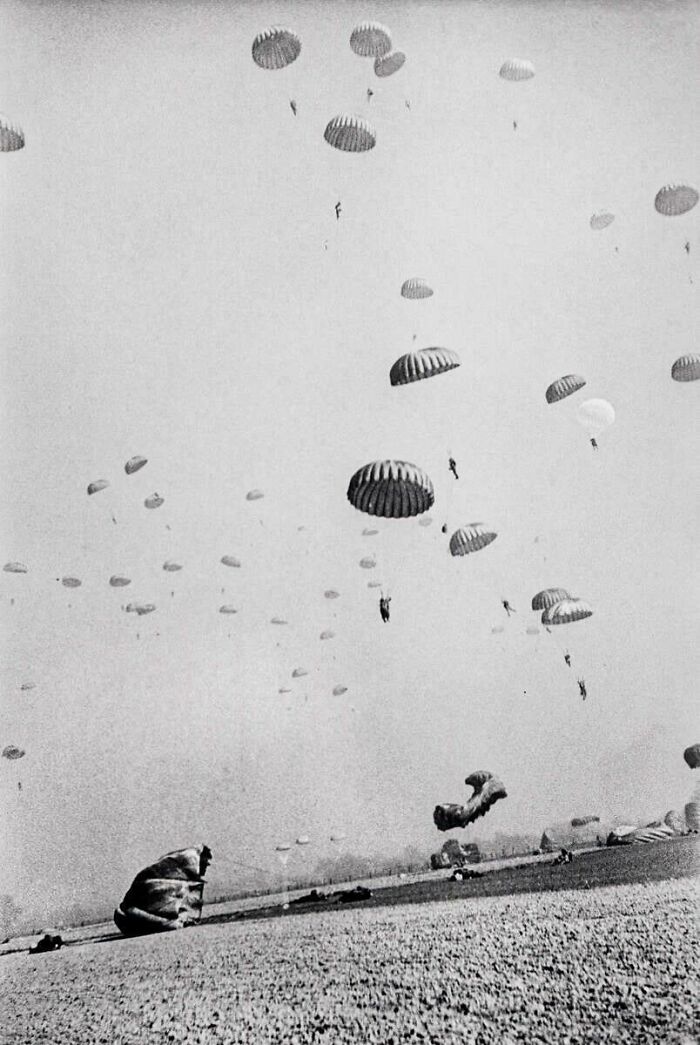
American paratroopers landing during the Allied invasion near Wesel, Germany 1945
Er, it says at the top of this list: 'Sometimes, the spectacular moments of history aren’t found in grand events'. If this - part of Operation Plunder - is not a grand event in history, what on Earth is it? I quote: 'The Battle of the Rhine was crucial for the Allied advance into Germany, and was planned by Montgomery as a three-army as$ault, including an airborne as$ault, a five-thousand-gun artillery barrage, and Anglo-American bombers. Thousands of tons of supplies were brought forward including huge amounts of bridging equipment.' Link follows.
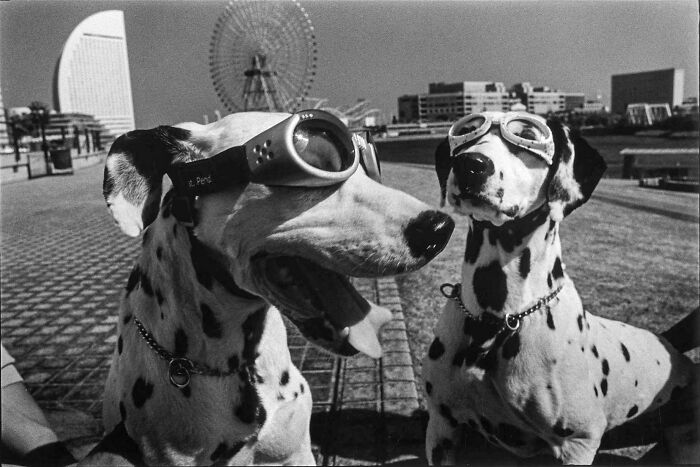
" I like dogs.... They’re sympathetic. They’re nice. They don’t ask for prints "
~ Elliott Erwitt
Pictures of daily life in the 19th and 20th century were also used to expose the harsh living conditions of marginalized communities.
As the medium evolved, photographers began to experiment with different styles. They also merged artistry with activism to create impactful visual stories.
Many photographers used their work to advocate for human rights, social justice and environmental conservation.
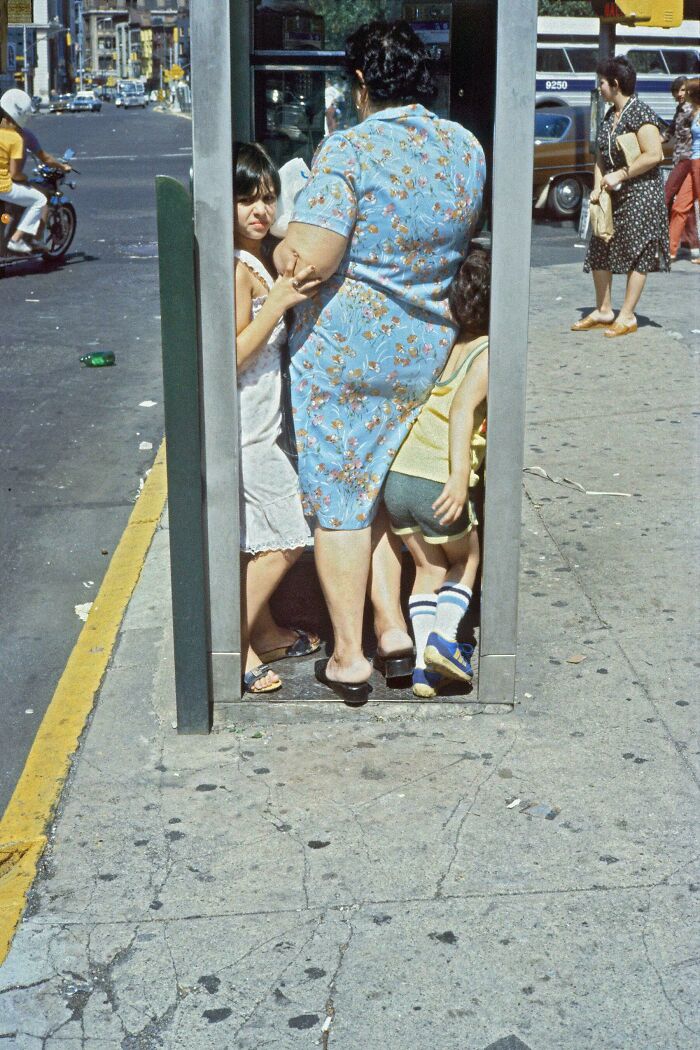
Levitt photographed in New York’s poorer neighborhoods before and during World War II. These images, which won early admirers, including Walker Evans, were in black and white. In 1959, after Levitt won a Guggenheim Fellowship, she turned to color film.
She took this photograph in 1988, the year she turned 75. It shows two children squeezing their bodies into a phone booth dominated by a heavyset woman. You assume she’s their mother.
It’s a wonderful, pomposity-puncturing picture that looks caught on the fly, but it’s also beautifully composed. The image is alive to unexpected color rhymes (yellow and dull green) and has an intriguing sense of space (compare the deep perspective to the left of the booth with the flat space that becomes obstructed on the right).
In photograph after photograph, Levitt showed that children’s physical gaucheness can be authentically expressive. In fact, the shapes their bodies make are to the decorous postures of adults as children’s halting speech is to adult fluency. They remind you, in any case, that there’s more to self-expression than having a smooth tongue.
Levitt’s photograph is a gorgeous, playful image of a family’s easy intimacy. But it’s also a claustrophobic image.
Her career overlapped with a period of heightened interest in child psychology. The pediatrician and psychoanalyst Donald Winnicott wrote about children’s play as a pathway to fullness of being. Problems can arise, he suggested, when their natural desires meet too much resistance, when they have no room to play, when their movements are constrained.
Here, the mother figure is conducting adult business. Her posture expresses her mature self-possession. She’s earned the space allotted her; she’s going to occupy it. The kids, comparatively, have no sovereignty. They must draw on all their inventiveness, squirming and twisting themselves into ungainly yet marvelously expressive postures as they squeeze into the spaces left over.
It won’t be long before they won’t fit at all
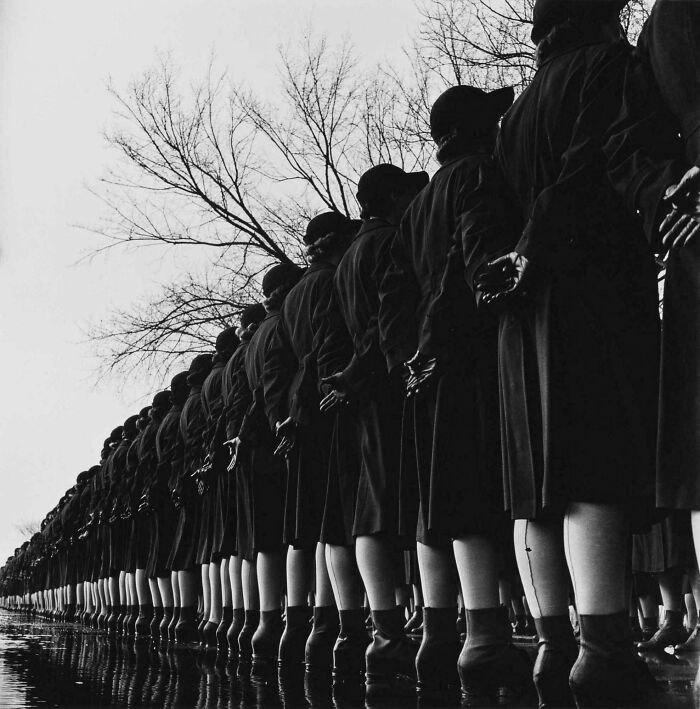
W.A.V.E.S. ( Women Accepted for Volunteer Emergency Service ) stand in formation during an inspection. More than 86,000 women served in the WAVES at its peak strength during World War II.
It was established on July 21, 1942, by the U.S. Congress and signed into law by President Franklin D. Roosevelt on July 30. This authorized the U.S. Navy to accept women into the Naval Reserve as commissioned officers and at the enlisted level, effective for the duration of the war plus six months.
The purpose of the law was to release officers and men for sea duty and replace them with women in shore establishments.
Mildred H. McAfee, on leave as president of Wellesley College, became the first director of the WAVES. She was commissioned a lieutenant commander on August 3, 1942, and later promoted to commander and then to captain
The historical importance of recording these quiet interactions is echoed by modern photographers.
Legendary street photographer Joel Meyerowitz explained that the entire magic of the genre rests on remaining deeply attuned to everyday life rather than searching for historical monuments. “One of the great joys of being on the street is staying alert to the unexpected,” he told The Guardian.
“It could be as simple as the way a truck comes past, or someone wearing a crazy outfit; anything that says, ‘Hello, I’m talking to you.’ When you receive a signal, pay attention. Paying attention is the basic act of photography,” he added.
" It's about time we started to take photography seriously and treat it as a hobby "
~ Elliott Erwitt
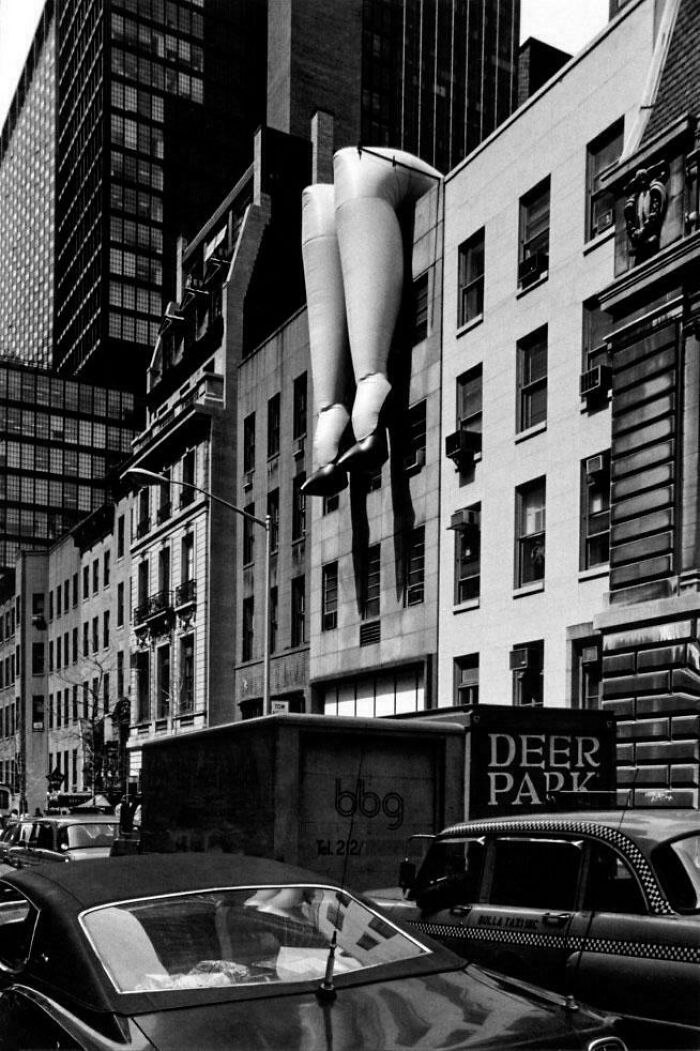
Is it just me, or does anyone else think this is weird and creepy? 😬
“Well, I suppose nothing is meant to last forever. We have to make room for other people. It’s a wheel. You get on, you have to go to the end. And then somebody has the same opportunity to go to the end and so on.”
~ Vivian Maier
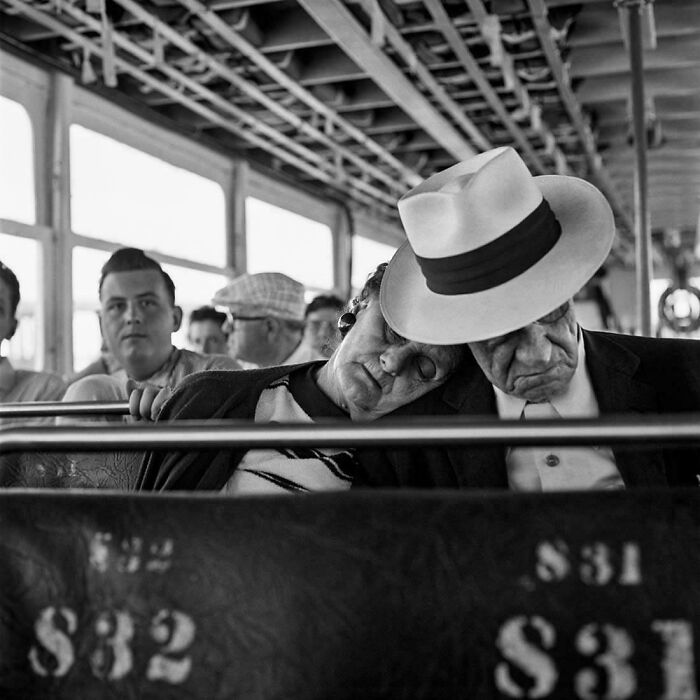
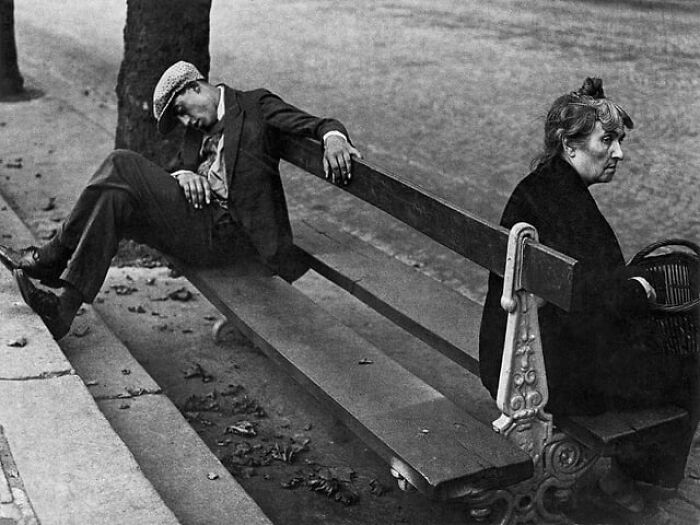
The snoozing couple had lived through two world wars and one great depression. Here's hoping they were enjoying a comfortable retirement by this time.
Similarly, contemporary street photographer Alan Schaller reflects on how we constantly search for meaning in high art, yet miss the daily theater right in front of us.
“There’s a humor in how we flock to galleries and museums to see humanity reflected back at us in interesting ways, when often such opportunities are all around us,” he said.
“Street photography requires intuition, technique, foresight and luck. A good environment also helps. There is something to be said for returning to a scene and working it repeatedly, trying to see new things, locating something special amid the seemingly mundane.”
" A good picture knows how to communicate the emotion that created it "
~ Willy Ronis
In 2013, Matt Black began photographing isolated communities in California’s Central Valley, the rural, agricultural area where he lives.
In 2015, Black expanded the project to encompass the United States and completed his first cross-country trip, a three-and-a-half-month journey visiting dozens of communities across 28 states. Since then, he has completed four additional trips, traveling over 100,000 miles and making work across 46 states.
Black combines his photographs, personal journal entries, and images of objects collected from his travels over the past seven years into one magazine: American Geography
Today, we filter, pose, and curate every second of our lives through our smartphones. Looking at raw images from our history proves that there’s a different kind of magic in the messy and unscripted chaos of the daily grind.
So the next time you step outside, look around. You might capture history in the making.
" Technique isn't important. Technique is in the blood. Events and mood are more important than good light and the happening is what is important "
~ André Kertész
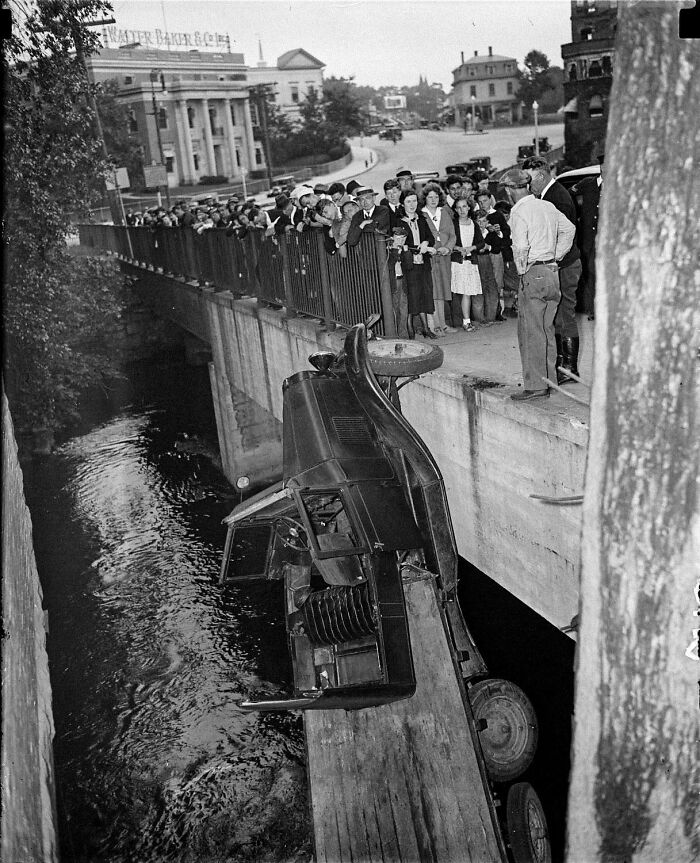
A truck is hanging by one wheel after driving off the Adams Street Bridge, which crosses the Neponset River in Lower Mills, between Dorchester and Milton.
From the Great Book " Living Room "
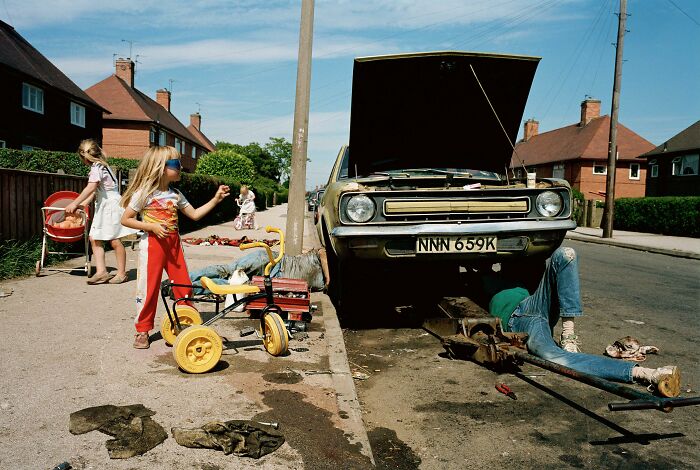
Photo's 1987; car's 1971/72 (K reg). I suspect it needed a lot of fixing. (It's a Morris of some sort - an early Marina, perhaps? 1970s British Leyland cars were not famous for their reliability.) Still quite a charming photo, if you lived during that era. Repairing cheap second hand cars was a way of life back in the old days. 😁
" Photography is always out there; it’s a way to get out of yourself "
~ Garry Winogrand
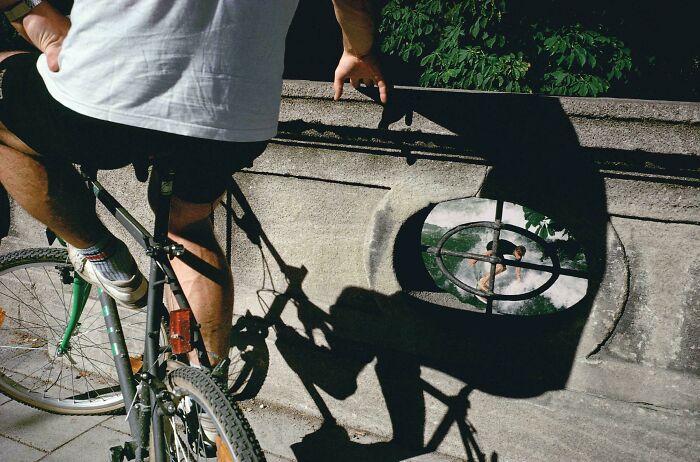
This is taken on the Eisbachbrücke in Munich (München) Through the opening in the bridge, you can see someone surfing on the Eisbach. Links follow.
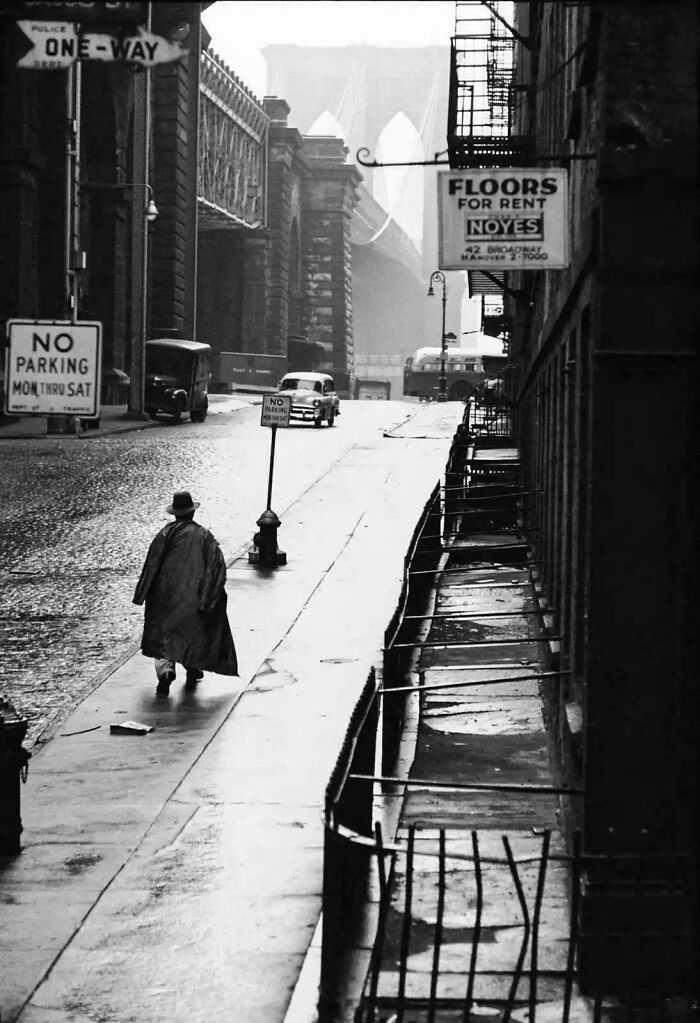
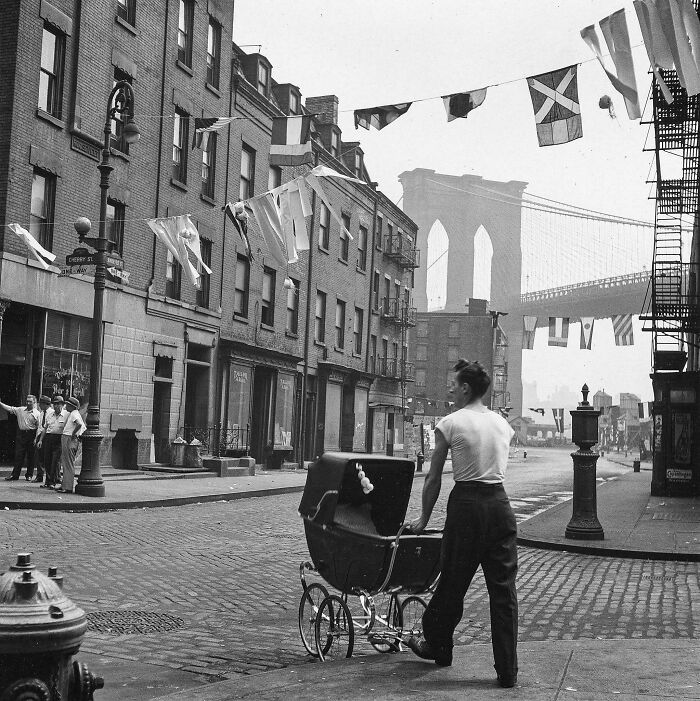
Father at the Brooklyn Bridge, Sunday Morning, Lower East Side.
I don't know why, but this photo put a smile on my face. Perhaps it's the obviously very proud dad.
" You don’t study photography, you just do it "
~ Elliott Erwitt
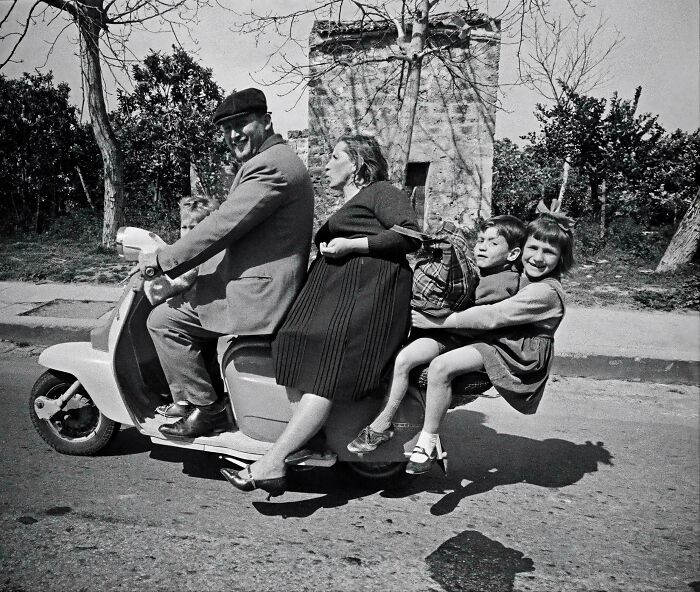
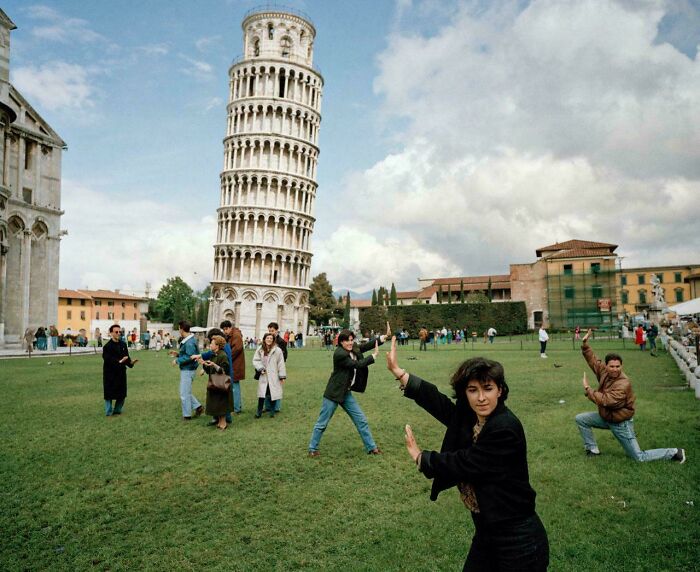
From the Book " The Italians "
Born in Belgium in 1938, Martine Franck grew up in the United States and in England. She studied art history at the University of Madrid and at the École du Louvre in Paris. After a trip to the Far East with Ariane Mnouchkine in 1963–64, Franck worked at Time-Life in Paris as an assistant to the photographers Eliot Elisofon and Gjon Mili. Her friendship with Mnouchkine also led her to follow the Théâtre du Soleil from its beginnings in 1964 until the end of her life.
After joining the Vu Photo Agency, Franck contributed to the founding of the Viva agency in 1972. She took many portraits of artists and writers, including a noteworthy series of women for Vogue. She undertook more far-reaching work for the French Ministry of Women’s Rights in 1983. That same year, she became a full member of Magnum Photos. From 1985, Franck collaborated with the International Federation of Little Brothers of the Poor, a non-governmental organization which cares for the elderly and outcasts of society. It was in 1993 that Franck first visited the island of Tory, off the northwest coast of Ireland. There, she studied the daily life of a traditional Gaelic-speaking community separated from the mainland.
She next traveled to Asia to meet Buddhist Tibetan children in India and Nepal. With the help of Marilyn Silverstone, a former member of Magnum Photos who became a Buddhist nun, she encountered the Tulkus, the young lamas who are thought to be the reincarnations of ancient great spiritual masters.
In 2002, she created, with Henri Cartier-Bresson and their daughter Mélanie, the Henri Cartier-Bresson Foundation in Paris, where she became President in 2004.
Martine Franck passed away in Paris on August 16, 2012.
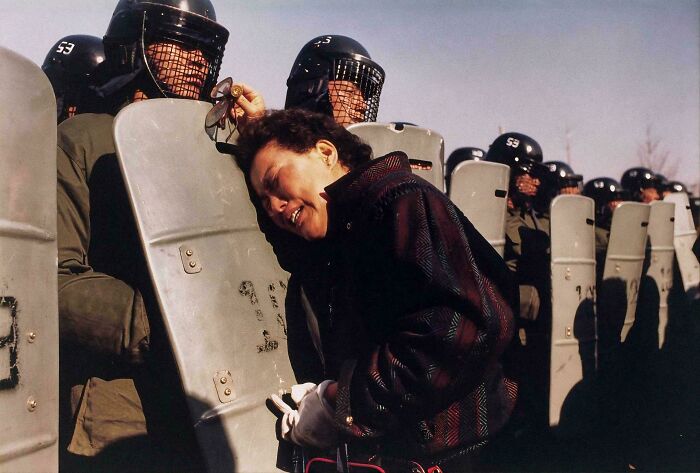
World Press Photo of the Year ( 1988 ) : Election in South Korea
A desperate mother in Kuro, South Korea leans against a riot policeman's shield and begs for mercy for her son, arrested during a demonstration.
After the November election there were protests against the government, accused of electoral fraud
“ Your first 10,000 photographs are your worst ”
~ Henri Cartier-Bresson
From the Book " Vivian Maier, Street Photographer "
The Magnificent Eleven :
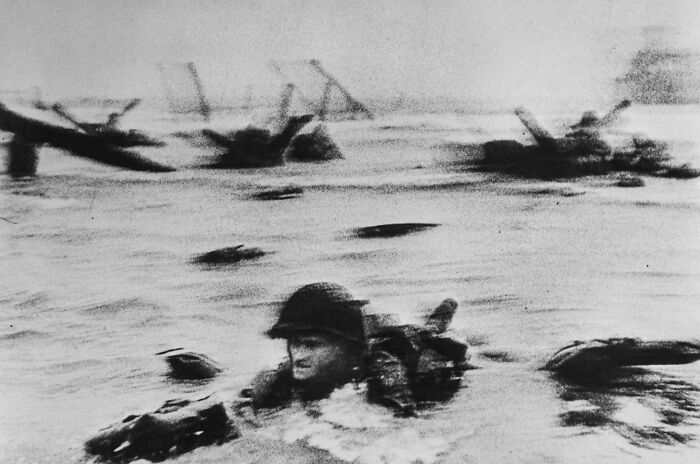
Group of photos of D-Day (6 June 1944) taken by war photographer Robert Capa. Capa was with one of the earliest waves of troops landing on the American invasion beach, Omaha Beach.
Capa stated that while under fire, with two Contax II cameras and 50 mm lenses he took 106 pictures, all but eleven of which were destroyed in a processing accident in the Life magazine photo lab in London, although the accidental loss of the remaining negatives has been disputed. The surviving photos have since been called The Magnificent Eleven.
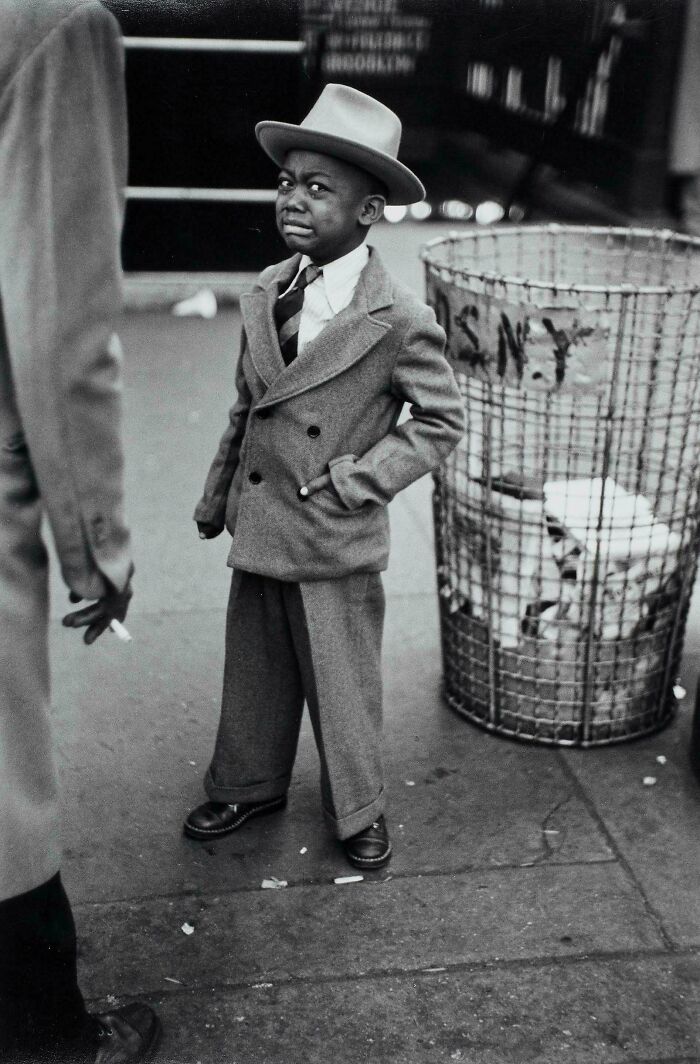
Tired Little Boy Crying Outside Circus Madison Square Garden
Poor little lad looks like he's been left waiting for far too long. Or worse...🥺
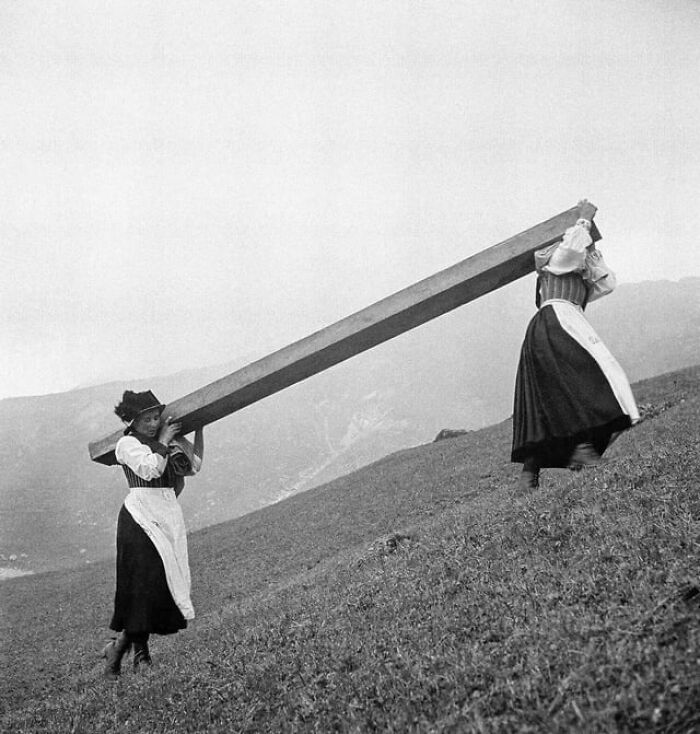
This photograph by Albert Nyfeler captures the vital process of transporting timber for the construction of Hans Lehner’s chalet in Lauchernalp, nestled in the Swiss Alps. Building in such a mountainous region required ingenuity and careful planning, as materials had to be moved across challenging terrain before modern machinery was widely available.
Timber, sourced locally or brought from nearby forests, was essential not only for structural strength but also for blending the chalet harmoniously with its alpine surroundings. This method of construction reflects the traditional Swiss approach to mountain architecture—durable, practical, and beautifully integrated with nature.
During the 1930s, alpine chalets symbolized comfort and a retreat from urban life, combining rustic charm with functionality. Transporting timber in the Alps often involved sleds, pack animals, and manual labor, highlighting the skill and teamwork of local workers.
Nyfeler’s photograph preserves a moment in this timeless process, emphasizing the relationship between people, craftsmanship, and environment. It offers a window into how communities in the Swiss Alps maintained their cultural heritage through architecture while adapting to the demands of their spectacular but demanding landscape
I wonder if those women are wearing their ordinary everyday clothing...
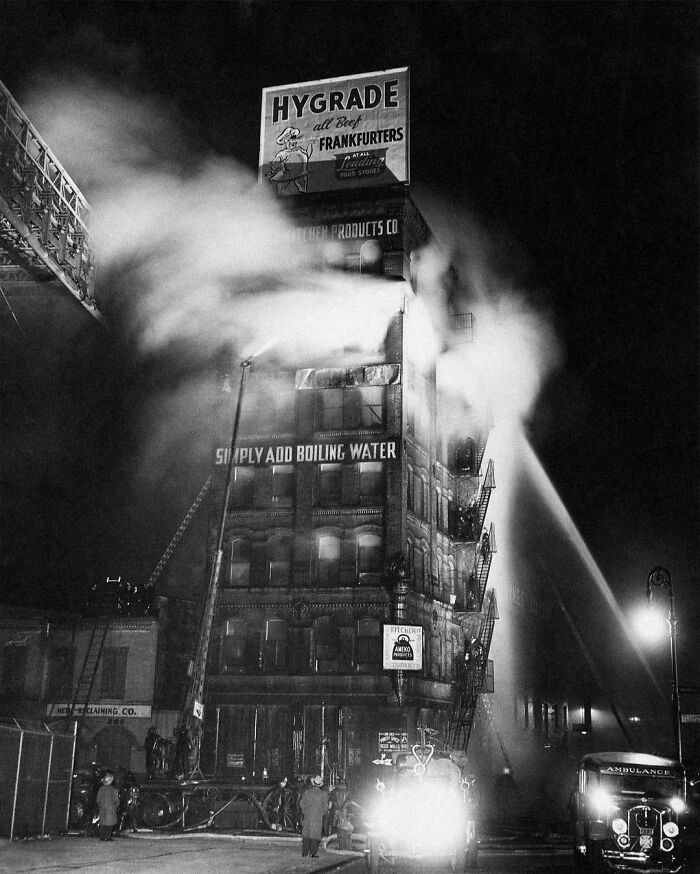
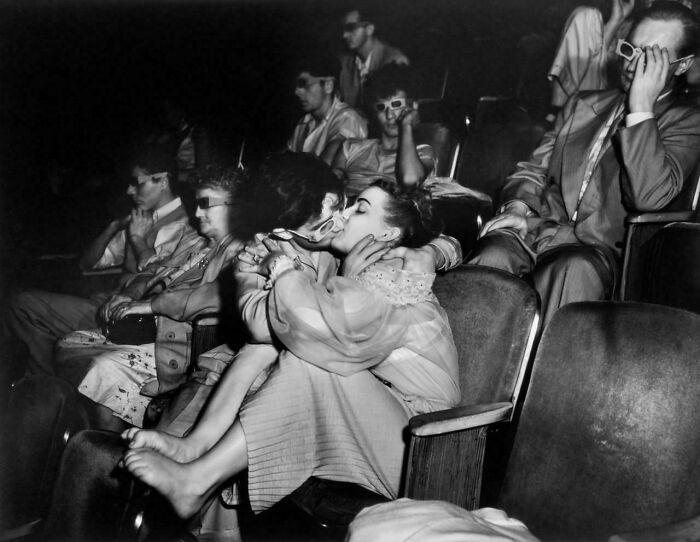
Simply Add Boiling Water
Link to the photographer Weegee follows. He was - umm - quite something...
" I have never separated form and content. The photo should have a meaning. But my photos are also more or less well constructed. If they had false notes, they stayed on the contact sheet. "
~ Willy Ronis
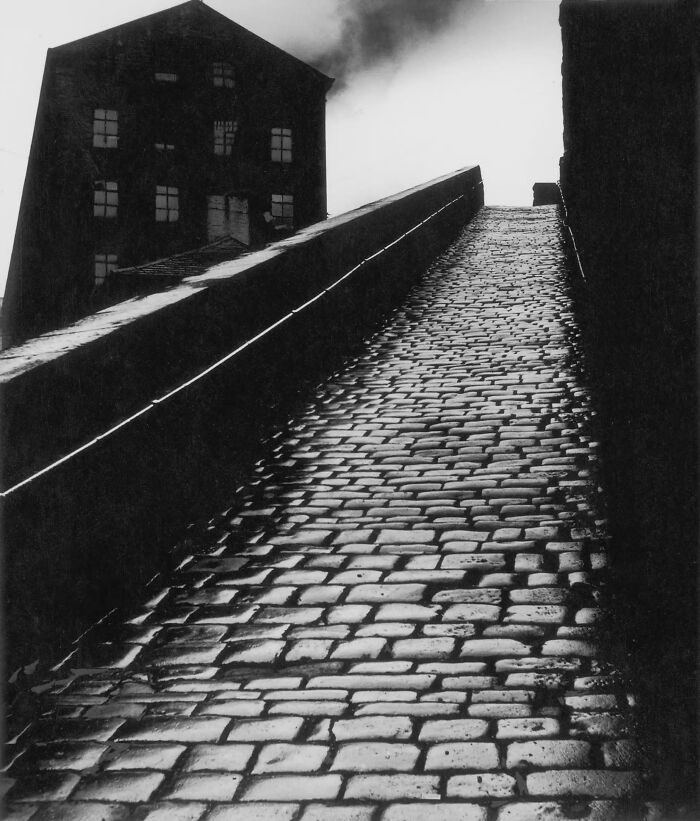
In 1951 Brandt started to print his photographs using a paper that could render very dark and light areas in the same image. In the earlier prints of this photograph, the details of the facade of the building on the left are perfectly visible. In contrast, in the second iteration he completely blackened the house and created a strong contrast with the glint on the ramp’s cobblestones while adding a plume of black smoke in the sky.
Brassaï : "The Eye of Paris" ( 1899-1984 )
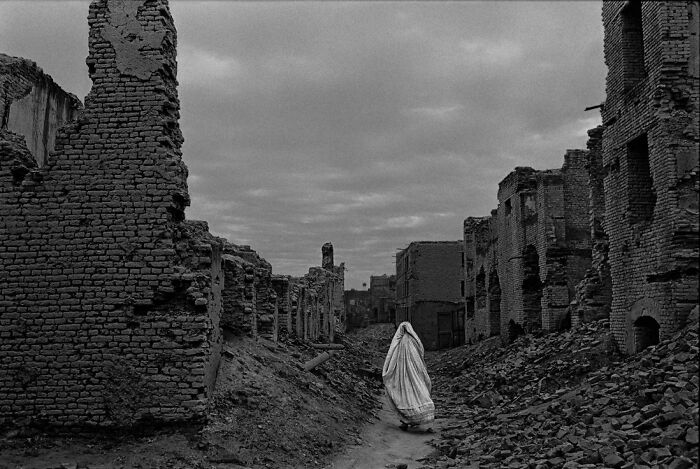
During the Afghan Civil War one-third of Kabul was totally destroyed by artillery and rocket fire. This picture of the central business district was made as the capital was being besieged by the Taliban.
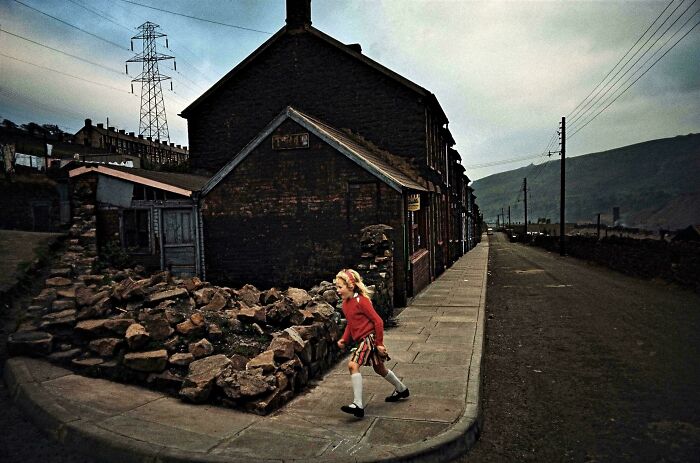
Girl in Red Sweater
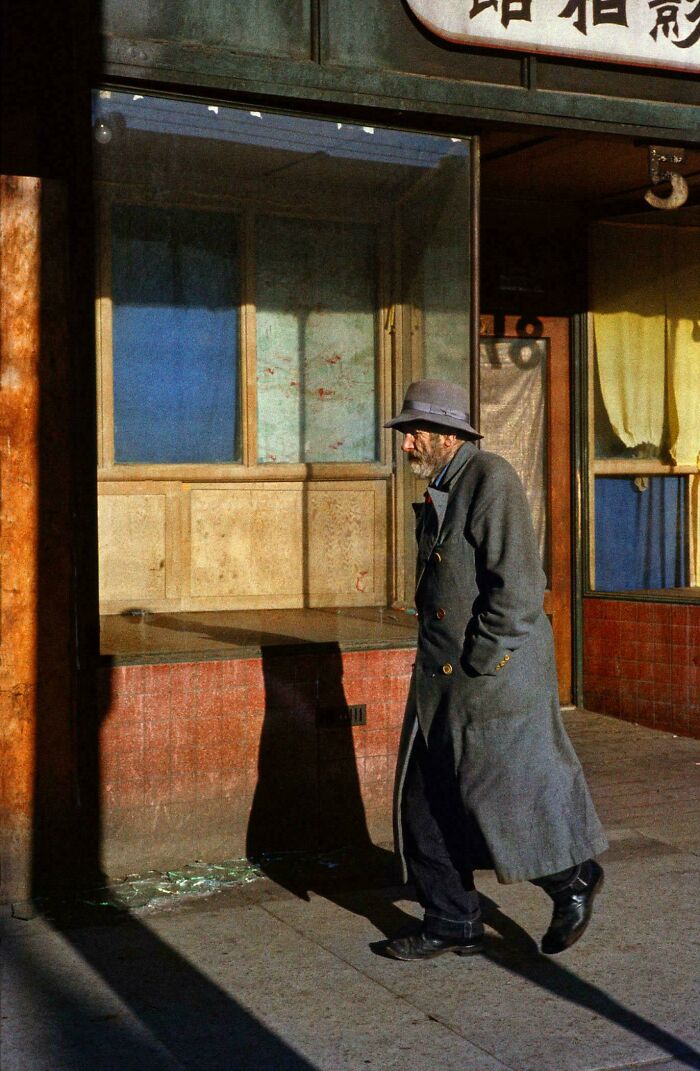
" I was aware I was taking art. That’s the conceit of young people. I knew that what I am doing is not only unique, but that someday I’m going to unpack that and shock people with it "
~ Fred Herzog
Reverse image search + AI overview gives: 'This photograph is titled "Old Man" and was taken in 1959 by pioneering street photographer Fred Herzog' 'The image captures a scene in Vancouver's Chinatown, documenting urban street life during a period when most fine art photography was black and white' 'It was shot using Kodachrome slide film, known for its deeply saturated colors, which Herzog used to capture the grit and vitality of the city.'
"To quote a phrase from the Prince of Salina in 'The Leopard': everything changes to remain what it is'"
Franco Fontana
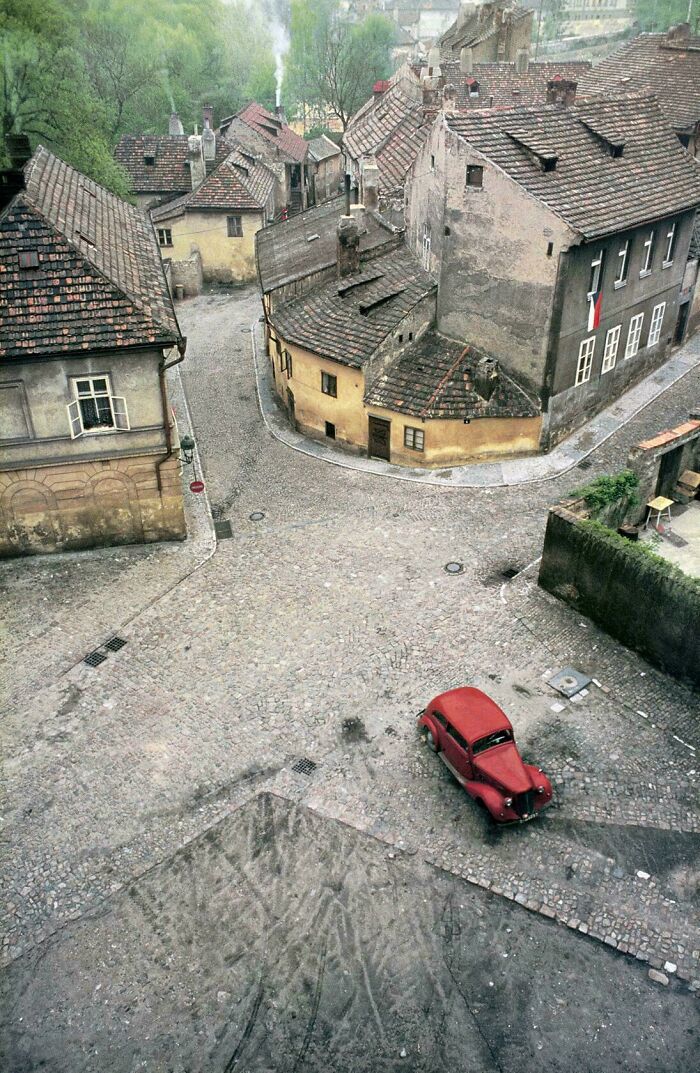
This would be just an OK photo without the red car. That vivid pop of color really makes this composition.
From the Book " Will They Sing Like Raindrops or Leave Me Thirsty "
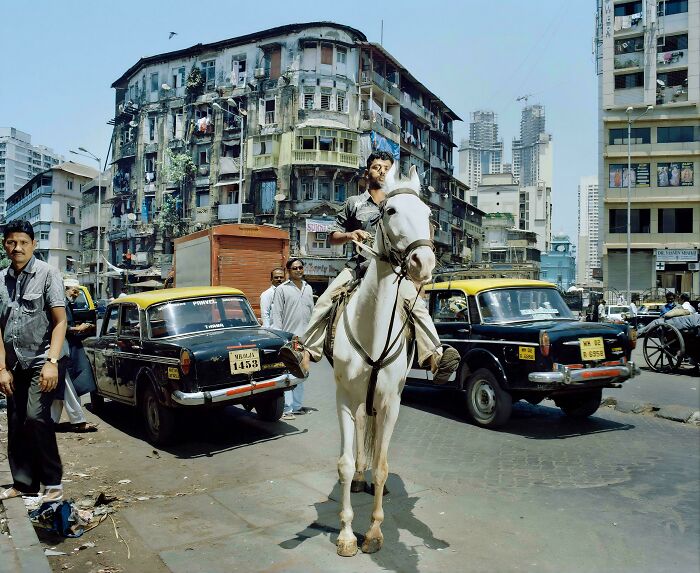
The taxis are an Indian-built version of the 1954 (!) Fiat 1100 known as the Premier Padmini. They've been phased out since then - 2023, I think. Links follow.
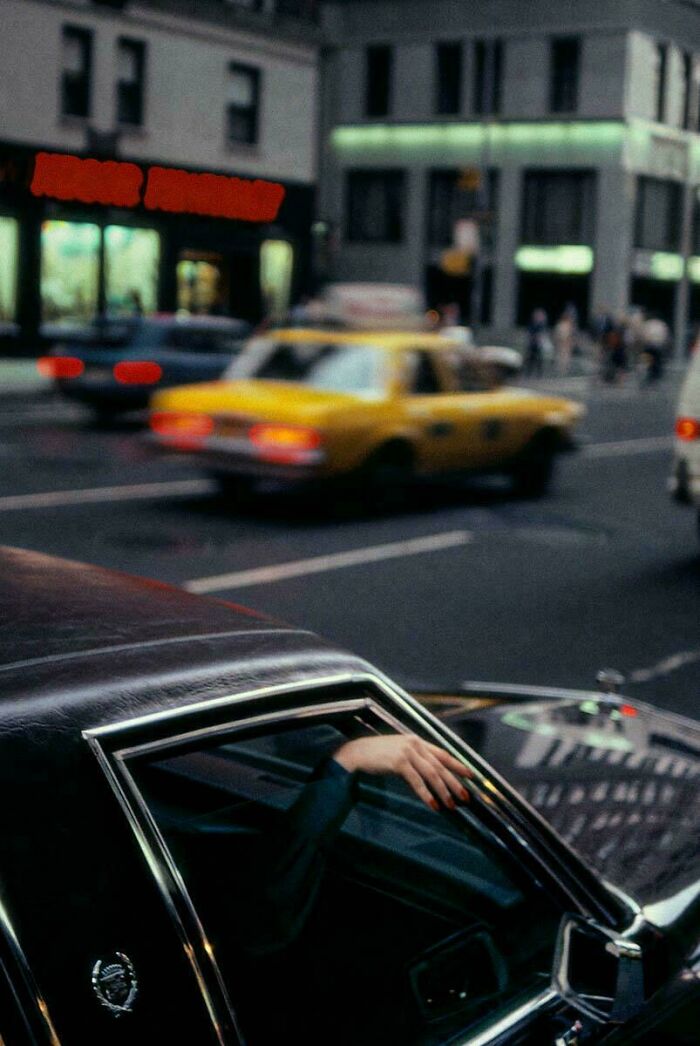
From the Book " Harry Gruyaert - New York "
Italian photographer Franco Fontana is a pioneer of color photography, known for his abstract cityscapes, seascapes, and landscapes. Fontana embraced color film as early as the 1960s at a time when few fine art photographers ventured outside the conventions of black-and-white photography. His break with established styles and practices represents a significant shift in Italian postwar photography.
In his images, Fontana often pares landscapes down to their essential elements, producing flat, geometric compositions —reminiscent of the color field paintings of Mark Rothko or Barnett Newman —by underexposing his transparencies. Contrasting blue skies with green or yellow grass and the rigid lines of buildings with the softness of puffy clouds, he makes color and texture his primary subjects.
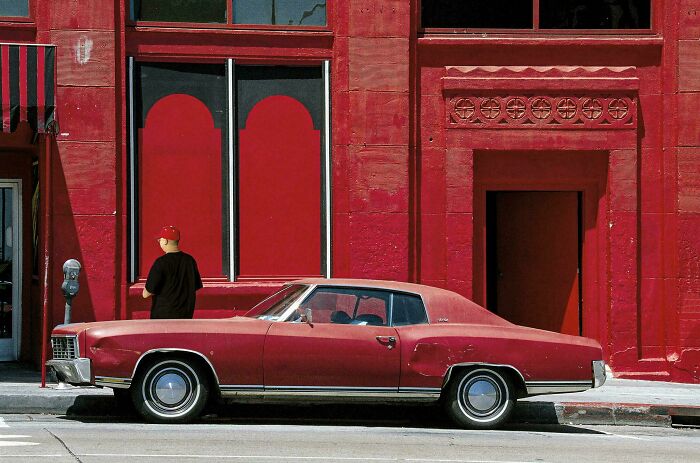
2001 - and yet the car is apparently a 1970 Chevrolet Monte Carlo. I see the dents, but it's doing well to be on the road.
“ We then take photos of ourselves in front of the visited sight. This proves we have been there and are part of the world as we know it. Visiting sites is a modern form of pilgrimage and the resulting photos the ultimate prize ”
~ Martin Parr
"The photographs that remain strong and alive seem to be when your vision and reality are so inexorably wedded together it is impossible to separate them."
~ Louis Stettner
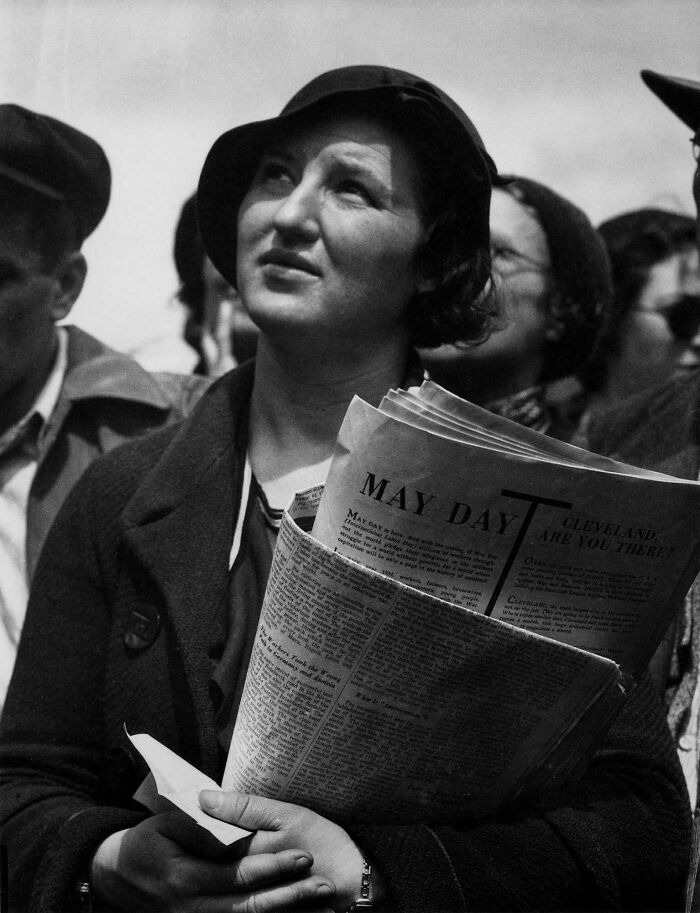
" I assigned myself the task of photographing the May Day demonstrations at Civic Center. . . . I will go there, I will photograph this thing, I will come back, and develop it. I will print it, and I will mount it and I will put it on the wall, all in twenty-four hours. I will do this, to see if I can just grab a hunk of lightning."
~ Dorothea Lange
" To take a photograph is to align the head, the eye and the heart. It's a way of life "
~ Henri Cartier-Bresson
" In photography, the smallest thing can become a big subject, an insignificant human detail can become a leitmotiv. We see and we make seen as a witness to the world around us; the event, in its natural activity, generates an organic rhythm of forms "
~ Henri Cartier-Bresson
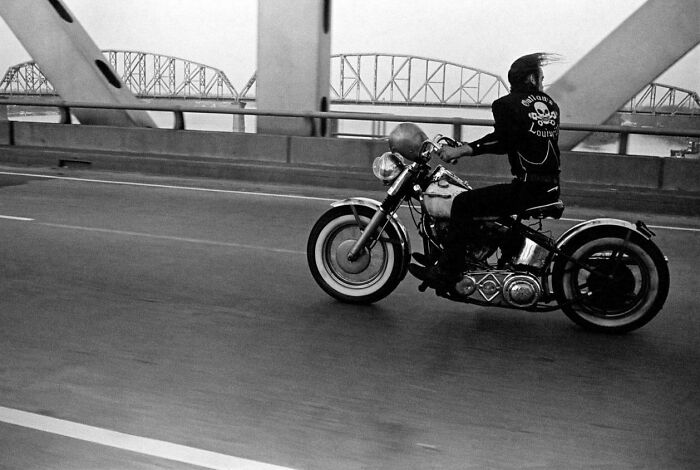
From the book " The Bikeriders "
Now that is a *proper* chopped bike - remove all the bits you don't need. "Outlaws, Louisville' seems to be what's on his back. Now, I get the idea of the wind in your hair but the rider does seem to have a helmet, it's just that it's mounted (somehow) on the handlebars. 🤔😂
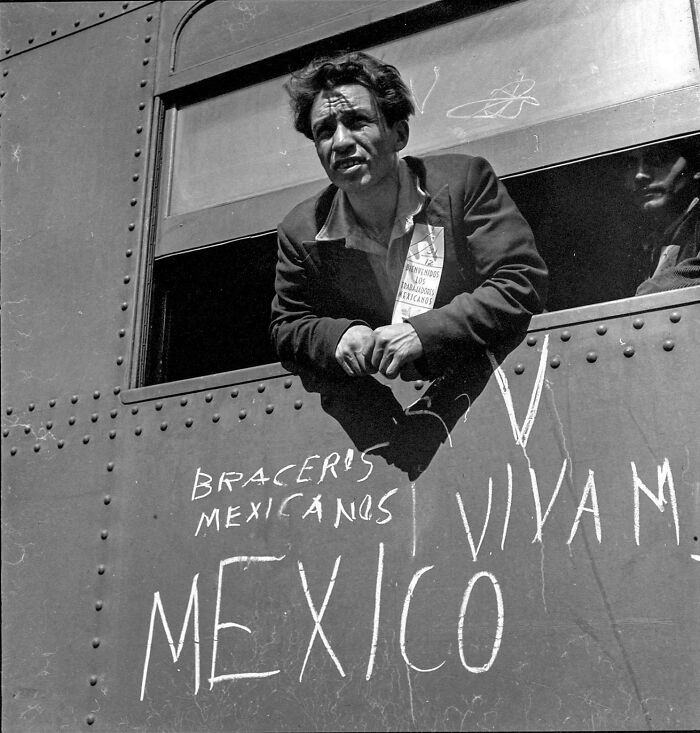
Mexican field laborer arriving at station in Sacramento, after 5 day trip from Mexico City, imported by arrangements bet Mexican and US governments to work in sugar beets.
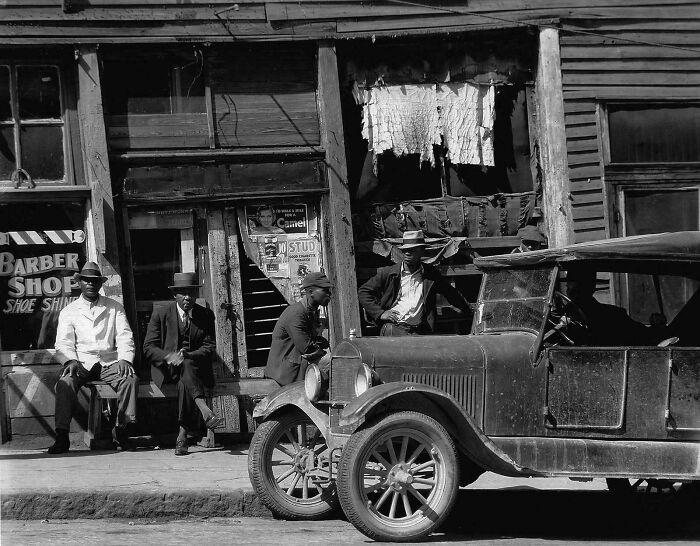
Walker Evans was born in 1903 in St. Louis, Missouri, to an upper-middle-class family, affording him access to a formal education.
He initially aspired to become a writer, an interest he never fully abandoned. He attended Williams College in Massachusetts for a year and briefly studied at the Sorbonne in Paris before moving to New York City in 1926 to focus on photography.
From 1935 to 1937 Evans worked as a photographer for the “Resettlement” , a US government initiative instituted to document the severe conditions of rural America during the Great Depression in order to gain support for relief programs. A significant moment for his artistic growth, the position allowed Evans to refine his photographic eye as he traveled across the country, focusing his camera on churches, advertisements, sharecroppers, and steel mills. Despite the advantages of steady employment, Evans had some personal reservations about working for a government program. Before accepting the position, he declared that under no circumstances would he “ make photographic statements for the government…. No matter how powerful—this is pure record not propaganda…. No politics whatsoever. ”
Throughout his career, Evans continued to resist the characterization of his work as political, remarking, “ I didn’t like the label that I unconsciously earned of being a social protest artist. I never took it upon myself to change the world. ”
Even if Evans’s intentions were driven by aesthetic pursuits rather than a political agenda, viewers of his work are not afforded the same neutrality, especially with challenging photographs such as Minstrel Showbill or Houses and Billboards in Atlanta. Despite being taken nearly 90 years ago, these alarmingly casual depictions of violence in the American vernacular are not records of a distant past; instead, they are sobering reminders of struggles that persist in the US today. In addition to these challenging scenes, Evans on occasion injected humor and absurdity into his work, as seen in images such as Truck and Sign, in which the word “ Damaged ” appears boldly across the photograph. In the summer of 1936 Evans took a leave of absence from the Resettlement Administration to work with his friend, the writer James Agee, on the publication " Let Us Now Praise Famous Men. " Through words and photographs, the book provided an account of life among a group of tenant farmers in Hale County, Alabama.
Evans continued to photograph until his death in 1975, holding positions at Time as well as Fortune magazine, where he worked as an editor and photographer from 1945 to 1965. A 1938 exhibition at The Museum of Modern Art, Walker Evans: American Photographs, surveyed his first decade of photography, and was the first one-person presentation by MoMA’s Department of Photography. ( An exhibition of Evans’s photographs of Victorian houses four years earlier was considered an architecture exhibition ) The exhibition’s accompanying publication, which serves as an exploration of US society through its workers and institutions, is considered one of the most influential photobooks in the history of the medium because of its rhythmic, uninterrupted sequencing. While Evans’s enduring vision was embraced by museums worldwide, the lifelong contrarian pushed back against the acclaim, noting one should “ be careful about being established…. Part of me doesn’t want this to be established...because it tames it. ”
Today, Evans’s impact and “ lyric documentary ” style can be seen in the work of many contemporary artists, including William Christenberry and RaMell Ross, both of whom have also worked in Hale County. Their works probe everyday life to depict an “ epic moment in something incredibly simple. ”
Viewing their photographs, one can sense that behind the veneer of banality, potentially mistaken as commonplace, social commentary and radical thought might be revealed
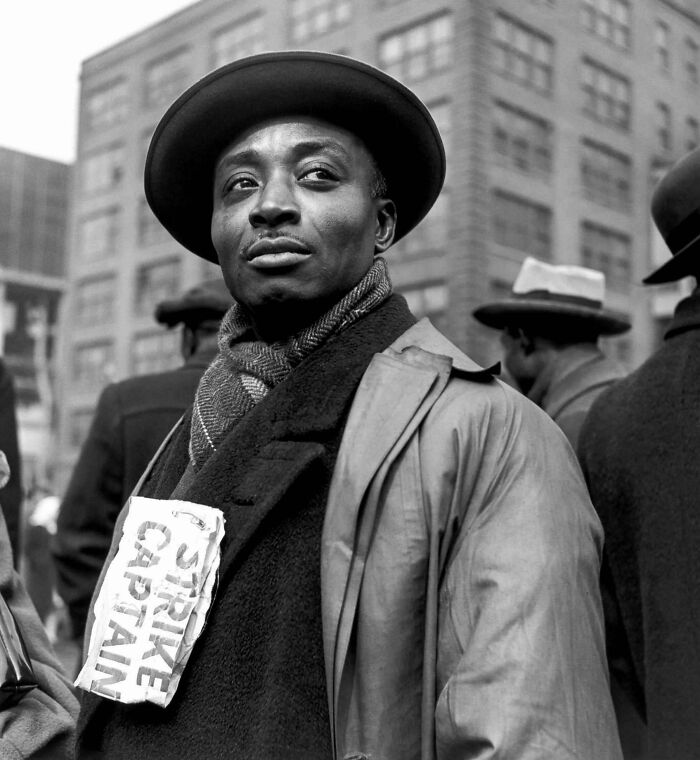
Strike captain during protest by the packing house workers from the Miller's series 'Chicago's South Side ' ( 1946 - 1948 )
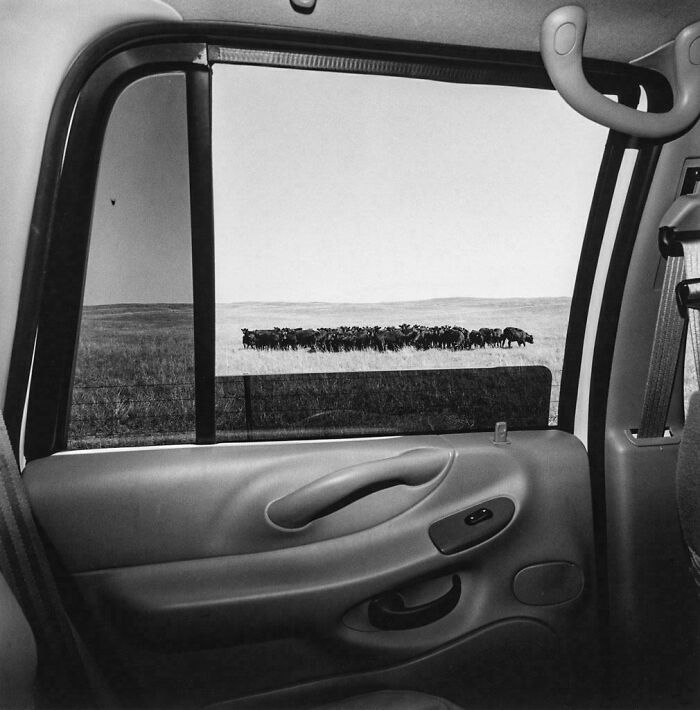
From the Great Book " America by Car " ( 1995-2009 )
" People are so wonderful that a photographer has only to wait for that breathless moment to capture what he wants on film "
Weegee
Fabulous - thank you for all of these. Almost all of them were astonishing photos.
Fabulous - thank you for all of these. Almost all of them were astonishing photos.



















 No fees, cancel anytime