Get Premium
Dark mode theme is available exclusively for premium users. Learn more about the benefits of subscribing.
No fees, cancel anytime.

 Dark Mode Ad-Free Browsing Unlimited Content
 Ad-Free Browsing Unlimited Content Dark Mode
Join 1.2 million Panda readers who get the best art, memes, and fun stories every week!

It’s not unusual to leave a job during your probationary period. In fact, many people choose to exit of their own accord. According to a survey from Jobvite, three in ten new hires leave within the first 90 days. Other times, however, they are let go by the company.
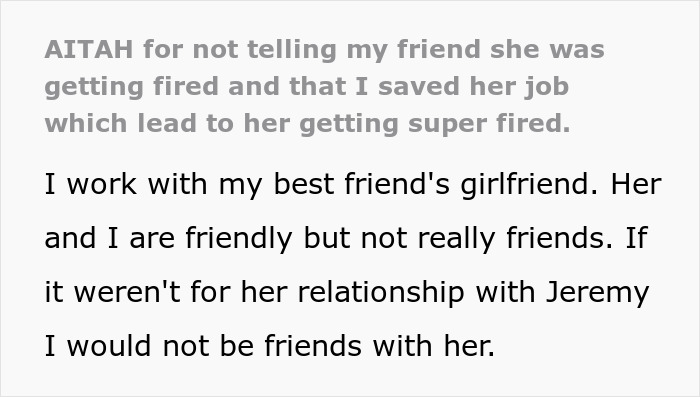
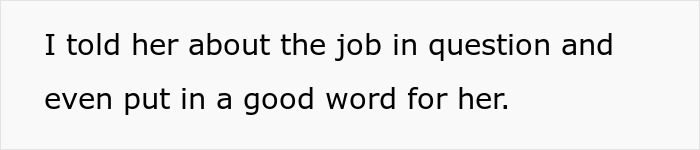
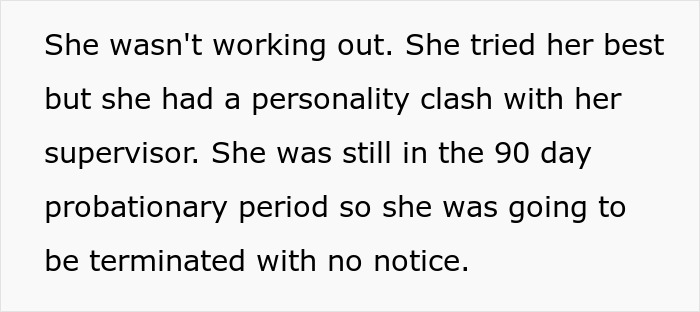
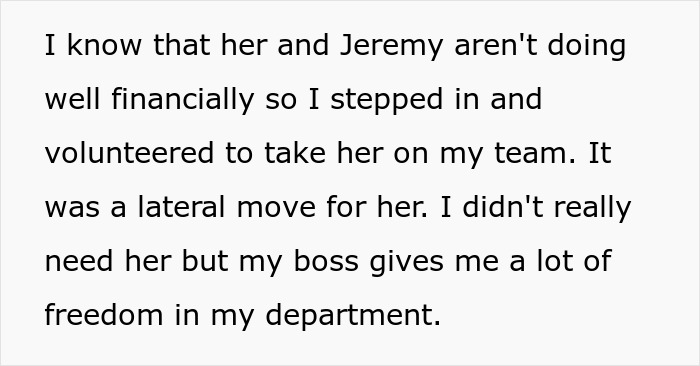
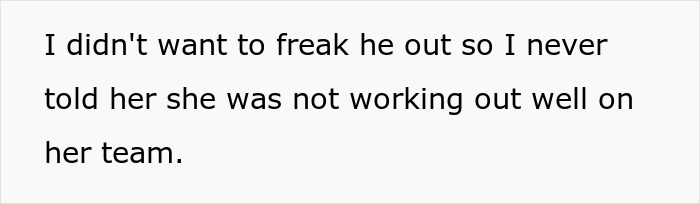
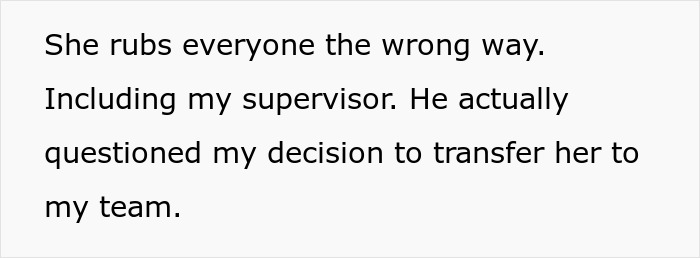
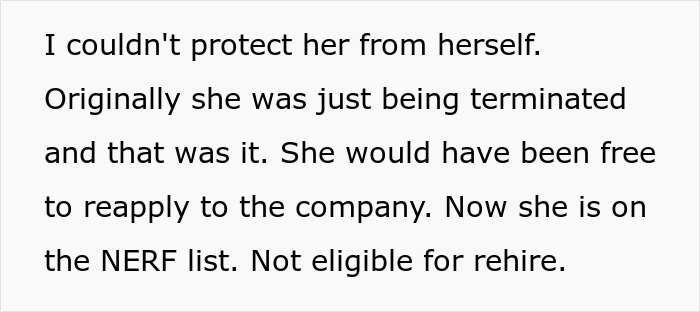
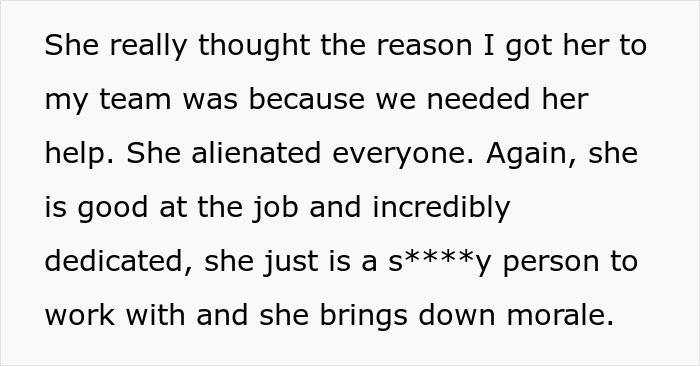
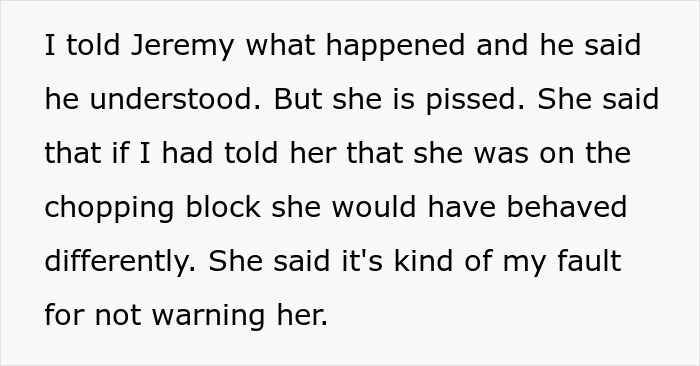
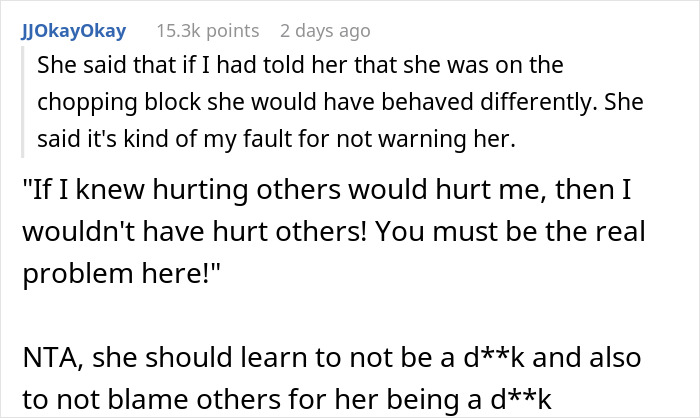
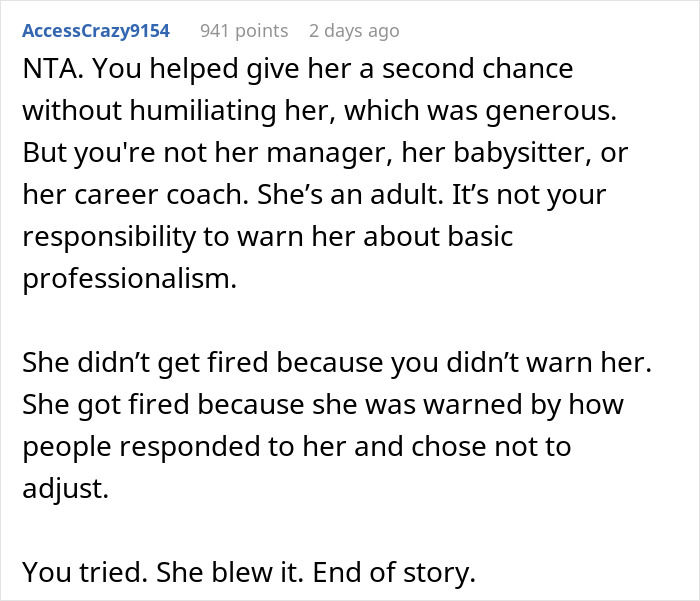
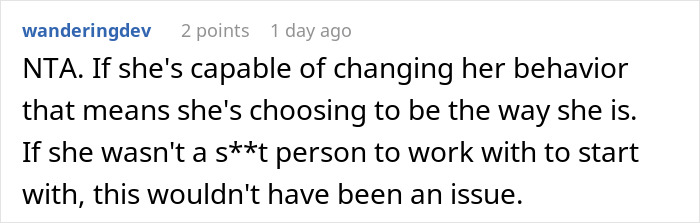
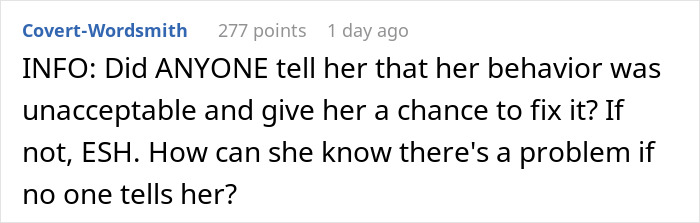
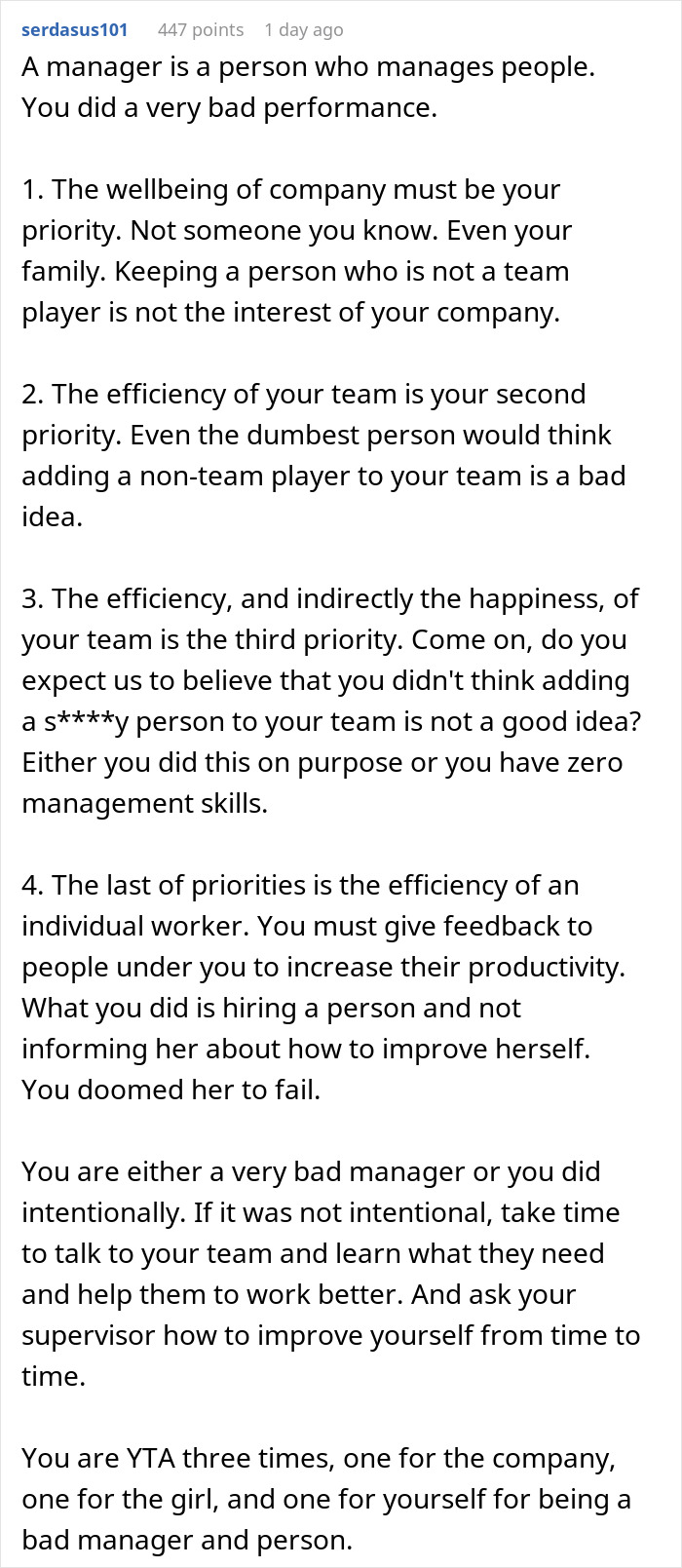
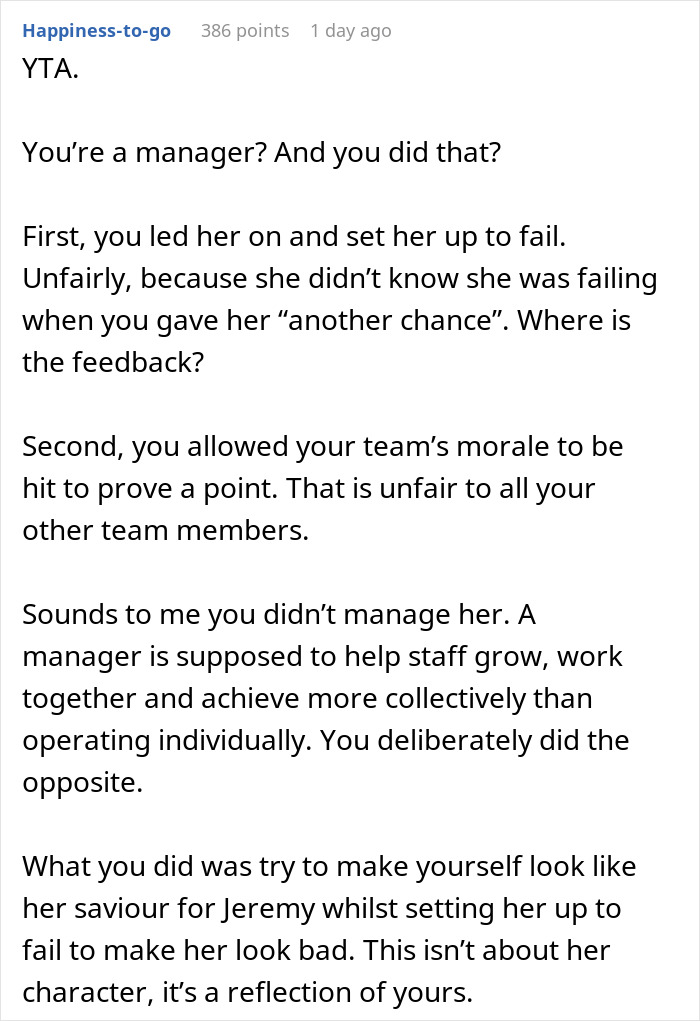
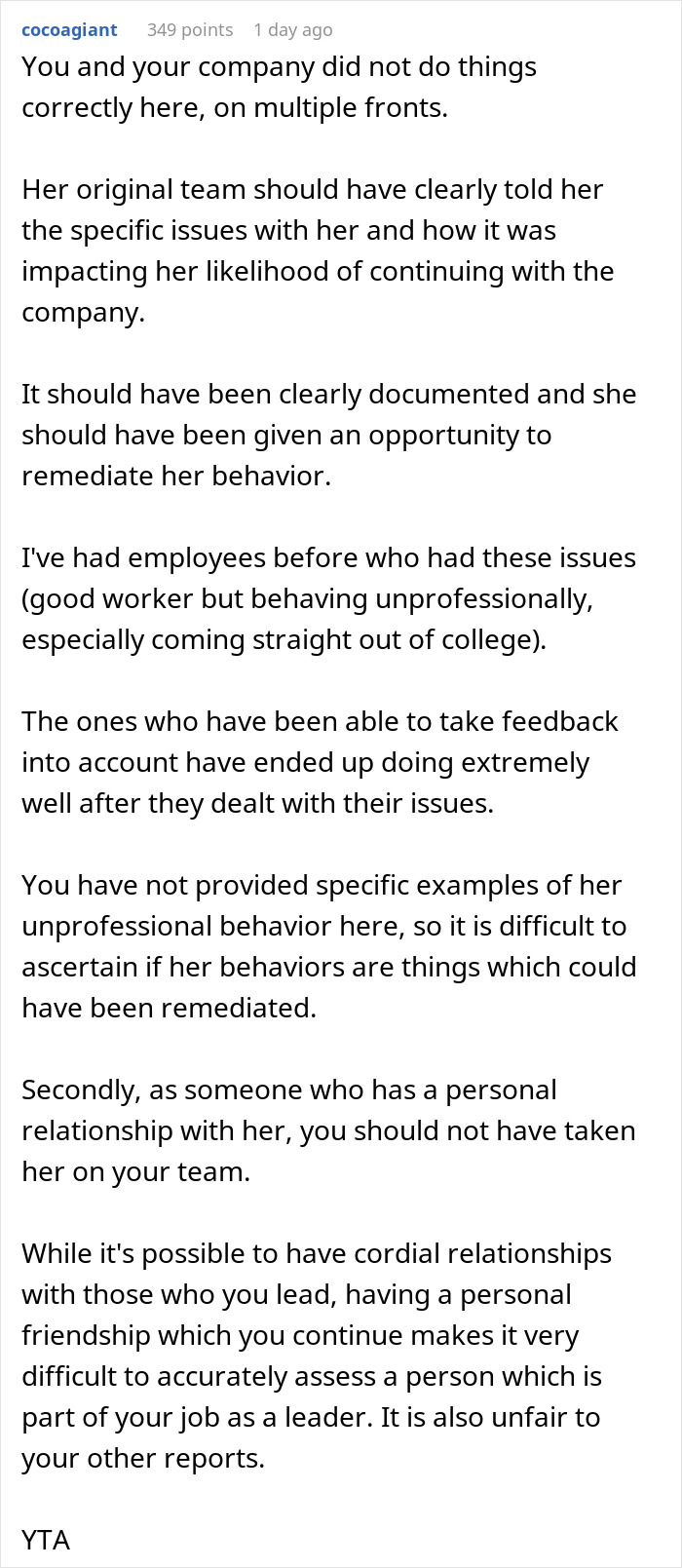
One woman was fired because she didn’t fit in with the team. Her friend, who vouched for her during her hiring, tried to salvage her position, but was unable to because “she alienated everyone.” But how was she supposed to know her behavior was putting everyone off if no manager ever told her?
Image credits: Getty Images / unsplash (not the actual photo)
Image credits: Danielle-Claude Bélanger / unsplash (not the actual photo)
Image credits: Getty Images / unsplash (not the actual photo)
Image credits: throwawayfiredgirl
Image credits: Johnny Cohen / unsplash (not the actual photo)
Fitting in with the team is an important part of being a good employee. Some people just might not be meant to work in a particular place with a particular team, and that’s okay.
But, like some commenters pointed out, this particular workplace might have put too much pressure on new hires to figure out for themselves how to fit in with the team.
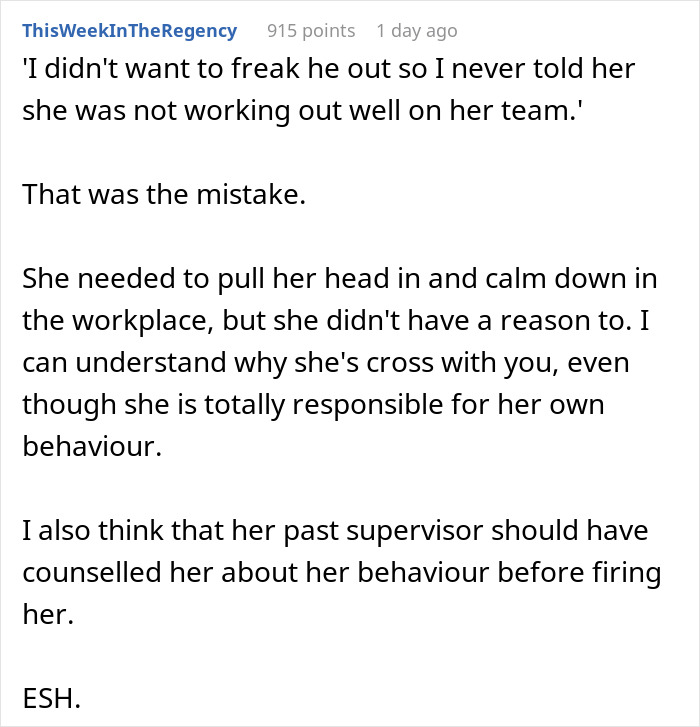
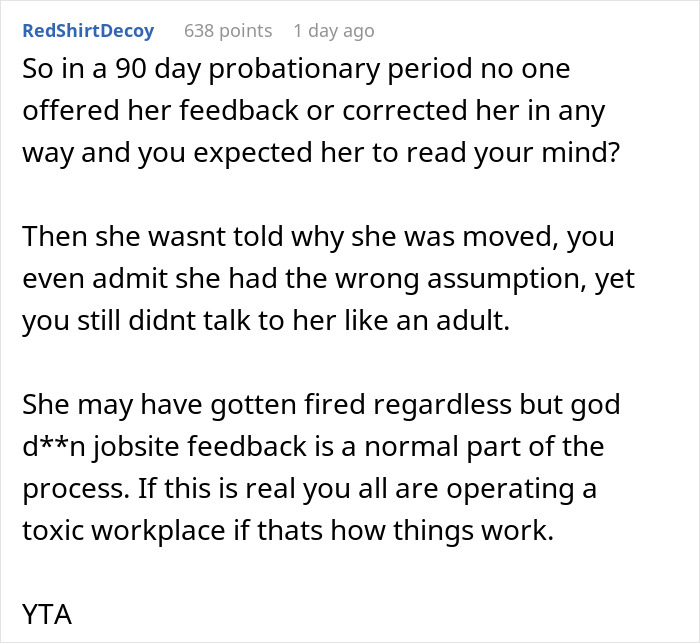
“Jobsite feedback is a normal part of the process,” netizen u/RedShirtDecoy wrote in a comment. “If this is real, you all are operating a toxic workplace if [that’s] how things work.”
Many pointed out how the company might not be communicating with employees well, and that is why its turnover rate was so high.
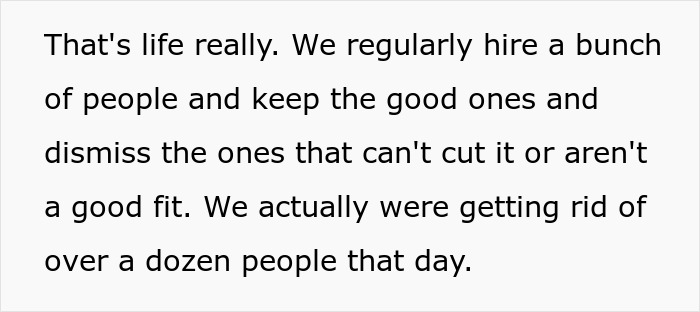
In their post, the author mentioned how the company often lays off new hires. “We regularly hire a bunch of people and keep the good ones and dismiss the ones that can’t cut it or aren’t a good fit. We actually were getting rid of over a dozen people that day.”
“High employee turnover is a symptom of a much larger problem, and leaders must explore the root cause,” JC Glick of Prodromos Leadership told Forbes. “The worst problem you can have, and what the highest turnover can be attributed to, is a bad culture.”
Image credits: Getty Images / unsplash (not the actual photo)
Not getting along with your colleagues is not ideal, but it happens quite often. According to a 2016 study by HR Acuity, at least 200 employees in organizations with over 1,000 workers will complain about others’ behavior.
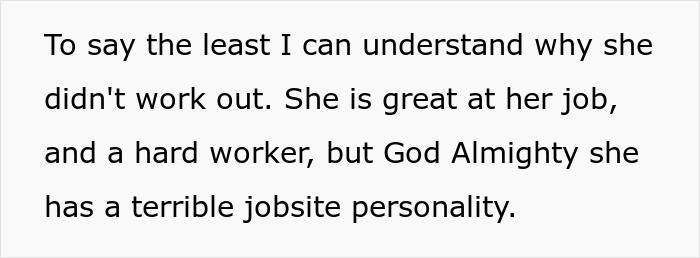
While it’s worth celebrating that people are not willing to put up with toxic behaviors, there is often a conundrum. Having a “bad attitude” or “terrible personality” isn’t very specific, is it?
While it’s not as important when it’s a new hire who’s still on their probationary period, firing an employee because of someone being grumpy or a cynic would warrant a wrongful termination lawsuit.
That’s why the experts at HR Acuity recommend documenting every bad behavior with precision. “If an employee rolls his eyes every time you start a team building activity, be prepared to document it and discuss with the employee the impact to the rest of the team.”
“If the employee repeatedly cuts you off when you start to discuss a new way of doing something, explain why it is counter-productive, not to mention disrespectful.”
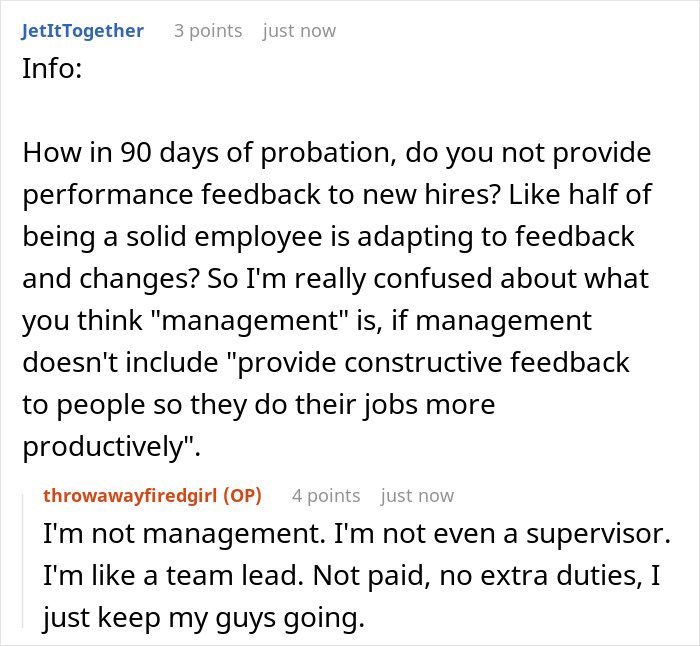
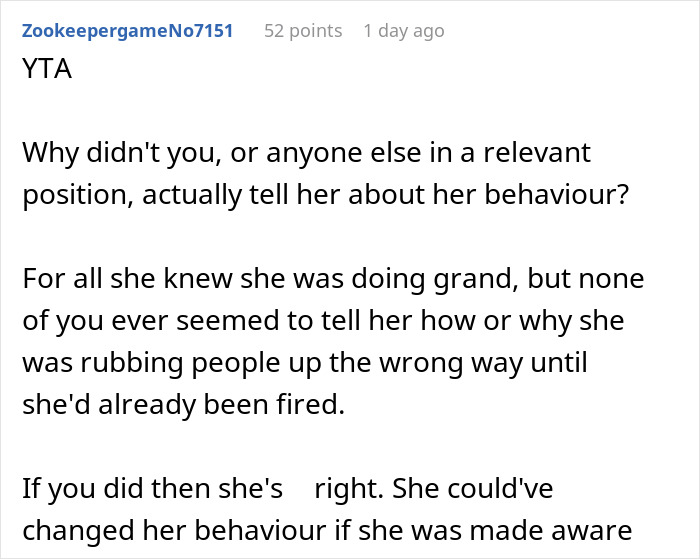
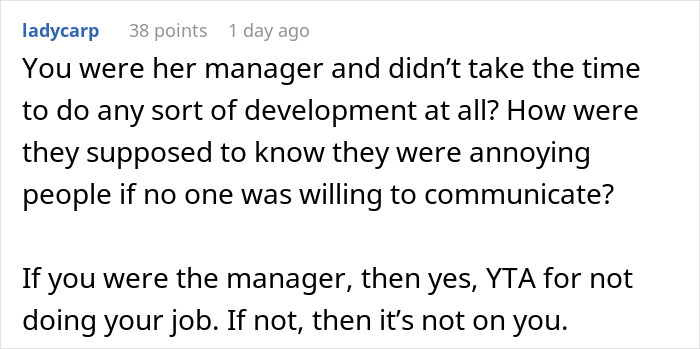
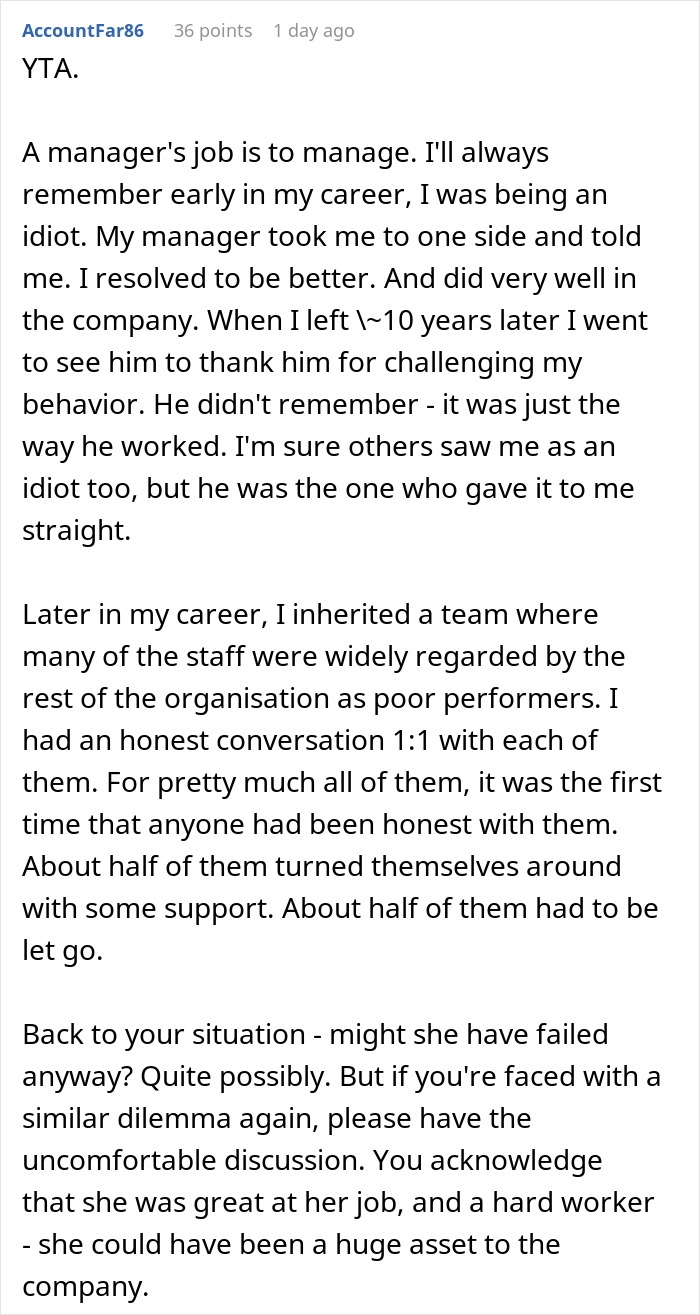
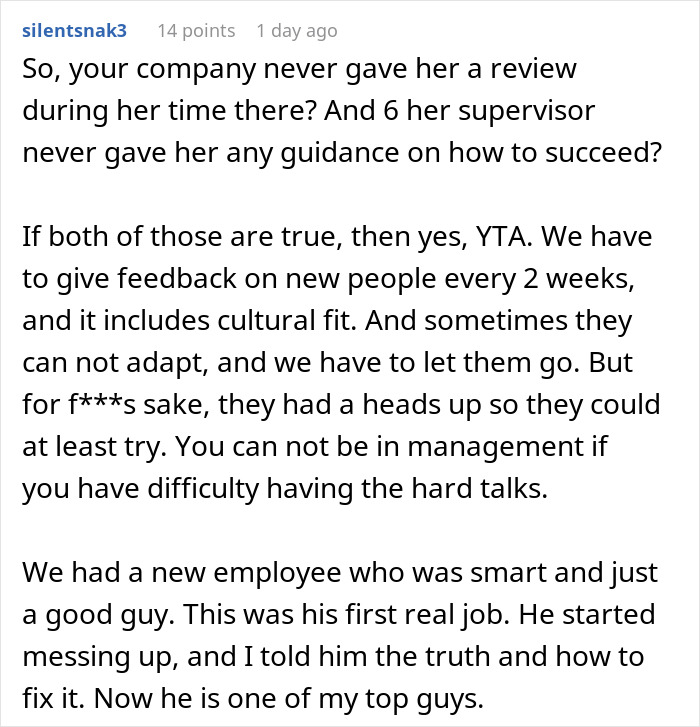
But it’s very important to raise these concerns to the employee and let them know what exactly they’re doing wrong. The employee might not be responsive to criticism or choose to quit, but a manager’s job to discuss bad behavior with the worker objectively and hear their side of the story.
“It’s possible that the alleged ‘negative’ employee doesn’t mean to be negative at all,” the experts at HR Acuity point out. “Or that he/she even understands that it’s perceived that way.” They believe that companies and managers can avoid losing employees by simply engaging in an open dialogue.

By entering your email and clicking Subscribe, you're agreeing to let us send you customized marketing messages about us and our advertising partners. You are also agreeing to our Privacy Policy.
Thank you! You've successfully subscribed to newsletters!


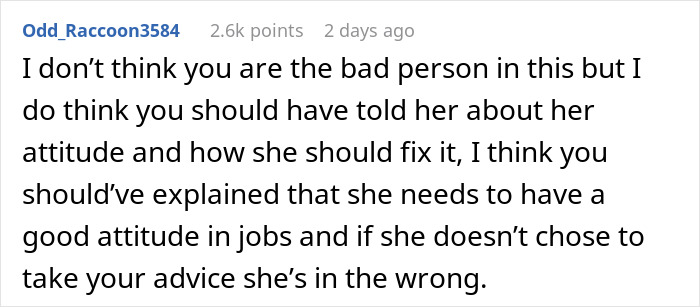
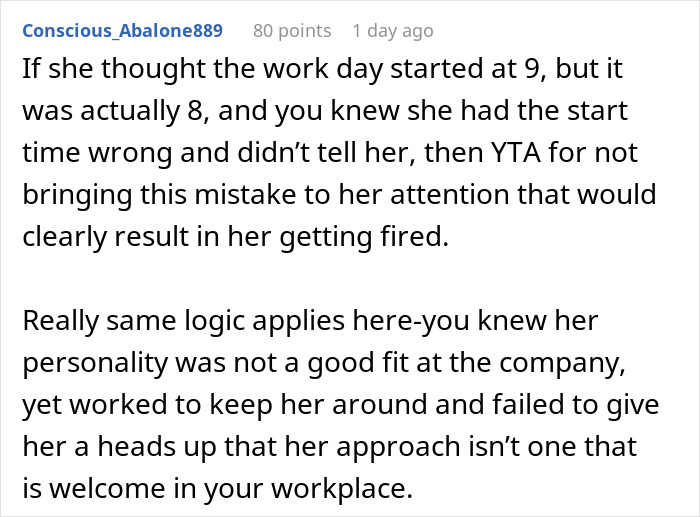
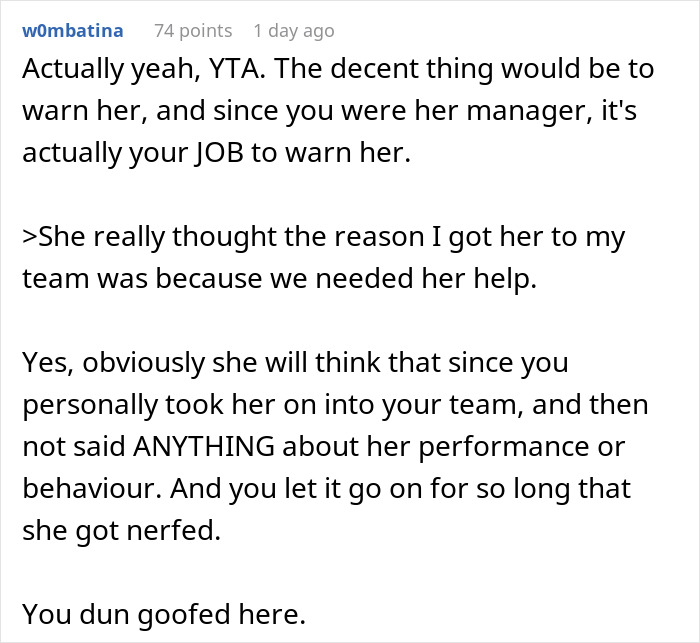
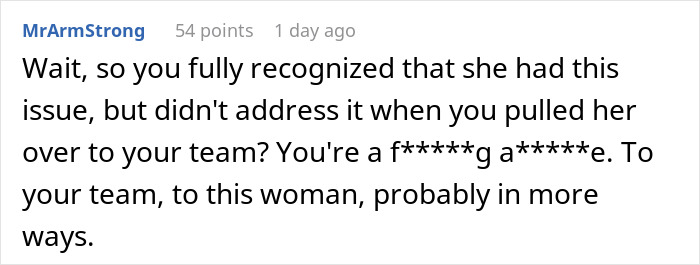
OP should have warned her to adjust her behaviour, if for no other reason than to make it easier for the new team to get along with her. OP knew other people found her difficult to work with and invited her to work with their team. By not warning her to improve her teamwork skills they not only ensured that she got fired, but made life harder for their teammates and themselves before she was.

Should she also be asked to use her manners and say please and thank you? Telling her she needed to improve her team work skills would have gone down like a lead balloon.
Load More Replies...
EAH - yes, you should have warned her, but equally she should not have been a t**t in the first place.

Can't fix a problem if no one tells you it's a problem. He should have pulled her into a one on one, and told her, "X, you are a hard worker, and good at your job, and I think you have a chance to succeed. There's a serious issue with your interpersonal interactions, which we need to address if you want to keep this job. The problem is XXX. It is really putting everyone's backs up. If I hadn't gone out on a limb for you and asked to give you a second chance with my team, you were about to be let go. We need to get this under control before your probation period ends, or you'll be fired, and NEFR. l'd like to go through a couple of specific examples with you, and talk through what you should have done instead, and set some expectations about things you need to do/avoid going forwards." Maybe she would have improved, maybe she would have rage-quit. This guy didn't want to have a difficult conversation, so she never had the chance to identify what she was doing wrong, and act on it.
OP should have warned her to adjust her behaviour, if for no other reason than to make it easier for the new team to get along with her. OP knew other people found her difficult to work with and invited her to work with their team. By not warning her to improve her teamwork skills they not only ensured that she got fired, but made life harder for their teammates and themselves before she was.
Should she also be asked to use her manners and say please and thank you? Telling her she needed to improve her team work skills would have gone down like a lead balloon.
Load More Replies... EAH - yes, you should have warned her, but equally she should not have been a t**t in the first place.
Can't fix a problem if no one tells you it's a problem. He should have pulled her into a one on one, and told her, "X, you are a hard worker, and good at your job, and I think you have a chance to succeed. There's a serious issue with your interpersonal interactions, which we need to address if you want to keep this job. The problem is XXX. It is really putting everyone's backs up. If I hadn't gone out on a limb for you and asked to give you a second chance with my team, you were about to be let go. We need to get this under control before your probation period ends, or you'll be fired, and NEFR. l'd like to go through a couple of specific examples with you, and talk through what you should have done instead, and set some expectations about things you need to do/avoid going forwards." Maybe she would have improved, maybe she would have rage-quit. This guy didn't want to have a difficult conversation, so she never had the chance to identify what she was doing wrong, and act on it.



































 No fees, cancel anytime













42
29