Get Premium
Dark mode theme is available exclusively for premium users. Learn more about the benefits of subscribing.
No fees, cancel anytime.

 Dark Mode Ad-Free Browsing Unlimited Content
 Ad-Free Browsing Unlimited Content Dark Mode
Join 1.2 million Panda readers who get the best art, memes, and fun stories every week!

Breakups are usually messy, but most people at least manage to divide things in a somewhat civilized way like who gets the couch or who keeps the coffee machine. What they don’t usually plan for who decided to keep a golden retriever who just wants to live his best life.
In this case, today’s Original Poster (OP) found himself unexpectedly stuck in the middle of a breakup fallout involving his close friend, his ex-girlfriend, and a shared golden retriever. When the friend kept the dog and showed up weeks later asking the OP to keep it, the OP was left questioning the friend’s intentions for keeping it in the first place.
More info: Reddit
Image credits: Steven Foster / Unsplash (not the actual photo)
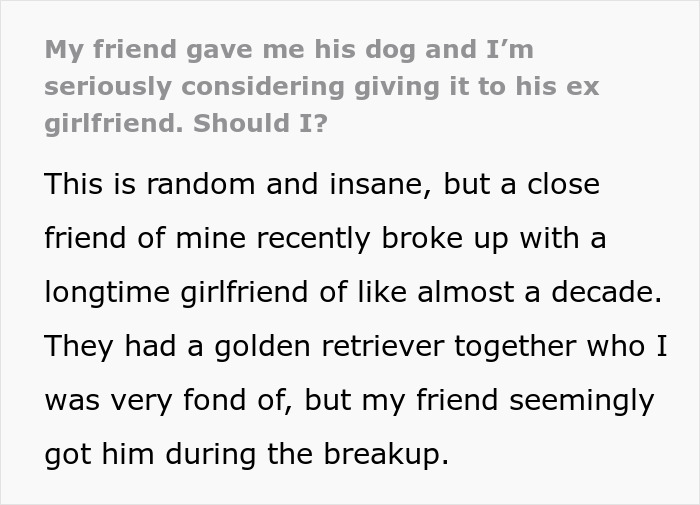
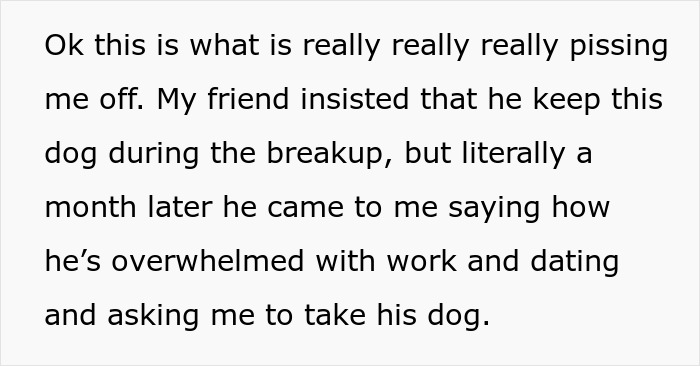
Image credits: Ben Moreland / Unsplash (not the actual photo)
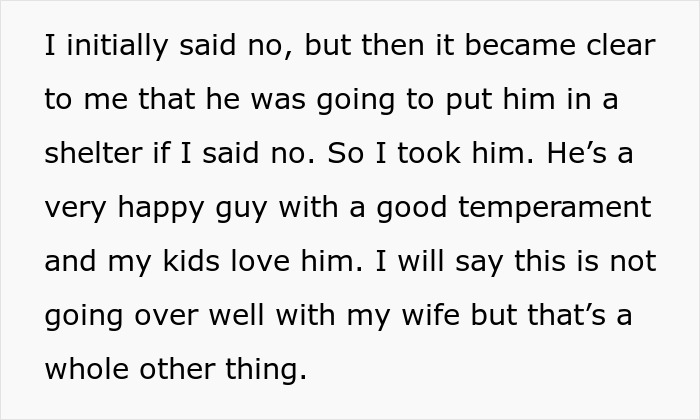
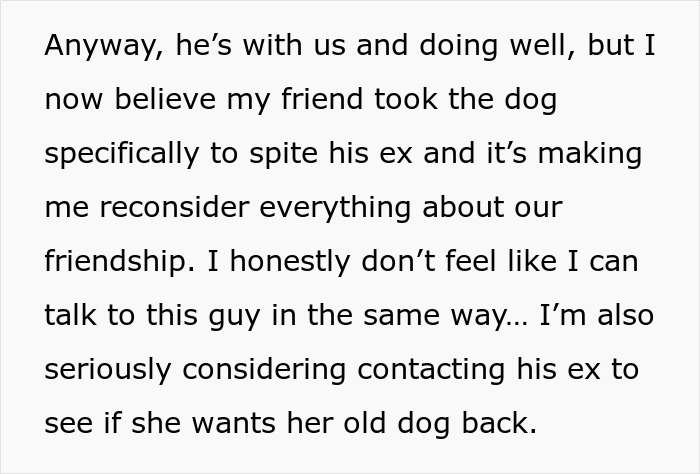
Image credits: @invadingkingdom / Unsplash (not the actual photo)
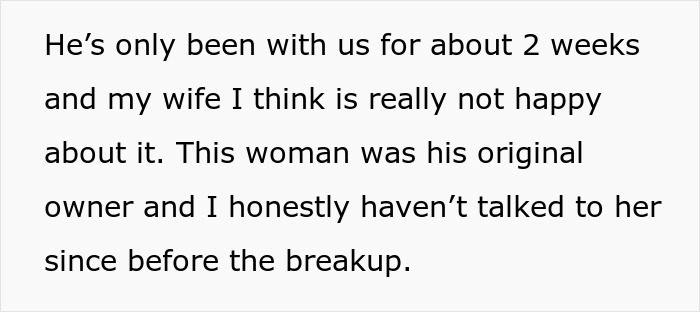
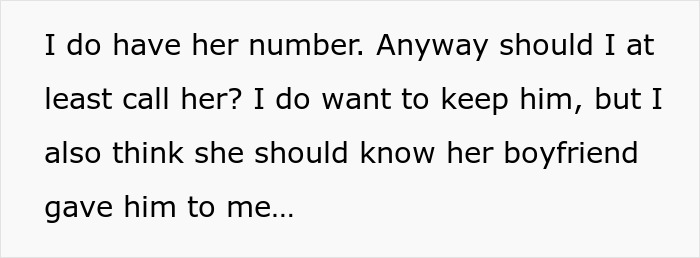
Image credits: ErrorPowerful412
The OP explained that his close friend had recently broken up with a longtime girlfriend after nearly ten years together. During the relationship, they shared a golden retriever that the OP himself had grown very fond of over the years. After the breakup, his friend insisted on keeping the dog, which was understandable.
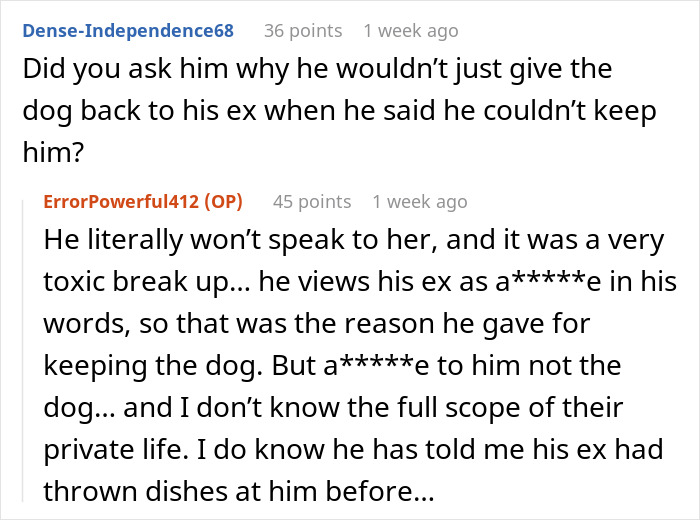
However, things took a bizarre turn only about a month later when the friend suddenly admitted he was overwhelmed with work, his social life, and dating after the breakup. He asked the OP to take the dog. The OP initially refused, but when he realized the friend might alternatively take him to a shelter, he agreed to take the golden retriever into his own home.
Thankfully, the dog adjusted well almost immediately, but his wife reportedly was not thrilled about suddenly becoming a dog owner. After spending more time reflecting on the situation, though, the OP began questioning his friend’s motives entirely. If the dog truly meant so much to him during the breakup, why was he willing to give him away almost immediately afterward?
The OP then started to believe his friend fought for custody of the dog mainly to hurt his ex-girlfriend, and that realization changed how he viewed the friendship. He admitted he no longer felt capable of speaking to his friend the same way after seeing what appeared to be such careless and manipulative behavior involving a pet.
Image credits: Richard Burlton / Unsplash (not the actual photo)
What makes situations like this especially complicated is that they are far more common than people might expect. Weightmans notes that disputes over pets in breakups usually end with one partner keeping the animal rather than any formal shared arrangement. They suggest that women are slightly more likely than men to become the primary caregiver after a relationship ends.
However, sometimes they become tangled in the dynamics of the breakup itself. According to Mel Magazine, in more high-conflict separations, pets can unfortunately be used as symbolic leverage. When one partner insists on keeping an animal, it may not always reflect genuine caregiving intentions, but as a way to assert control, “win” the breakup, or send an emotional message to an ex.
At the same time, practical welfare considerations often tell a different story. Gathered states that ownership itself is usually less important than the stability of the environment provided for the animal. Dogs, in particular, tend to thrive on routine, consistent caregivers, and low-stress homes, meaning that sudden transitions or uncertain arrangements can be more disruptive than a change in ownership.
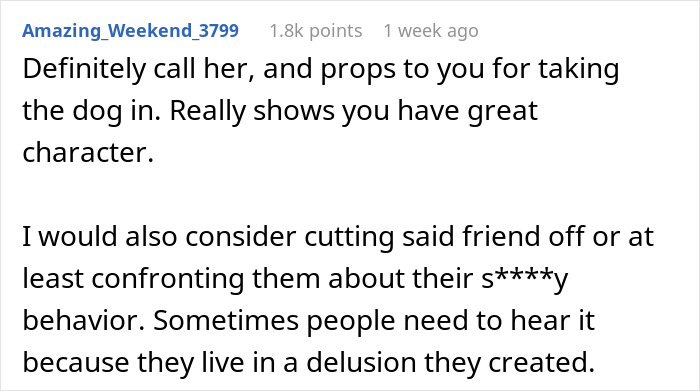
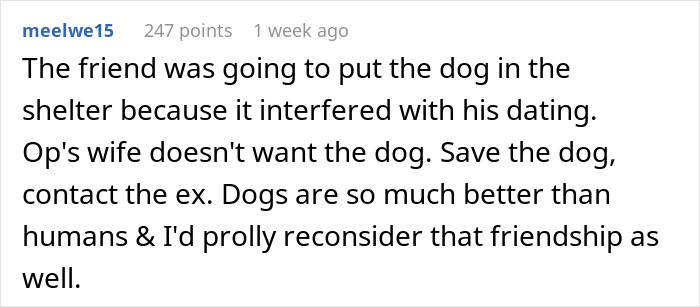
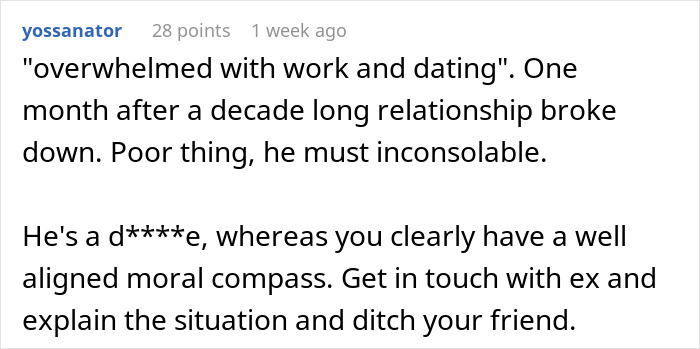
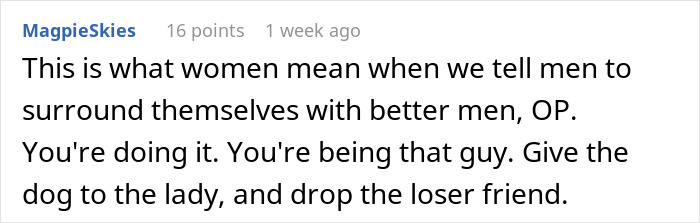
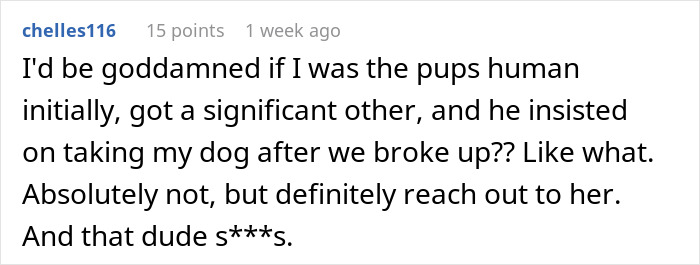
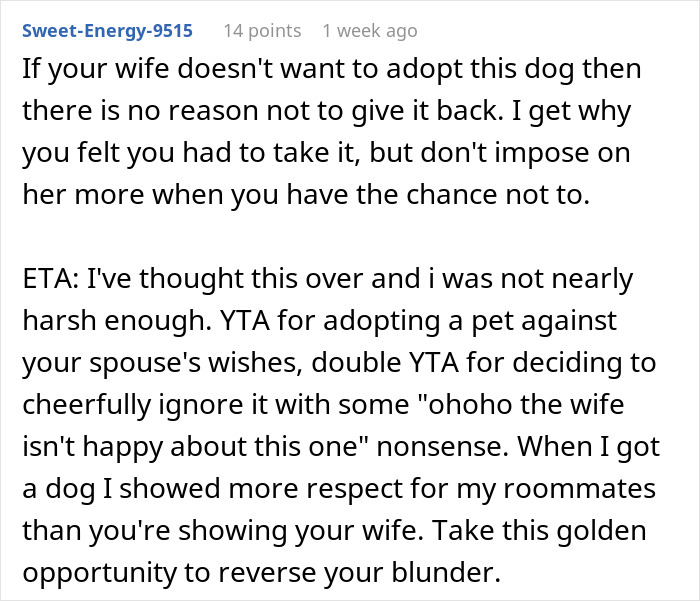
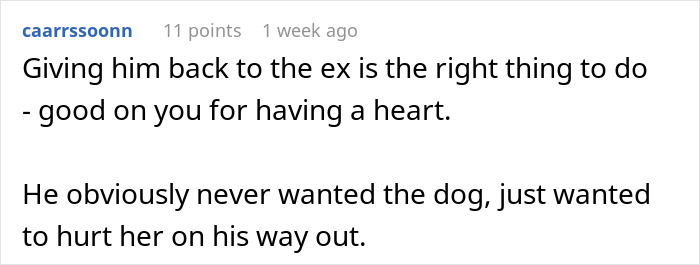
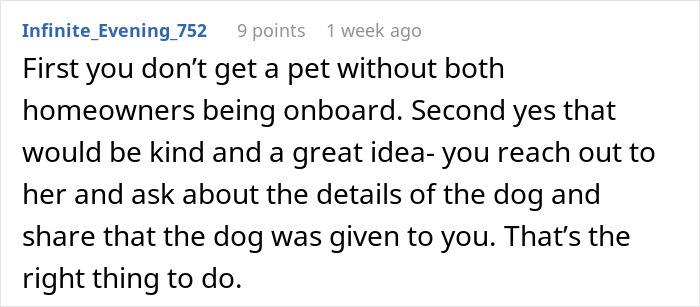
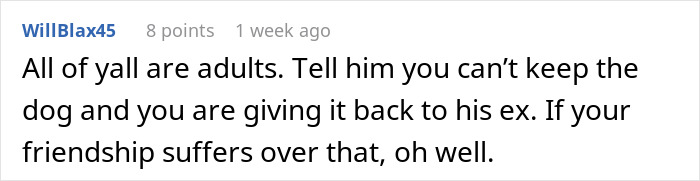
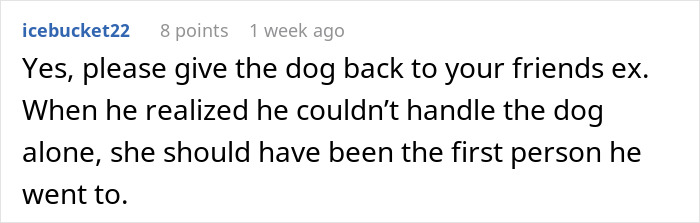
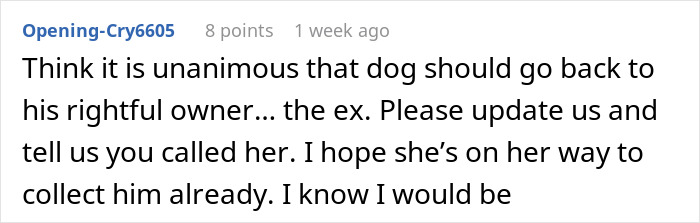
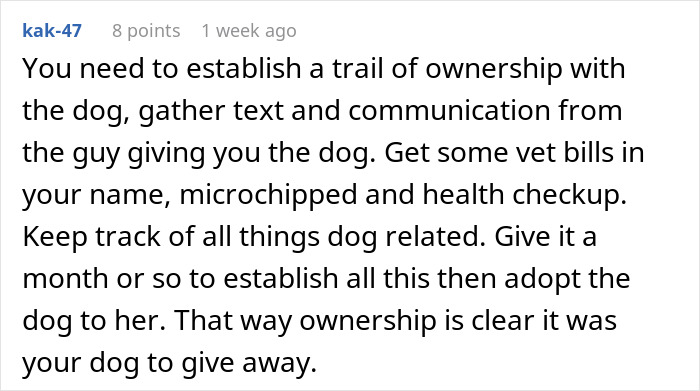
Netizens praised the OP’s actions as morally sound and responsible. They also encouraged him to reconsider the friendship as the friend’s behavior indeed seemed selfish and manipulative. If you were in this situation, would you contact the ex to tell her what happened to the dog, or stay out of it entirely? We would love to know your thoughts!











By entering your email and clicking Subscribe, you're agreeing to let us send you customized marketing messages about us and our advertising partners. You are also agreeing to our Privacy Policy.
Thank you! You've successfully subscribed to newsletters!

OMG, the reply where the ex *k/lled* the pets! Imagine having children with such a partner! But yeah, I wouldn't give much for the character assassination by someone who a month after a breakup of a yearslong relationship can't take care of a dog because he's too busy trying to get his d/ck wet. Or who took care of a dog and then doesn't want to make the necessary sacrifices for the best of the animal (which he had for years and supposedly liked). Looks very much like the ex-GF had a good riddance, and will be much happier with the dog and without the nasty ex-BF. Props to OP for being a decent guy here!

Hope OP called the jerk-face's ex to let her know he has the dog. My ex-hubs kept my cat when I left. So I broke in + took her. 😁 *He knew I did it, the *cops* knew I did it + AH-ex didn't press charges. If he had, annoying things would have happened to him. Just sayin'... If he had pressed charges, weird things would have happened. He worked 35 min. to 1 hr. away from his apartment and I worked 5 min. away.
OMG, the reply where the ex *k/lled* the pets! Imagine having children with such a partner! But yeah, I wouldn't give much for the character assassination by someone who a month after a breakup of a yearslong relationship can't take care of a dog because he's too busy trying to get his d/ck wet. Or who took care of a dog and then doesn't want to make the necessary sacrifices for the best of the animal (which he had for years and supposedly liked). Looks very much like the ex-GF had a good riddance, and will be much happier with the dog and without the nasty ex-BF. Props to OP for being a decent guy here!
Hope OP called the jerk-face's ex to let her know he has the dog. My ex-hubs kept my cat when I left. So I broke in + took her. 😁 *He knew I did it, the *cops* knew I did it + AH-ex didn't press charges. If he had, annoying things would have happened to him. Just sayin'... If he had pressed charges, weird things would have happened. He worked 35 min. to 1 hr. away from his apartment and I worked 5 min. away.

























 No fees, cancel anytime










27
2