Get Premium
Dark mode theme is available exclusively for premium users. Learn more about the benefits of subscribing.
No fees, cancel anytime.

 Dark Mode Ad-Free Browsing Unlimited Content
 Ad-Free Browsing Unlimited Content Dark Mode
Join 1.2 million Panda readers who get the best art, memes, and fun stories every week!
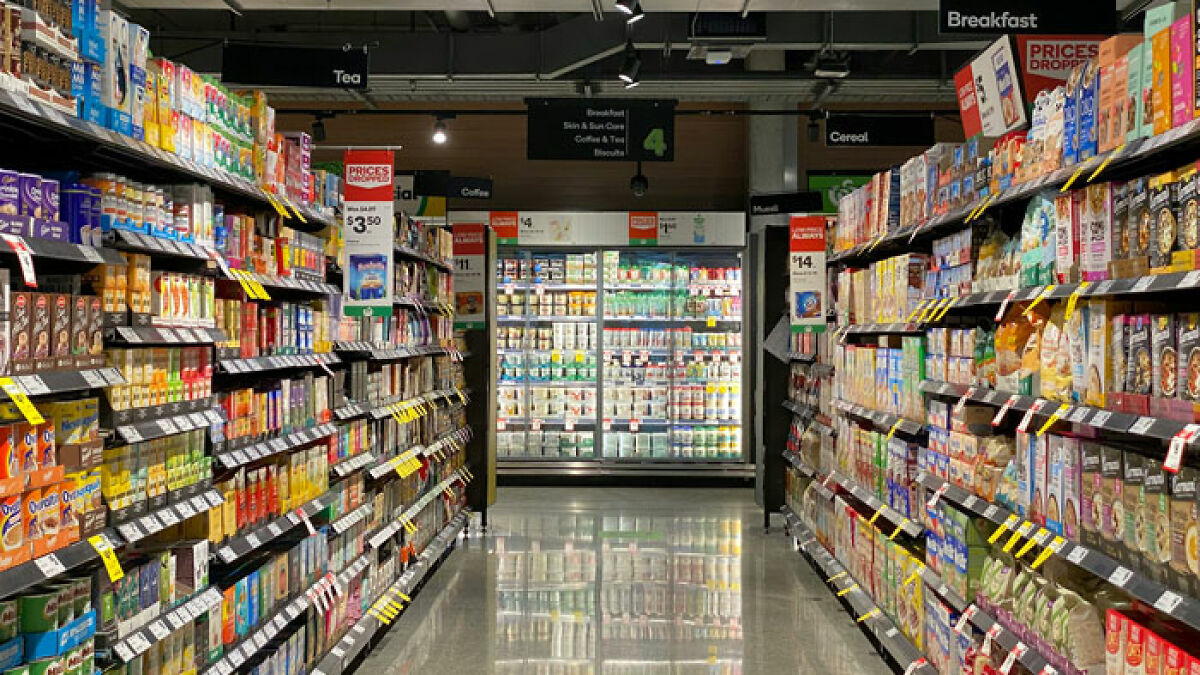
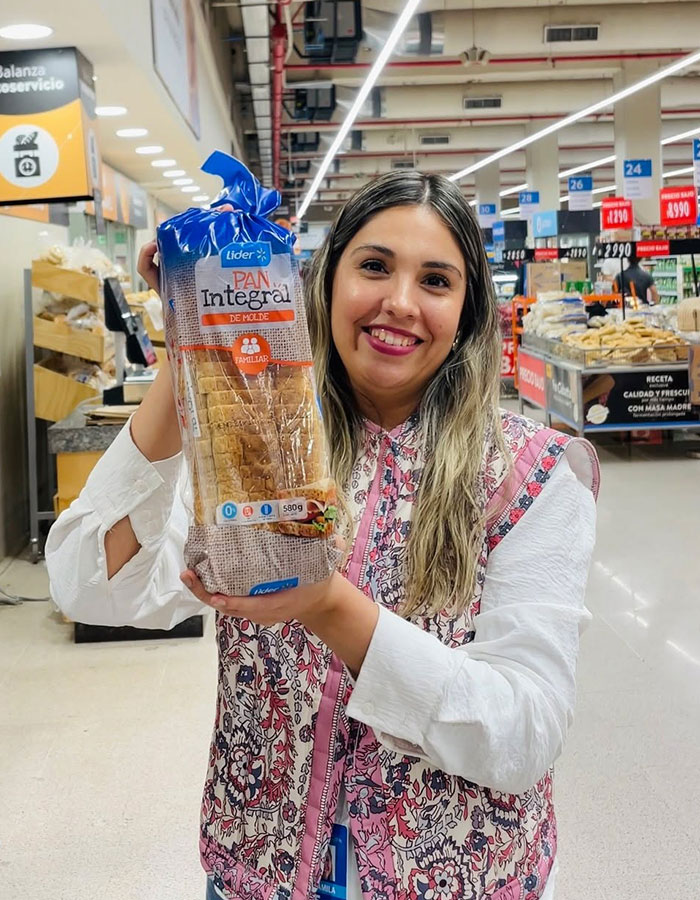
Camila Garate, a food engineer from the University of Chile, never planned on going viral. But a few supermarket videos later, she built a community of consumers tired of being misled.
The mother-of-two has taken social media by storm with a simple mission: to make shoppers smarter. Her platform is dedicated to demystifying supermarket products, revealing which ones are hiding behind misleading marketing, which contain unnecessary additives, and which are worth putting in your cart.
From tomato sauces diluted with water to protein bars masquerading as health food, Camila is not afraid to call out brands, even if it means stepping on corporate toes.
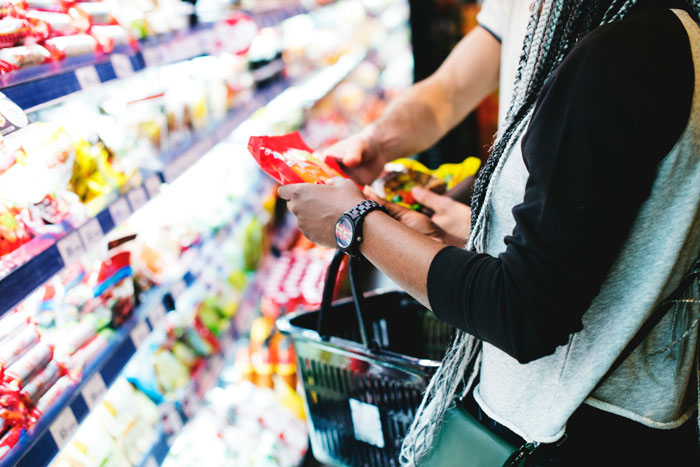
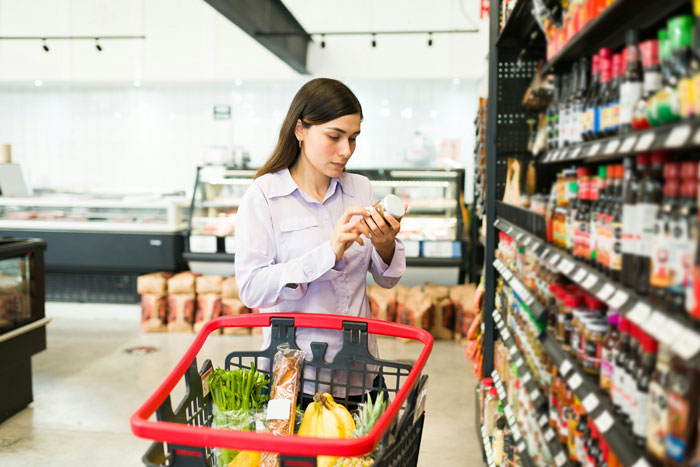
“The information is right there on the label,” she exclusively told Bored Panda. “But as consumers, we’ve gotten way too trusting.”
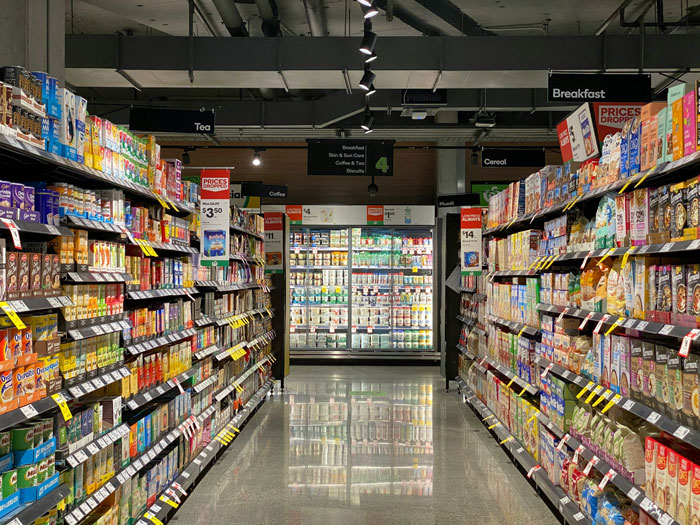
Image credits: Unsplash/Franki Chamaki
Despite being critical of the food industry, Camila stops short of calling their practices outright scams, as they are technically operating within legal boundaries. But that doesn’t mean marketing can’t be misleading.
“We’ve grown accustomed to buying products without ever looking at labels,” she said.
“We are trusting an industry that isn’t necessarily focused on taking care of us.”
Image credits: Instagram/megustacomerrico_
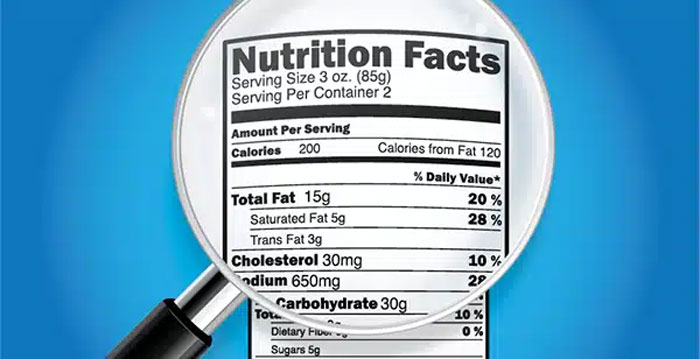
According to the food engineer, the first step in decoding what a product is truly about lies not only in the ingredients listed on packages, but the order in which they are listed.
“The most important thing to know is that ingredients are always listed in descending order,” Camila explained.
“That means the first ingredient tells you the true nature of the product.”
Image credits: Unsplash/Curated Lifestyle
To illustrate her point, Camila shared with us a series of examples.
“Some tomato sauces list water as the first ingredient instead of tomato,” she said, explaining that to make up for the lost volume, these brands then resort to adding thickeners such as Carrageenan, which has been linked by multiple studies to inflammatory bowel diseases.
Image credits: Unsplash/Anna Jakutajc
“The same happens with chocolate where sugar comes before cacao, or whole-wheat bread where refined flour appears first instead of whole-wheat flour,” she added.
“These are the things that should make us stop and think: What am I actually buying?”
Image credits: Unsplash/Rodrigo Araya
The food engineer then detailed the second step: to choose products with fewer ingredients and cleaner labels.
“The fewer additives a product contains, the less processed and more natural it tends to be,” she said.
Camila nevertheless acknowledges that the widespread use of additives and preservatives often stems from cost-cutting and operational efficiency, not outright deceit.
Image credits: Unsplash/Tiard
Still, Camila believes transparency is non-negotiable. The problem, she says, isn’t that companies use these ingredients, it’s that consumers are often unaware, misled by branding and empty marketing language.
She cited the growing trend of “premium” sauces that advertise themselves as containing natural ingredients and real meat, only to reveal in the fine print that just 2% is actually beef, with the rest being mostly soy protein.
“At that point, you’re not really getting what you paid for,” she said.
That’s why Camila’s channel resonated with her audience in Latin America. She admittedly isn’t interested in policing people’s diets, she wants to arm her viewers with the tools to make informed decisions.
View this post on Instagram
When asked about which types of products tend to be more marketing than substance, Camila didn’t hesitate.
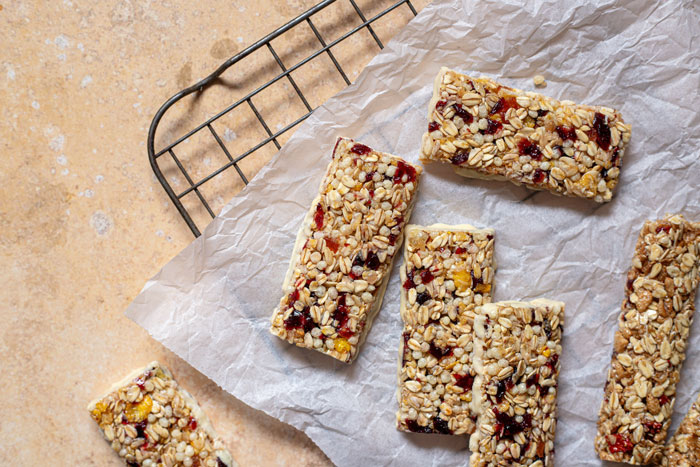
“Granolas, cereal bars, and protein bars are some of the biggest offenders,” she said.
“They’re marketed as healthy, but often their composition says otherwise. Entire teams work on the marketing, not necessarily on making the product healthier. Don’t believe the slogans, read the labels.”
Image credits: Unsplash/Getty
As a rule of thumb, Camila recommends asking a few simple questions before deciding what to buy:
Does it have just a few ingredients? Can I recognize them? Are they simple?
If the answer to the last question is no, if it’s filled with long, unpronounceable names, then it’s worth thinking twice before buying, as per the food engineer.
Image credits: Instagram/megustacomerrico_
Among the dozens of preservatives, thickeners, and other additives, Camila warned about what she considers the biggest red flags.
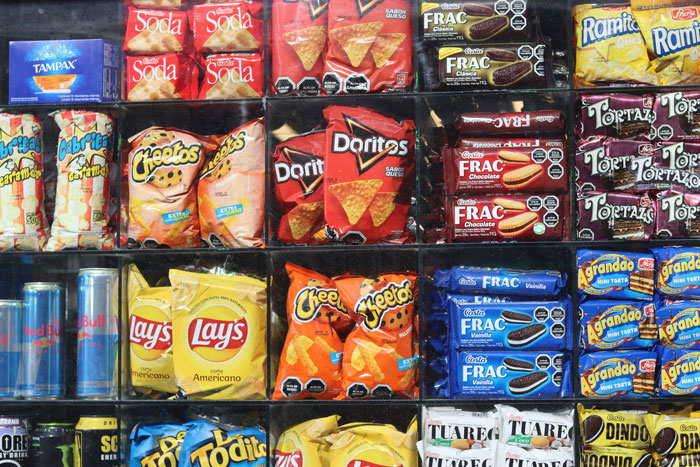
“Number one: high-fructose corn syrup. After that, maltodextrin and palm oil. These are all very common in processed foods we eat every day, such as cookies, cereals, snacks, candy, and more.”
She explained that these additives act on metabolic pathways that promote inflammation, insulin resistance, and the accumulation of visceral or liver fat.
Image credits: Unsplash/Getty
“They also disrupt cardiovascular biomarkers like LDL cholesterol, lipids, and inflammatory profiles,” she added.
“All of this contributes to the development or worsening of conditions like obesity, type 2 diabetes, and cardiovascular disease.”
In other words, while these ingredients may offer convenience and cost savings for manufacturers, it’s the consumers who end up paying the price with their health.
Image credits: European Heart Network
Beyond increasing awareness among consumers, Camila’s videos have already begun to move the needle.
“Recently, I noticed that Van Camp’s tuna reformulated its recipe back to the original,” she said.
“A lot of people might remember one of my viral videos where I explained how they were adding vegetable broth to cut costs, basically replacing tuna with broth. I’m happy to say they’ve now removed it.”
Image credits: Instagram/megustacomerrico_
Despite directly naming and exposing multiple brands, Camila says she has not received any threats or legal warnings.
“None so far,” she said. “And I hope it stays that way.”
In just over a year, Camila’s channel has blossomed into a community of shoppers across Latin America who are hungry for transparency.
“I wanted to teach people how to look out for themselves,” she said. “Because no one else is going to do it for them.”

By entering your email and clicking Subscribe, you're agreeing to let us send you customized marketing messages about us and our advertising partners. You are also agreeing to our Privacy Policy.
Thank you! You've successfully subscribed to newsletters!


I *always* read labels. Stevia and I do not agree. Sadly it is turning up in more and more things. Plus, I don't care to eat too much food that is lacking in identifiable "food", or is using cheap low-quality ingredients (like palm oil instead of butter, glucose syrup instead of sugar, that sort of thing). It's also useful because if I read a label for a product with a lot of rubbish in it (seriously, how much do you need to make a cookie?), then I'll be "ewww!" and put it back on the shelf. I might regret that decision at 3am, but in the long run it's probably far better for me. Sadly, there is as yet no legal requirement to do the same sort of thing for meat (such as growth hormones, antibiotics, and the like; not to mention whatever the hell the coat it with to give it that ghastly red colour (dead flesh doesn't look like that!)).

I was trying to add collagen in my diet by using a flavored powder in my coffee. Gah, the bloating and gas it caused! Finally figured out it was the stevia they used as a sweetener. Couldn't find another brand that didn't use it, so am now using an unflavored powder. So many people react to additives!
Load More Replies...
Why, of all examples, cite water in tomato sauce? That is so misleading! (And there's better criticism: sugar, canola oil, salt,...) Typically, store-bought tomato sauce is cooked down so much of the moisture content is removed. The concentrate is easier to store and cheaper to ship. The water is used to reconstitute it to a pourable consistency, but you're still getting more tomato than if you just used nothing more than fresh tomatoes. The store-bought stuff is still extra thick due to concentration. I always check my labels and I have NEVER seen carageenan in a tomato sauce (although I stay away from the expensive brands). I wonder if she's confused with white sauces, where carageenan would make some sense. My criticism with Prego is that it is unnecessarily high in sugar; a touch of sugar is helpful for balancing acidity, but it seems like Prego uses so much that it's used as a sweetener (7g); other than that, I like it's carageenan-free, thick consistency.

Prego uses so much sugar because they use plum tomatoes. The type of vegetable can make an enormous amount of difference in something concentrated.
Load More Replies... If you want a real "holy sh*t" moment, read what's in your cat food. If you're lucky, it's 4% of what it says on the label and 96% of "don't ask" including 2.5% cinders. What?!? And this is for stuff like Felix as well as the supermarket's own-brand twaddle (because there's a box of Felix sitting on my lap as I write this and I'd copy out the ingredients for you except I don't know what the heck "sous-produits animaux" would best translate to...and I'm thinking that I probably don't want to know).

"sous-produits animaux" == skin and bone and cartilage. The same sort of stuff that they'll gladly eat if they get a hold of my discarded chicken carcass, for example, only a bit more mashed up together. Cats digestive systems are very robust - if they need to they can eat almost anything - so it doesn't worry me too much what's in the Felix Whiskas, or Canillou or Coshida (these last two Intermarché and Lidl brands respectively) branded wet food I give them, I just mix and vary them all the time to try to minimise fussiness on their part. Right now they're being restricted to two meals a day, as Poppy has developed T2 diabetes (with complications) and it's part of her treatment regime to only eat when I dose her with Insulin so are being less picky than ever.
Load More Replies... I *always* read labels. Stevia and I do not agree. Sadly it is turning up in more and more things. Plus, I don't care to eat too much food that is lacking in identifiable "food", or is using cheap low-quality ingredients (like palm oil instead of butter, glucose syrup instead of sugar, that sort of thing). It's also useful because if I read a label for a product with a lot of rubbish in it (seriously, how much do you need to make a cookie?), then I'll be "ewww!" and put it back on the shelf. I might regret that decision at 3am, but in the long run it's probably far better for me. Sadly, there is as yet no legal requirement to do the same sort of thing for meat (such as growth hormones, antibiotics, and the like; not to mention whatever the hell the coat it with to give it that ghastly red colour (dead flesh doesn't look like that!)).
I was trying to add collagen in my diet by using a flavored powder in my coffee. Gah, the bloating and gas it caused! Finally figured out it was the stevia they used as a sweetener. Couldn't find another brand that didn't use it, so am now using an unflavored powder. So many people react to additives!
Load More Replies... Why, of all examples, cite water in tomato sauce? That is so misleading! (And there's better criticism: sugar, canola oil, salt,...) Typically, store-bought tomato sauce is cooked down so much of the moisture content is removed. The concentrate is easier to store and cheaper to ship. The water is used to reconstitute it to a pourable consistency, but you're still getting more tomato than if you just used nothing more than fresh tomatoes. The store-bought stuff is still extra thick due to concentration. I always check my labels and I have NEVER seen carageenan in a tomato sauce (although I stay away from the expensive brands). I wonder if she's confused with white sauces, where carageenan would make some sense. My criticism with Prego is that it is unnecessarily high in sugar; a touch of sugar is helpful for balancing acidity, but it seems like Prego uses so much that it's used as a sweetener (7g); other than that, I like it's carageenan-free, thick consistency.
Prego uses so much sugar because they use plum tomatoes. The type of vegetable can make an enormous amount of difference in something concentrated.
Load More Replies... If you want a real "holy sh*t" moment, read what's in your cat food. If you're lucky, it's 4% of what it says on the label and 96% of "don't ask" including 2.5% cinders. What?!? And this is for stuff like Felix as well as the supermarket's own-brand twaddle (because there's a box of Felix sitting on my lap as I write this and I'd copy out the ingredients for you except I don't know what the heck "sous-produits animaux" would best translate to...and I'm thinking that I probably don't want to know).
"sous-produits animaux" == skin and bone and cartilage. The same sort of stuff that they'll gladly eat if they get a hold of my discarded chicken carcass, for example, only a bit more mashed up together. Cats digestive systems are very robust - if they need to they can eat almost anything - so it doesn't worry me too much what's in the Felix Whiskas, or Canillou or Coshida (these last two Intermarché and Lidl brands respectively) branded wet food I give them, I just mix and vary them all the time to try to minimise fussiness on their part. Right now they're being restricted to two meals a day, as Poppy has developed T2 diabetes (with complications) and it's part of her treatment regime to only eat when I dose her with Insulin so are being less picky than ever.
Load More Replies...





































 No fees, cancel anytime
















29
21