Get Premium
Dark mode theme is available exclusively for premium users. Learn more about the benefits of subscribing.
No fees, cancel anytime.

 Dark Mode Ad-Free Browsing Unlimited Content
 Ad-Free Browsing Unlimited Content Dark Mode
Join 1.2 million Panda readers who get the best art, memes, and fun stories every week!

Anyone who works in medicine knows that nurses are not to be messed with. They’re the ones running hospitals like well-oiled machines, and their role is every bit as vital as any doctor’s. Yet somehow, a surprising number of people still see them as less than.
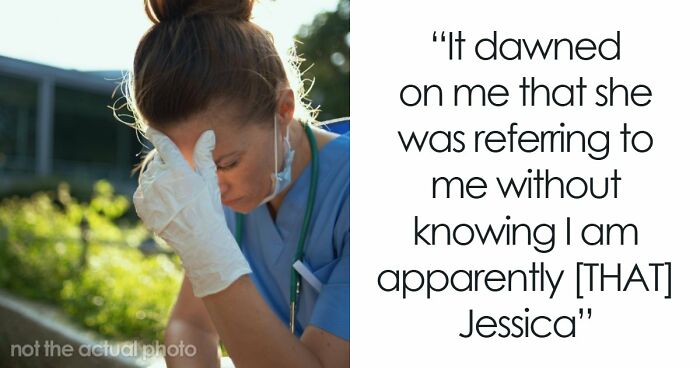
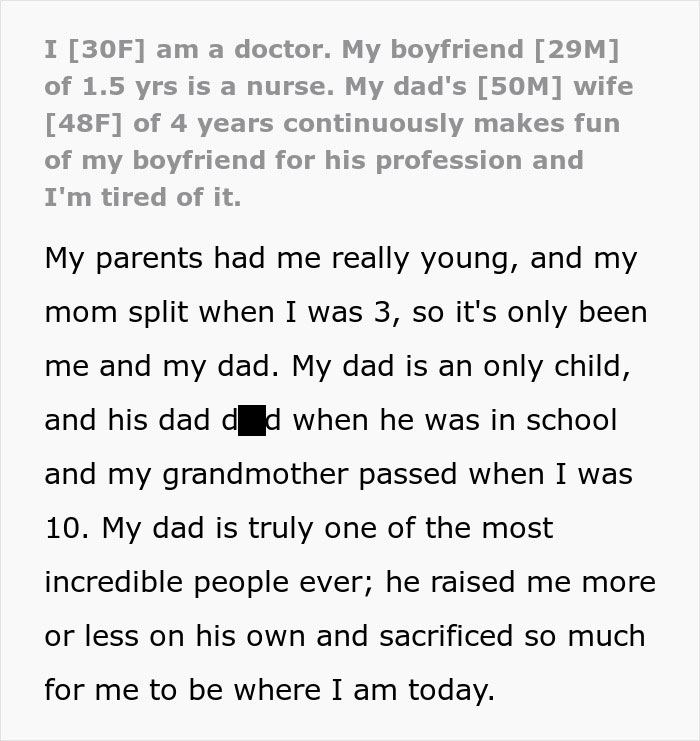
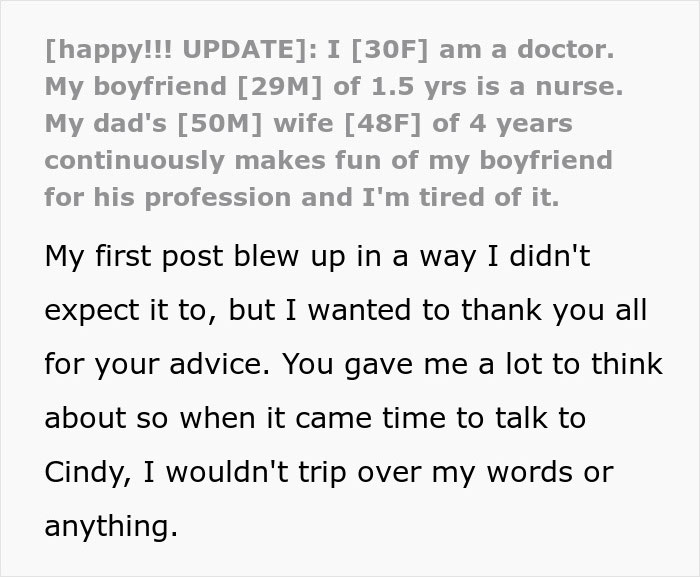
That’s exactly what one woman found herself dealing with when her stepmom couldn’t stop mocking her boyfriend’s nursing career, calling it feminine and unmanly. She loved her stepmom deeply, but the jokes just kept coming. Unsure how to put a stop to it without damaging their relationship, she turned to Reddit for advice.
Image credits: The Yuri Arcurs Collection / freepik (not the actual photo)
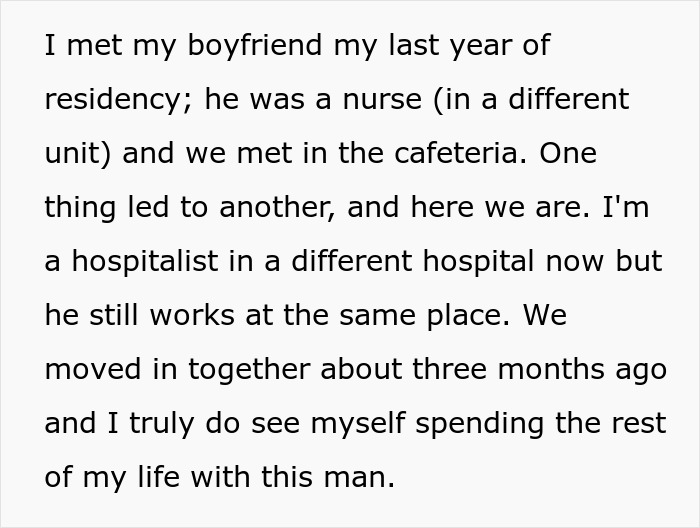
Image credits: freepik (not the actual photo)

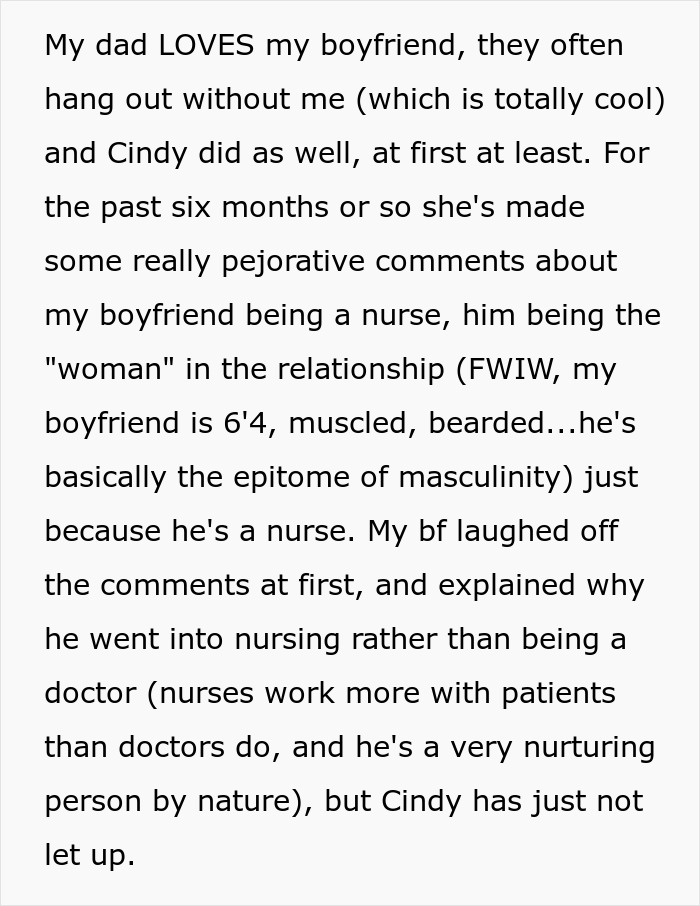
Image credits: Lance Reis / Unsplash (not the actual photo)
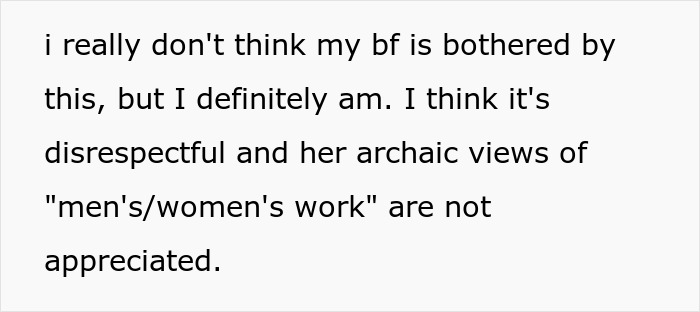

Image credits: diana.grytsku / freepik (not the actual photo)

Image credits: mybfisanurse
The man in this story is by far not the only one who experiences this kind of stereotyping. Nursing has long been a profession plagued by misconceptions, and at the root of most of them is the same thing: it is seen as women’s work. That perception has fueled a lot of misogyny toward the field, and male nurses end up caught in the crossfire too.
As a result of sexism, when a profession becomes associated with women, it tends to get devalued. Nursing is a textbook example of that. According to Regis College, one of the most common assumptions is that nursing is inherently a feminine job, built on the myth that women are naturally more caring and compassionate. That belief alone has done a lot to define how the entire profession is seen.
From there, other stereotypes follow. Nurses are widely viewed as subordinate to doctors, as if their entire role is to assist rather than lead and make critical decisions of their own. Regis College notes that this kind of thinking relies on a harmful hierarchy that treats some contributors as less valuable than others. Doctors and nurses intentionally pursue different career paths, and the idea that one outranks the other says more about how society values certain kinds of work than it does about the actual roles themselves.
Nursing is also frequently dismissed as a low-skill job, despite the years of education, clinical training, and licensing that registered nurses must complete before they can even begin working. Many go on to become nurse practitioners or pursue doctoral-level programs with serious leadership responsibilities.
The assumption that it requires little skill is hard to separate from the fact that it has long been seen as women’s work, and women’s work has historically been underestimated.
Image credits: DC Studio / freepik (not the actual photo)
These assumptions did not appear out of nowhere. They are tied to a specific history that explains how nursing ended up being seen as a female profession in the first place.
As Alice Blackmore, MN, RN, explains, it was not always this way. In the 1700s, when the first hospitals opened in the United States, many nurses, often called stewards, were actually men. That started to change in the 1860s during the Civil War, when male nurses left to fight and women stepped in to fill the overwhelming need for caregivers.
By 1900, women made up roughly 91% of the nursing workforce. Institutional policies then cemented that further. When the U.S. Army Nurse Corps reorganized in 1901, men were banned from serving, a restriction that lasted until 1955.
Many civilian nursing schools also refused to admit male students, and it was not until a 1981 court ruling that nursing programs were legally required to accept men.
While times have changed, the stereotypes that formed over centuries did not simply disappear. Society inherited the idea that nurses, who are mostly women, are supposed to be gentle, nurturing, and obedient. And even as more men have entered the field, it remains a predominantly female profession.
Sadly, society has a long history of dismissing anything associated with women as lesser. That is exactly what this man’s stepmom was doing, whether she realized it or not.
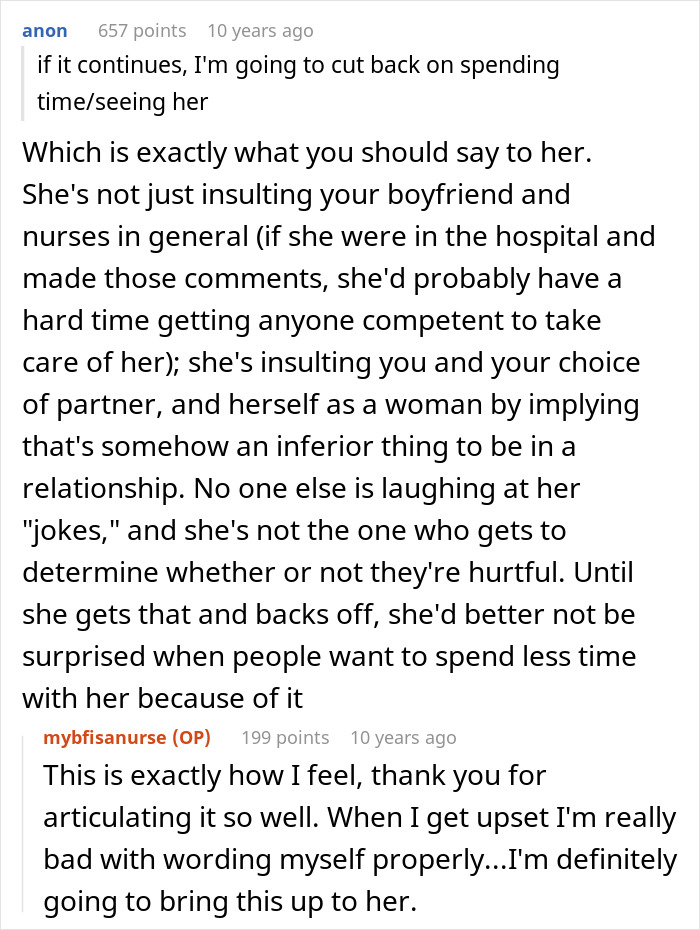

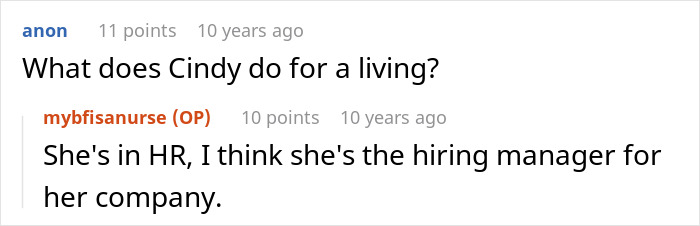
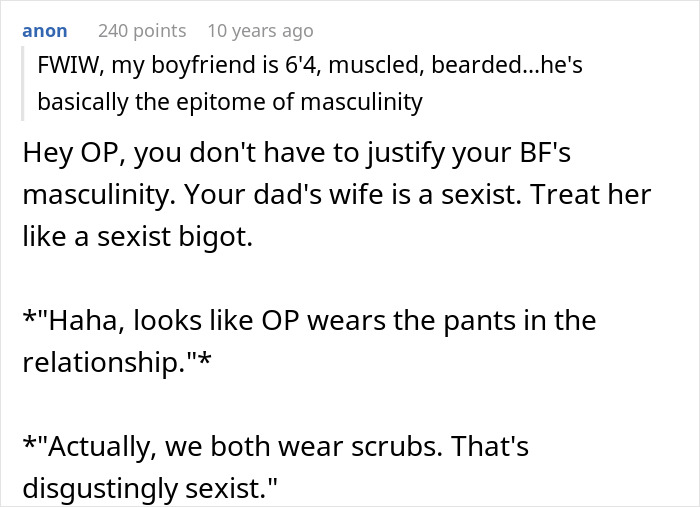
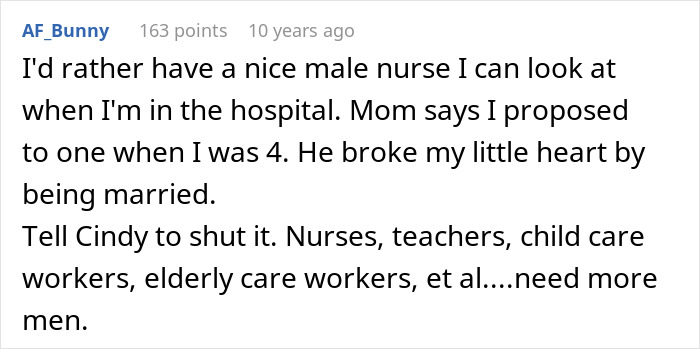

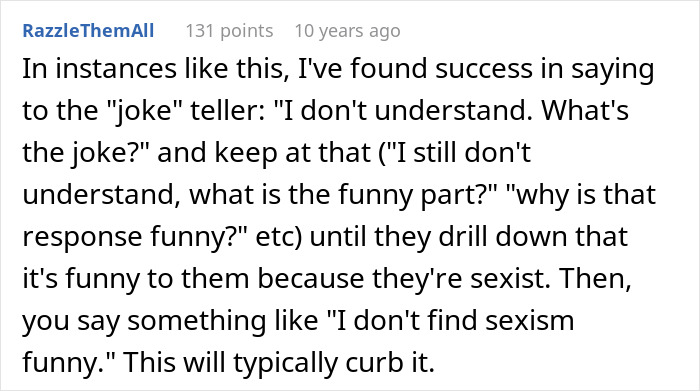

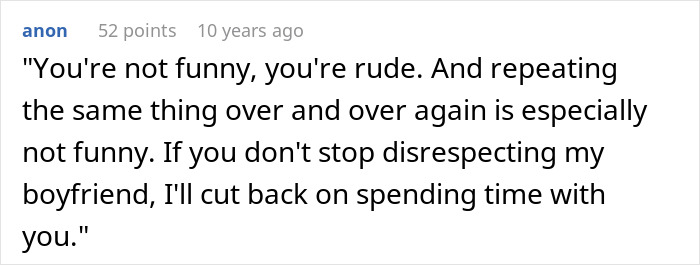
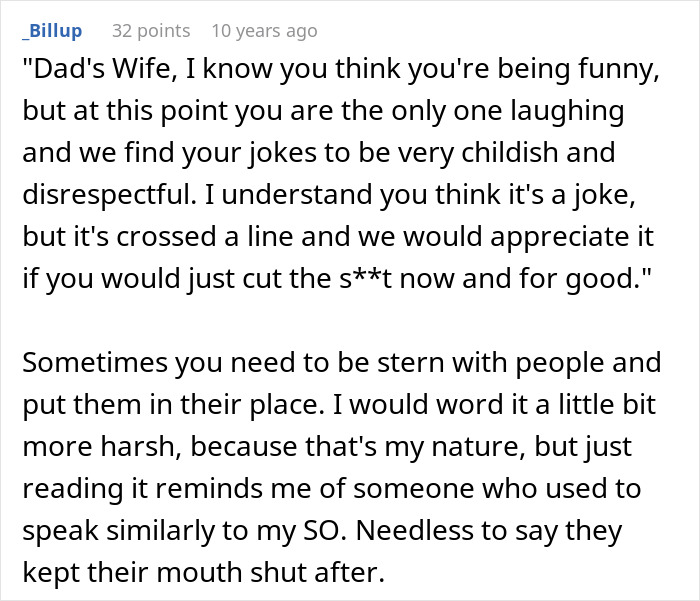
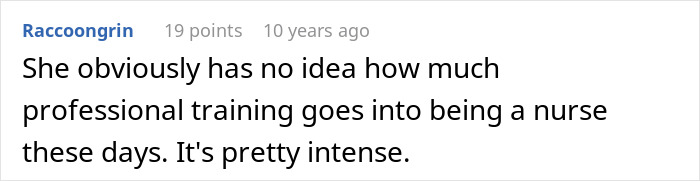
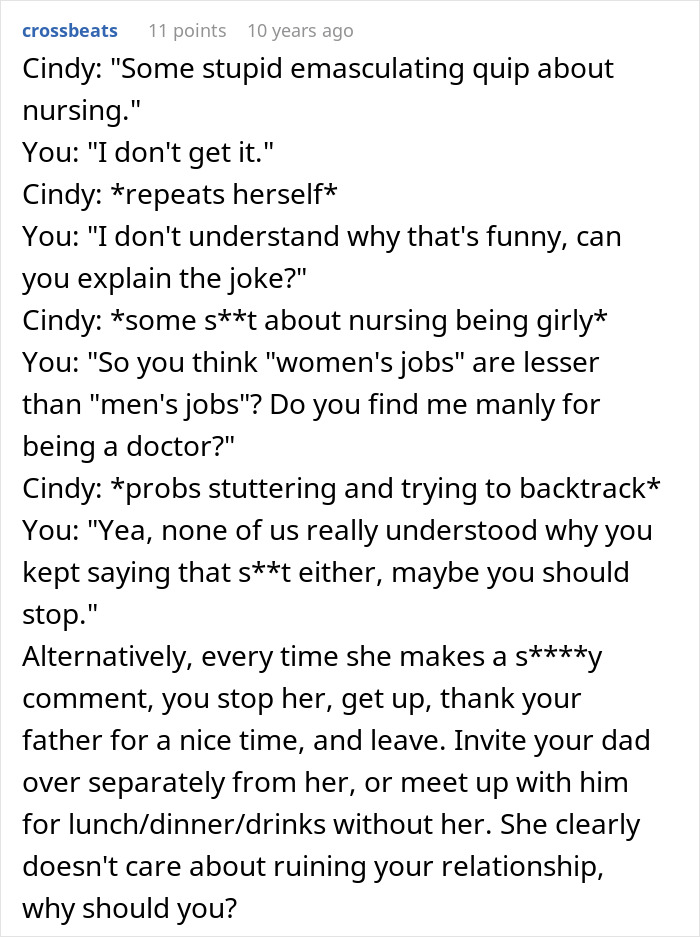
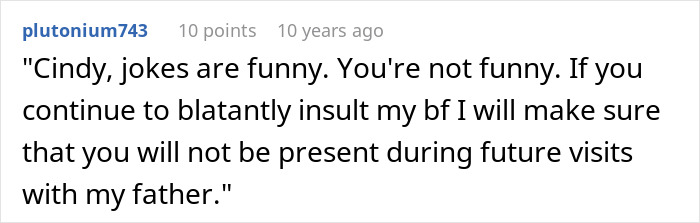
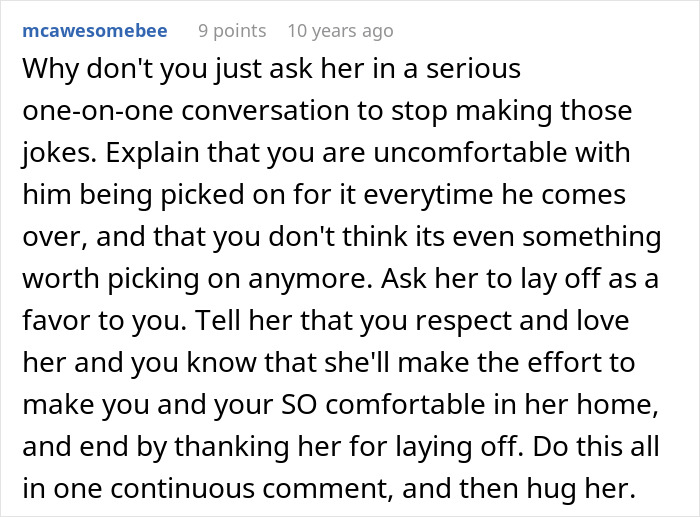
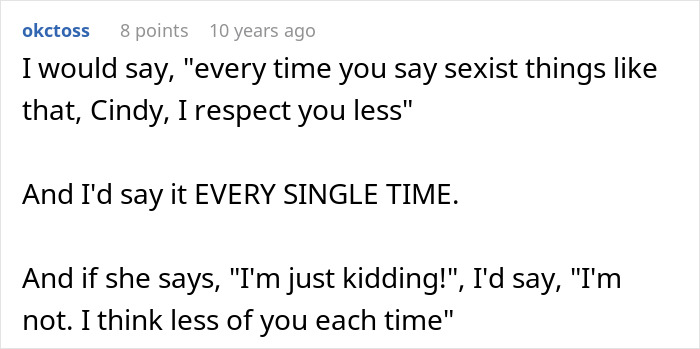
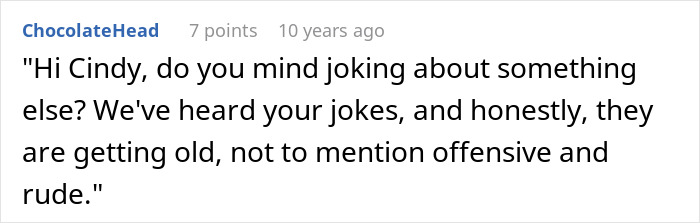

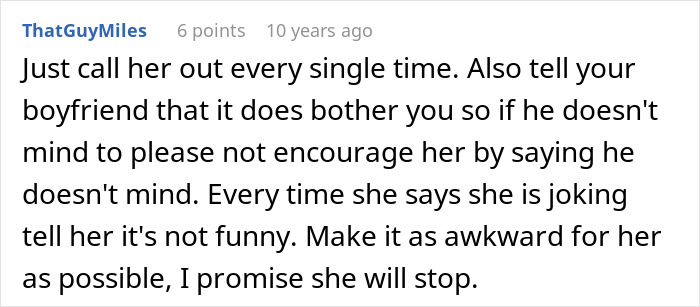

Image credits: gpointstudio / freepik (not the actual photo)
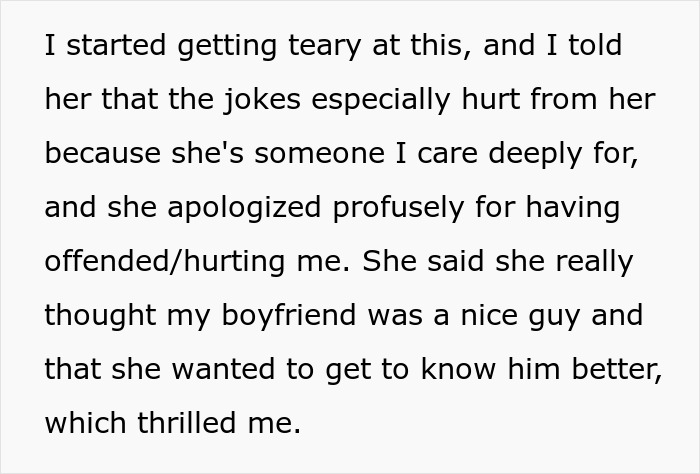
Image credits: goffkein / freepik (not the actual photo)

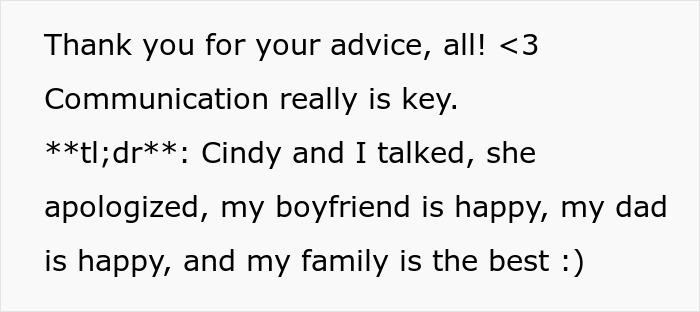
Image credits: mybfisanurse
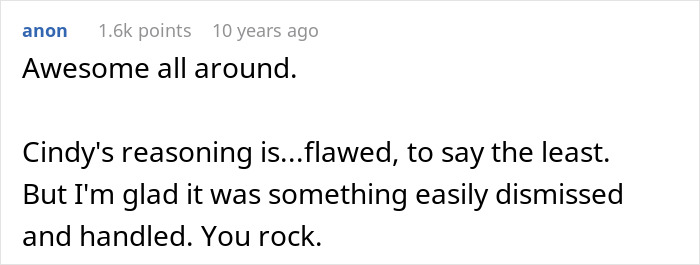

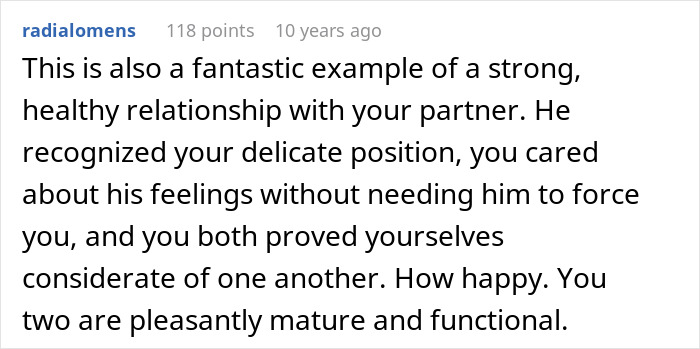





By entering your email and clicking Subscribe, you're agreeing to let us send you customized marketing messages about us and our advertising partners. You are also agreeing to our Privacy Policy.
Thank you! You've successfully subscribed to newsletters!


It may not be in all countries, but in Europe at least; you need a bachelor degree to become a nurse, and there are many who even have a major (edit: masters) degree. The tasks and responsibilities of a nurse go far beyond personal hygiene and administering pills. A lot of physicians depend on the experience and observational skills of nurses to decide what medicine to prescribe, in what form and what dosage, or they may ask advice from nurses on for example wound care. Nurses will perform specialized procedures that physicians may not even be qualified to do.

Exactly. The doctor may prescribe the treatment, but it's the responsibility of nurses to administer it and monitor progress. And that is life-critical in many situations. My mother was a nurse, and later in life set up a nursing home from scratch. It's a huge responsibility, male or female.
Load More Replies...
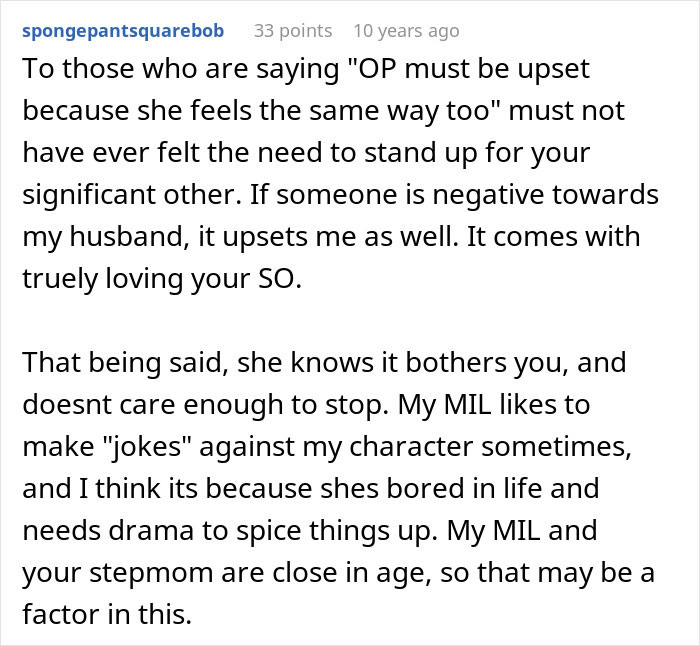
Tell Cindy that one of BF's co-workers is making fun of him for being a man in the nursing profession. Then ask her, as an HR Professional, how she would suggest handling the problem.
It may not be in all countries, but in Europe at least; you need a bachelor degree to become a nurse, and there are many who even have a major (edit: masters) degree. The tasks and responsibilities of a nurse go far beyond personal hygiene and administering pills. A lot of physicians depend on the experience and observational skills of nurses to decide what medicine to prescribe, in what form and what dosage, or they may ask advice from nurses on for example wound care. Nurses will perform specialized procedures that physicians may not even be qualified to do.
Exactly. The doctor may prescribe the treatment, but it's the responsibility of nurses to administer it and monitor progress. And that is life-critical in many situations. My mother was a nurse, and later in life set up a nursing home from scratch. It's a huge responsibility, male or female.
Load More Replies... Tell Cindy that one of BF's co-workers is making fun of him for being a man in the nursing profession. Then ask her, as an HR Professional, how she would suggest handling the problem.





























 No fees, cancel anytime













38
4