Get Premium
Dark mode theme is available exclusively for premium users. Learn more about the benefits of subscribing.
No fees, cancel anytime.

 Dark Mode Ad-Free Browsing Unlimited Content
 Ad-Free Browsing Unlimited Content Dark Mode
Join 1.2 million Panda readers who get the best art, memes, and fun stories every week!
A photograph is more than just a moment frozen in time. It’s also a fascinating story told through an image, oftentimes much more meaningful than words alone can express.
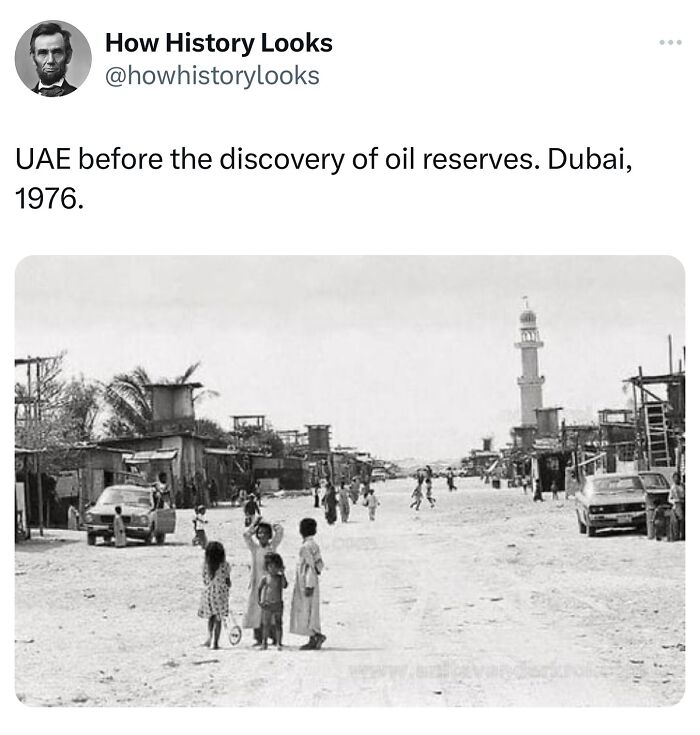
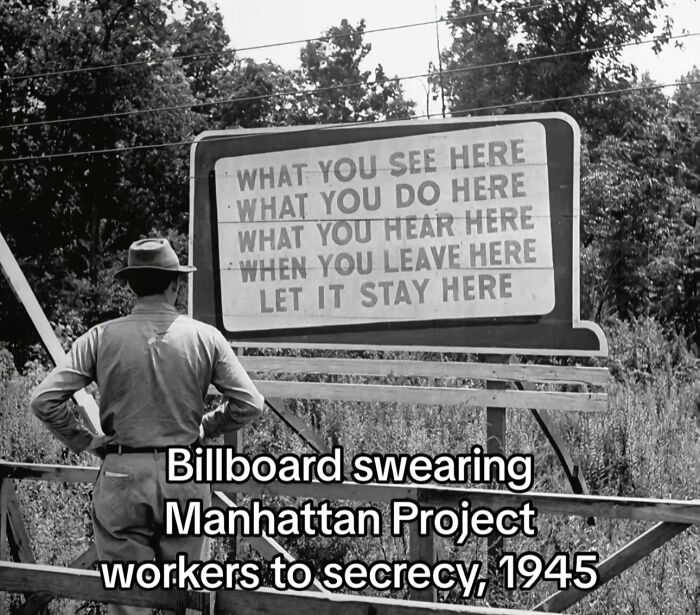
Check out these examples from the How History Looks Instagram account. These snapshots are enough to captivate, but reading their backstories may make you want to do more digging.
We’ve collected some snapshots from the page, including unseen portraits of notable figures, events that shaped humanity, and pictures of daily life from nearly a full century ago.
This post may include affiliate links.

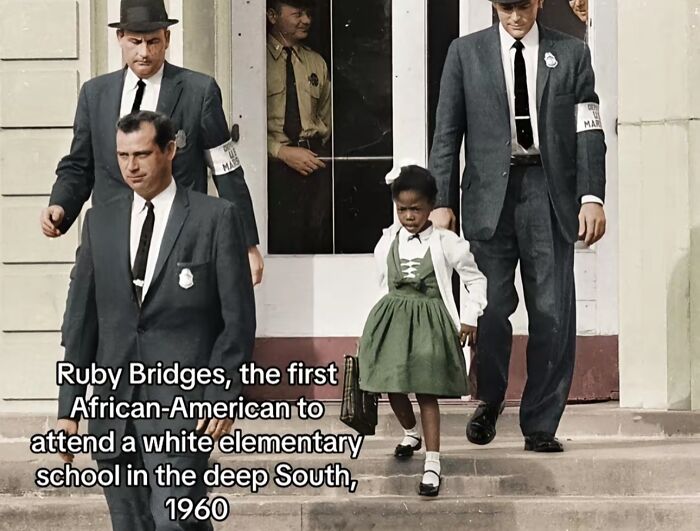
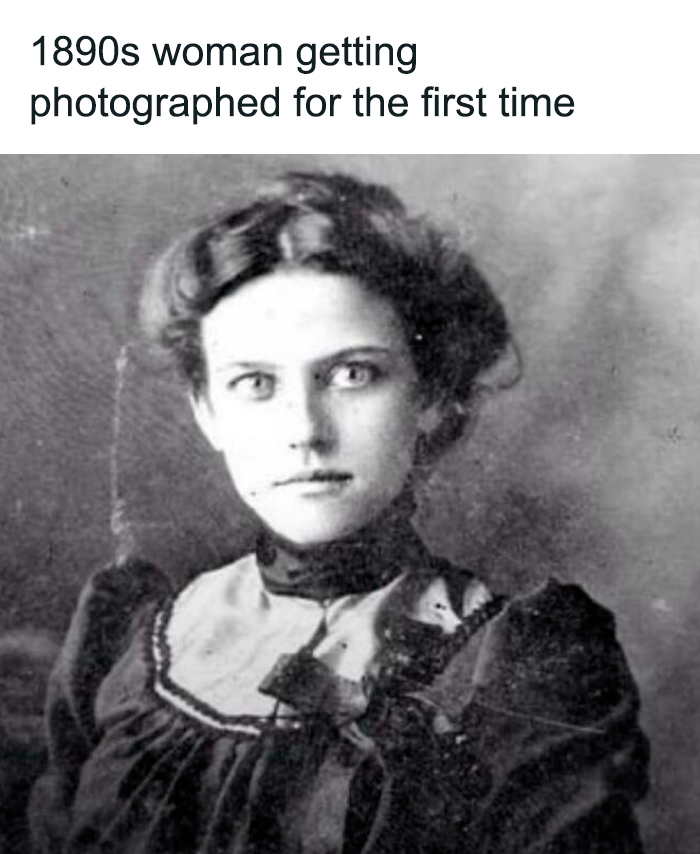
She's in her 70s now. Always remember that ALL the parents of that school withdrew their kids rather than allow them to go to school with a black girl. She was escorted past dozens of hateful white people throwing rocks and hurling insults at her. She was just a kid. And she went to those classes and sat alone.
Learning about history provides us with enough context and understanding for the present to make informed decisions about the future. But that’s just one of the many reasons to do so.
According to research by University of Massachusetts Amherst professor Lisa Wexler, a lack of accurate knowledge about the historical traumas of one’s culture creates a sense of grief and stress.
Educator and public servant Shahara McGee shares a similar sentiment. In an article for the University of Nevada, Reno publication, McGee explained how knowing about the African-American legacy is more than just learning about the contributions of Martin Luther King, Rosa Parks, and Malcolm X.
“It is vital and a personal moral imperative to share the breadth and depth of Black History, showing what it is and means to the world,” she wrote.

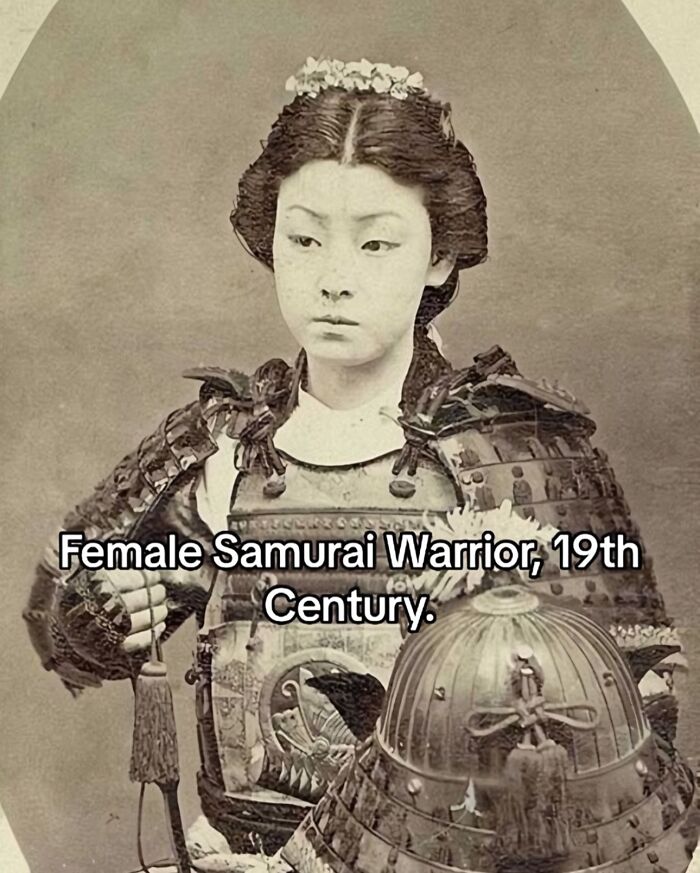
This is most likely Nakano Takeko, a famous onna-bugeisha (female warrior) in Japanese history. Nakano fought during the Boshin War (1868-1869) and died aged 21. She (and other women) fought "without permission, since the senior Aizu retainers at the time did not allow them to fight as an official part of the army. Her preferred weapon was the naginata. She was wounded by a rifle bullet to the chest in October of 1868, and Nakano asked her younger sister to behead her in order to prevent Nakano being taken captive. She asked that her sister give her an honorable burial. Her sister and another Aizu soldier carried out her wishes, and Nakano was buried at the temple her family attended, in the Fukushima prefecture.
Many photos on this list were taken way before digital cameras and smartphones existed. It was a very different time. For UC Berkeley journalism professor and veteran photojournalist Ken Light, photographs at the time had the same point of view.
In an interview with UC Berkeley News, he explained how the pre-smartphone era allowed people to be fully immersed in the moment they intended to capture with a camera.
“If you took a picture in 1970 of 500,000 people at an anti-war protest in Washington, D.C., they all had their peace fingers up, or their power fists,” he said. “If you took a picture now, they’d all have their cell phones up.”

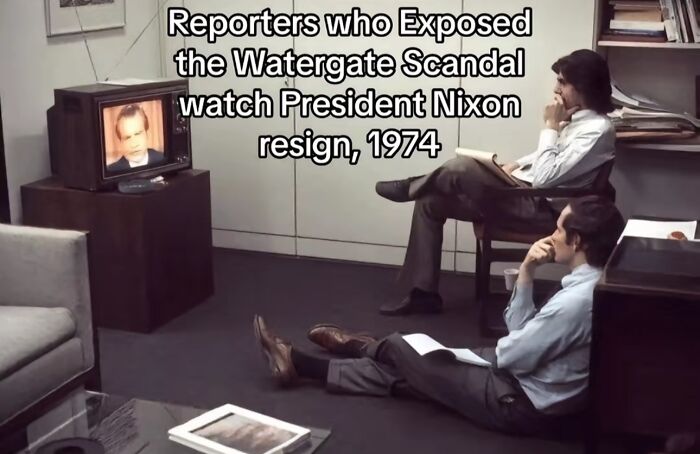
Woodward and Bernstein of the Washington Post. Had to stop my subscription when the WP didn't endorse Kamala Harris over Trump.
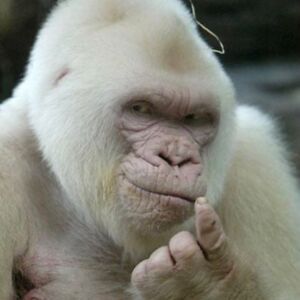
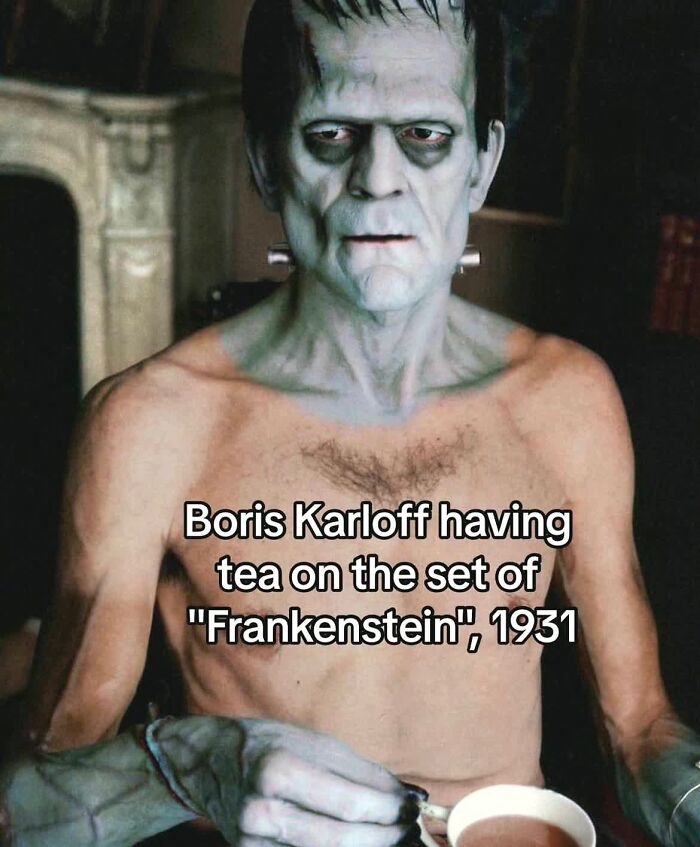
Amazing special effects makeup. Comparable still to now, almost 100 years later.
Light adds that photographers played a much more important role decades ago: to witness and record history. These days, he says, everyone sees themselves as their own brand and says, “Why do we need a photographer?”
At the same time, he recognized how images are much more powerful through social media and as a tool for change.
“The number of images and videos that can be captured really changes how people can record history,” he said.
Now, it’s your turn, readers. Which of these photos captured your attention the most? What about them drew you in? Let us know in the comments!

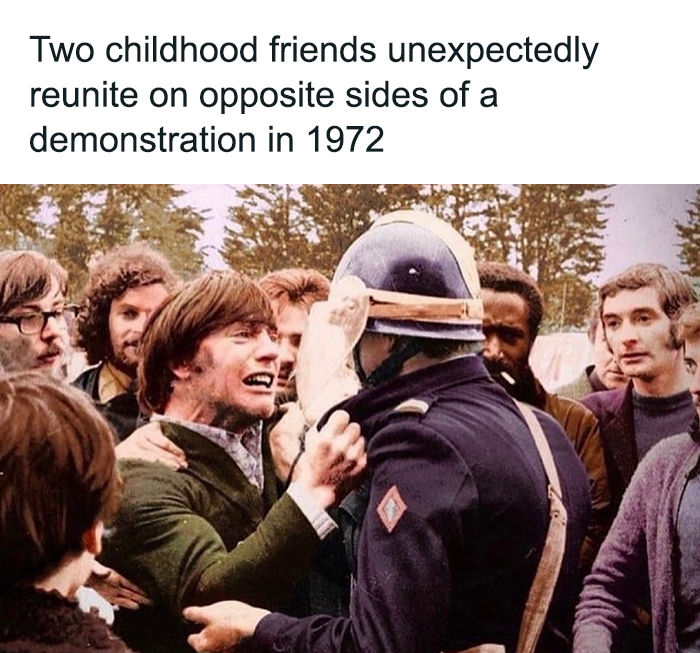
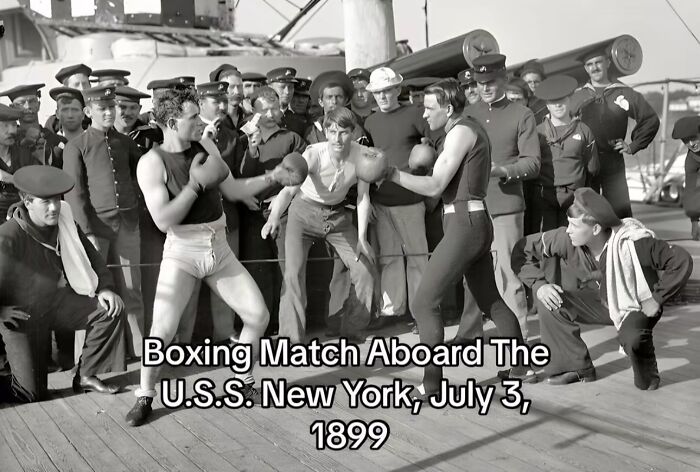
This happened in France during a syndicalist protest. They were best friends growing up. Man on the left is saying "Well, aren't you going to hit me?"

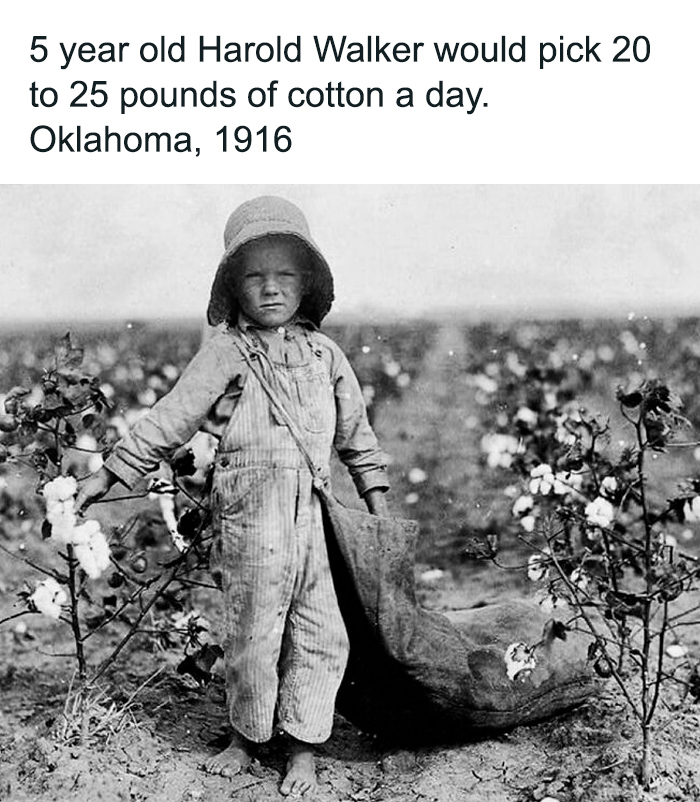
Picking cotton is rough , not just from the work itself. The protective case around the fibers opens up into what look and feel like wooden spikes.
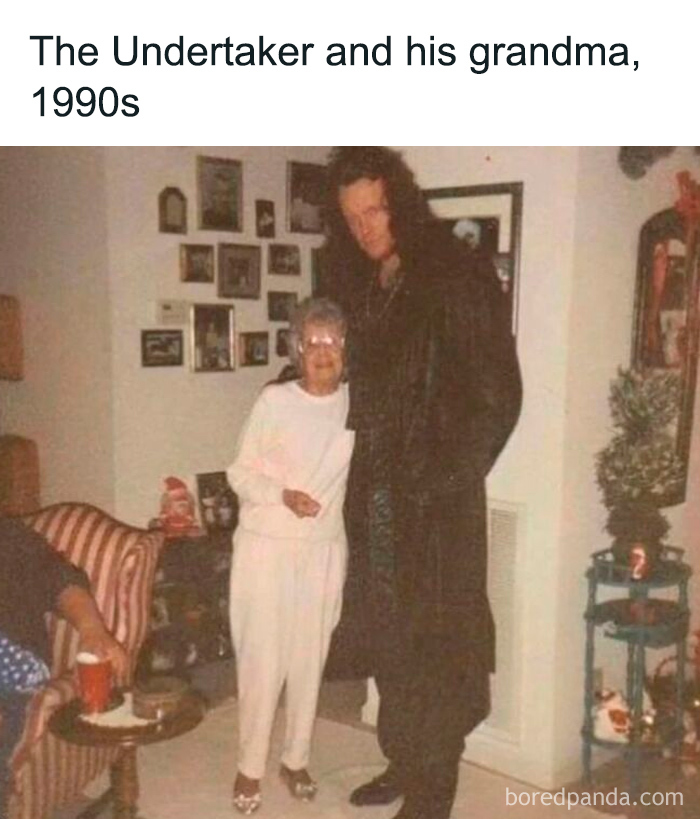
I met him way back when he was one of the WWF top fighters. I was working at an airport's gate and had to wand him. Well I'm barely 5' 2", and was about to climb a chair to start from the top, but he stopped me and instead crouched down to my height til I got done. Everyone around the gate was laughing and he signed autographs and took pictures with his fans.
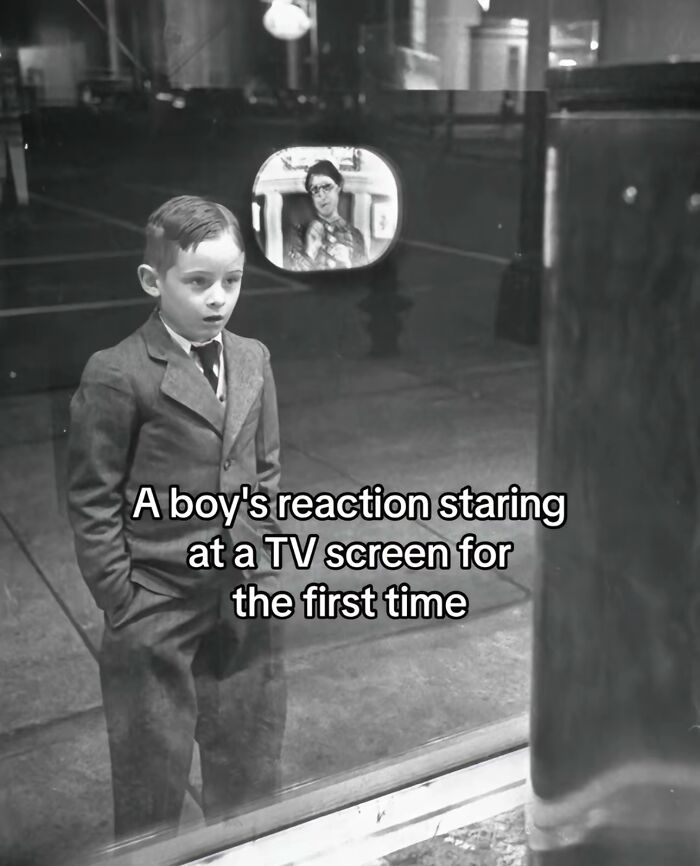
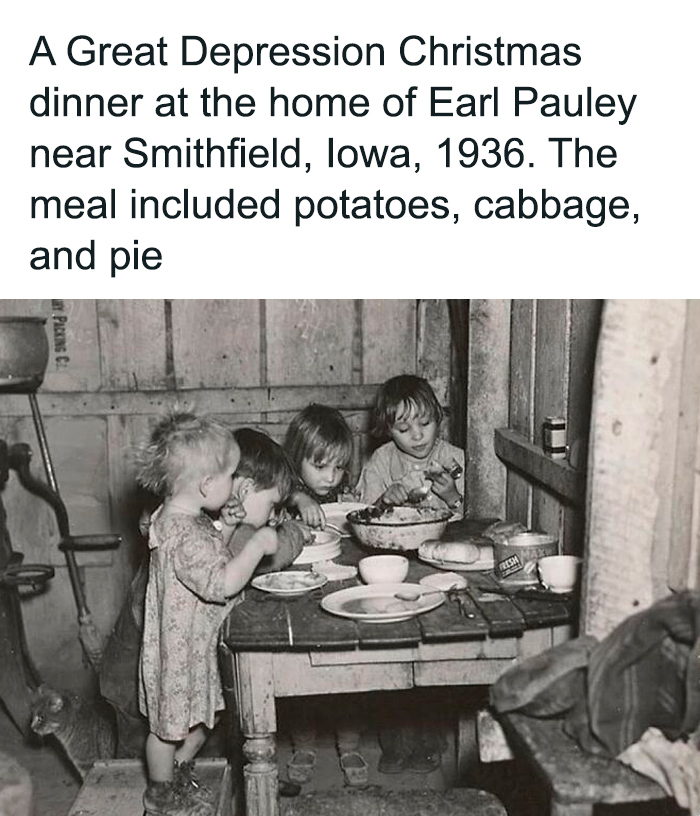
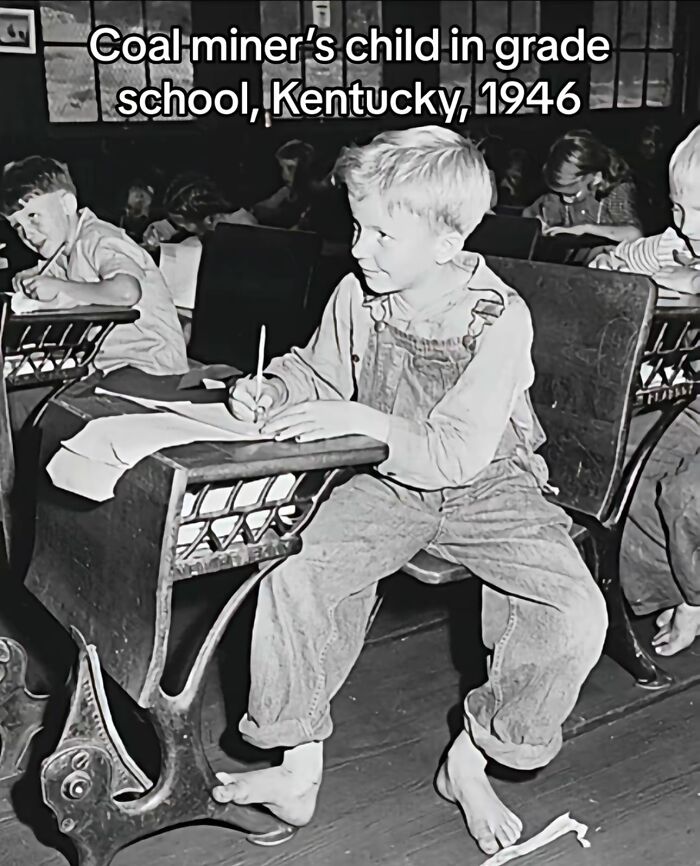
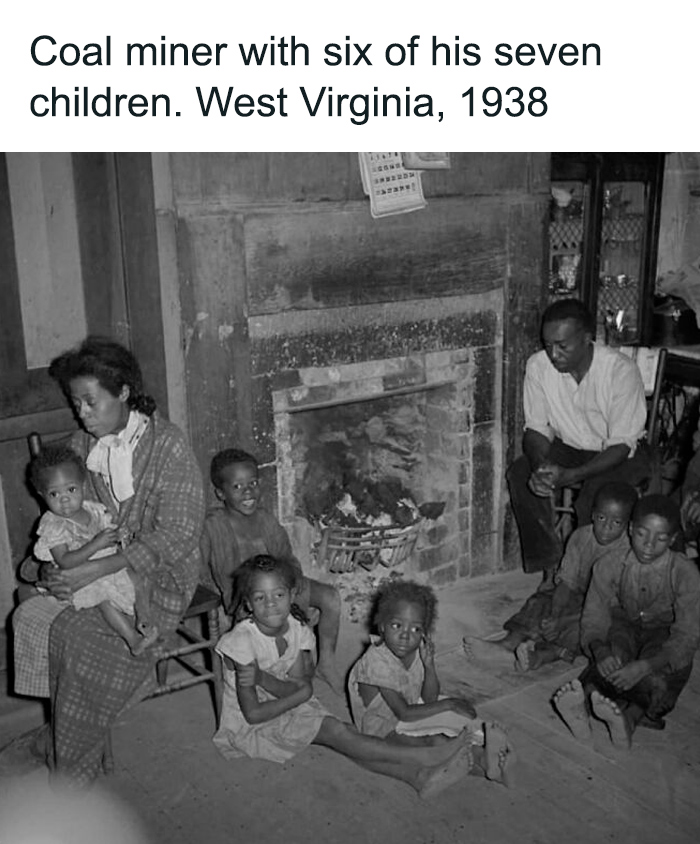
I love the boy with the huge smile on his face. Making the best of hard times.
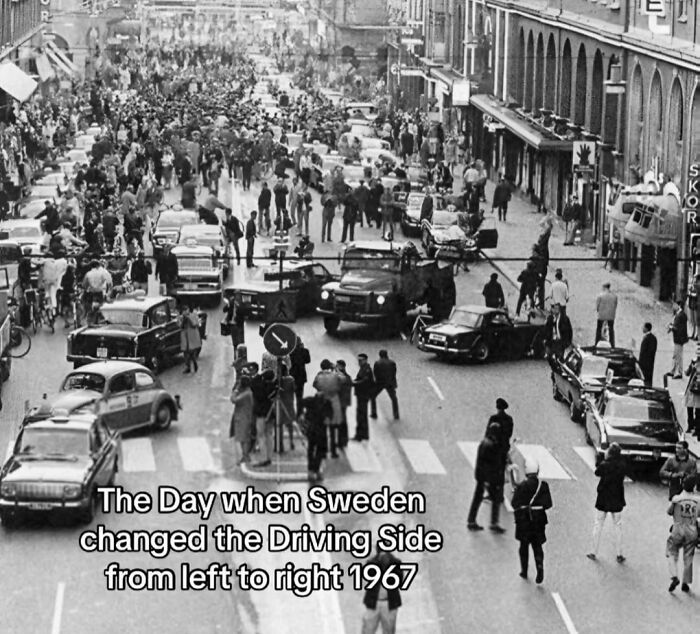
this is an arranged picture by the people in the picture being there for their in the morning of the change. https://en.wikipedia.org/wiki/Dagen_H
I didn’t see that on the wiki page. I probably just missed it. Can you tell me where it is, please?
Load More Replies...

I had an uncle who was either killed or in a crash a handful of years later when he was driving home late at night. I don’t recall if he was drunk or just tired.
Load More Replies...
Yeah, utter confusion. Sort of like trying to get the United States on the metric system.
Which has proved to be a worthless cause. Americans are too stuck on what they believe is the right was to join the rest of the world who are "wrong".
Load More Replies...
They had little signs along the road reminding you to drive on the right side EVERYWHERE for a year or so.



Neighbour countrys Norway and Finland already drove on the right side and having the same as them made it easier crossing the borders, trade and less accidents with tourists from those countries.
Load More Replies... This may be an arranged picture but I'm sure it was being played out all over Sweden, just like this!

Okay, where is this guy now who would name all the cars? I see a Beetle, a FORD 20M(?), a TR6, a MB taxi and the two US make taxis on the right?

https://en.wikipedia.org/wiki/L%C3%B3tus_Bridge. also another bridge I can't seem to find in S.E. Asia where the lanes cross. Saw it on a trip to Thailand.
Wow! I've never seen this picture before. I never even knew it dried up like this. What happened?
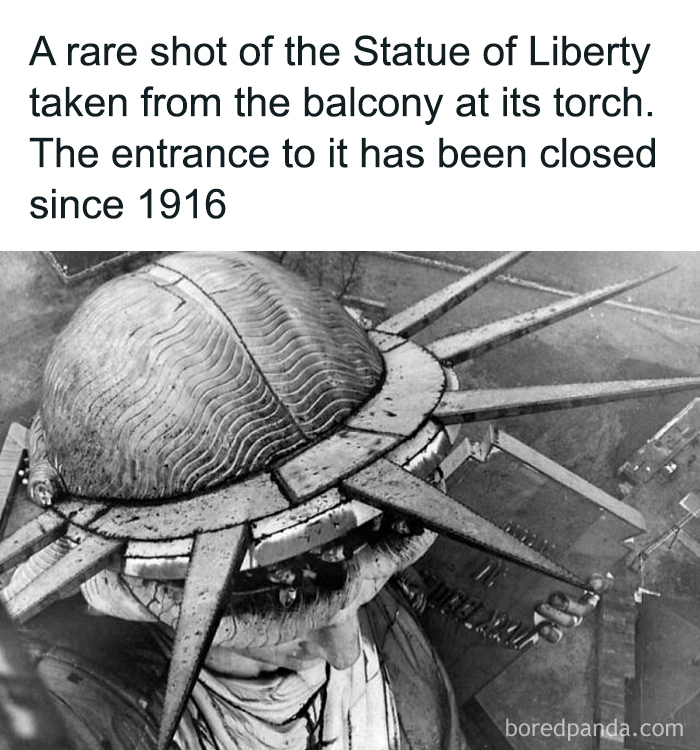
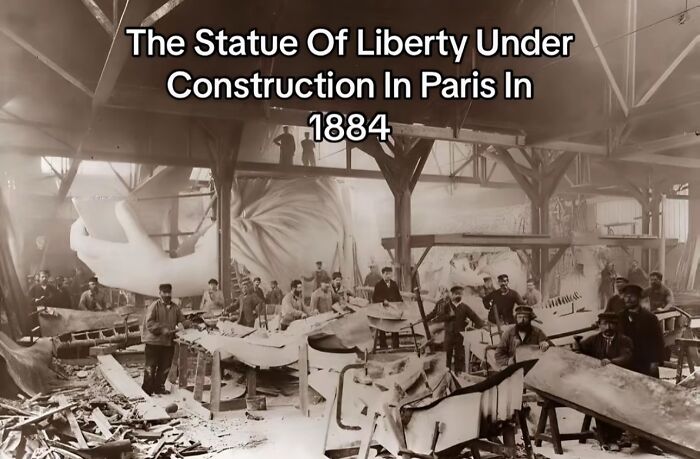
The Black Tom explosion in New Jersey on July 30, 1916 was thought to have weakened the arm, and the stairway was closed to the public. Investigation attributed the explosion to German saboteurs, Apparently there were also logistic reasons for keeping it closed even after the repairs in 1984-86, due to the single staircase available in the arm.
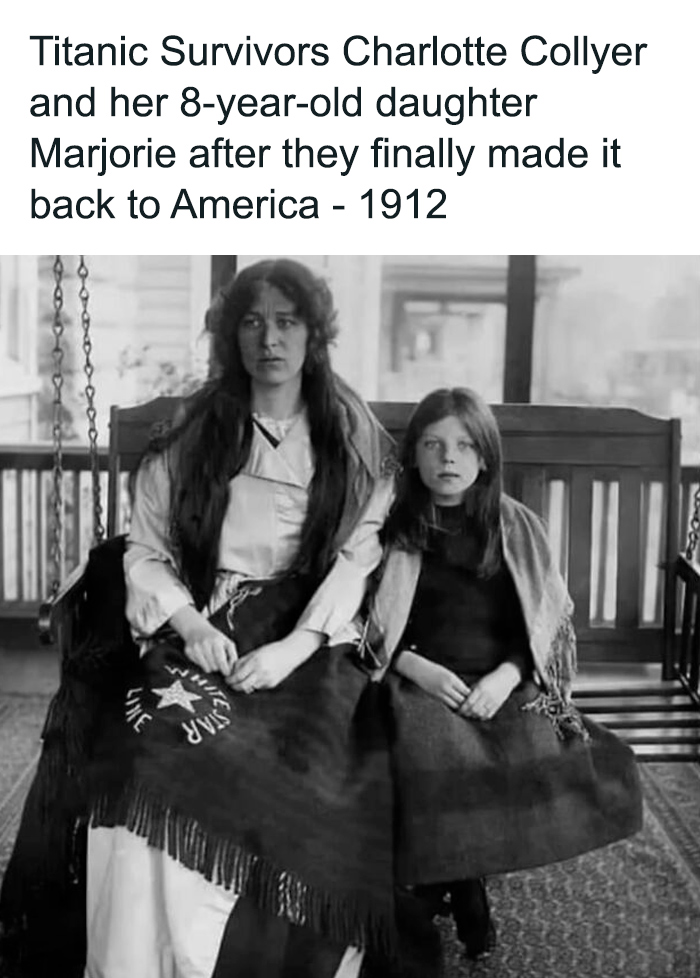
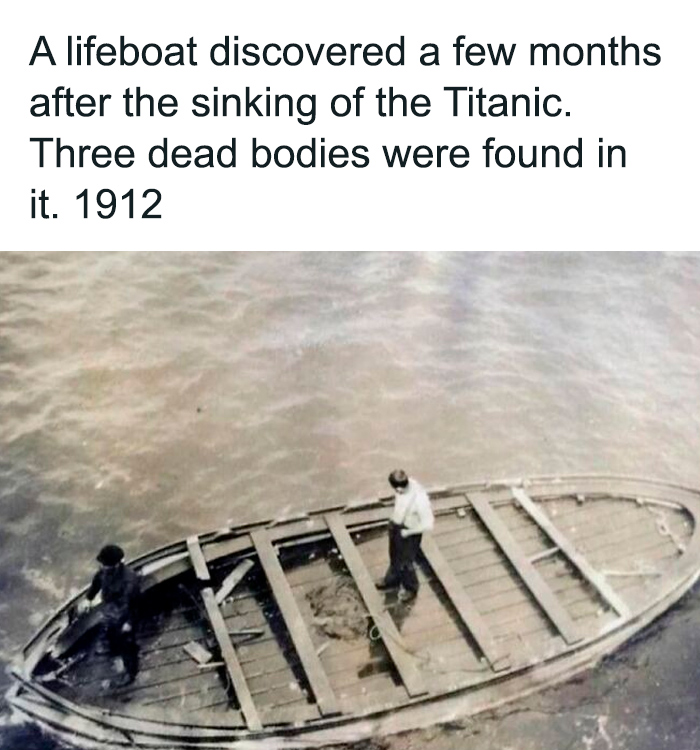
Collapsible Boat A. The canvas sides were not put up during the sinking, so many of those who managed to climb onboard died of hypothermia and fell to the sea. Apparently, only 14 survived and were transfered to another boat. The three bodies were left there and the lifeboat drifted off.

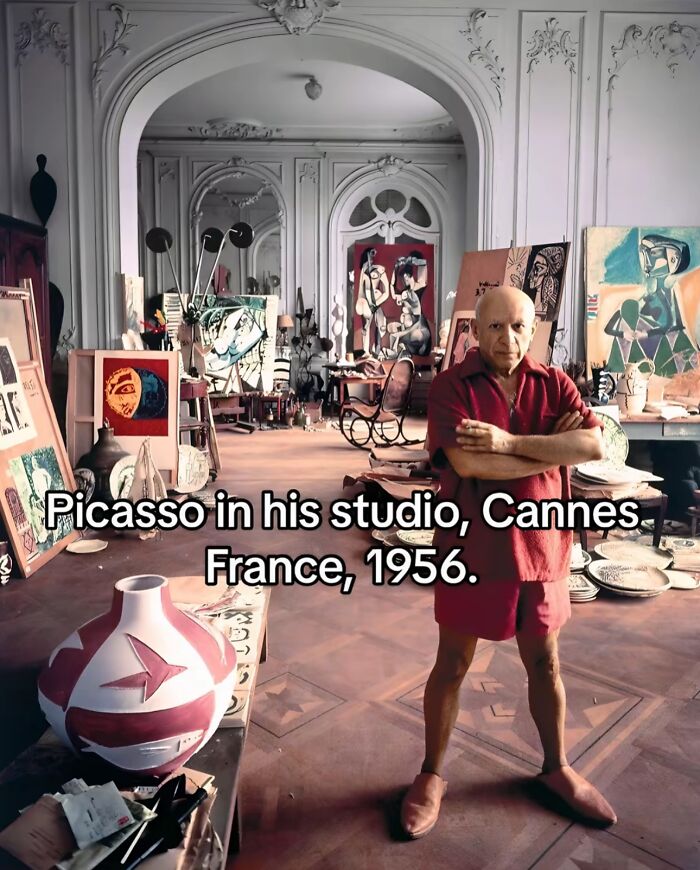
I like his art, Guernica for example is a masterpiece. Just a shame he was a moronic príck.

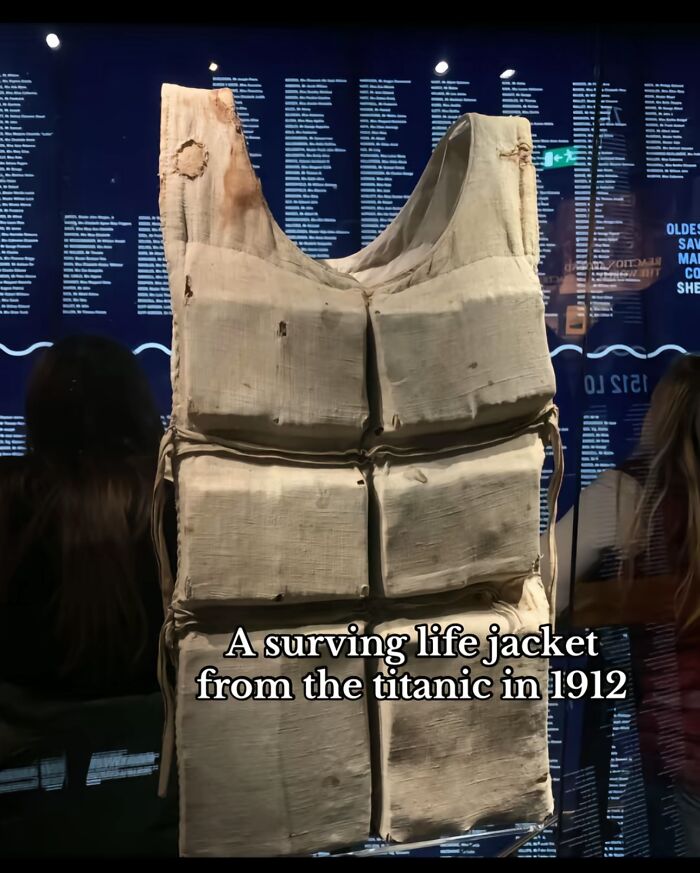
I remember when we used them when I was younger life jackets we bulkier and more rectangular, compared to the ones now. I felt a little embarrassed wearing them then, which is silly of course.
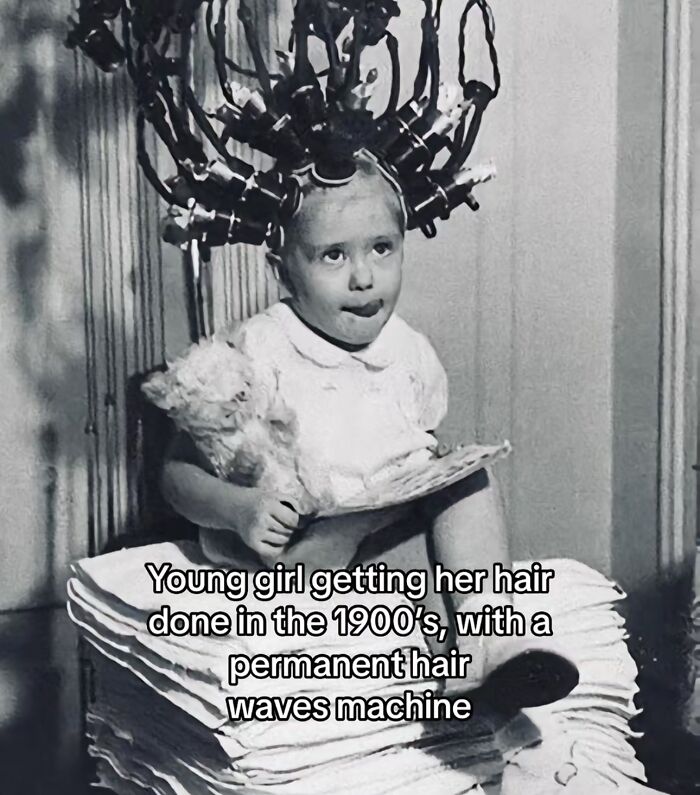
That was definitely the early 1900s. That gave way to Toni permanents you could do at home.
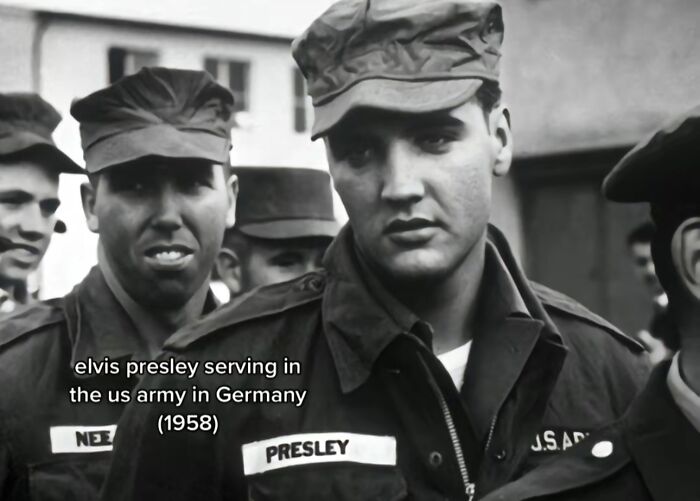
It was during his army stint that he made his only stop in the UK. His plane taking him home made a fuel stop at Paisley Airport.
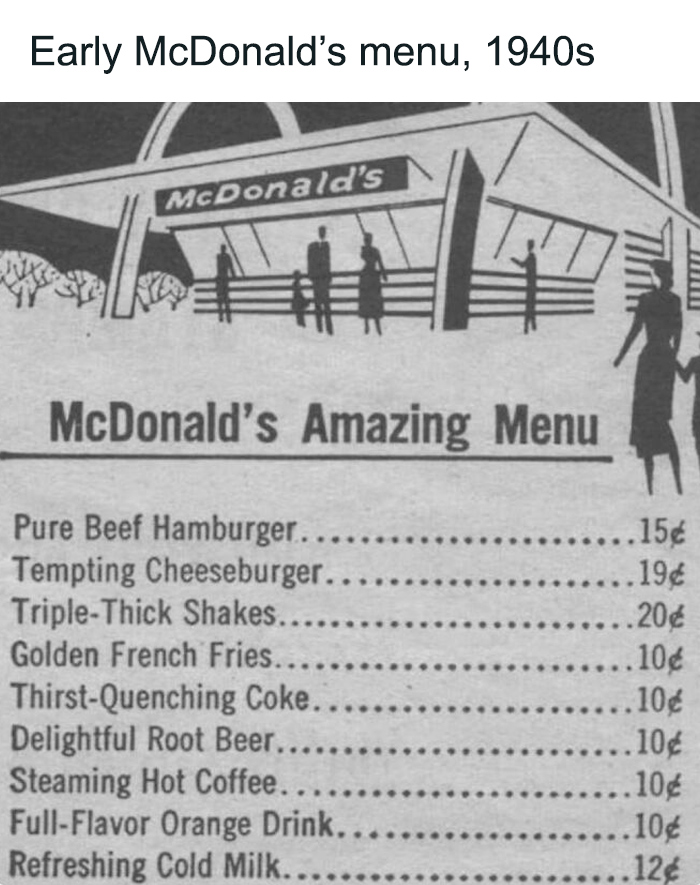
Apparently, McDonalds french fries were one of the main reasons for its success. They were fried in beef tallow, which made them golden and rich, but after a US Congressman had a heart attack which he attributed to the fries, a law was passed mandated cooking oil instead, which is worse...
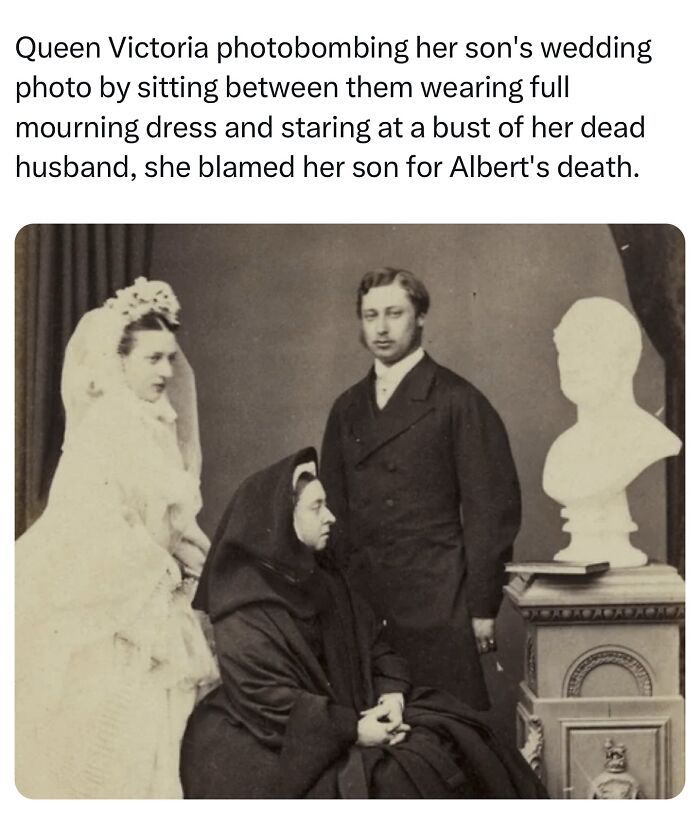
Albert, the Prince Consort, had been ill for some time. In 1861, "Albert was informed that gossip was spreading in gentlemen's clubs and the foreign press that the Prince of Wales [his son] was involved with Nellie Clifden. Albert and Victoria were horrified by their son's indiscretion and feared blackmail, scandal or pregnancy. Although Albert was ill and at a low ebb, he travelled to Cambridge to see the Prince of Wales on 25 November and discuss the indiscreet affair." Albert died less than a month later on December 14th.
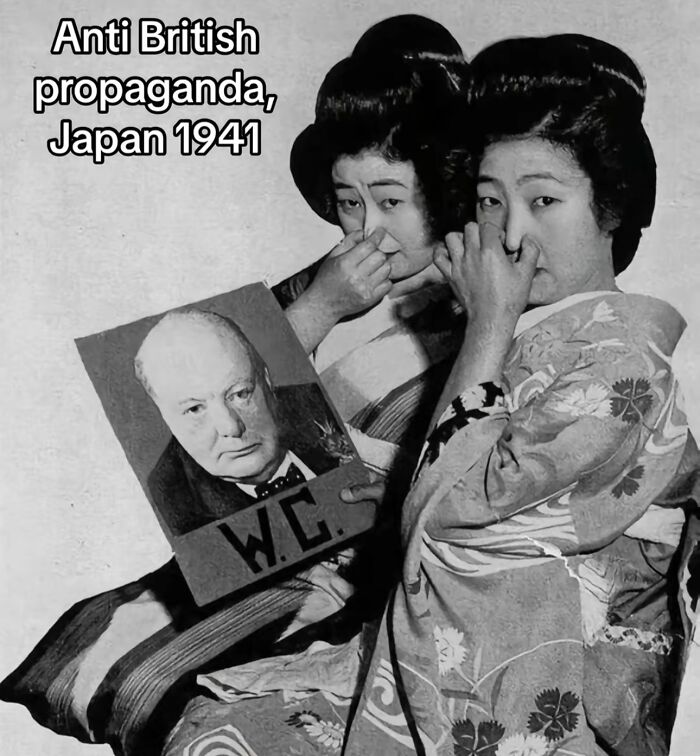
For those confused: WC = Winston Churchill (in the photograph) but also stands for "water closet", another phrase for the toilet/bathroom, which is why they're holding their noses XD

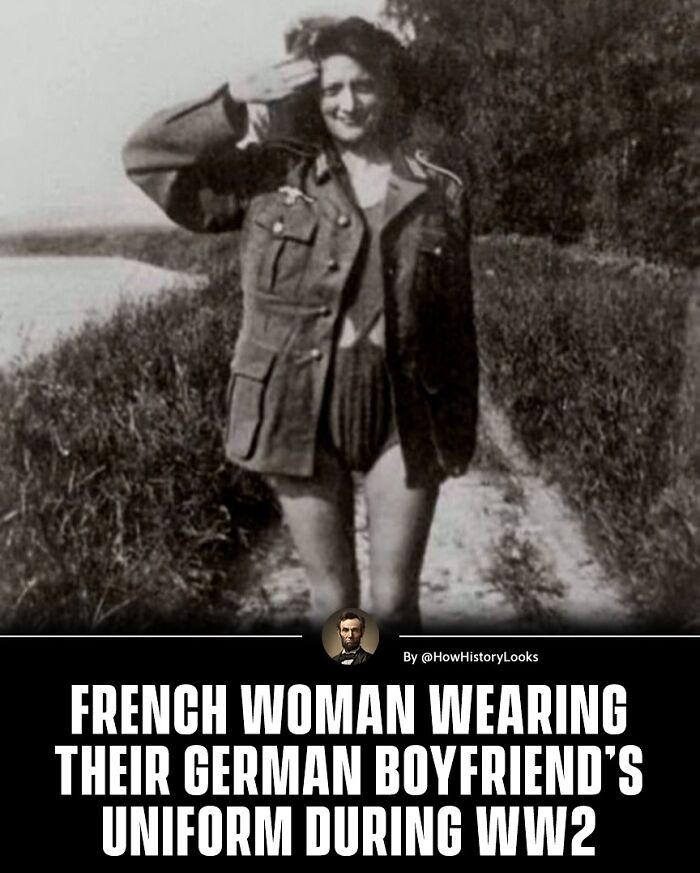
Still, some women gladly collaborated with the enemy to obtain more rations, jewels, and other goods. They were truly material girls, and the Germans had the means. At the end of the war, many such women had their heads shorn and were publicly humiliated. It ended up to be lasting social stigma and ostracization for these women.












 No fees, cancel anytime