Get Premium
Dark mode theme is available exclusively for premium users. Learn more about the benefits of subscribing.
No fees, cancel anytime.

 Dark Mode Ad-Free Browsing Unlimited Content
 Ad-Free Browsing Unlimited Content Dark Mode
Join 1.2 million Panda readers who get the best art, memes, and fun stories every week!

Blended families can be wonderful, but making one work is not always easy. It can take time for people to get used to each other, and bringing everyone together can be a challenge.
One woman faced constant problems with the parents of her husband’s late wife. They treated her son like he didn’t belong while accusing her of being an “evil stepmom” to their grandson.
She tried to keep the peace for years, but after seeing how much their behavior was hurting her child, she finally supported her husband’s ultimatum: treat both boys like family or stay away.
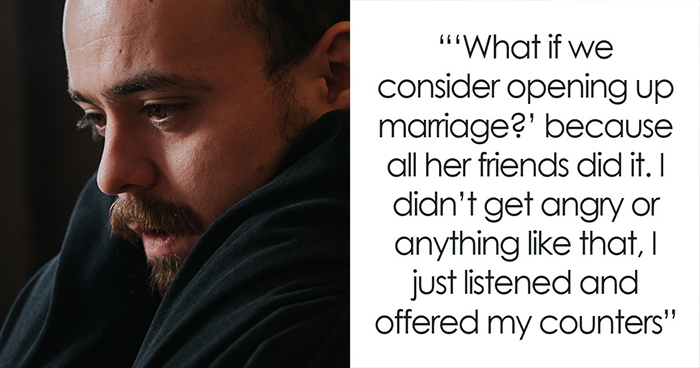
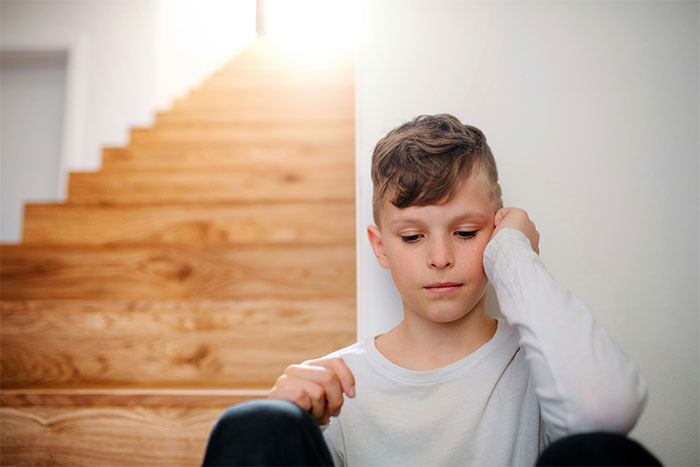
Image credits: engin akyurt / Unsplash (not the actual photo)
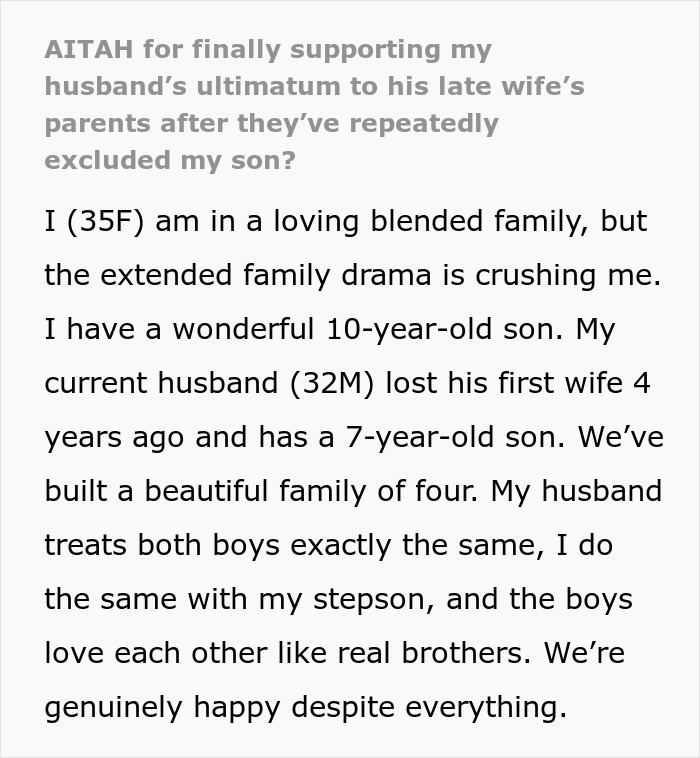

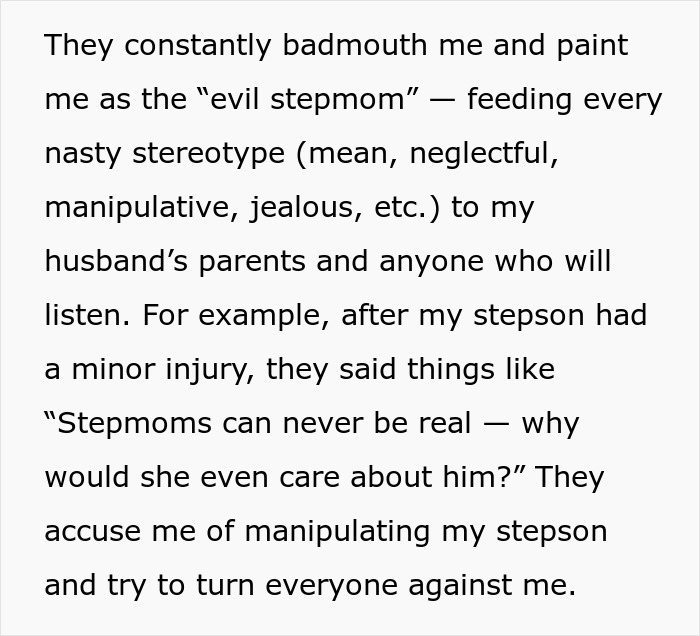
Image credits: Getty Images / Unsplash (not the actual photo)
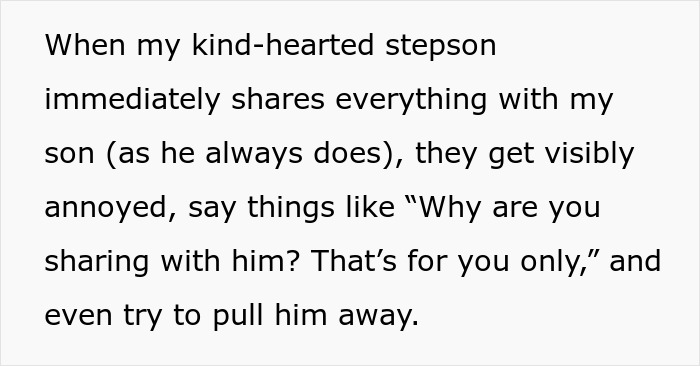
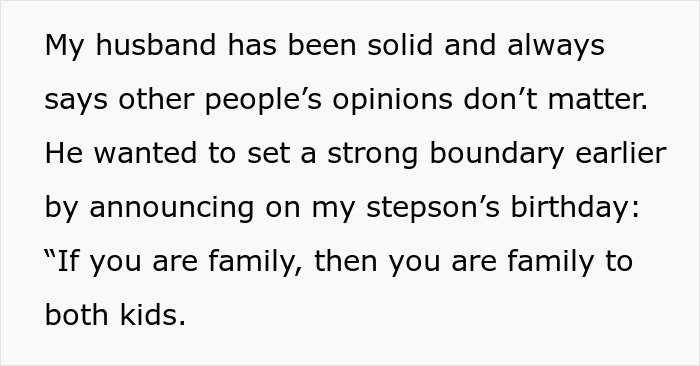
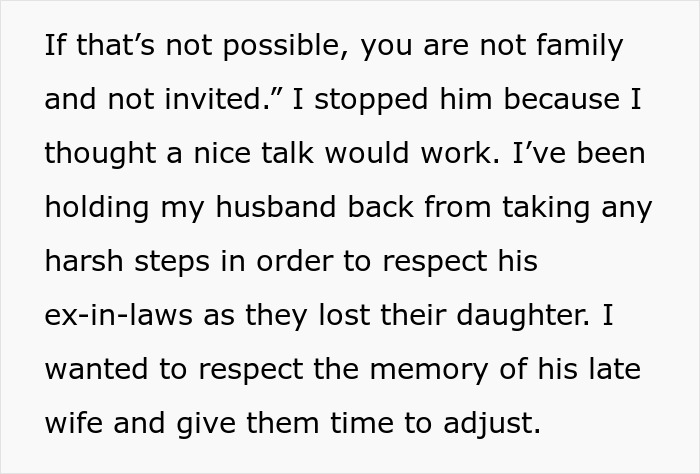
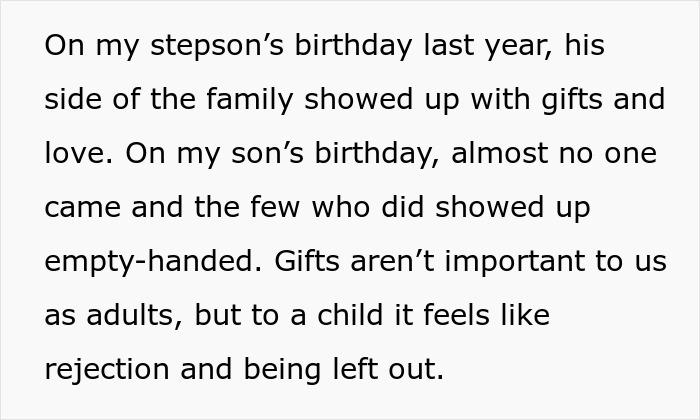
Image credits: Getty Images / Unsplash (not the actual photo)
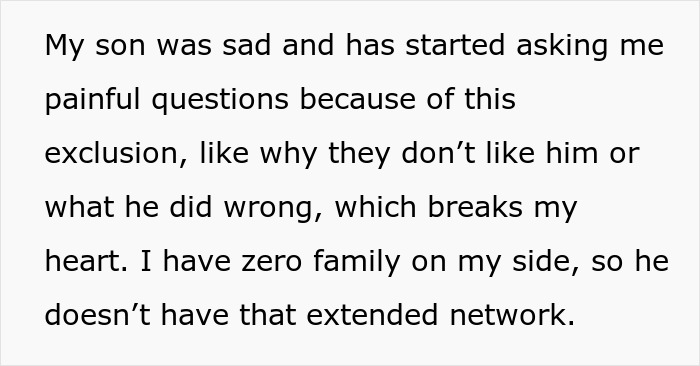
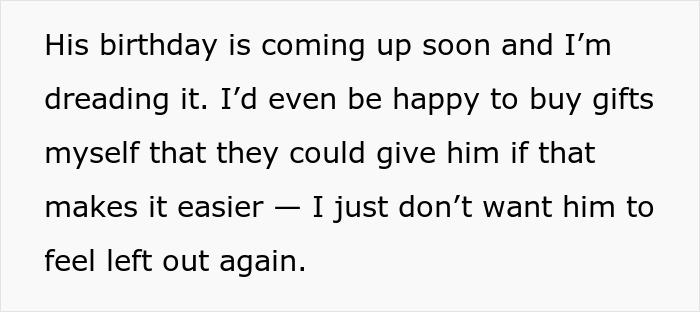
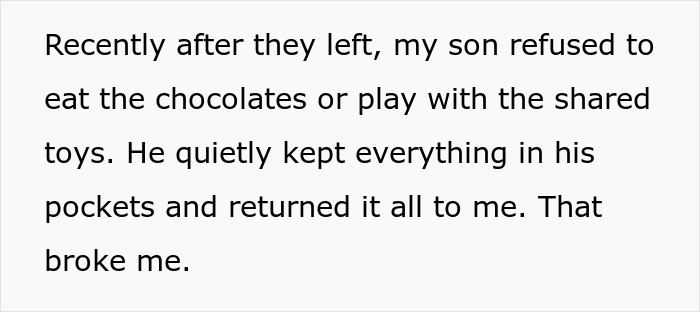
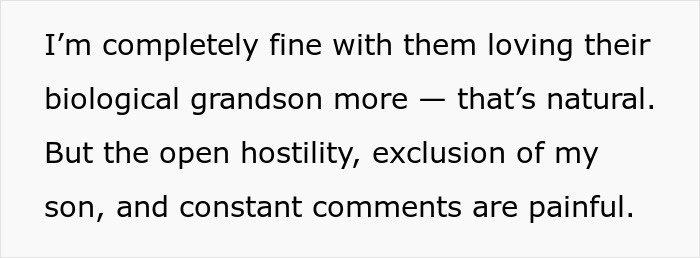
Image credits: Curated Lifestyle / Unsplash (not the actual photo)
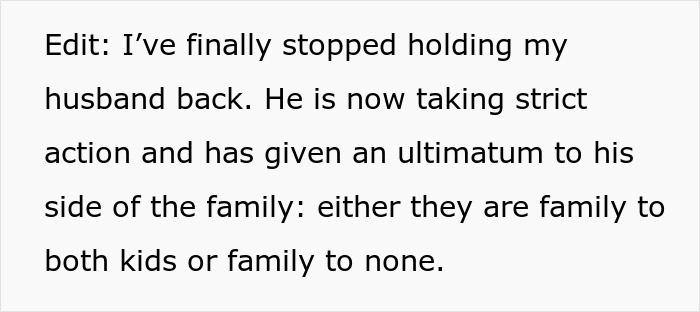
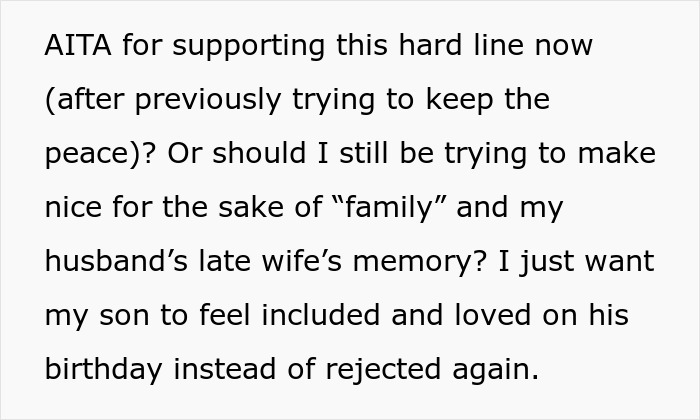
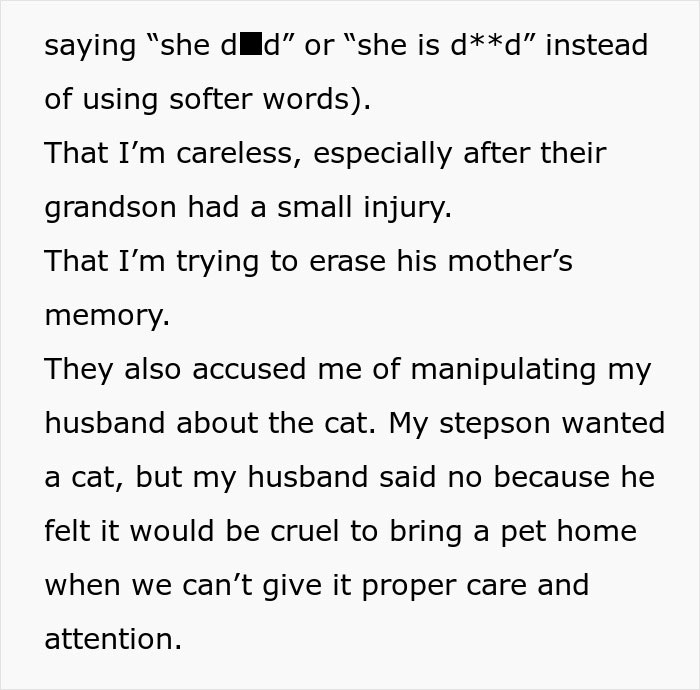
Image credits: Stunning_Factor871
Every family has its difficult moments. When two households come together, though, there are often more relationships to manage and more feelings to consider. It can take time for people to settle into their new roles and find a way to get along.
In this story, the situation was especially delicate. The man lost his first wife, with whom he had a son. He later married the author of the post, who also had a child from a previous relationship. According to her, the couple treats both boys equally, and the children have grown close and see each other as brothers.
The problems began with the parents of the man’s late wife. They are the biological grandparents of his son, but they are not related to the woman’s child. Nobody can force them to feel the same way about both boys. Still, there is a big difference between feeling closer to one child and going out of your way to make the other feel unwanted.
Their behavior added tension to a home that otherwise appeared to be doing well. It also left a child wondering what he had done wrong.
Step-relatives are common in modern families. Pew Research Center has estimated that more than 40% of Americans have at least one step-relative. Research published in 2018 also found that around one in five grandparents aged 51 or older had at least one step-grandchild.
Even so, close relationships rarely appear overnight. Psychologist Patricia Papernow, author of Surviving and Thriving in Stepfamily Relationships, has found that the average stepfamily may need around seven years to develop a real sense of closeness and trust.
“People go into this expecting blending,” Papernow told AARP. “I always put it in quotes because it captures the longing but not the reality, often, of the stepfamily.”
Papernow and other experts say adults have a responsibility to keep children out of their conflicts. Kids should not be made to feel caught in the middle or blamed for problems between grown-ups.
“Anything that you do that ups the tension between the adults is hard on kids,” Papernow told AARP. That includes criticizing a parent or speaking badly about someone the child loves.
This advice applies to the story well. The former in-laws may not see the woman’s son as their grandchild, but both boys are part of the same home. They did not have to feel equally close to him. Still, they could have greeted him, included him, and avoided making it obvious that he was less welcome.
Research shared by the American Psychological Association found that children who receive less favorable treatment often have poorer mental health and more strained family relationships. The study focused on how children are treated by their parents, but its findings still show how hurtful repeated comparisons and unequal treatment can be.
AARP encourages blended families to create a sense of “familiness” in everyday life, including during holidays and gift-giving. Adults should avoid making obvious differences between biological grandchildren and step-grandchildren.
Grandparents can also think of themselves as “grandfriends” and focus on forming a warm connection with the child. Talking to the parents beforehand may help them understand what feels fair and appropriate.
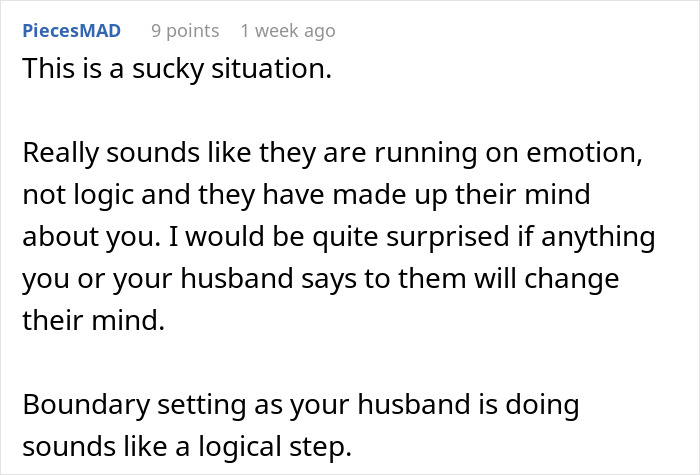
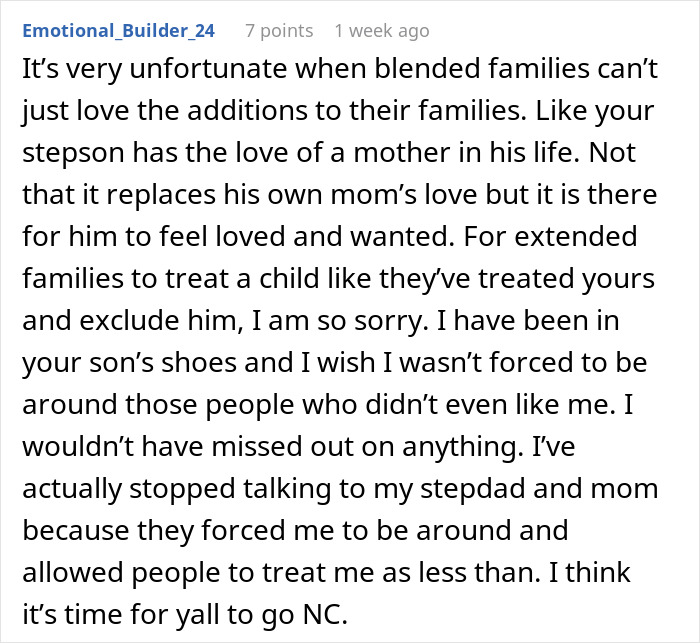
The former in-laws in this story clearly had little interest in doing that. Eventually, the couple decided that stronger boundaries were needed. The husband told his relatives that they could either treat both boys like part of the family or stay away.
Do you think the couple handled the situation fairly? Share your thoughts in the comments.
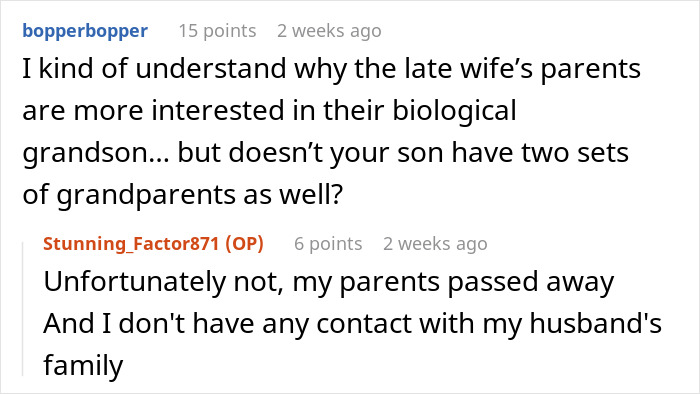
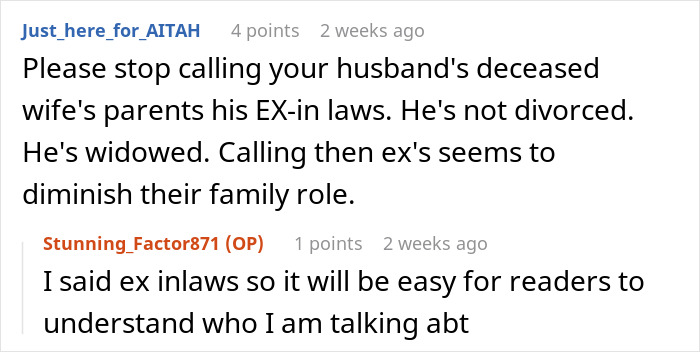
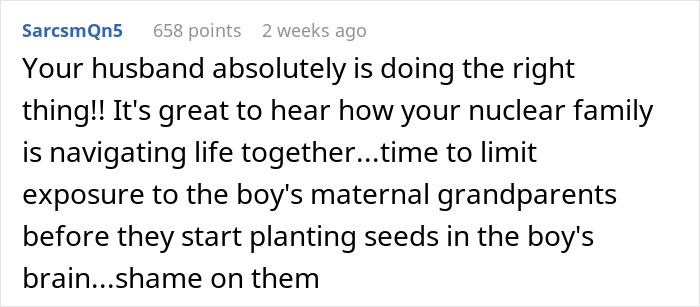
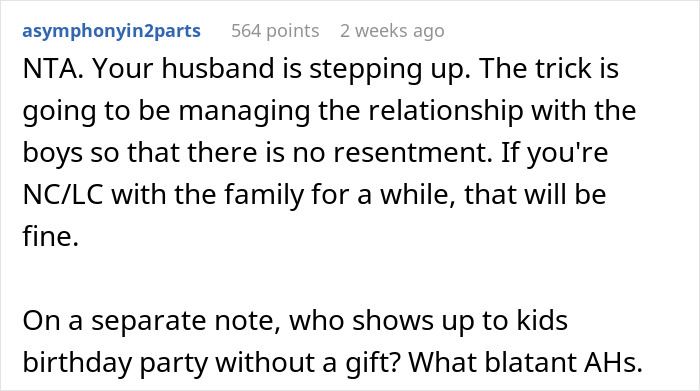

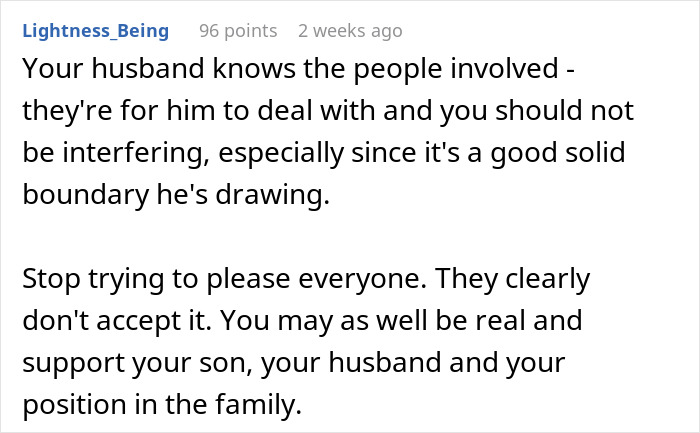
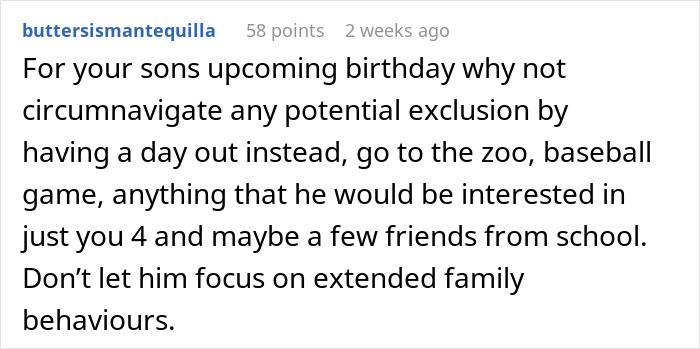
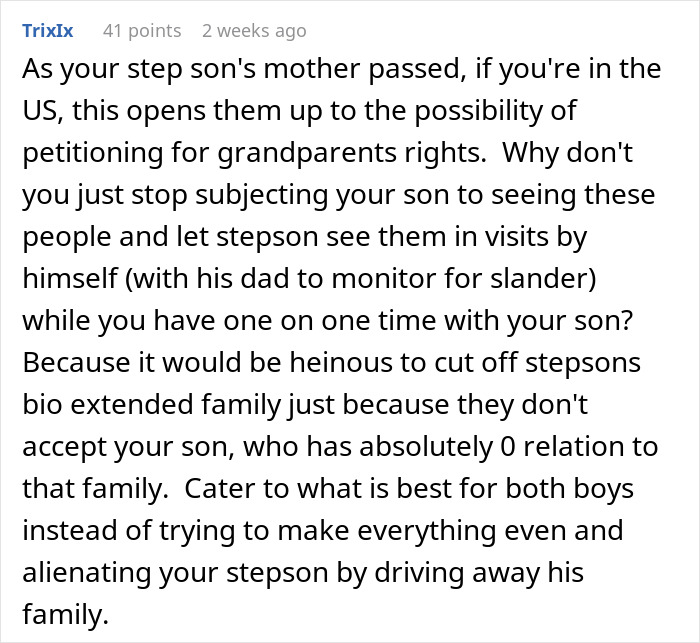
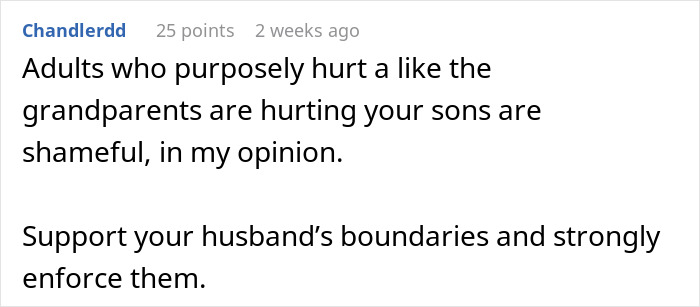

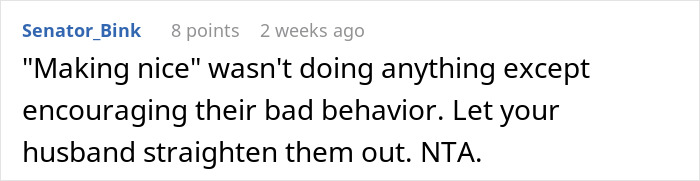
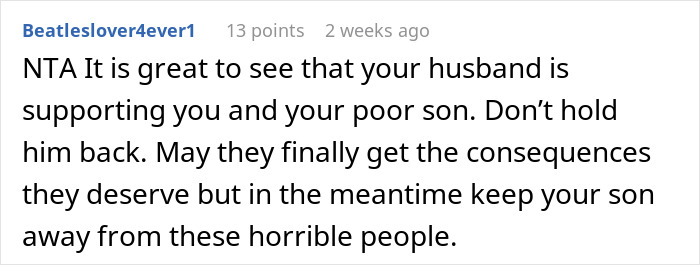
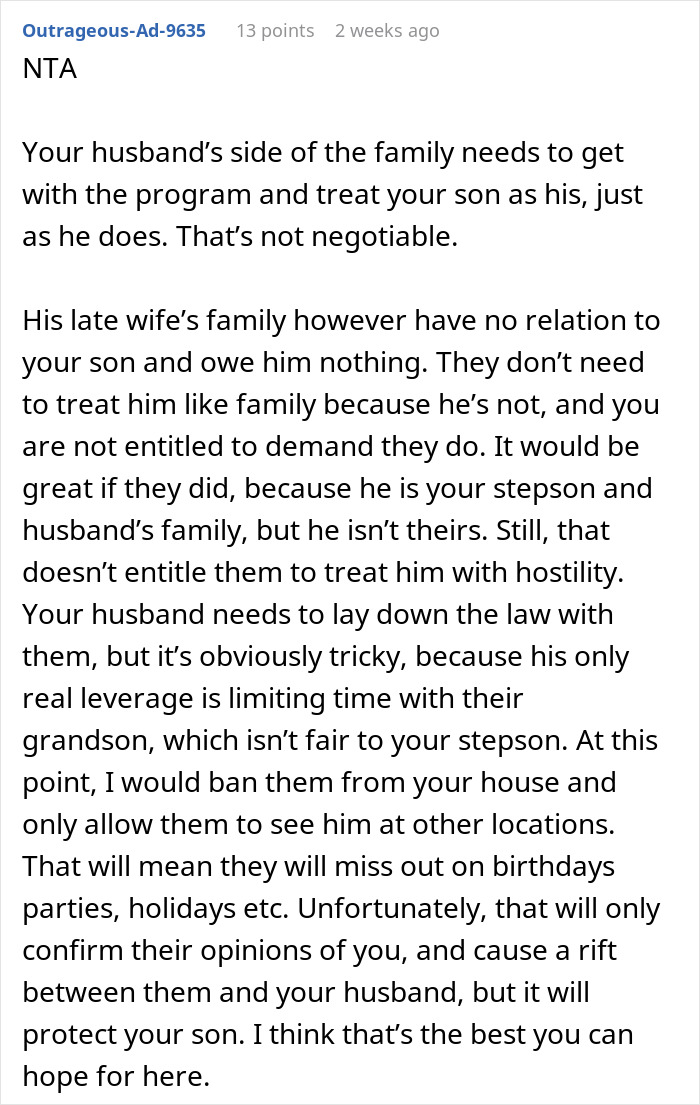
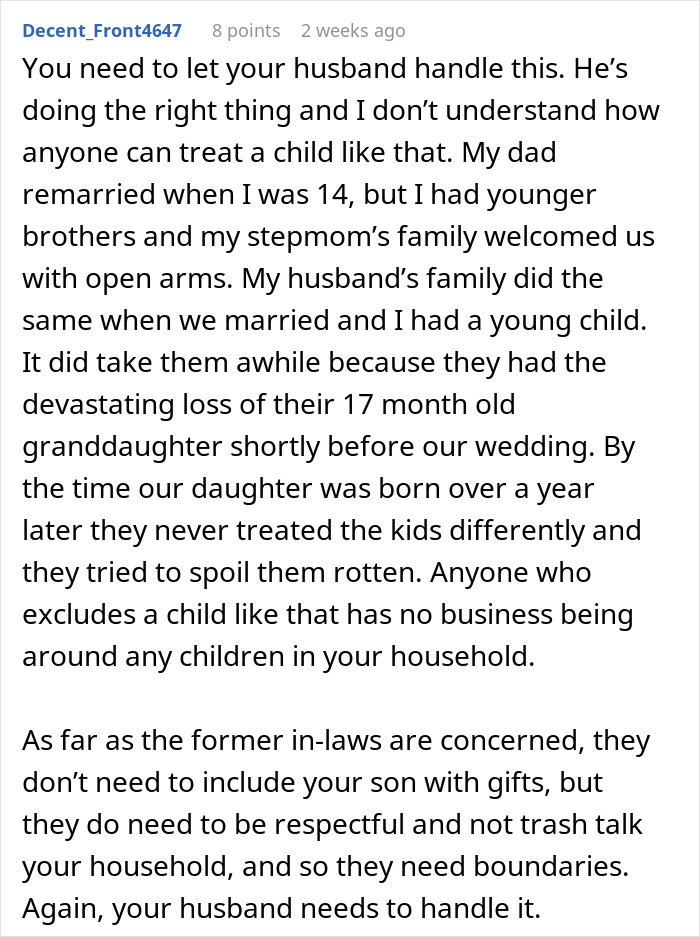

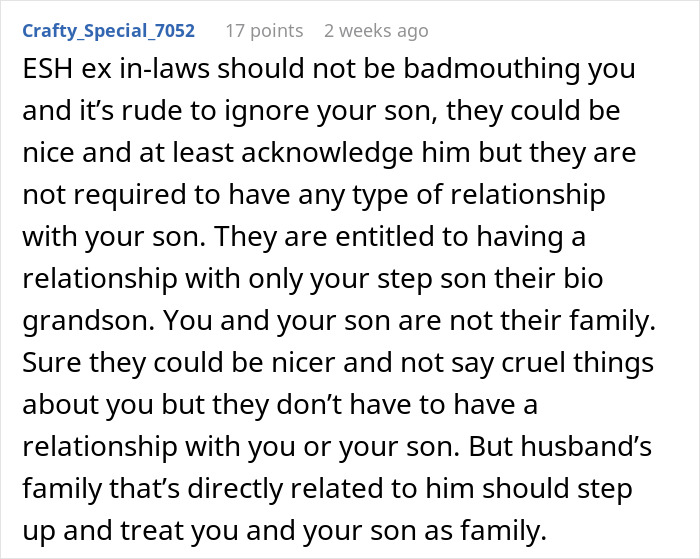
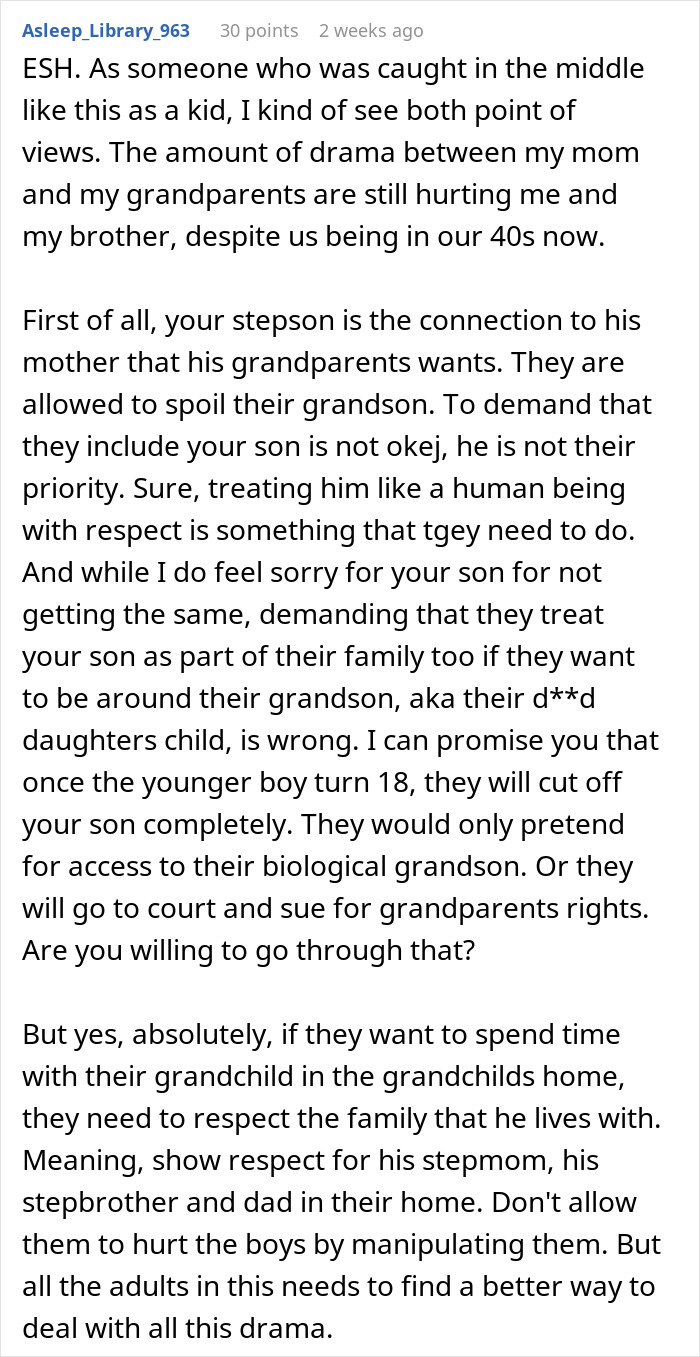
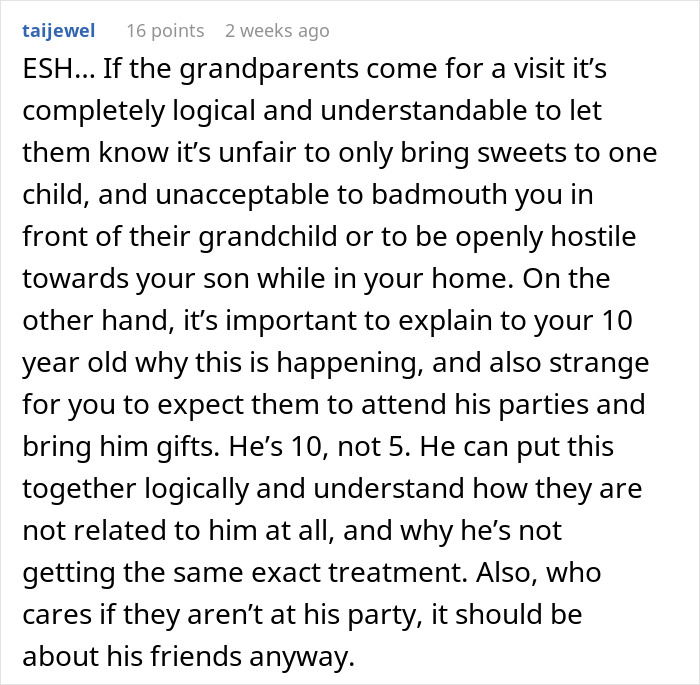

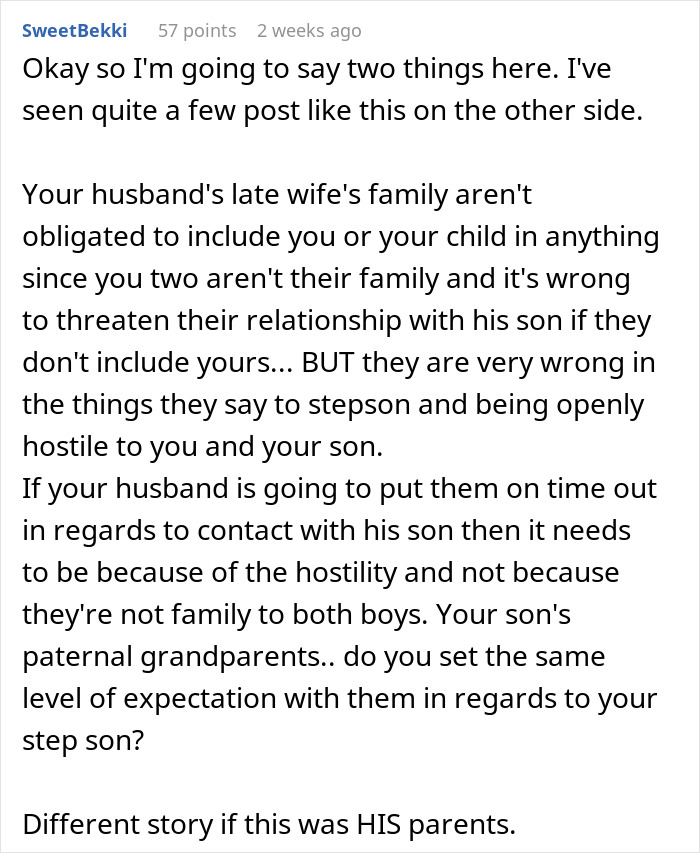
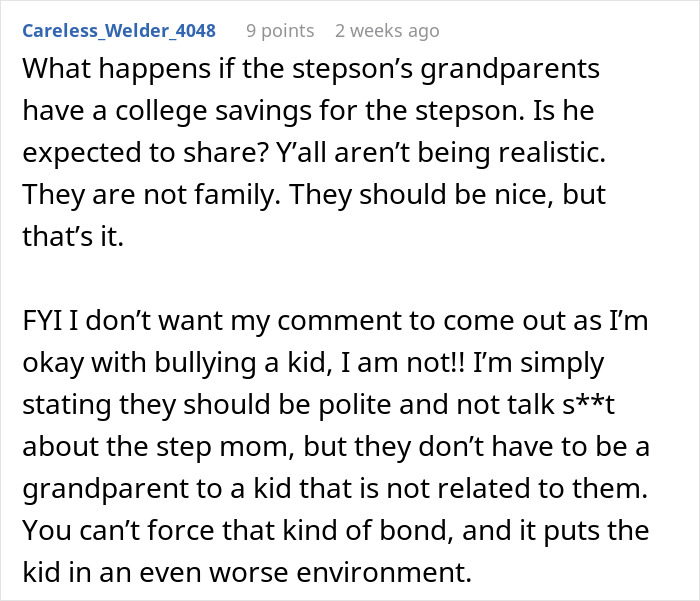
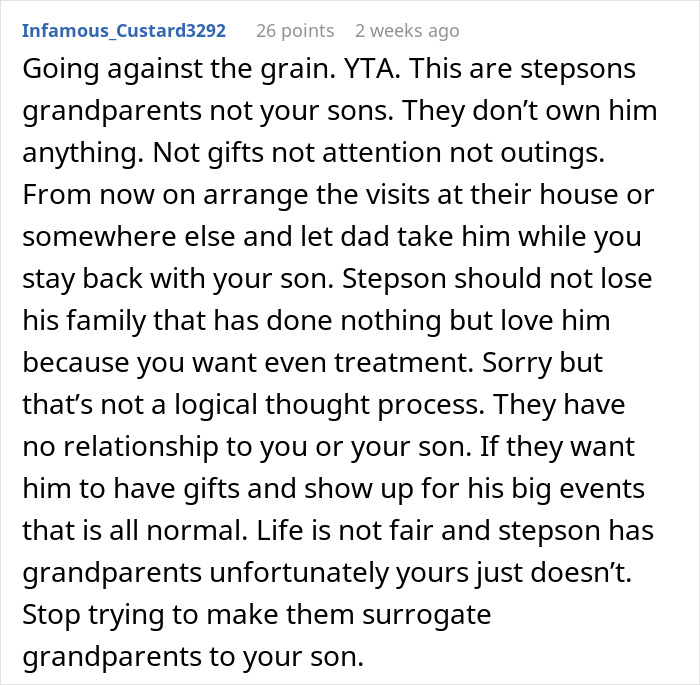
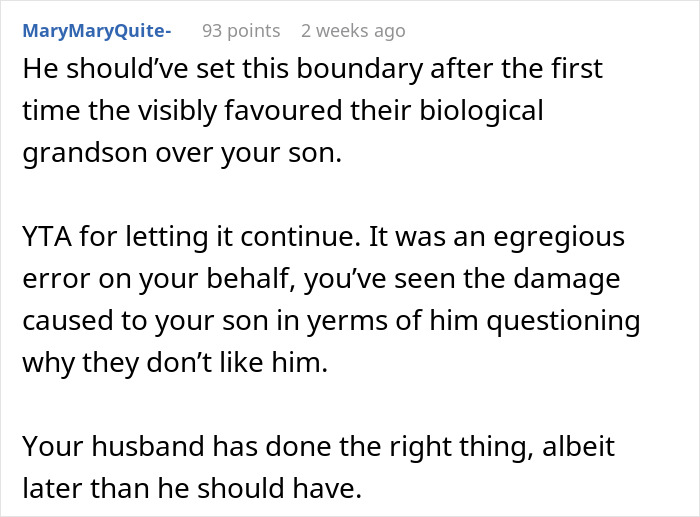
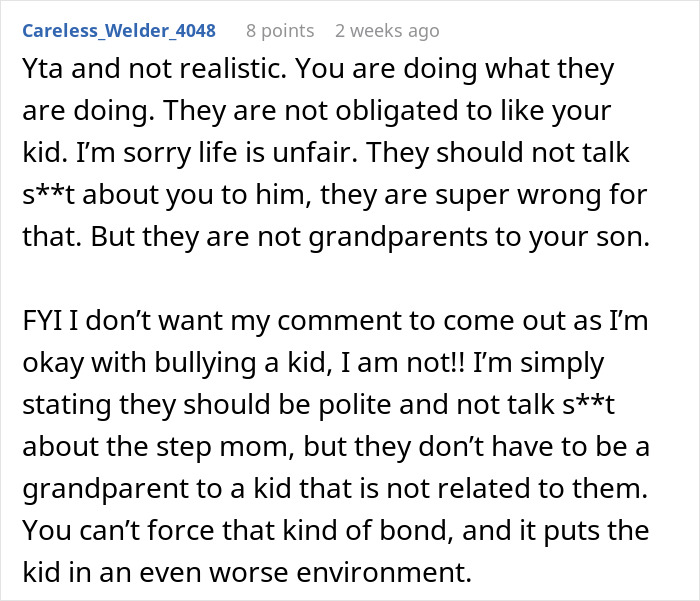
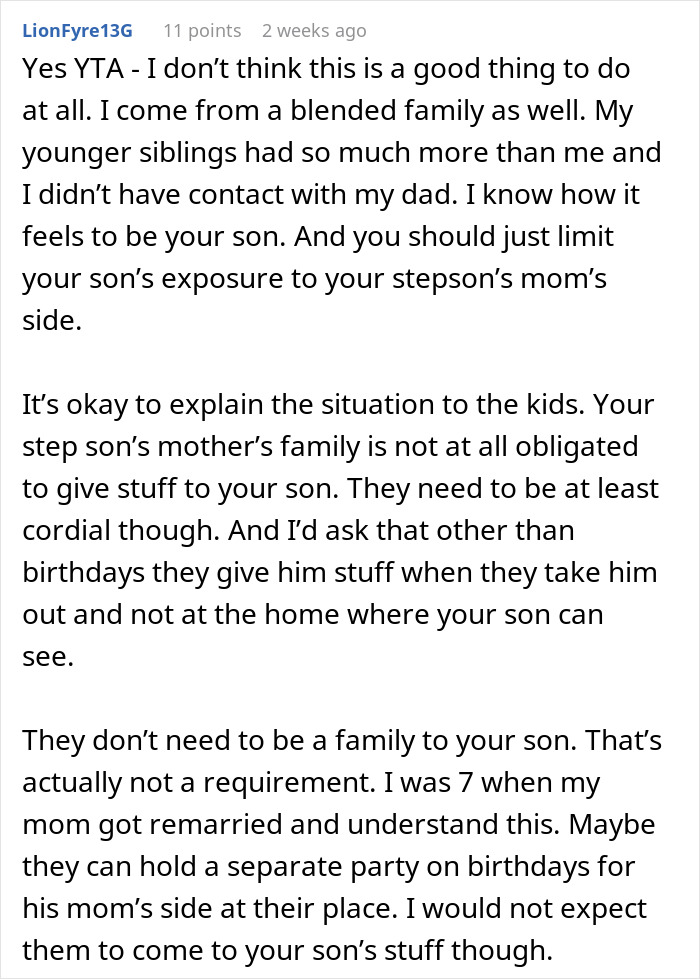
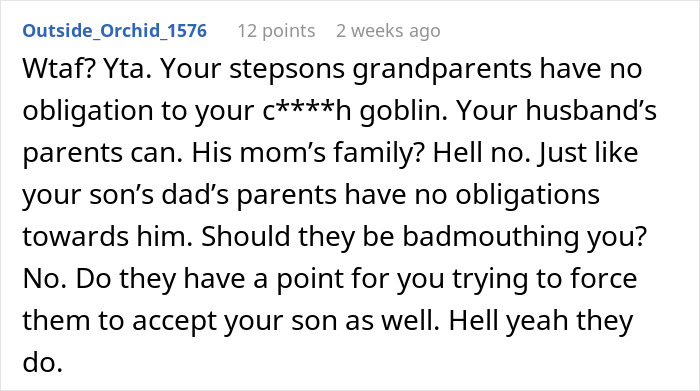

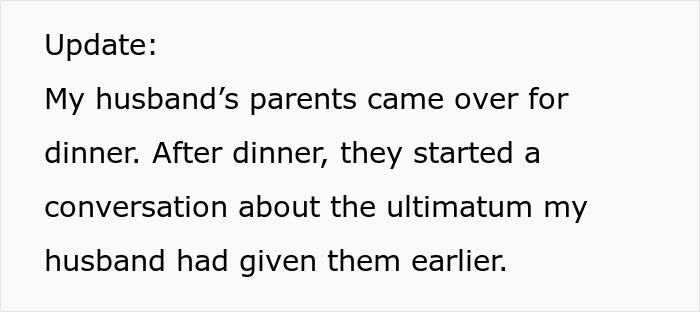
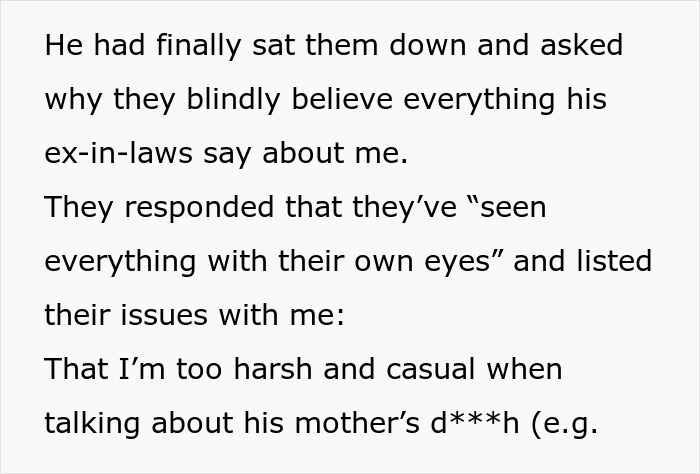
Image credits: The Yuri Arcurs Collection / Freepik (not the actual photo)
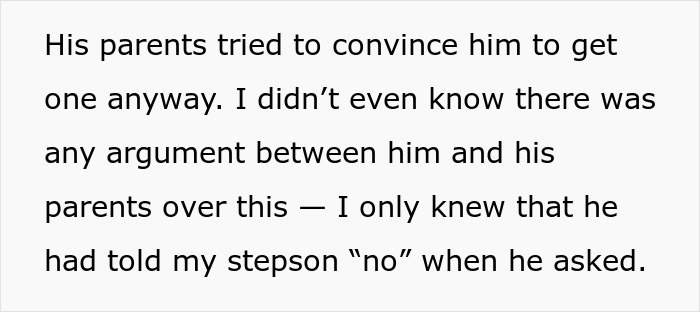
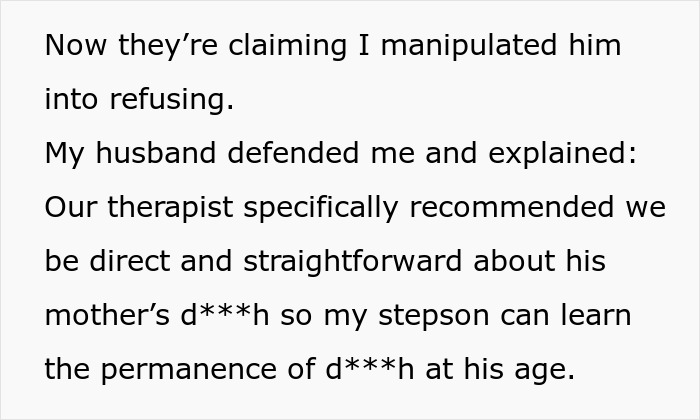
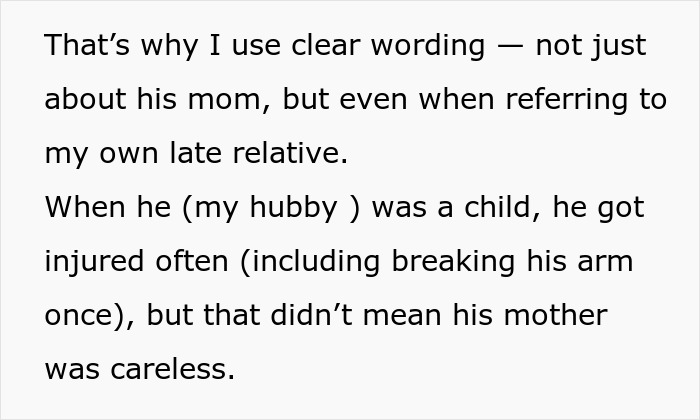
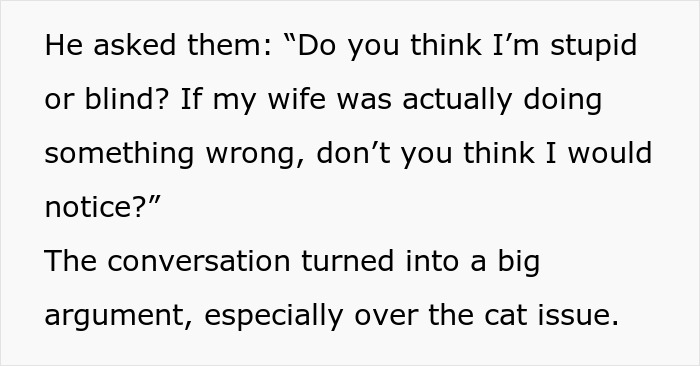
Image credits: Stunning_Factor871
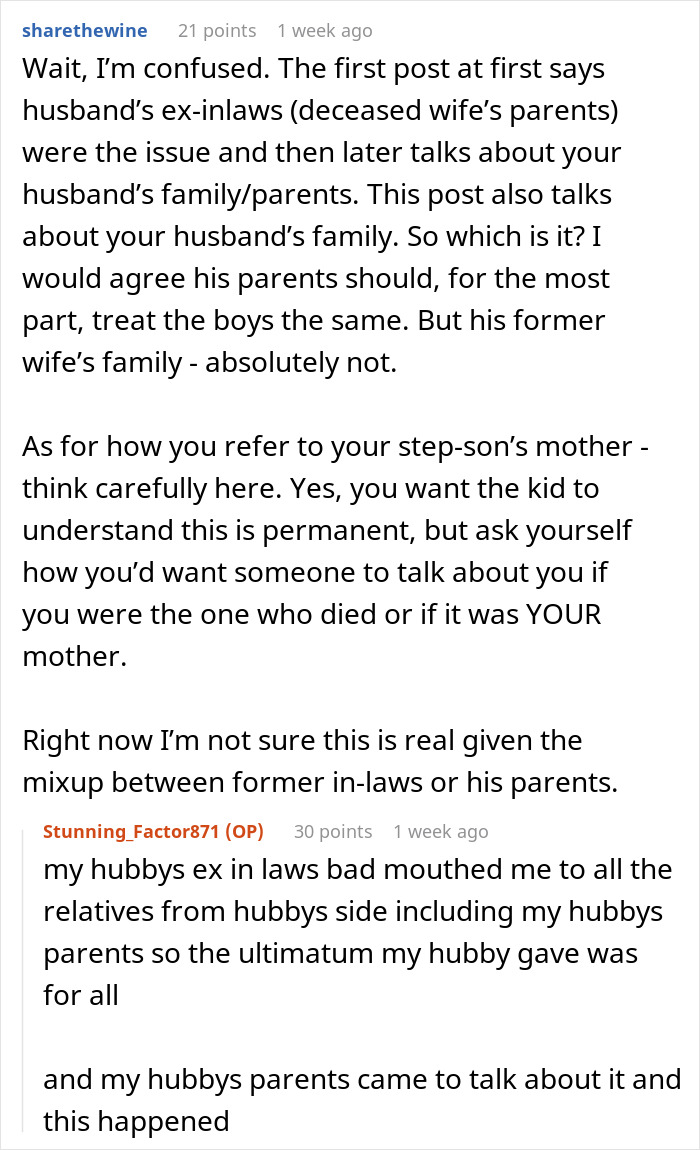
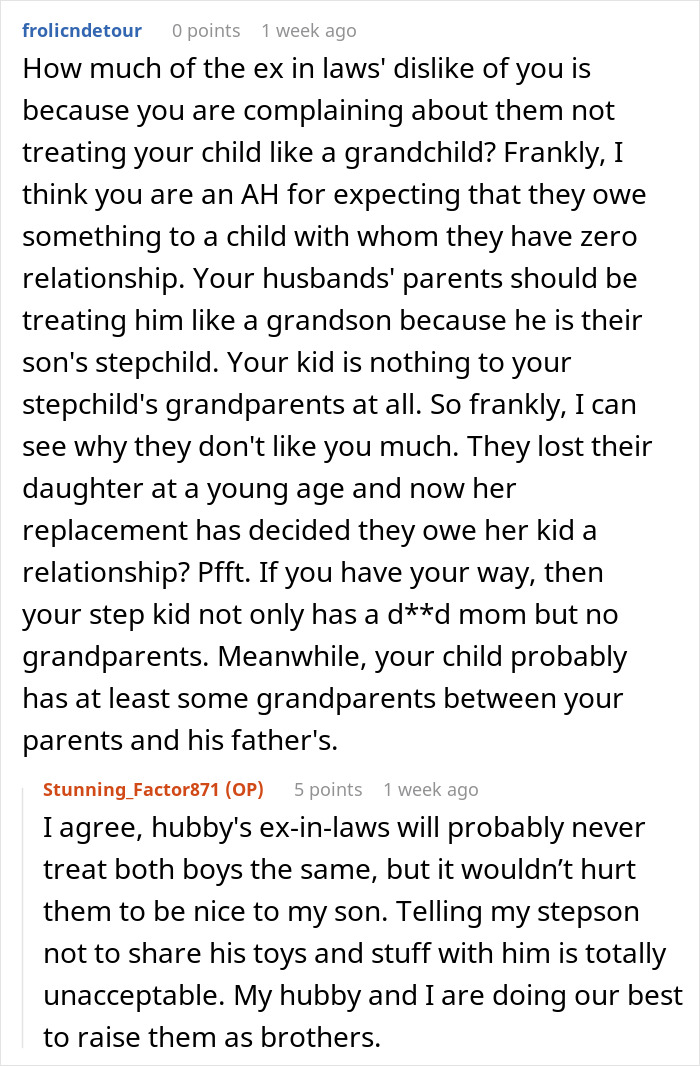



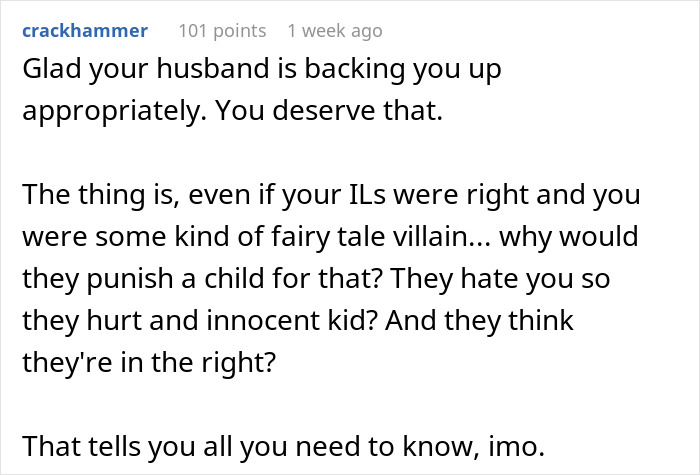












By entering your email and clicking Subscribe, you're agreeing to let us send you customized marketing messages about us and our advertising partners. You are also agreeing to our Privacy Policy.
Thank you! You've successfully subscribed to newsletters!


Someone commented similar to this - I would stop throwing family parties for their birthdays, especially OP's son. Throw a party with school friends, take him somewhere fun for the day, just the four of you. And as V said, limit contact
That’s the best idea, especially if neither set of grandparents from husband’s and stepson’s side can pull their heads out of their asses for a second and act like decent people.
Load More Replies... I loved(/S!) the commeters who basically said "why should the GPs be nice to your kid? He's no relation of theirs" WHY? Oh, dunno, maybe common decency, and, failing that, basic manners?? If it takes blóod relations to invoke simple friendliness and kindness towards a kid who never did them any harm they're bordering sociopaths. OP's husband had better remove his family from that corrosive influence - maybe with a not so gentle reminder that he himself doesn't share familial relations with them any more ("until déath do us part": well, it did) and hence has no obligations towards them.

They can't make his parents or his sons other grandparents be nice to OP or her son, but they can limit contact. They shouldn't cut contact, especially if they live somewhere with grandparents rights, but should start only having the husband and his son see them in neutral locations, ie, a restaurant rather than someone's house.

if they can't be nice, why shouldn't OP + hubby cut contact? The alternative is supporting an a*****e environment
Load More Replies... Someone commented similar to this - I would stop throwing family parties for their birthdays, especially OP's son. Throw a party with school friends, take him somewhere fun for the day, just the four of you. And as V said, limit contact
That’s the best idea, especially if neither set of grandparents from husband’s and stepson’s side can pull their heads out of their asses for a second and act like decent people.
Load More Replies... I loved(/S!) the commeters who basically said "why should the GPs be nice to your kid? He's no relation of theirs" WHY? Oh, dunno, maybe common decency, and, failing that, basic manners?? If it takes blóod relations to invoke simple friendliness and kindness towards a kid who never did them any harm they're bordering sociopaths. OP's husband had better remove his family from that corrosive influence - maybe with a not so gentle reminder that he himself doesn't share familial relations with them any more ("until déath do us part": well, it did) and hence has no obligations towards them.
They can't make his parents or his sons other grandparents be nice to OP or her son, but they can limit contact. They shouldn't cut contact, especially if they live somewhere with grandparents rights, but should start only having the husband and his son see them in neutral locations, ie, a restaurant rather than someone's house.
if they can't be nice, why shouldn't OP + hubby cut contact? The alternative is supporting an a*****e environment
Load More Replies...
























 No fees, cancel anytime








36
18