Get Premium
Dark mode theme is available exclusively for premium users. Learn more about the benefits of subscribing.
No fees, cancel anytime.

 Dark Mode Ad-Free Browsing Unlimited Content

 Ad-Free Browsing Unlimited Content Dark Mode

Join 1.2 million Panda readers who get the best art, memes, and fun stories every week!

AI is sure making people sweat. And I’m not just talking about the impact of its huge data centers. People everywhere are wondering if they’ll be replaced by these so-called intelligent machines. Sure, companies and bosses might try to reassure us with platitudes about putting “people first,” but when it comes down to it (the bottom line, that is), allegiances become a little murkier.
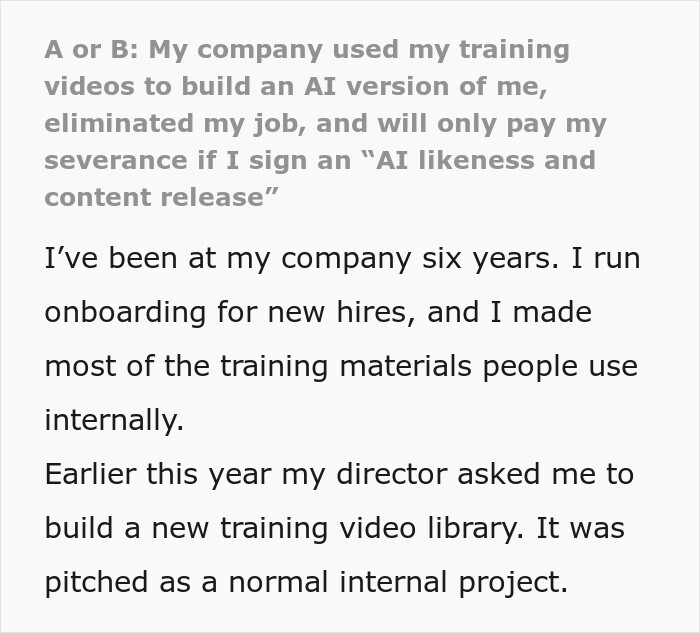
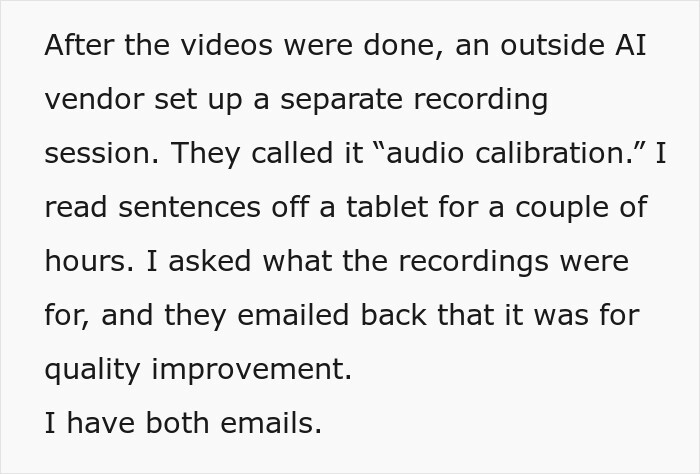
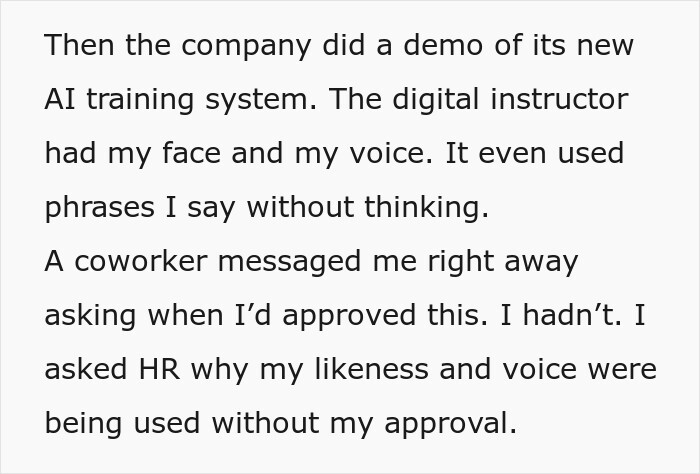
Case in point: This employee recorded a whole library of training videos for their company, only to find their own face and voice staring back at them from a new AI instructor. Now their job is gone, and their severance comes with a catch. They shared the full story online, asking whether they should sign on the dotted line.
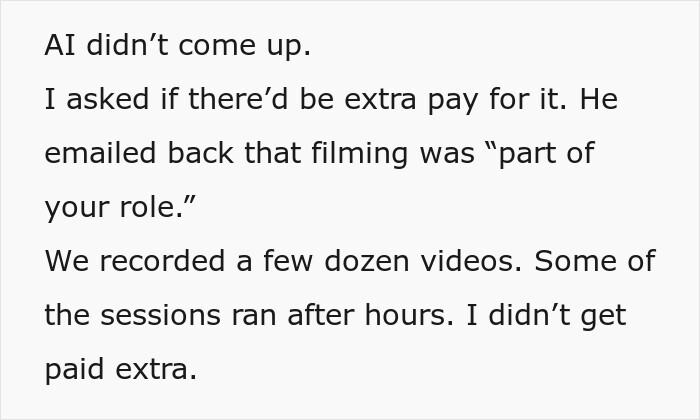
Being asked to train your own replacement is a special kind of workplace indignity. It’s also a fairly familiar one, whether your role is being outsourced, you’re moving on, or the company has found a cheaper hire. The poster, however, didn’t even know that’s what they were doing. They’d been asked to build a new training video library, pitched as a normal internal project. Being on film was simply “part of [their] role.” AI never came up.
Losing your job to AI is a familiar story too. Most of us know someone who’s been through it, or at least worries about it. But this story goes a step further. The company didn’t just take the poster’s job. It took their face, their voice, their likeness, right down to the phrases they use without thinking. They weren’t just replaced by AI. They were replaced by an AI version of themselves.
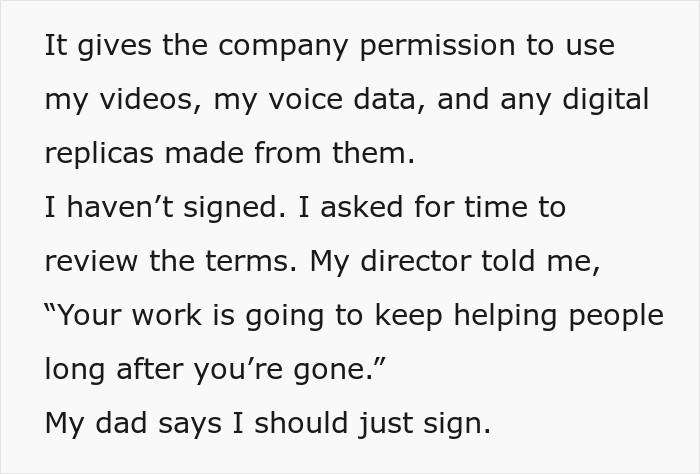
“Your work is going to keep helping people long after you’re gone,” their director told them.
It’s the kind of thing you’d expect to hear in a eulogy, not an exit interview. And that’s what makes it so chilling: the company had found a way to keep the poster working after they’d left, without their consent and without paying them. Or had it?
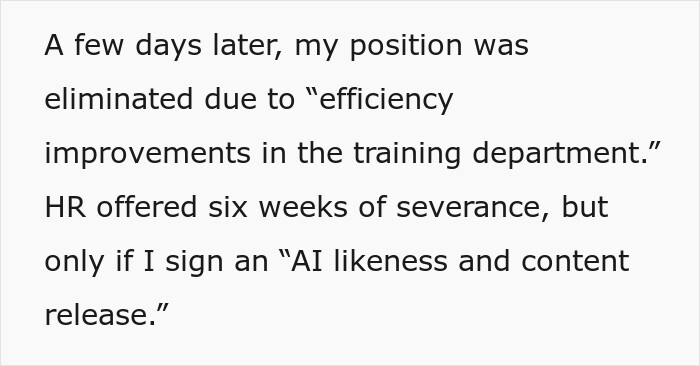
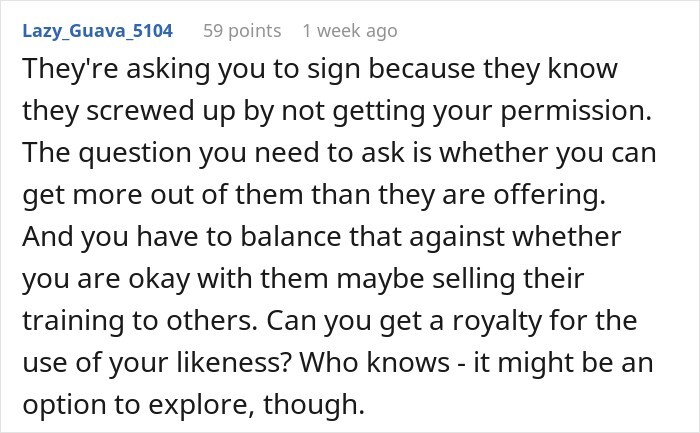
If the company was so sure it already had the right to use the poster’s face and voice, why make their severance depend on signing a release saying exactly that?
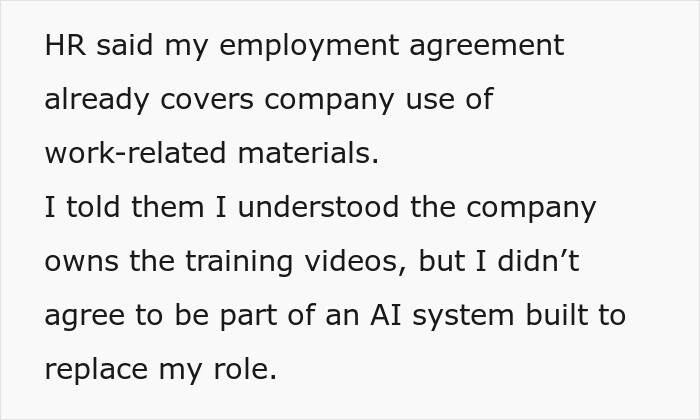
It likely comes down to the difference between owning someone’s work and owning their likeness. Under US copyright law, anything an employee creates as part of their regular duties is generally considered a “work made for hire,” which means the employer counts as its author and owner. So the company is probably on solid ground when it comes to the training videos the poster filmed for its new library. A person’s face and voice, though, are a different matter.
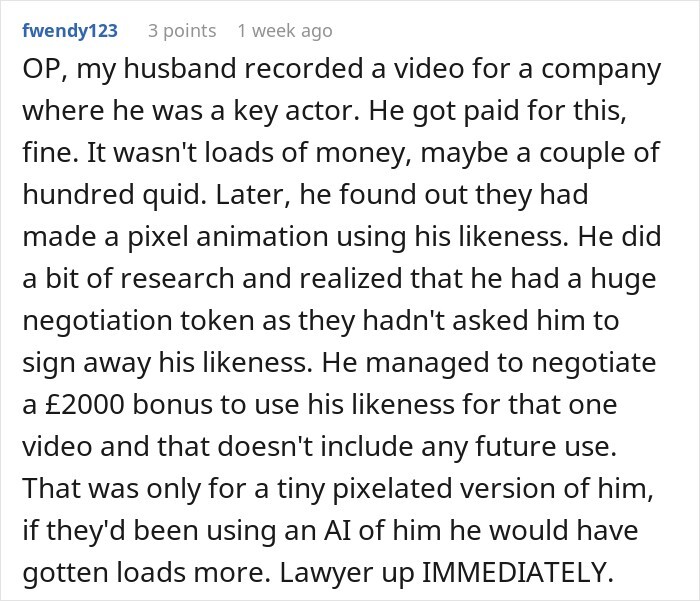
Those can be protected by what’s known as the right of publicity (ROP), which gives people some control over how their identity is used commercially. As the Congressional Research Service explains, “if a manufacturer uses a famous athlete’s name or face in a TV commercial without her permission, the athlete could sue the manufacturer for violating her ROP, and a court could order the manufacturer to pay damages and stop showing the commercial.”
It’s not just for celebrities, either, although there’s no federal law covering it, so how much protection you get depends on where you live.
Some states have gone a step further and passed laws aimed specifically at AI replicas. In California, New York and Illinois, a contract that lets an AI replica do your job might not hold up if it doesn’t clearly explain how the replica will be used and you didn’t have a lawyer or union negotiating for you. These laws were mainly written with performers in mind, so while they could apply more widely, it’s not clear they’d cover someone in the poster’s position. But they do show that lawmakers are starting to take the issue seriously.
There’s also a federal bill in the works. The NO FAKES Act, aimed at curbing unauthorized deepfakes, would create a federal right that lets people control AI replicas of their voice and likeness. Unlike most deepfake laws, which tend to focus on election interference or nonconsensual intimate images, the bill addresses “realistic computer-generated recreations of a person’s likeness across a variety of contexts,” as Erik Dullea and Evan Yahng of law firm Husch Blackwell write. It cleared the Senate Judiciary Committee in June 2026, but stalled on the Senate floor in September, so for now, it’s still just a bill.
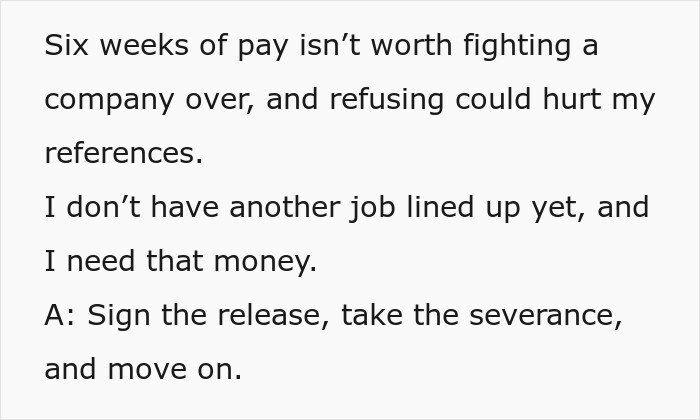
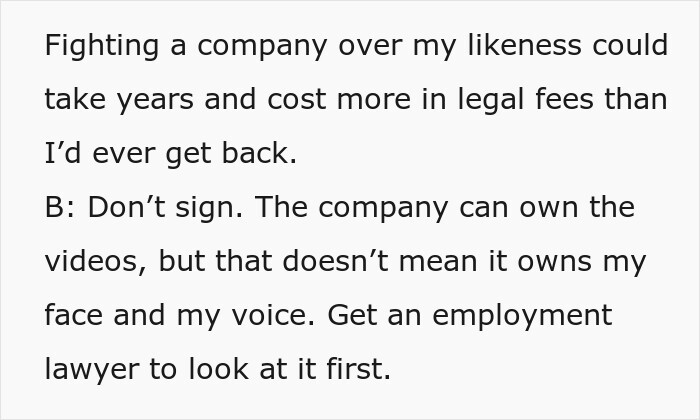
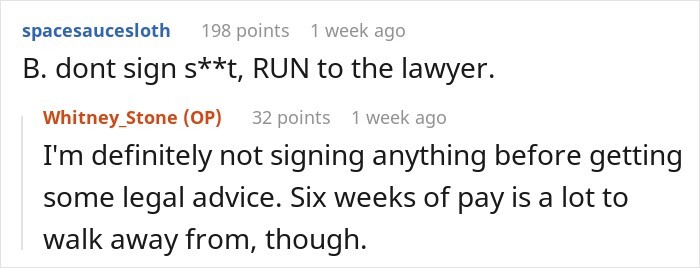
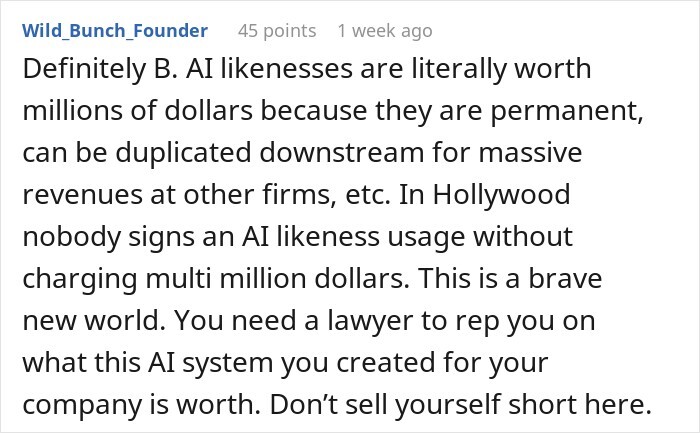
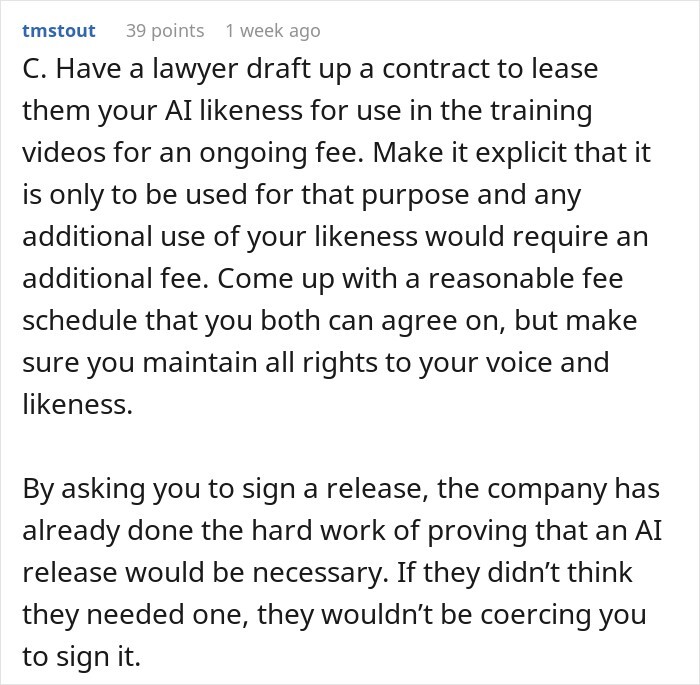
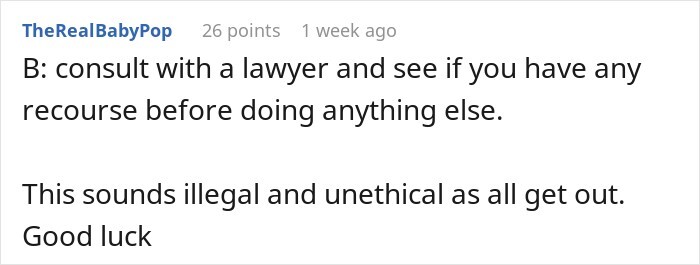
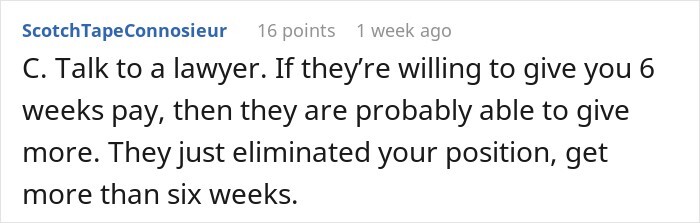
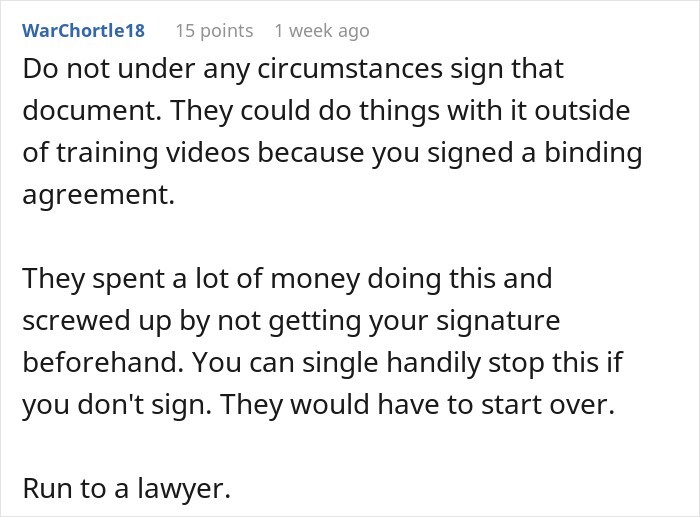
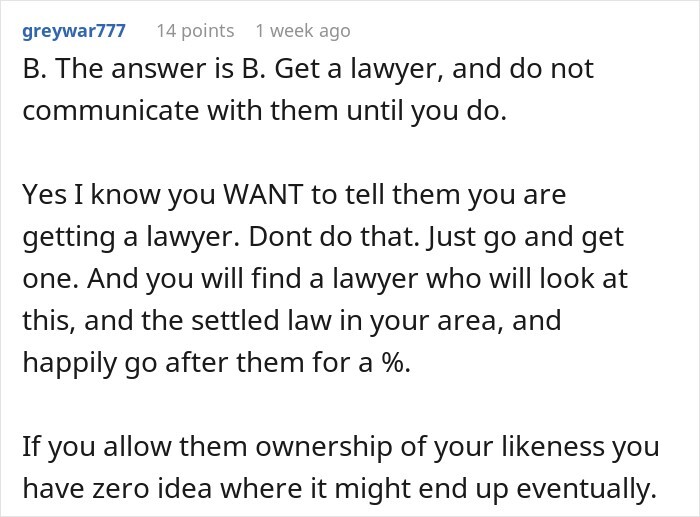
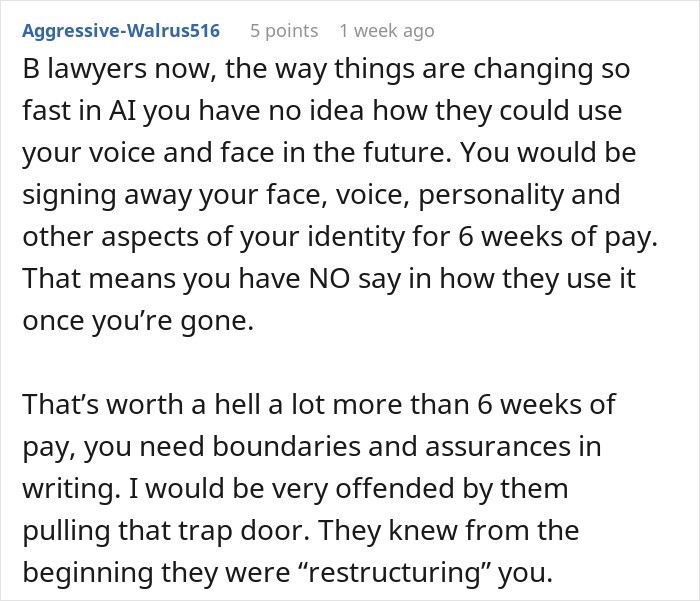
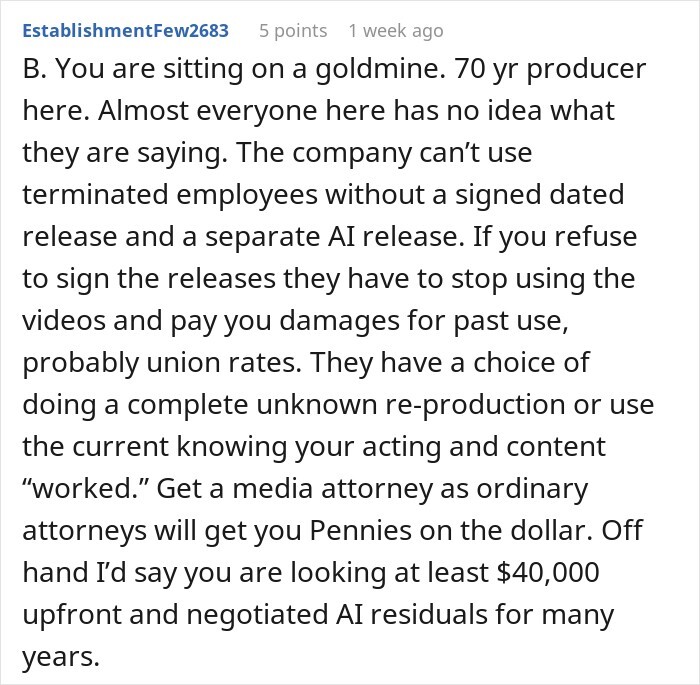
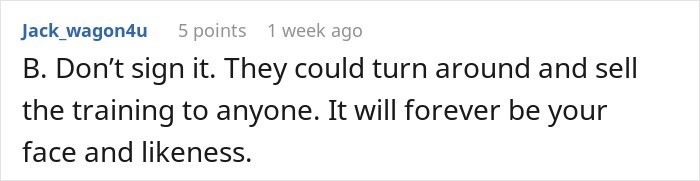
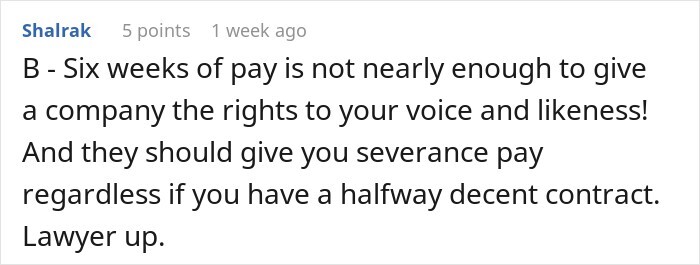
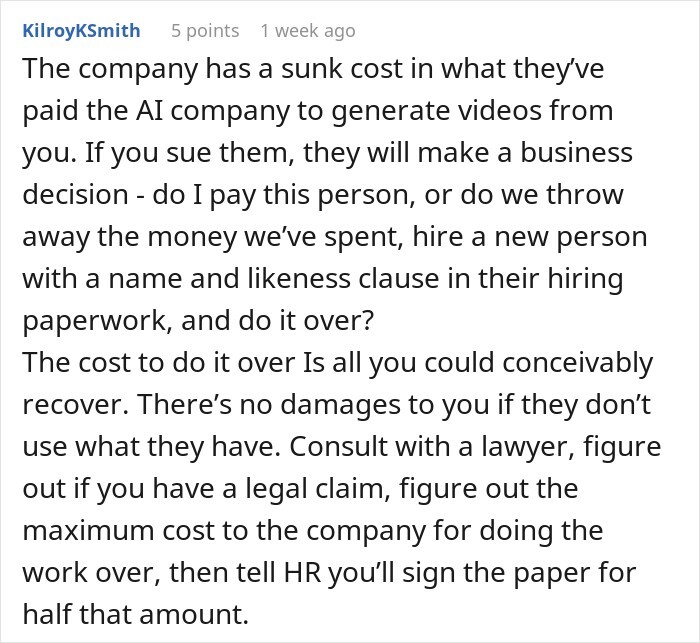
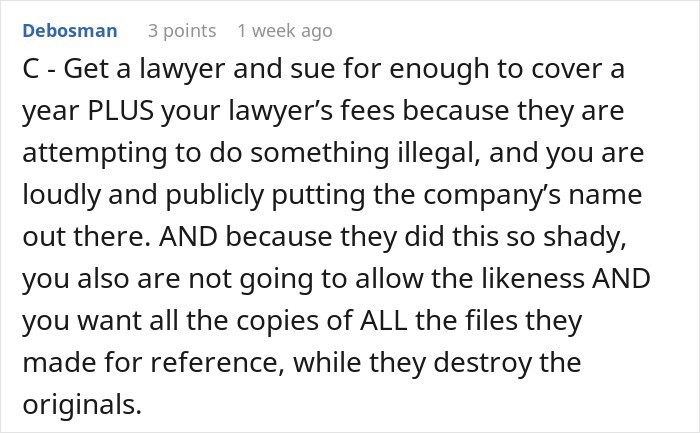
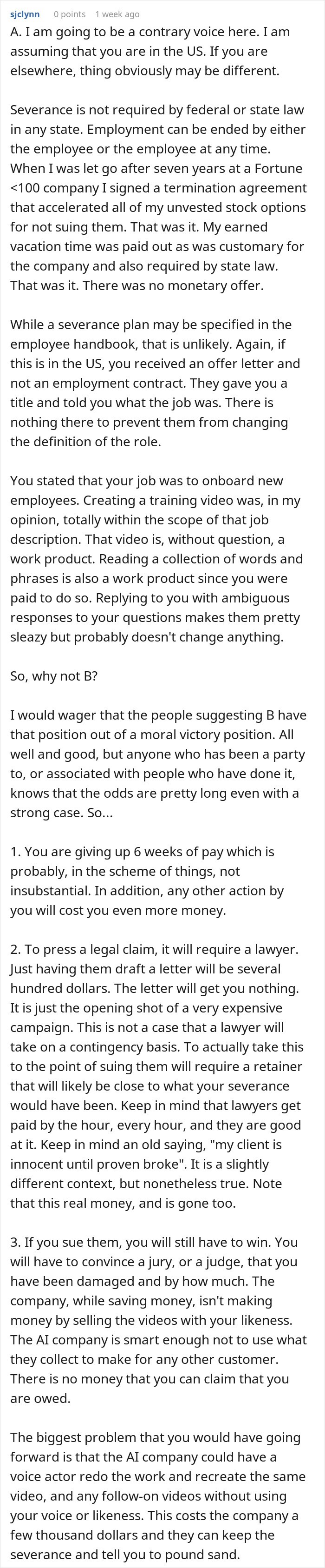
In the meantime, the poster feels stuck choosing between A and B. They don’t have another job lined up and they need the money. Their dad thinks they should just sign, warning that refusing could hurt their references. But signing could mean giving up control of their face and voice for good, and that comes with its own risks.
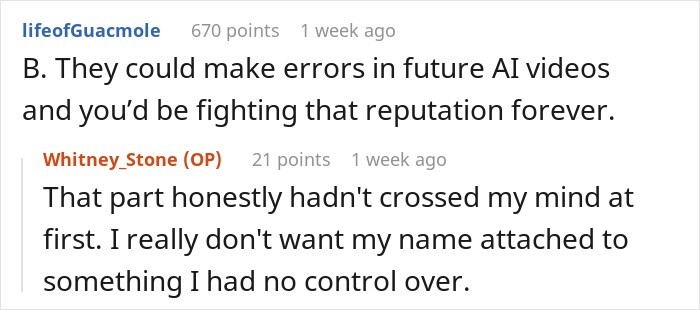
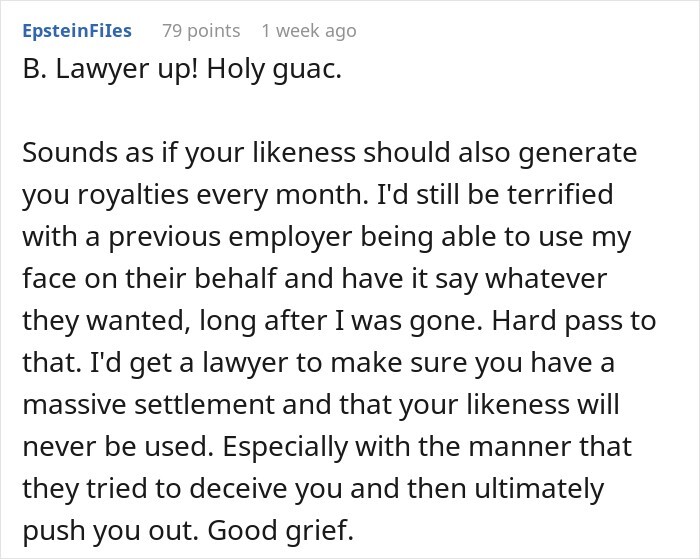
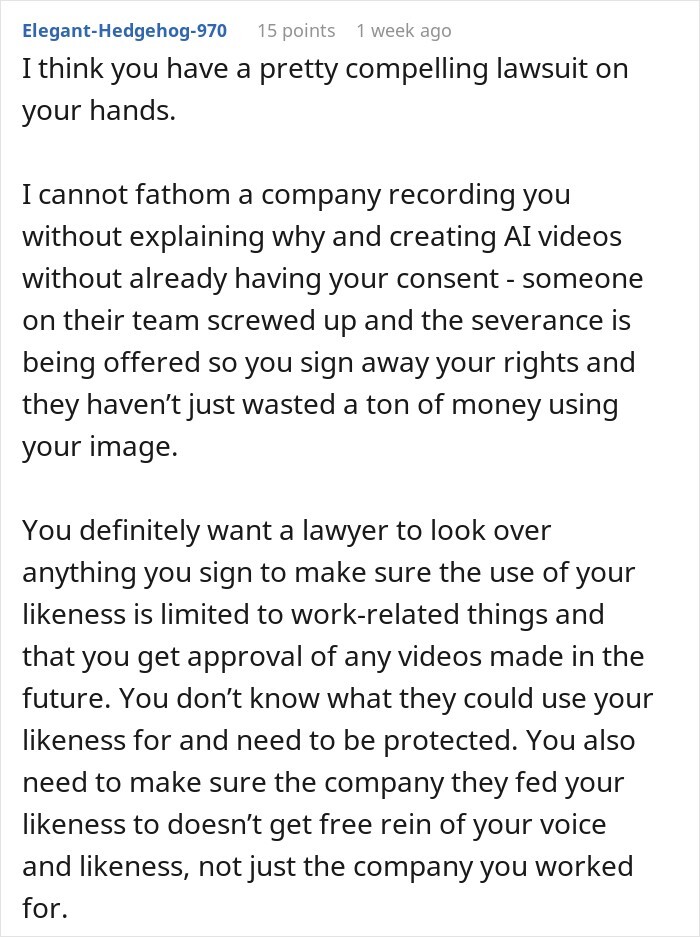
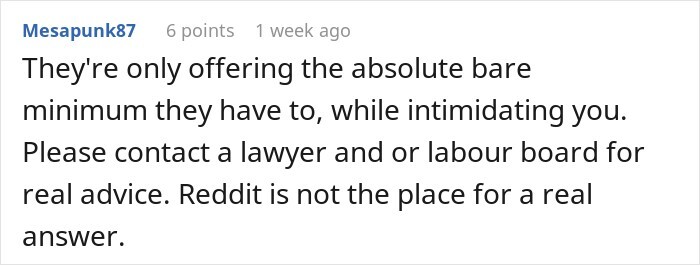
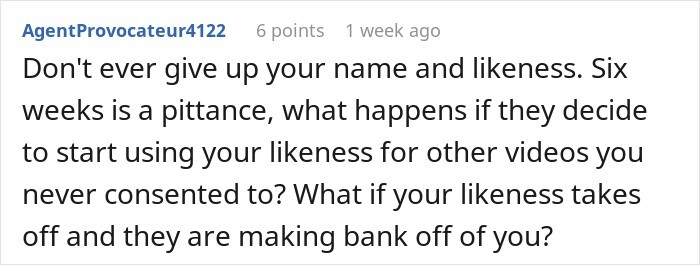
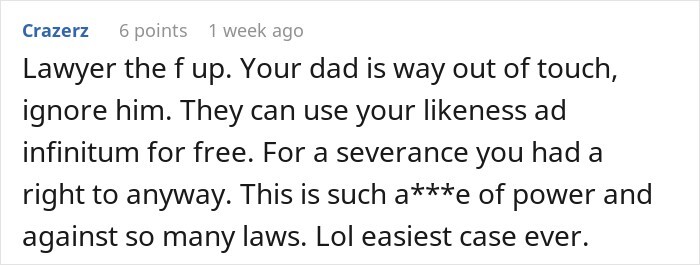
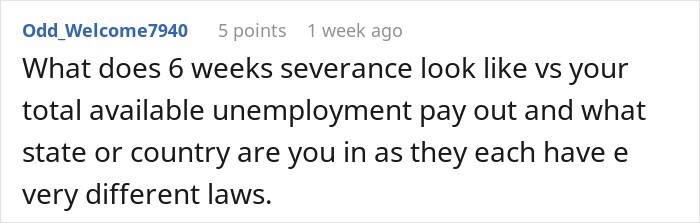
It’s not just about the AI making mistakes. As several commenters pointed out, who knows what the poster’s likeness could end up being used for? It could promote something they’re against, or say something that undermines their values or professional reputation. Either way, it’d still be their face on the line.
It’s not an unfounded fear, either. Researchers at the University of Oxford have explored the potential harms of AI-generated likenesses, including people being represented without their control or consent.
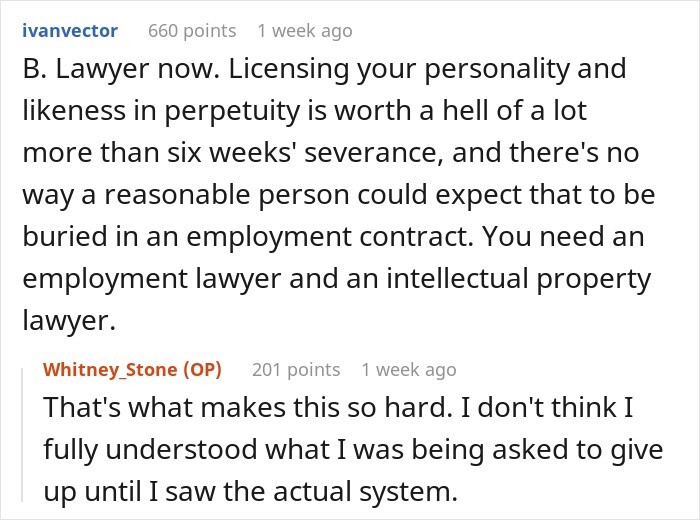
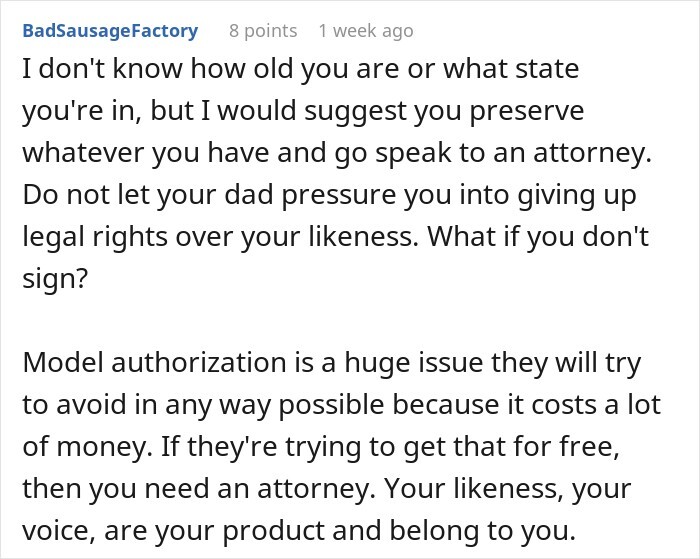
That’s why the fine print matters so much. Giving a company permission to use your likeness doesn’t have to mean handing it over for good. How long can it keep using your digital replica? Can it share it with other companies? Could your face and voice end up in products that have nothing to do with the videos you made?
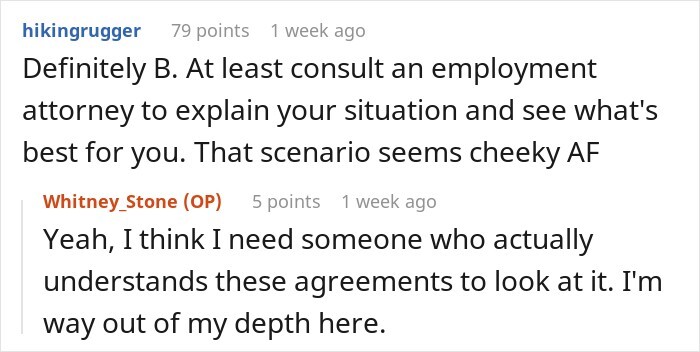
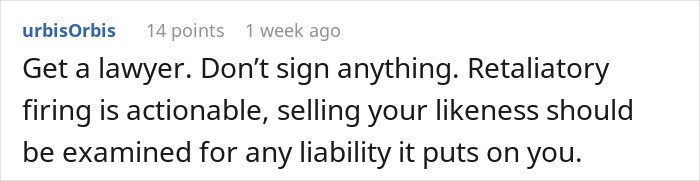
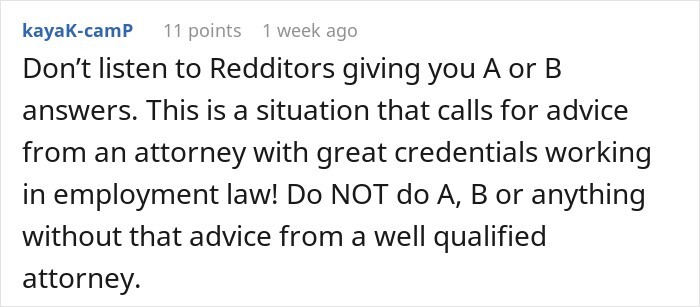
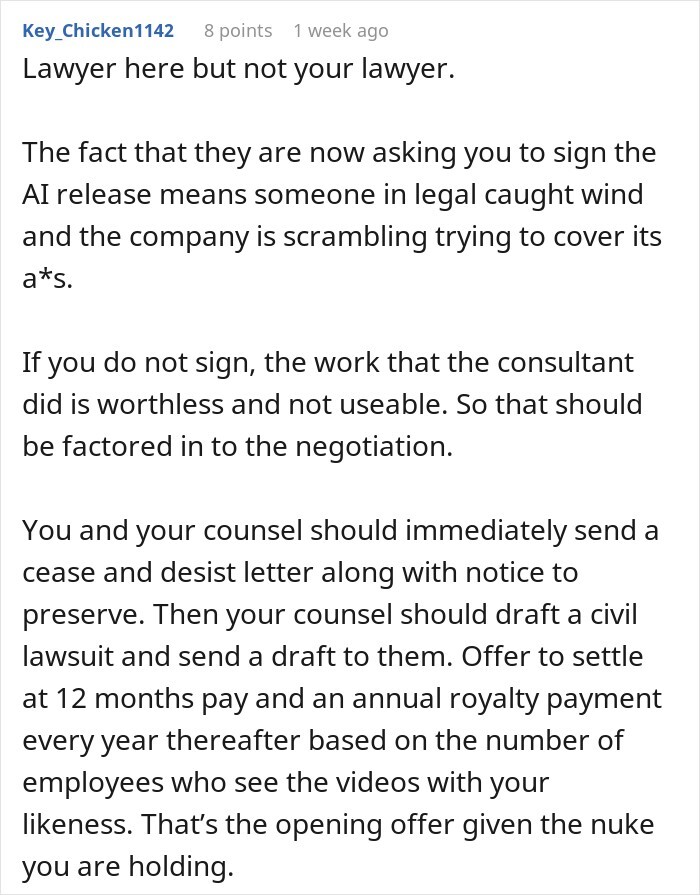
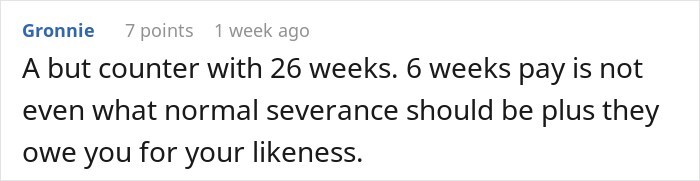
These are exactly the kinds of questions a lawyer could help the poster work through before signing anything. And the answers might be worth a lot more than six weeks of pay.

By entering your email and clicking Subscribe, you're agreeing to let us send you customized marketing messages about us and our advertising partners. You are also agreeing to our Privacy Policy.
Thank you! You've successfully subscribed to newsletters!












 No fees, cancel anytime



















28
1