Get Premium
Dark mode theme is available exclusively for premium users. Learn more about the benefits of subscribing.
No fees, cancel anytime.

 Dark Mode Ad-Free Browsing Unlimited Content
 Ad-Free Browsing Unlimited Content Dark Mode
Join 1.2 million Panda readers who get the best art, memes, and fun stories every week!

We’ve heard about relationship pranks that go a step too far. But what happens when a partner intentionally lies, and then expects you to laugh it off as a joke?
That’s the nightmare scenario one 21-year-old woman recently found herself in. After a night out, her boyfriend’s mother sent a harrowing text saying he didn’t survive a car crash. She instantly went into panic mode.
Sharing her story online, she said she went into shock and did something extreme. But moments later, her boyfriend walked through the door completely fine.
When the truth finally came out, he offered no apologies and started blaming his girlfriend for being too emotional.
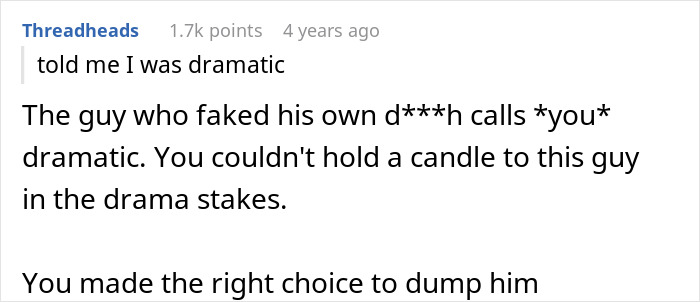
As one person in the comments noted: “You couldn’t hold a candle to this guy in the drama stakes.”
Image credits: The Yuri Arcurs Collection (not the actual photo)
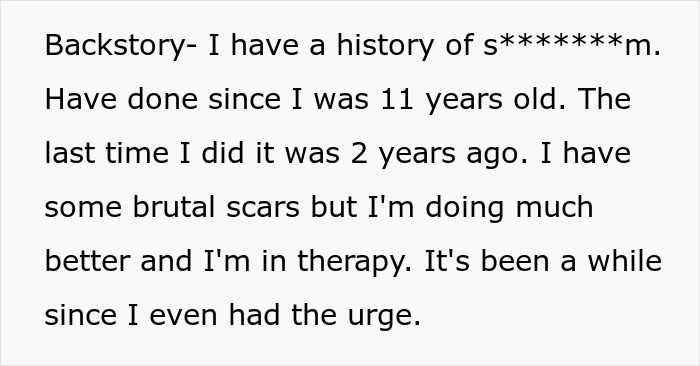
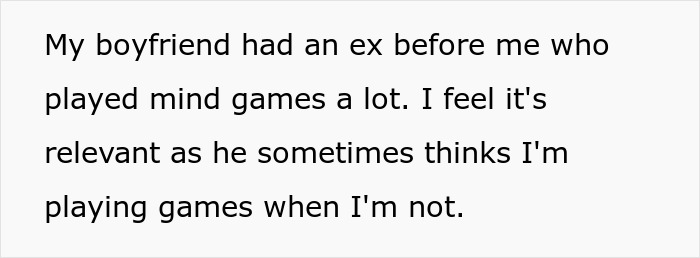
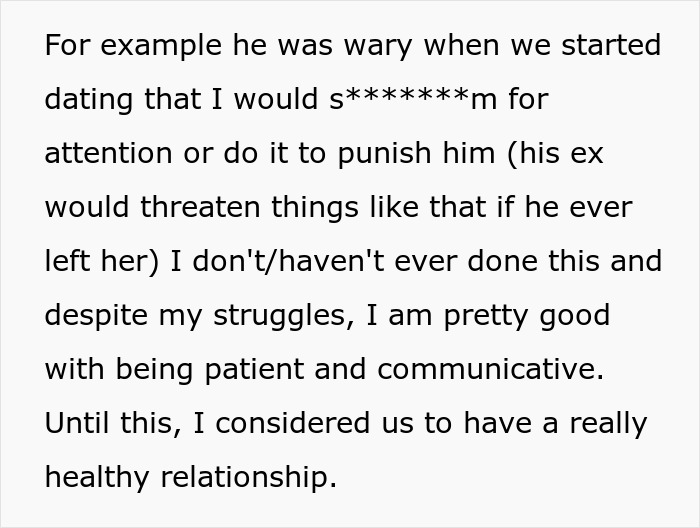
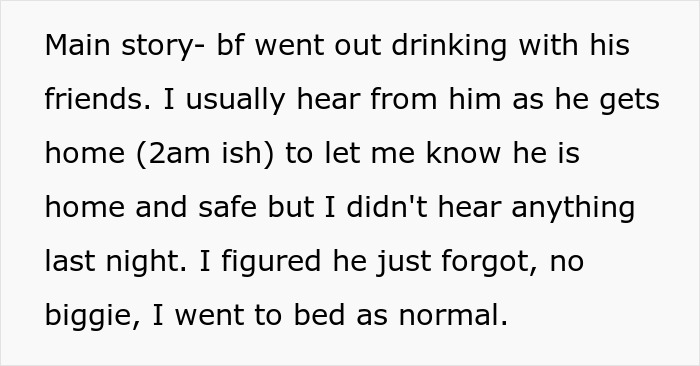
Image credits: magnific (not the actual photo)
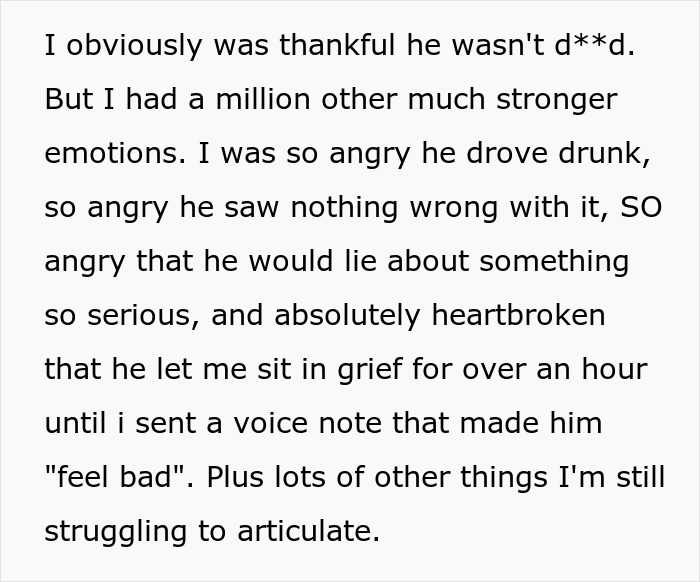
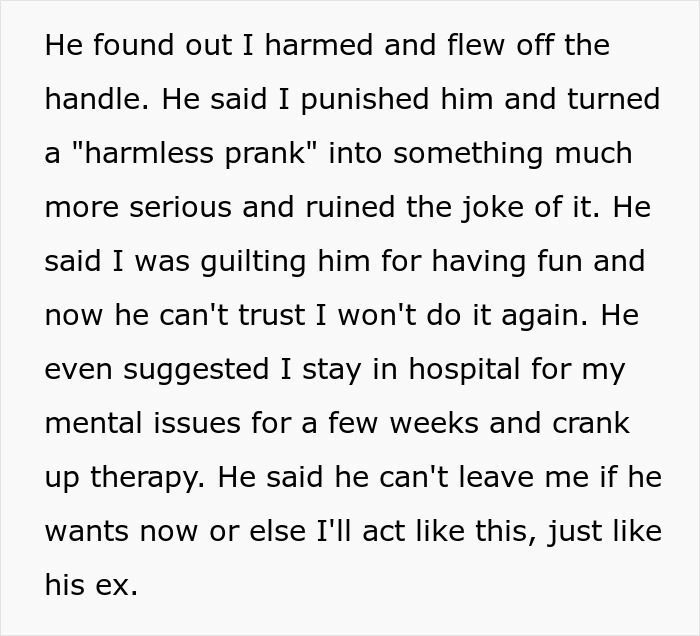
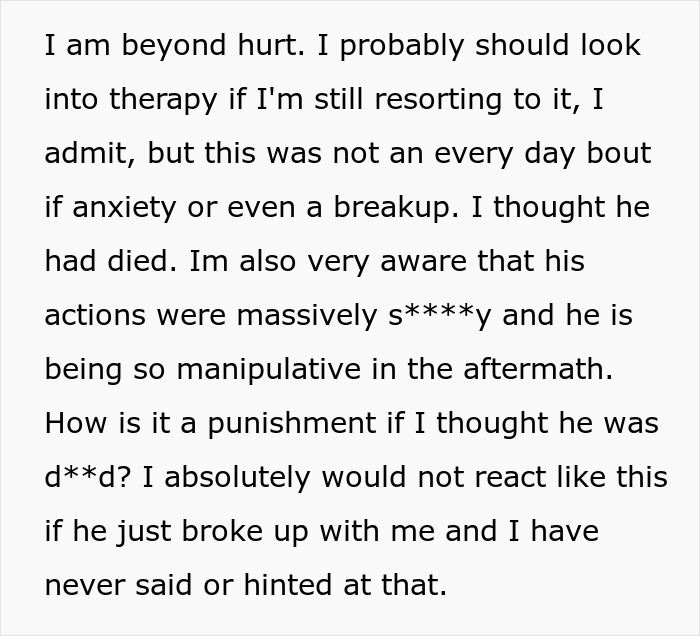

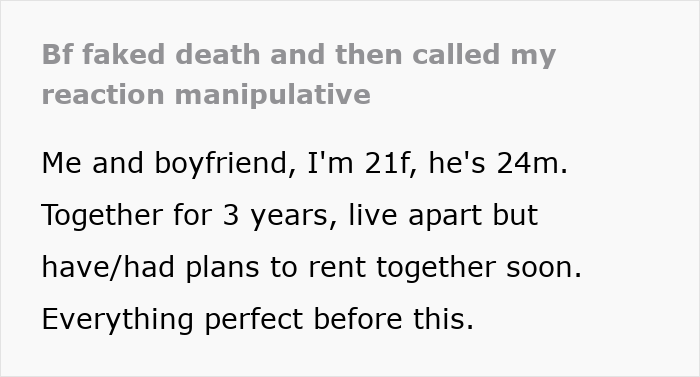
Image credits: throwra186252
In this story, the author’s boyfriend made her believe that he had passed away in a severe car crash. When she reacted emotionally and eventually got angry that he had lied, he told her she was “ruining the joke” and trying to “guilt” him.
To deflect accountability, he turned the tables completely, labeling her natural trauma response as “manipulative.”
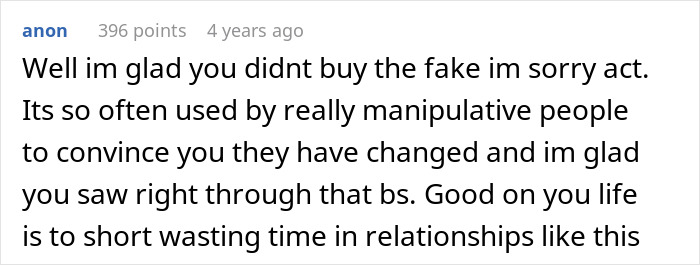
These phrases are a common manipulation tactic that mental health professionals call DARVO. Coined by psychologist Dr. Jennifer Freyd in the 1990s, DARVO is a documented approach where those confronted with wrongdoing instantly Deny the act, Attack the accuser, and Reverse the roles of Victim and Offender.
It combines elements of gaslighting and blame-shifting.
Some experts also believe these are traits of narcissism. “By denying their actions, attacking the person confronting them, and flipping the roles of victim and offender, the narcissist effectively redirects attention away from their own actions, often causing doubt in the victim’s claims,” says Bayu Prihandito, founder of Life Architekture and certified psychology expert.
He adds: “The psychology behind DARVO is rooted in a strong need for self-preservation and control. They will often employ this strategy to protect their ego and maintain their desired self-image at all costs.”
When this form of manipulation takes hold, victims often end up internalizing a twisted narrative. They start to believe they are the villain of their own story and convince themselves that they somehow caused or deserved the mistreatment.
Enduring this constant cycle of blame-shifting takes a devastating toll on mental health.
Over time, it erodes a person’s self-worth and reality, triggering deep anxiety, depression, and relentless self-doubt. Trapped in a state of helplessness, victims can lose trust in their own judgment — and eventually, lose touch with their true sense of self.
“The victim develops a pseudo personality that echoes and repeats the narcissist’s false self — their grandiose narrative of themselves,” says Avigail Lev, PsyD, founder of Bay Area CBT Center and CBTonline.
Image credits: Getty Images (not the actual photo)
Studies show that severe emotional shock (such as sudden, unexpected grief) activates the brain’s fight-or-flight response. It can cause temporary cognitive collapse and trigger old behaviors even after years of recovery.
“Relapse doesn’t mean failure, it signals that emotional needs are not being met… Warning signs can emerge suddenly or gradually, triggered by stress, trauma, conflict, or worsening mental health conditions like depression or anxiety,” says Viviane Silva, a clinical social worker and psychotherapist.
Expecting someone to maintain perfect emotional composure while processing traumatic grief isn’t just unrealistic — it’s medically unfounded.
Yet, rather than offering support during a mental health crisis he directly caused, the author’s partner attempted to minimize his actions by hiding behind a classic shield: framing the entire ordeal as a “harmless prank.”
Ask any expert or sane person, and they will tell you that a prank requires mutual enjoyment.
It crosses an unforgivable line the moment it targets someone’s physical body, creates actual danger, or destroys property. At its core, a genuine prank is completely harmless. A healthy joke should be lighthearted, leaving the person who was tricked feeling amused rather than terrified, humiliated, or distressed.
For anyone navigating this level of emotional distress, experts emphasize that the first step toward recovery is breaking the cycle of isolation and self-doubt.
Victims should trust their instincts and document what occurred. Re-establishing firm personal boundaries is critical. Reaching out to trauma-informed therapists or trusted support networks also provides a safe space to process the shock.
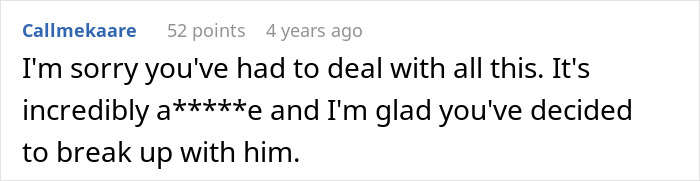
And when a partner repeatedly dismisses trauma responses, walking away is often the healthiest choice.
Image credits: Getty Images (not the actual photo)
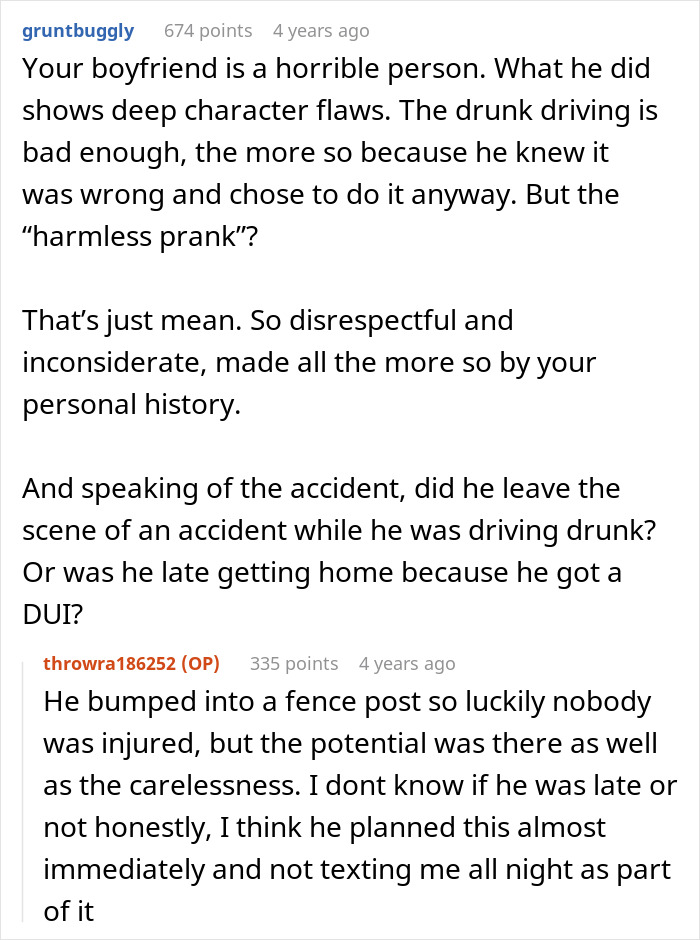
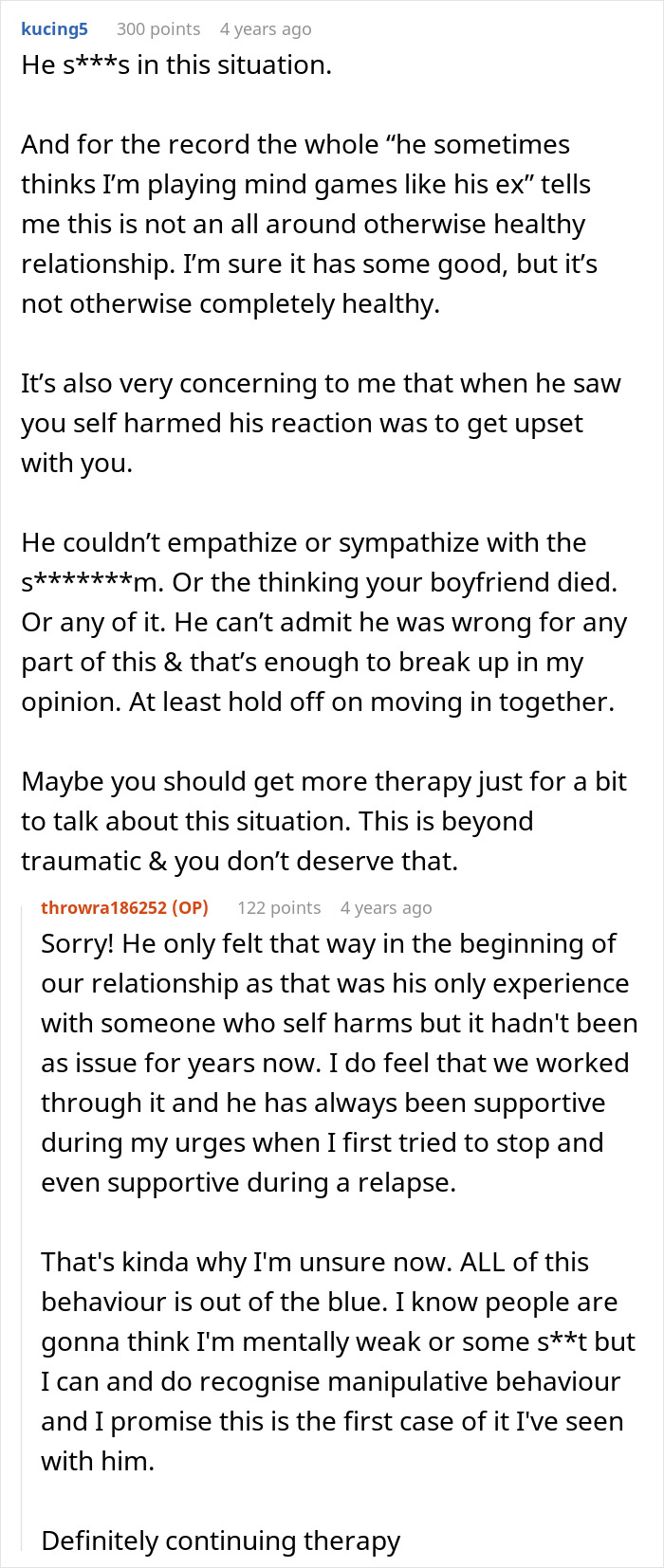

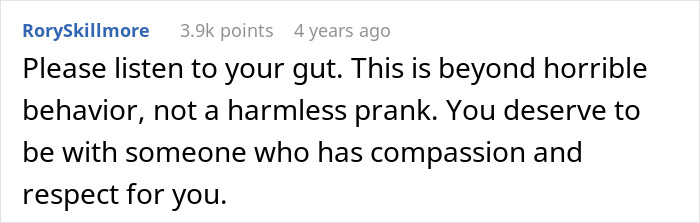
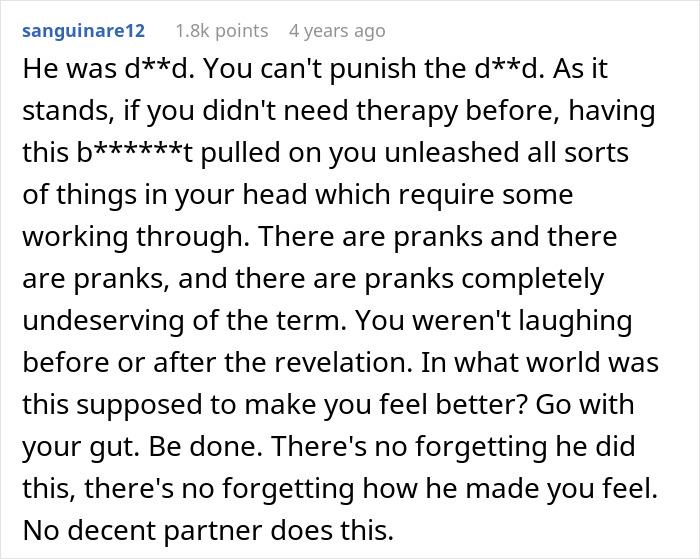

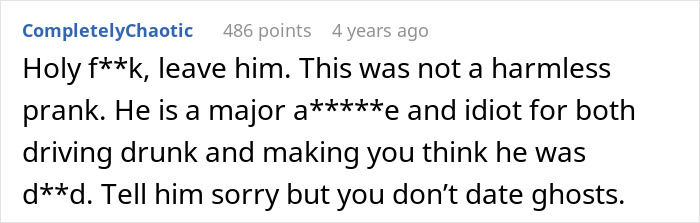
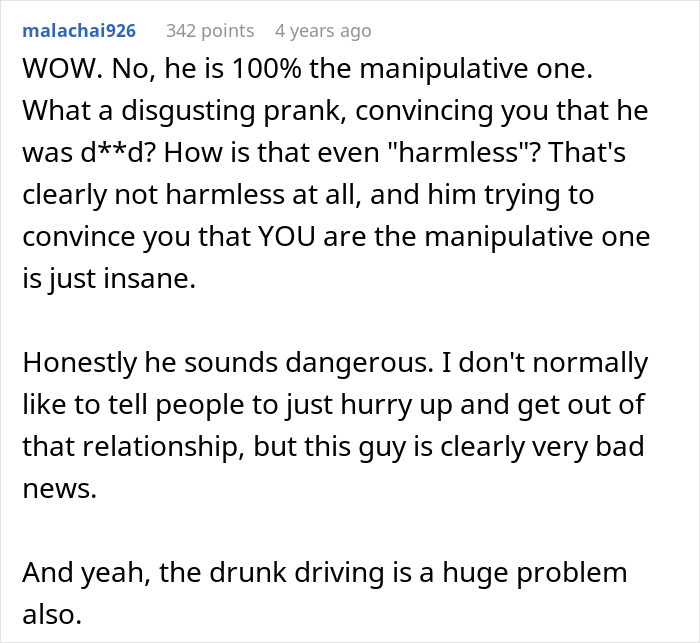
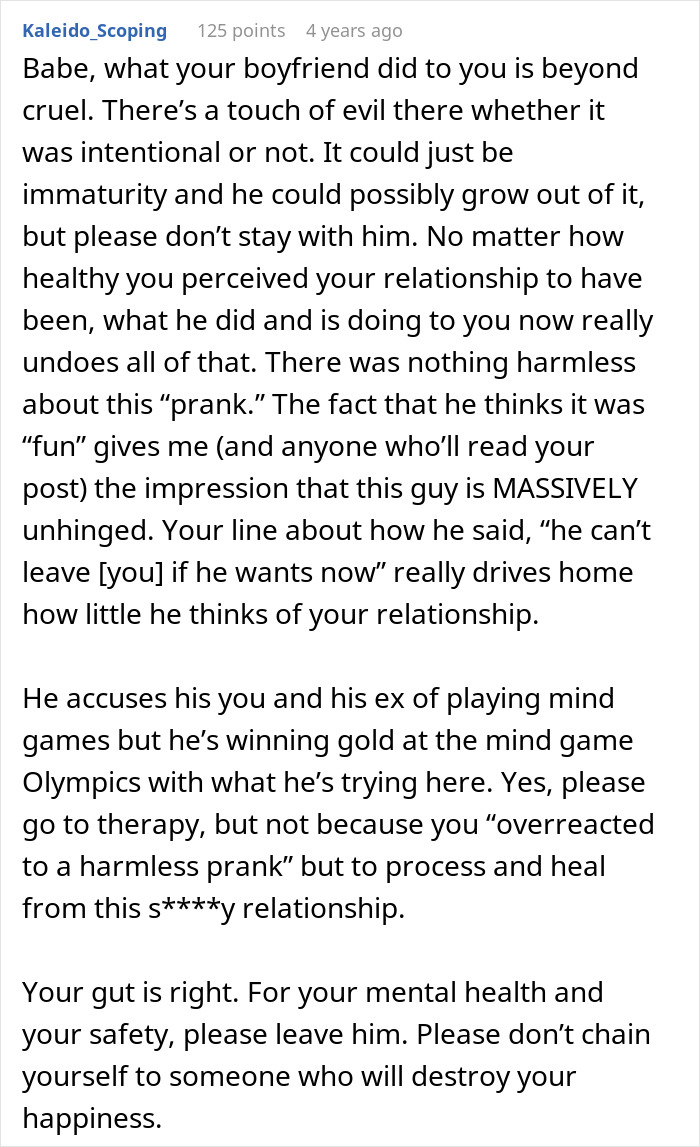
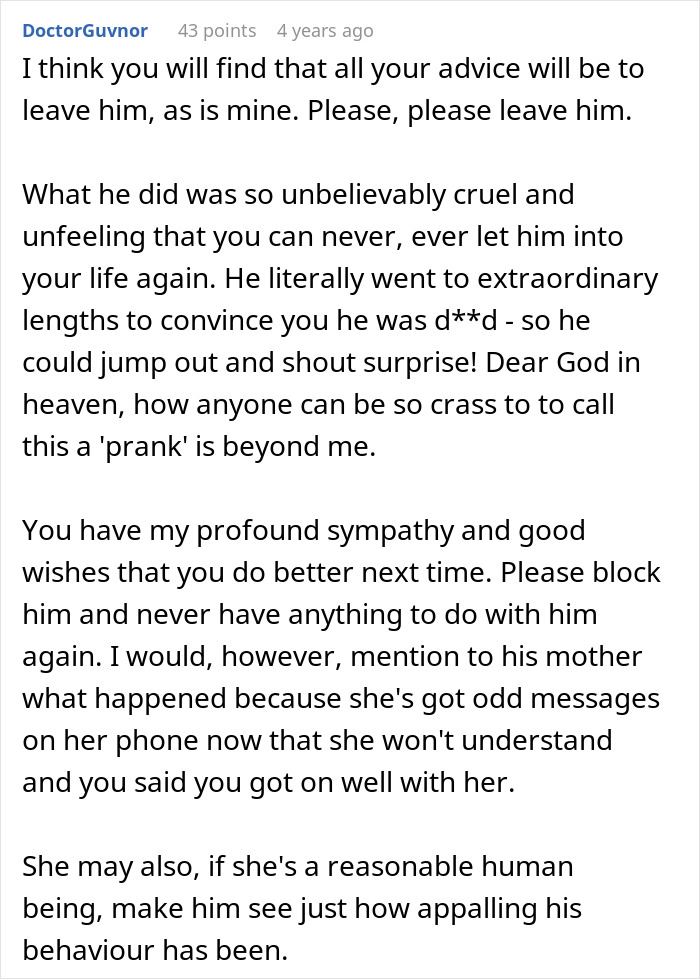
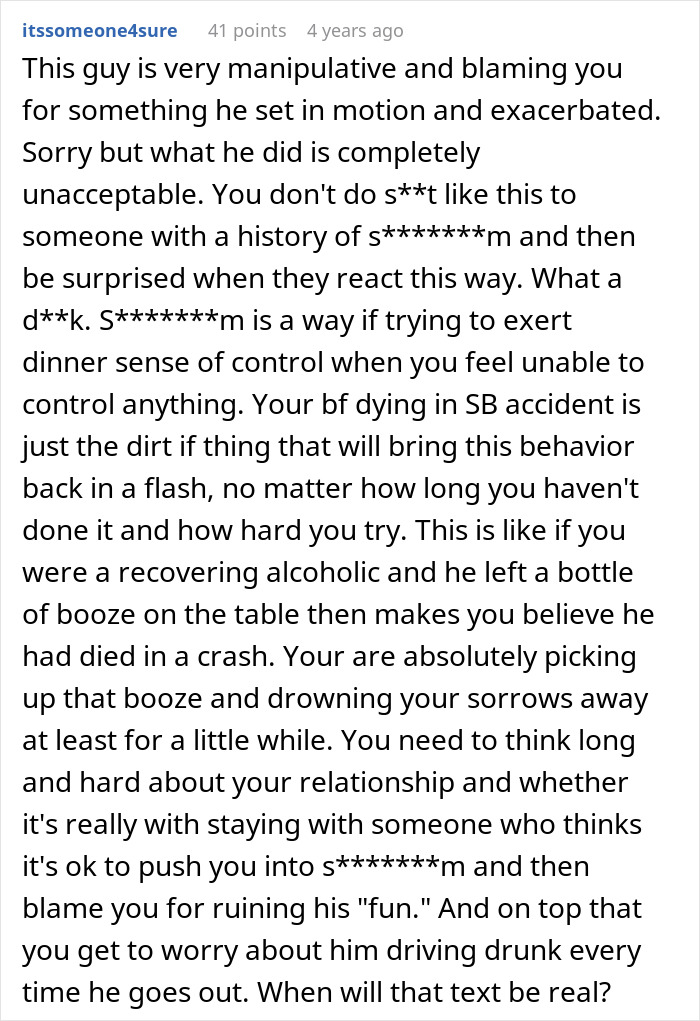



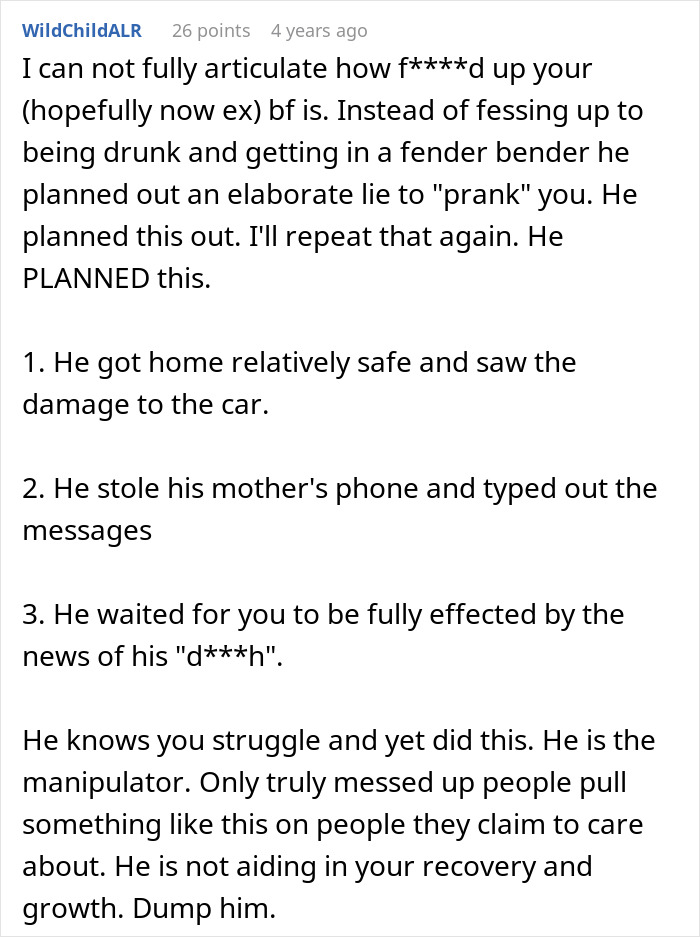


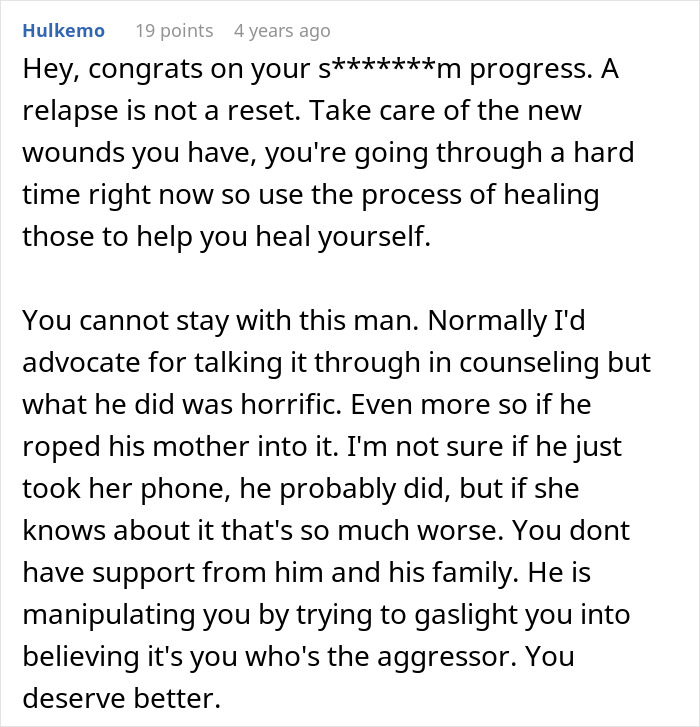

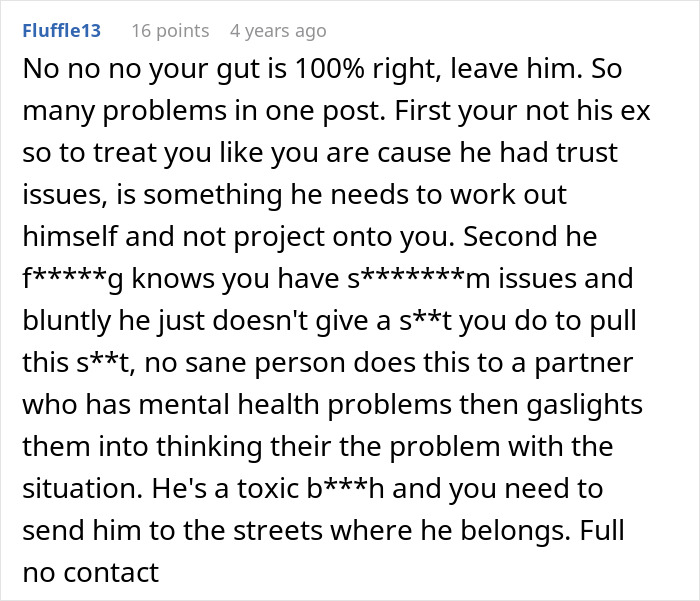
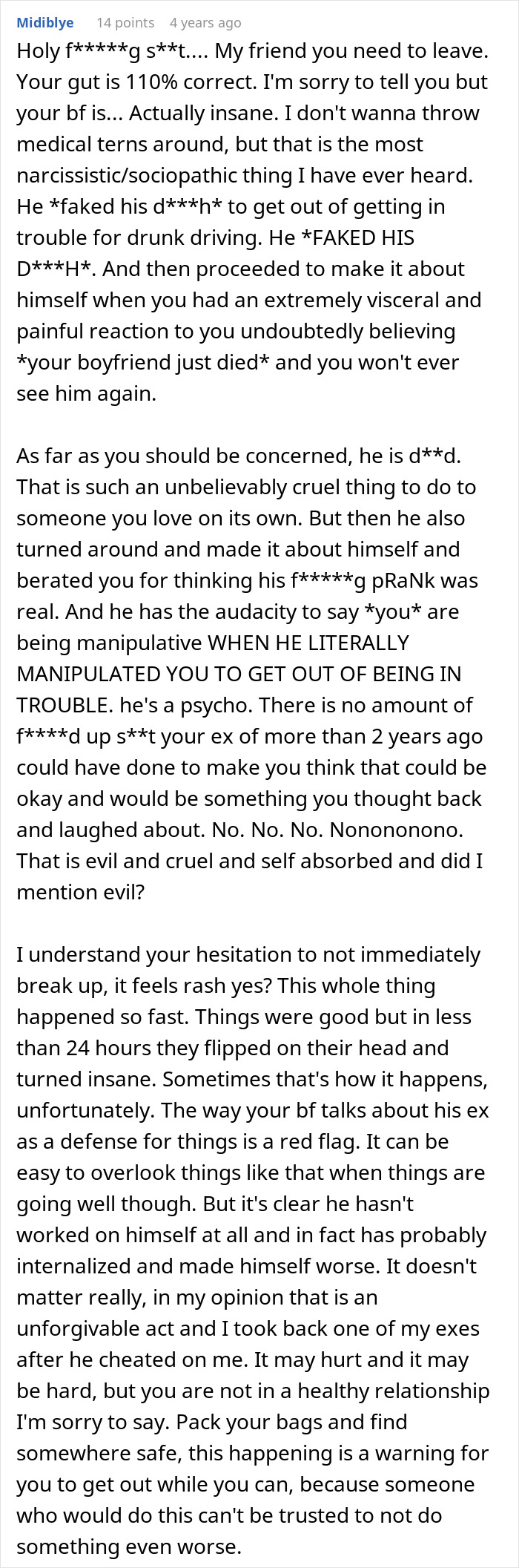

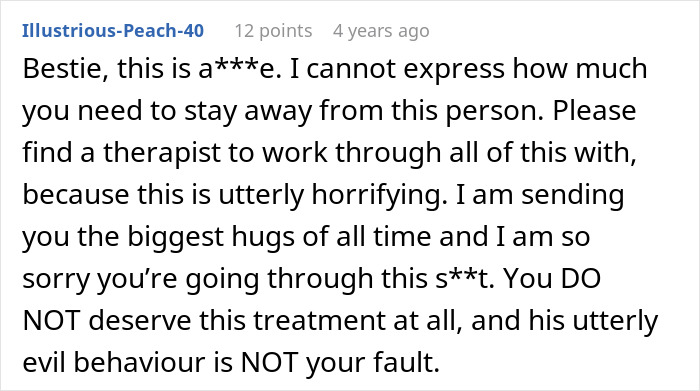
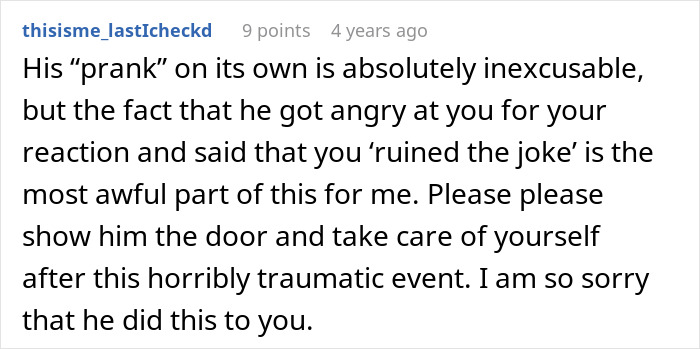


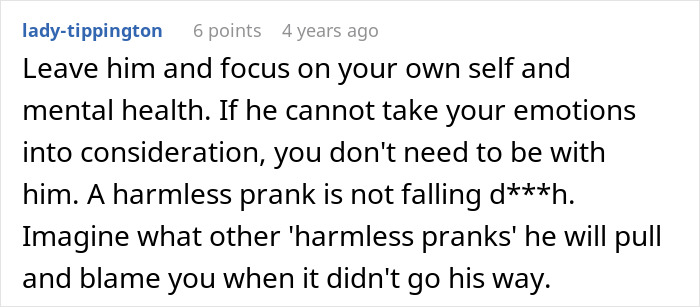
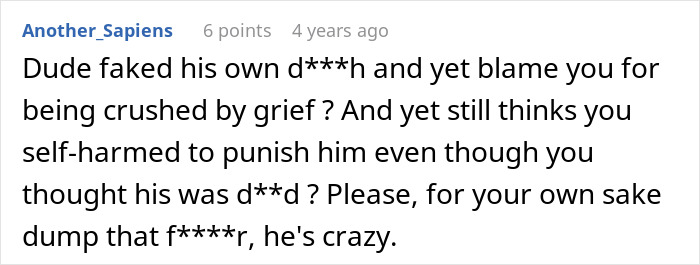
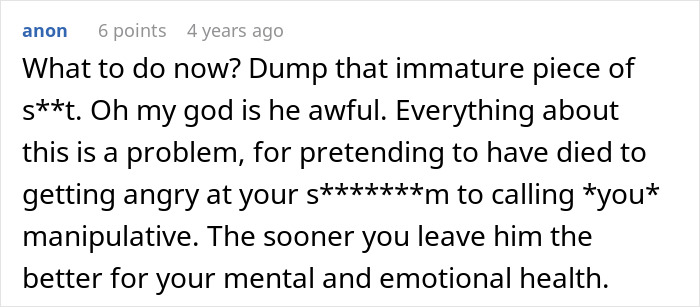
Image credits: wavebreakmedia_micro (not the actual photo)
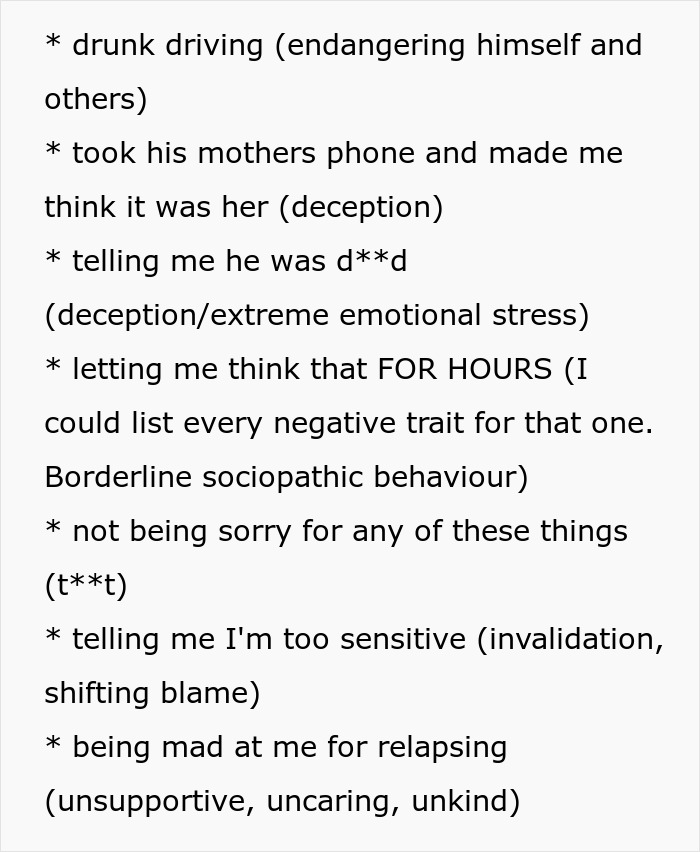
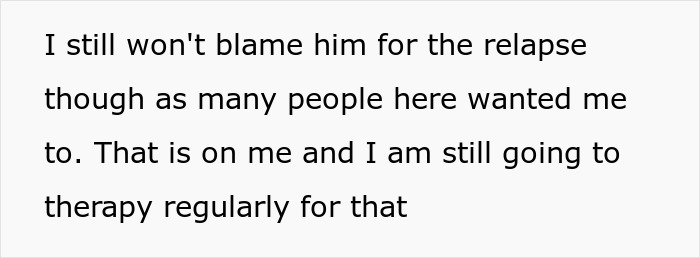
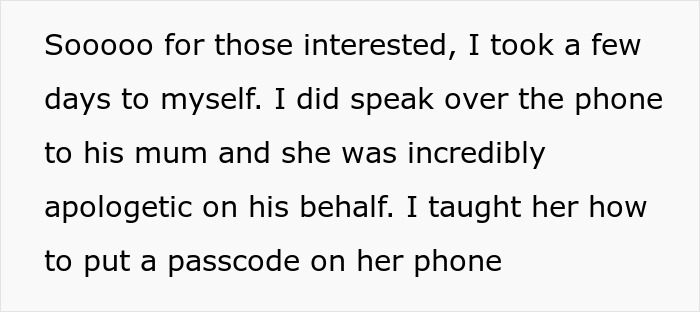
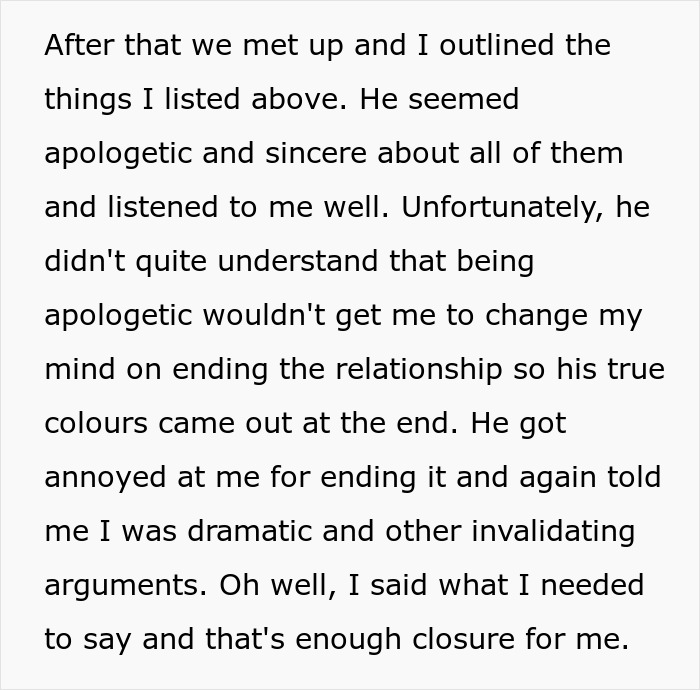
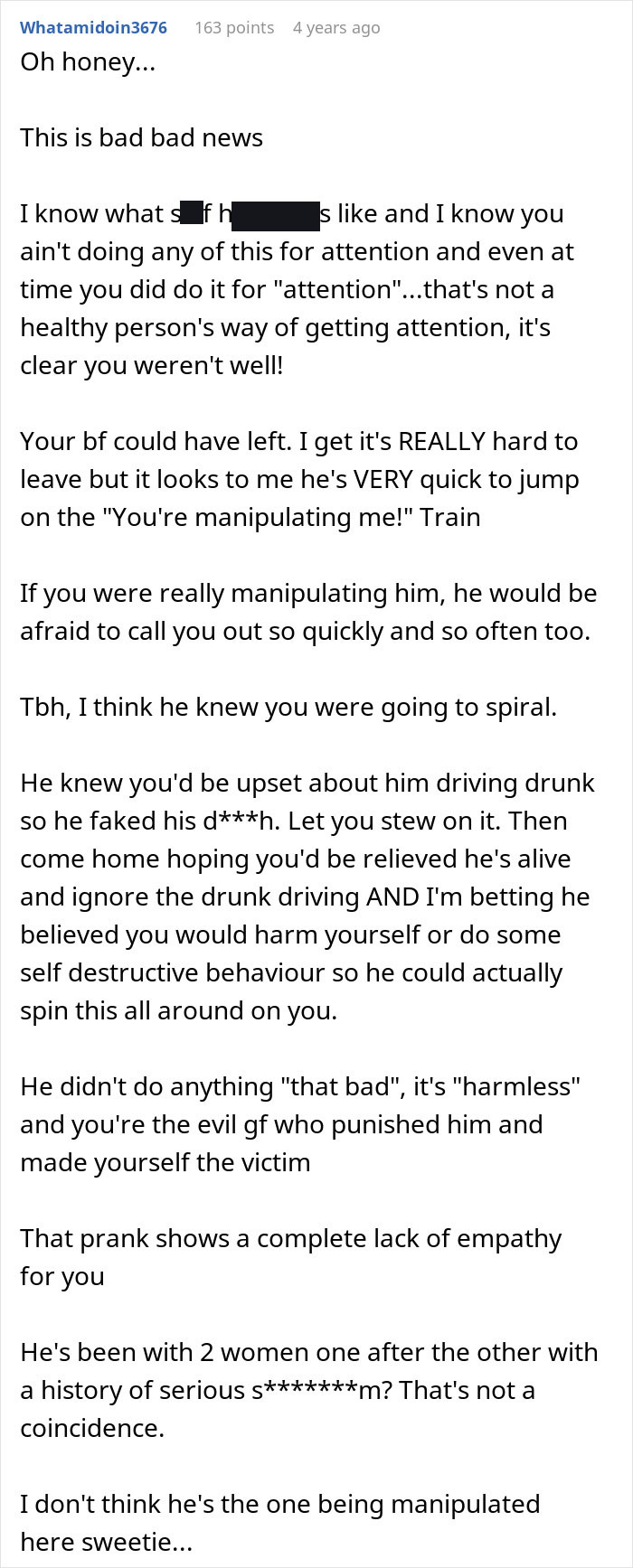
Image credits: throwra186252














By entering your email and clicking Subscribe, you're agreeing to let us send you customized marketing messages about us and our advertising partners. You are also agreeing to our Privacy Policy.
Thank you! You've successfully subscribed to newsletters!


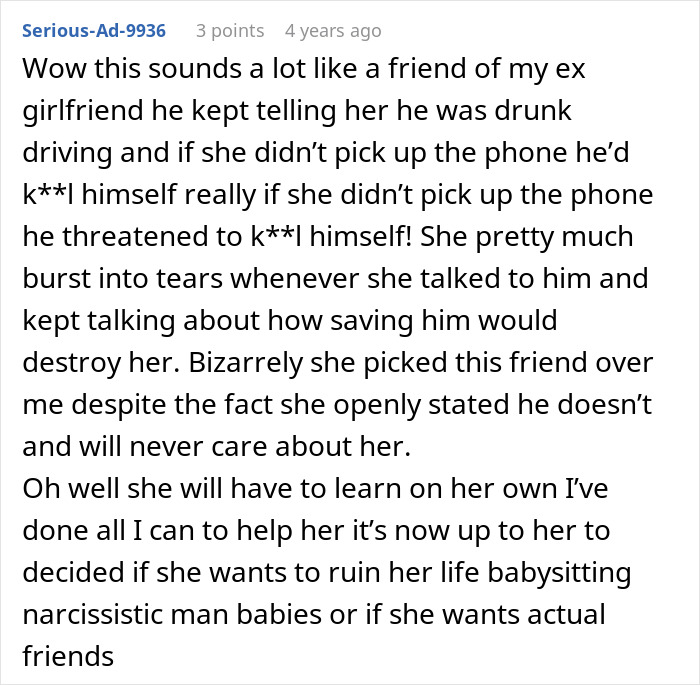
I dunno about y'all, but boyfriend would be deád for REALS afterwards if he did this to me XD

Oh hell yes very very very proper d e a d ! With no chance of coming back from it what so ever ,oh and they’d never find him either !!
Load More Replies...
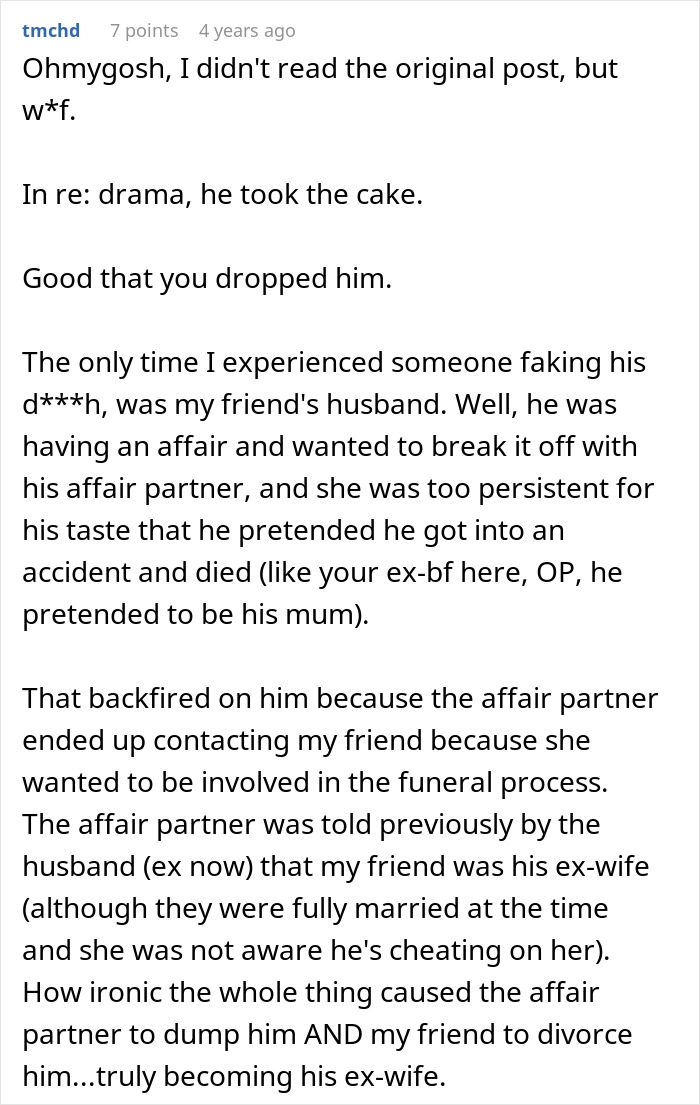
I'm happy all 19 voters in the poll agree the "prank" is completely unforgivable and cruel.

The dumb ones have now voted, and three percent have picked the bad choices, but that's to be expected. Looks as if the BF voted, too, for "Just a bad joke that got out of hand."
Load More Replies...
I dunno about y'all, but boyfriend would be deád for REALS afterwards if he did this to me XD
Oh hell yes very very very proper d e a d ! With no chance of coming back from it what so ever ,oh and they’d never find him either !!
Load More Replies... I'm happy all 19 voters in the poll agree the "prank" is completely unforgivable and cruel.
The dumb ones have now voted, and three percent have picked the bad choices, but that's to be expected. Looks as if the BF voted, too, for "Just a bad joke that got out of hand."
Load More Replies... 

























 No fees, cancel anytime














36
33