Get Premium
Dark mode theme is available exclusively for premium users. Learn more about the benefits of subscribing.
No fees, cancel anytime.

 Dark Mode Ad-Free Browsing Unlimited Content
 Ad-Free Browsing Unlimited Content Dark Mode
Join 1.2 million Panda readers who get the best art, memes, and fun stories every week!
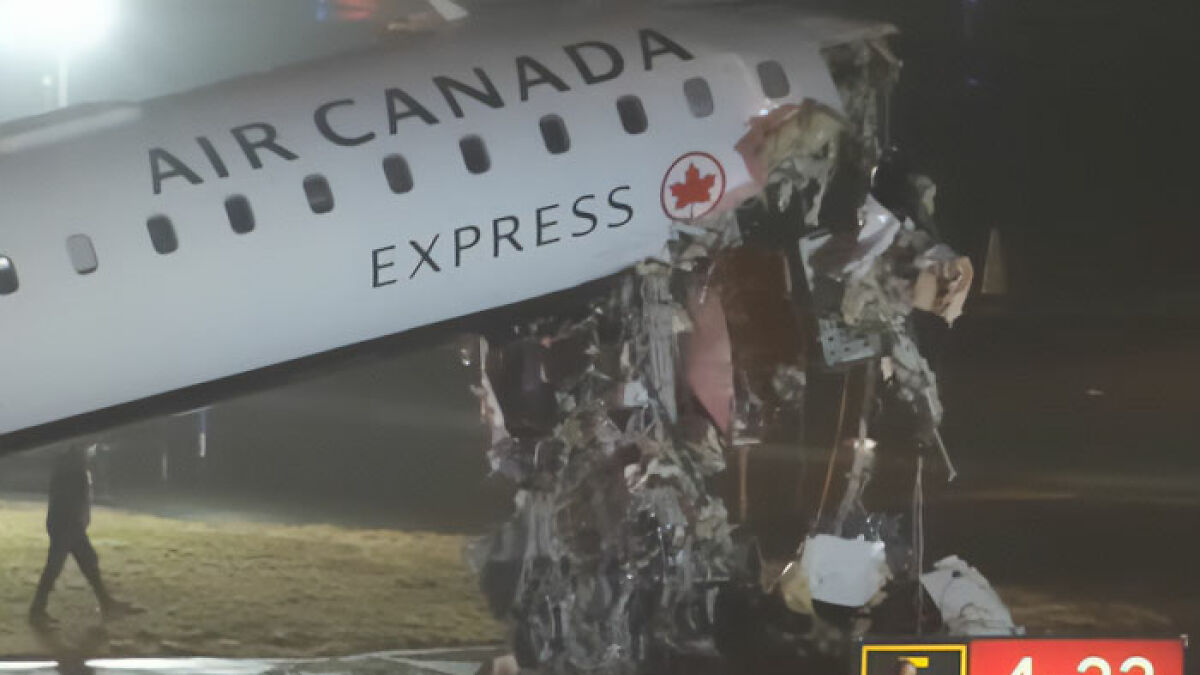
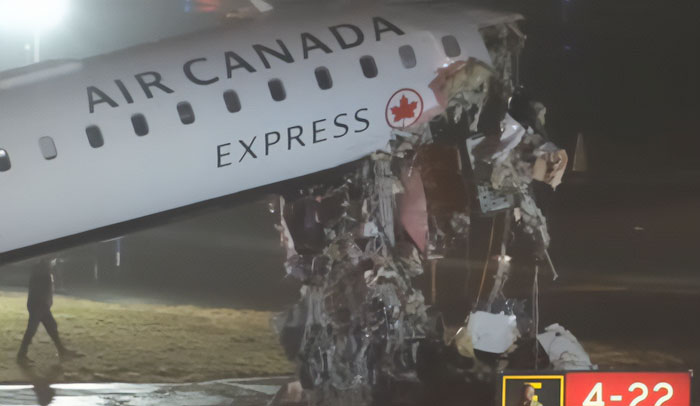
The rush to assign blame quickly began in the aftermath of the devastating Air Canada crash on the runway of LaGuardia Airport.
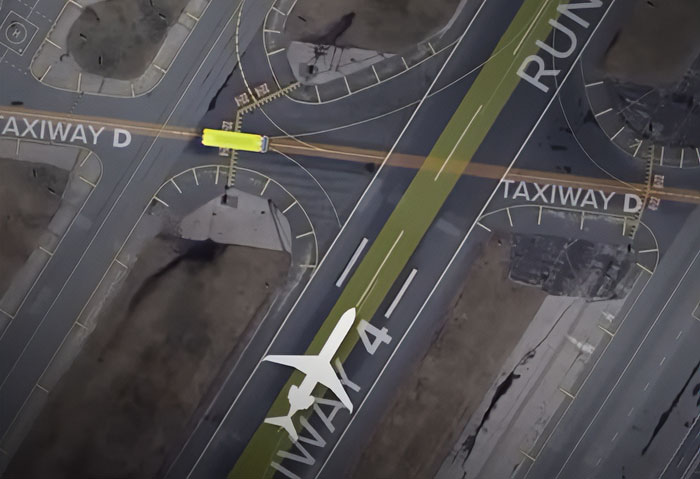
Much of the attention turned towards the airport’s air traffic control (ATC) after early reports said a plane and a ground vehicle were both cleared onto the same runway at the same time.
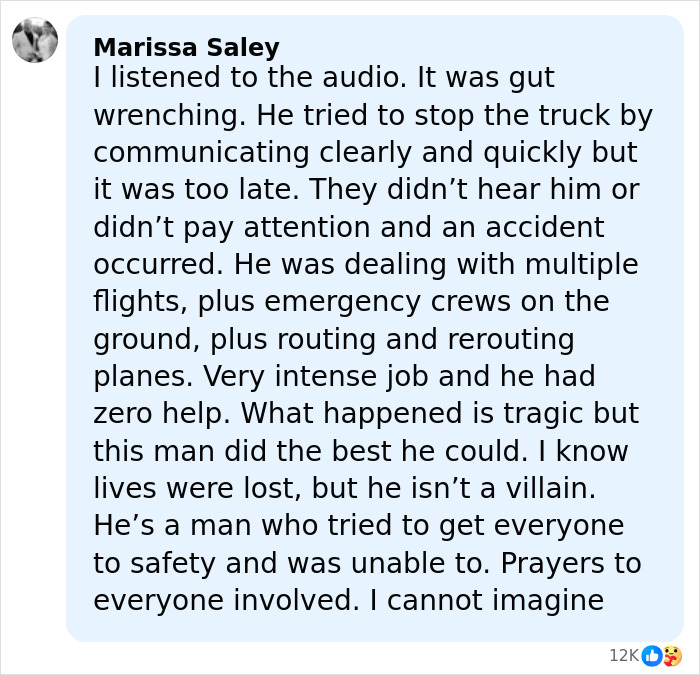
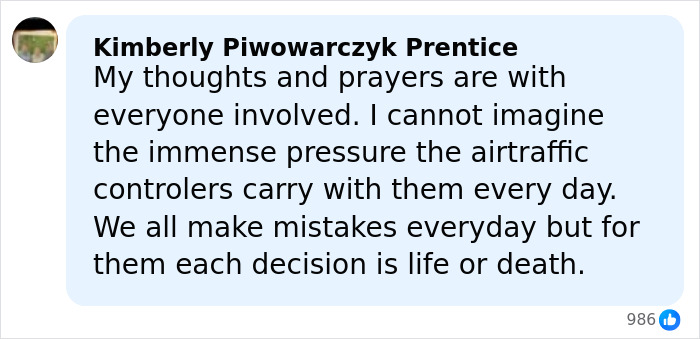
But experts said pointing fingers at the air traffic controller would be overlooking the bigger picture.
Image credits: ABC News
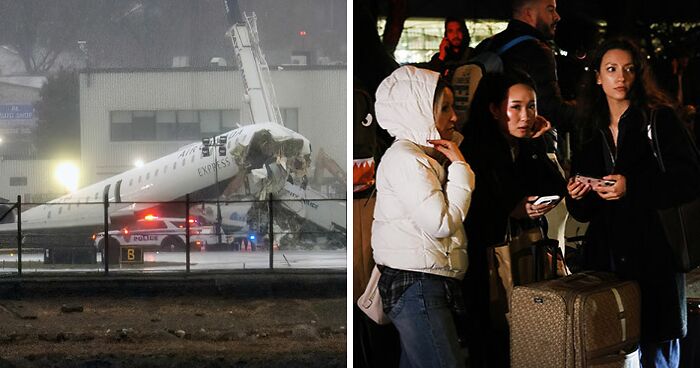
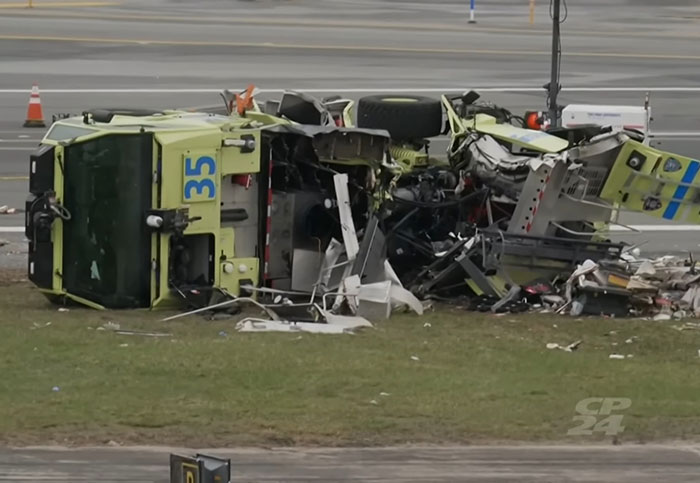
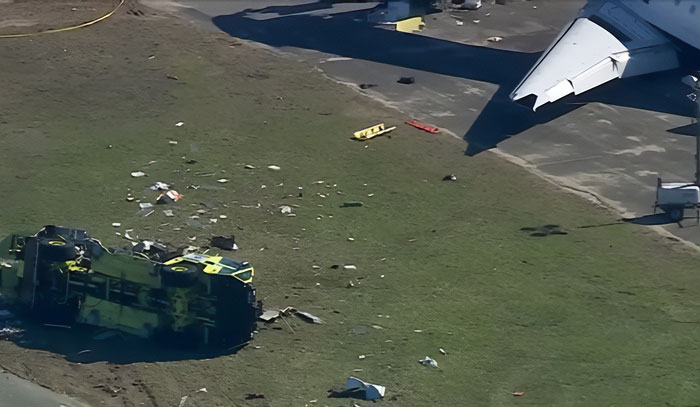
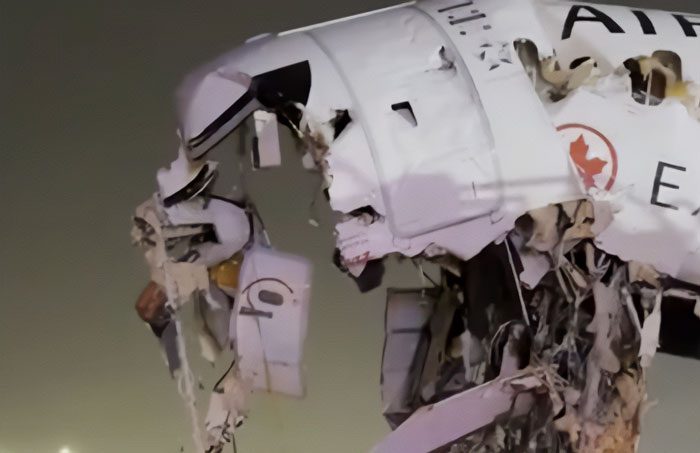
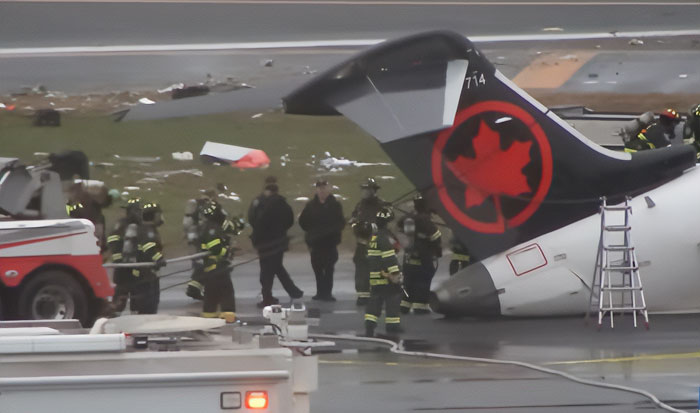
The crash unfolded just before midnight on Sunday when the Air Canada flight landing in LaGuardia crashed into a fire truck, which was responding to a separate issue related to a United Airlines flight.
A controller from the ATC tower was heard frantically asking the truck to stop, moments before the aircraft collided with the vehicle and claimed the lives of the pilots. Several others were injured.
Image credits: CP24
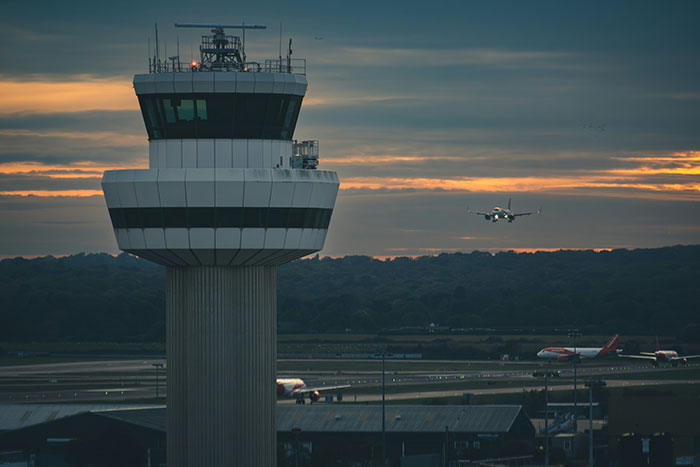
LaGuardia handles roughly 1,000 takeoffs and landings each day, which means controllers are often managing a constant stream of aircraft in one of the busiest airspaces in the country.
Decisions about planes taking off and landing are made by air traffic controllers, and they also decide when ground vehicles can safely enter the runways.
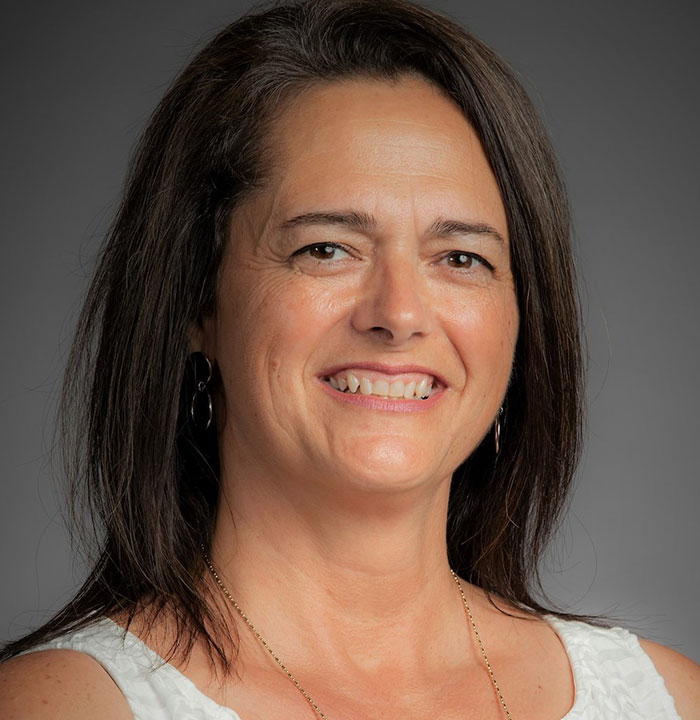
“Departures are typically two minutes apart. Only one aircraft can be on the runway at a time, except under certain circumstances,” Margaret Wallace, who spent over 10 years working ATC in the US Air Force, told Bored Panda.
“The initial information currently available appears that it may be a controller error, but only the NTSB can determine that once all the information is gathered and analyzed,” said Margaret Wallace.
Image credits: Florida Tech
It is normally the tower controller’s responsibility to clear aircraft and vehicles onto the runway surface.
The process typically involves two controllers: a local controller, responsible for all runway operations and airborne aircraft, and a second controller, responsible for aircraft and vehicles on the ground except for the runway.
“They are responsible for coordinating with each other for vehicle movement on the runway,” explained Wallace, the assistant professor of aviation management at Florida Tech’s College of Aeronautics.
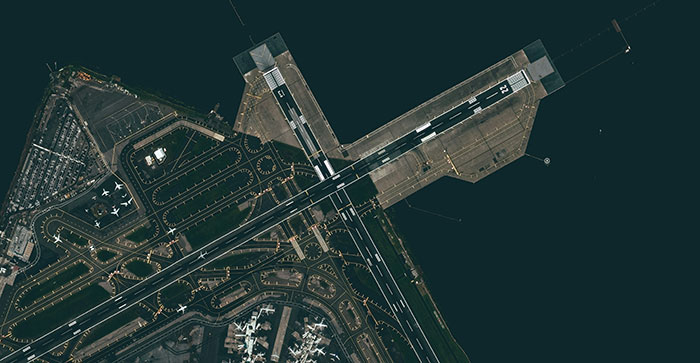
Image credits: Mohit Kumar/Unsplash (Not the actual photo)
“A vehicle cannot be cleared onto the runway with an inbound arrival unless the proper timing and distance has been determined to be safe, which is the controller’s responsibility to determine and make that decision,” she added.
The NTSB (National Transportation Safety Board) chair Jennifer Homendy said during a Tuesday press conference that they have conflicting information about whether the local controller was also serving as the ground controller on the night of the crash.
Nevertheless, it was normal for one controller to be working both positions during periods of slow traffic, Wallace said.
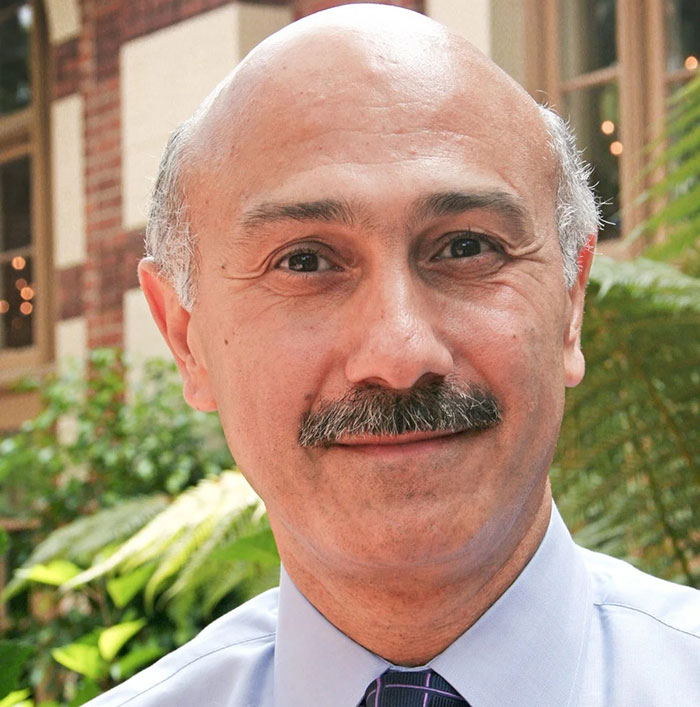
The tendency to blame ATC for the crash is “understandable, but it oversimplifies the issue by blaming the victim at the frontline and ‘sharp end’ for the entire system failure,” Najmedin Meshkati, a University of Southern California professor and expert on aviation safety, told Bored Panda. It also “misreads how aviation accidents occur.”
Meshkati emphasized that aviation safety cannot be reduced to a single point of failure. Instead, it depends on what he referred to as the “HOT” framework: human, organizational, and technological subsystems that are deeply interdependent.
“When something goes wrong, total system integrity has broken down, not merely one link in the chain,” he said.
Image credits: USC Today/Diane Ainsworth
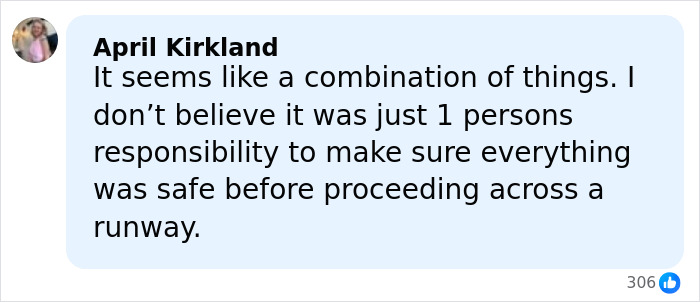
Hence, when both the aircraft and a ground vehicle were cleared onto the same runway, Meshkati said the “question is not simply who gave the wrong clearance, but why the system allowed that to happen.”
“Was the controller managing an excessive workload? Were ground radar systems adequate? Were staffing levels sufficient to prevent fatigue-induced errors? What was the status of supervision and organizational management of the system? Where was the regulator?” he continued.
“These are the questions that must drive the investigation.”
Image credits: ABC News
During Tuesday’s press briefing, the NTSB chair Jennifer Homendy raised several concerns that investigators were looking into.
She flagged a critical issue with the fire truck and noted that the vehicle was not equipped with a transponder, which is a piece of technology that would have helped air traffic controllers identify and track vehicles on the ground.
Image credits: Johannes Heel/Unsplash (Not the actual photo)
LaGuardia is one of the airports in the country with an advanced surface surveillance system. Its ATC tower has an ASDE-X display that shows controllers the location of every plane and vehicle.
But for the ASDE-X to work properly, “you have to know where ground vehicles and aircraft are,” Homendy said. In this case, that wasn’t possible since the “ground vehicle did not have a transponder.”
Consequently, on Sunday night, the ASDE-X did not activate an alert “due to the close proximity of vehicles merging and unmerging near the runway, resulting in the inability to create a track of high confidence.”
While replaying the moments of the crash, the ASDE-X did not show anything going “in front of the plane on the runway” during the collision, she added.
Image credits: Good Morning America
Homendy also pointed out possible issues with the ATC’s midnight shift. The NTSB has “raised concerns about [it] with respect to fatigue” “many times” in the past, she said.
“Again, I do not know. We have no indication that was a factor here, but it is a shift that we have been focused on in past investigations,” she continued.
Image credits: Good Morning America
Meshkati pointed out that a lot of runway incursions (a serious aviation safety event where something that shouldn’t be on an active runway ends up there) are attributed to “human factors.”
FAA (Federal Aviation Administration) data showed that there were 80 runway incursions by vehicles or pedestrians during the quarter ending on December 31.
The number spiked from 54 in the same period a year earlier.
Image credits: Good Morning America
Meshkati said human factors had contributed to 671 out of 768 runway incursions, recorded from 2012 to 2017 in an analysis of NASA’s Aviation Safety Reporting System.
Human factors dwarfed “all other causes combined,” he noted.
The aviation safety expert, however, asserted that human factors were not “synonymous with ‘controller or pilot error.’”
“It systematically considers controller workload, cumulative fatigue from consecutive long shifts and forced overtime, deficient ground radar systems, communication failures, inadequate situational awareness, staffing shortfalls, and departure pressure on crews – all systemic conditions, not individual lapses,” he explained.
As the investigation into the Air Canada continues, the responsibility of the catastrophic landing would be distributed between the controller, the organization, the technology, as well as the regulatory framework that “supports or undermines safe performance,” Meshkati said.
“Assigning it to one individual, without examining those systemic conditions, is not only unfair,” he added, “it is a recipe for repeating the tragedy at the next airport.”

By entering your email and clicking Subscribe, you're agreeing to let us send you customized marketing messages about us and our advertising partners. You are also agreeing to our Privacy Policy.
Thank you! You've successfully subscribed to newsletters!


Prof. Nancy Leveson has extensive experience in all forms of ‘accidents’ in safety critical industries, such as nuclear, aviation and aerospace. She says “Human error is a sign of system failure”. People don’t even understand types of human error. There are always multiple causes - sideways to various actors at the time and vertically through organisations, funding, regulation, standards, technology, engineering (design, production, installation, maintenance), procedures, data, training, policy, regulatory oversight and more that might be years old. Anyone who thinks that they can unpick that in a few months is an idiot. Never believe anything you hear about a crash for at least a week.
Prof. Nancy Leveson has extensive experience in all forms of ‘accidents’ in safety critical industries, such as nuclear, aviation and aerospace. She says “Human error is a sign of system failure”. People don’t even understand types of human error. There are always multiple causes - sideways to various actors at the time and vertically through organisations, funding, regulation, standards, technology, engineering (design, production, installation, maintenance), procedures, data, training, policy, regulatory oversight and more that might be years old. Anyone who thinks that they can unpick that in a few months is an idiot. Never believe anything you hear about a crash for at least a week.



















 No fees, cancel anytime





28
2