Get Premium
Dark mode theme is available exclusively for premium users. Learn more about the benefits of subscribing.
No fees, cancel anytime.

 Dark Mode Ad-Free Browsing Unlimited Content
 Ad-Free Browsing Unlimited Content Dark Mode
Join 1.2 million Panda readers who get the best art, memes, and fun stories every week!

Trying to help your neurodivergent child navigate eating challenges that are less about preference and more about survival can be stressful. However, what might be more stressful is having someone close to you act like their quinoa-loving toddler is some kind of mealtime messiah.
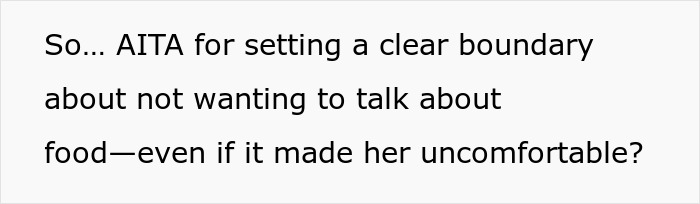
Today’s Original Poster (OP) opened up about the heartbreak of setting a simple boundary and being cut off for it. In the story, the OP tried to protect her mental health and her child’s dignity, only to be met with silence, judgment, and a block button.
More info: Reddit
Image credits: senivpetro / Freepik (not the actual photo)
Image credits: CreditUnhappy899
Image credits: freepik / Freepik (not the actual photo)
Image credits: CreditUnhappy899
Image credits: freepik / Freepik (not the actual photo)
Image credits: CreditUnhappy899
The OP started by explaining that her young son has autism, and with it comes significant challenges around food. For her son, eating isn’t just about nourishment; it’s more about how he processes the world. The OP has been working with professionals to support her son, but admitted that it is still causing a lot of stress and anxiety.
Now, the OP and her cousin were once close. However, as time went on, her cousin’s text messages became a source of tension. She frequently sent unsolicited tips, made moralizing remarks about the food the OP’s son chose to eat, and praised her own child’s diet in ways that felt more like comparisons than support.
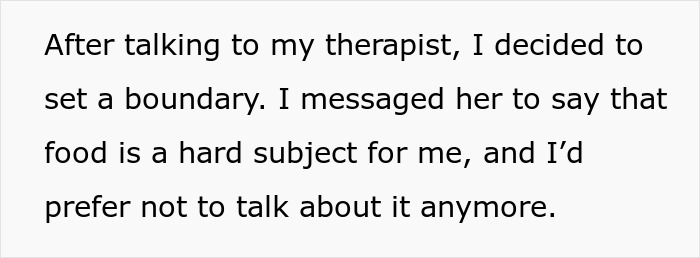
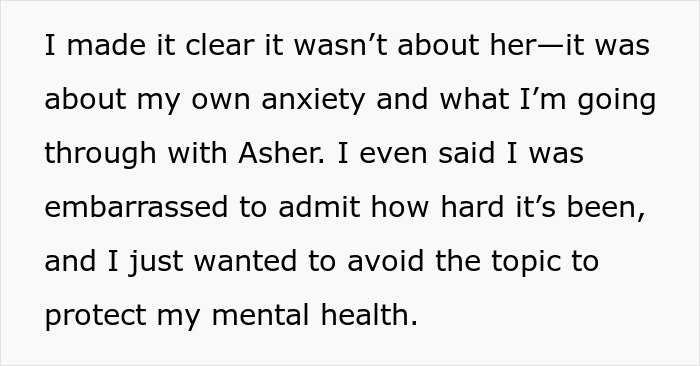
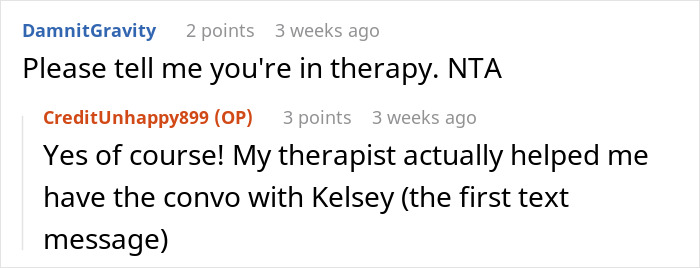
After a lot of inner turmoil and therapy sessions, the OP decided to protect her mental health and clearly asked her cousin to avoid discussing food. She emphasized that it wasn’t personal, but rather it was about reducing anxiety and preserving their relationship.
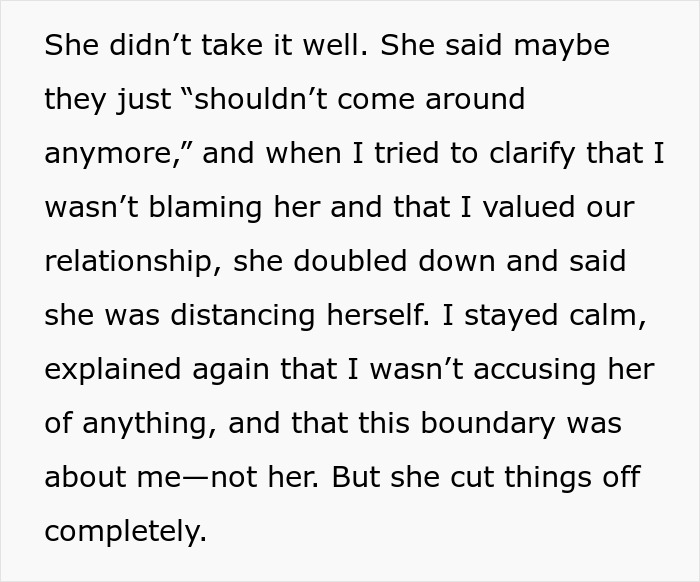
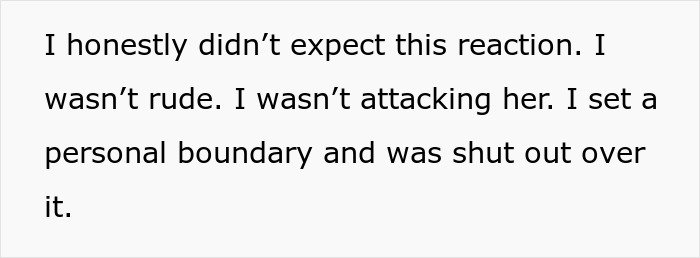
However, instead of understanding, her cousin responded defensively, saying maybe she shouldn’t visit anymore. She further distanced herself and eventually cut contact before blocking her for months.
To better understand why the OP’s cousin reacted so strongly to a simple and respectful boundary, Bored Panda reached out to clinical psychologist Florence Okezie, who explained that boundary-setting often threatens the familiar patterns people are used to, which can cause discomfort or even defensiveness.
“For someone emotionally dependent, it may feel like a loss of access or privilege,” she noted. In some cases, resistance may stem from misunderstanding the intention behind the boundary and seeing it as rejection. Okezie also pointed out that, at times, negative reactions may be “manipulative in nature, meant to induce guilt and maintain control.”
Image credits: prostock-studio / Freepik (not the actual photo)
Given the complexity of the child’s eating habits, we asked Okezie why children on the autism spectrum often have such intense reactions to food. She explained that sensory sensitivities like texture, smell, or even the visual appearance of food can cause strong aversions.
“What looks like picky eating is often tied to how these children process the world,” she said. Routine plays a major role, and disruptions can feel distressing. Even seemingly small elements like clinking cutlery or the sound of chewing can overwhelm a child with heightened sensory perception.
When asked how extended family can be more supportive instead of unintentionally piling on pressure, Okezie emphasized the need for psycho-education, stating that “families who understand autism are more likely to respect boundaries and stop offering harmful, unsolicited advice.”
Involving a professional in this learning process can also help, as it reassures relatives that the parents’ choices are informed and necessary, not just personal preferences. “It’s not about favoritism or excuses, it’s about accommodating a different neurological reality,” she said.
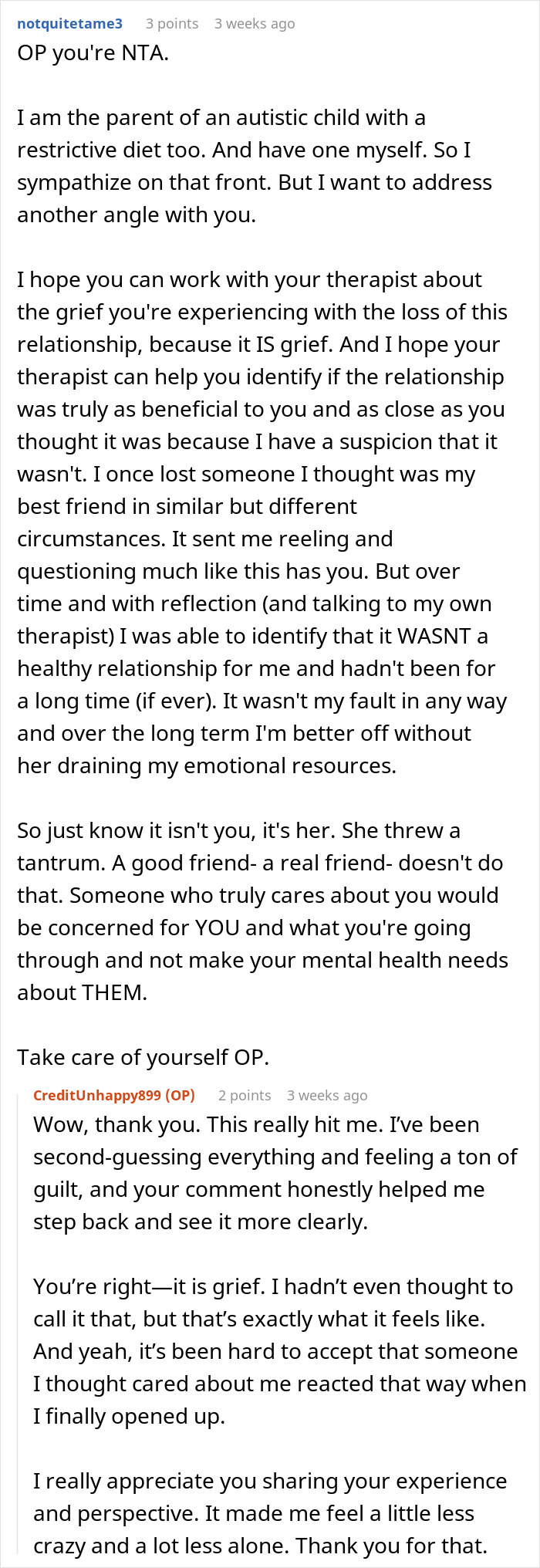
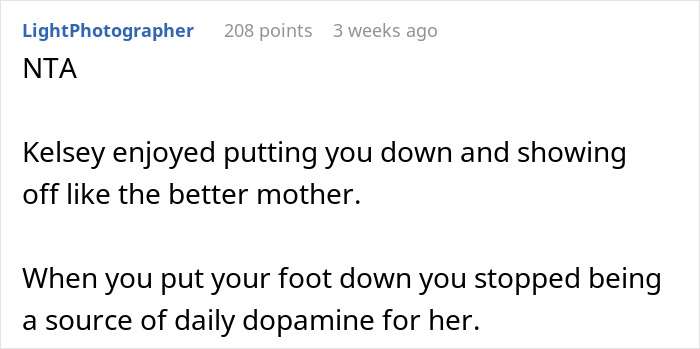
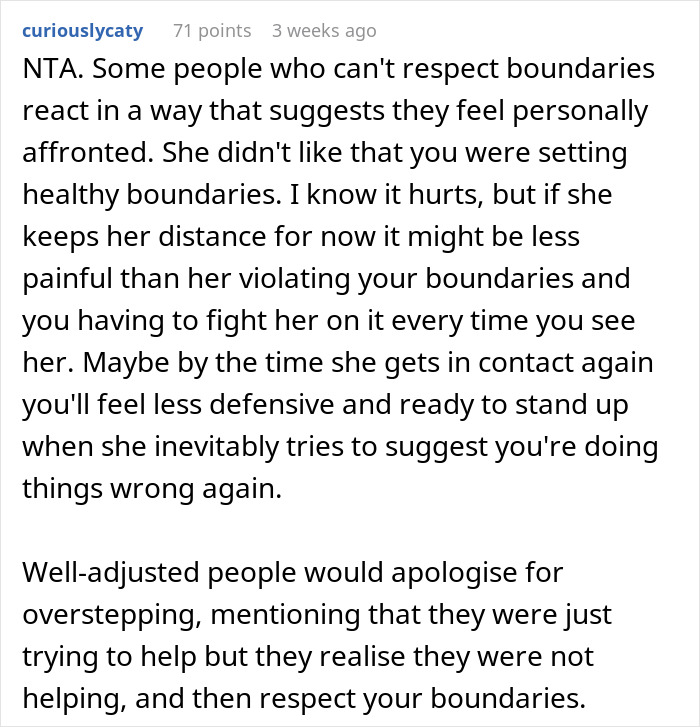
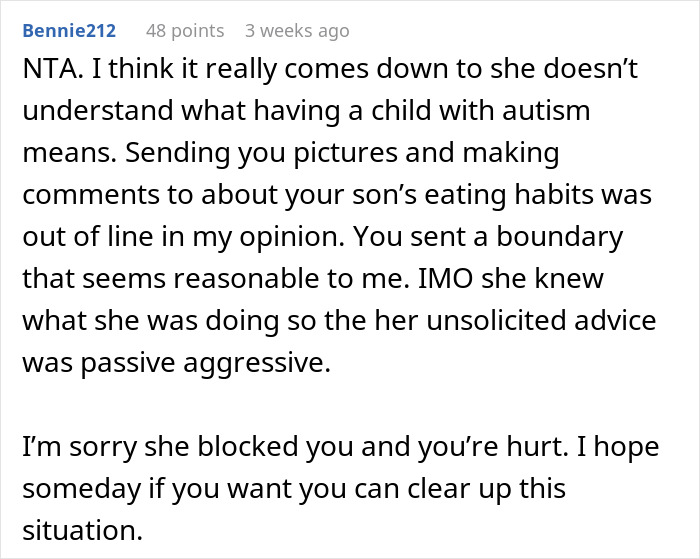
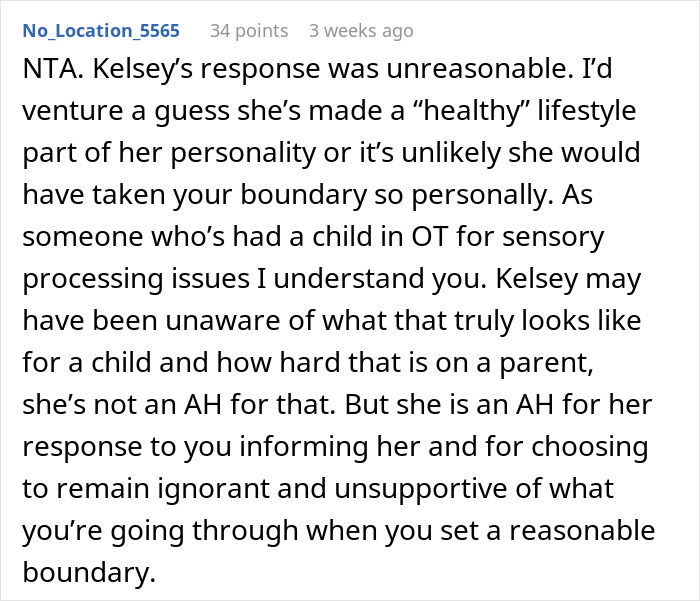
Netizens showed strong support for the OP, with many affirming that she was not wrong for setting a boundary to protect her mental health. They pointed out that her cousin’s reaction revealed her true intentions, suggesting she enjoyed the subtle superiority of comparing her child to her son.
What do you think about this situation? Do you think Kelsey’s reaction revealed something deeper about the relationship—or was it just a misunderstanding? We would love to know your thoughts!

By entering your email and clicking Subscribe, you're agreeing to let us send you customized marketing messages about us and our advertising partners. You are also agreeing to our Privacy Policy.
Thank you! You've successfully subscribed to newsletters!


NTA. Having an autistic child is not easy and what matters is that the kid is eating, that's a victory. OP's cousin is 100% in the wrong.

Op's second paragraph should have been: If you feel you can't come over without talking about food then perhaps you're right. Maybe someday if you find it less difficult to control what you say we can revisit this conversation.
Load More Replies...
If a friend says they need to put something on the office limits list, but they seem to be getting help with it, you should respect that. Anyone who wouldn't respect that is cruel and unempathetic, not worth trying to salvage a relationship with them.
NTA. Having an autistic child is not easy and what matters is that the kid is eating, that's a victory. OP's cousin is 100% in the wrong.
Op's second paragraph should have been: If you feel you can't come over without talking about food then perhaps you're right. Maybe someday if you find it less difficult to control what you say we can revisit this conversation.
Load More Replies... If a friend says they need to put something on the office limits list, but they seem to be getting help with it, you should respect that. Anyone who wouldn't respect that is cruel and unempathetic, not worth trying to salvage a relationship with them.
























 No fees, cancel anytime













38
22