Get Premium
Dark mode theme is available exclusively for premium users. Learn more about the benefits of subscribing.
No fees, cancel anytime.

 Dark Mode Ad-Free Browsing Unlimited Content
 Ad-Free Browsing Unlimited Content Dark Mode
Join 1.2 million Panda readers who get the best art, memes, and fun stories every week!

Carrying a secret can literally make you sick. That's because the heavy mental load of constantly trying to hide information triggers a physiological stress response. The bad vibes (aka stress hormones) can drain your energy, weaken your immune system, and manifest as physical symptoms.
But what if you really can't bring yourself to tell anyone what skeletons you've been keeping in your closet? You could always head over to a dark corner of the internet that's become somewhat of a digital confessional booth. You don't need to reveal your name, just your dirty little secrets.
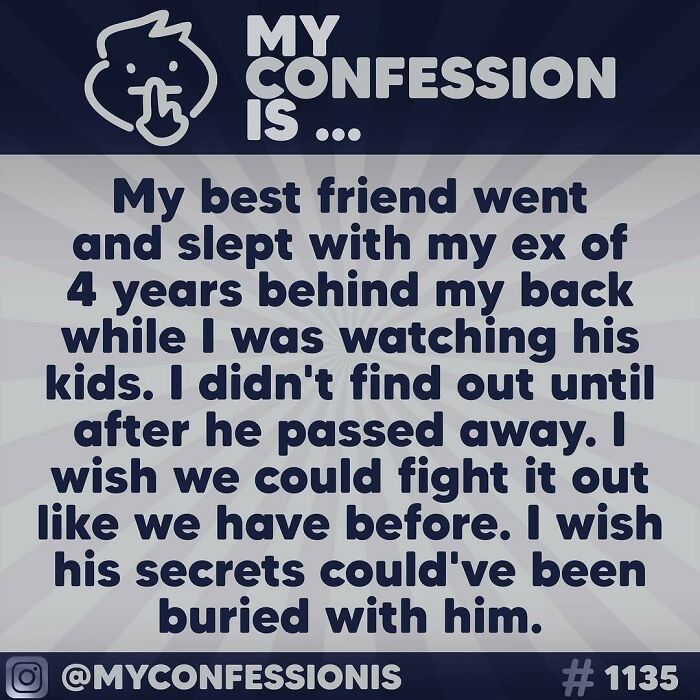
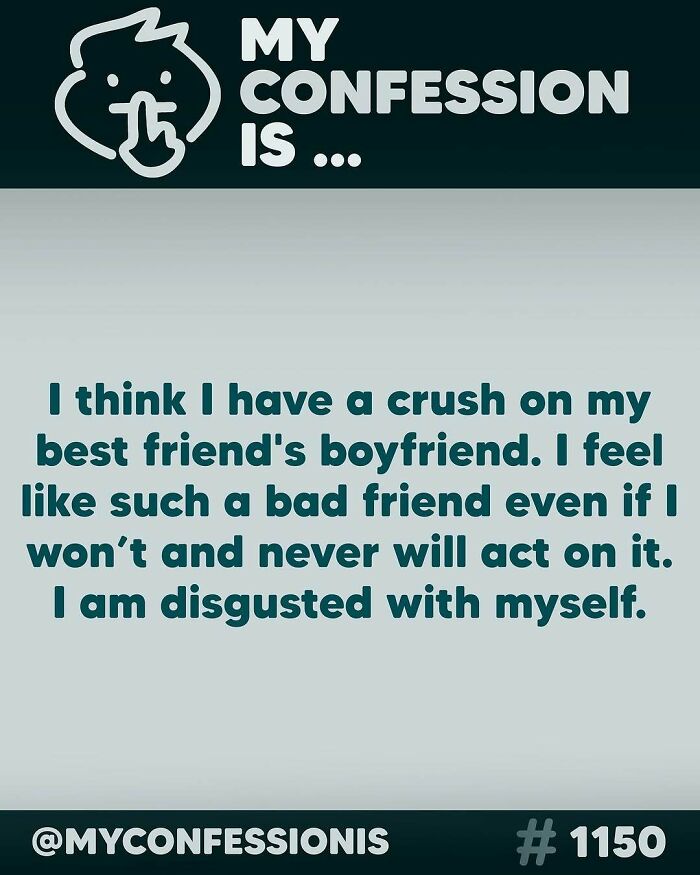
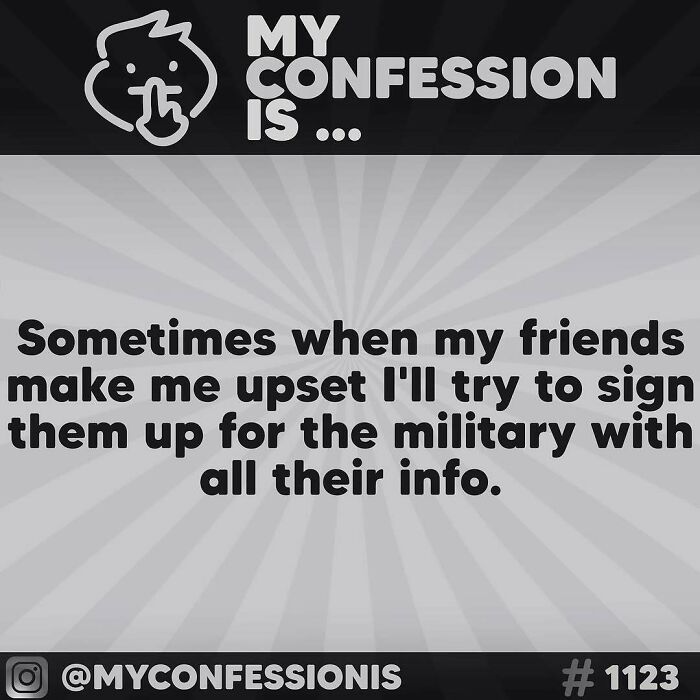
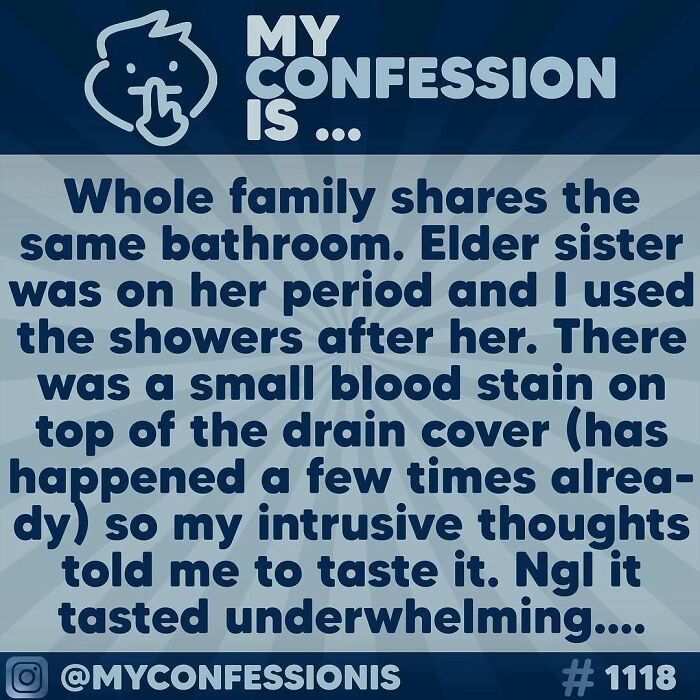
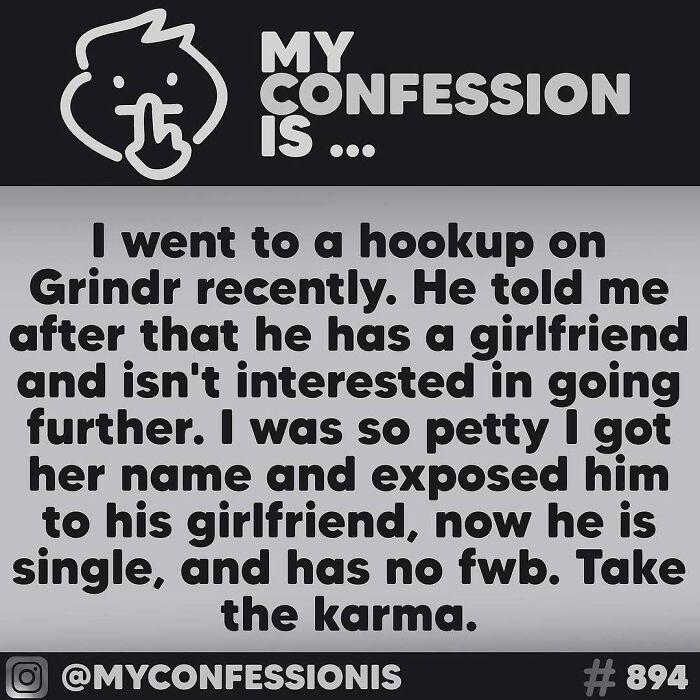
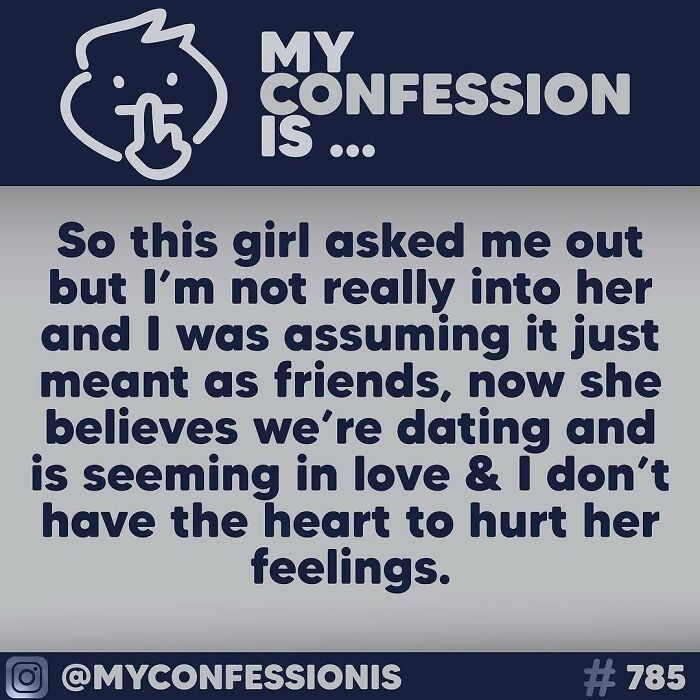
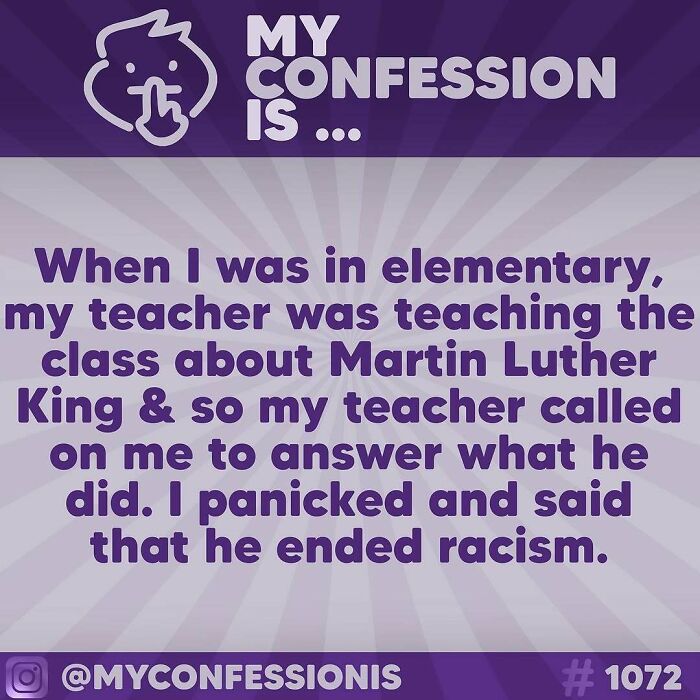
Confession Account on Instagram allows people to anonymously submit whatever they need to get off their chest. The confessions are then turned into "My confession is..." posts that hopefully provide you with some relief, and strangers with some spicy tea. Bored Panda has put together some of the best anonymous confessions for anyone who needs to feel a bit better about their own shady matters.
This post may include affiliate links.
It's been said that we're only as sick as our secrets. It's a common phrase used by those in recovery but it goes further than dealing with addiction. "It basically means that a secret kept in the dark grows and becomes more harmful, but once it is exposed to light or released, its power is lost," explains Recovery.com.
Research has found that keeping secrets can be harmful, both to your mental and physical health. The skeletons in your closet can boost stress hormones, impact blood pressure, inhibit sleep, contribute to mental health and substance use disorders and even cause you chronic pain.
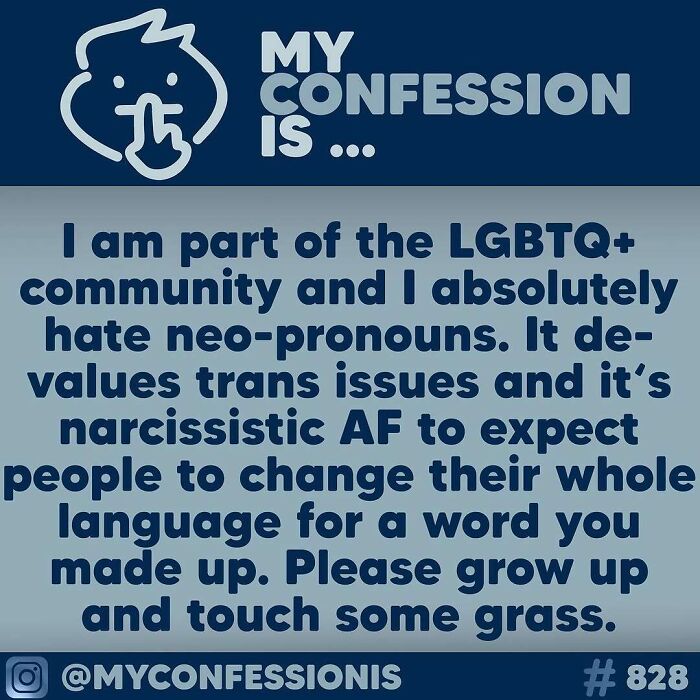
I'm a part of the LGBTQ+ community and I absolutely don't give a d**n about what pronouns make people happy. It costs me absolutely nothing to make a mental note and some slight effort if it makes people comfortable in their skin.
Keeping secrets can be incredibly stressful. "Chronic stress, particularly stress that is unaddressed, can weaken the immune system, making the body more susceptible to illnesses such as infections and inflammatory conditions," warns the New York Mental Health Center.
It further adds that the physiological stress response triggered by secret-keeping can lead to elevated cortisol levels, increased heart rate, and even higher blood pressure over time. "These changes in bodily functions can increase the risk of developing heart disease, gastrointestinal problems, and other chronic conditions," notes the site.

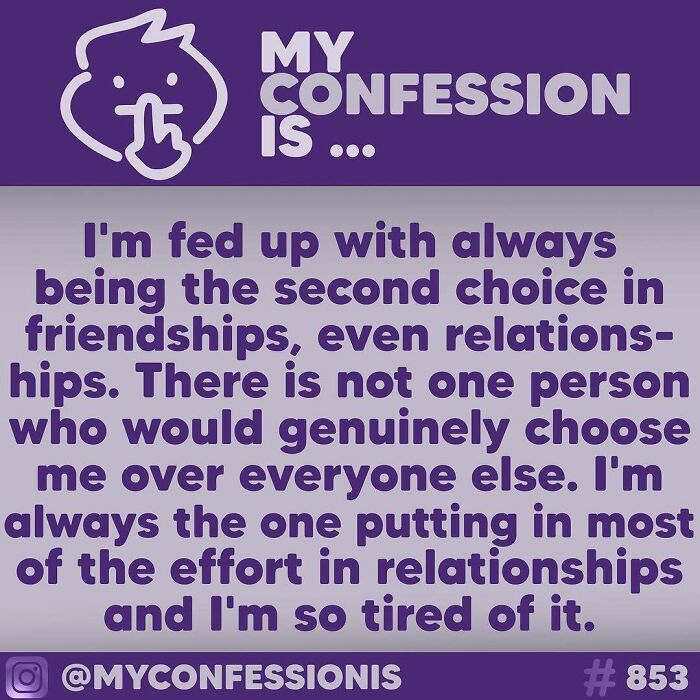
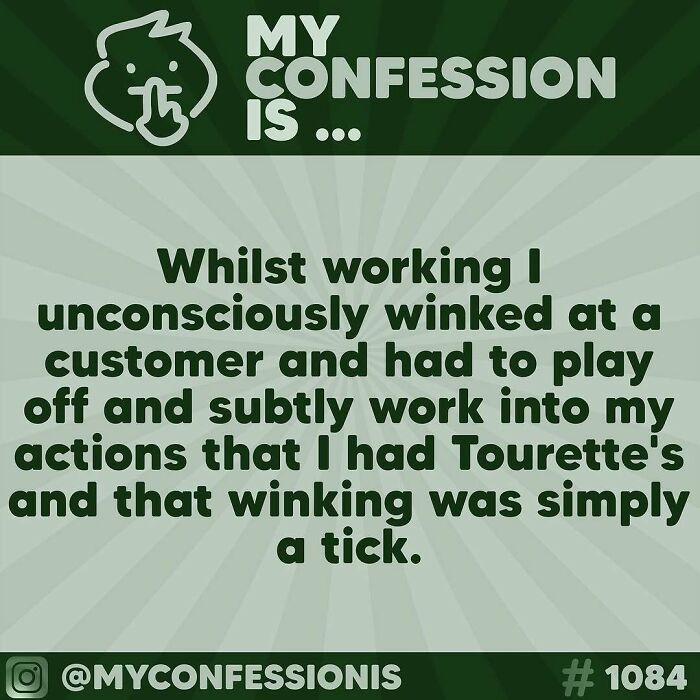
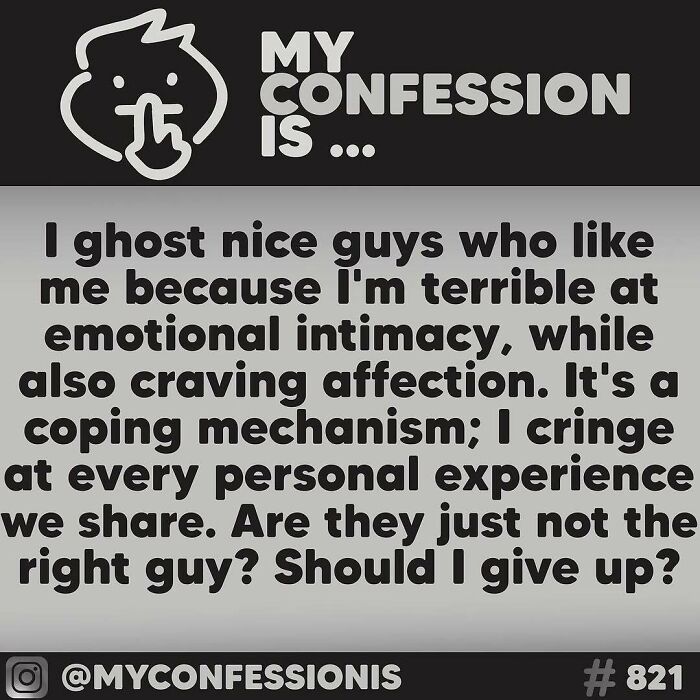
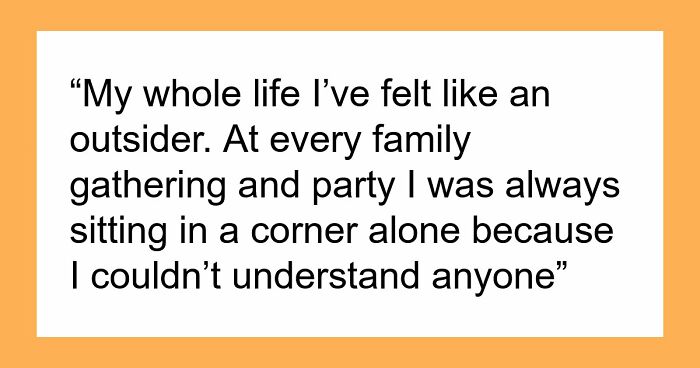
I too feel this way I feel like people including family just hate me and I don’t know why. I have adhd and I say stuff that’s blunt and often rude but it comes out that way and I don’t know how to stop it. It feels like I imagine Tourette’s will feel. Most of the time I feel lonely and sad.

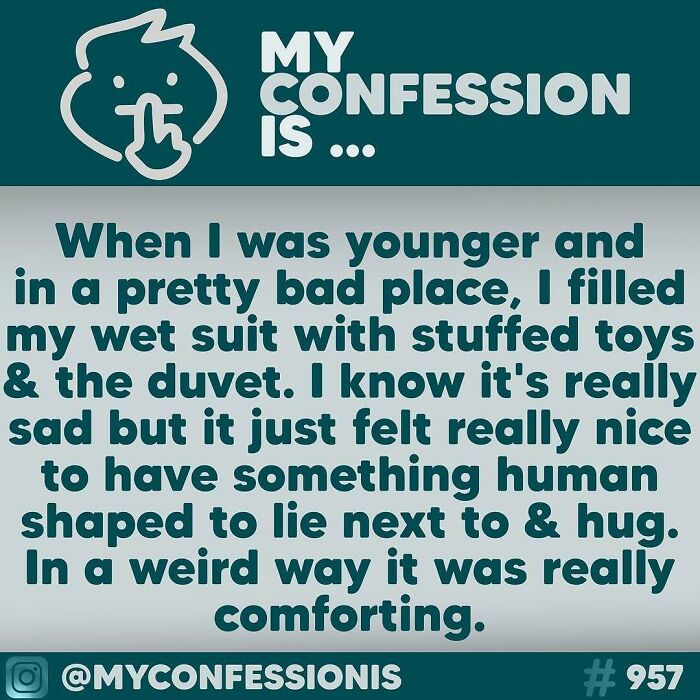
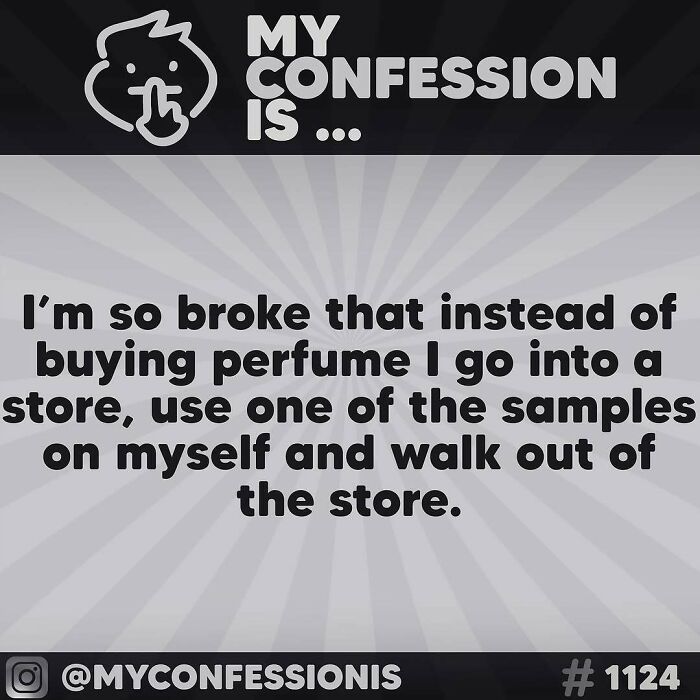
Cheaper that a Hatsune Miku body pillow. Not that I would know. Shut up!
Getting something off your chest after keeping it in the dark can feel like a physical relief. "Being open and honest with ourselves allows us to forgive and become okay with who we are, and that can facilitate us cleaning up the wreckage of the past," explains Recovery.com.
But sharing our deepest secrets can also help us connect with others, whether it's through forgiveness or simply realizing that everyone makes mistakes. "Secrets can lead to increased feelings of guilt and shame, which in turn, hinder authentic connections with others," say the experts at the New York Mental Health Center.
They add that secrets can also lead to cognitive dissonance in relationships, where individuals find it difficult to fully engage or be present because they are distracted by their hidden knowledge.
While not all of your secrets need to be revealed to another person, it is important to find an outlet to avoid some of the negative consequences to your health and well-being.
You could do this through journaling, therapy, confiding in a friend, going to confession at church (if that's your thing), or even submitting your confession to an online account like My Confession Is.

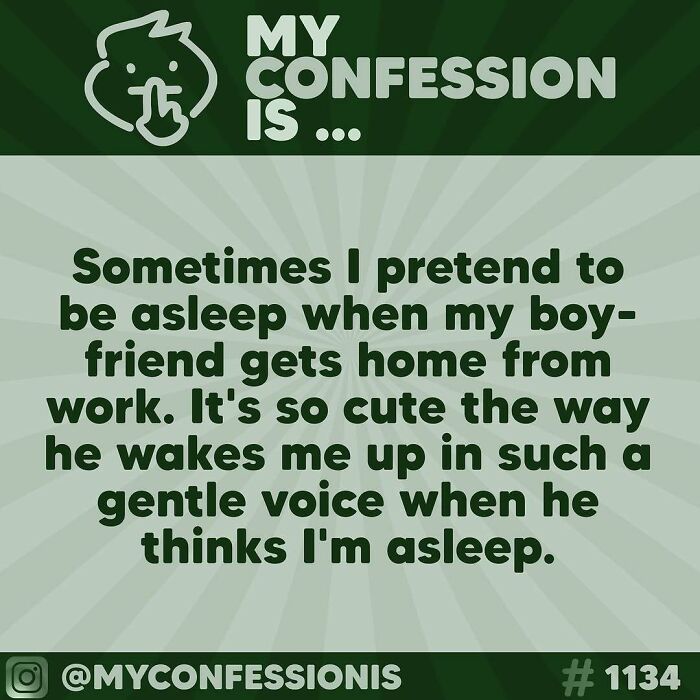
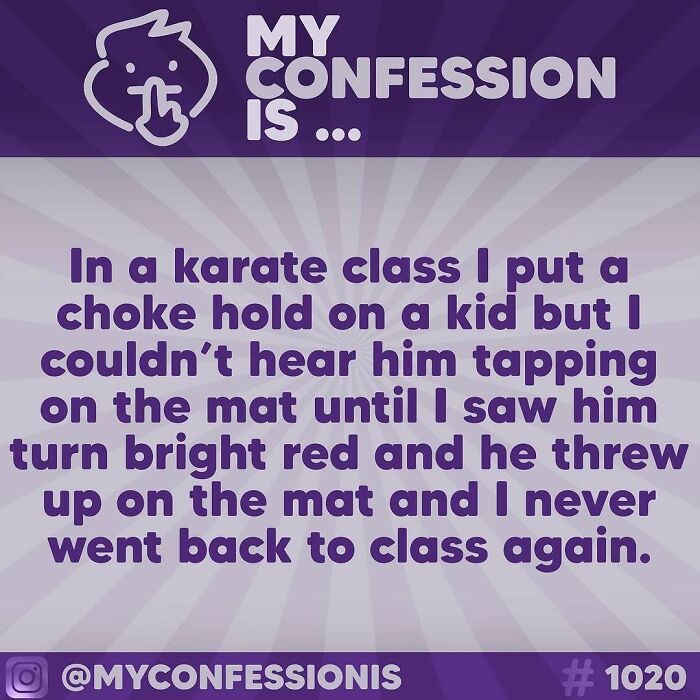
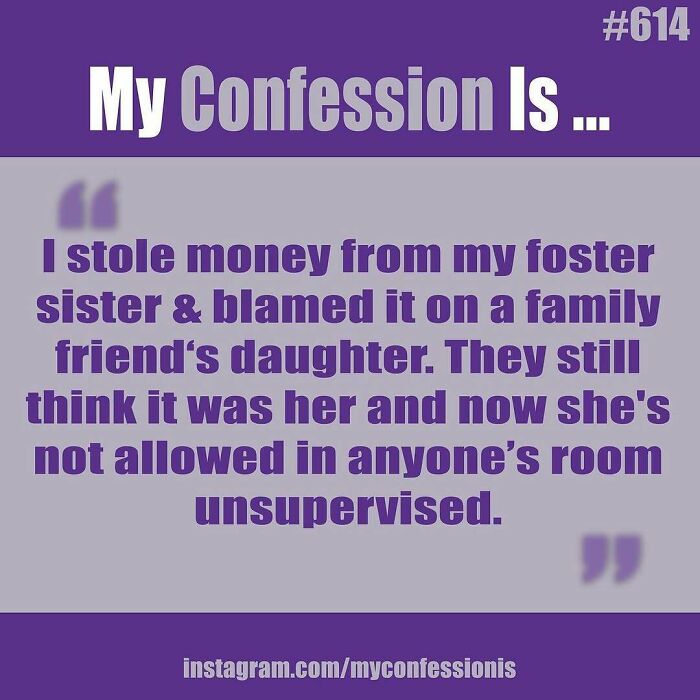
Never be alone with this person, or if you do have a water gun on you. Down girl, down!

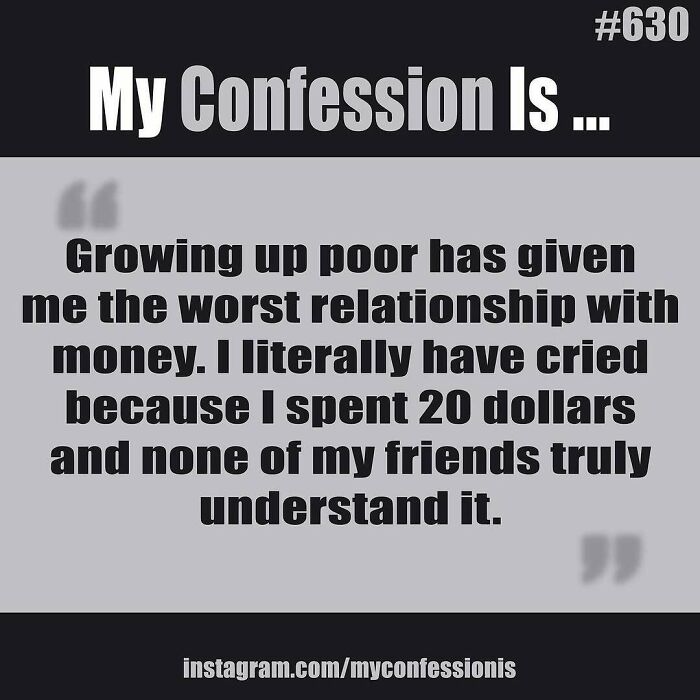
My boyfriend and I both grew up poor, me moreso (like food banks, free clothes from churches, months without utilities etc...) He has a hard time spending money, even though he has a very good job (travelling SNF administrator, currently regional director of operations). I however enjoy spending money 😅 not to the point of being in debt or anything, I've never had a credit card, and I think "luxury/designer" brands are stúpid, but I enjoy actually having money....
Catholics are required to confess their mortal, or grave, sins to a priest at least once a year. For a sin to be considered mortal, it should meet three conditions: grave matter, full knowledge that the act is wrong, and deliberate and complete consent to do it.
Confessing lesser (venial) sins is not a must in the Catholic Church, but it is highly encouraged.

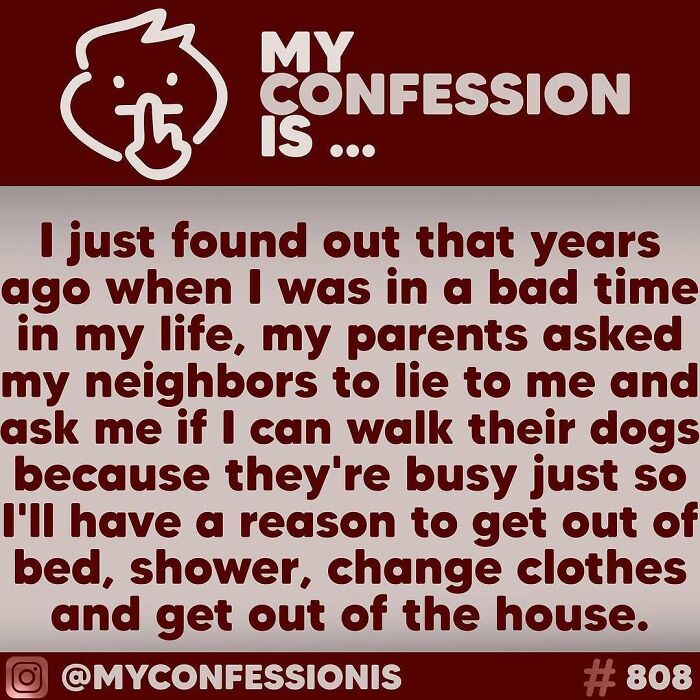
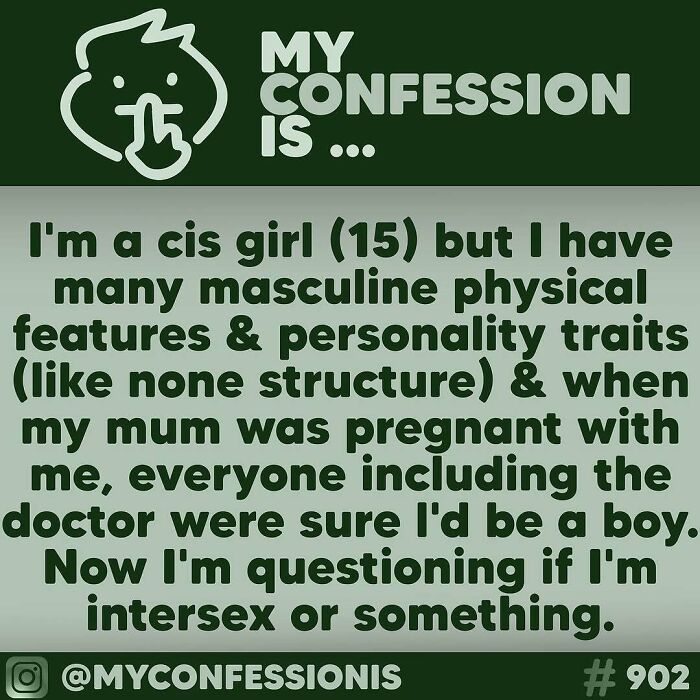
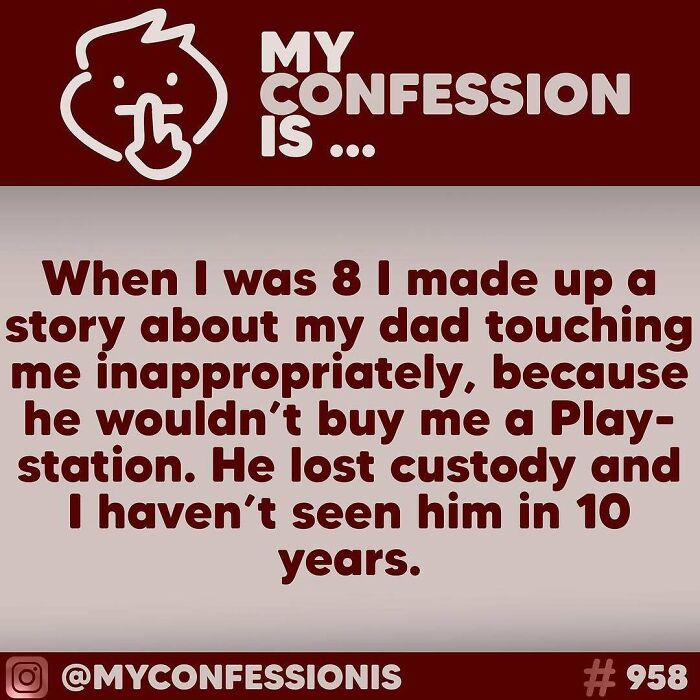
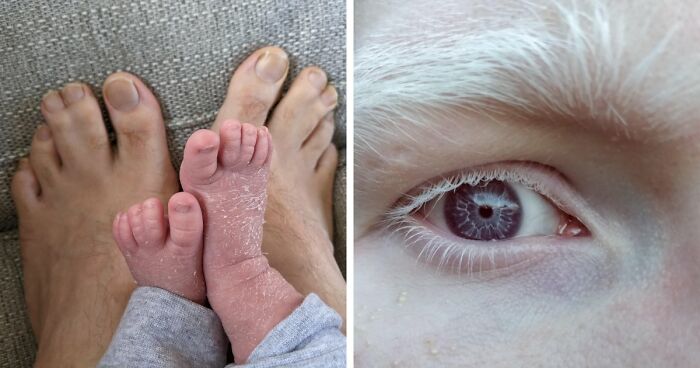
And they didn't tell anyone so baby could be checked out? Professional negligence.

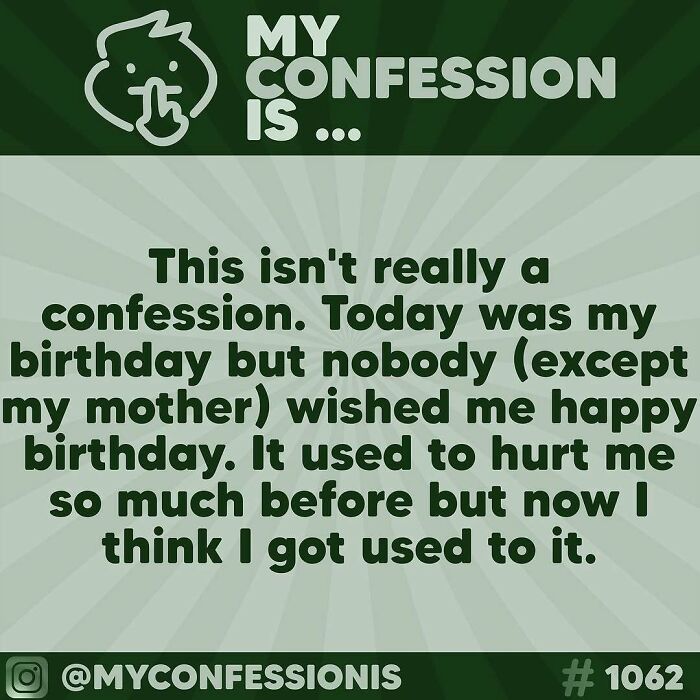
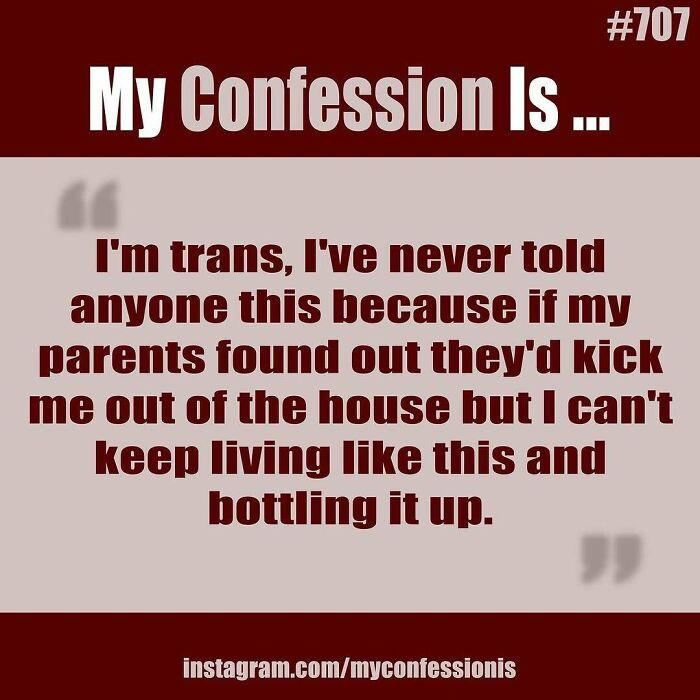
This is so sad to me...ive told this before but it can never be told too much. My oldest came to me and told me she(born male) was trans when i wished her a happy bday...I said "ok but that doesnt change the fact its ur bday and that i love you for YOU not what gender you are! I promised before you were born that i would love u no matter what and i wont stop now!" She cried and i said dont be sad. She said "im not...im happy because i thought this would go so differently" and to me THAT is the saddest part! A child should NEVER have to worry that a parent will stop loving them because of who they are! As a society we have gotten better but only slightly! We have such a long way to go! This one makes me so sad! 😢😢
"One goes to Confession privately behind a screen or face-to-face with the priest," explains the Cathedral of the Blessed Sacrament's site. "Preparation for the Sacrament of Penance consists of a good examination of conscience. This examination, guided by the Ten Commandments, prepares one to confess sins to the priest. Confession presumes the penitent is truly sorry with a firm resolve not to sin again."
The person confessing will follow a certain script and then list their confessions. They'll also state when their last confession took place.
"The priest will assign you a penance," reveals the cathedral's site. "The penance takes into account your personal situation and supports your spiritual good. It may be a prayer, an offering, works of mercy, service, or sacrifice."
Interestingly, more and more Catholics are shying away from confession, and the church is looking for a revival. One poll found that the most common barrier is the belief that forgiveness can be sought directly from God without confession.
"Discomfort is also a factor; among those who haven’t been to confession in over a year, 50% report embarrassment about their sins, while 53% find the sacrament generally awkward," reported the Catholic Review.
There's another issue that many people, including non-Catholics, have with the idea of confession in general: the fact that priests are sworn to secrecy, even if someone admits to a crime...

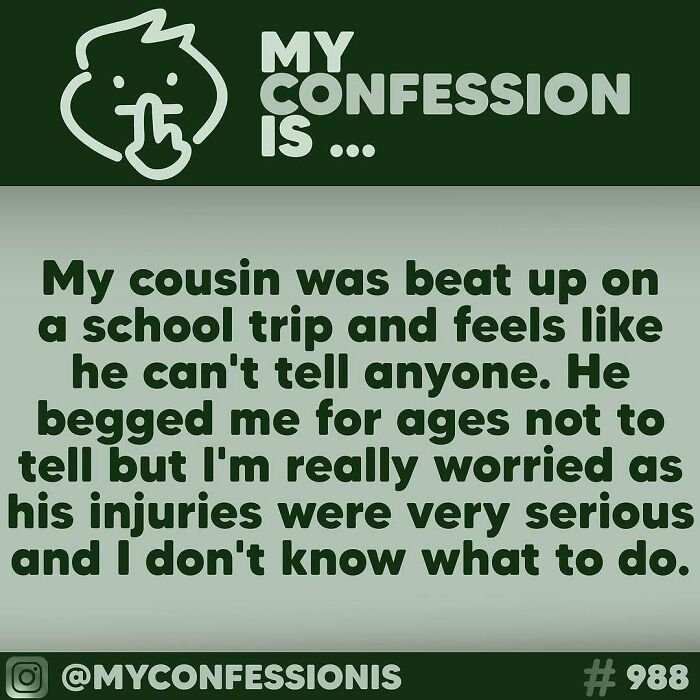
Tell someone. He may have ongoing medical issues, and someone needs to check him out. Also, whoever beat him up needs consequences.

"The seal of confession forbids the priest from sharing such information with the authorities—or with anyone for that matter. The Code of Canon Law tells us that the seal is 'inviolable' (can. 983.1), and if a priest were to break the seal (intentionally share the information), he would incur an automatic excommunication," reads the Catholic Answers site.

It adds that if the penitent is truly contrite, then the priest could talk it through with them and try to get him to see what "true repentance" involves.
"If the penitent doesn’t intend to rectify his ways, the priest could withhold absolution," it notes. "The priest may also strongly encourage the offender to turn himself in to the authorities."
But in a world where gruesome crimes are rife, especially against women and children, is "encouragement" really enough?

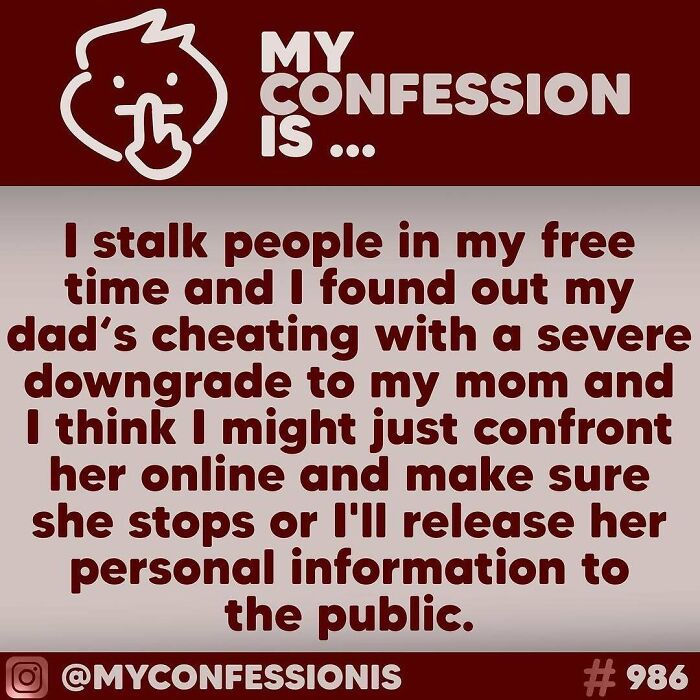
Yeah, she definitely forced your dad to have an affair. Can't be his fault at all.

Both sides need to either stop fighting or just nuke each other into oblivion. Multiple wrongs (committed by both sides, I give zero sh.its who started it) don't make multiple rights. I hate when people ask who I support. Can I support both sides? Or neither? How about not hating each other because they don't pray to the same imaginary being that you do?

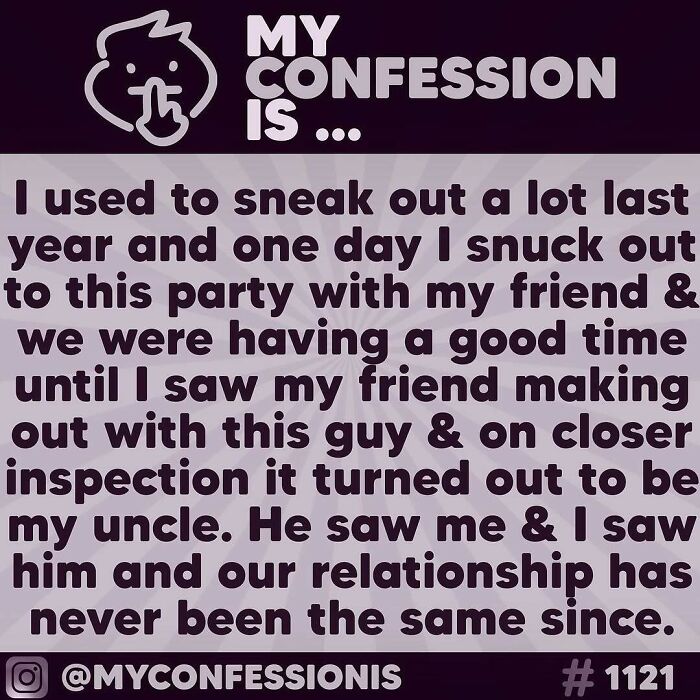
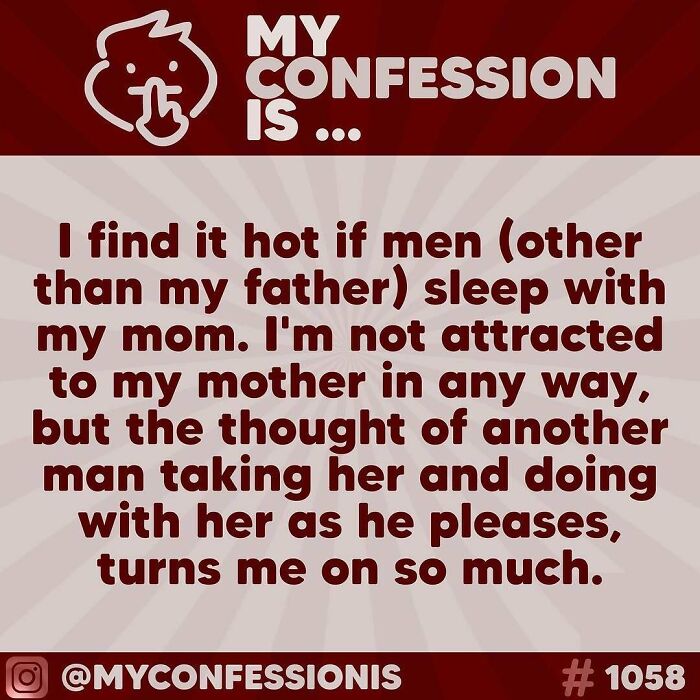
Theres a lot of stories about this, you arent blood related 🤷🏼♀️ The saddest story ive ever read was a couple that had been separately adopted as kids are married and have been together for like 7 years. They found out they were siblings through a blood test. They were so deeply in love that they both got sterilized so no kids but they stayed together and never told anyone around them about the situation
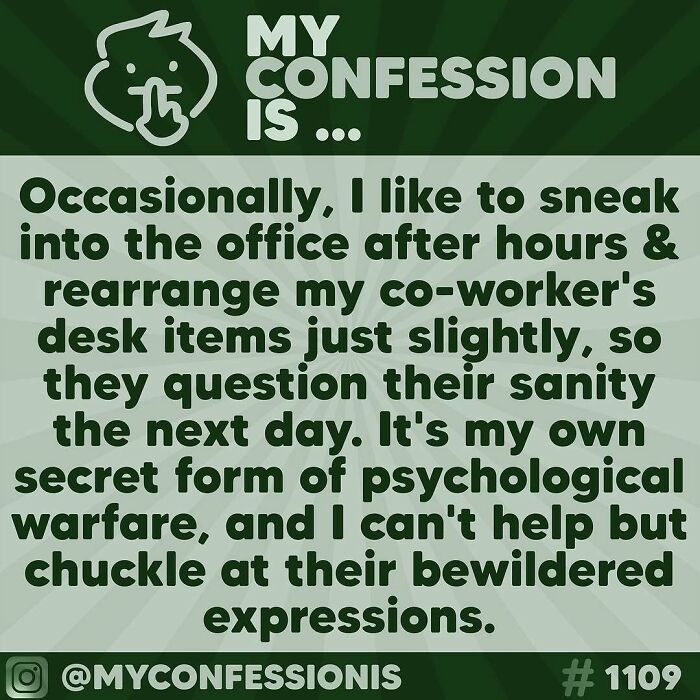
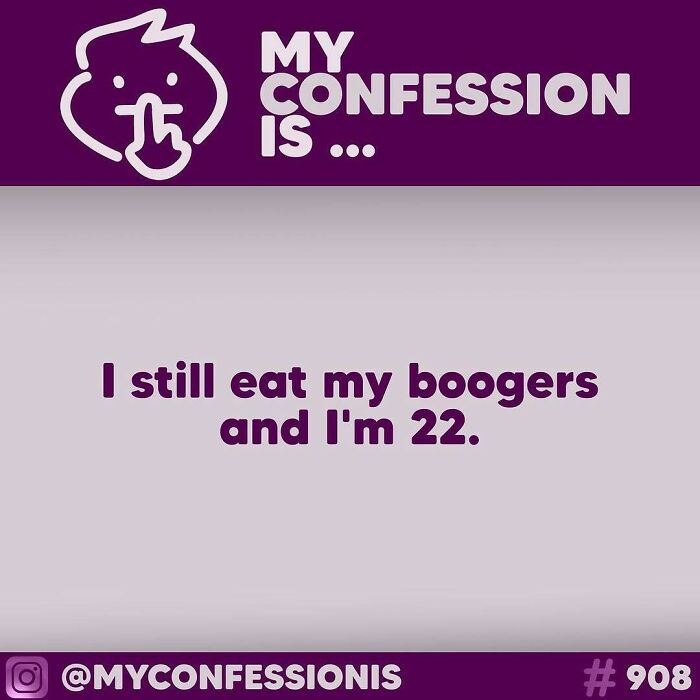
And now the lil 🤫 guy at the top suddenly looks like a guy picking his nose....
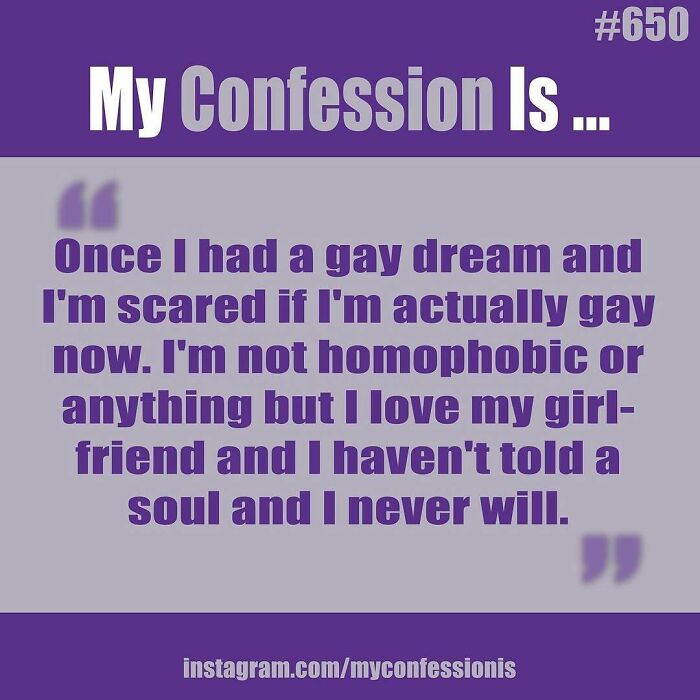
Everyone feels like this for the first kiss! The longer you leave it the more scary it becomes so bite the bullet (not the lip!)!

Could always get checked and tested. Some cis females have unusually high testosterone - I do. It can cause certain issues in life - including painful menstruation.
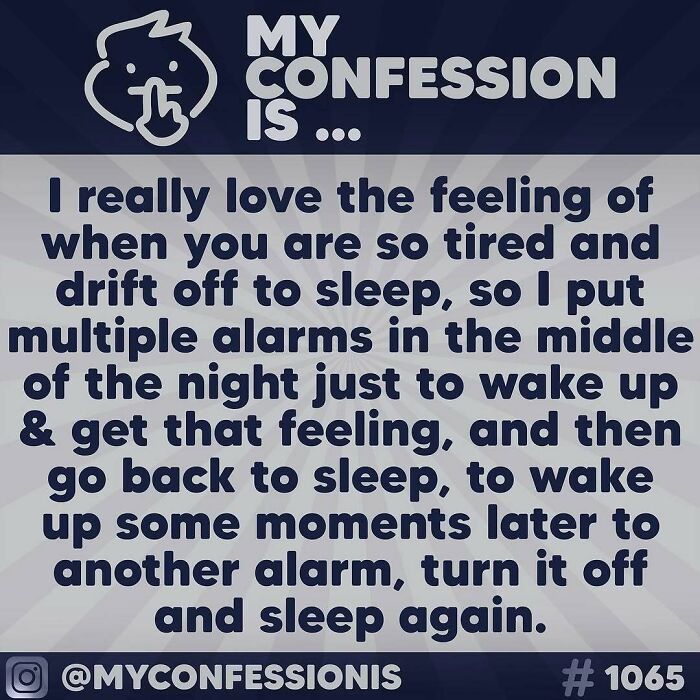
As someone who has always struggled with insomnia I cannot imagine purposefully doing this to myself
If you like mayo on a sandwich or in tuna salad, what's wrong with eating a spoonful of it? Why is it suddenly gross to eat a spoonful? XD
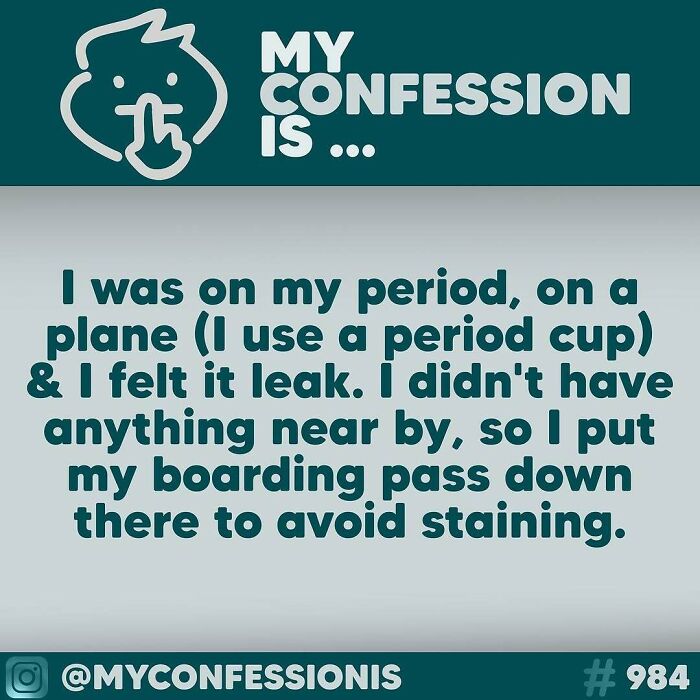
Periods are nothing to be ashamed of and you sound far more considerate than most air travelers

Yeah, why not just string her along, she will be fine when you break up with her 🤦♀️
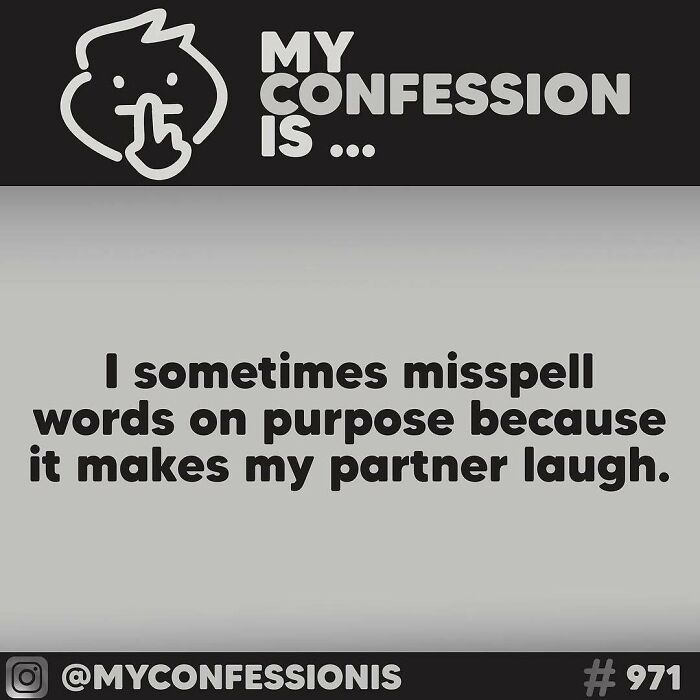
If your partner is laughing AT you because they think you're stupid or uneducated and they're mocking you, that's not good. :x
Half of these ‘ confessions’ I don’t believe and are just made up by kids
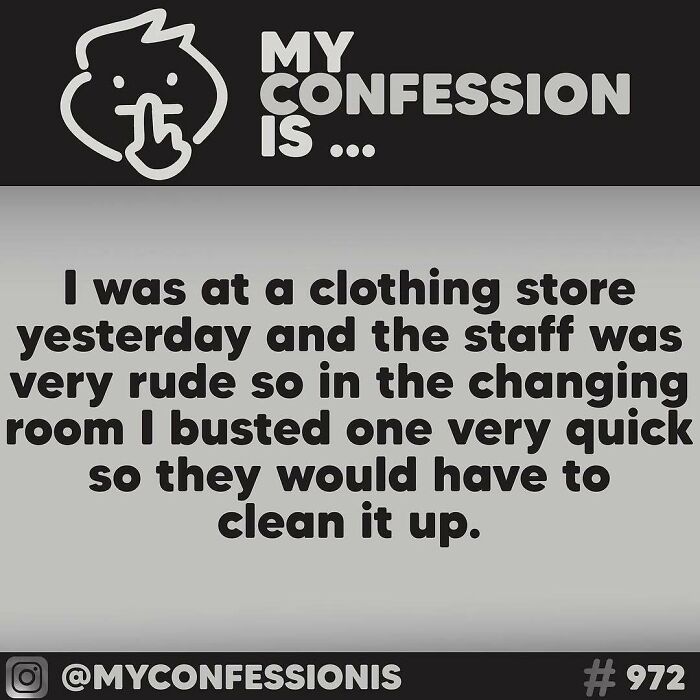
Uhm, EW. Does that mean 💩???! Rude people súck but that's just sick. Retail workers have enough to deal with

Some truly heinous stuff but mostly adolescent, attention-seeking fiction. Blech.

Yes, I don't know what's happened to BP today/yesterday, but the posts/threads they're choosing to resurrect from other platforms have really gone downhill. I mean, they've been scraping the bottom of the barrel for a while but this lot has gone right through the bottom and is burrowing into the ground beneath.
Load More Replies... Some truly heinous stuff but mostly adolescent, attention-seeking fiction. Blech.
Yes, I don't know what's happened to BP today/yesterday, but the posts/threads they're choosing to resurrect from other platforms have really gone downhill. I mean, they've been scraping the bottom of the barrel for a while but this lot has gone right through the bottom and is burrowing into the ground beneath.
Load More Replies...




















 No fees, cancel anytime