Get Premium
Dark mode theme is available exclusively for premium users. Learn more about the benefits of subscribing.
No fees, cancel anytime.

 Dark Mode Ad-Free Browsing Unlimited Content
 Ad-Free Browsing Unlimited Content Dark Mode
Join 1.2 million Panda readers who get the best art, memes, and fun stories every week!
“If I had to go and take a driving test right now, I would probably fail” – isn’t this thought relatable? No worries, because all of us somehow have faced obstacles in this journey. For some, the biggest one was to memorize all of the road signs. Others struggled to always look in the mirrors. Certainly, there were those who didn’t know the difference between left and right. And let’s not forget about the personal experiences of friends and family, which have often been more stressful than motivating.
Luckily, you are in the right place because this time, we’ve prepared a 28-question driver’s test! The only trick here is that some questions and answers are more applicable to Europe, others to the US, and some to the whole world.
So, fasten your seat belts, and find out if you can drive anywhere and everywhere!🚗
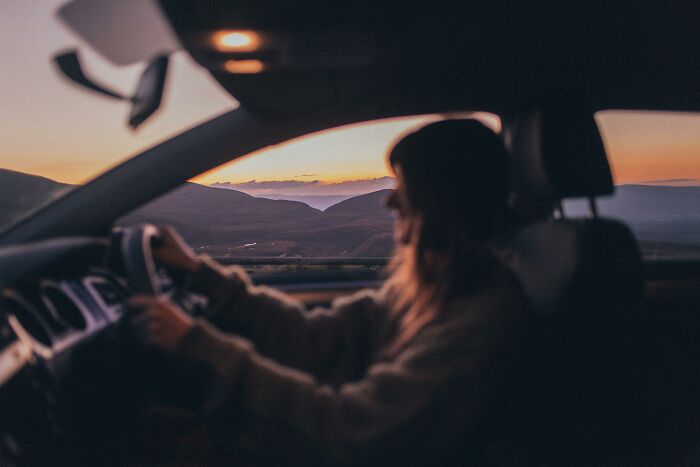
Image credits: Elina Sazonova
Not Quite Done Yet!
Subscribe Premium to Compare Your Stats with Others
| User | Result | Reward |
|---|---|---|
  | / 28 | |
| | / 28 | |




American bias obviously but fun nevertheless, I learned something today.

In Germany and Switzerland fog lights are only allowed with visibility below 50m and then a max of 50km/h. So most should almost never really need fog lights 🤷♀️
Load More Replies...
Pull over to the side of the road on which you are driving - which is the LEFT in the UK. Number 4 is wrong, unless there is a stop sign or road markings.
Very foreign... I know how to use the road here in the UK, but (for example), "Pull over to the right"? Er, no, never - not unless it's that one motorway in Northern Ireland that has a "hard shoulder" either side of the central reservation. Still, no worries, eh? The rules of the road are different in every country.

#2: in the UK one continues driving *unless* it's both safe and necessary to pull over in such a way that it is also safe for the emergency vehicle to pass. If there is no oncoming traffic and the emergency vehicle can pass safely there is no requirement to slow down at all. Too many idiots see the blue lights and immediately hit the brakes, forcing the emergency vehicle to slow down or cross into oncoming traffic or pass on a bend, brow of a hill, or even to stop completely because the road isn't wide enough for it to get past.

13. If you are from the north American continent and do what BP tells you in Europe you may hit someone. It's a regulated crossing and first is the the truck cause it goes straight and it's on a property road then is the red car BECAUSE it has the priority even though it turns left. Then is the no priority road with the car turning right for the reason it's turning right (right has property) and last is the green car turning left cause no priority road and turning left. Ffs BP

I'm European and you're wrong!!! America or Europe, in that situation the order is the same!
Load More Replies...
4. Doesn't specify how many stop signs, if any. 10. I've driven in a roundabout where the traffic already inside the roundabout yields to vehicles entering the roundabout on only one of the four approaching roads. First time driving that roundabout, I didn't see the yield sign and almost got hit... driver definitely leaned on the horn (rightly so). 20. If large puddle is due to flash-flooding, none of the above. Road could be damaged/washed out, so don't drive through.
#10: Why show a picture of a roundabout on which the vehicles are clearly travelling anti-clockwise then make the answer about the exact opposite? It says "The approaching traffic usually gives way to traffic already on the roundabout, which always comes from the right". Always? Not in the sodding photograph, it doesn't!
23/28, I watched "Canada's Worst Driver" growing up. A show worth watching if you want to learn how to drive. "Look where you want to go" is the catchphrase of the show and that catchphrase itself can prevent car accidents. Plus, Toronto drivers are absolutely the worst, from running stop signs/red lights to speeding to changing lanes without signaling, they are the most aggressive drivers out there who probably got their license out of a cereal box.

Oakland County Michigan is the same way. "Yellow means punch it, red means put it to the floor".
Load More Replies...
Good question. Why is 5/6 of the world on the right side of the road?
Load More Replies... Stupid quiz because it is specifically geared to North America. What about all the countries that drive on the left? Britain, Australia, India South Africa actually most of Southern African countries drive on the left so this quiz is meaningless to us with the exception of a couple of the road signs which are universal.
"all those countries". It's just 1/6 of the counties worldwide.
Load More Replies...
Several of these are wrong in countries other than America. Ignoring the fact that the UK drives on the other side of the road, the obvious ones are: A green arrow indicates that you have priority over other traffic - if there are lights then pedestriams are also controlled by the lights - there will be additional road markings if you have to give way to other traffic. The traffic order at the crossroads does not allow for the green car to make its turn - traffic already on the road has priority and unless it is a multi-lane junction, the turning traffic would cross the path of the other car. You do not have to stop for school buses - you do need to slow down an be aware that children may step out - but buses only stop with the door facing the side of the road and children are taught to wait until the bus has left and they can see the road in both directtions before trying to cross - they are also generally older before using the bus on their own.
There is a new rule regarding giving way to pedestrians when turning into side roads. Previously you had to gibe way only to pedestrians already in the road. Now you have to give way to anyone who is about to cross that road. It is a bit of an idiotic rule, as it encourages pedestrians to cross roads without looking and it also puts you in a dangerous position of having to come to a complete stop on a busy main road to give way to someone who is thinking about crossing the road. I follow the rule, but it makes me nervous about getting shunted up the backside!
Load More Replies...



I stopped at the school bus as this is for the USA only. You have some weird sign overthere. Don't want to risk my life on your roads.

Got only three wrong for being american signs - And I don't even have a license XD



No. 4, 10 and 13... seems different country had different rules. On here, those who would enter from intersection should give way with anyone went straight until someone from there decide to make a turn or stopping.

Is #28 a European or non USA sign(s)? I've never seen this before and I was a commercial driver (Class A), OTR truck driver. To me, it looks to say no enter during the times specified. This sign has no indication that it has anything to do with parking.


#5 is just flat out wrong. There are no stop signs on high speed highways

Was #28 an American sign? I've been driving 30+ years and have never ever seen that sign. I live on the West coast, maybe we just don't have those over here.




Yay - I would pass my driver's test in the US! Good to know. I made three mistakes (mostly by reading too fast and not concentrating enough) but I passed.
14. It's a one way street though. Just not allowed to enter from this side.
The sign is "no entry", though. Yes, it's often on the other side of a one-way street but the sign says "No entry".
Load More Replies... Too American. Why does the USA have different signs than the rest of the world? They just have to be different in everything isn't it? Even if it doesn't make any sense

a green arrow at a red you have right of way. you yield when its yellow. pedestrians crossing at an unmarked cross-walk (or in other words crossing where it is not a crossing) they are jay walking and should be ticketed. don't hit them, and yield to the, but giving them a little honk to warn them isn't that bad an idea, since THEY SHOULDN'T BE CROSSING THERE ANYWAY

I missed 3 but I still think that's pretty good for a nearly blind person who has never held a driver's license.

I took the Illinois driver's test after reading its handbook. It clearly states that pedestrians have the right-of-way when they are in a crosswalk. This implies that they do NOT have the right-of-way outside of a crosswalk. So, feel free to run over pedestrians in Illinois :p (caveat, this was 30 years ago, they may have updated the manual)



what even were some of these? 28 and 25 I had no clue what they were, and some other ones were based on areas. I got like three wrong because of where I live 😭

This BP test is more comprehensive than the actual test at the DMV in Oregon.
American bias obviously but fun nevertheless, I learned something today.
In Germany and Switzerland fog lights are only allowed with visibility below 50m and then a max of 50km/h. So most should almost never really need fog lights 🤷♀️
Load More Replies... Pull over to the side of the road on which you are driving - which is the LEFT in the UK. Number 4 is wrong, unless there is a stop sign or road markings.
Very foreign... I know how to use the road here in the UK, but (for example), "Pull over to the right"? Er, no, never - not unless it's that one motorway in Northern Ireland that has a "hard shoulder" either side of the central reservation. Still, no worries, eh? The rules of the road are different in every country.
#2: in the UK one continues driving *unless* it's both safe and necessary to pull over in such a way that it is also safe for the emergency vehicle to pass. If there is no oncoming traffic and the emergency vehicle can pass safely there is no requirement to slow down at all. Too many idiots see the blue lights and immediately hit the brakes, forcing the emergency vehicle to slow down or cross into oncoming traffic or pass on a bend, brow of a hill, or even to stop completely because the road isn't wide enough for it to get past.
13. If you are from the north American continent and do what BP tells you in Europe you may hit someone. It's a regulated crossing and first is the the truck cause it goes straight and it's on a property road then is the red car BECAUSE it has the priority even though it turns left. Then is the no priority road with the car turning right for the reason it's turning right (right has property) and last is the green car turning left cause no priority road and turning left. Ffs BP
I'm European and you're wrong!!! America or Europe, in that situation the order is the same!
Load More Replies... 4. Doesn't specify how many stop signs, if any. 10. I've driven in a roundabout where the traffic already inside the roundabout yields to vehicles entering the roundabout on only one of the four approaching roads. First time driving that roundabout, I didn't see the yield sign and almost got hit... driver definitely leaned on the horn (rightly so). 20. If large puddle is due to flash-flooding, none of the above. Road could be damaged/washed out, so don't drive through.
#10: Why show a picture of a roundabout on which the vehicles are clearly travelling anti-clockwise then make the answer about the exact opposite? It says "The approaching traffic usually gives way to traffic already on the roundabout, which always comes from the right". Always? Not in the sodding photograph, it doesn't!
23/28, I watched "Canada's Worst Driver" growing up. A show worth watching if you want to learn how to drive. "Look where you want to go" is the catchphrase of the show and that catchphrase itself can prevent car accidents. Plus, Toronto drivers are absolutely the worst, from running stop signs/red lights to speeding to changing lanes without signaling, they are the most aggressive drivers out there who probably got their license out of a cereal box.
Oakland County Michigan is the same way. "Yellow means punch it, red means put it to the floor".
Load More Replies... Good question. Why is 5/6 of the world on the right side of the road?
Load More Replies... Stupid quiz because it is specifically geared to North America. What about all the countries that drive on the left? Britain, Australia, India South Africa actually most of Southern African countries drive on the left so this quiz is meaningless to us with the exception of a couple of the road signs which are universal.
"all those countries". It's just 1/6 of the counties worldwide.
Load More Replies... Several of these are wrong in countries other than America. Ignoring the fact that the UK drives on the other side of the road, the obvious ones are: A green arrow indicates that you have priority over other traffic - if there are lights then pedestriams are also controlled by the lights - there will be additional road markings if you have to give way to other traffic. The traffic order at the crossroads does not allow for the green car to make its turn - traffic already on the road has priority and unless it is a multi-lane junction, the turning traffic would cross the path of the other car. You do not have to stop for school buses - you do need to slow down an be aware that children may step out - but buses only stop with the door facing the side of the road and children are taught to wait until the bus has left and they can see the road in both directtions before trying to cross - they are also generally older before using the bus on their own.
There is a new rule regarding giving way to pedestrians when turning into side roads. Previously you had to gibe way only to pedestrians already in the road. Now you have to give way to anyone who is about to cross that road. It is a bit of an idiotic rule, as it encourages pedestrians to cross roads without looking and it also puts you in a dangerous position of having to come to a complete stop on a busy main road to give way to someone who is thinking about crossing the road. I follow the rule, but it makes me nervous about getting shunted up the backside!
Load More Replies... I stopped at the school bus as this is for the USA only. You have some weird sign overthere. Don't want to risk my life on your roads.
Got only three wrong for being american signs - And I don't even have a license XD
No. 4, 10 and 13... seems different country had different rules. On here, those who would enter from intersection should give way with anyone went straight until someone from there decide to make a turn or stopping.
Is #28 a European or non USA sign(s)? I've never seen this before and I was a commercial driver (Class A), OTR truck driver. To me, it looks to say no enter during the times specified. This sign has no indication that it has anything to do with parking.
#5 is just flat out wrong. There are no stop signs on high speed highways
Was #28 an American sign? I've been driving 30+ years and have never ever seen that sign. I live on the West coast, maybe we just don't have those over here.
Yay - I would pass my driver's test in the US! Good to know. I made three mistakes (mostly by reading too fast and not concentrating enough) but I passed.
14. It's a one way street though. Just not allowed to enter from this side.
The sign is "no entry", though. Yes, it's often on the other side of a one-way street but the sign says "No entry".
Load More Replies... Too American. Why does the USA have different signs than the rest of the world? They just have to be different in everything isn't it? Even if it doesn't make any sense
a green arrow at a red you have right of way. you yield when its yellow. pedestrians crossing at an unmarked cross-walk (or in other words crossing where it is not a crossing) they are jay walking and should be ticketed. don't hit them, and yield to the, but giving them a little honk to warn them isn't that bad an idea, since THEY SHOULDN'T BE CROSSING THERE ANYWAY
I missed 3 but I still think that's pretty good for a nearly blind person who has never held a driver's license.
I took the Illinois driver's test after reading its handbook. It clearly states that pedestrians have the right-of-way when they are in a crosswalk. This implies that they do NOT have the right-of-way outside of a crosswalk. So, feel free to run over pedestrians in Illinois :p (caveat, this was 30 years ago, they may have updated the manual)
what even were some of these? 28 and 25 I had no clue what they were, and some other ones were based on areas. I got like three wrong because of where I live 😭
This BP test is more comprehensive than the actual test at the DMV in Oregon.





























 No fees, cancel anytime













16
81