Get Premium
Dark mode theme is available exclusively for premium users. Learn more about the benefits of subscribing.
No fees, cancel anytime.

 Dark Mode Ad-Free Browsing Unlimited Content
 Ad-Free Browsing Unlimited Content Dark Mode
Join 1.2 million Panda readers who get the best art, memes, and fun stories every week!
It’s easy to think of the law as something very serious and perfectly rational. After all, it’s handled by important institutions and meant to keep society running in order. But as it turns out, it’s not always as sensible as it seems.
We’ve gathered some truly unusual laws from around the world, and let’s just say they’re not what you’d expect. We had a hard time wrapping our heads around quite a few of them. Scroll down to check out the list and upvote the ones that surprised you the most!
This post may include affiliate links.

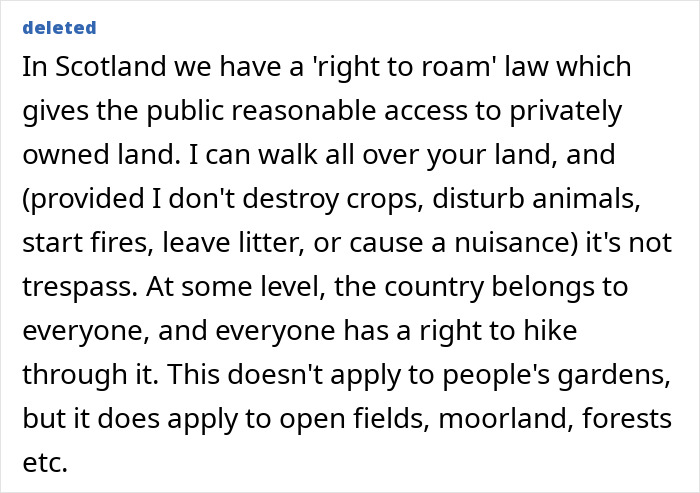
Not just in Scotland. Right to roam exists all over the UK, but there are less restrictions in Scotland. Trespassing isn't a criminal offence in the UK.
Some of these laws are truly silly and weird and will definitely make you laugh reading them. Like the fact that there’s a place out there where it’s illegal to forget your wife’s birthday (although maybe that’s actually a good rule and we should have it everywhere).
Others though, while they raise a few eyebrows, are pretty serious. In India, for example, you can’t find out the gender of your baby before it’s born, for pretty dark reasons.
Good. Should be implemented everywhere. Ensures fines have the same impact.
But regardless of how funny or serious they are, all of them have an explanation behind them. It just doesn’t always translate well to modern times.
Take the UK, for example. It’s a country with a very long history and one that’s famous for its formalities and peculiar traditions. So naturally, if we go far enough back, we’re bound to find some very strange laws. It’s just that, well, many of them have remained on the books, even if most people don’t know they technically exist.

It is silly to wear high heels to such places anyway since the ground is always uneven and you risk injury.
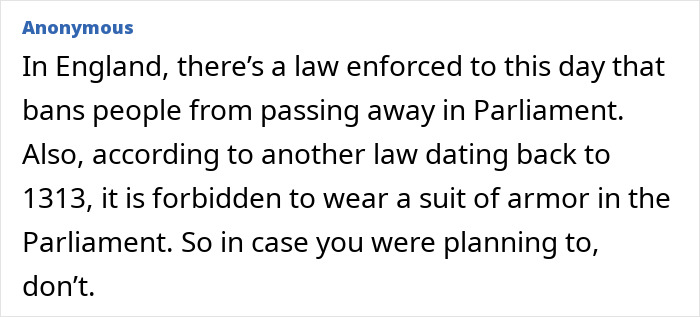
As it turns out, there’s a law in the UK where MPs are prohibited from wearing armor in parliament. No one really wears armor these days anyway, right? But as The Guardian notes, it was established by the Bearing of Armour Act, which dates all the way back to 1313.
It was an attempt by Edward II to prevent nobles from threatening to use force when parliament was called. The Earl of Lancaster, apparently, still attended parliament carrying weapons until at least 1319.

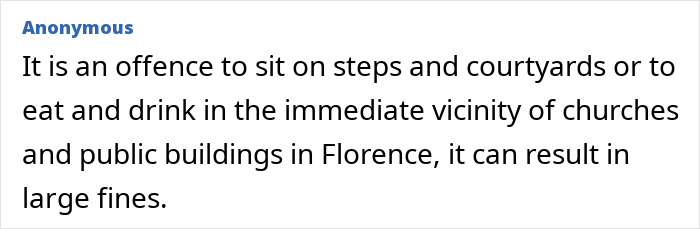
This is a law meant to ward off inconsiderate tourists? Want to sit, and eat you snack? Go to a cafe, sit on a park bench.

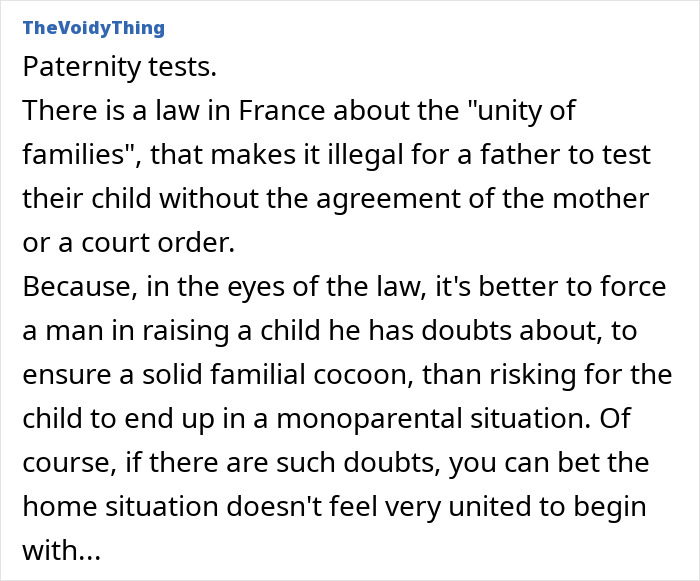
France is weird about a lot of medical things, but DNA tests in general. If I wanted to do one, like for ancestry or whatever, I'd need to order one from the UK (which I think is technically unlawful but a law that's pretty hard to police...) and send it back to the UK for processing. Genealogists were hoping an exemption could be made, but the Senate ruled to keep them unlawful outside of legal medical reasons. I think France might be the last country in the EU that doesn't permit home testing.
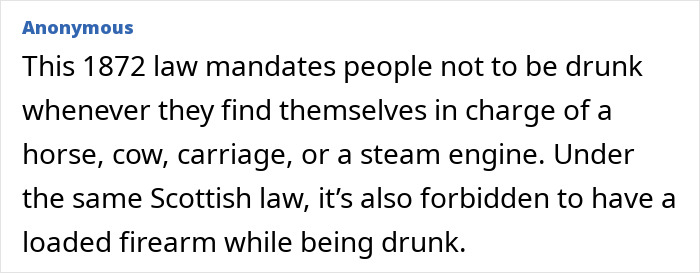
Some other unusual regulations in the UK include a part of the 1872 Licensing Act that outlaws being drunk in charge of cattle (so watch yourself after a few pints on the farm).
Then there’s the 1986 Salmon Act, which was intended to ban poaching but somehow makes it illegal to handle salmon in suspicious circumstances. Whatever that means. There’s also a 19th-century law banning the beating of carpets after 8am on streets in London.
I was born there, and lived till my mid '20s, and never ever heard about this "law". Although, Ceausescu and his wife Elena were a special kind of dipshíts. Their years spent in school didn't even add up to a primary school education. Together. So, it may be legit.

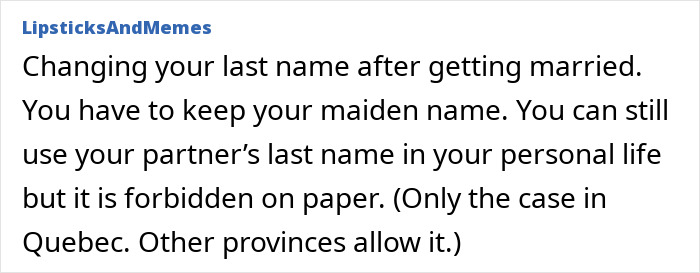
Makes as much sense as forcing the woman to change her name - but not the man.
Of course, it’s widely recognized that some of these old laws are ridiculous. That’s why the UK has The Law Commission, which is responsible for regularly recommending the removal of outdated regulations.
The Unlawful Games Act 1541, for instance, required every Englishman aged between 17 and 60 to keep a longbow and practice archery on a regular basis. It wasn’t repealed until 1960.


This among many more human rights violations is the reason the accession negotiations with the EU are on hold for more than a decade now. I sincerely hope you and your fellow Turks will be able and willing enough to oust pseudo-Sultan Erdogan and his cronies out of office the next chance you get.
In some countries though, the laws that were enforced a while ago are still very much in use, and it doesn’t look like they plan on changing them anytime soon.
You may have heard that in Singapore it’s illegal to sell gum. Sounds a bit absurd, but no, it’s not because it’ll be stuck in your body for seven years after you swallow it, as we were all told as kids.
The environmental protection agencies in most countries forbid me to dance regardless of headwear.
Well... Um... Kind of makes one wonder what happened enough times that this was made a law.
Apparently, chewing gum was causing maintenance problems all over the place. In apartment buildings, vandals were disposing of spent gum in mailboxes, inside keyholes, and on elevator buttons.
Gum left on the ground, stairways, and pavements in public areas was driving up cleaning costs and damaging equipment. Even the seats on public buses weren’t safe from it.

Here in Toronto, it is illegal to feed any wild birds or animals (including pigeons; we have a great many here) on both public and private property. There is an exception for backyard bird feeders provided that they are only accessible to songbirds, and spilled seed must be promptly cleaned up. It is a city bylaw so violations are not actually criminal, but the fines can be hundreds of dollars.
So it was banned in 1992. Since 2004 though, an exception has been made for therapeutic, dental, and nicotine chewing gum, which can be bought from a doctor or registered pharmacist.
It’s worth noting that it’s not actually illegal to chew gum in Singapore. It’s just against the law to import and sell it, apart from the exceptions mentioned above.
I'm beginning to suspect that elements in the Finnish legal system have taken their eyes off the ball. I'll leave the final pun to any Panda who's still reading my random remarks...

It was illegal in the Australian state of Western Australia to possess, transport, or sell more than 50 kg of potatoes. Enacted under the Marketing of Potatoes Act 1946, police had the power to stop and search vehicles for unregulated "spud smuggling". However, this law was officially repealed in May 2021
And there we are. Whether you think these rules are too drastic or too silly, it doesn’t change the fact that they existed at one point or still do now.
If anything, it reflects us as a society pretty well. We can be pretty unreasonable, and naturally, we need equally unreasonable laws to keep us in check.
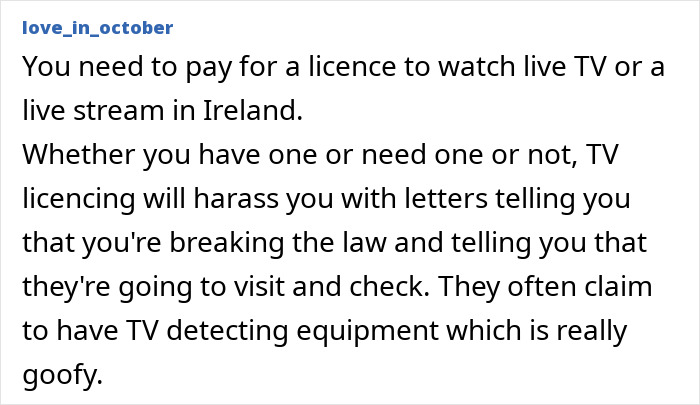
You have to have a TV licence in the UK as well. £180 a year. The money goes to funding the BBC. 🙄
Because if it were to come to disputes, it would be much easier for the courts to decide based on the "Bienenrecht" (§§ 961 ff. BGB) than based on the extremely complicated german "Bereicherungsrecht" (§§ 812 ff. BGB) or our torts laws respectively. But that might tell us we should simplify the latter (every law student would be very grateful).
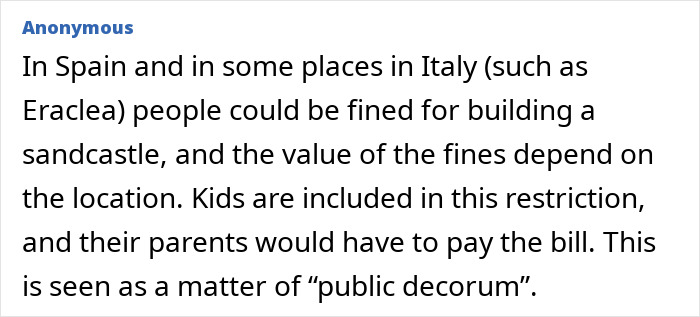
Kids these days with their sandcastles... They are a menace!
In Germany is also not illegal. However, if you break any laws through it, it will add to your original punishment.If caught ever again, of course ...

Now I know why the Filipinos at my work have expressed how appalled they are that divorce is acceptable in North America, and common. Quite frankly, I think divorce is a good thing to have.

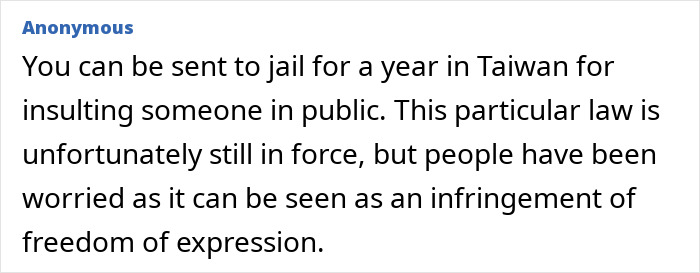
I am insulted by the fact that I could be sent to jail when insulting somone

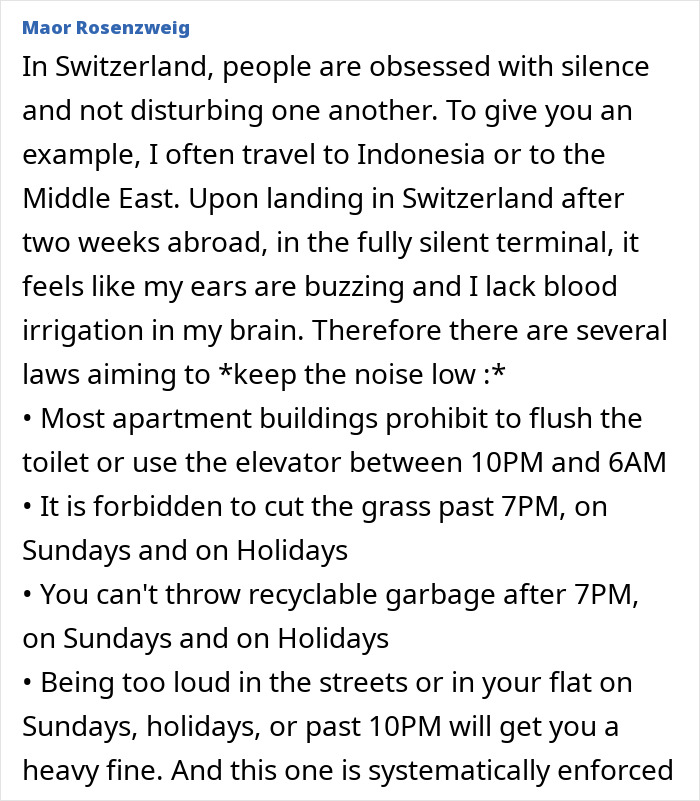
Mostly true apart from the toilet thing, already mentioned higher up. Oh, and elevators too. It's possible that individual apartment buildings could have rules about their use, but it is absolutely not a law. And no, the noise things are not "systematically enforced", but some Swiss neighbours may not be reticent about calling the police if you're making a disturbance.
This is a myth. No such law exists and even if it did, how would it be enforced?
Laws almost never get repealed, that is the reason you can find so many crazy laws still on the books. The people making laws don't want to take time out for this. Instead two things mainly happen with such laws. One is that they stop enforcing them. And the other is they pass a law or such that "overrides" the other law. For instance, Trump couldn't get the votes to repeal the law that say that the auto manufactures have to pay a fine for not meeting the clean air acts. Instead they passed a law to change the fine to zero. And another thing this administration is doing is now enforcing hundreds of years old laws that were "suppressed" by a recent law (right to have an abortion) when the supreme Court reversed its ruling on that.

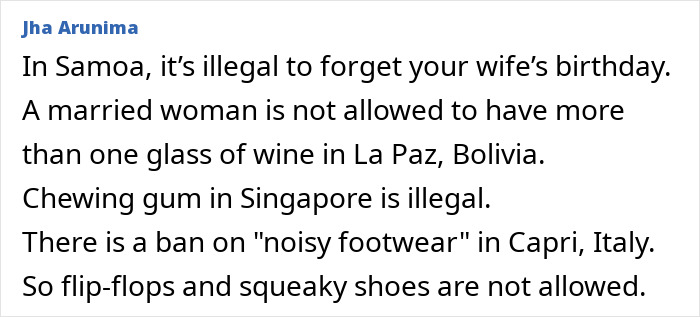
It absolutely is not illegal in Samoa to forget your wife's birthday. Married women all over Bolivia can drink as much wine as they want. On the island of Capri, "noisy" footwear is banned only in the old town due to acoustics, not the entire island. Chewing gum is not illegal in Singapore BUT there are extremely strict and/or prohibitive laws pertaining to gum.

We in Canada have the Electronics Recycling Fee added to the cash register. A $500 laptop, say, would be levied $38.

Winnie the Pooh was never banned in Poland. He was, however, rejected as the town mascot by councilors in Tuszyn, Poland, because he doesn't wear pants.
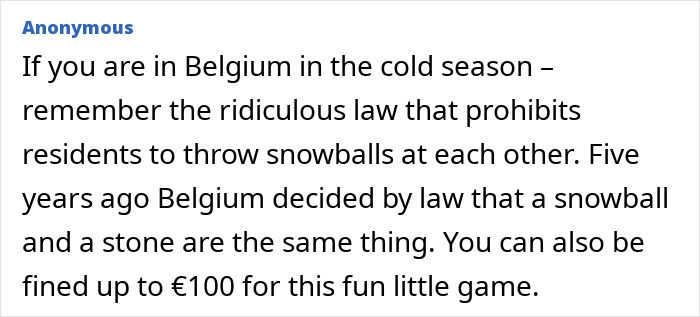
This isn't true. Throwing snowballs at traffic is an offence, but ordinary snowball fights in parks, gardens etc are considered normal winter activities.
It's bollocks. The origin of the myth is down to the first two publishers renaming Napoleon in Animal Farm to be César (so keeping the spirit while rejecting a pig being named Napoleon). This was purely a personal decision by the editor and companies involved. Since 1981 the text has been translated correctly. It is not, and never has been, a law - never mind "quite a famous" one.






In France, you can marry your deceased partner if the court rules they would have consented to it. The law came to be during war times in order to allow pregnant women to be legally widowed rather than unmarried if their man got called to war before the wedding and d*ed there. It's still in use today, about 30 times a year (spouses of cops, firefighters or people who d*ed in an accident before the actual wedding day)
In Dyersburg, Tennessee, it is illegal for spouses to kiss one another on a Sunday. I have violated this law.
Not entirely unique to England, Wales or Northern Ireland but one thing that may suprise some visitors is the lack of shops which are open on Sunday evenings. Most shops which are bigger than 280 Square metres are only allowed to trade for a maximum of six hours (five in NI) on Sundays and must not trade at all on Christmas Day or Easter Sunday. Scotland doesn't have Sunday trading laws.

Typical Sunday trading hours are 10am to 4pm. You can't get fish and chips on a Sunday at all though.
Load More Replies... In France, you can marry your deceased partner if the court rules they would have consented to it. The law came to be during war times in order to allow pregnant women to be legally widowed rather than unmarried if their man got called to war before the wedding and d*ed there. It's still in use today, about 30 times a year (spouses of cops, firefighters or people who d*ed in an accident before the actual wedding day)
In Dyersburg, Tennessee, it is illegal for spouses to kiss one another on a Sunday. I have violated this law.
Not entirely unique to England, Wales or Northern Ireland but one thing that may suprise some visitors is the lack of shops which are open on Sunday evenings. Most shops which are bigger than 280 Square metres are only allowed to trade for a maximum of six hours (five in NI) on Sundays and must not trade at all on Christmas Day or Easter Sunday. Scotland doesn't have Sunday trading laws.
Typical Sunday trading hours are 10am to 4pm. You can't get fish and chips on a Sunday at all though.
Load More Replies...


































 No fees, cancel anytime