Get Premium
Dark mode theme is available exclusively for premium users. Learn more about the benefits of subscribing.
No fees, cancel anytime.

 Dark Mode Ad-Free Browsing Unlimited Content
 Ad-Free Browsing Unlimited Content Dark Mode
Join 1.2 million Panda readers who get the best art, memes, and fun stories every week!

The modern corporate world loves its buzzwords. We’re no longer employees; we’re “human capital.” We don’t just work together; we “synergize.” And we’re not just managed; our “resources are optimized.” This high-tech language is designed to make everything sound efficient and futuristic, even when it’s just a fancy way of saying someone is about to get a passive-aggressive email.
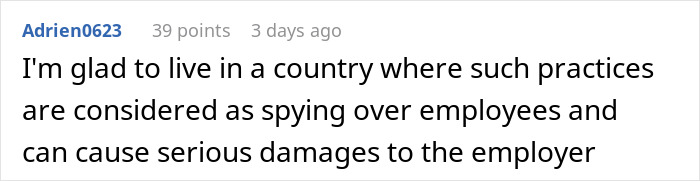
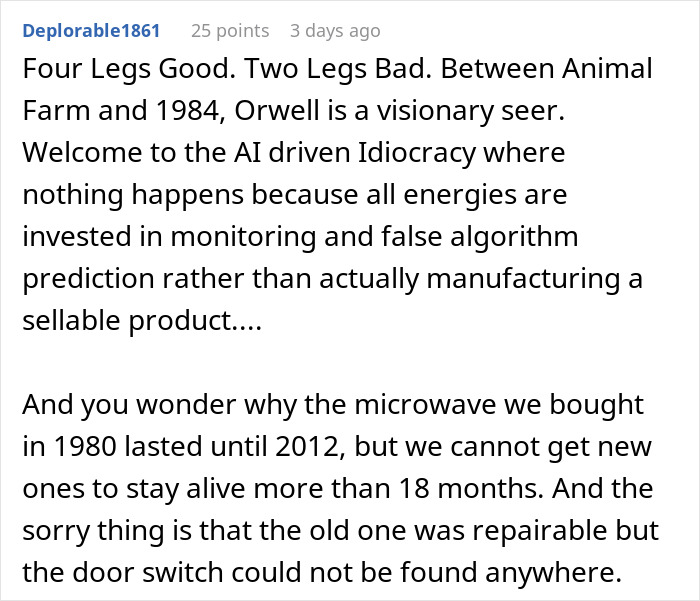
So how can we rephrase “corporate spying” to sound a little more appealing? Because we assume they’re just looking for big problems, but maybe they are analyzing our every keystroke like a digital fortune teller. One ex-employee discovered just this. Their company was being a digital Big Brother and weaponizing their data in the most toxic way.
More info: Reddit
Image credits: pressfoto / Freepik (not the actual photo)
Image credits: Imaginary_Addition21
Image credits: EyeEm / Freepik (not the actual photo)
Image credits: Imaginary_Addition21
Image credits: seventyfour / Freepik (not the actual photo)
Image credits: Imaginary_Addition21
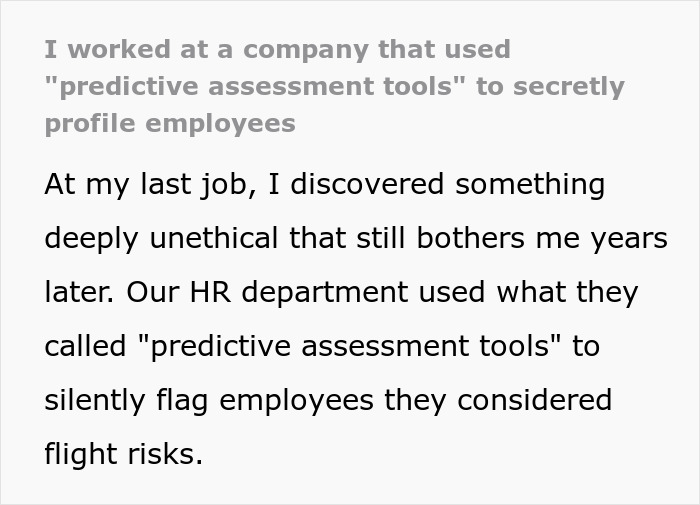
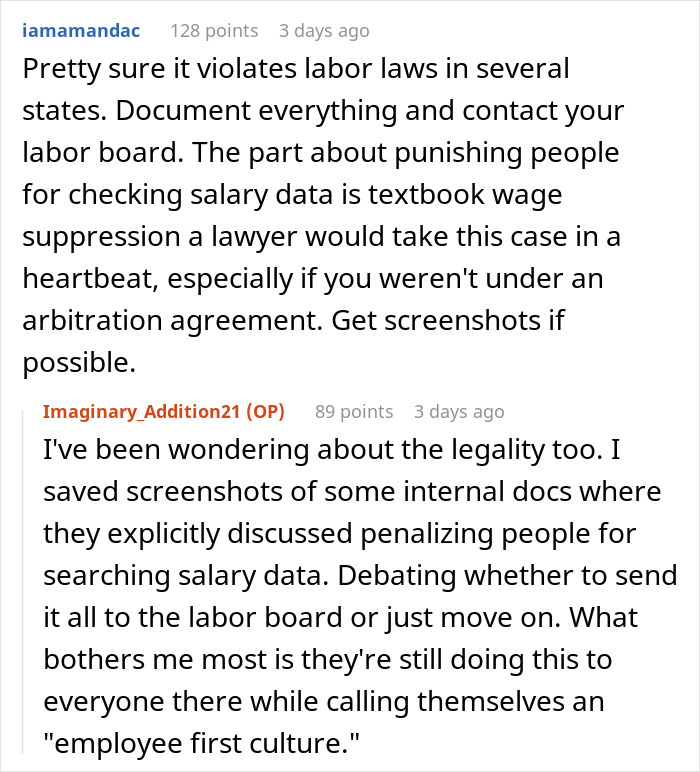
One former employee recently pulled back the curtain on a corporate practice so dystopian it would make George Orwell blush. At user u/Imaginary_Addition21‘s last job, HR wasn’t just tracking vacation days; they were using “predictive assessment tools” to secretly profile everyone. This was a high-tech witch hunt to identify and neutralize potential “flight risks” before they could even think of escaping.
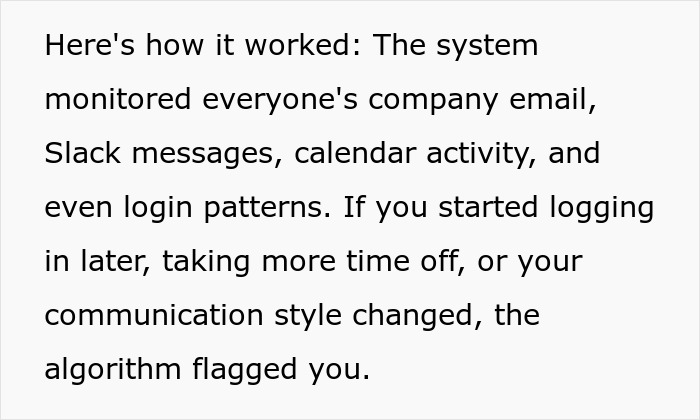
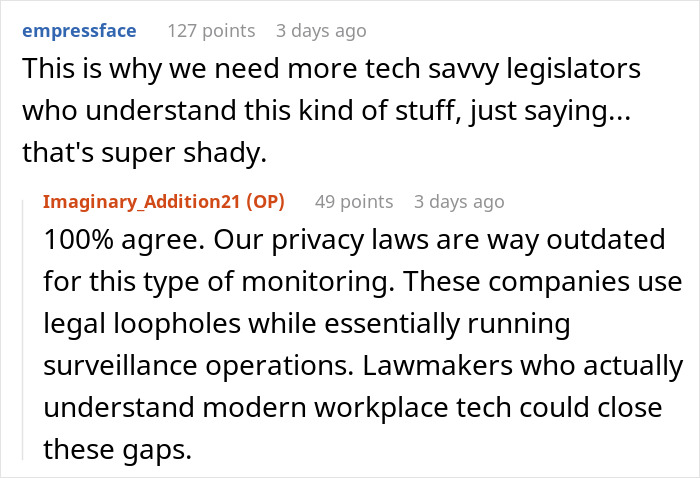
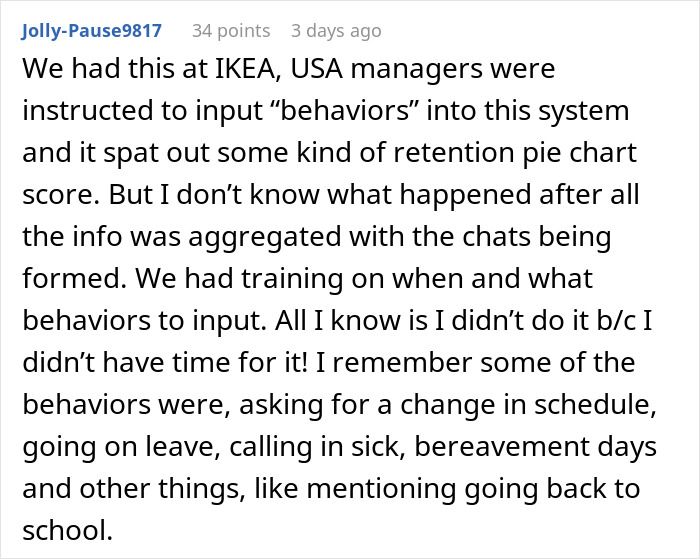
The system was monitoring everything from company emails and Slack messages to your login patterns. If you started logging in a little later or your communication style changed, a silent alarm would trip in a server somewhere. This data was then used to create a “retention prediction score,” a beautiful piece of corporate jargon for “how likely is this person to leave us?”
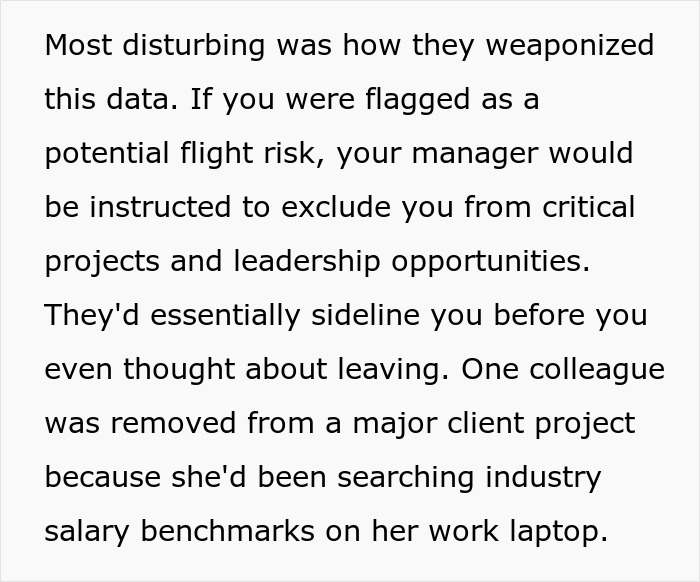
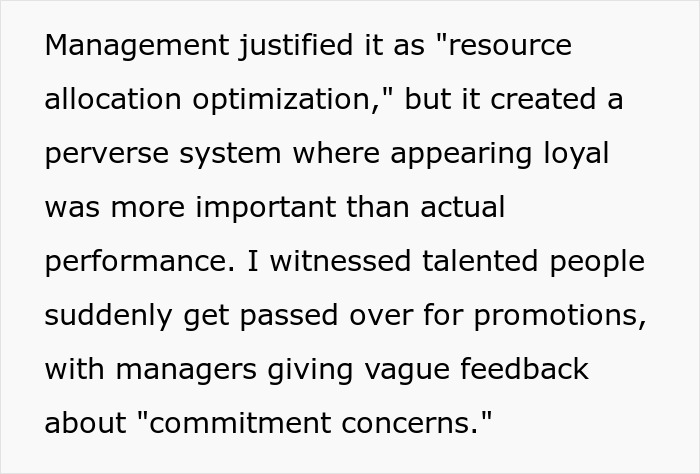
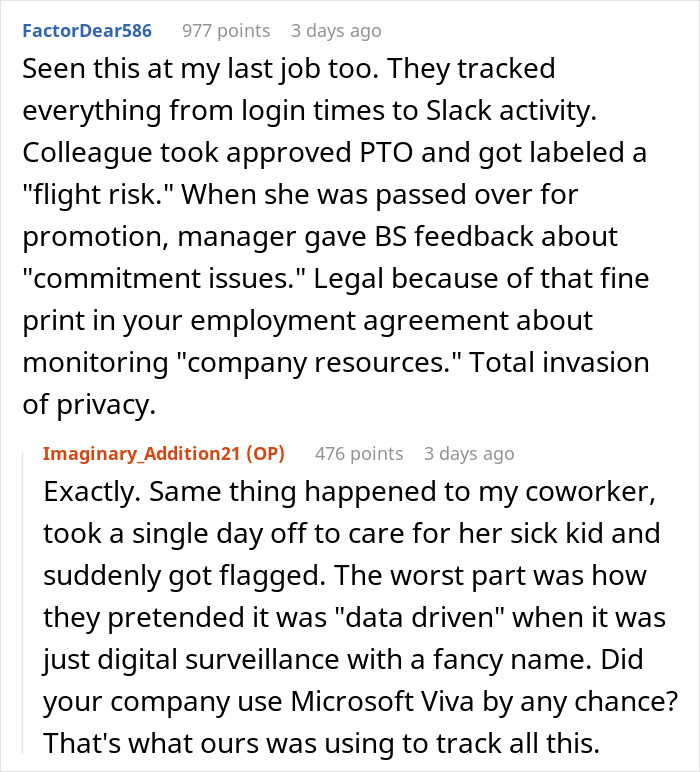
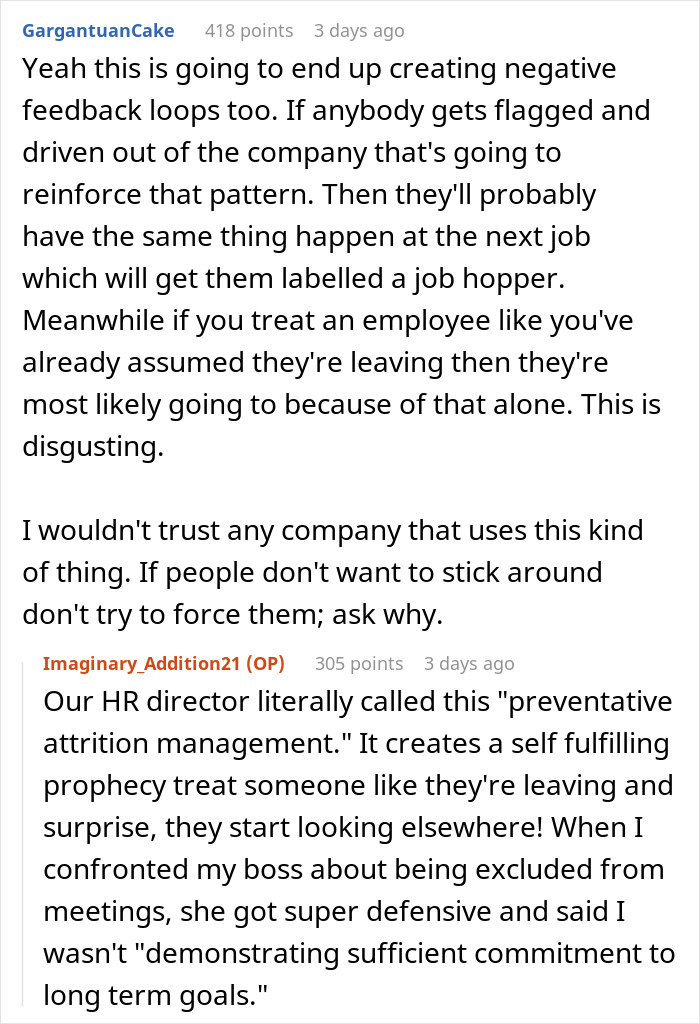
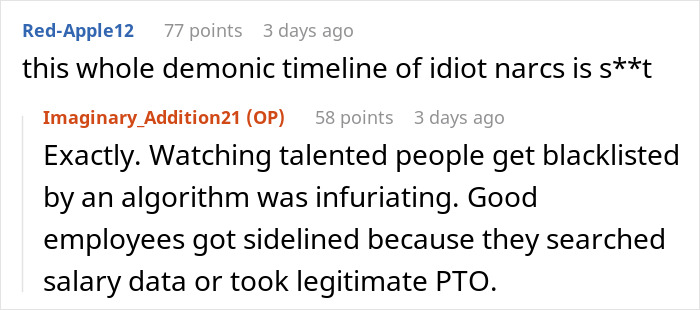
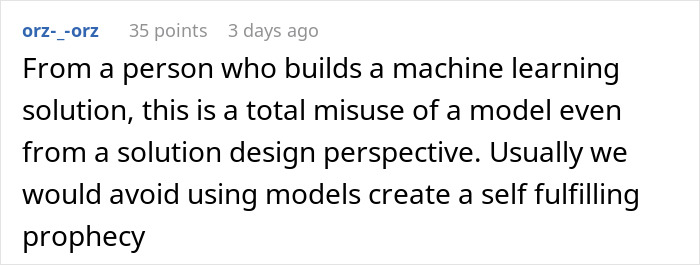
This became a weapon instead of a data source. If you were flagged, your manager was secretly instructed to sideline you, pulling you from important projects and leadership opportunities. One talented colleague was benched simply for searching salary benchmarks on her work laptop. The company created a perfect self-fulfilling prophecy: they treated good employees so poorly that, eventually, they had no choice but to leave.
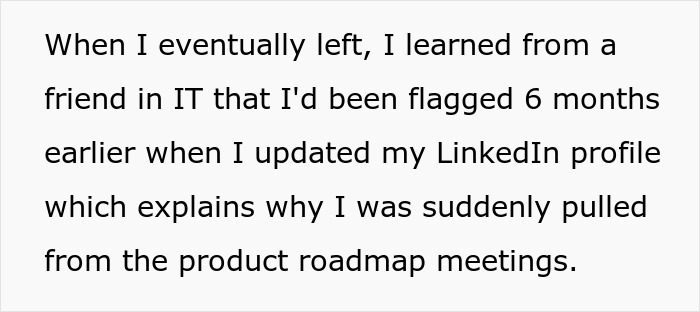
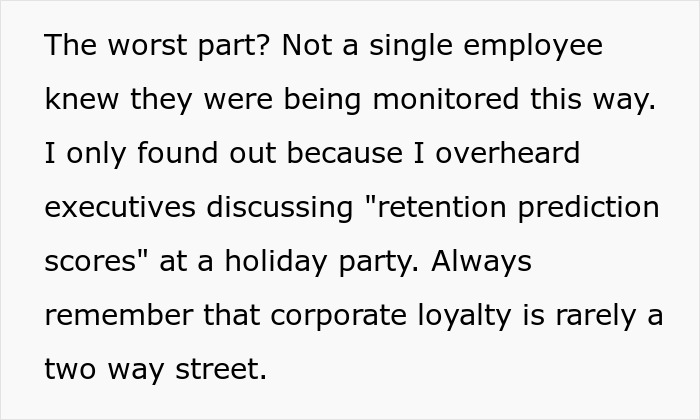
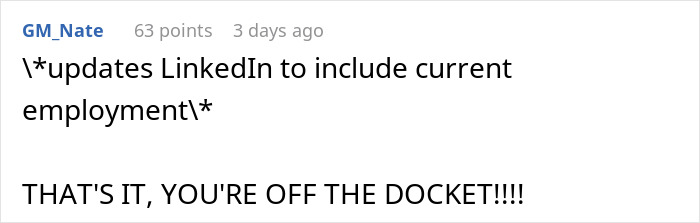
The OP only discovered this secret surveillance program by overhearing executives casually discussing it at a holiday party. They later learned that they’d been flagged six months before they quit, right after updating their LinkedIn profile, which explained why they were mysteriously pulled from all the important meetings. It was the ultimate proof that your company might have already broken up with you in their head.
Image credits: freepik / Freepik (not the actual photo)
The company’s secret surveillance program is not just unethical, but research also shows it is a fundamentally flawed strategy that actively encourages bad behavior. A major study from the Harvard Business Review found that monitored employees were “substantially more likely to” engage in rule-breaking, from taking unapproved breaks to purposefully working slowly.
This feeling of being constantly watched creates a culture of anxiety and distrust, not loyalty. According to findings posted by Apploye, over 56% of employees feel anxious about being monitored at work, and a staggering 54% would consider quitting their job if surveillance increased. So in this case, the company’s “flight risk” tool is a self-fulfilling prophecy…
Ultimately, these tools fail because they measure the wrong things. Dr. Tara Behrend, a professor of human resources, argues that such surveillance is a “mistake because the tools aren’t measuring what’s really important—all the ways a worker is contributing to the organization and generating value.”
Has your workplace ever used a creepy or counterproductive tool to monitor its employees? Share your story below. This is a safe space!

By entering your email and clicking Subscribe, you're agreeing to let us send you customized marketing messages about us and our advertising partners. You are also agreeing to our Privacy Policy.
Thank you! You've successfully subscribed to newsletters!



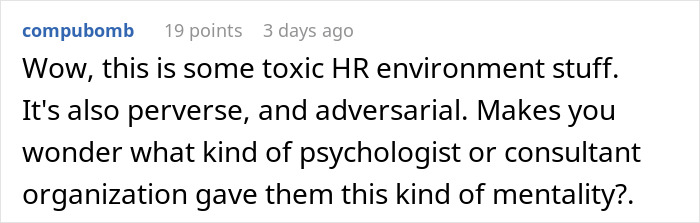
The irony of making decisions to exclude so-called "flight risks" from promotions and projects... resulting in people leaving because they were passed over for promotions and kept from working on important projects. I know managers are stupid but this is next level.
The irony of making decisions to exclude so-called "flight risks" from promotions and projects... resulting in people leaving because they were passed over for promotions and kept from working on important projects. I know managers are stupid but this is next level.




































 No fees, cancel anytime














29
9