Get Premium
Dark mode theme is available exclusively for premium users. Learn more about the benefits of subscribing.
No fees, cancel anytime.

 Dark Mode Ad-Free Browsing Unlimited Content
 Ad-Free Browsing Unlimited Content Dark Mode
Join 1.2 million Panda readers who get the best art, memes, and fun stories every week!
In-law drama isn’t unavoidable, but every family is different. There can always be a mismatch of expectations, demands, needs and norms, but generally people try to make it work, particularly if there are kids involved. The presence of grandchildren tends to help. However, like in any relationship, people do have to meet each other halfway.
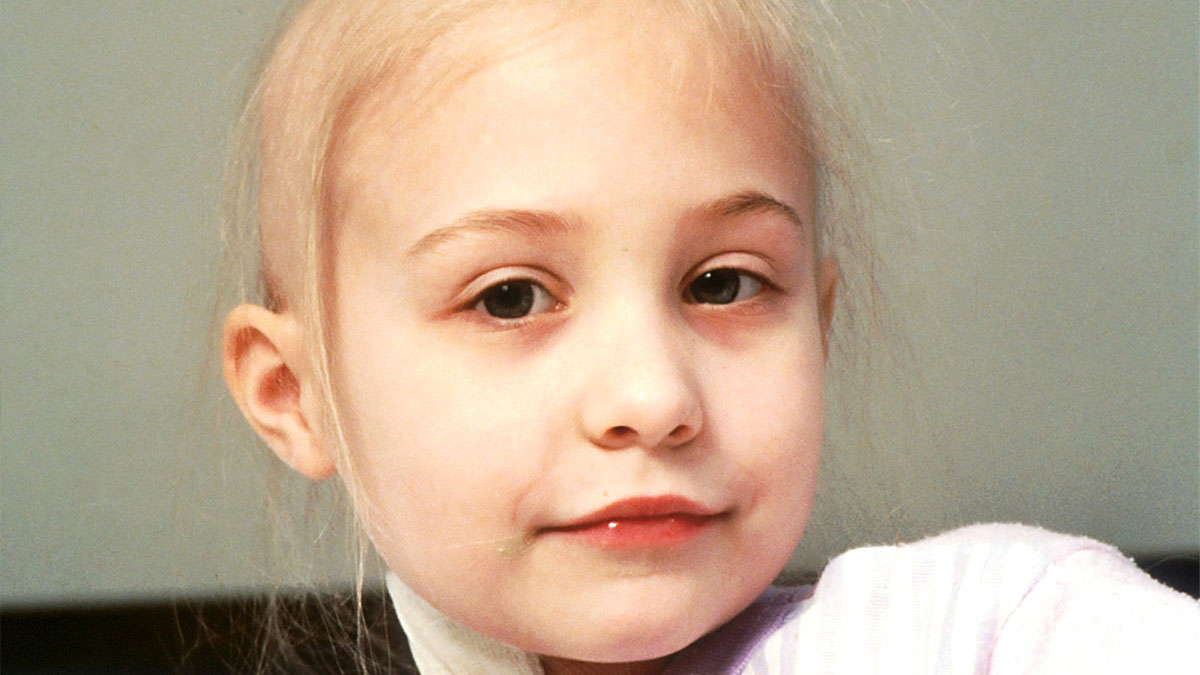
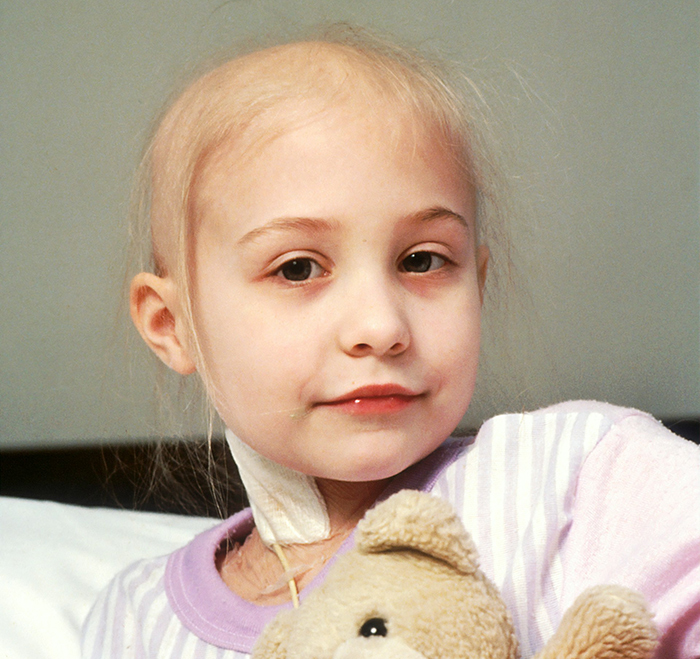
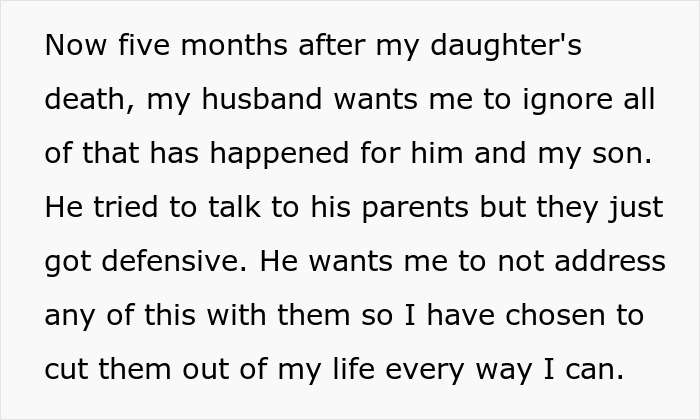
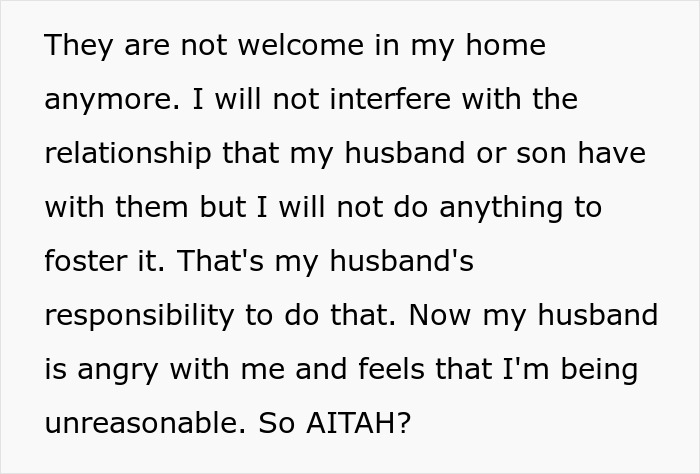
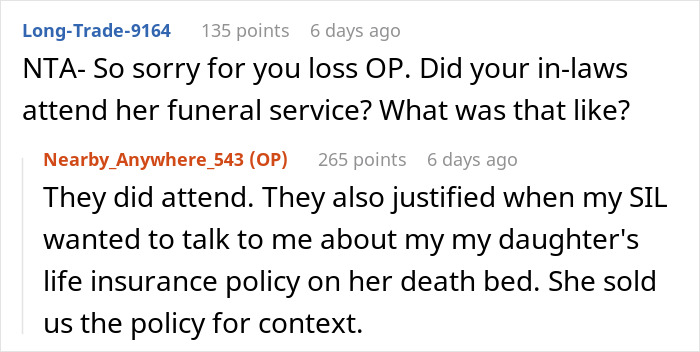
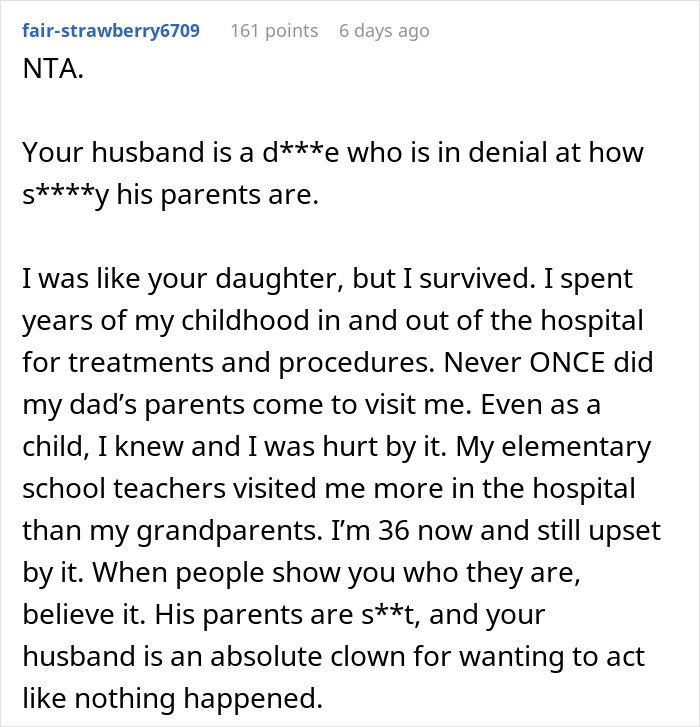
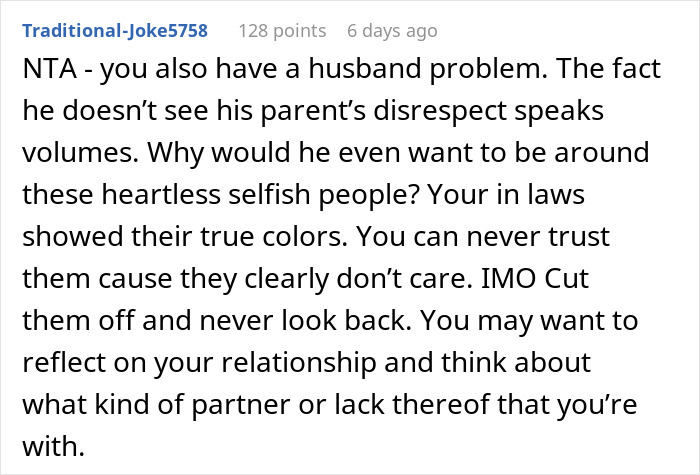
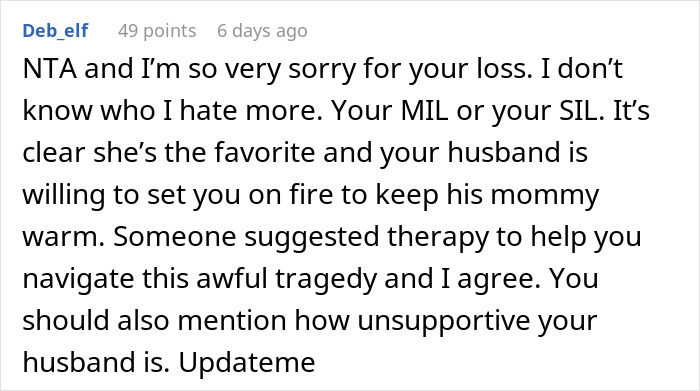
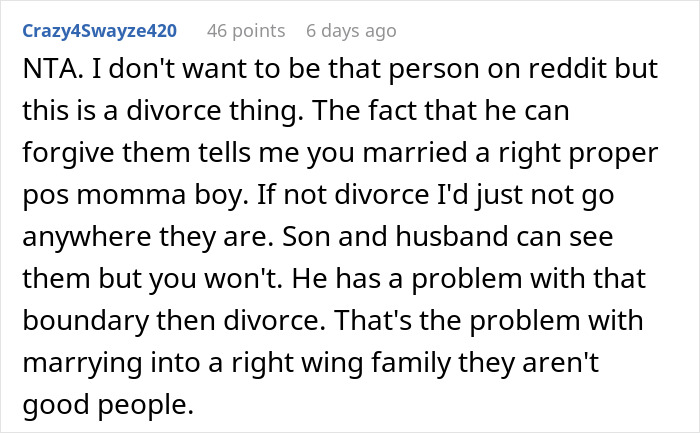
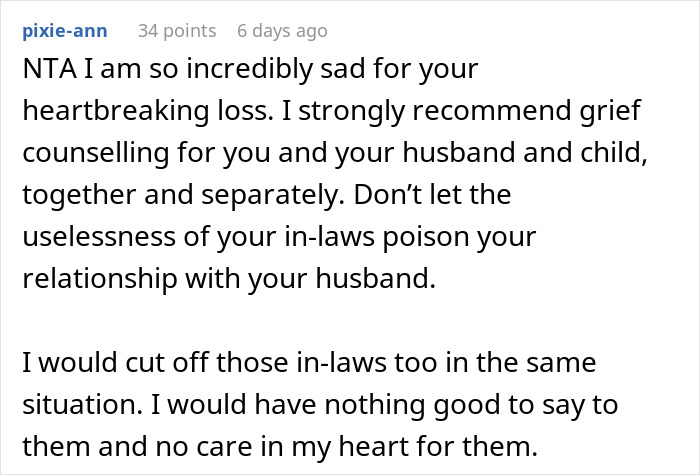
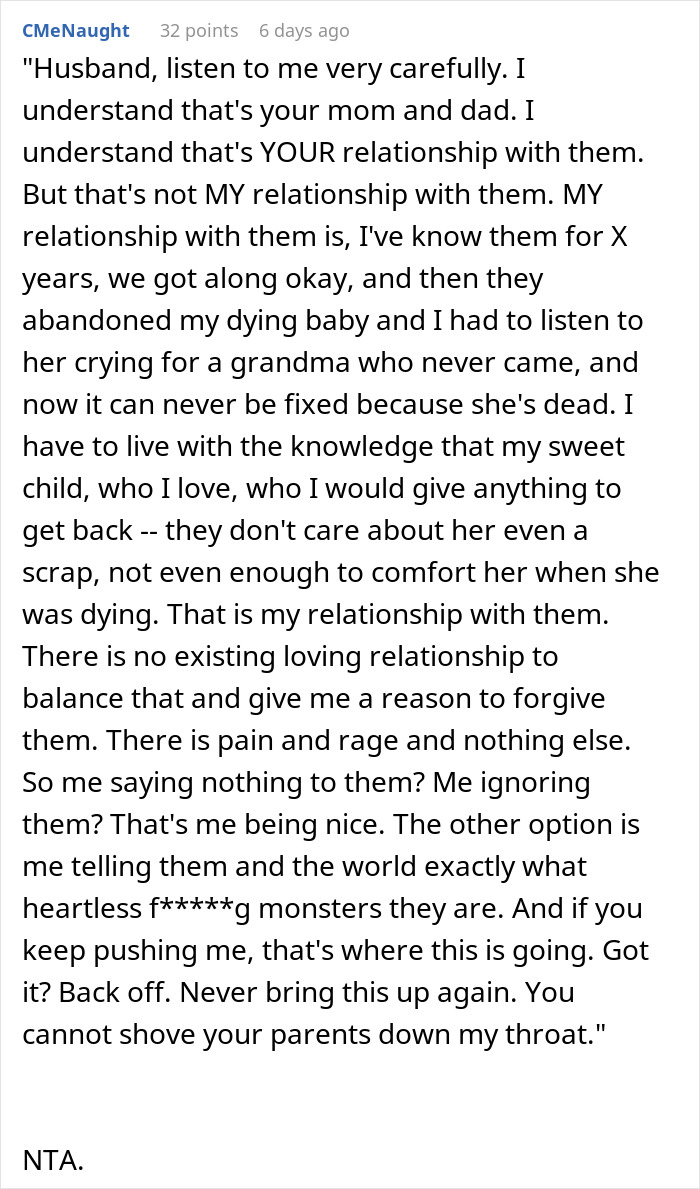
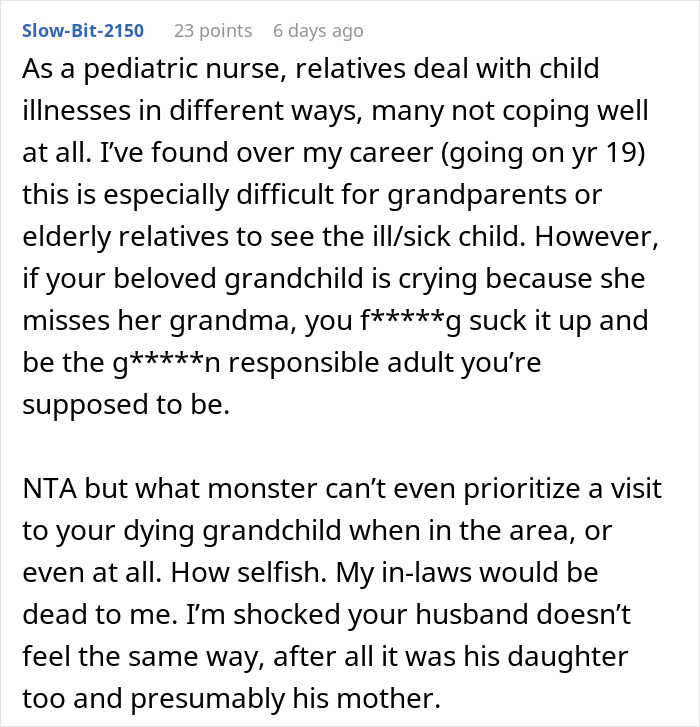
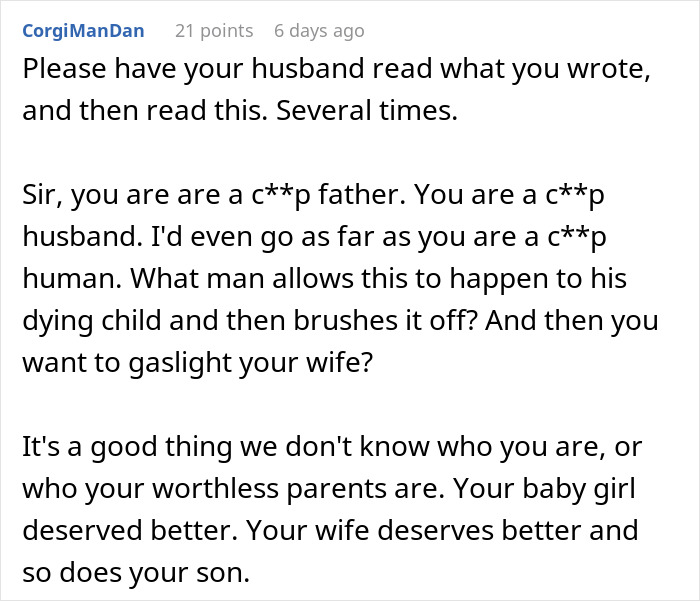
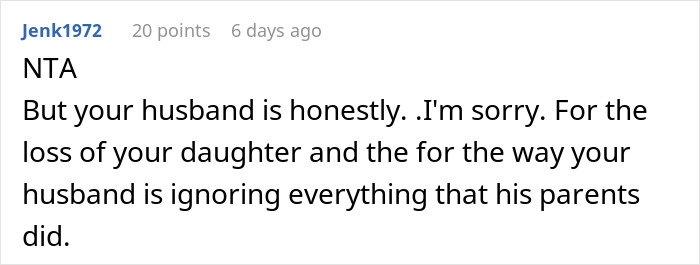
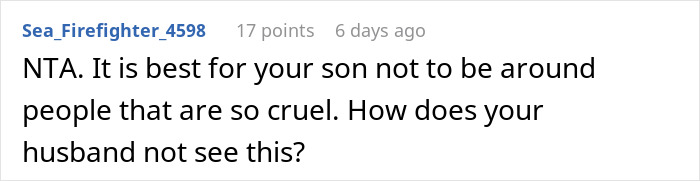
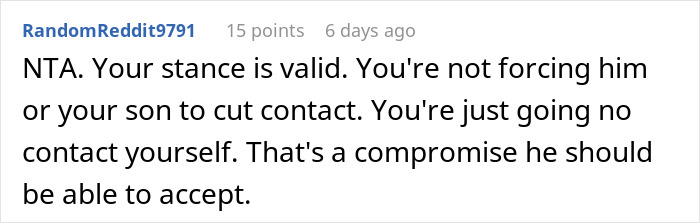
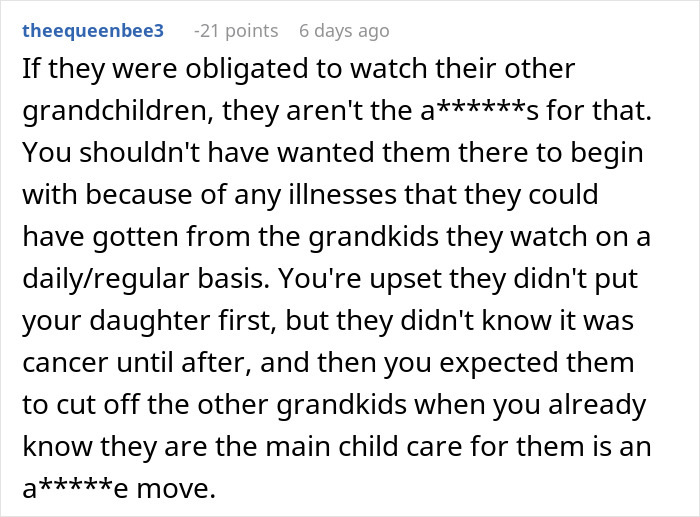
A woman considered ending contact with her in-laws after they completely ignored her very very ill daughter for years. People online gave their condolences and some suggestions for how she should proceed. Be warned, this story does get dark in places.
Image credits: National Cancer Institute / unsplash (not the actual photo)
Image credits: Samuel Yongbo Kwon / unsplash (not the actual photo)
Image credits: Nearby_Anywhere_543
When in-laws repeatedly answer the question of visiting with a simple “no” or refuse to lend a hand in daily needs of the family, be it childcare, help during holiday preparations, or simply dropping by for a cup of coffee, it soon feels like a one-way street. You find yourself shouldering the emotional and practical cost of keeping the relationship alive, traveling long distances for every function, putting your schedule to their use, and keeping your hopes raised repeatedly that this will be the time they will finally reciprocate. When such hopes are constantly dashed, the practice of disappointment erodes your good nature and makes each invitation hurt a little more. Eventually, taking a step back becomes a question of maintaining your own stockpile of patience and love.
Repeated failures to show up also have an emotional toll that adds up. Every broken promise erodes trust, making you suspect that they cannot be trusted to fulfill their good intentions. You find yourself preparing for the disappointment, hiding behind your anticipation for being able to receive them. That tension of waiting and wariness is exhausting, and it takes the fun and relaxation that family gatherings are supposed to enjoy. Dodging them spares you that rollercoaster of hopeful optimism followed by disappointment, allowing you to put your emotional capital where it is actually valued.
Pragmatic justice is also a powerful reason to reconsider contact. If your in-laws never give back help, the imbalance is more than symbolic, it manifests as real sacrifices. You redistribute work, expend vacation hours, and double up on house chores to compensate for their lack, but they make no equivalent concessions. Over time, the balance becomes so skewed in your favor that any impression of reciprocal exchange vanishes. Severing connections, even if only for a season, emphasizes that your effort and time are not unlimited assets to be taken advantage of and that true relationships involve give-and-take. The impact resonates beyond superficial disappointment into the world of family togetherness and common memory. This granddaughter didn’t get to have her grandparents around when she needed them, something they can no longer change.
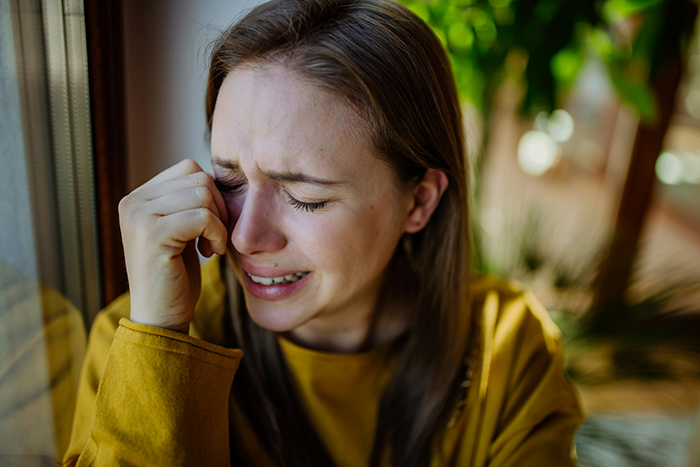
Image credits: Getty Images / unsplash (not the actual photo)
Children, in particular, learn about real family life, forming ideas of loyalty and belonging around who’s there and who’s not. If grandparents or uncles and aunts never appear or won’t even help out, children might understand that they’re not worth the trouble. Over time, this will influence their sense of self-worth and how they believe families work. By severing connections with unengaged in-laws, parents protect their children from being consumed with second-class feelings in the larger family unit and show the importance of setting boundaries with individuals who won’t honor your family’s demands.
It’s generally worth a try to have an honest and compassionate conversation. Describing how their absence impacts you, without fault-finding or guilt-tripping, gives them the chance to understand and even change. But if a lot of conversations share the same pattern of empty apologies and unkept promises given, you are confronted with hard evidence of their unwillingness to invest. In this case, moving away is less of a penalty and more accepting reality: it turns out that some people are not going to meet you halfway.
Walking away from a relationship that only frustrates also paves the way for better connections. Neighbors, friends, or other relatives who come forward with genuine enthusiasm to live with you and share their life can take the place of missing in-laws. Building a chosen family of people who love you for yourself provides tangible support and emotional comfort. The contrast between the good energy you receive from these kinds of relationships and the drain of one-way relationships makes breaking contact less a loss and more reclaiming your social scene.
Caring about your own well-being and the tranquility of your close family sometimes requires giving up in-laws who refuse to. It doesn’t necessarily have to be for good, but that they simply take time from that reduced communication until or unless they are able to demonstrate real commitment to being a part of your family life. By honoring your own time, taking care of your family’s emotional health, and associating with people who are willing to put the work in to be present, you are showing that relationships are about respect and give-and-take effort rather than duty.

By entering your email and clicking Subscribe, you're agreeing to let us send you customized marketing messages about us and our advertising partners. You are also agreeing to our Privacy Policy.
Thank you! You've successfully subscribed to newsletters!


I'd wear full hazmat, level 4 CDC protection, or MOPP bear to visit anyone deathly ill who wanted me to. No excuse. No excuse. None. It would half k1ll me to see a child that sick, or dying, but that's what grown ups do. And I've never had a child.

I am not religious, but this screams for an AMEN!
Load More Replies...
The thing that got me was that the grandparents didn't want to put on a mask to visit their grandchild or spend any time away from the grandchildren they were watching. They were selfish and cowards. Can't imagine doing this to a gravely ill grandchild. They need to know they are loved to give them some happiness and peace. Not sure I would be able to face them as the OP.

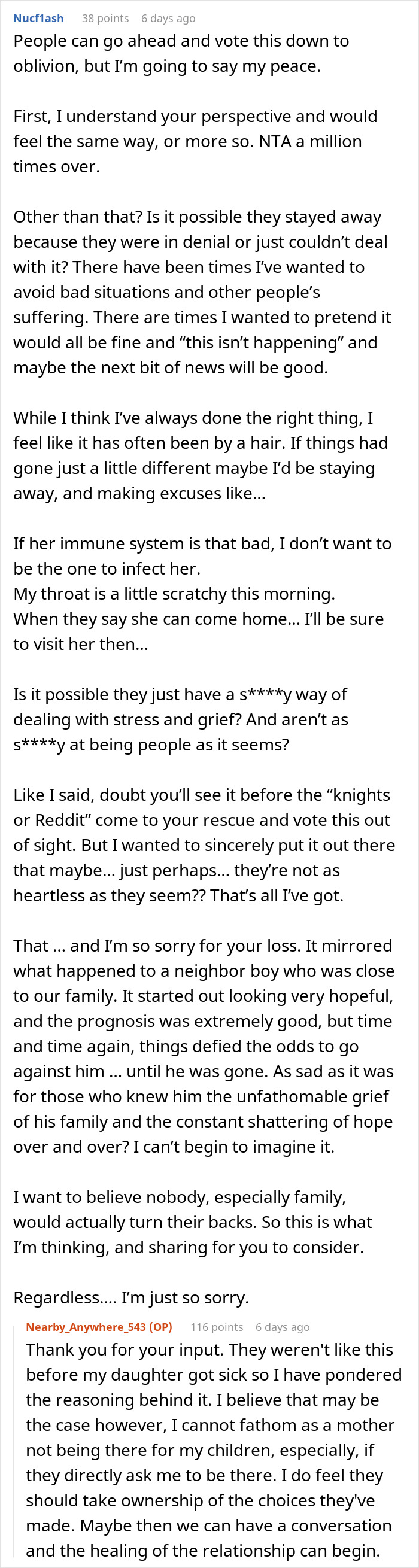
Illness and grief works in very funny ways and I'm no way condoning what the grandparents did however, after my dad took his own life there were people who were friends who just avoided us and others with no contact at all. I now believe that that was a "them" problem and not us. Some people just cannot cope with their own trauma or emotion when it comes to grief and illness to be able to support others. It really does suck and creates a lot of anger and hurt but ultimately you cannot control how others behave in these situations. Hopefully time and reflection will bring about the reconciliation and peace that OP will need to heal.
Load More Replies...
I've seen strange behavior when people are ill. When my GF was dying of cancer 20 years ago, my mother and I would often take for for treatment. One day my mother asked me, "why don't ___'s parents ever take her for treatment"? They were in some sort of denial. Never heard a word from her parents or her siblings during her illness. On her deathbed at home, her brother came up to me and said, "hey I saw that there's a clinical trial for her cancer". Literally the night before she died. (and we exhausted all possible treatments and clinical trials. We live near one of the best cancer research and treatment centers in the world). Where was he for the last 18 months? When she died, the treated me as if I killed he because I didn't get her the proper treatment. To this day, her form of cancer can't be cured. To top it off, they sent me an eviction notice 30 days after she died as we were living in her condo.

I would do everything in my power to make their name garbage in your community.
Load More Replies... I'd wear full hazmat, level 4 CDC protection, or MOPP bear to visit anyone deathly ill who wanted me to. No excuse. No excuse. None. It would half k1ll me to see a child that sick, or dying, but that's what grown ups do. And I've never had a child.
I am not religious, but this screams for an AMEN!
Load More Replies... The thing that got me was that the grandparents didn't want to put on a mask to visit their grandchild or spend any time away from the grandchildren they were watching. They were selfish and cowards. Can't imagine doing this to a gravely ill grandchild. They need to know they are loved to give them some happiness and peace. Not sure I would be able to face them as the OP.
Illness and grief works in very funny ways and I'm no way condoning what the grandparents did however, after my dad took his own life there were people who were friends who just avoided us and others with no contact at all. I now believe that that was a "them" problem and not us. Some people just cannot cope with their own trauma or emotion when it comes to grief and illness to be able to support others. It really does suck and creates a lot of anger and hurt but ultimately you cannot control how others behave in these situations. Hopefully time and reflection will bring about the reconciliation and peace that OP will need to heal.
Load More Replies... I've seen strange behavior when people are ill. When my GF was dying of cancer 20 years ago, my mother and I would often take for for treatment. One day my mother asked me, "why don't ___'s parents ever take her for treatment"? They were in some sort of denial. Never heard a word from her parents or her siblings during her illness. On her deathbed at home, her brother came up to me and said, "hey I saw that there's a clinical trial for her cancer". Literally the night before she died. (and we exhausted all possible treatments and clinical trials. We live near one of the best cancer research and treatment centers in the world). Where was he for the last 18 months? When she died, the treated me as if I killed he because I didn't get her the proper treatment. To this day, her form of cancer can't be cured. To top it off, they sent me an eviction notice 30 days after she died as we were living in her condo.
I would do everything in my power to make their name garbage in your community.
Load More Replies...








 No fees, cancel anytime
















47
39