Get Premium
Dark mode theme is available exclusively for premium users. Learn more about the benefits of subscribing.
No fees, cancel anytime.

 Dark Mode Ad-Free Browsing Unlimited Content
 Ad-Free Browsing Unlimited Content Dark Mode
Join 1.2 million Panda readers who get the best art, memes, and fun stories every week!
During their wedding, people promise to stay together “for better, for worse, for richer, for poorer, in sickness and in health.” But what if one partner becomes a completely different person from who they were when the couple exchanged those vows?
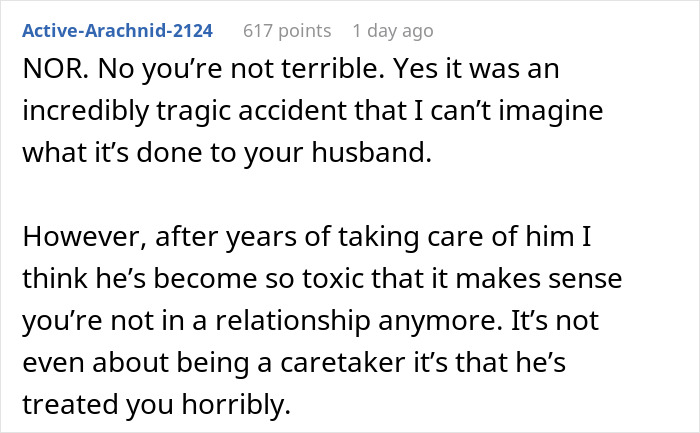
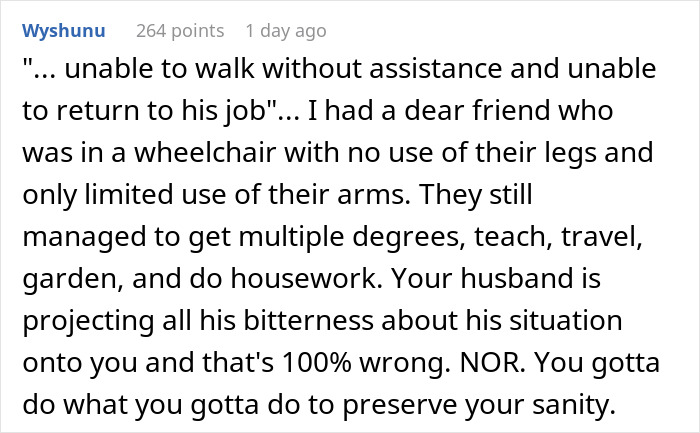
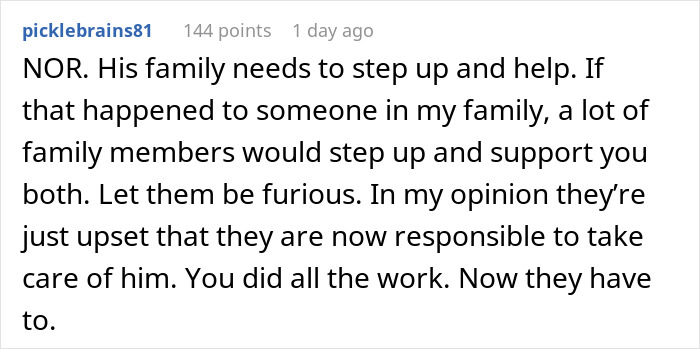
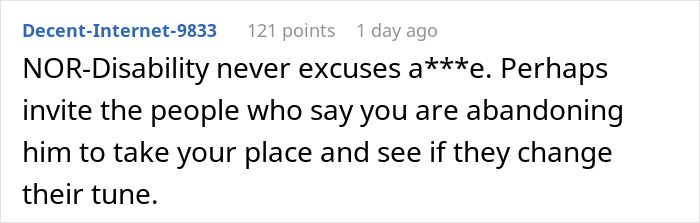
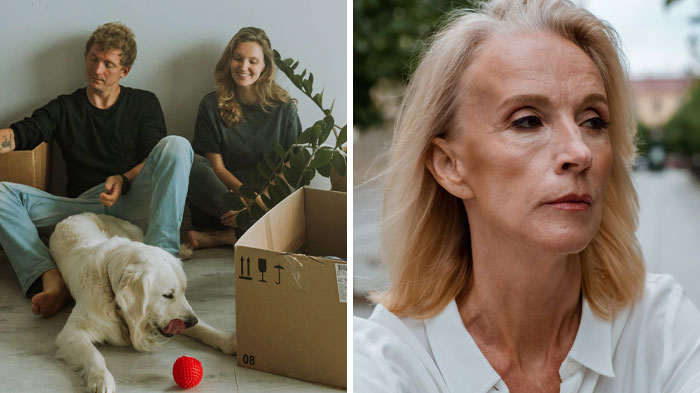
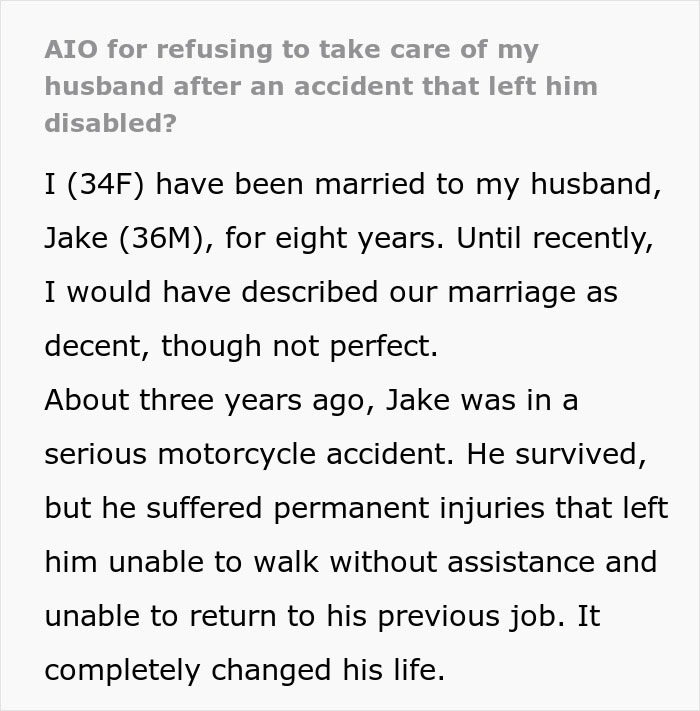
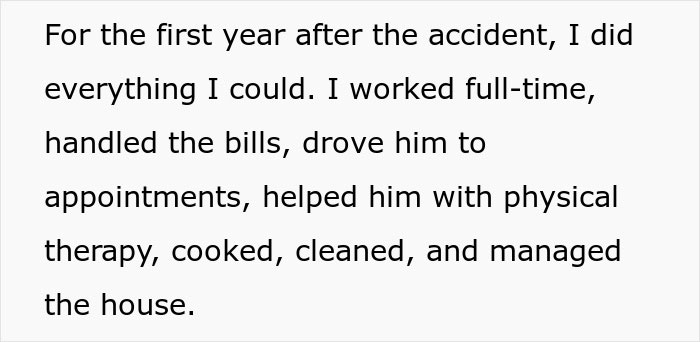
This was the dilemma a woman faced after a horrific motorcycle accident left her husband disabled. In her online confession, she said the issue wasn’t his physical condition, but his personality; the man grew increasingly bitter and cruel, treating her more like a full-time servant than a wife.
Image credits: Alrightstock / Magnific (not the actual photo)
Image credits: The Yuri Arcurs Collection / Magnific (not the actual photo)
Image credits: hryshchyshen / Magnific (not the actual photo)
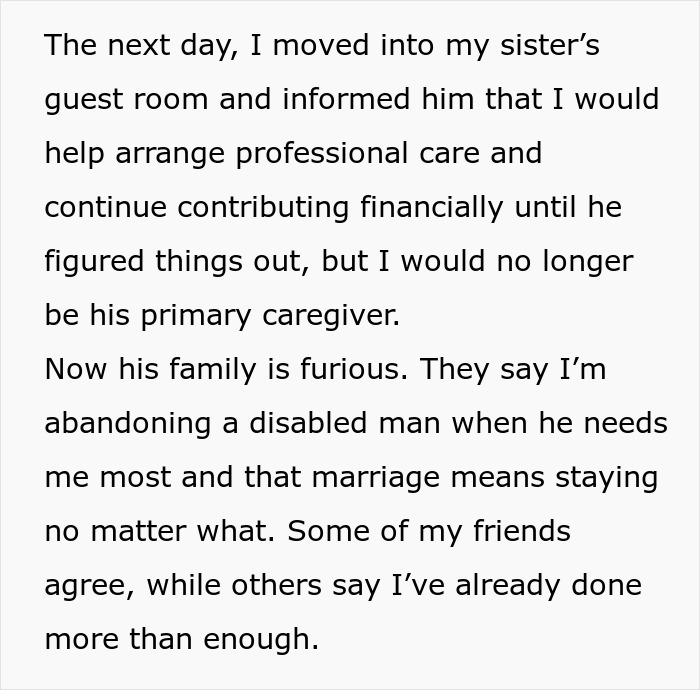
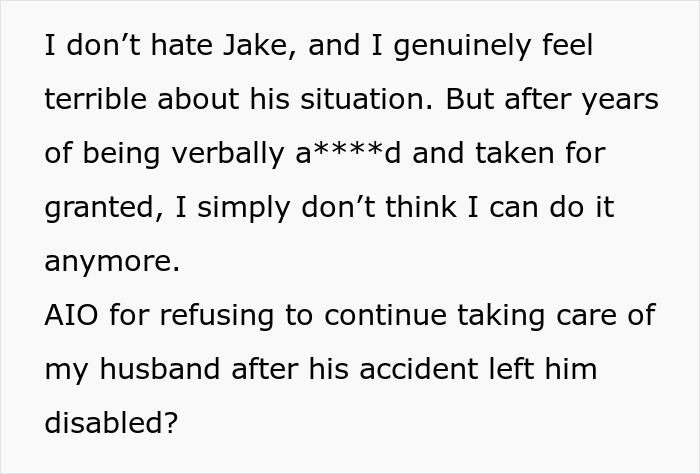
Image credits: Own-Investment1682
For some people, caregiving can be traumatic, leading not just to short-term symptoms but also to chronic conditions like post-traumatic stress disorder (PTSD).
Caregiver PTSD is much different from stress or burnout; it’s a serious mental health condition that can develop from the ongoing stress of watching a loved one’s health decline. Caregiver traumas are often “hidden” experiences that cause a variety of challenges, including intrusive memories, social isolation, guilt, and hopelessness.
As you care for a loved one, you must also look after your own mental well-being. If you’re experiencing significant emotional, mental, or physical distress from caregiving, professional support is available.
According to experts, short-term caregiver trauma may develop from:
While prolonged or chronic PTSD may arise from:
And while not all caregivers will develop PTSD from their duties, they can still have a hard time battling its symptoms.
Data shows that in the United States alone, about 5.7 million people find themselves stepping into the role of a spousal caregiver, and their journeys look completely different from anyone else’s.
Unlike people who care for an aging parent, spouses are usually entirely on their own. Roughly 66% of them handle the intense medical demands, household chores, and daily struggles without a single shred of paid or unpaid help.
It is a long-term sacrifice, too; nearly half of them—49%—end up providing this relentless, around-the-clock care for more than three years, and that number jumps to nearly eight years if the partner is younger.
Because they share a life, the stakes are exponentially higher. When an accident strikes, the financial hit is devastating—often forcing both the injured partner and the caregiver to leave their jobs as medical bills start piling up. But as this story has shown, the true cost isn’t just financial; it’s deeply personal.
They are forced to trade a romantic partnership and companionship for a stressful patient-caregiver dynamic. It bleeds into every single corner of their lives and over time, that constant vigilance takes a massive toll, which is why only 32% of spousal caregivers say their health is good. It is an overwhelming responsibility.










By entering your email and clicking Subscribe, you're agreeing to let us send you customized marketing messages about us and our advertising partners. You are also agreeing to our Privacy Policy.
Thank you! You've successfully subscribed to newsletters!


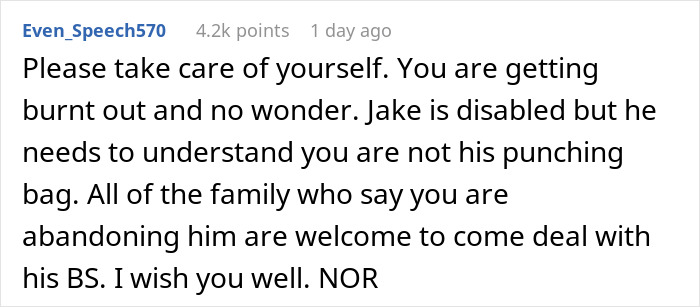
The chattering monkeys need reminding that nobody should ever stay with their a****r, even if they are married to them.

Some Pandas in the poll think she’s wrong and should stay to be abyoosed. Let’s take ‘em out back and shoot ‘em.
Load More Replies...
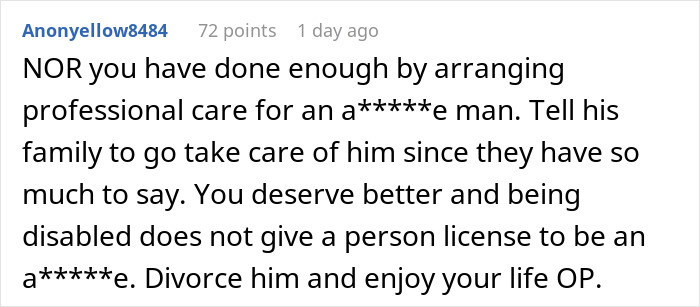
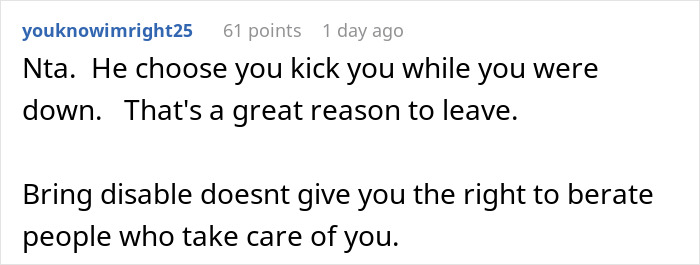
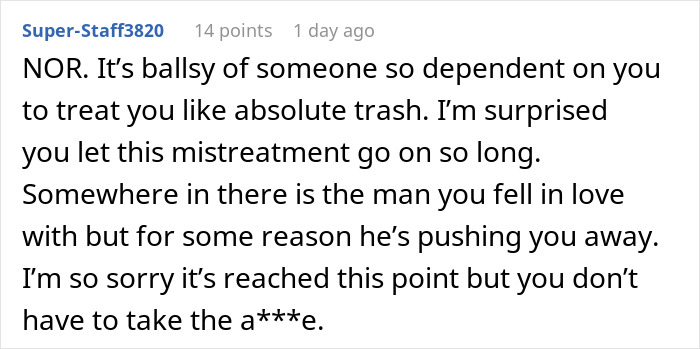
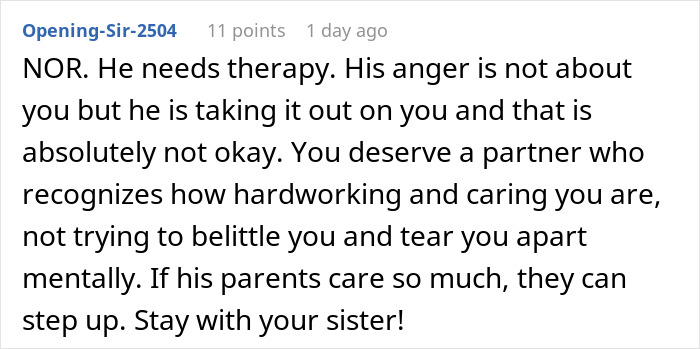
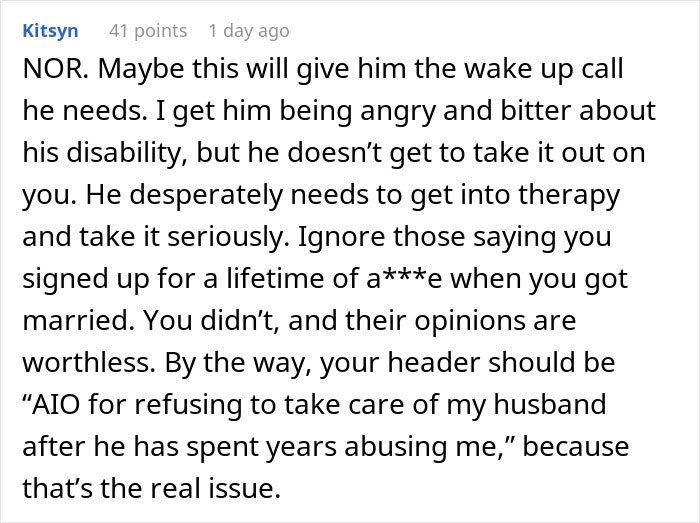
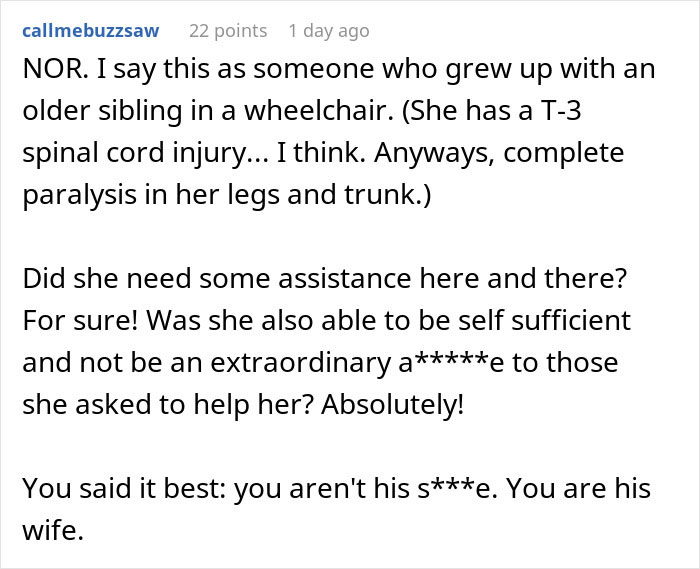
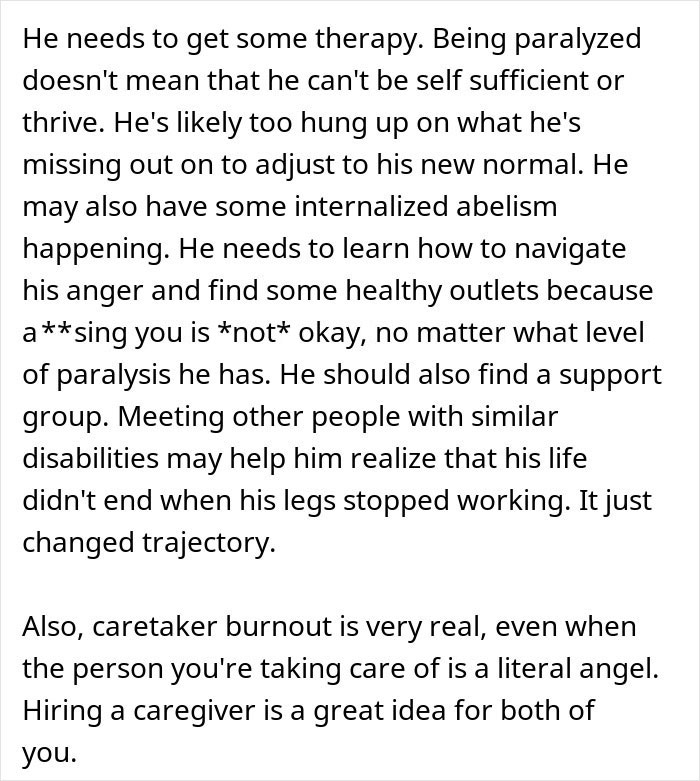
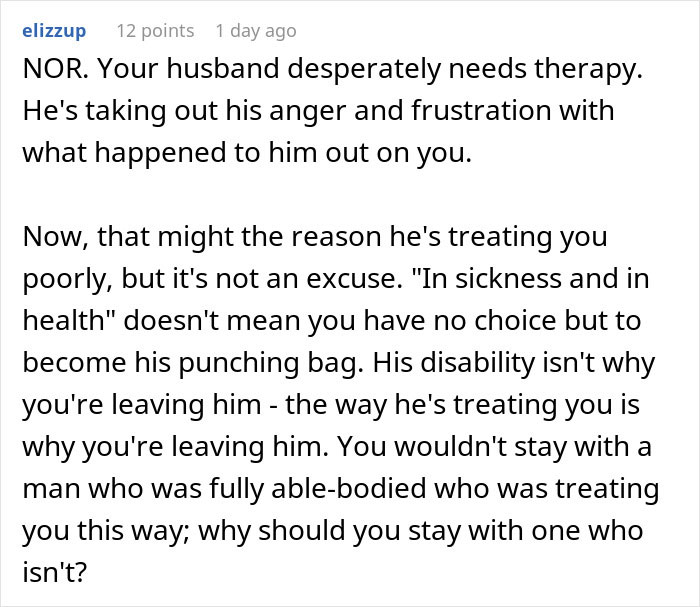
I have a great deal of compassion and patience for people who are suffering with an injury/disability/mental illness, but that patience comes to a quick end if that person refuses to participate in their own well-being, or uses it as an excuse to take their anger and frustration out on others. This man refused counseling and seems determined to be mired in anger. I wouldn't stay with someone like that either.
The chattering monkeys need reminding that nobody should ever stay with their a****r, even if they are married to them.
Some Pandas in the poll think she’s wrong and should stay to be abyoosed. Let’s take ‘em out back and shoot ‘em.
Load More Replies... I have a great deal of compassion and patience for people who are suffering with an injury/disability/mental illness, but that patience comes to a quick end if that person refuses to participate in their own well-being, or uses it as an excuse to take their anger and frustration out on others. This man refused counseling and seems determined to be mired in anger. I wouldn't stay with someone like that either.






















 No fees, cancel anytime








32
20