Get Premium
Dark mode theme is available exclusively for premium users. Learn more about the benefits of subscribing.
No fees, cancel anytime.

 Dark Mode Ad-Free Browsing Unlimited Content
 Ad-Free Browsing Unlimited Content Dark Mode
Join 1.2 million Panda readers who get the best art, memes, and fun stories every week!
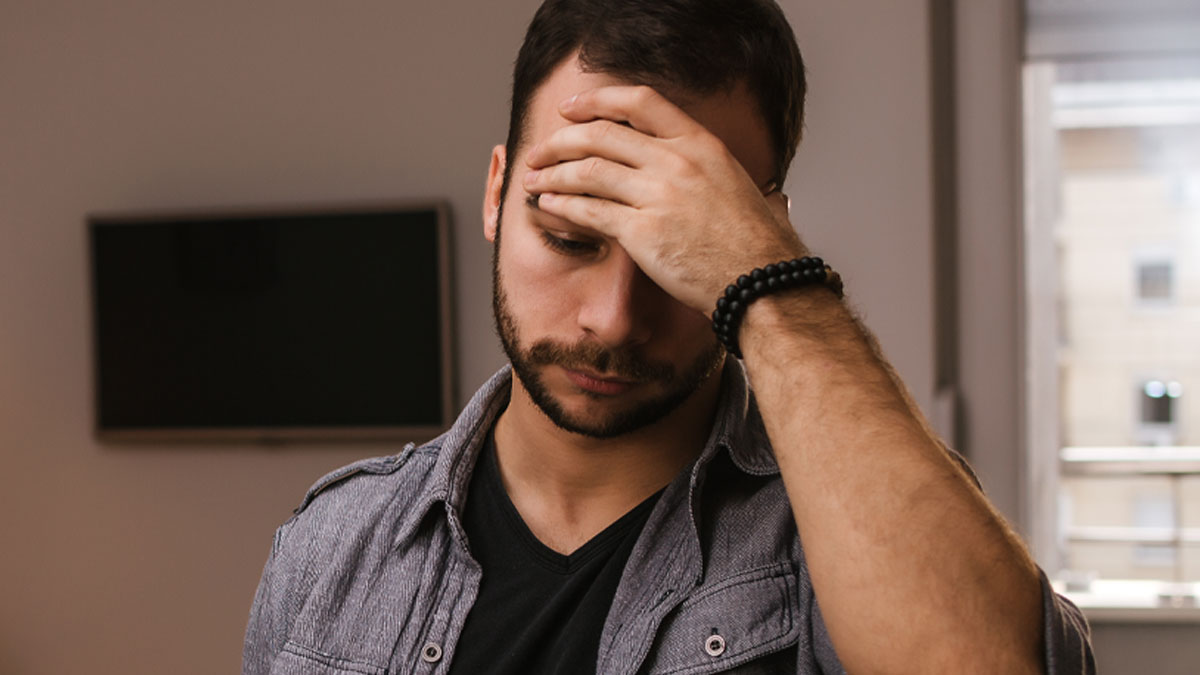
Thankfully, seeking mental health support is no longer as frowned upon as it once was. After all, we’ve all heard the saying, “Going to therapy is only for crazy people.” I know I certainly did, and the more traditional a society is, the more that mindset tends to stick around.
But if there’s one thing social media actually got right, it’s raising awareness about mental health struggles and normalizing neurodivergent diagnoses. And today’s story shows exactly that: a man who, after years of struggling, finally received an autism diagnosis, but it came at the cost of a lifelong dream he shared with his wife. So without further ado, here’s what happened.
Read more: Reddit
Image credits: branin / Magnific (not the actual photo)
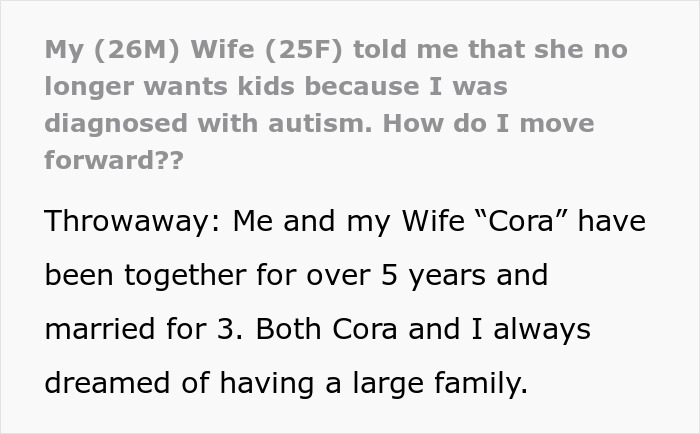
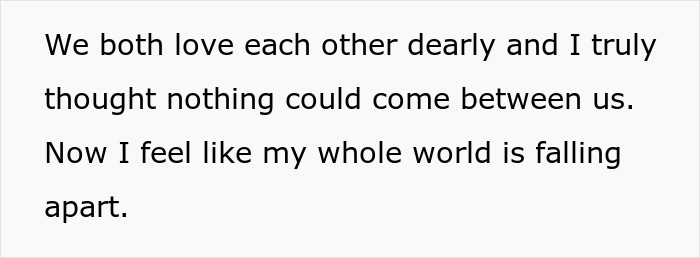
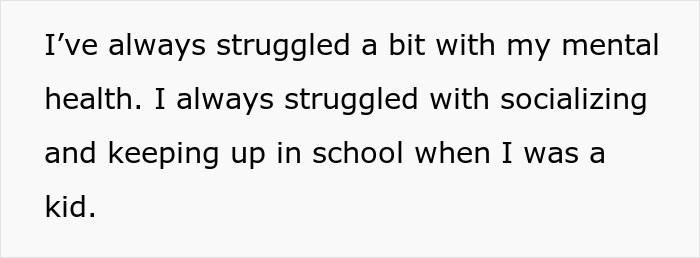
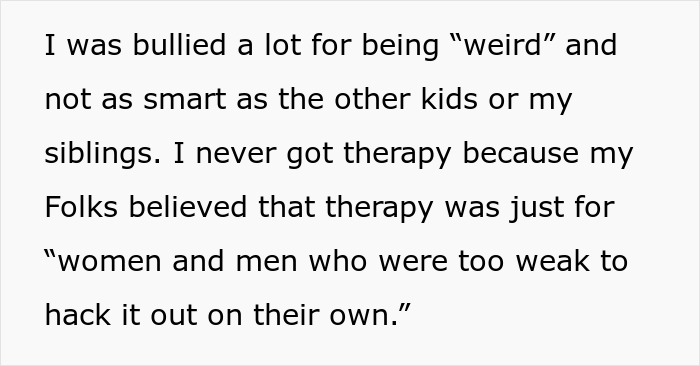

Image credits: prostooleh / Magnific (not the actual photo)
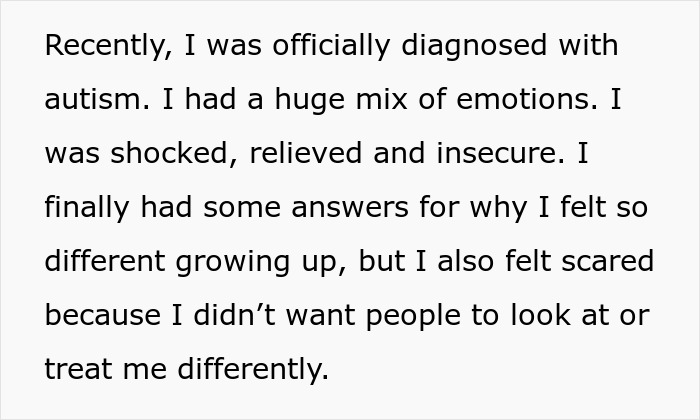
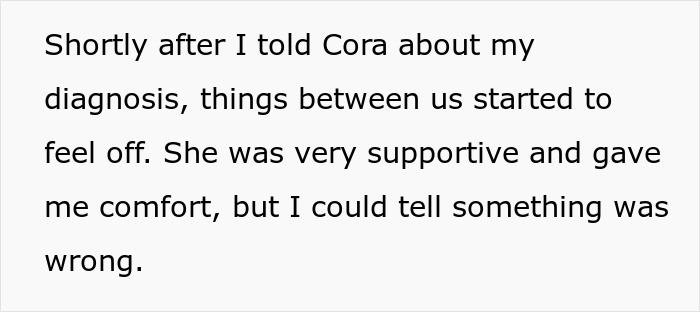
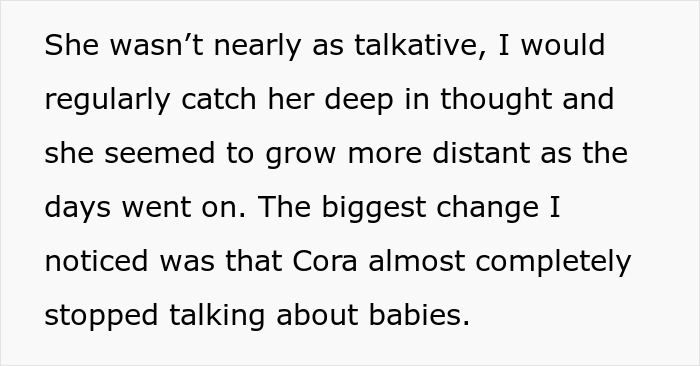
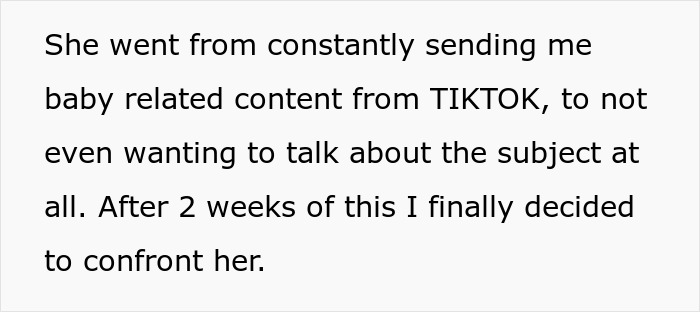
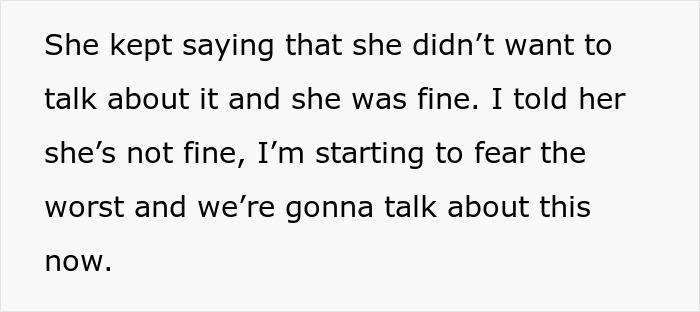
Image credits: drobotdean / Magnific (not the actual photo)
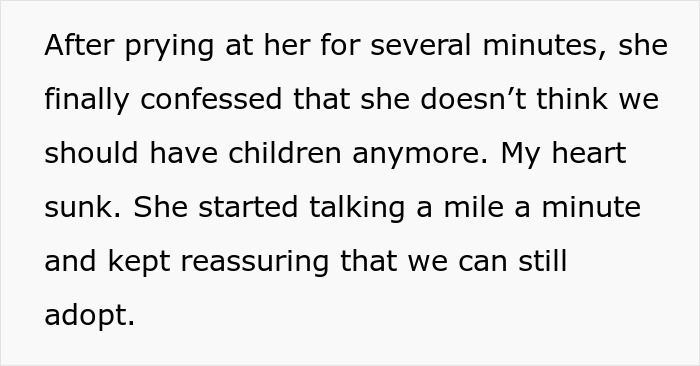
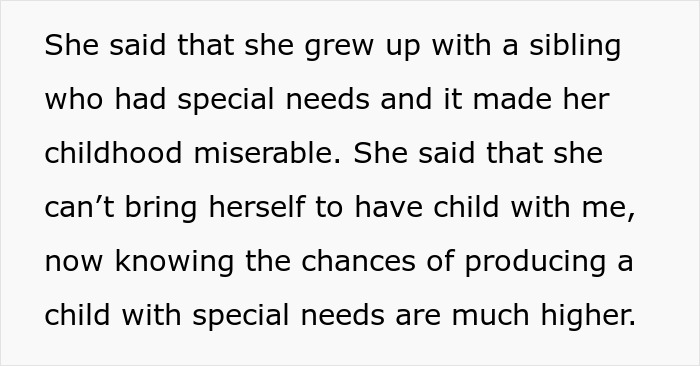
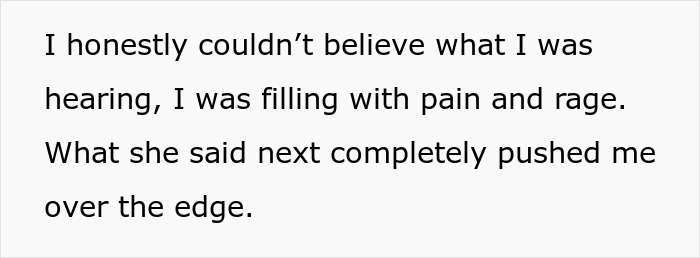
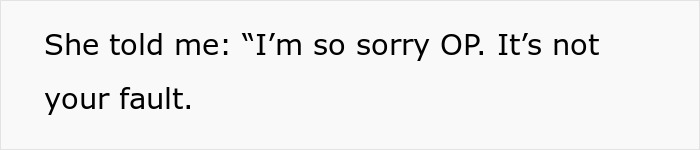
Image credits: Drazen Zigic / Magnific (not the actual photo)
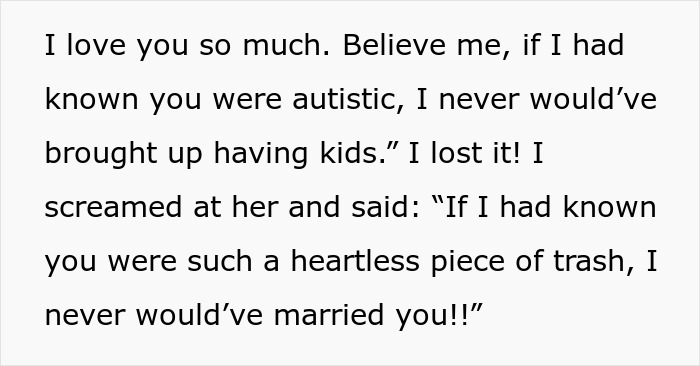
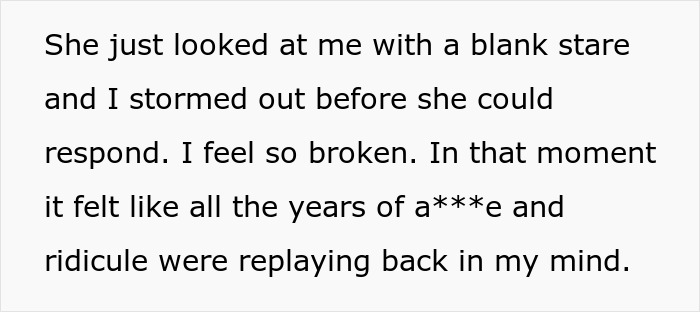
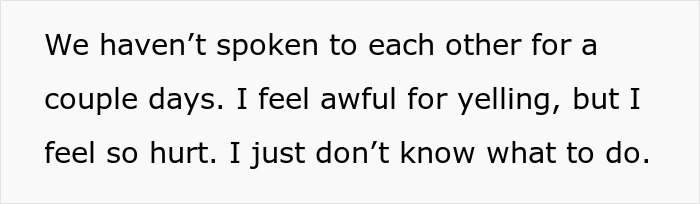
Image credits: ThrowRAbettybae555
The Original Poster (OP) is a 26-year-old man who has been married to his 25-year-old wife, “Cora,” for three years. He explains that they had a strong relationship, filled with love and shared dreams, including having a big family. Cora would often send him videos of babies and talk about having kids as soon as they could. But that dream proved to be short-lived.
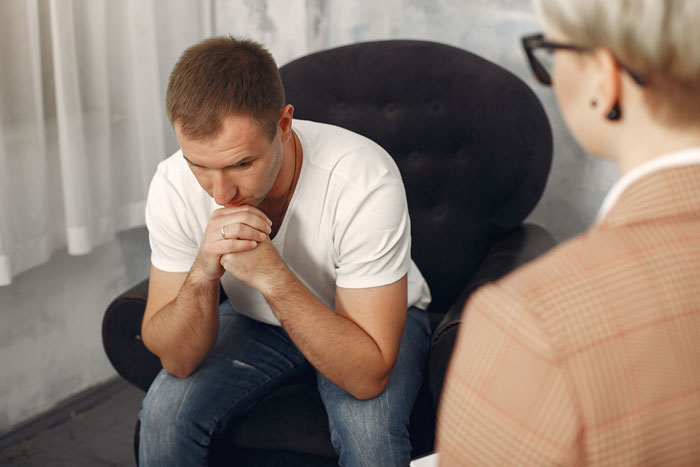
The OP says he’s always struggled with socializing. Ever since he was a kid, he dealt with mental health challenges and was bullied for being the “weird kid” who wasn’t as smart as his siblings or classmates. He says it took a heavy toll on him, but he never sought therapy because of the stigma surrounding men asking for mental health support. Until he finally did.
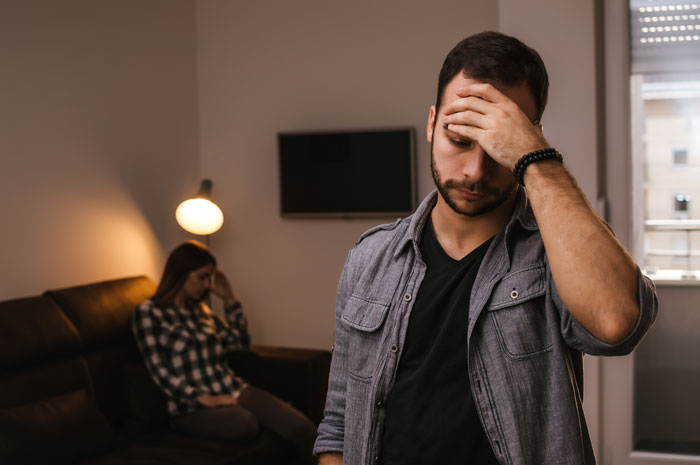
After deciding to see a therapist, he was diagnosed with autism. Feeling like he finally understood himself, he shared the news with Cora, who initially seemed supportive. Over time, though, she grew cold and distant. She then admitted the truth: she was afraid they could have neurodivergent children who might need extra support, and she was now questioning whether she wanted biological children at all.
That said, she told him she was open to adoption because she still wanted to raise children together. She just didn’t want to take a genetic risk that could lead to a child with special needs. The OP admits he took her comments personally and lashed out, calling her a “heartless piece of trash” before storming out. The last thing he shares is that they hadn’t spoken in a few days, and he never posted another update.
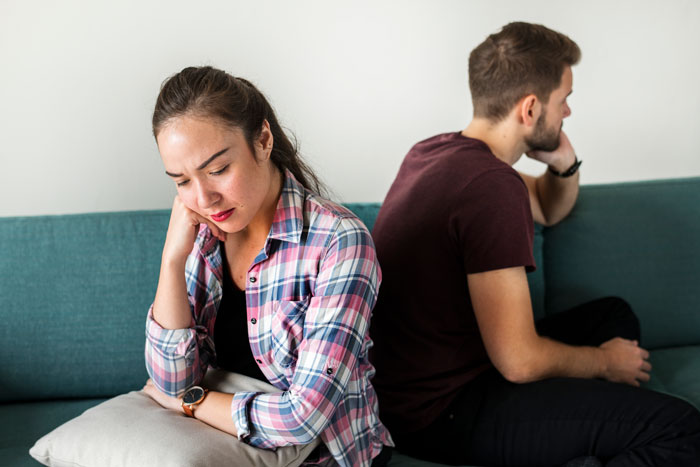
Image credits: rawpixel / Magnific (not the actual photo)
Now, neither of them is necessarily wrong, and here’s why. Cora’s fears are supported by research. Studies show that autism does have a strong genetic component, with heritability estimates ranging from 60% to 90%. It is one of the most heritable neurodevelopmental conditions, meaning that if one parent is autistic, the likelihood of having an autistic child is significantly higher.
The possibility of being a caregiver, on top of the financial costs, is a very real concern for future parents. At the same time, it’s understandable why the OP feels rejected by his own partner. Experts say that a late autism diagnosis often goes hand in hand with a complex grieving and reframing process, and adding the feeling of being rejected by someone you love can make that adjustment harder.
That said, the OP also messed up in the way he responded to Cora. Aside from offering an apology, experts suggest using a “soft startup” to prevent future conflicts. This communication technique focuses on expressing personal feelings rather than making accusations. Instead of immediately interpreting Cora’s concerns as an attack, the OP could explain how her comments made him feel and try to ask her to do the same.
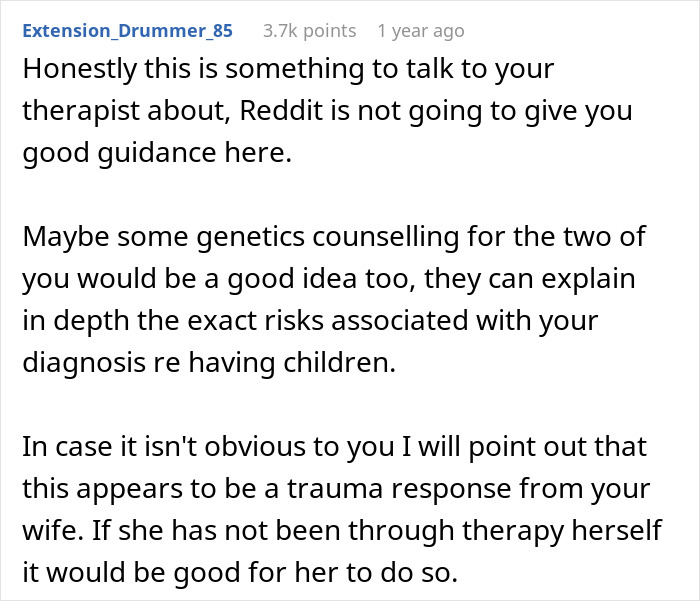
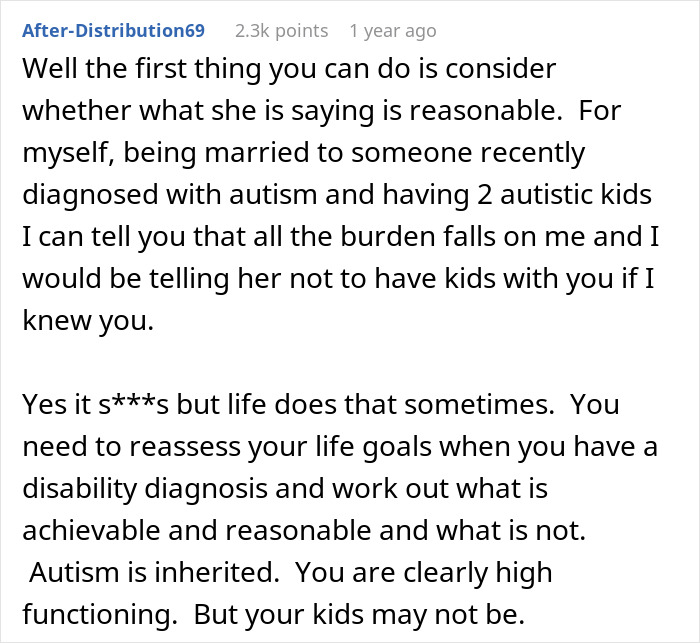
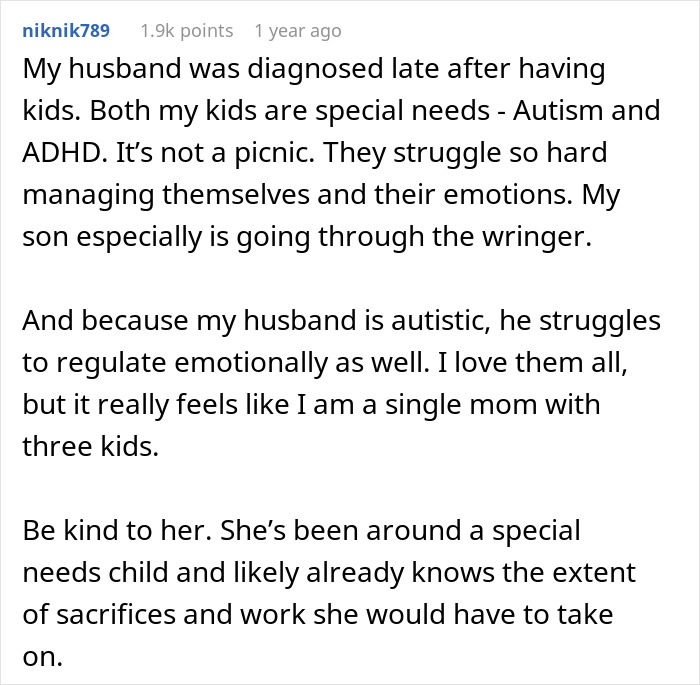
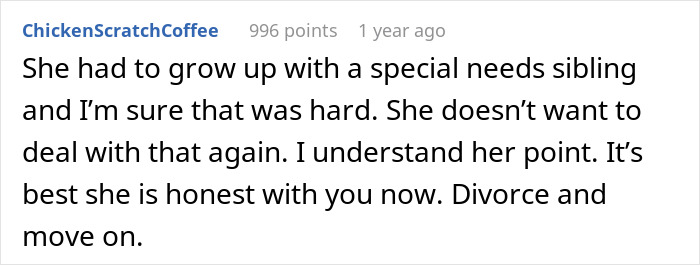
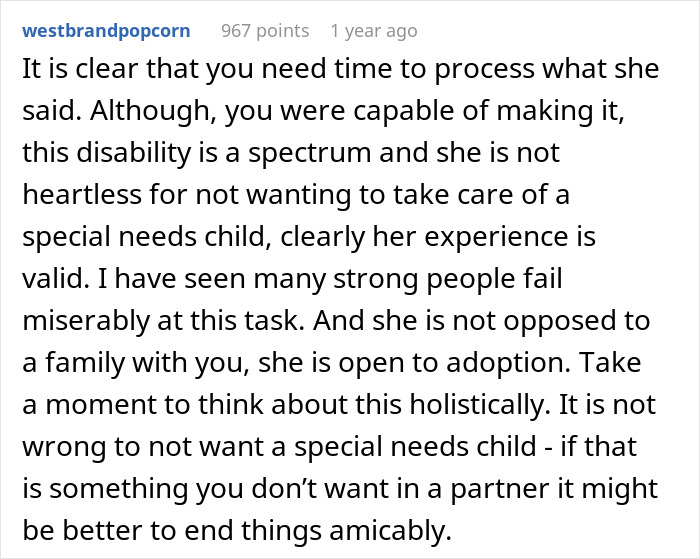
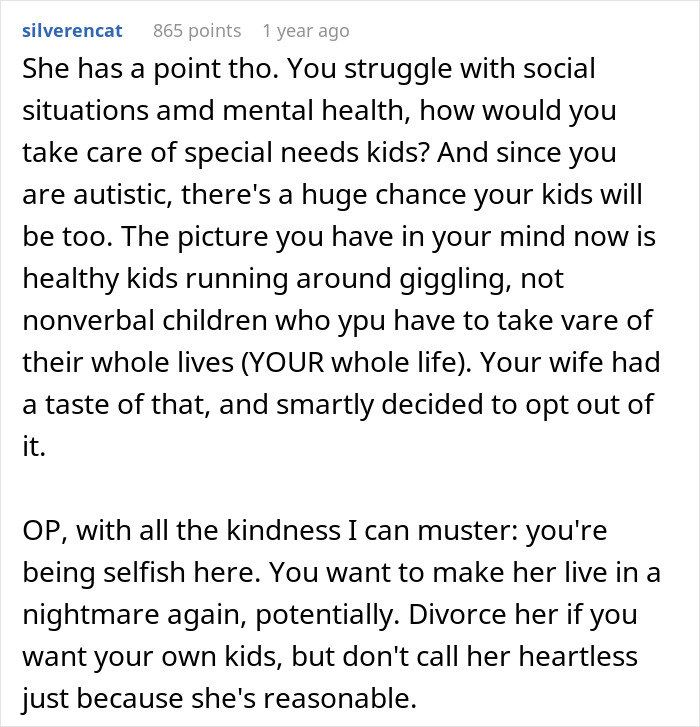
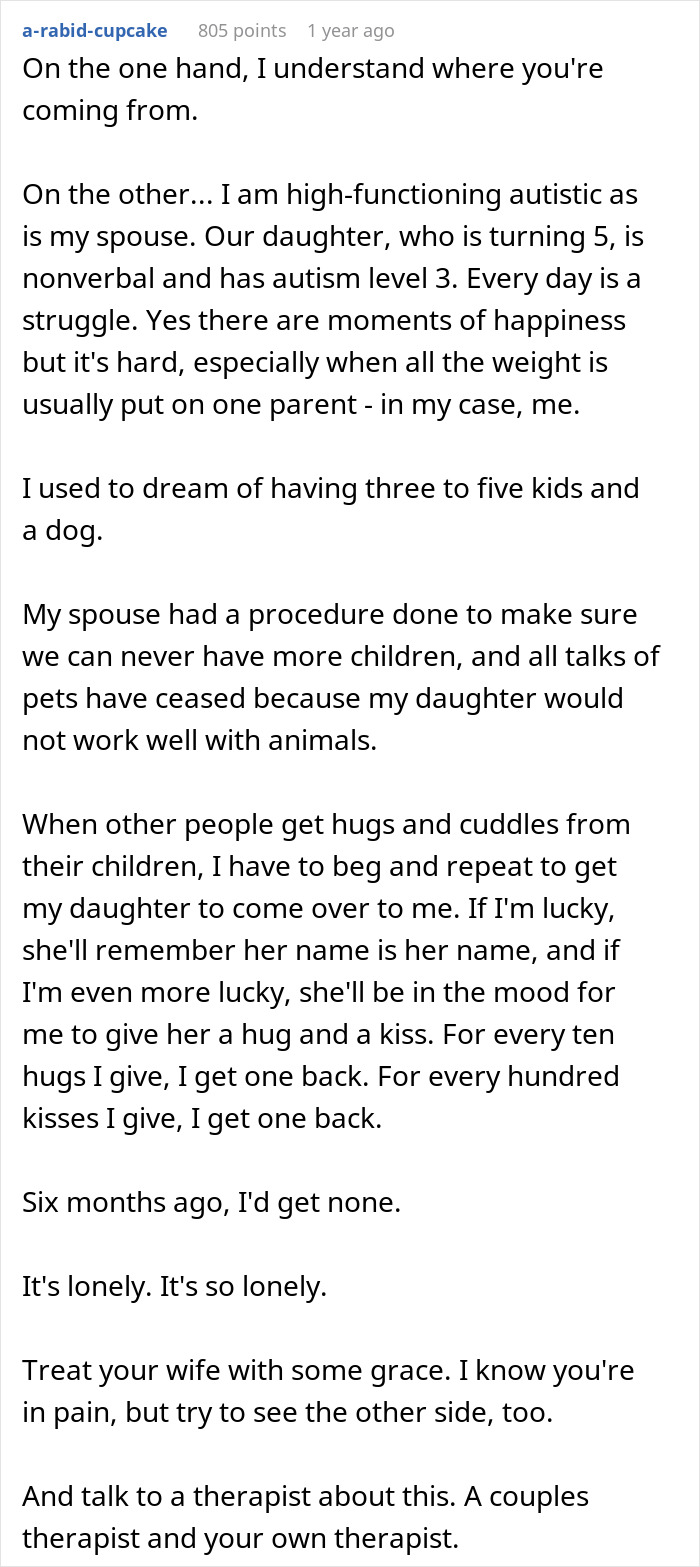
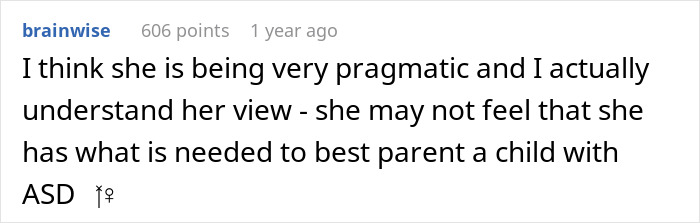
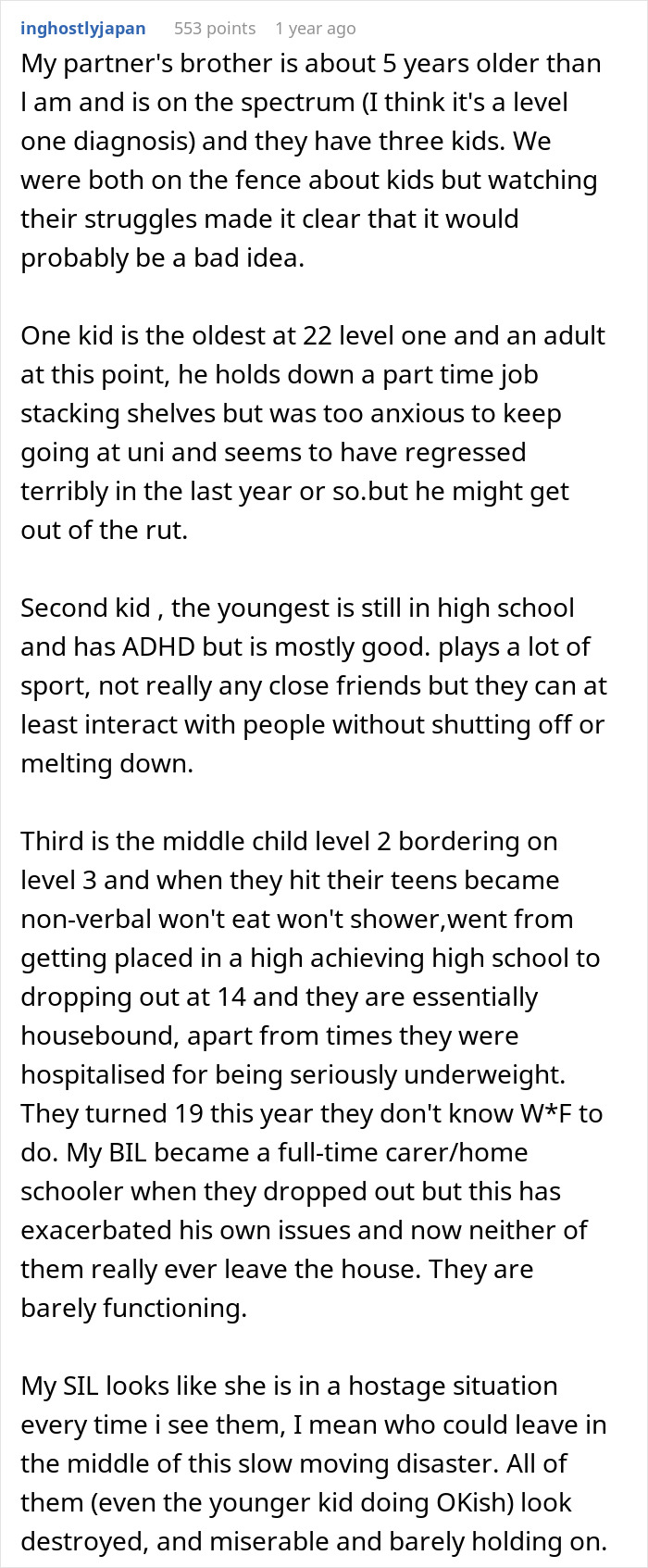
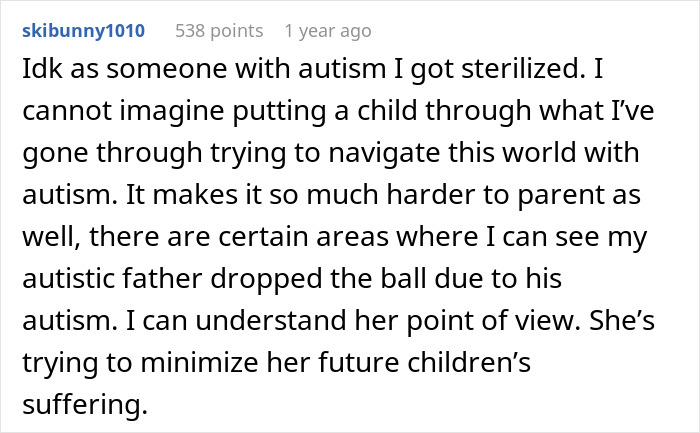
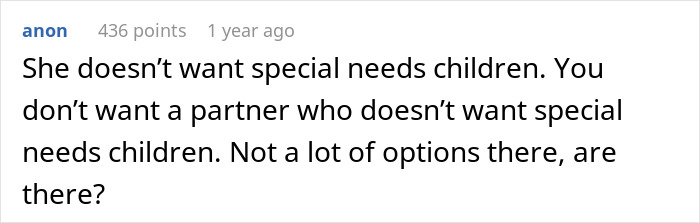
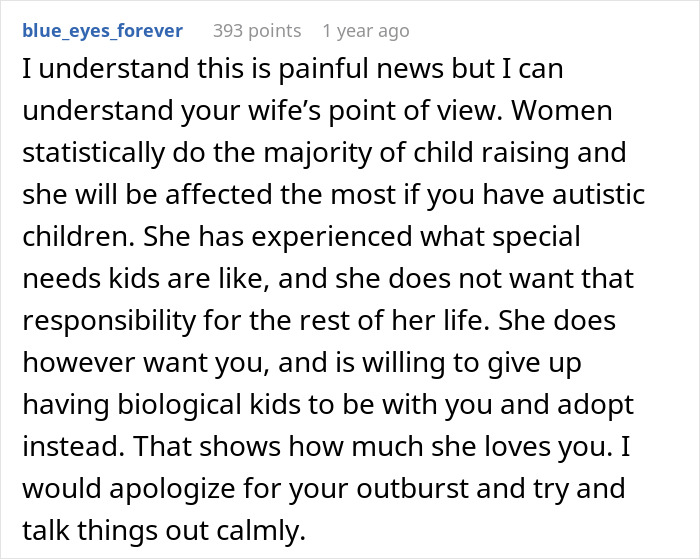
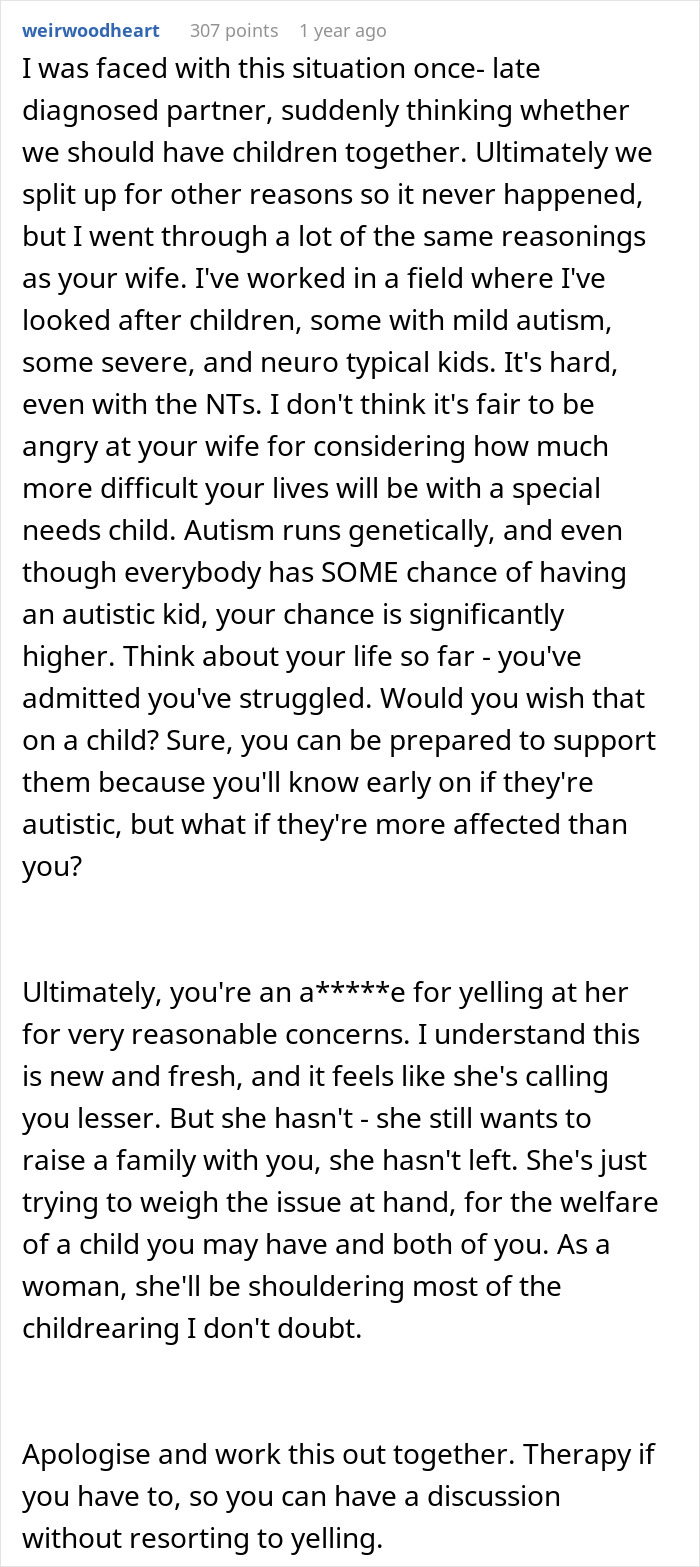
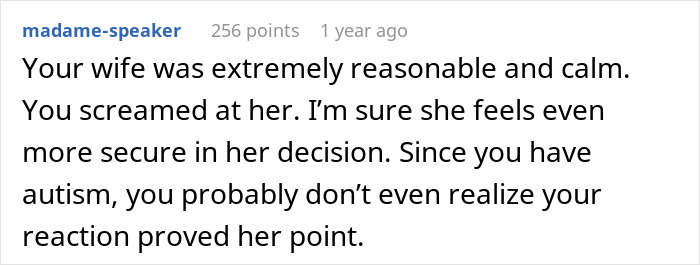
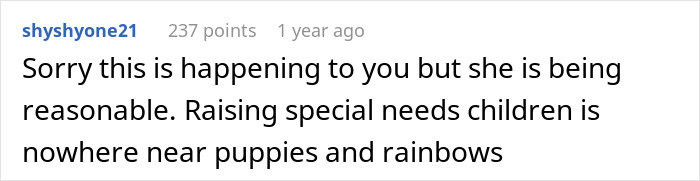
Netizens quickly chimed in with their own experiences, with many saying their children are also neurodivergent because one parent is autistic. Others urged the OP to show his wife some compassion, since she understands firsthand the challenges that can come with being a caregiver. With all that in mind, were Cora’s fears justified, or did the OP take her comments too personally? Let us know!



By entering your email and clicking Subscribe, you're agreeing to let us send you customized marketing messages about us and our advertising partners. You are also agreeing to our Privacy Policy.
Thank you! You've successfully subscribed to newsletters!

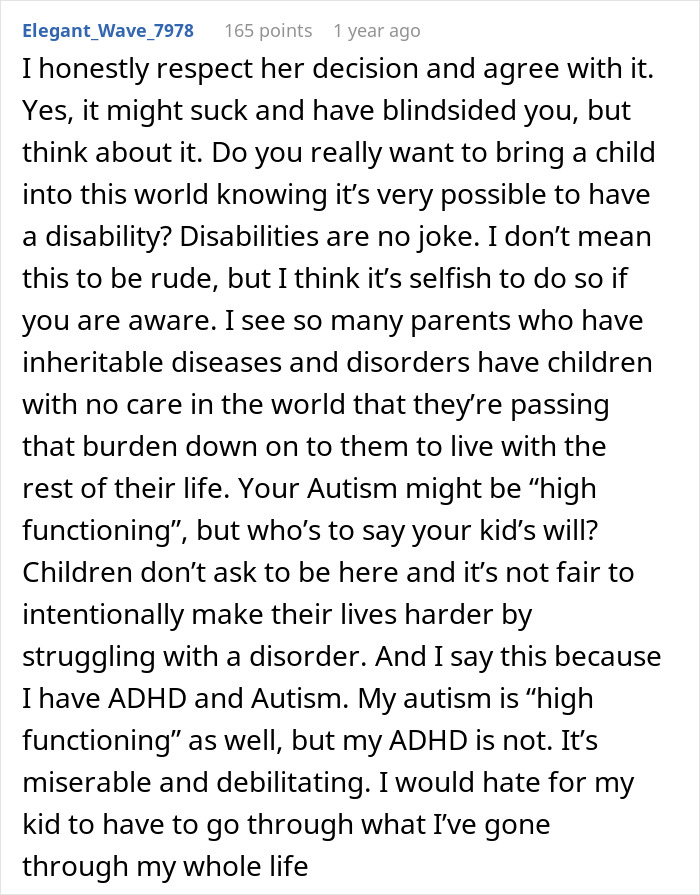
It's not unreasonable to consider what you could be passing on to your kids and decline to do so. Personally I wish more folks did that. It's also not unreasonable to have had the challenges of a special needs sibling and to decline to want a repeat of that experience. It's also not unreasonable to want kids even if you have some challenges. Tough situation.


I get why OP was very angry. Her telling him she doesn't want to run an increased risk of having a child with special needs might feel to him as her rejecting him. However, he needs to get beyond that point and look at the data. Only a small percentage of children with autism are high-functioning: the rest struggle for life. Parents of children with autism are often chronically tired and burn-out is an ever-present risk. There is constant mental stress, not just in the moment itself, but also about the future and I'm not mentioning financial worries. Every parent wants the best for their child but special needs kids often require expensive extra's to make the most of what they are able to do. Last but not least: autism is considered highly hereditary. If OP's wife feels she won't be able to care for a special needs kids the way they should be cared for, she should not have kids, even if it cost her her marriage. OP needs to move beyond his own emotions and look at the reality of things

Actually, many high-functioning autistic people struggle for life. It is a disability. With some accommodations, the right situation, good friends and family, and a lot of luck, a high-functioning autistic person might actually then find themselves not struggling so much. But that is not most autistic people. I don't disagree with your comment in general. I just wanted to correct that. As a high-functioning autistic person (though a lot of people don't like using that term), it bothers me when people p*o p*o the struggles of autistic people with low support needs. Someone with higher support needs could lead a happier and more fulfilled life than someone with low support needs, just depending on their circumstance. The disability shouldn't be measured only by how much you bother other people, but should also take into account the quality of life of the person.
Load More Replies... It's not unreasonable to consider what you could be passing on to your kids and decline to do so. Personally I wish more folks did that. It's also not unreasonable to have had the challenges of a special needs sibling and to decline to want a repeat of that experience. It's also not unreasonable to want kids even if you have some challenges. Tough situation.
I get why OP was very angry. Her telling him she doesn't want to run an increased risk of having a child with special needs might feel to him as her rejecting him. However, he needs to get beyond that point and look at the data. Only a small percentage of children with autism are high-functioning: the rest struggle for life. Parents of children with autism are often chronically tired and burn-out is an ever-present risk. There is constant mental stress, not just in the moment itself, but also about the future and I'm not mentioning financial worries. Every parent wants the best for their child but special needs kids often require expensive extra's to make the most of what they are able to do. Last but not least: autism is considered highly hereditary. If OP's wife feels she won't be able to care for a special needs kids the way they should be cared for, she should not have kids, even if it cost her her marriage. OP needs to move beyond his own emotions and look at the reality of things
Actually, many high-functioning autistic people struggle for life. It is a disability. With some accommodations, the right situation, good friends and family, and a lot of luck, a high-functioning autistic person might actually then find themselves not struggling so much. But that is not most autistic people. I don't disagree with your comment in general. I just wanted to correct that. As a high-functioning autistic person (though a lot of people don't like using that term), it bothers me when people p*o p*o the struggles of autistic people with low support needs. Someone with higher support needs could lead a happier and more fulfilled life than someone with low support needs, just depending on their circumstance. The disability shouldn't be measured only by how much you bother other people, but should also take into account the quality of life of the person.
Load More Replies...






 No fees, cancel anytime











32
18