Get Premium
Dark mode theme is available exclusively for premium users. Learn more about the benefits of subscribing.
No fees, cancel anytime.

 Dark Mode Ad-Free Browsing Unlimited Content
 Ad-Free Browsing Unlimited Content Dark Mode
Join 1.2 million Panda readers who get the best art, memes, and fun stories every week!

Parents might spend decades sacrificing for their kids, helping them reach a point where they can take on the world on their own. So it feels natural that the children will return the favor and step in when their parents start having problems because of old age.
However, life usually sounds simple only in theory, and real situations are much more nuanced and complicated.
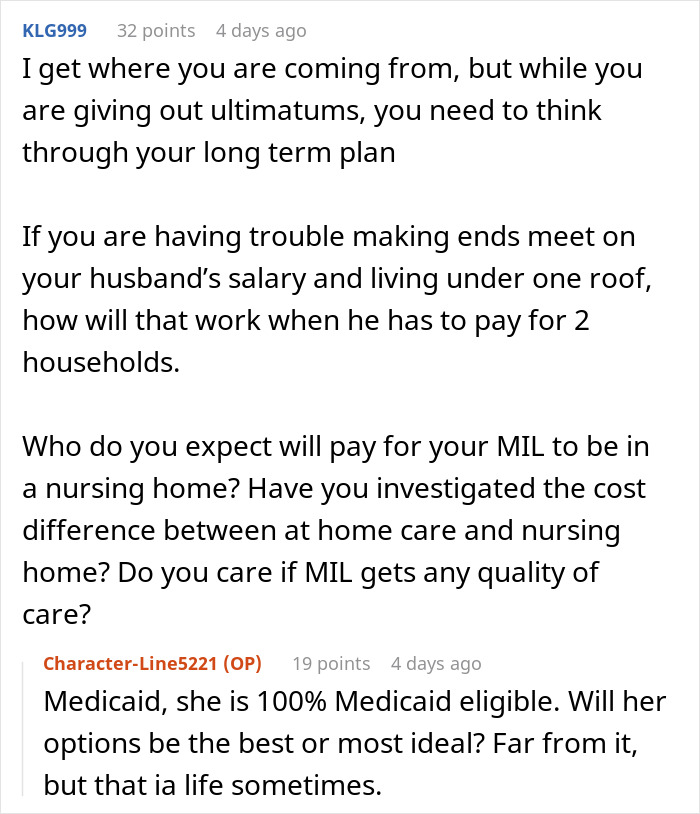
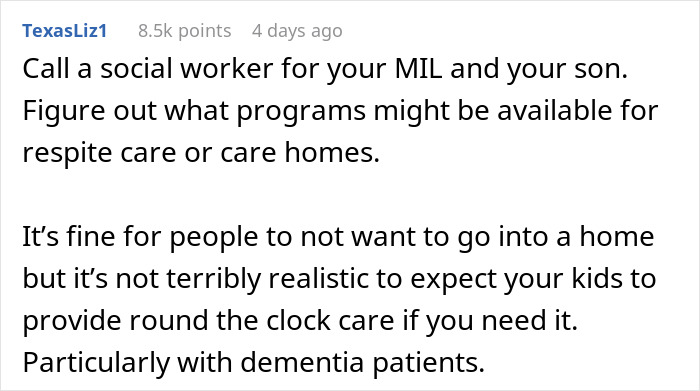
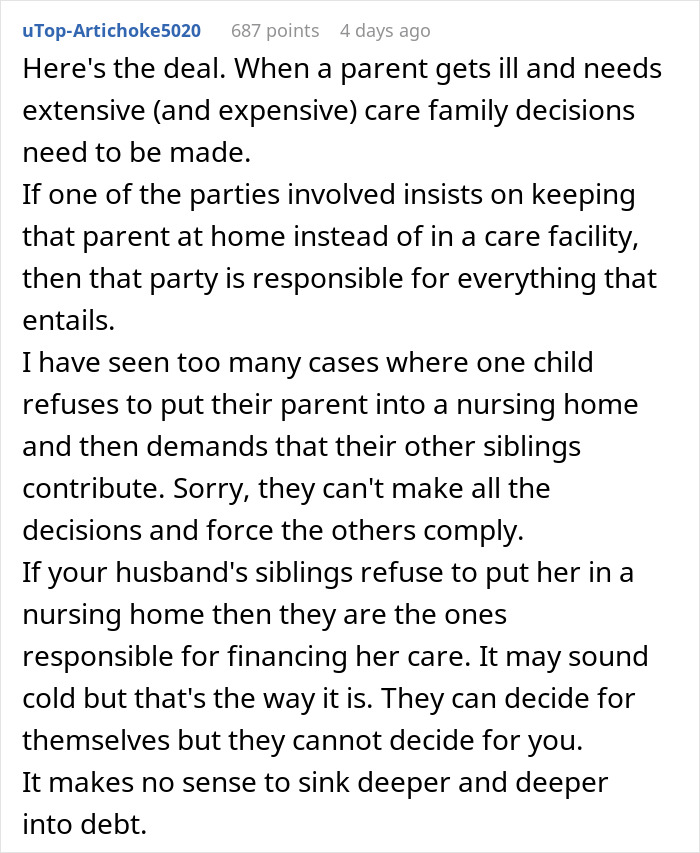
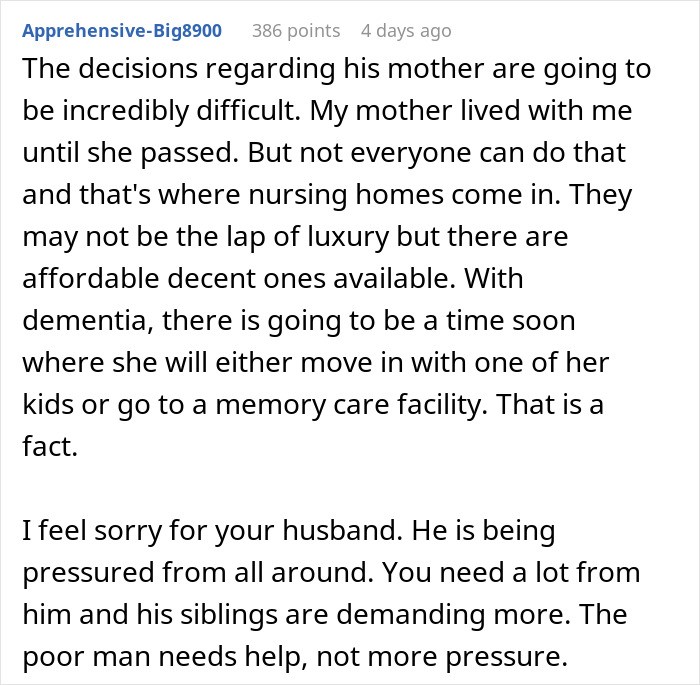
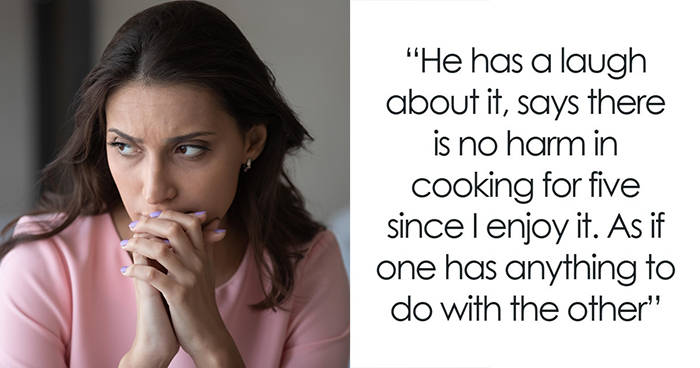
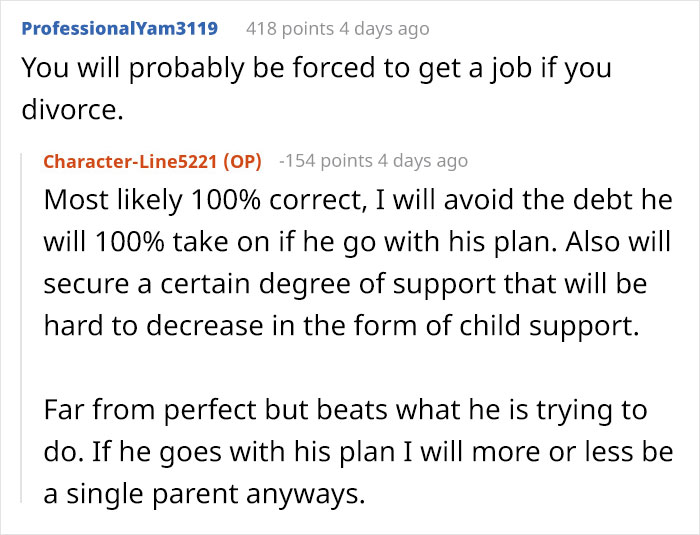
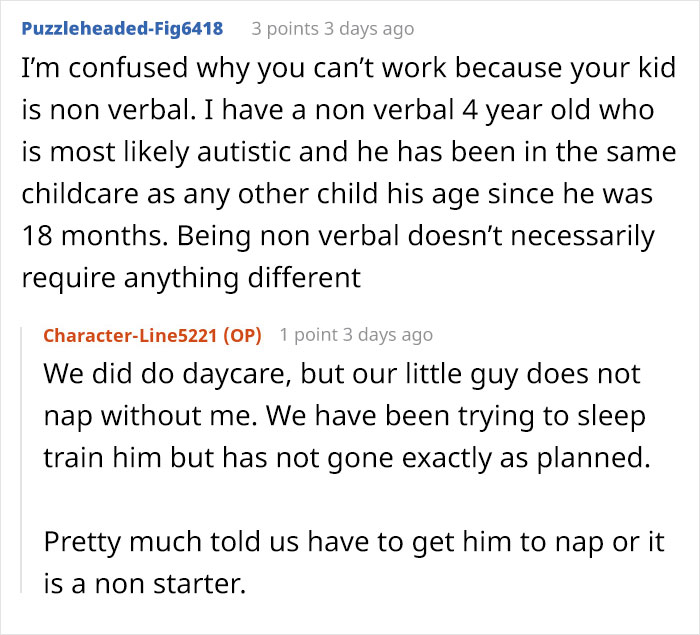
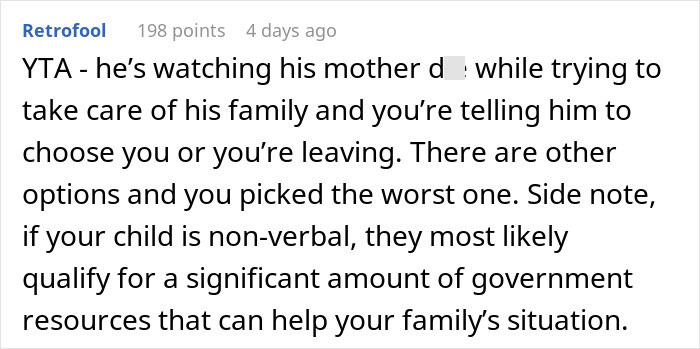
One woman recently took to the internet to ask if she was wrong for drawing a hard line after her husband’s family insisted on keeping his elderly mother out of a nursing home and pressuring him to increase his contribution to her care, even though the man was already stretched thin.
Image credits: Queenmoonlite35/Envato (not the actual photo)
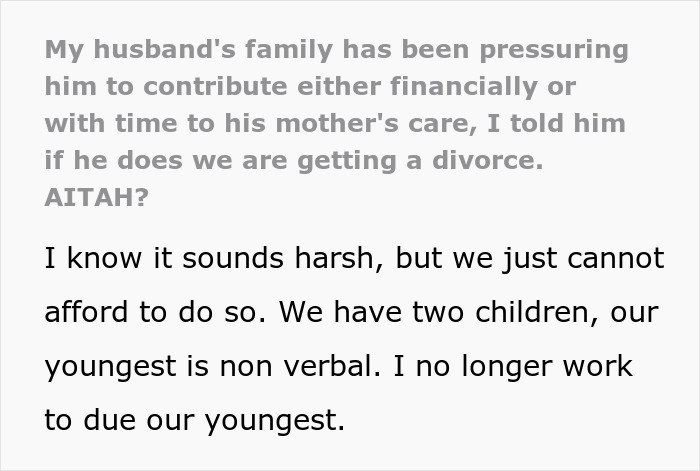
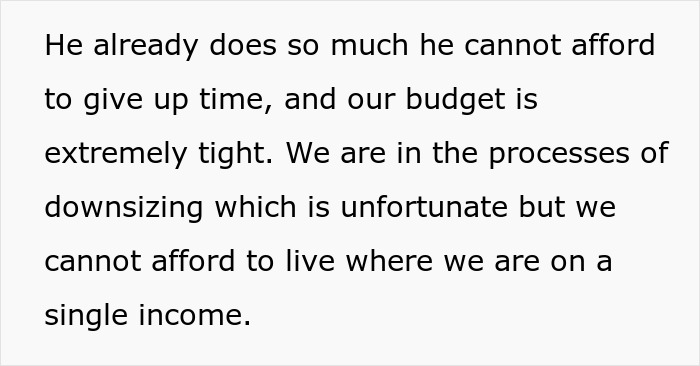

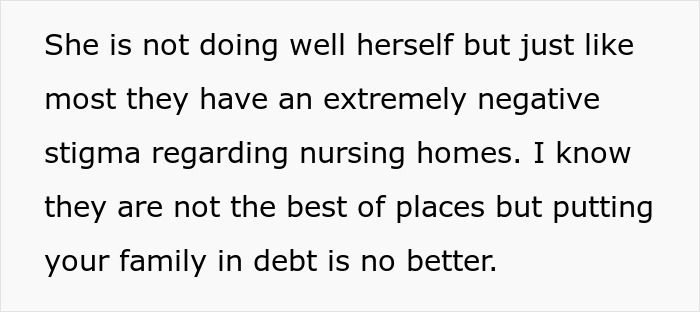
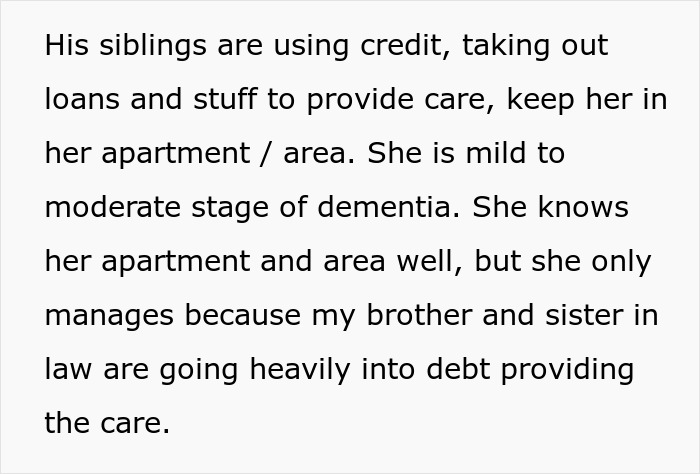
Image credits: MaplesImages/Envato (not the actual photo)
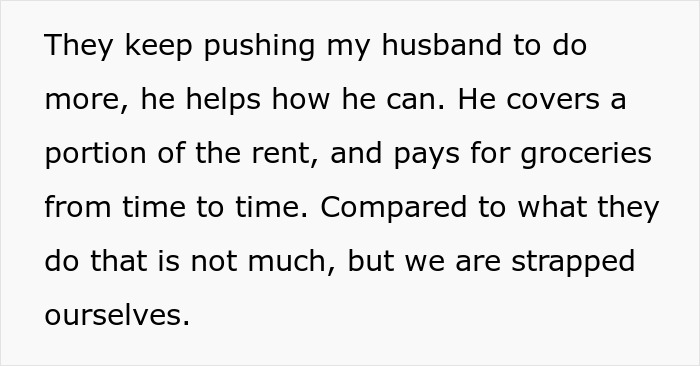
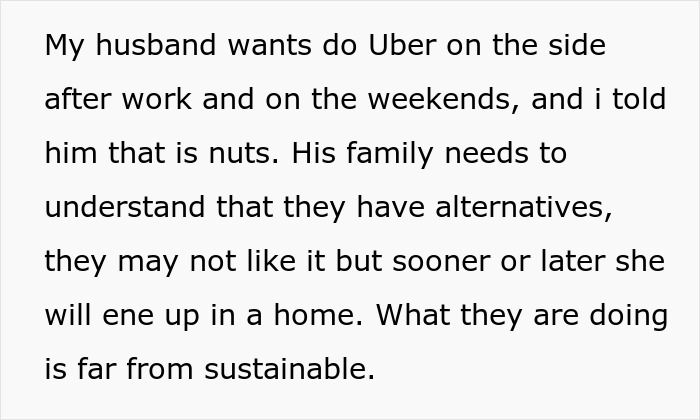

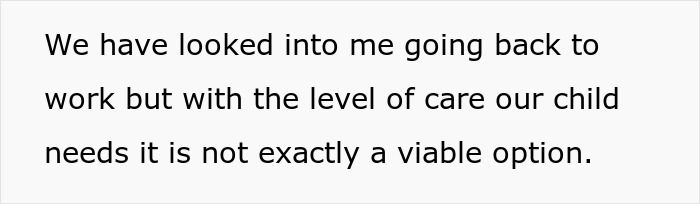
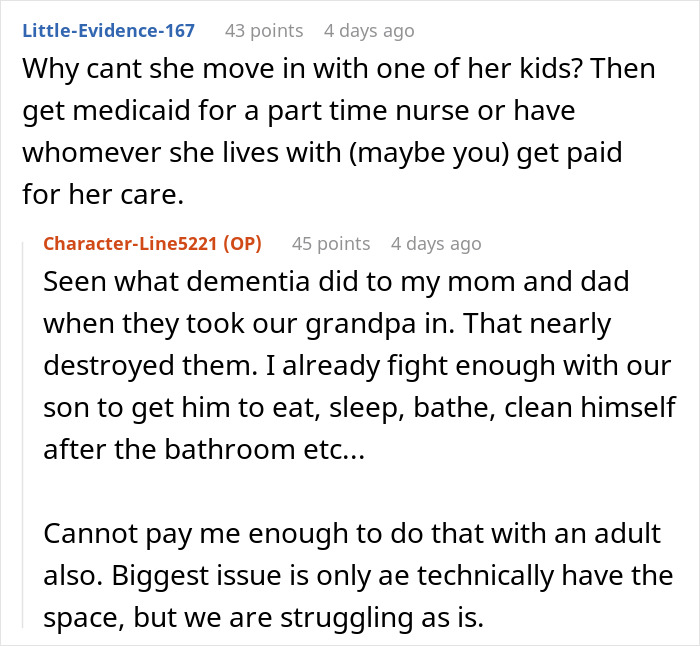
Image credits: Character-Line5221
Of course, it’s difficult if the husband’s mother has repeatedly expressed her disapproval of nursing homes. But it sounds like she is now holding the entire family hostage.
Since elderly people’s conditions change, families can’t simply follow the same blueprint for caring for them that they developed a few years ago. Their care needs to be constantly reevaluated.
Geriatrician Dr. Hillary Lum, an associate professor of medicine at the University of Colorado School of Medicine’s Division of Geriatric Medicine, recommends that families have an ongoing conversation with their parents, regularly checking in on their day-to-day.
Image credits: Ahmed/Unsplash (not the actual photo)
Lum explained that, broadly speaking, the time to step in and change something is when you notice challenges with what medical professionals call the Instrumental Activities of Daily Living. The National Institutes of Health defines this term as “activities related to the ability to live independently in the community.”
“For example,” Lum said, “Are they having trouble managing finances, navigating transportation, keeping up with housekeeping, running errands, or making meals?”
Other signs that something has changed are, for instance, when your ordinarily elegant mom stops bathing, or your gregarious father declines social invitations. These are warning signals that something may be preventing them from doing what typically gives them joy. Perhaps your mother is worried about falling in the shower or is having trouble turning on the water. And maybe your father is depressed and doesn’t want to be around people because he’s having trouble hearing.
Lum said that being patient with your parents and yourself is key to managing their care.
“Recognize that this is going to feel overwhelming, so start slow and plan to keep discussing it over time,” she explained. She also suggested bringing in trusted additional people, such as other family members and/or a social worker from a health care clinic or a case manager from a community organization.
A social worker or case manager can go over a checklist of assessments to help you identify where there is a real need for help and which types of support may be available. In this case, however, it seems that the lady’s children are placing too much trust in their own assessment of her condition.
Image credits: Age Cymru/Unsplash (not the actual photo)
“These conversations may be emotional. Try not to accuse or blame,” Lum said. “Instead, ask questions like: How’s driving going for you? Tell me more about why you’re not going to book club like you used to.” Making your parents feel like they’re part of the decision-making is essential to reaching an agreement.
Currently, 10% of all U.S. adults view themselves as a caregiver for a parent age 65 or older. (Another 3% are caregivers for a spouse or partner age 65 or older, and a very small share (less than 1%) say they care for an aging parent and an aging spouse or partner.)
And while adults who are caring for an aging parent report that this has had a more positive than negative impact on their relationship with their parent, they say it’s had a more negative than positive impact on:

























By entering your email and clicking Subscribe, you're agreeing to let us send you customized marketing messages about us and our advertising partners. You are also agreeing to our Privacy Policy.
Thank you! You've successfully subscribed to newsletters!


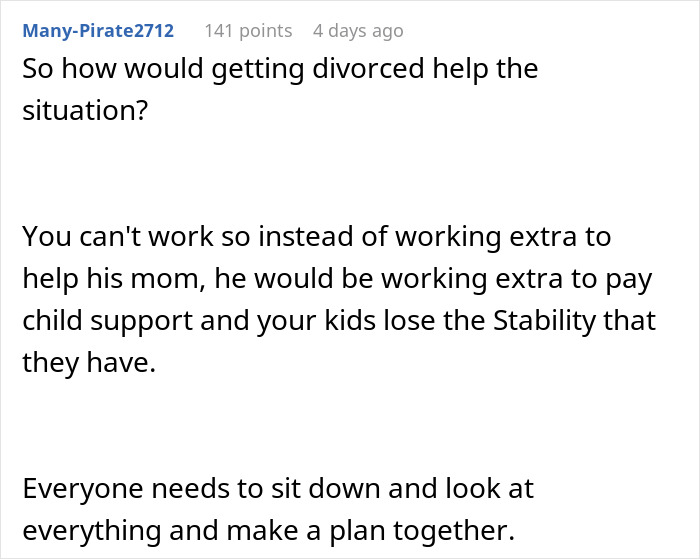
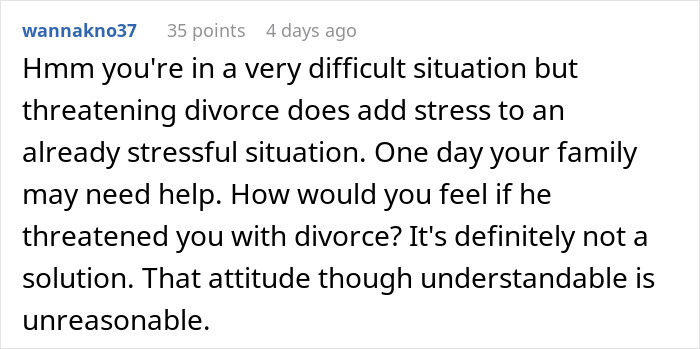
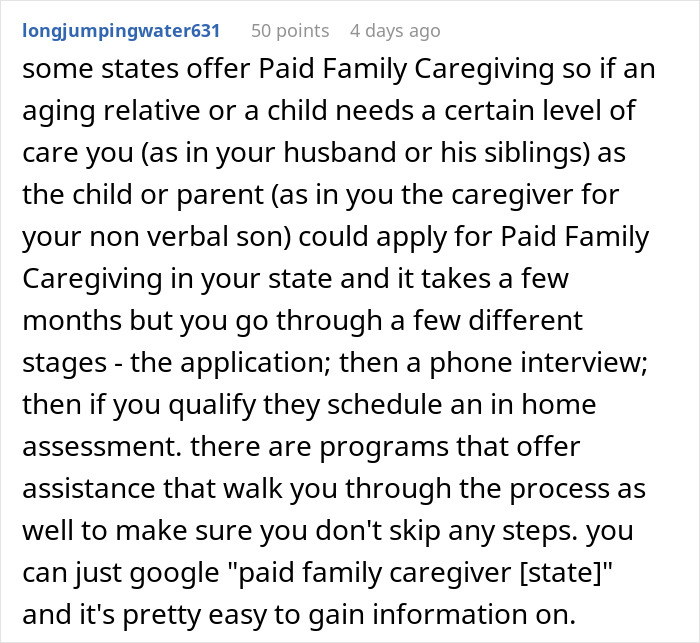
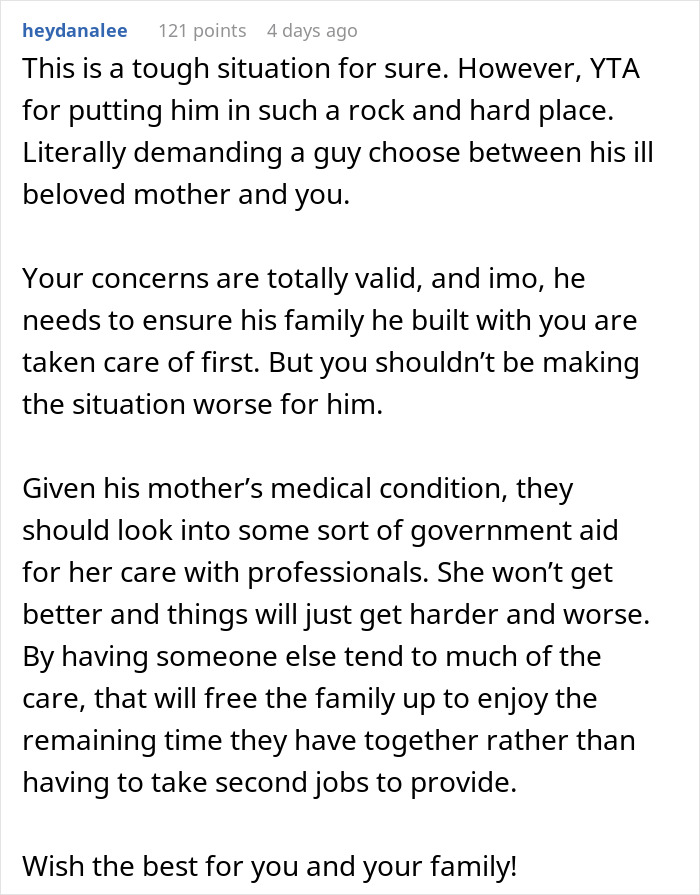
He should get a divorce. It will be harder in the short term, but he will be happier long term. This is not a supportive partner. She even said she's 100% expecting to get a job after the divorce. Cool, get a job now.

He should put his disabled child and family first instead of draining the family coffers and putting them in debt in a futile attempt to keep his mother out of a nursing home. Op is the only one facing reality.
Load More Replies...

He should get a divorce. It will be harder in the short term, but he will be happier long term. This is not a supportive partner. She even said she's 100% expecting to get a job after the divorce. Cool, get a job now.
He should put his disabled child and family first instead of draining the family coffers and putting them in debt in a futile attempt to keep his mother out of a nursing home. Op is the only one facing reality.
Load More Replies... 




































 No fees, cancel anytime












33
23