Get Premium
Dark mode theme is available exclusively for premium users. Learn more about the benefits of subscribing.
No fees, cancel anytime.

 Dark Mode Ad-Free Browsing Unlimited Content
 Ad-Free Browsing Unlimited Content Dark Mode
Join 1.2 million Panda readers who get the best art, memes, and fun stories every week!

If you were a late bloomer, a group of scientists in China has some good news for you.
A new study suggests that the age at which you lose your virginity may affect your aging process.
According to data from the Centers for Disease Control and Prevention (CDC), the average American loses their virginity at age 17, with only 12-14% of people remaining virgins between the ages of 20 and 24.

Image credits: Ketut Subiyanto/pexels (not an actual photo)
The figure drops among Americans in their late 20s, with only about 5% of individuals in this age group reporting that they have never slept with anyone.
The study, conducted by researchers from Shandong University, used a large genetic database of people of European ancestry and examined the age of their “first time.”
The team then analyzed whether earlier or later s*xual activity was associated with differences in health and quality of life in older age.
Image credits: cottonbro studio/pexels (not an actual photo)
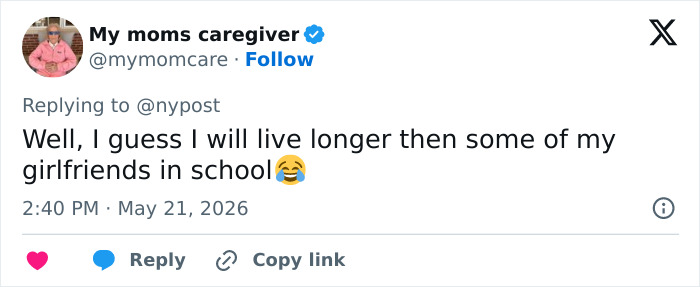
Image credits: mymomcare
Researchers found that earlier s*xual activity was linked to an overall less favorable aging process.
They used Mendelian randomization, a method that considers naturally occurring genetic differences. This allowed them to test likely cause-and-effect relationships between the age at which people lost their virginity and a range of longevity and health-related measures.

Image credits: cottonbro studio/pexels (not an actual photo)
Kaixian Wang, the study’s lead author, noted, “Our findings suggest that the timing of first s*xual int*rcourse may be connected to aging through multiple psychological, behavioral, and disease-related pathways.”
He said that the timing of first s*xual activity was associated with higher levels of frailty, miserableness, chronic obstructive pulmonary disease (COPD), and attention-deficit/hyperactivity disorder (ADHD).
Image credits: Ketut Subiyanto/pexels (not an actual photo)
Image credits: js81tn
The researcher clarified, “Nonetheless, our findings do not mean a single behavior determines a person’s future health.
“Instead, they highlight how early-life experiences may cluster with mental health challenges, chronic disease risks, and functional decline over time.”

Image credits: Ron Lach/pexels (not an actual photo)
Long Sun, who also participated in the study, highlighted the importance of addressing health issues promptly to help reduce the risk of a negative aging process.
“Prevention and intervention across the life course may help reduce later health disadvantages and promote healthier aging,” the author noted.
He added, “Our findings further affirm the value of early s*xual health education and broader support for adolescents who may be at higher risk.”
Researchers acknowledged that the study was based primarily on genetic data from people of European ancestry and said further research involving other populations is needed before more definitive conclusions can be drawn.
In the study, published in March in the journal Healthcare and Rehabilitation, the team suggested that the relationship between losing your virginity early and the impact this has on the aging process may be influenced by several factors.
These include “elevated risks of unintended pregnancies, s*xually transmitted diseases, and physical health conditions during adolescence and adulthood which are closely linked to earlier s*xual int*rcourse, and can significantly compromise life expectancy and elevate aging-related vulnerabilities.”
Image credits: SHVETS production/pexels (not an actual photo)
They also identified substance ab*se as being associated with earlier s*xual initiation.
The study comes amid reports that Gen Z, those born between 1997 and 2012, are delaying s*xual activity or choosing to avoid it altogether.
In 2021, only 30% of Gen Z teenagers told the CDC they had lost their virginity, down from more than half three decades earlier.
Experts have attributed this shift to a combination of factors, including increased screen time, changing dating norms, rising mental health struggles, and the impact of the COVID-19 pandemic.
Image credits: Matilda Wormwood/pexels (not an actual photo)
New York City therapist Keanu Jackson suggested that, for many Gen-Zers, the pressure to sleep with someone becomes so overwhelming that it ultimately diminishes desire.
“I actually encounter a bunch of folks who seek support in learning how to advocate for themselves and to speak truth into their s*xual and relational needs,” Jackson told HuffPost.
“There is a wide misconception that if you wish to have a long-term healthy relationship, that you need to be ready to meet 100% of your partner’s needs 100% of the time.”
Moreover, the image-obsessed culture we live in can make some people feel deeply insecure about their bodies.
“We live in a culture of shame, unfortunately, that assigns value judgment based on what your body looks like, and perceived s*xual prowess,” Jackson said, adding that not fitting the mold can lead to discomfort or shame.
Jessica Borelli, a professor of psychological science at UC Irvine, said the connections people form through screens may also play a role in this trend toward s*xual abstinence.

Image credits: Yan Krukau/pexels (not an actual photo)
“A lot of young people when you talk to them will say their best friends are people they’ve never met,” Borelli told the LA Times.
“Sometimes they live across the country or in other countries, and yet they have these very intimate relationships with them. … The in-person interface is not nearly as essential for the development of intimacy as it might be for older people.”
Jean Twenge, a San Diego State University psychology professor, believes the decline in s*xual activity among younger people is linked to what she calls a broader “slow-life factor.”
“Young people just aren’t growing up as fast as they once did. They’re delaying big milestones such as getting their driver’s licenses and going to college. And they’re living at home with their parents a lot longer.
“In times and places where people live longer and education takes longer, the whole developmental trajectory slows down,” she said.
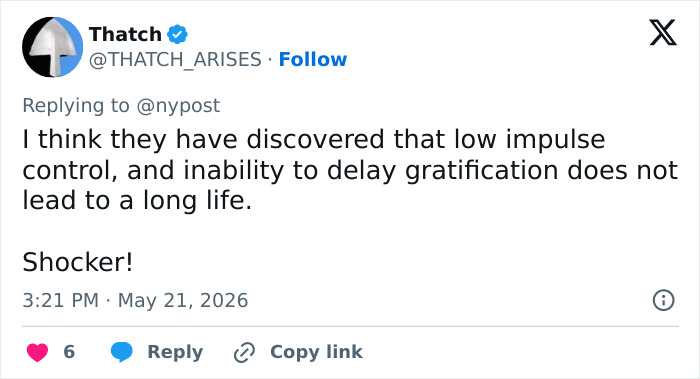
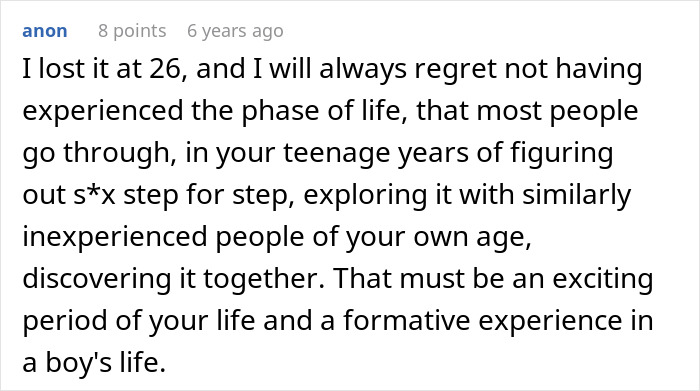
Image credits: THATCH_ARISES
Image credits: theretardedai
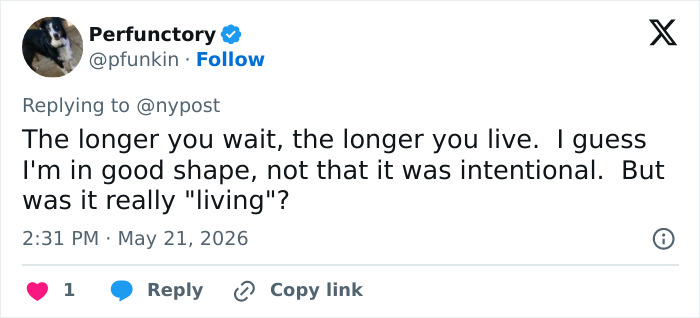
Image credits: pfunkin
Image credits: weef1998
Image credits: DisabledCel2
Image credits: Gasaholic2

By entering your email and clicking Subscribe, you're agreeing to let us send you customized marketing messages about us and our advertising partners. You are also agreeing to our Privacy Policy.
Thank you! You've successfully subscribed to newsletters!




Right?? Like it's something precious. I was 19, for the record.
Load More Replies... My sister, with a host of health issues in later life, most likely died a virgin.
Right?? Like it's something precious. I was 19, for the record.
Load More Replies... My sister, with a host of health issues in later life, most likely died a virgin.


























 No fees, cancel anytime













9
28