Get Premium
Dark mode theme is available exclusively for premium users. Learn more about the benefits of subscribing.
No fees, cancel anytime.

 Dark Mode Ad-Free Browsing Unlimited Content
 Ad-Free Browsing Unlimited Content Dark Mode
Join 1.2 million Panda readers who get the best art, memes, and fun stories every week!
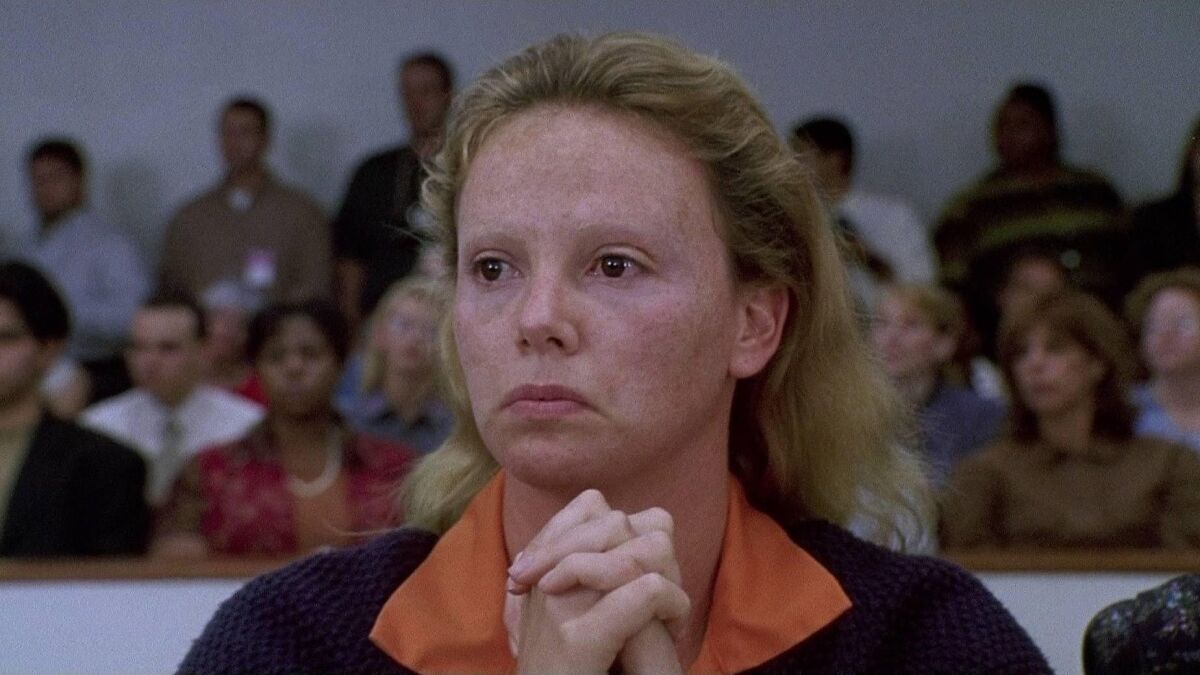
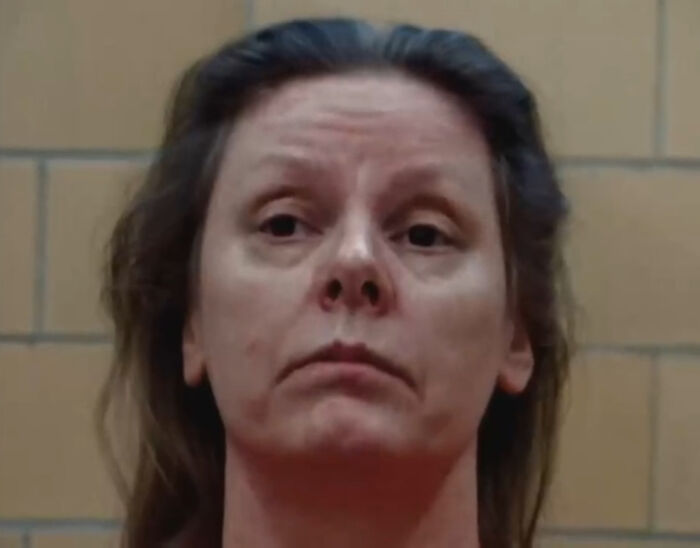
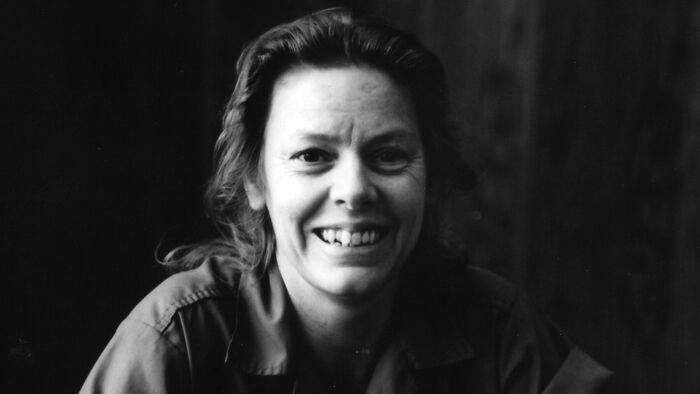
Between 1989 and 1990, Aileen Wuornos took the lives of at least seven men who had solicited her services as an adult worker in Florida.
She claimed she acted in self-defense when the men became violent toward her, though she later gave several inconsistent accounts of the crimes. In 2002, a decade after her arrest, she was executed by lethal injection.
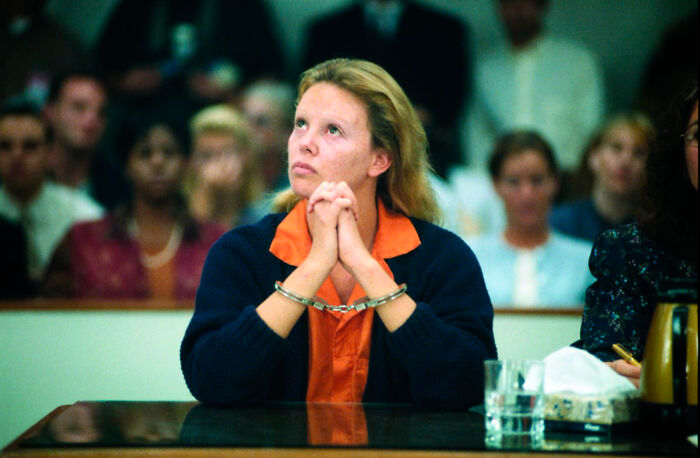
Her story was brought to the big screen in the 2003 film Monster, which earned Charlize Theron an Oscar for her portrayal of the criminal.
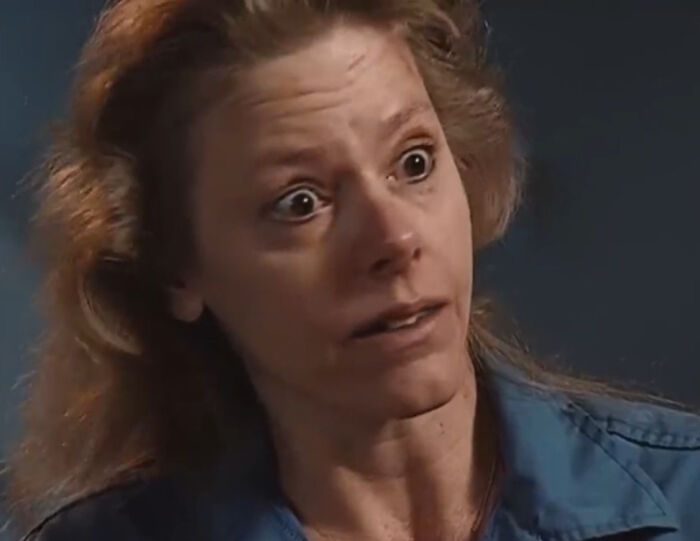
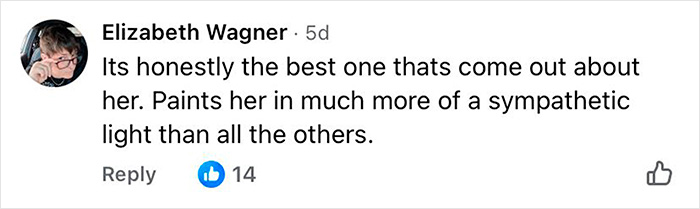
Now, a new Netflix documentary, Aileen: Queen of the Serial Killers, reexamines the case through previously unreleased audio, archival footage, and a 1997 interview Wuornos gave during her arrest.
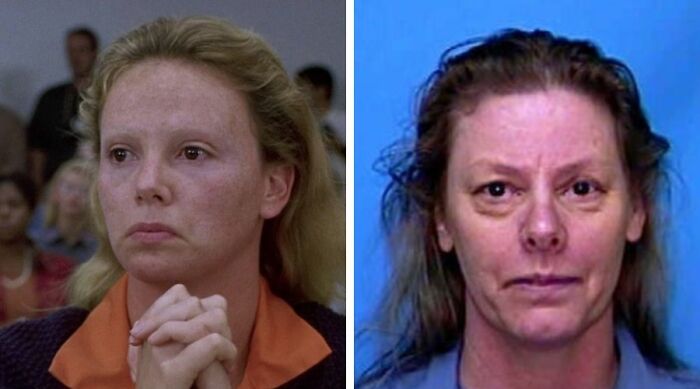
Image credits: Newmarket Films / Florida Department of Corrections
Though the documentary and Monster recount the same story, several elements in the Charlize Theron film were modified or added for dramatic effect.
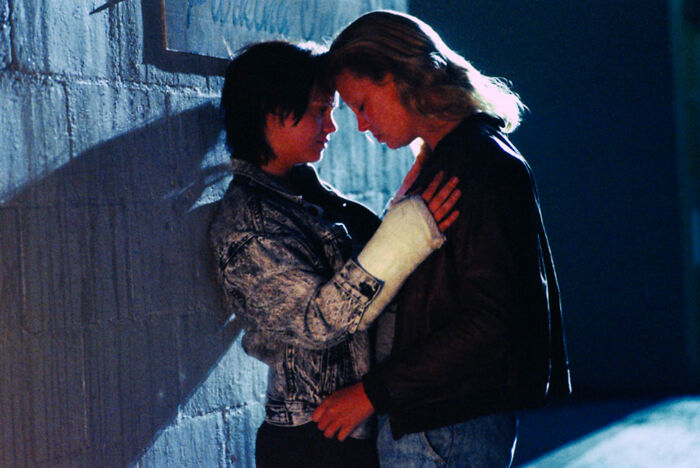
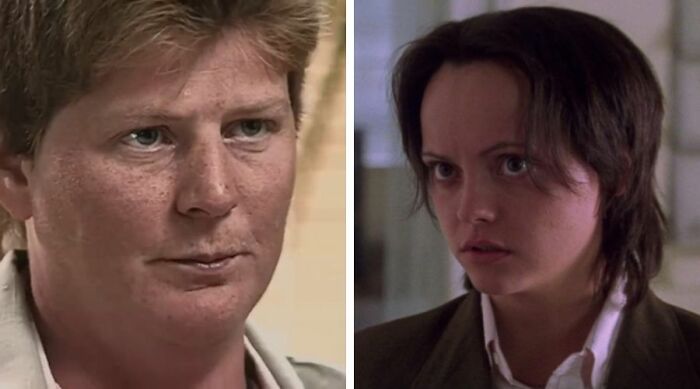
One of these differences is Wuornos’ relationship with her girlfriend. In the movie, Christina Ricci plays Selby Wall, a young woman judged for her orientation who begins a whirlwind romance with Wuornos.
The character is based on a woman named Tyria Moore, who was openly gay and did not depend financially on Wuornos, contrary to what is suggested in the film.
Image credits: Netflix
In the documentary, Wuornos and her girlfriend are described as “living together as lovers” for roughly four and half years, indicating their relationship was more stable than the one portrayed in the movie.
Additionally, Moore was not Wuornos’ first lesbian partner, as Monster implies. New footage shows that the criminal identified as a lesbian long before meeting Moore and had dated two women previously.
Image credits: Netflix
Soon after Wournos was arrested, Moore was located and persuaded to call her girlfriend while being recorded by police. While the scene appears in the film, the script does not reflect the real content of their phone calls.
In one of the calls, Moore told Wournos that she feared being arrested, to which the criminal replied, “If I have to confess everything just to keep you from getting in trouble, I will.”
She also told Moore, “I was so worried about us not having an apartment and s**t…I was scared that we were going to lose our place … I know it sounds crazy but it’s the truth.”
Image credits: Newmarket Films
Wuornos admitted to Moore that she had committed the crimes, and the recording was later played in court.
Moore testified against Wournos and reportedly led police to a weapon believed to have been used in Wournos’ crimes.
Image credits: Netflix
Regarding the weapon, Wuornos said in the 1997 interview that she carried it to stay safe and make it home to Moore.
“The only reason I carried that darn g*n is because I loved her so much … I wanted to make sure that I got home alive,” she said.
In contrast, Monster presents her as already armed and contemplating taking her own life before meeting her girlfriend. This last part does appear in the documentary, in which Wuornos can be heard describing prior attempts to take her own life.
Image credits: Netflix
In the biographical film, one scene shows the two women crashing and abandoning a victim’s car, after which a police sketch of them is drafted.
This part of the plot aligns with the real-life case. In 1990, witnesses told police that they had seen two women wreck the Pontiac belonging to Peter Siems, one of Wuornos’ victims.
After the women were seen, a sketch depicting them was produced, prompting a media campaign to locate them. Police also found the palm print of Wournos, who already had a criminal record in Florida, inside the vehicle.
Monster features a character named Thomas, who unsuccessfully warns Wuornos to leave The Last Resort, a biker bar she frequented, before her arrest.
However, there is no evidence that anyone like Thomas ever existed.
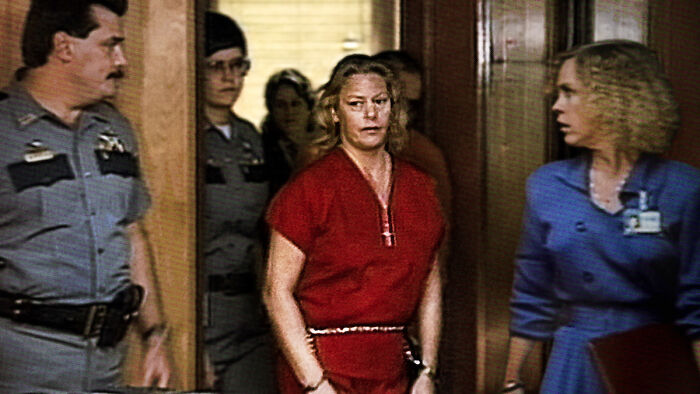
On January 9, 1991, undercover detectives walked into The Last Resort and placed Wuornos under arrest. The following year, she was convicted of m*rder at the age of 35.
Her victims were Richard Mallory, David Spears, Charles Carskaddon, Troy Burress, Charles Humphreys, Peter Siems, and Walter Antonio.
Image credits: Newmarket Films
After committing the crimes, Wuornos stole her victims’ possessions and dumped their bodies in remote wooded areas.
Wuornos pleaded guilty to only two of the crimes, but she received six capital punishment sentences, as Siems’ body was never found.
As shown in Monster, some of the victims had a background in law enforcement. Humphreys, 56, was reportedly a retired Air Force major, former police chief, and child-ab*se investigator, while Antonio, 61, had served as a Brevard County reserve deputy.
Image credits: Netflix / Newmarket Films
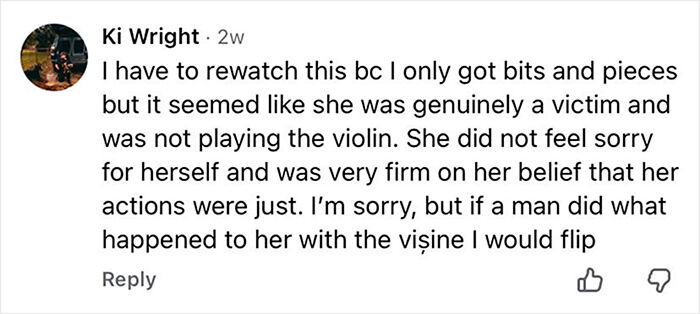
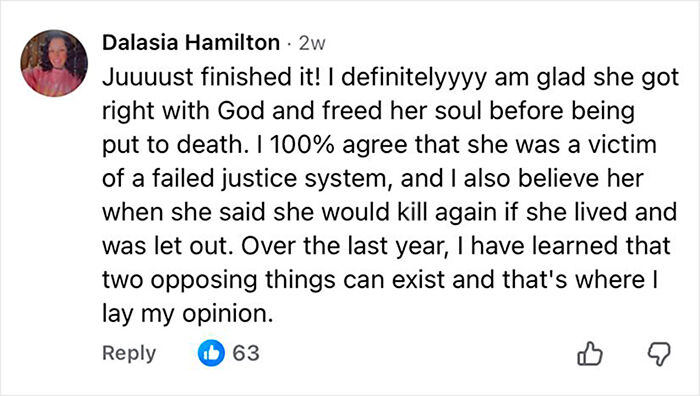
Both the 2003 film and the documentary mention Wuornos’ claims of self-defense. However, the documentary includes footage from a 2001 Volusia County hearing in which Wuornos confesses to the crimes and admits she also stole from her victims. “I k*lled those men … and robbed them as cold as ice,” she said.
One of her friends, Dawn Botkins, also recalls Wournos telling her that “she was definitely a serial k*ller,” adding, “She k*lled to rob, she robbed to k*ll, period.”

By entering your email and clicking Subscribe, you're agreeing to let us send you customized marketing messages about us and our advertising partners. You are also agreeing to our Privacy Policy.
Thank you! You've successfully subscribed to newsletters!



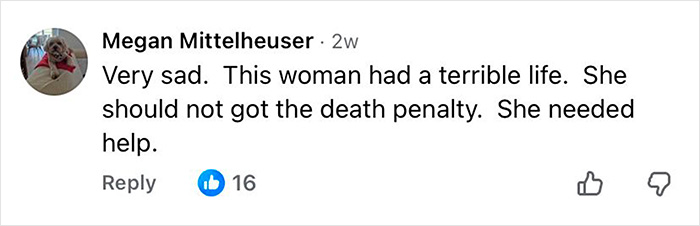
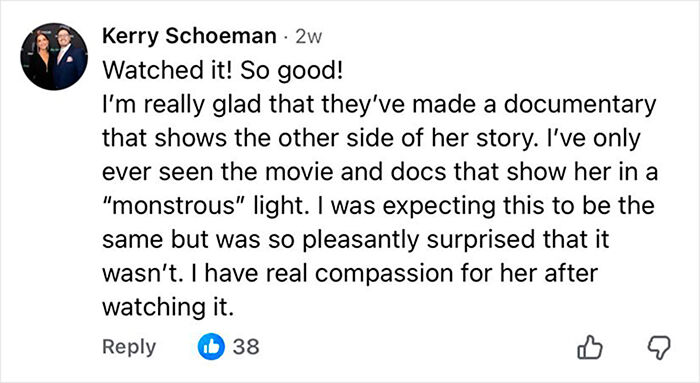
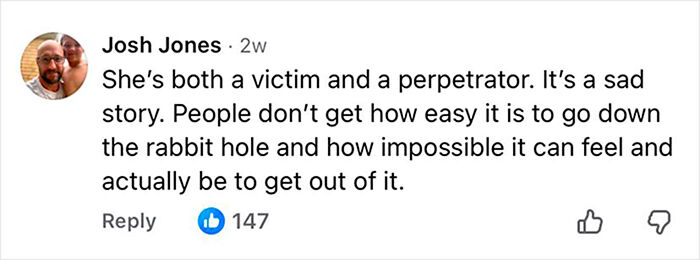
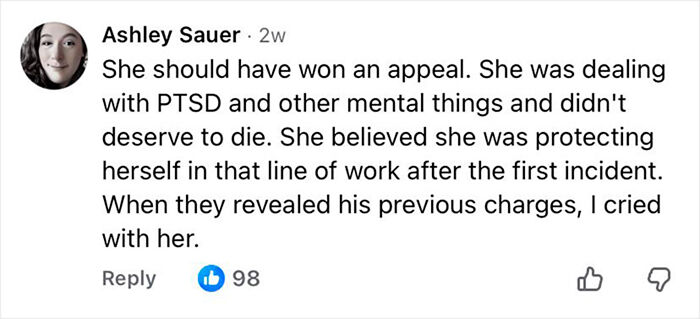
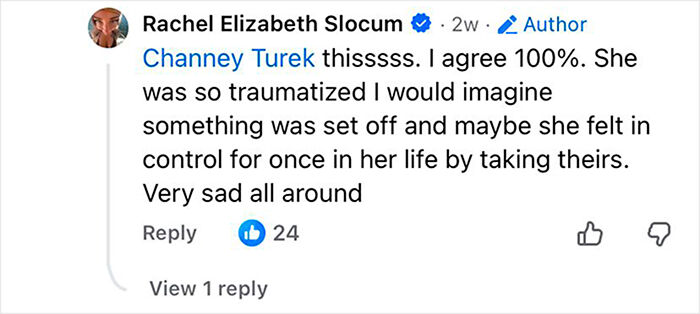
Monster is a film, I saw it when it came out. At no time did the pre-release publicity indicate that it was, in the least, biographical in nature. Virtually every film ever made, made as a film created, for entertainment purposes (not as a biographical film) takes liberties with the story. It's how they make them. Jeez. If in fact the protagonist has a four year relationship, that's just incidental in the movie, the actual plot is the poor woman's abvse growing up and her descent into madness because of it and how it manifested in the rage that resulted in the mu®ders of those men. It was "entertainment" not a documentary. There IS a difference.
Monster is a film, I saw it when it came out. At no time did the pre-release publicity indicate that it was, in the least, biographical in nature. Virtually every film ever made, made as a film created, for entertainment purposes (not as a biographical film) takes liberties with the story. It's how they make them. Jeez. If in fact the protagonist has a four year relationship, that's just incidental in the movie, the actual plot is the poor woman's abvse growing up and her descent into madness because of it and how it manifested in the rage that resulted in the mu®ders of those men. It was "entertainment" not a documentary. There IS a difference.







 No fees, cancel anytime





26
3