Get Premium
Dark mode theme is available exclusively for premium users. Learn more about the benefits of subscribing.
No fees, cancel anytime.

 Dark Mode Ad-Free Browsing Unlimited Content
 Ad-Free Browsing Unlimited Content Dark Mode
Join 1.2 million Panda readers who get the best art, memes, and fun stories every week!
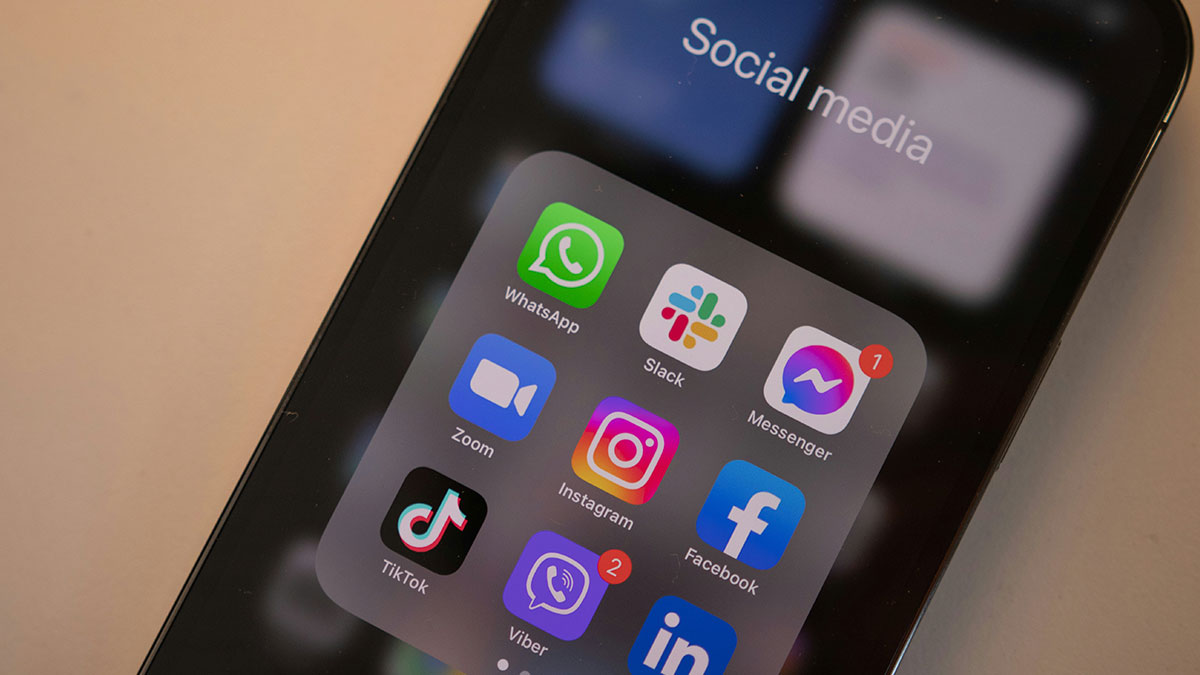
Who and what are we? Great minds have given different answers in different eras, but today, any answer would be incomplete without mentioning our digital legacy. After all, virtually every modern person leaves behind a colossal digital footprint across social media, various services, and messaging apps.
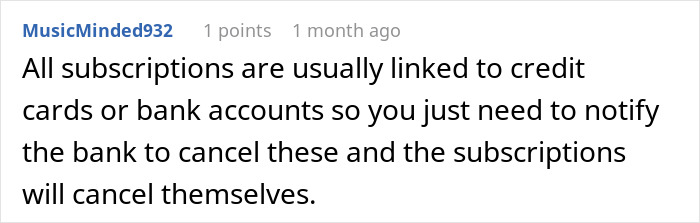
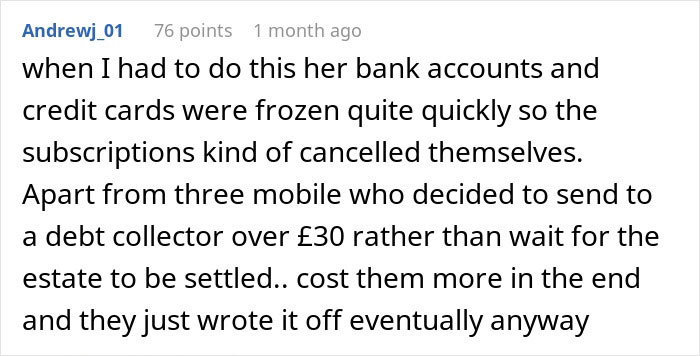
And then, when the inevitable happens and one of us passes away, the heirs have to deal with the digital inheritance in addition to the “regular” one. And they have to do this quite quickly, too, because many subscriptions renew automatically, and the heirs end up paying for lapsed subscriptions… So the question of “digital legacy” is more relevant today than ever.
More info: Reddit
Image credits: Vadim Bogulov / Unsplash (not the actual photo)
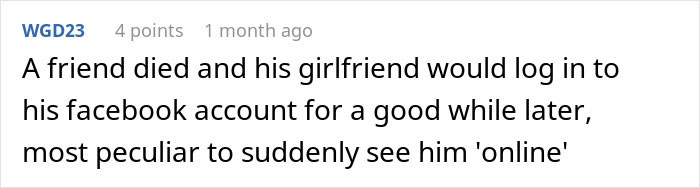
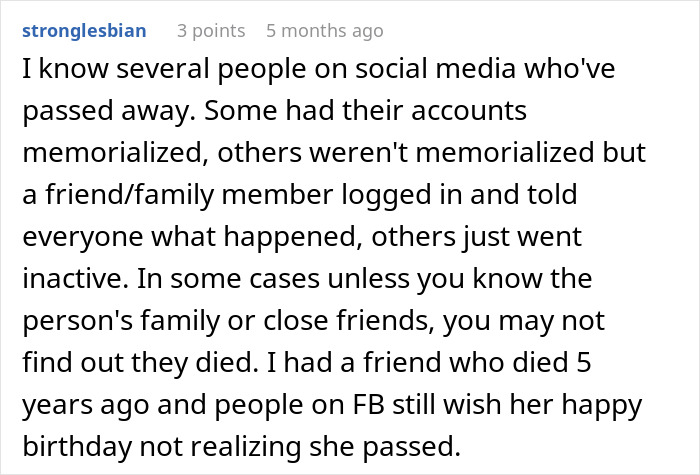
Five years ago, an electrical engineer I knew passed away at work in a tragic accident. Since then, I’ve felt uneasy every time Facebook “optimistically” suggests I wish him a happy birthday. And in my country, mobile operators release numbers that haven’t been active for a year, so sometimes it’s quite eerie when I see “him” online on WhatsApp…
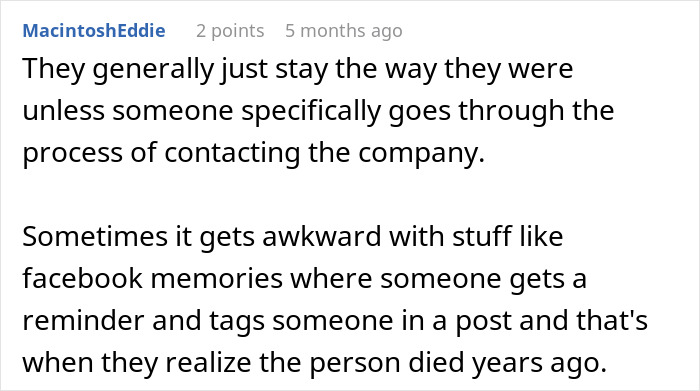
And why is that? Because his wife and relatives didn’t manage his “digital legacy” properly at the time, and didn’t, for example, transfer his Facebook account to a special memorial status. How appropriate and relevant is this for those grieving? Well, let’s say it certainly makes sense in today’s world.
Image credits: Leo_Visions / Unsplash (not the actual photo)
By and large, even if you don’t plan to leave this world and have long-term, ambitious plans, it’s still worth considering your digital legacy. At the very least, because, sadly, humans are not only mortal, but sometimes suddenly mortal. So, at the very least, making things easier for our heirs would be a noble thing to do.
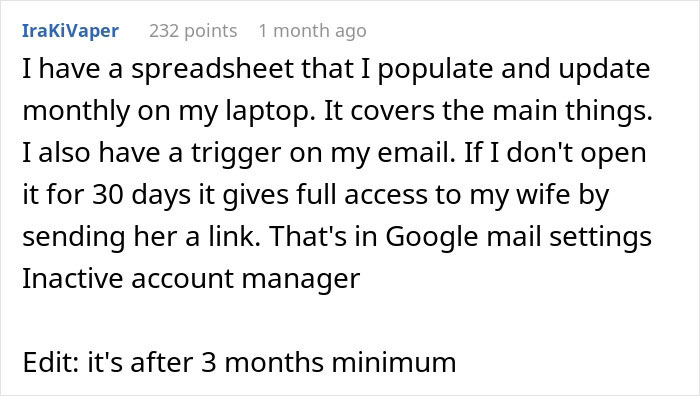
In social media services like Google, you can set a period of inactivity: 3, 6, 12, or 18 months, after which the account will be deleted, and certain data (you specify which data exactly) will be transferred to trusted individuals you designate. However, relatives can also request the deletion of a Google account by submitting a passing certificate.
Image credits: rawpixel.com / Magnific (not the actual photo)
A similar routine operates in the Apple ecosystem, where anyone can designate another person as a trusted individual in their account settings. Then, with a key and a passing certificate, the heir will be able to access documents, photos, and notes. However, note: not personal keychains or purchases!
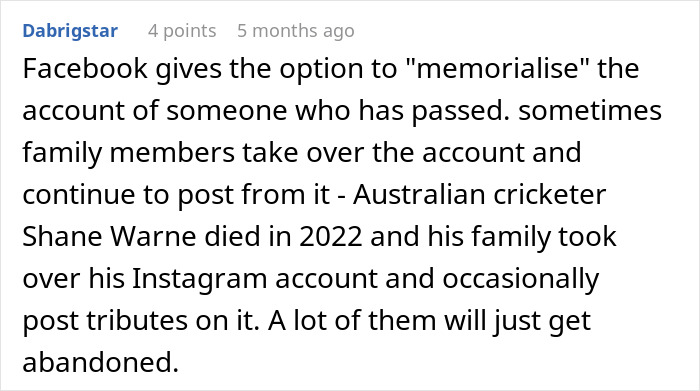
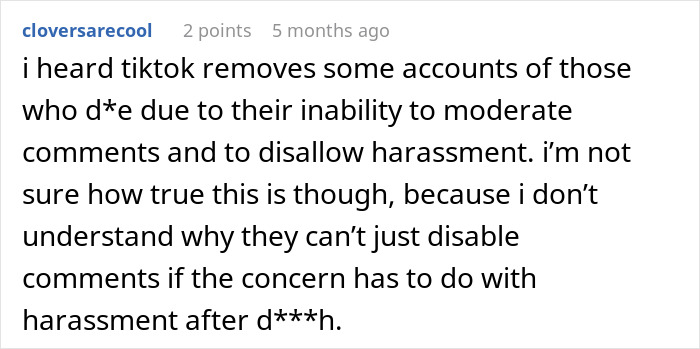
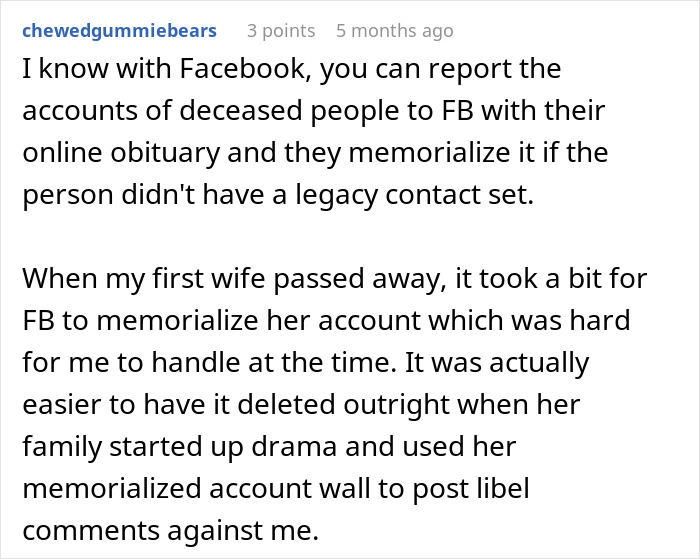
On Facebook and Instagram, relatives can memorialize the account owner’s account by submitting a passing certificate, too. This will disable access to the account, and a special mark will appear next to the late user’s name. Additionally, the heirs can request complete closure and deletion of the page using a special form.
Image credits: dlxmedia.hu / Unsplash (not the actual photo)
It should also be noted that most countries today lack centralized legislation governing the inheritance of digital assets, so many platforms establish their own internal rules for such cases. Anyway, relatives or friends of the deceased will have to invest considerable time and effort to get everything done correctly.
Image credits: Freepik / Magnific (not the actual photo)
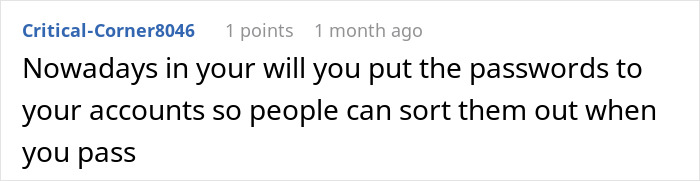
If you want to make it easier for your heirs to close your subscriptions or access your accounts, simply document your digital life and select one or more trusted individuals who can access these records. Many experts strongly recommend creating a “digital will” – perhaps over time, this will simply become a generally accepted “rule of good form.”
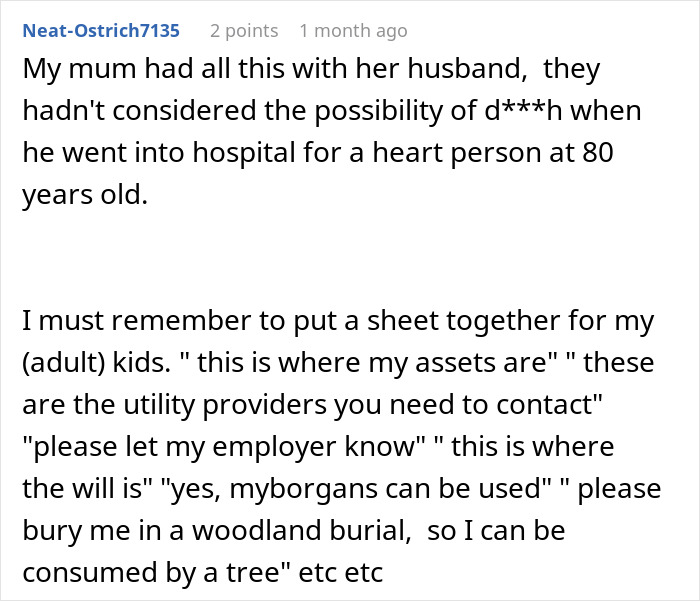
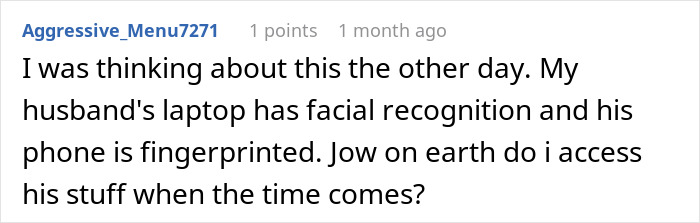
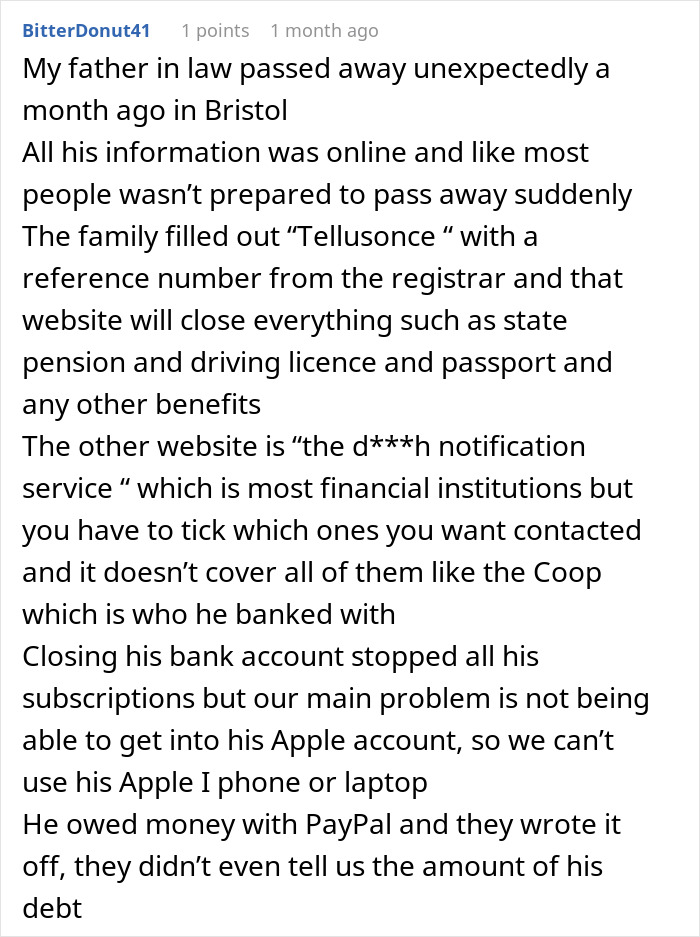
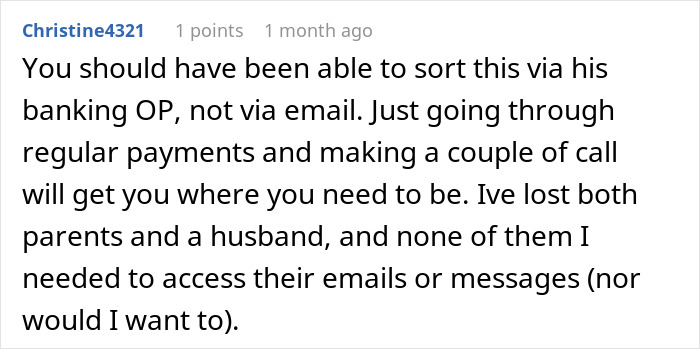
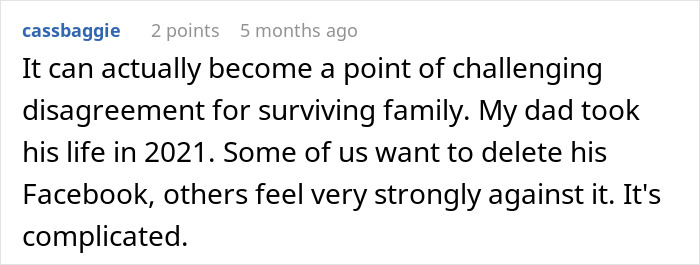
Many people in the comments also noted that they realized the importance of a “digital will” through their own painful personal experiences and how much documenting a person’s digital life makes things easier for the deceased person’s relatives. The general trend is that the more sophisticated the system, the easier it is to understand and sort out. So, what do you, our dear readers, think about this whole concept?

By entering your email and clicking Subscribe, you're agreeing to let us send you customized marketing messages about us and our advertising partners. You are also agreeing to our Privacy Policy.
Thank you! You've successfully subscribed to newsletters!
Just leave your passwords to all your various accounts in a will or other document that your relatives will be able to find and access after you d*e. I don't have a proper will (because I don't really have anything substantial in the way of assets right now), but I did tell my siblings about a document on my computer with all of that information, and plenty of other info on anything they should need to "get my affairs in order" should I happen to kick the bucket before they do.

In today’s rapidly evolving digital world, learning industry-relevant skills has become essential for career growth. ICS Learnings is a professional learning and skill development platform designed to help students, working professionals, and aspiring learners gain practical knowledge aligned with modern industry demands. From AI-powered Digital Marketing to Research Writing using AI Tools, ICS Learnings focuses on future-ready education that combines academic excellence with real-world application. The platform offers flexible online learning, expert-led training, industry-oriented curriculum, and globally recognized certification opportunities. As technology continues to reshape careers, learners need more than traditional education. They need practical skills, digital fluency, and career-focused learning experiences. ICS Learnings bridges this gap by creating programs that prepare learners for emerging opportunities in the global workforce. Explore professional certification program

“SEO is d**d” is probably the biggest myth in marketing right now. SEO isn’t d**d. Bad marketing is. We’ve entered the era of SEO + AEO + GEO, where ranking alone isn’t enough — brands need to become the answer AI trusts. The future belongs to brands building authority, trust, and real value, not keyword-stuffed content. SEO didn’t d*e. It evolved.
Just leave your passwords to all your various accounts in a will or other document that your relatives will be able to find and access after you d*e. I don't have a proper will (because I don't really have anything substantial in the way of assets right now), but I did tell my siblings about a document on my computer with all of that information, and plenty of other info on anything they should need to "get my affairs in order" should I happen to kick the bucket before they do.
In today’s rapidly evolving digital world, learning industry-relevant skills has become essential for career growth. ICS Learnings is a professional learning and skill development platform designed to help students, working professionals, and aspiring learners gain practical knowledge aligned with modern industry demands. From AI-powered Digital Marketing to Research Writing using AI Tools, ICS Learnings focuses on future-ready education that combines academic excellence with real-world application. The platform offers flexible online learning, expert-led training, industry-oriented curriculum, and globally recognized certification opportunities. As technology continues to reshape careers, learners need more than traditional education. They need practical skills, digital fluency, and career-focused learning experiences. ICS Learnings bridges this gap by creating programs that prepare learners for emerging opportunities in the global workforce. Explore professional certification program
“SEO is d**d” is probably the biggest myth in marketing right now. SEO isn’t d**d. Bad marketing is. We’ve entered the era of SEO + AEO + GEO, where ranking alone isn’t enough — brands need to become the answer AI trusts. The future belongs to brands building authority, trust, and real value, not keyword-stuffed content. SEO didn’t d*e. It evolved.











 No fees, cancel anytime









26
3