Get Premium
Dark mode theme is available exclusively for premium users. Learn more about the benefits of subscribing.
No fees, cancel anytime.

 Dark Mode Ad-Free Browsing Unlimited Content
 Ad-Free Browsing Unlimited Content Dark Mode
Join 1.2 million Panda readers who get the best art, memes, and fun stories every week!
You can get away with a sloppy handshake but with a carelessly built house? Not so much. Eventually, its qualities will deteriorate to the point when the only thing holding it together is pure luck. And you better call in the construction engineers before that runs out, too.
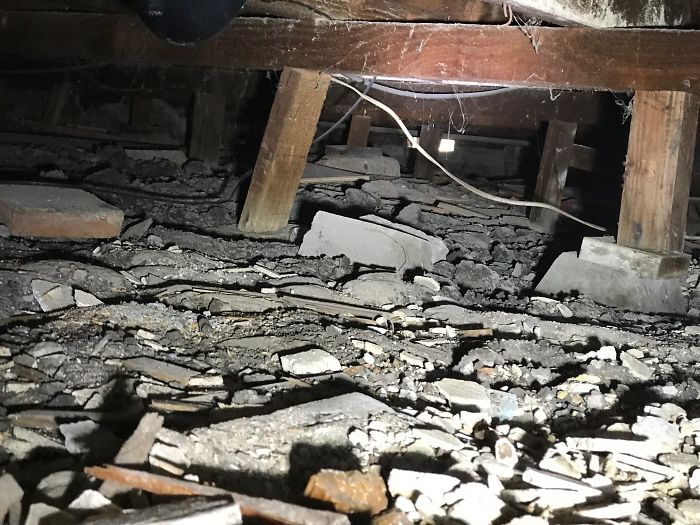
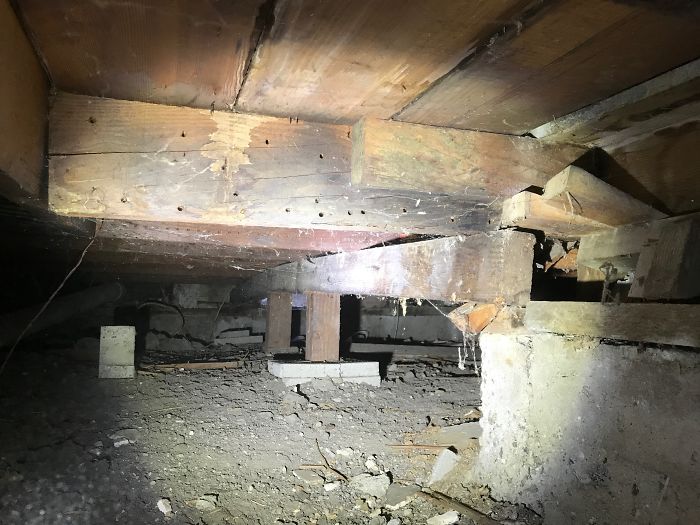
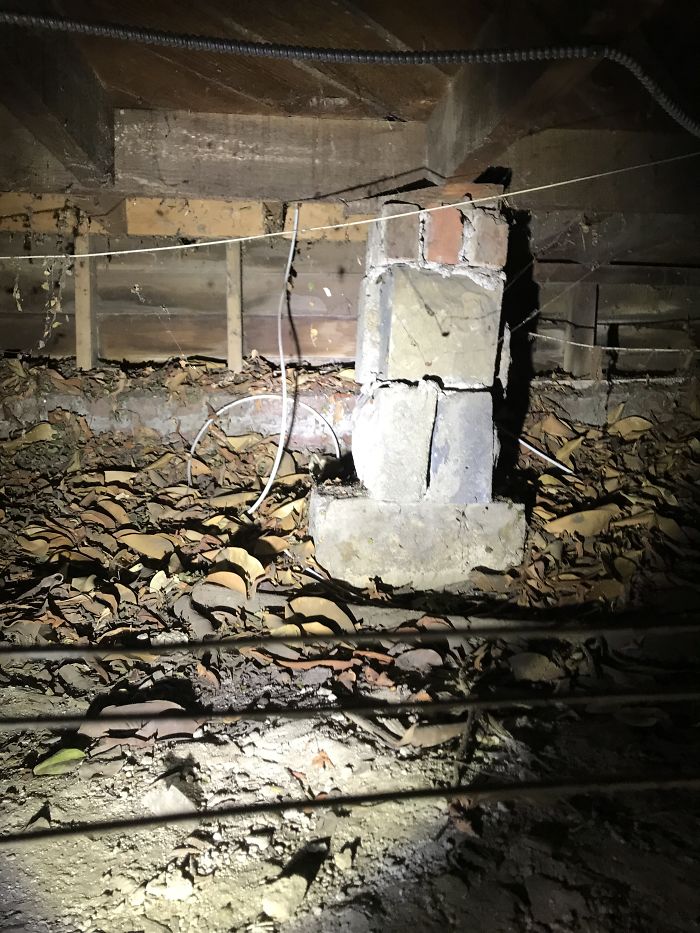
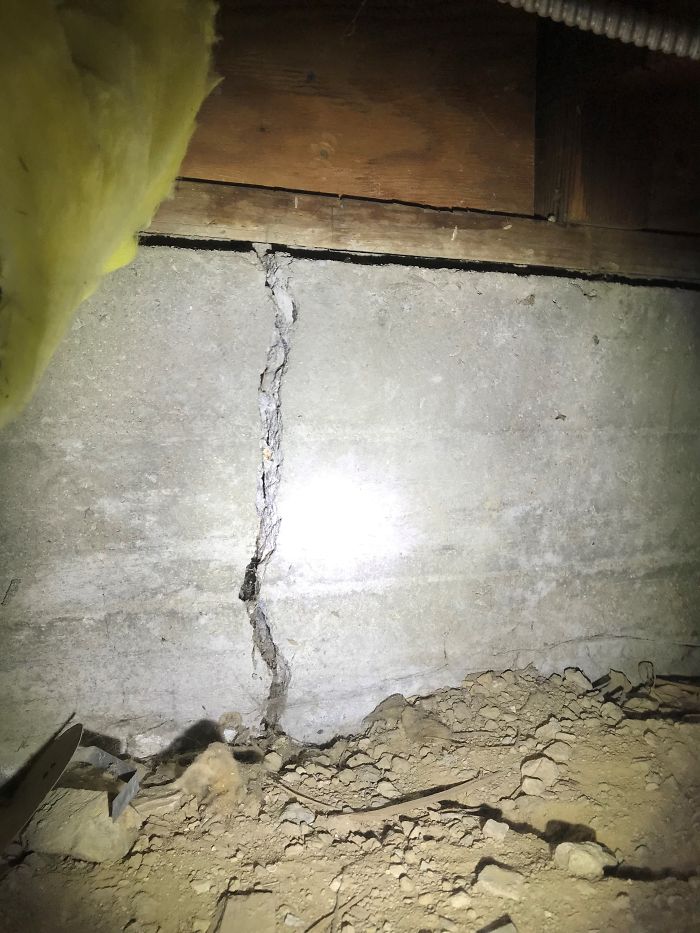
Alpha Structural, Inc. presents itself as the only company in Los Angeles County licensed to engineer and build any type of foundation or hillside repair. For its 25th birthday, the organization has decided to share some of the craziest structural construction fails they've found over the years, making many internet users question the sanity of some contractors. "Besides having a stellar reputation, we're called out to inspect and propose solutions to many structural issues," a spokesperson of Alpha Structural, In. told Bored Panda. "Specializing in advanced hillside foundation repair methods we mainly are called to inspect when there are issues such as sloping floors, failed retaining walls, etc."
"A very common engineering fail we see is mid-century hillside homes that are sinking. They were often built with shallow footings that are prone to sink over time. Additionally, there is a lot of expansive soil in Los Angeles which, due to its high clay content, expands and contracts. This leads to corners or sides of a home that sink."
Since the company has already inspected tens of thousands of properties, it's hard to catch its engineers off guard. "I would say we're more likely to be surprised by what's under the home than the structure itself! Although, while we are not alarmist in any way, every once in a while we will come across a structure that we are surprised is still standing."
According to Alpha Structural, Inc., everyone living in the area can take measures to make their building a safe place. "We always recommend earthquake retrofitting your home," they added. "It's no surprise seismic activity is prevalent in Los Angeles, so taking the time to retrofit your home is key. Also, most foundation problems are caused because of no drainage, or poor drainage around the home. The most cost-effective solution to preserve your foundation is to make sure your yard slopes away from the structure and that your gutters and downspouts are cleaned and route the water away.
However, it's easy to get carried away. "People tend to overreact when it comes to their home. Things such as hairline cracks and minor sticking of doors can cause quite a panic in most homeowners. Plenty of information about our services can be found on our website!"
Continue scrolling to check out what epic fails these guys find daily and upvote your favorite entries!
More info: alphastructural.com | Facebook
Click here & follow us for more lists, facts, and stories.
This post may include affiliate links.
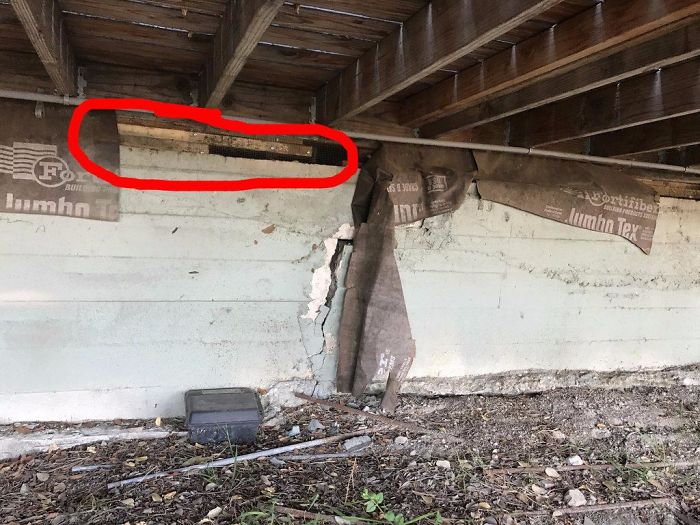
This was taken during one of our structural inspections in North Hollywood. It's gonna take a little more than duct tape to fix this one.
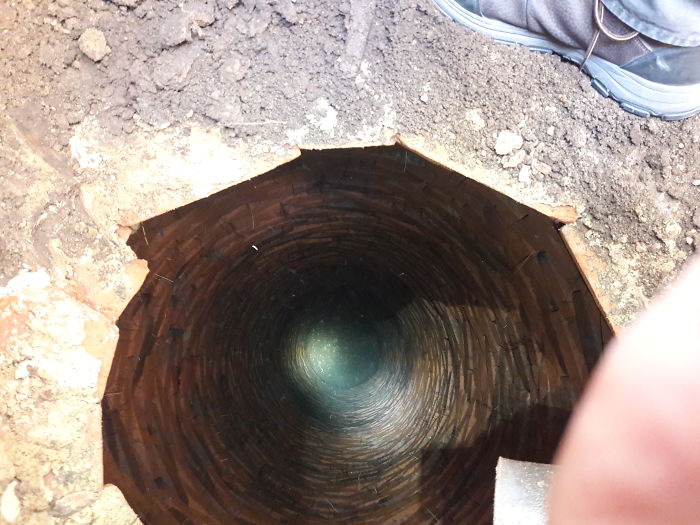
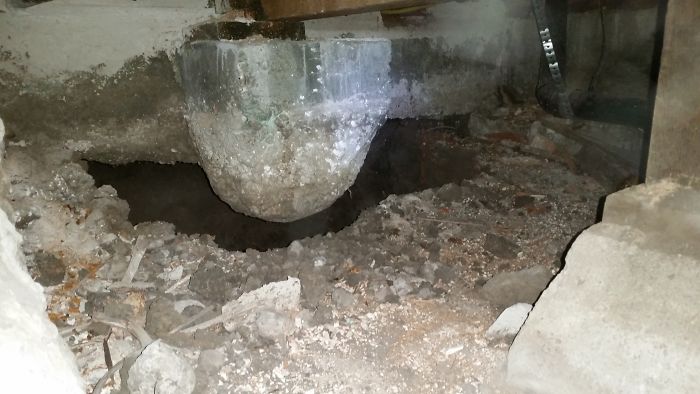
Now, I forgot the term for these, but basically it's a massive hole/well that was about a meter under the concrete footing. The owner had no idea this was here. Must have been there for decades.
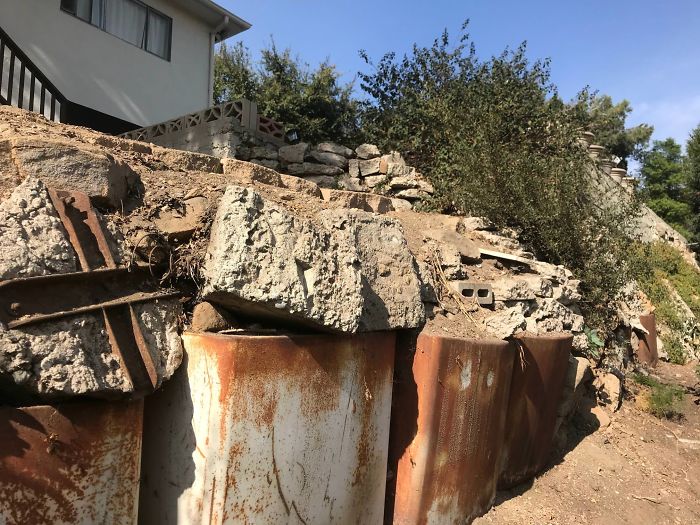
During an inspection, one of our assessors found this beauty. A wall created entirely out of concrete filled washing machines.
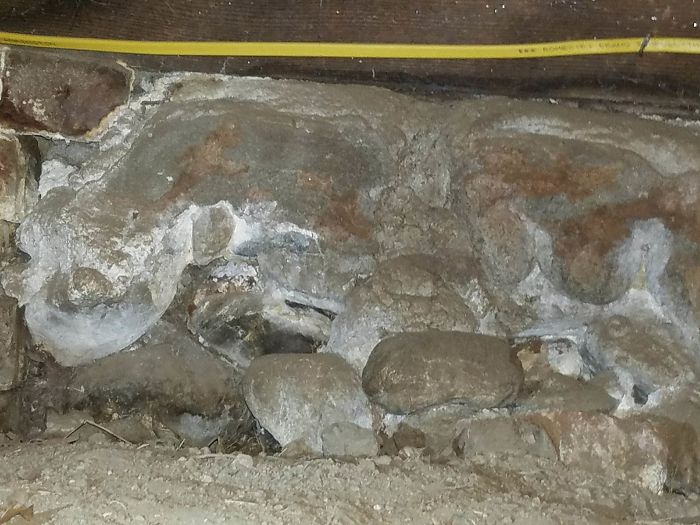
This is a foundation made up of river rock, some sort of hardened mortar and the tears of the contractors who did it. Also, I see a rhino!
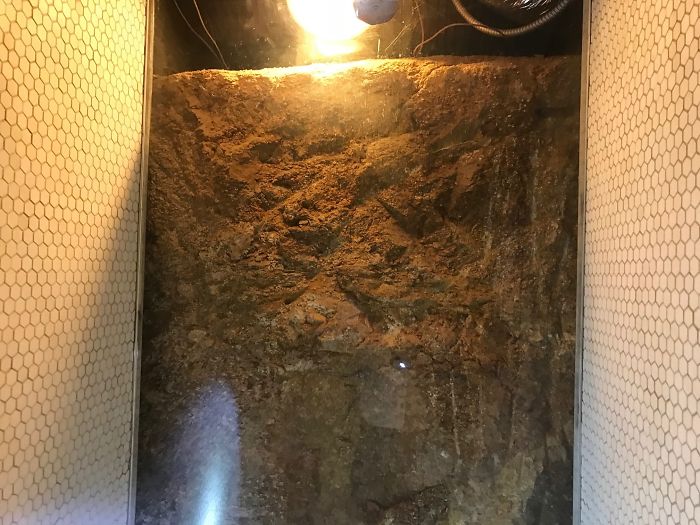
This is a very interesting view from a basement window. It's actually located in a shower and you can see the critters moving around in the dirt. Hope you like bugs!
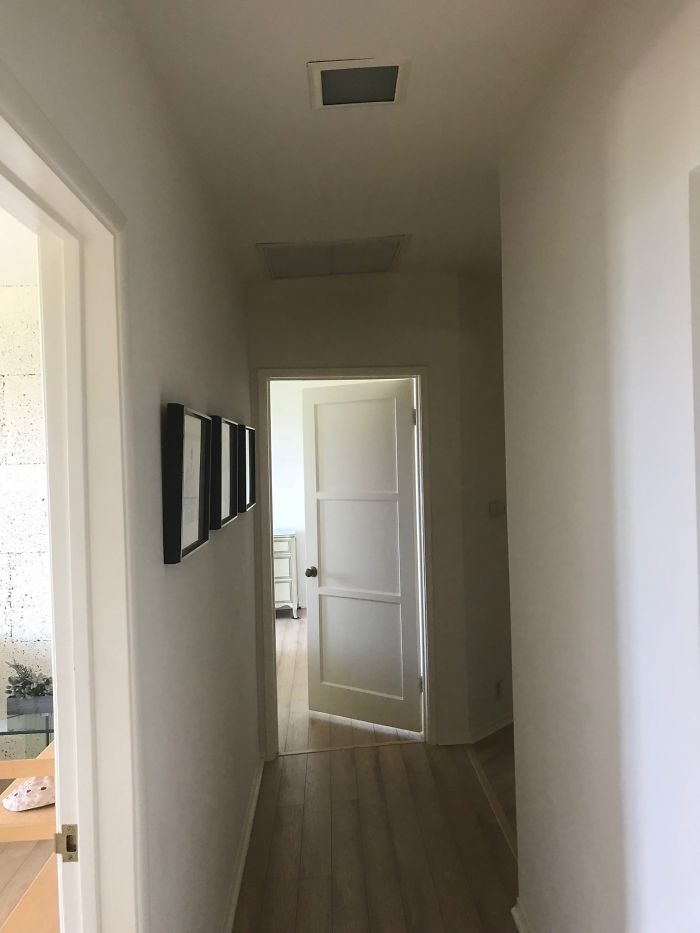
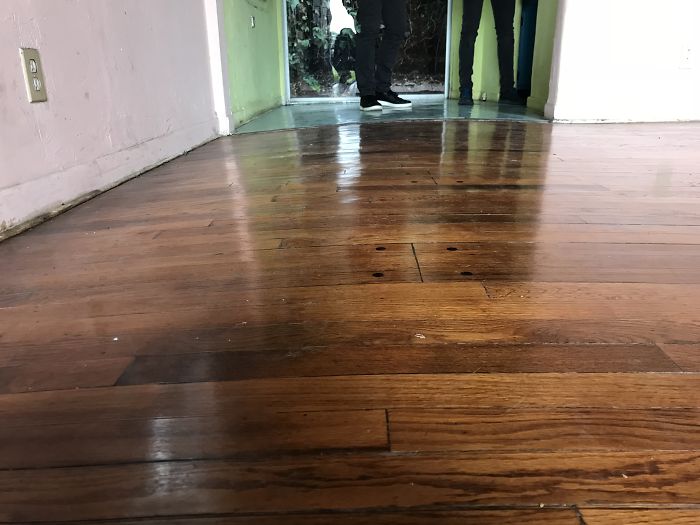
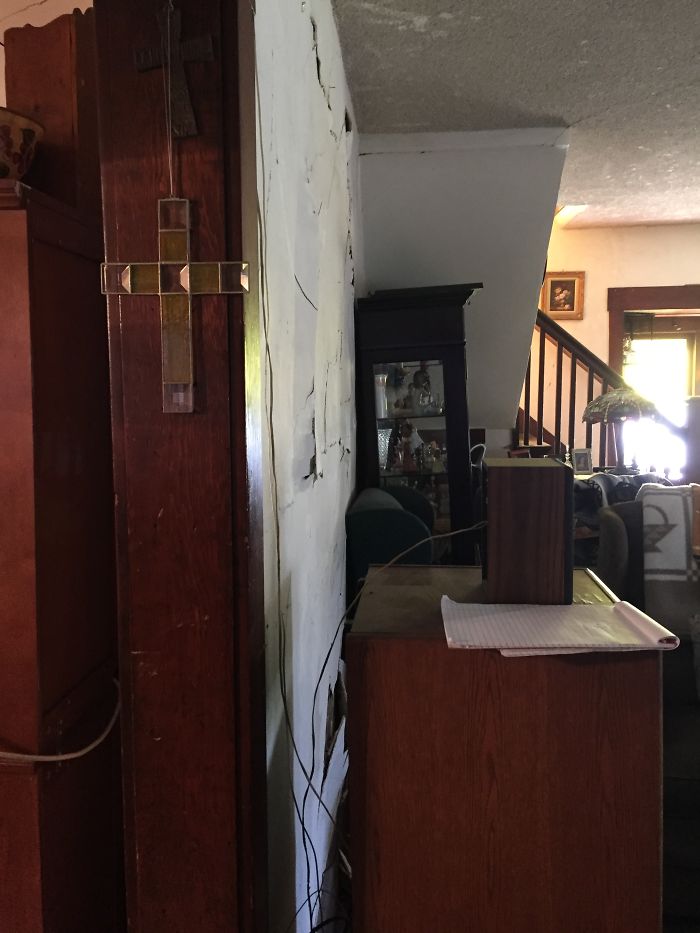
It may seem as if this is a photo was taken at an angle, but I assure you, it was perfectly straight. The floors are just sloping down a good 6 inches from the middle of the home.
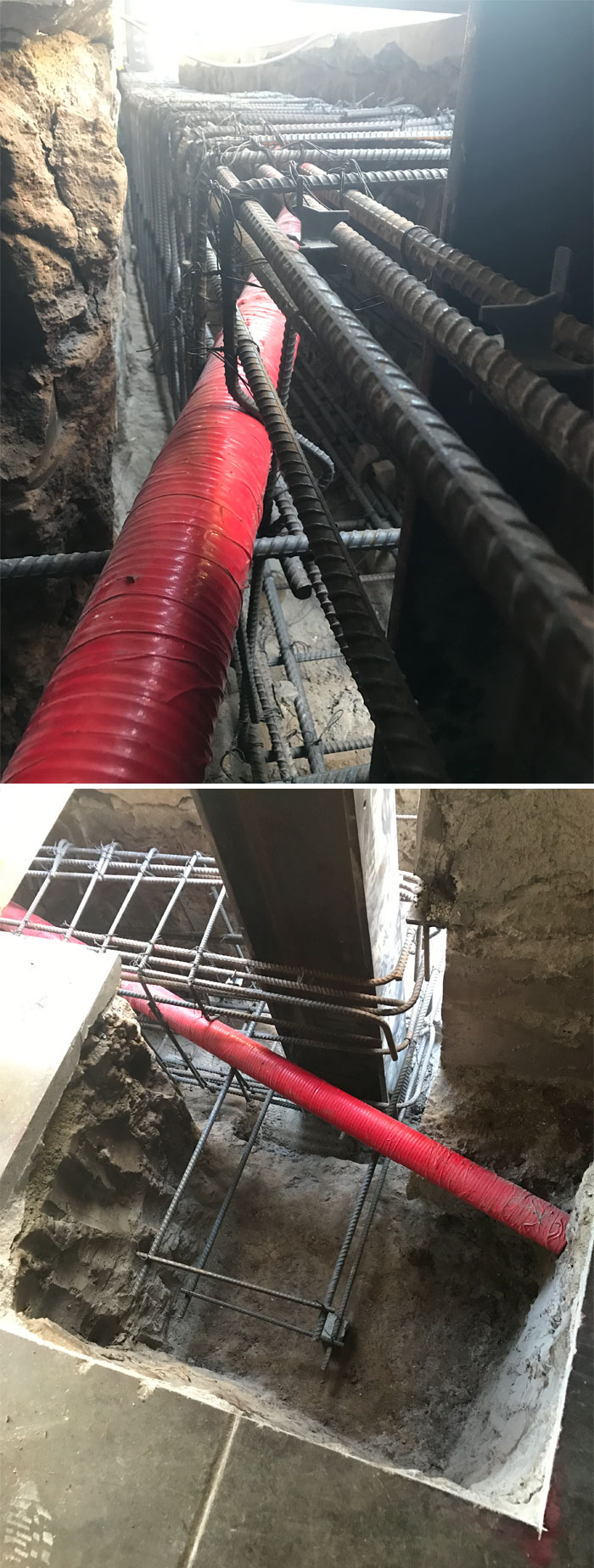
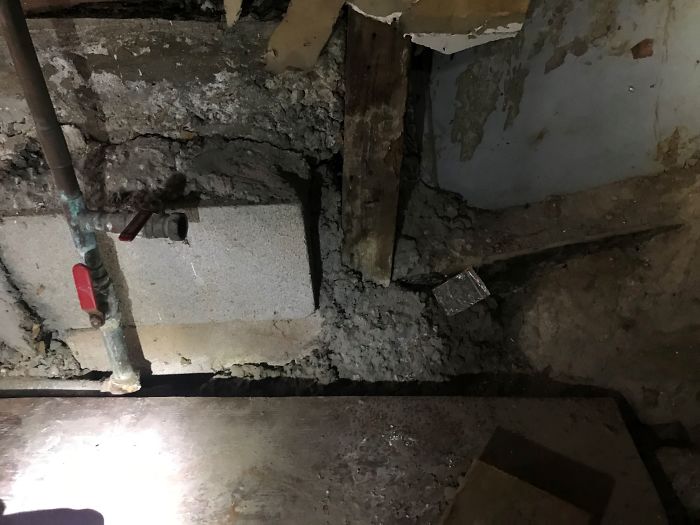
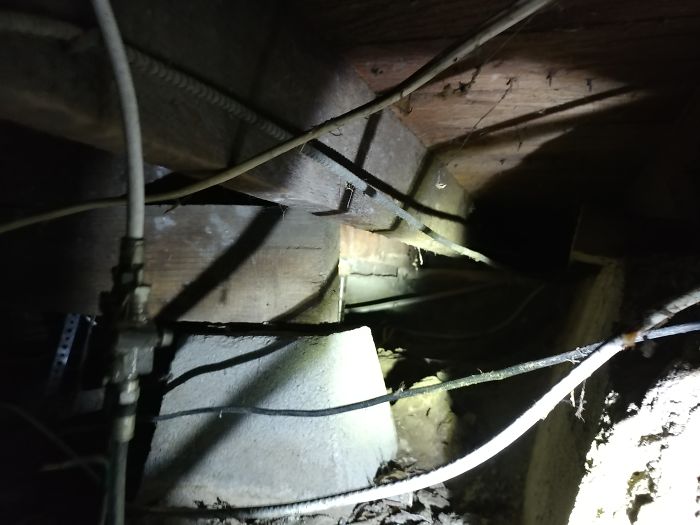
Nothing is worse than coming across a massive gas pipe while excavation. It wasn't on the initial plans.
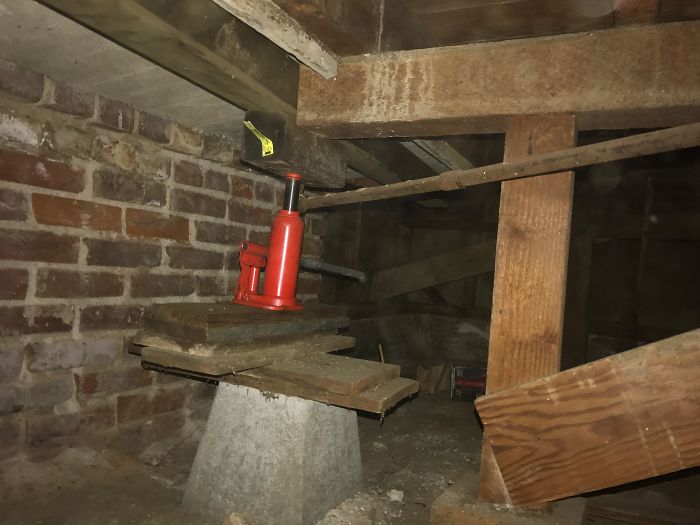
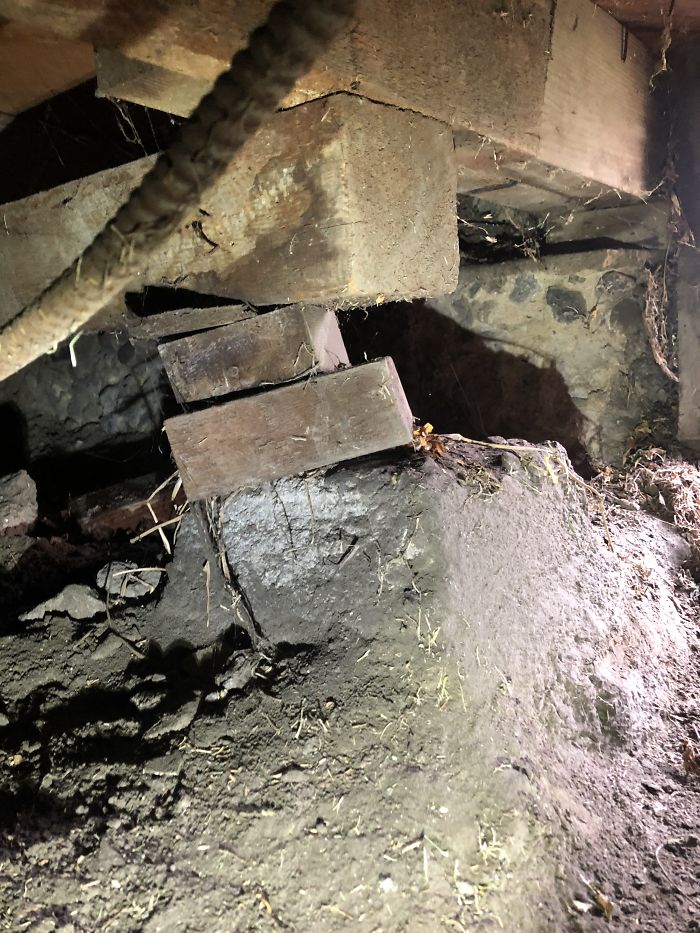
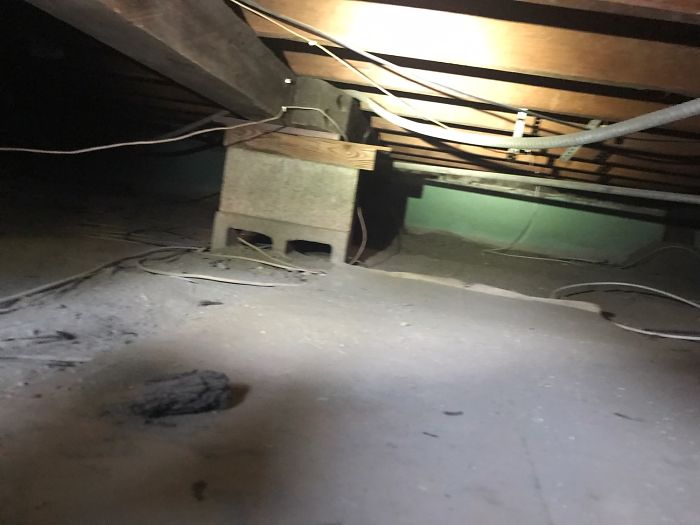
Though these jacks are pretty common...they should never be used as a permanent pier. Unless secured with duct tape of course.
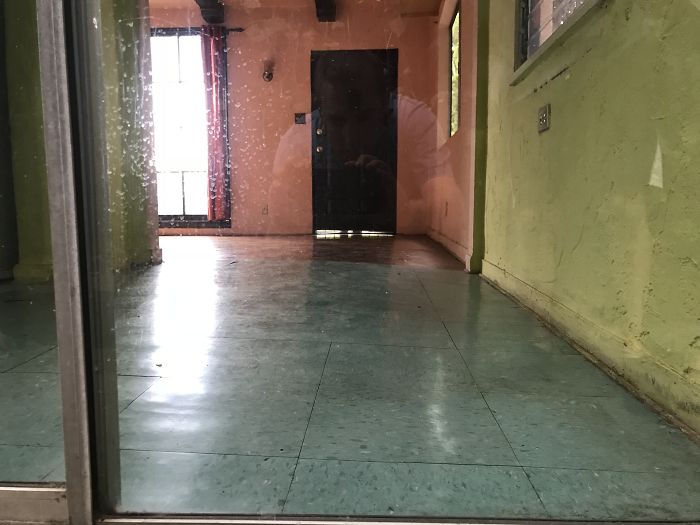
This is an abandoned home in East Los Angeles. I don't want to get too technical on this, but not even the homeless would want to set up shop in there.
This is one of the craziest structural fails I've ever seen. No re-bar, not bolted, settling 2 ft and it's on sand...Just wow!
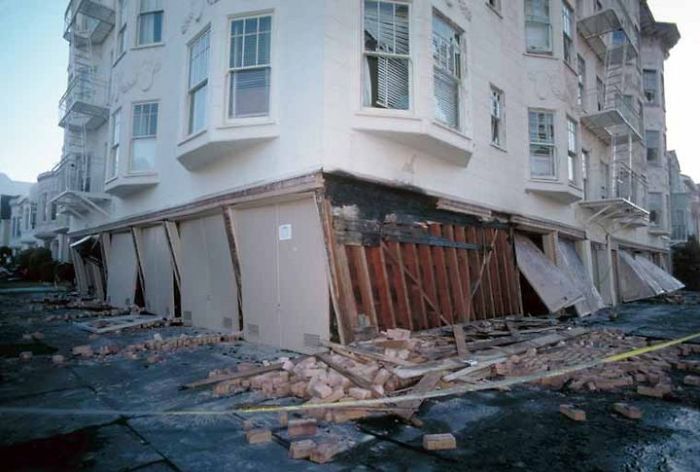
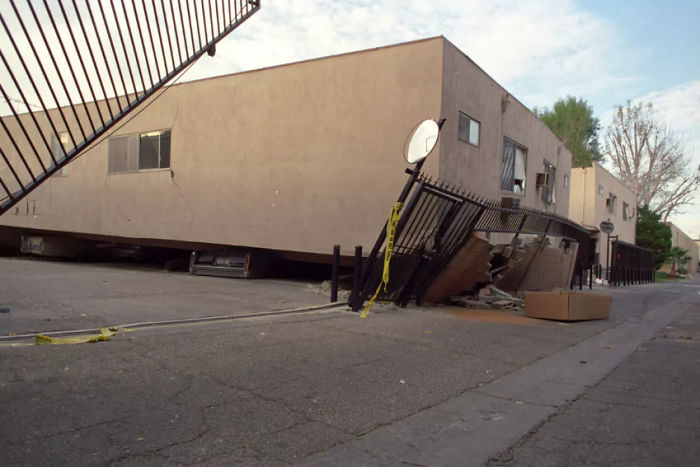
A soft-story can be described as multi-level structure built with a first floor that is much less rigid (soft) than the floors above, such as in an apartment with tuck under parking. This is a cause for concern, for when an earthquake hits, the existing columns do not have the strength to protect against the sideways movement that can occur.
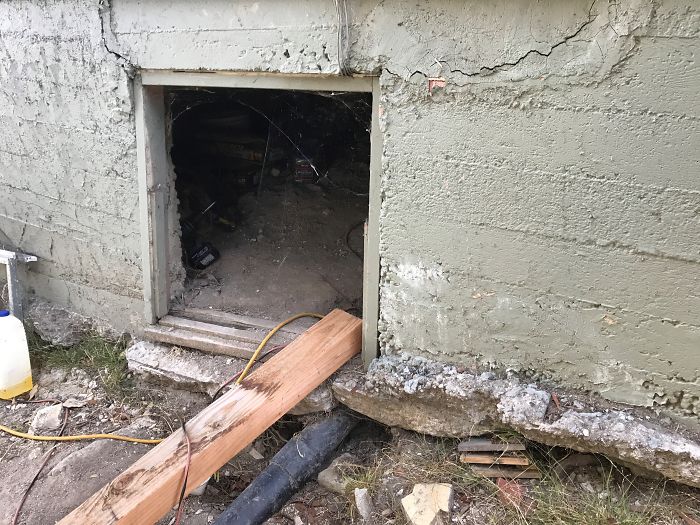
This is actually the door leading to Narnia. It just so happens that it's under a house in Pasadena, CA.
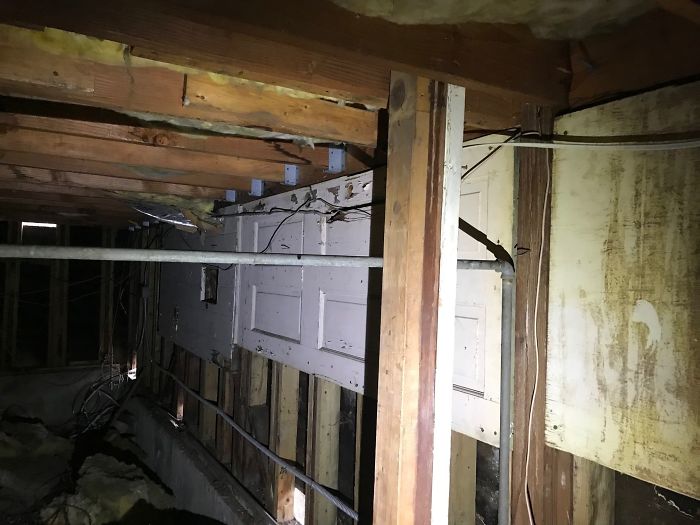
Seriously though, they used this as a sort of "shear wall" for additional strength. Again, an obvious DIY job.
May not look like much, but a single toddler jumps and that set of stairs and deck come down.
This is what happens when wood touches dirt over a long period of time. It soaks up water and rots.
So from here we see there is a slope starting from the right and going 15 feet to left.
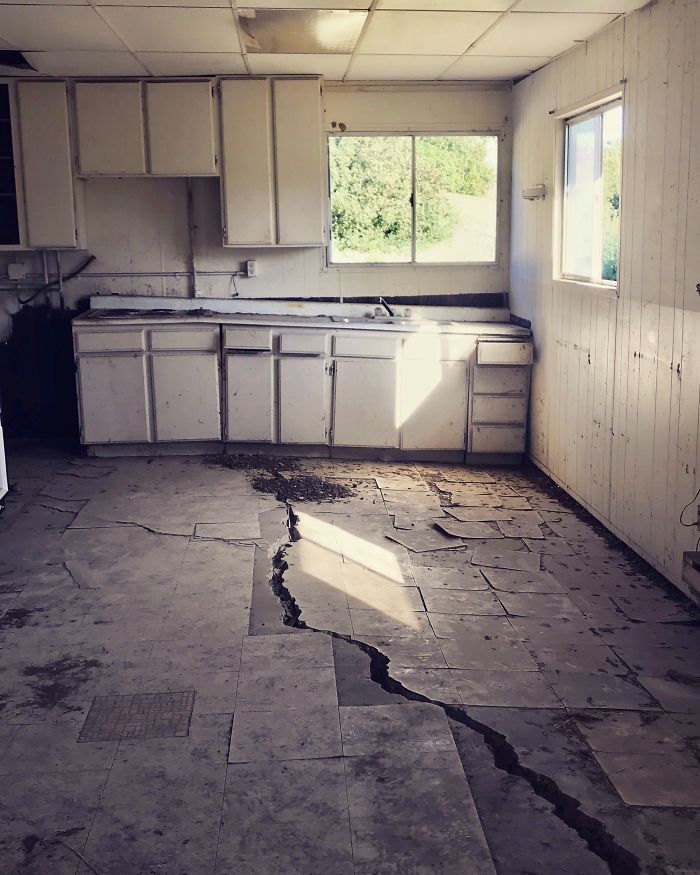
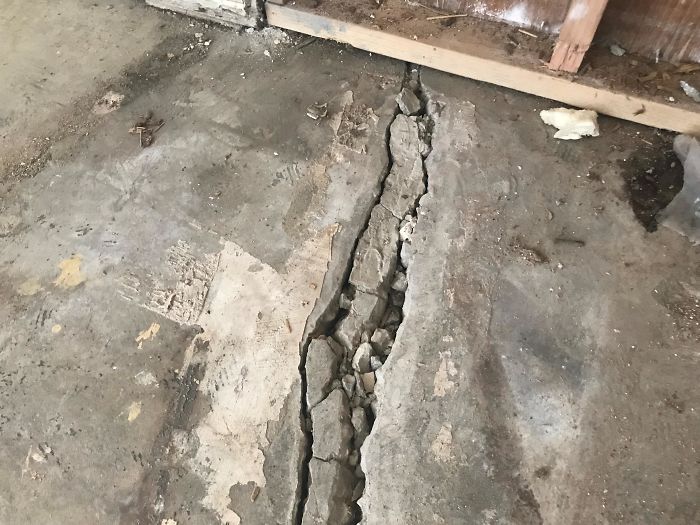
After peeling back the carpet, we discovered a massive slab crack. To the right of the crack we see another crack that's been patched. The left side of the house was completely sinking a total of 18 inches from the point of the crack. One of the worst slab conditions we've seen so far in LA.
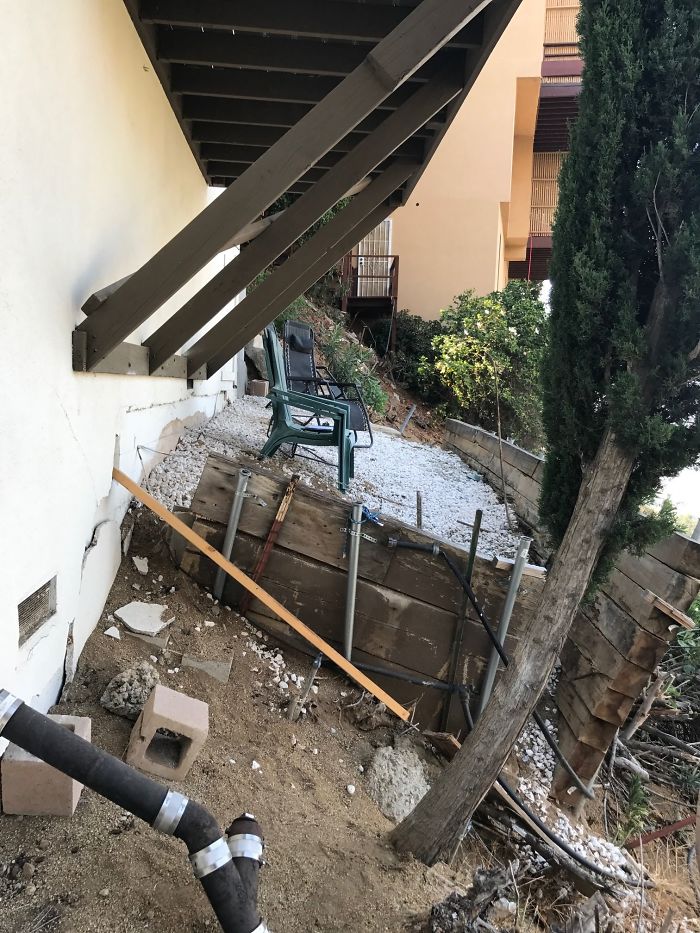
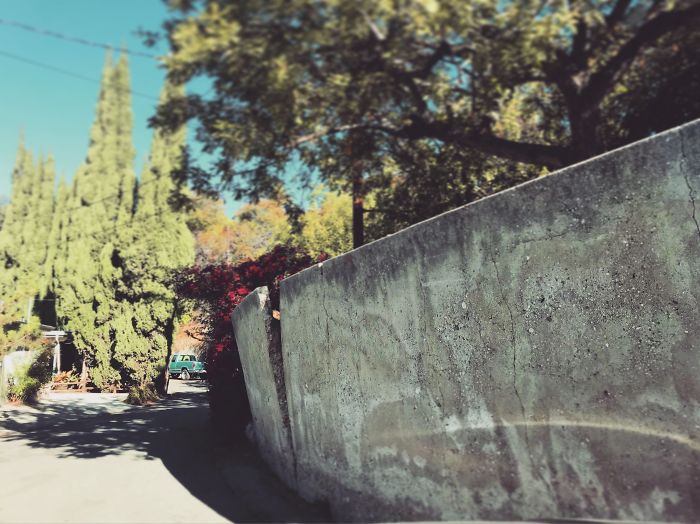
They might want to add a "Do not park next to this obviously failing retaining wall because it might fall on your car in the night and we're not paying for it" sign.
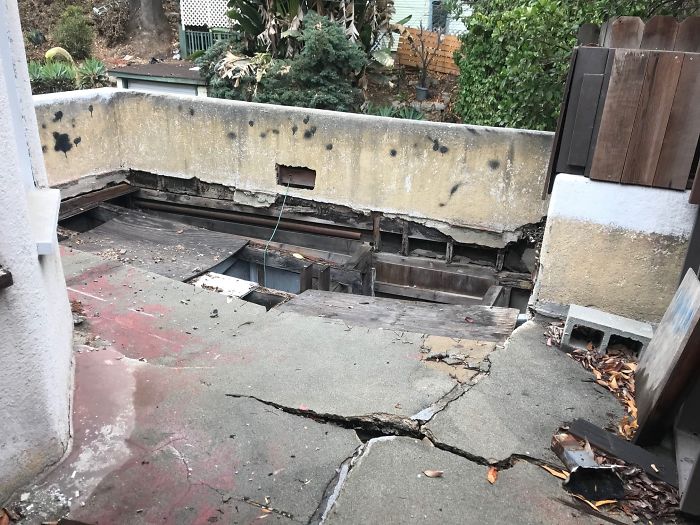
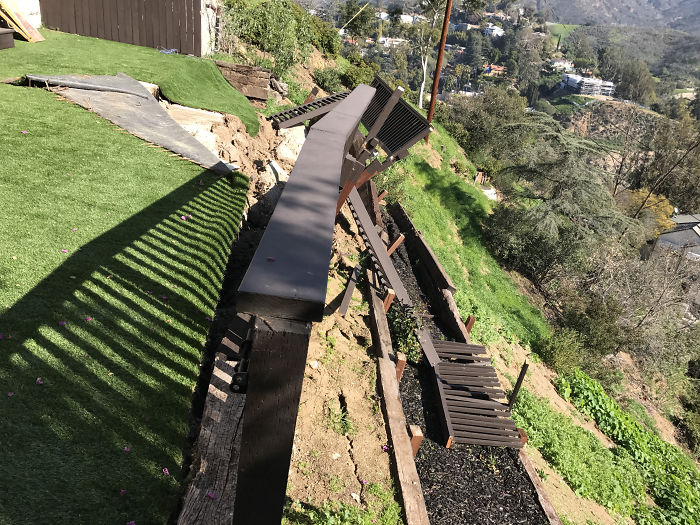
This is a disaster waiting to happen. A large area of the back patio is basically floating on this hillside. Also, you can clearly see my finger in the frame.
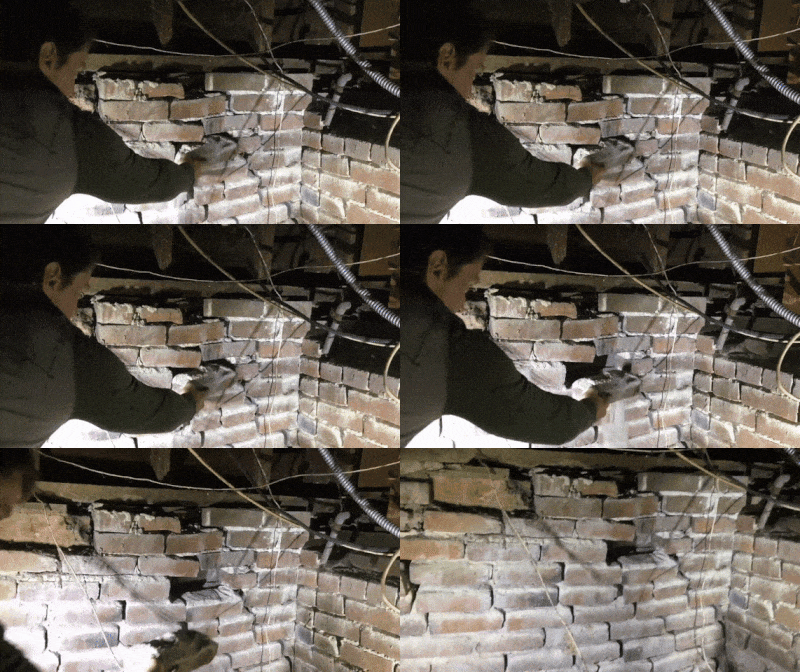
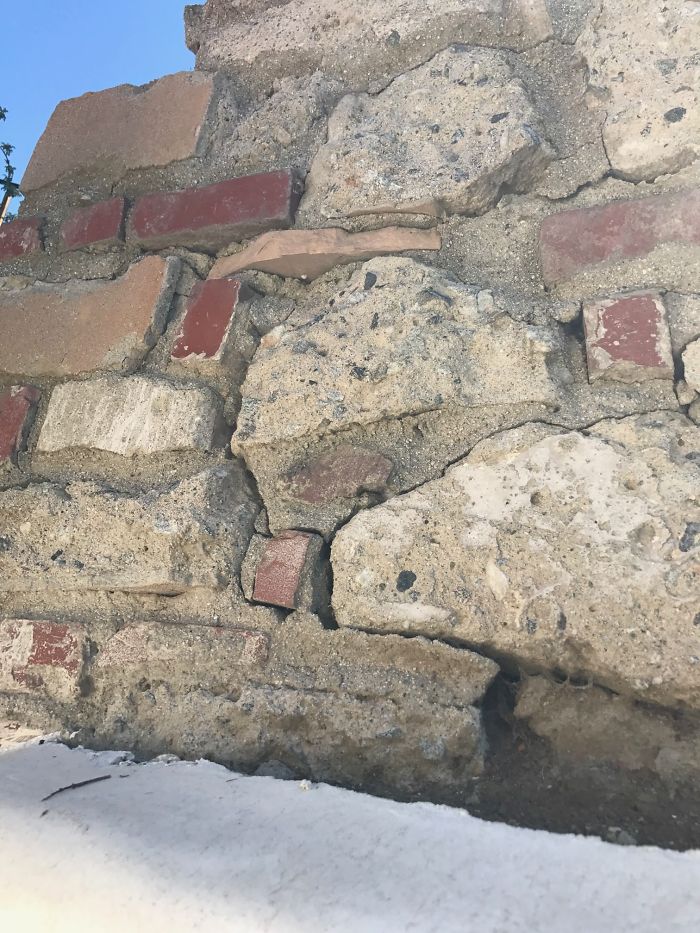
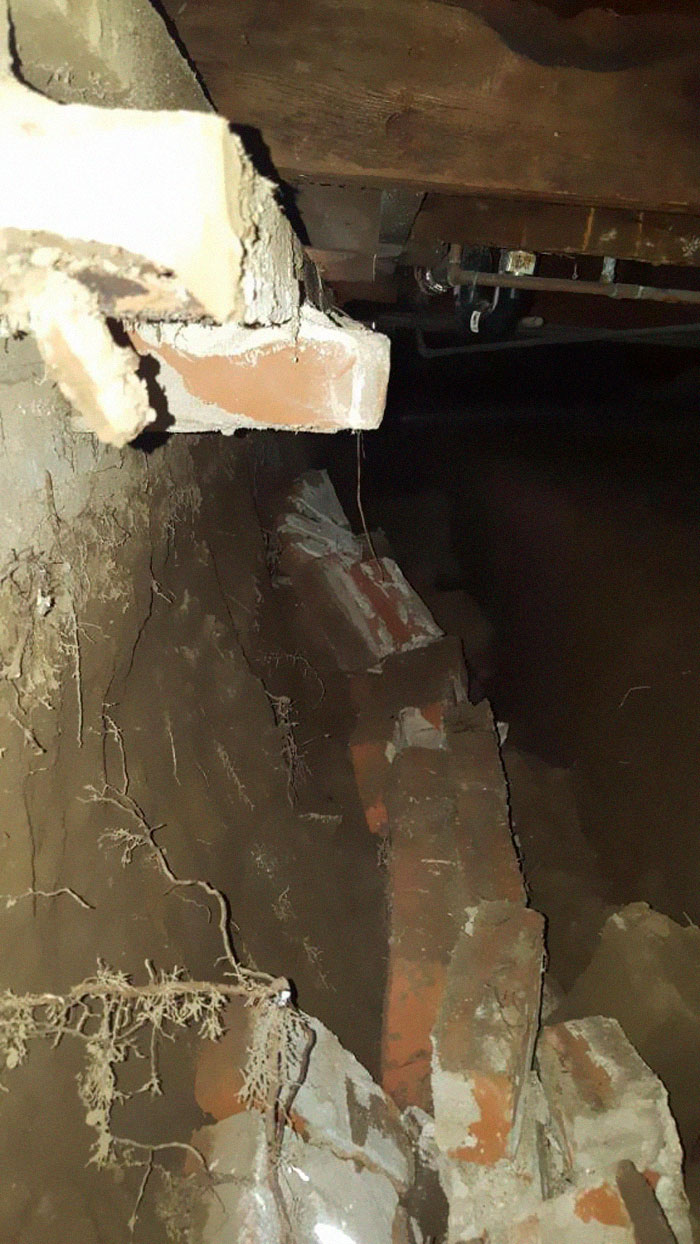
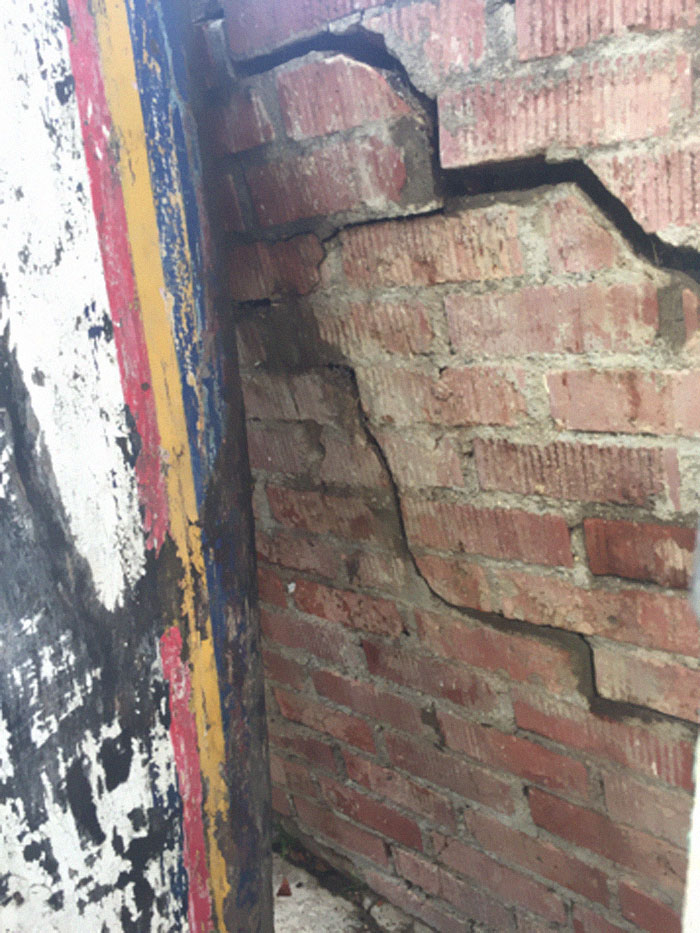
During an inspection in Los Angeles, we came across this brittle, failing foundation made of brick. The mortar simply fell right off of the brick in a dust waterfall. An earthquake would more than likely demolish this home.
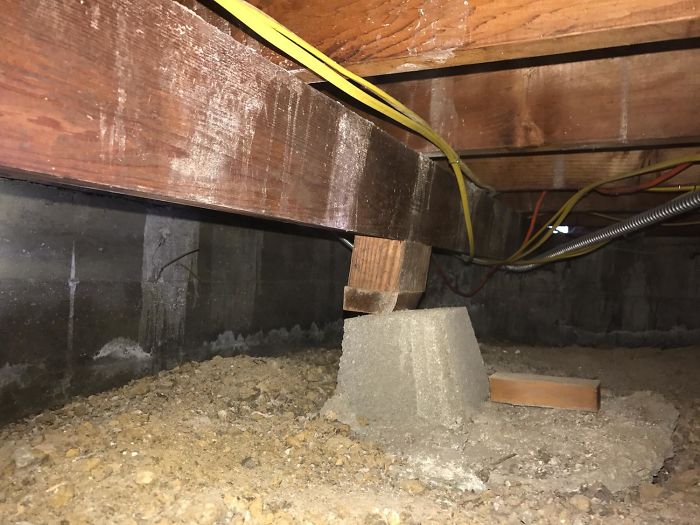
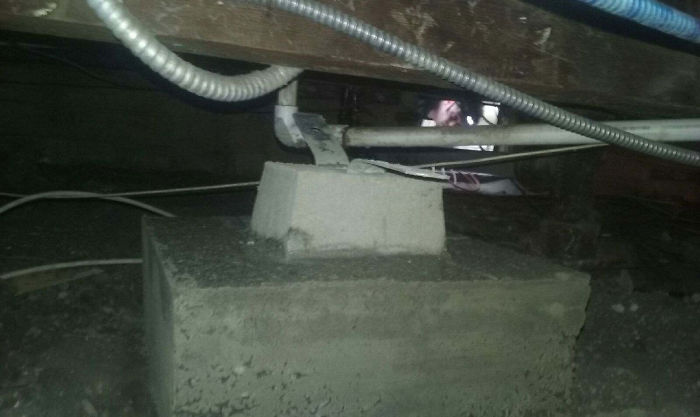
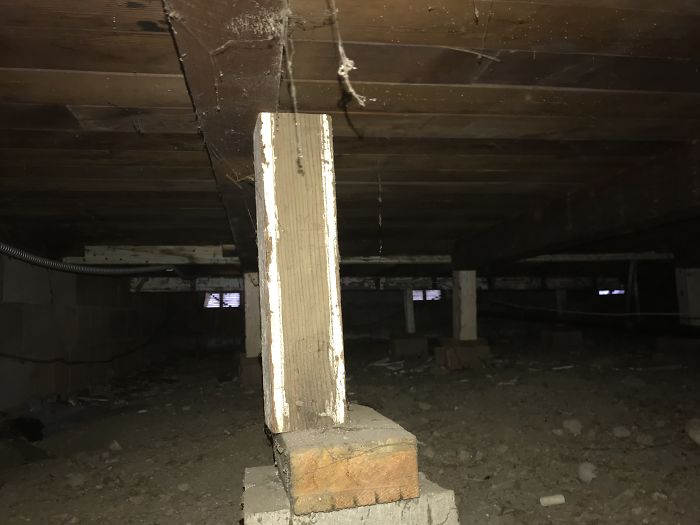
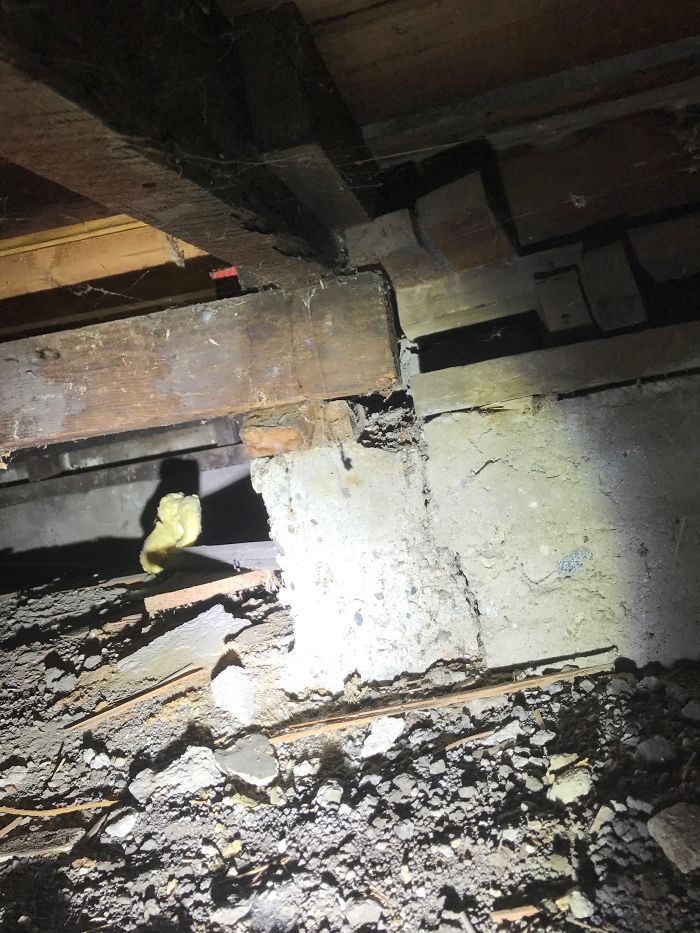
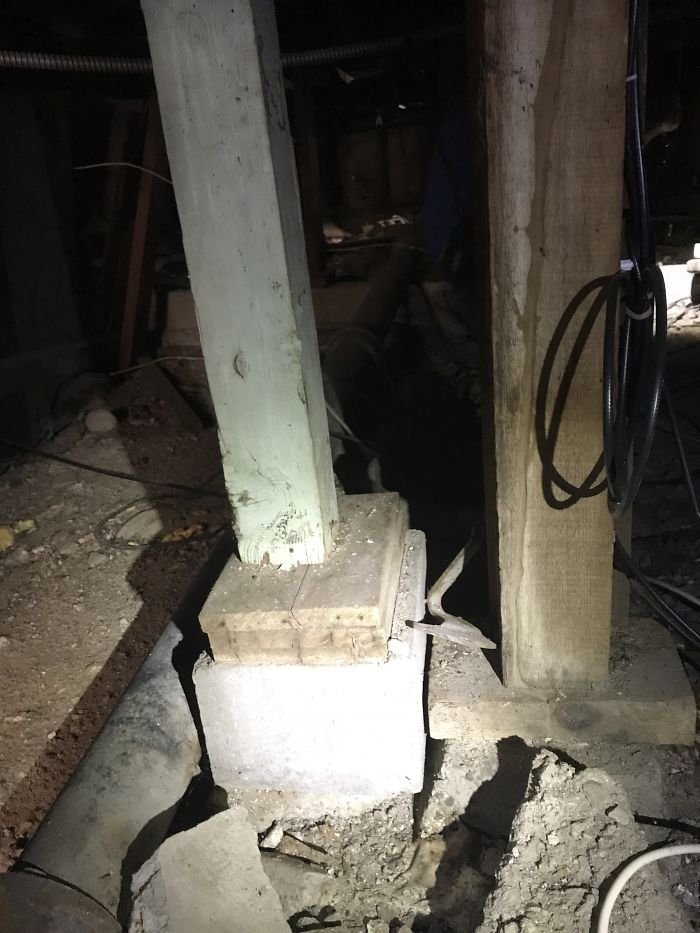
Post that's barely resting upon a concrete pier. This one is undermined and probably one good shake away from collapsing.
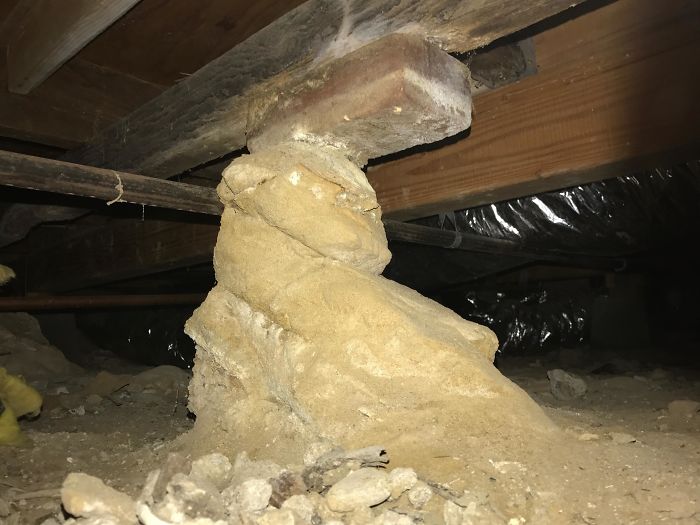
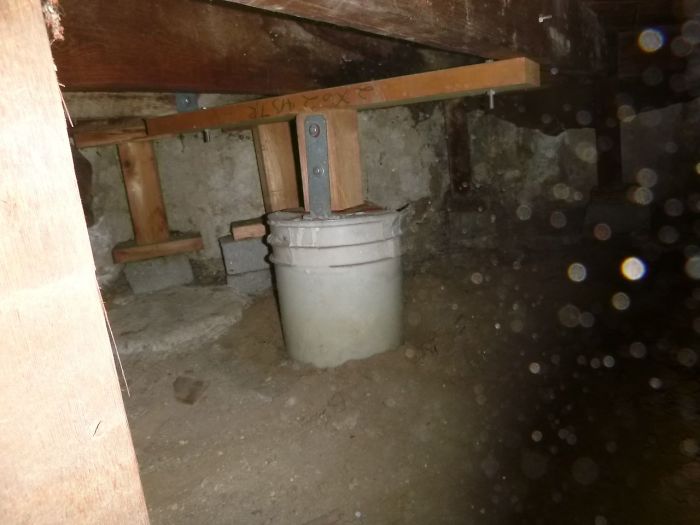
It's a bucket filled with sand, not concrete, used as a concrete pier. Code? Nope. Aesthetic? Nope. Funny? Yep.
This speaks for itself. If you're wondering about the filter, I lost the original. All I have is our Instagram photo.
Did a structural assessment for this home and the lady was wondering why her home was sloping 7 inches. Some classic LA settlement.
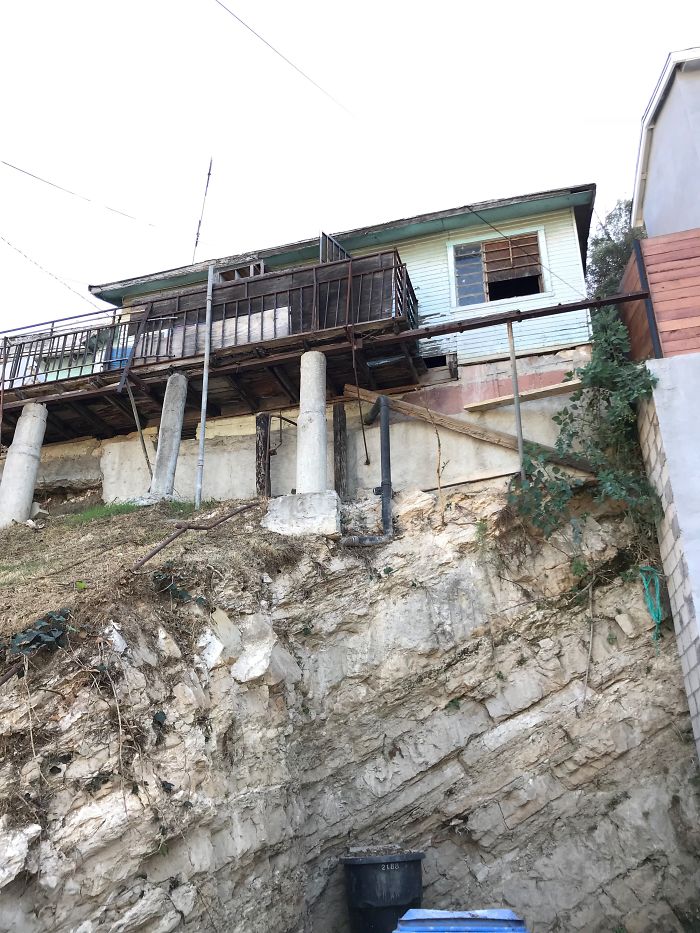
This was a very interesting hillside home that was sliding down the hill. They needed an engineered wall to keep the house from cracking down the slope.
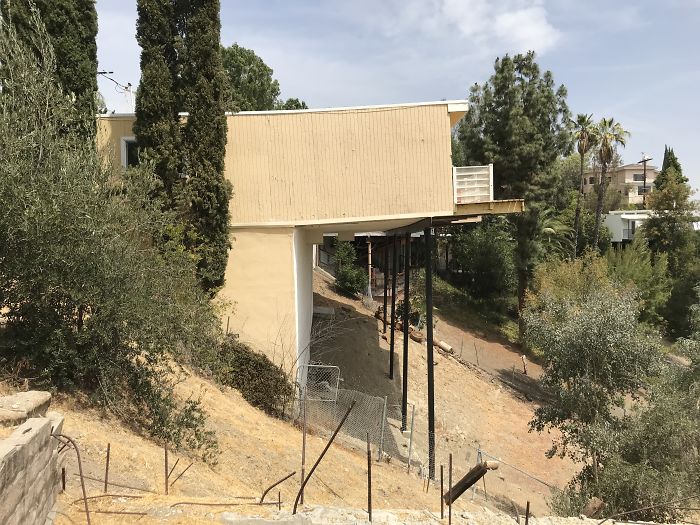
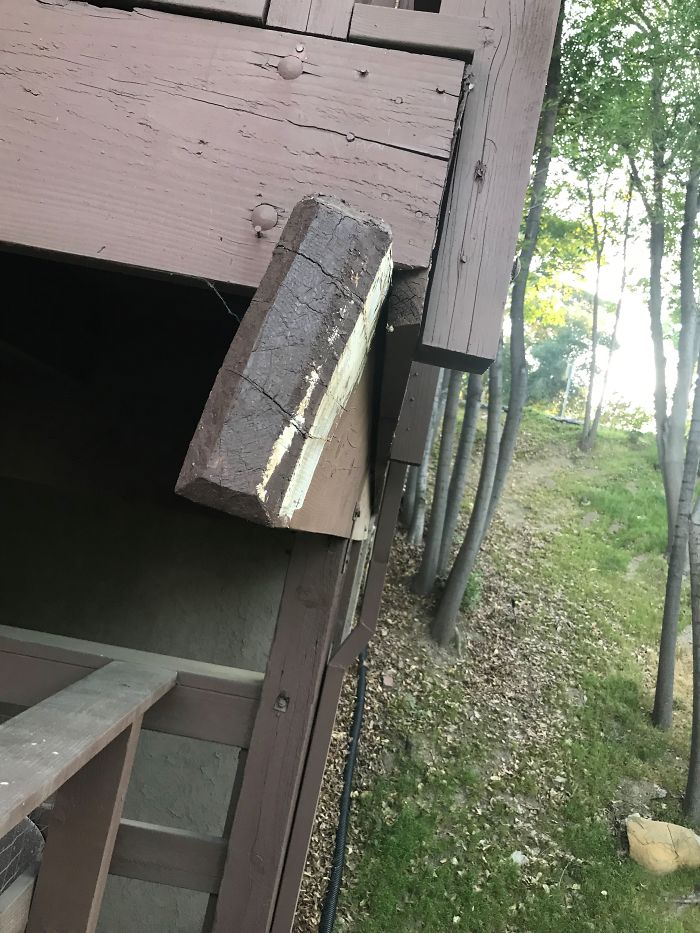
This one is subtle but the property is shifting like crazy! The back wall is bowing quite a bit and in the top right, where the stilts connect to the overhang, you can see the waviness of the connections and how unstable it really is.
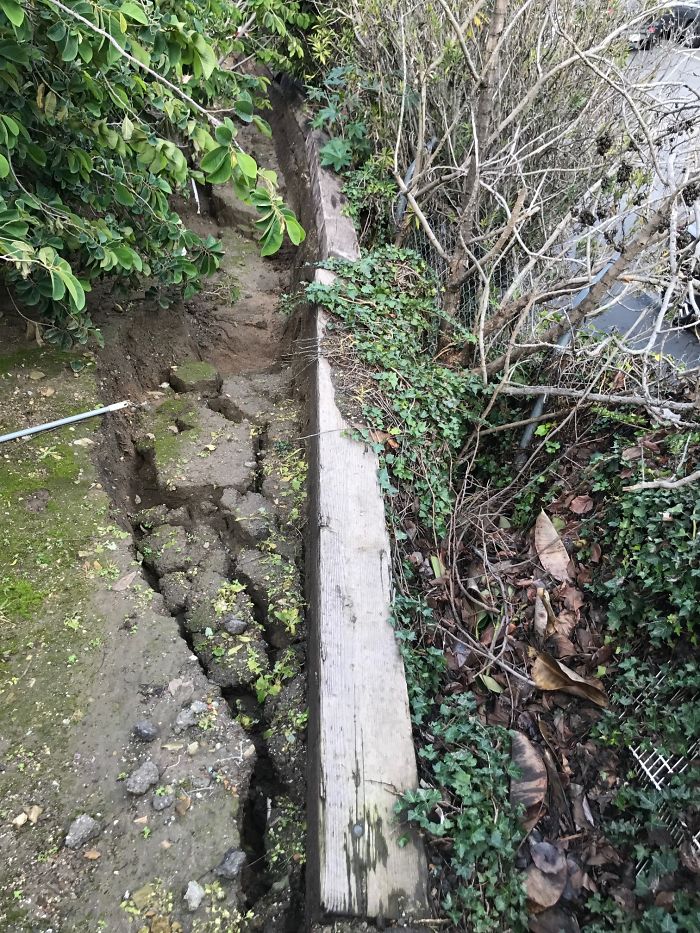
A few more inches down and that would have made a nice half-pipe for skateboarding. Image below shows the cause of this dip!
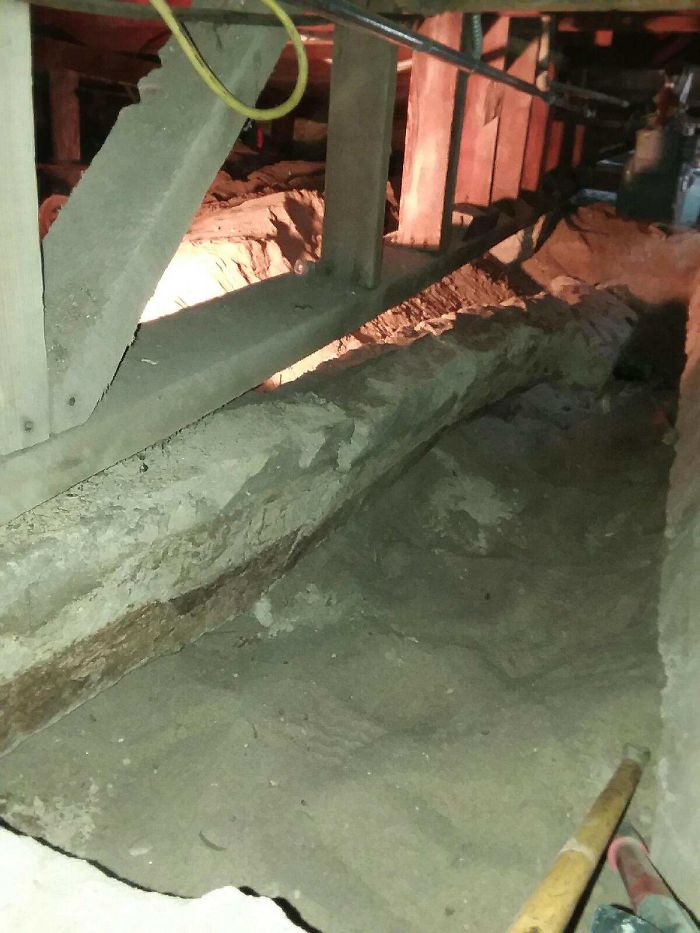
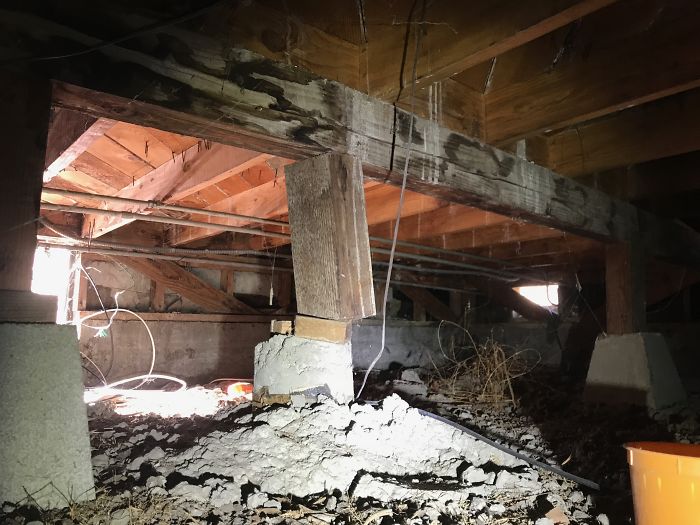
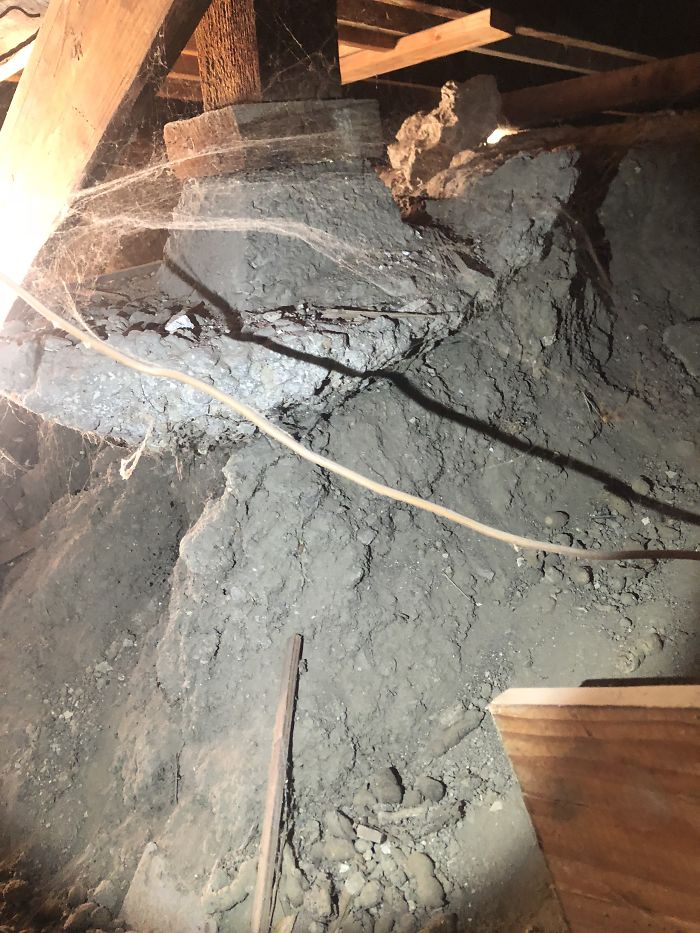
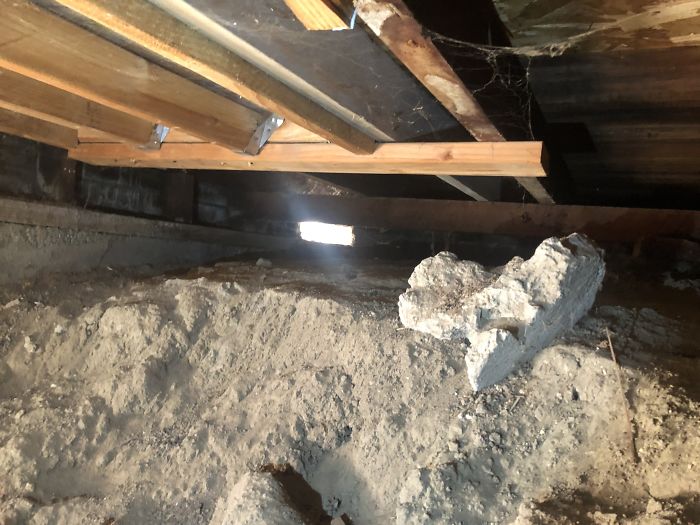
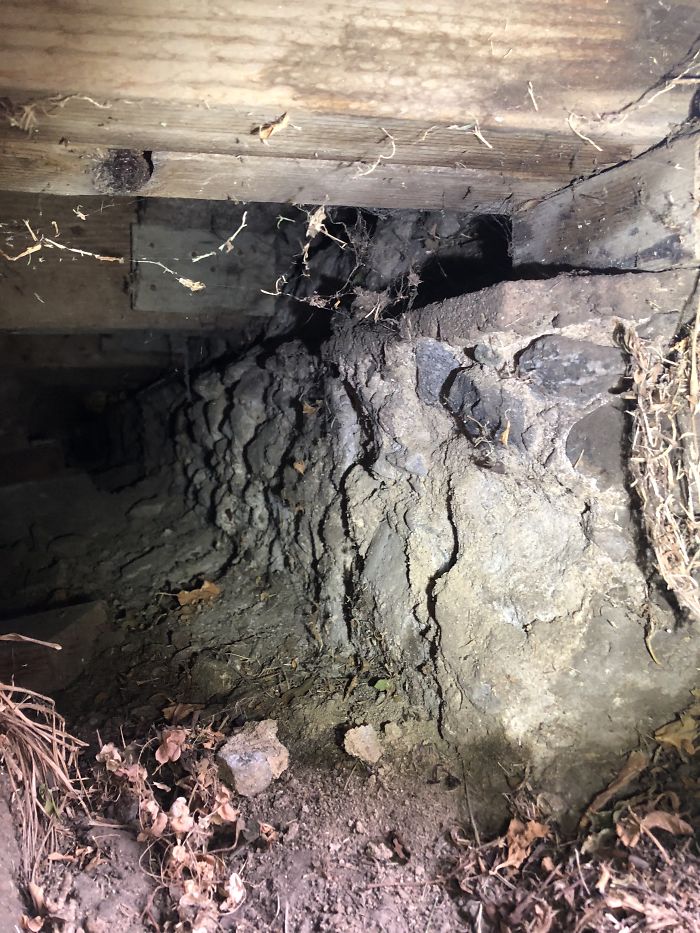
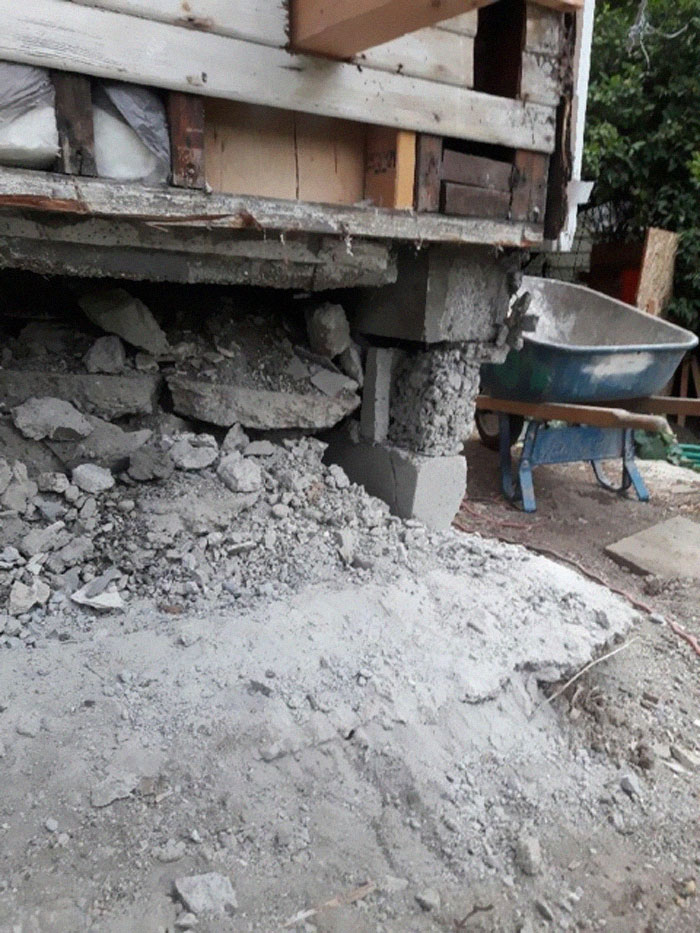
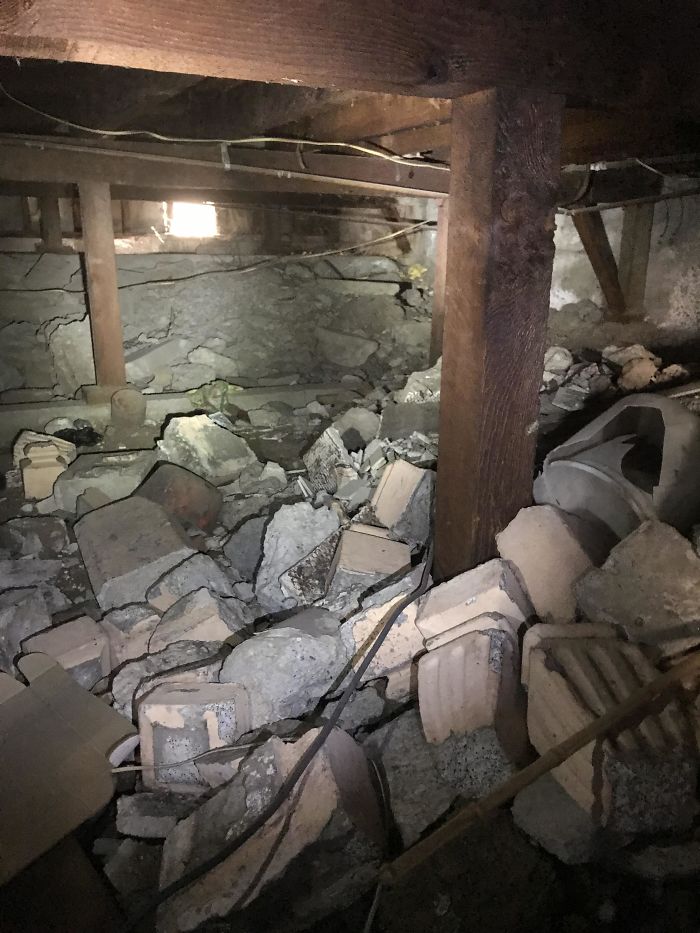
This was found under a house. Somebody undermined the entire footing then stopped the excavation and left.
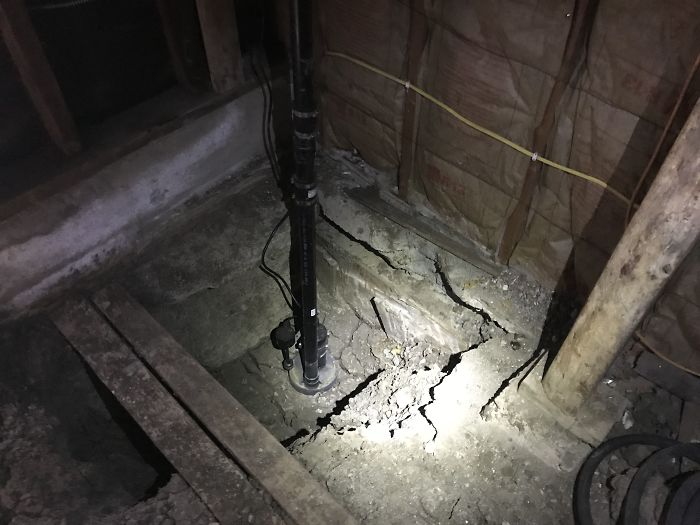
This is a sump pump. It should be isolated in a plastic or concrete basin to collect water. This was installed into dirt. Fail.
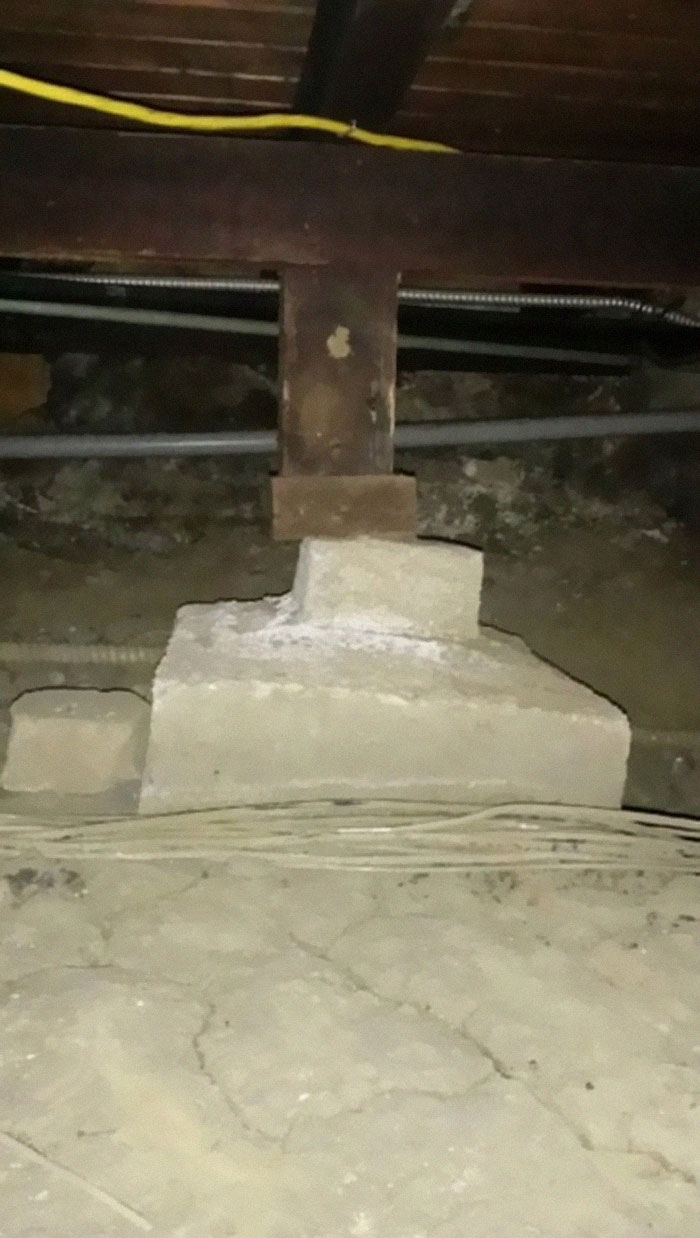
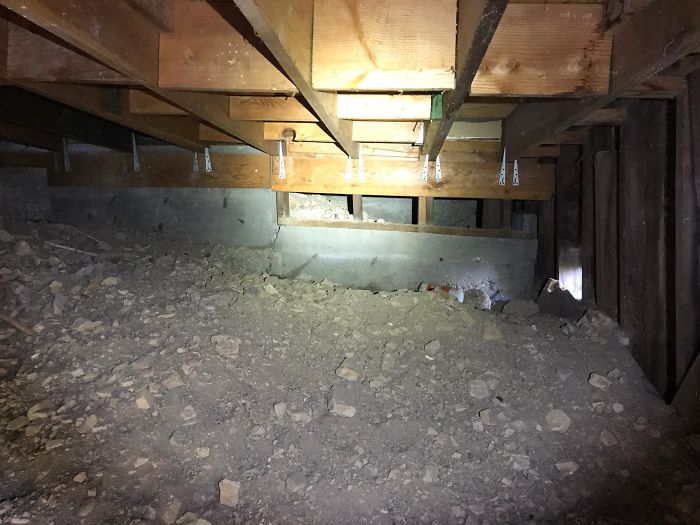
A pier with the footing sinking 7 inches down on the right. There were 6 others just like it under this property.
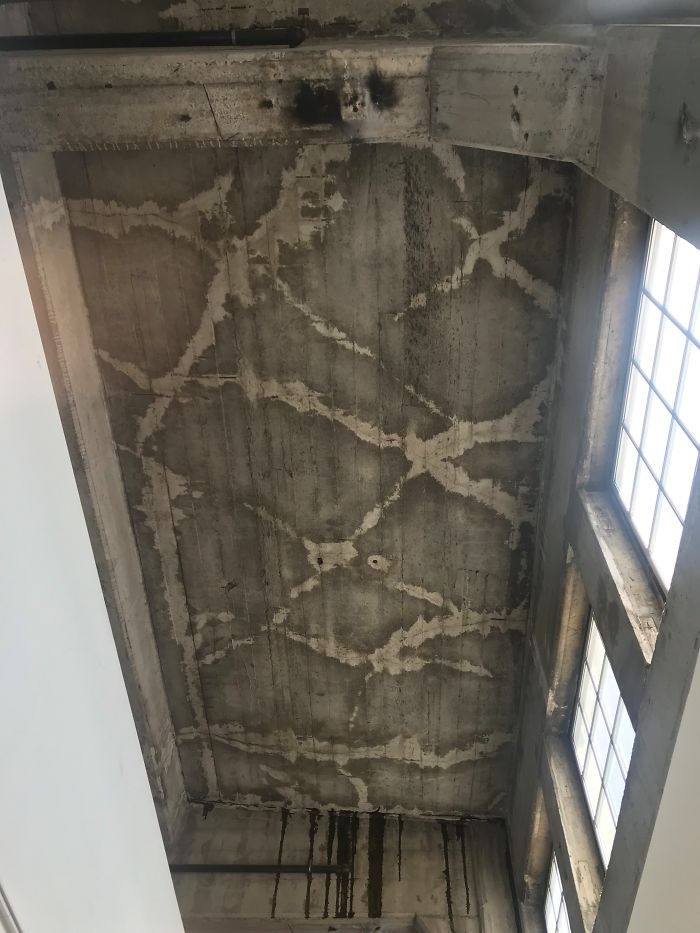
This may look like a cool, industrial ceiling pattern in a DTLA villa, but it's actually water intrusion coming through the cracks above.
This was a failed retaining wall that we're fixing up. It actually wraps around the front (which you'll see below) and the pressure underneath and farther up the hill caused it to fall over and collapse into the street and into the neighbors yard. What occurred was called a "surcharge" and it's when the pressure from the structure puts too much tension into the surrounding soil that it slowly gets pushed outwards.
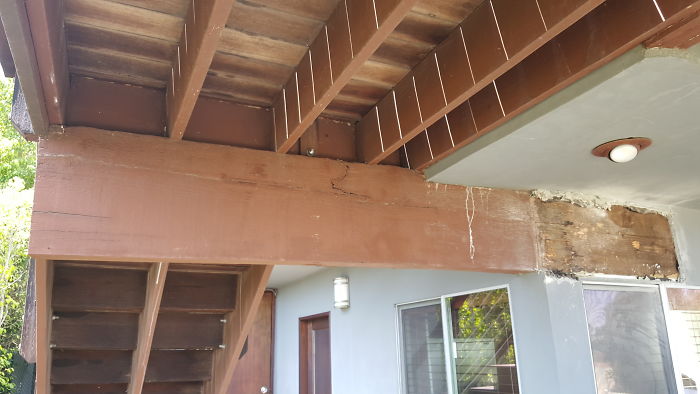
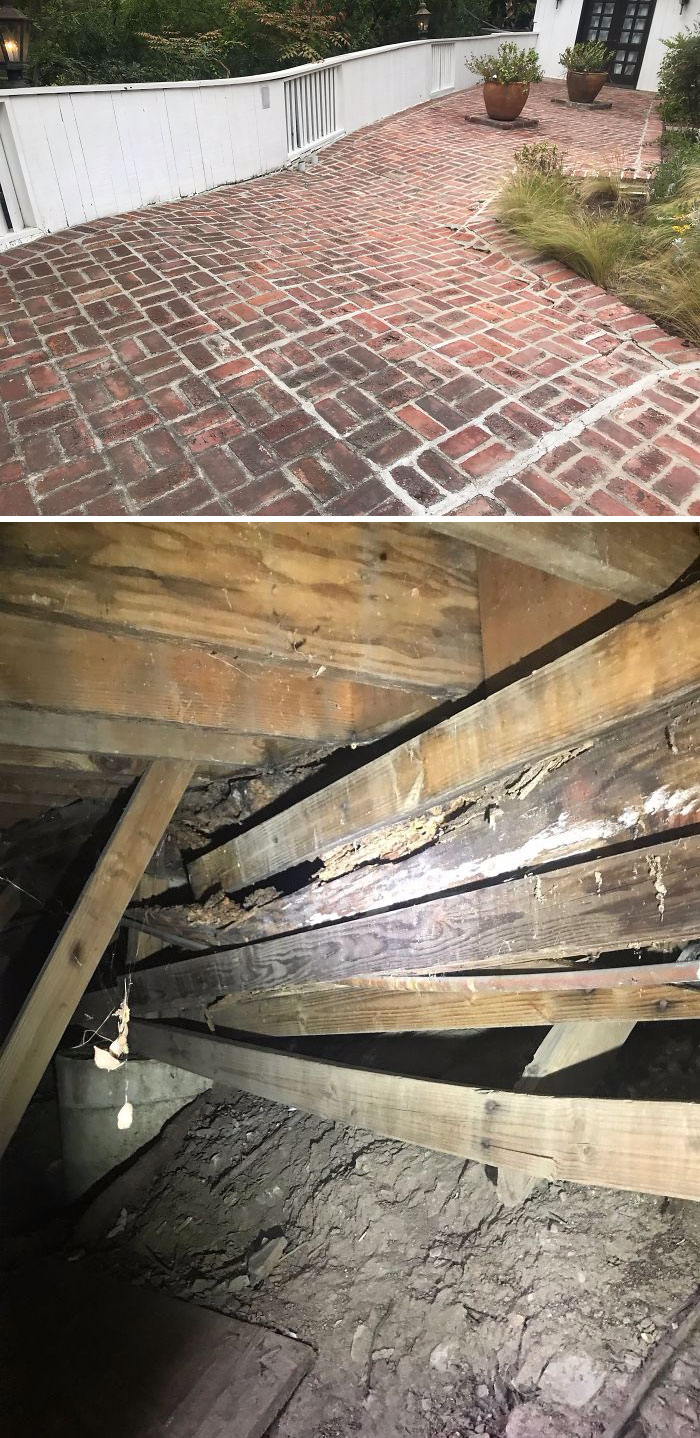
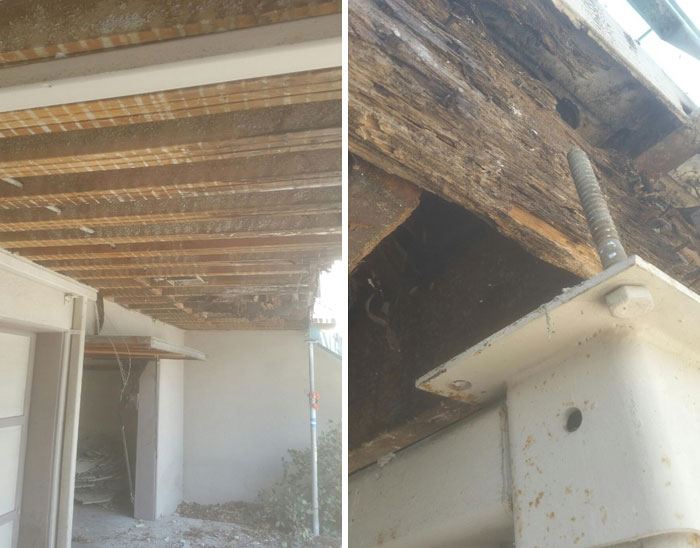
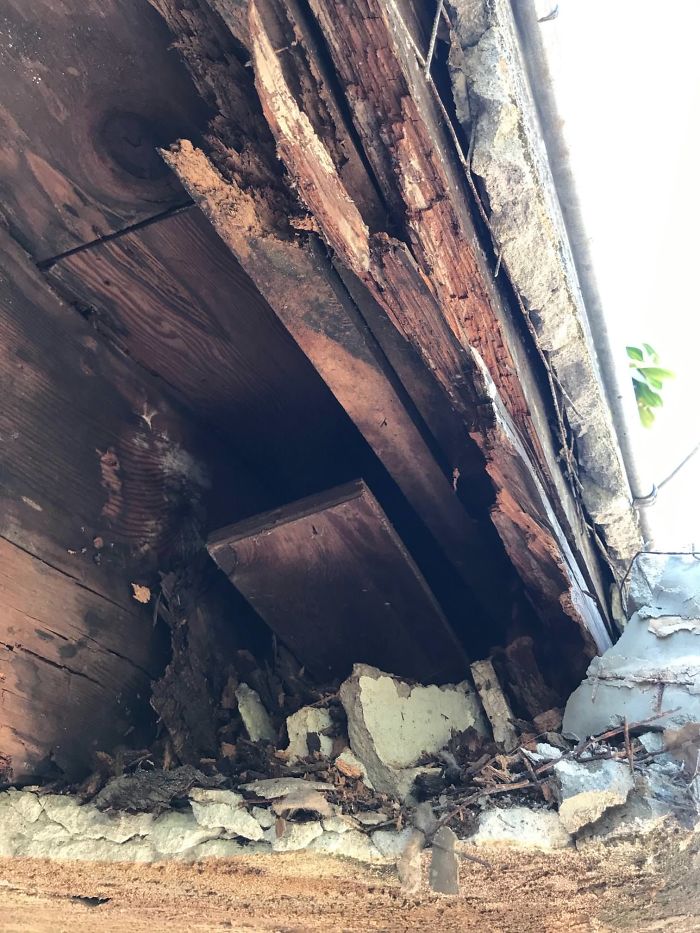
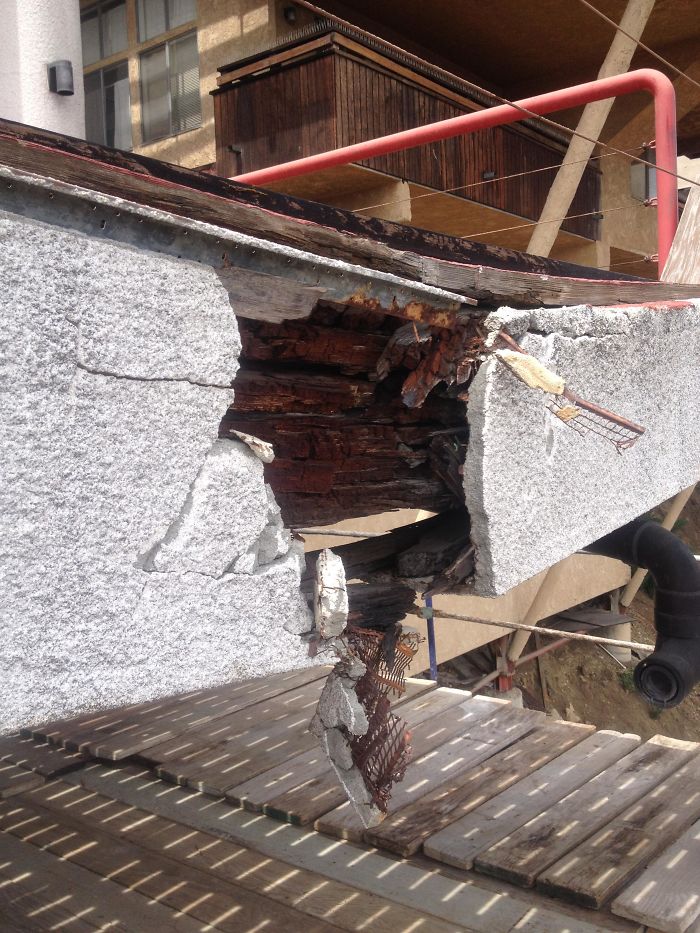
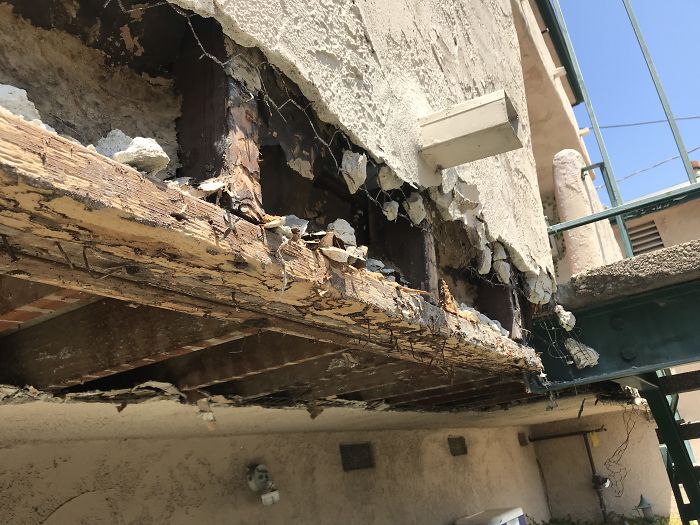
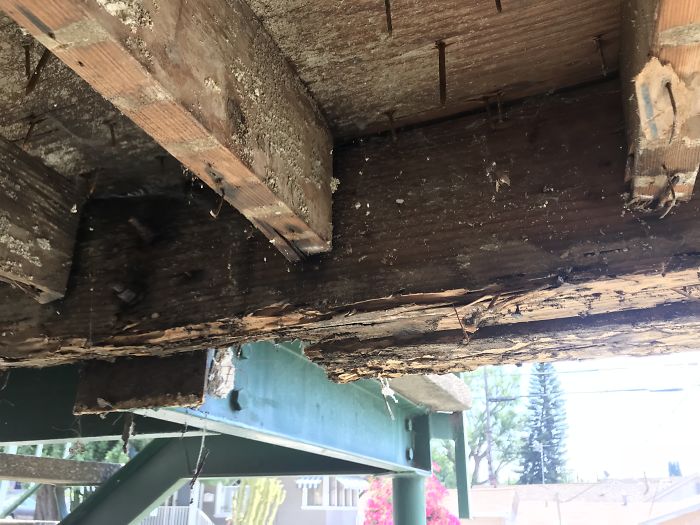
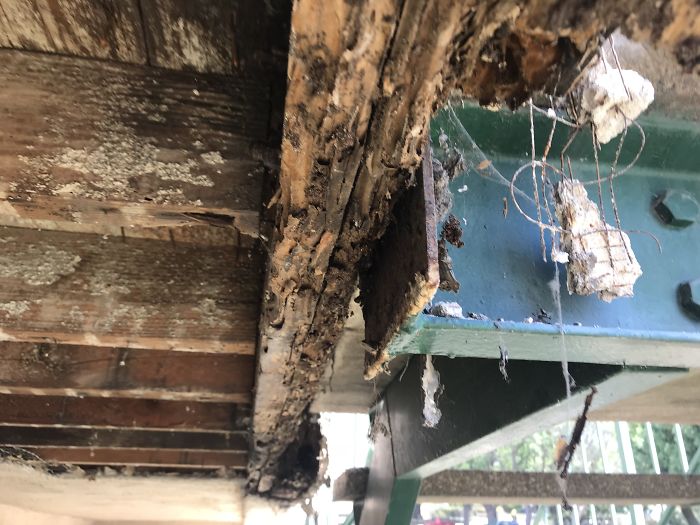
This is a deck that extended past the garage doors below it. Needless to say, it had some insane wood-rot underneath! In the photo to the right, you can see the once sturdy deck was held together by a massive framing bolt. Now it's free floating.
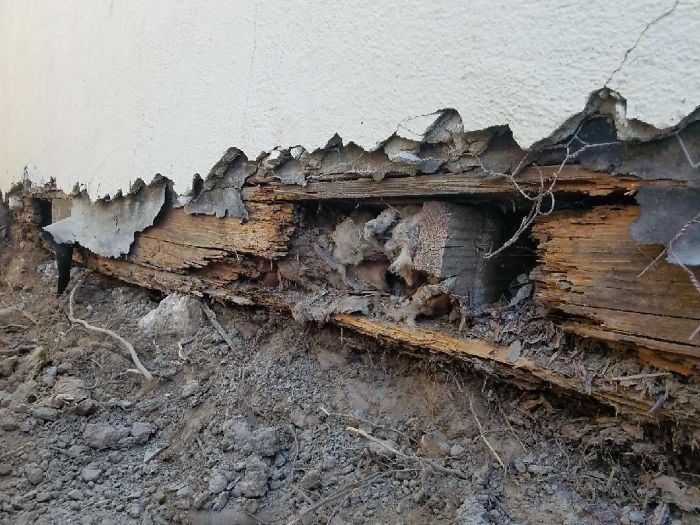
This is the side of a home that had awful water damage and wood-rot. The walls were so badly damaged and damp, they began to buckle and burst open, exposing the interior framing and causing the house to sink on one end.
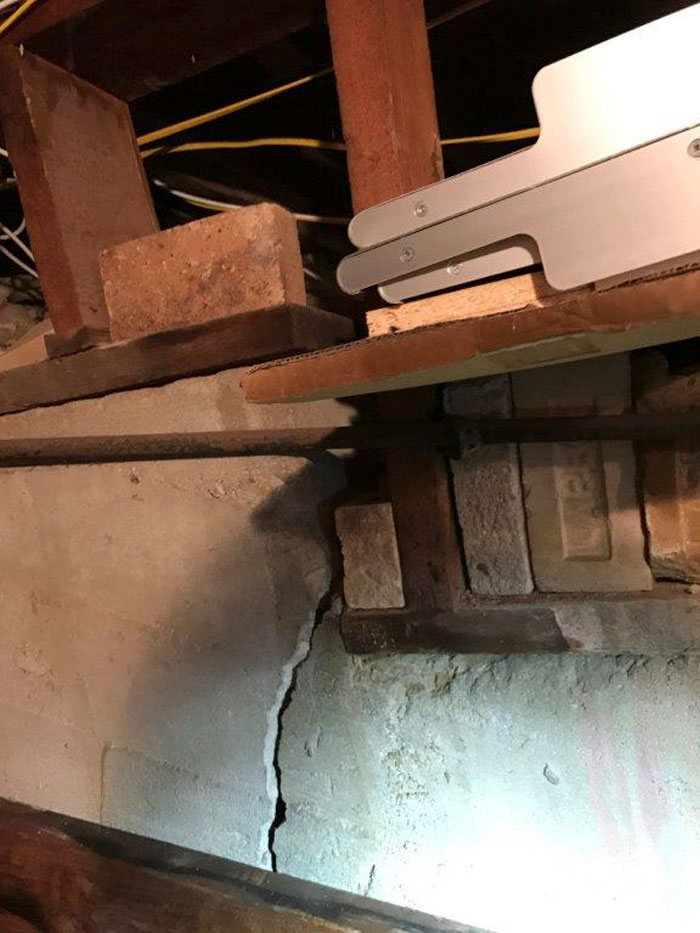
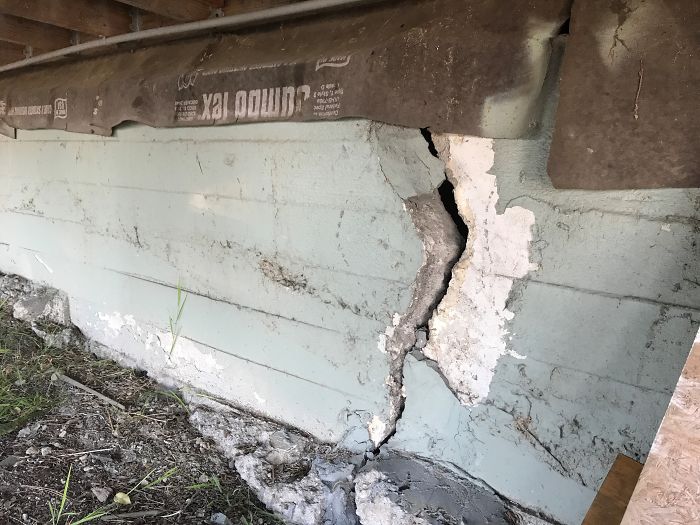
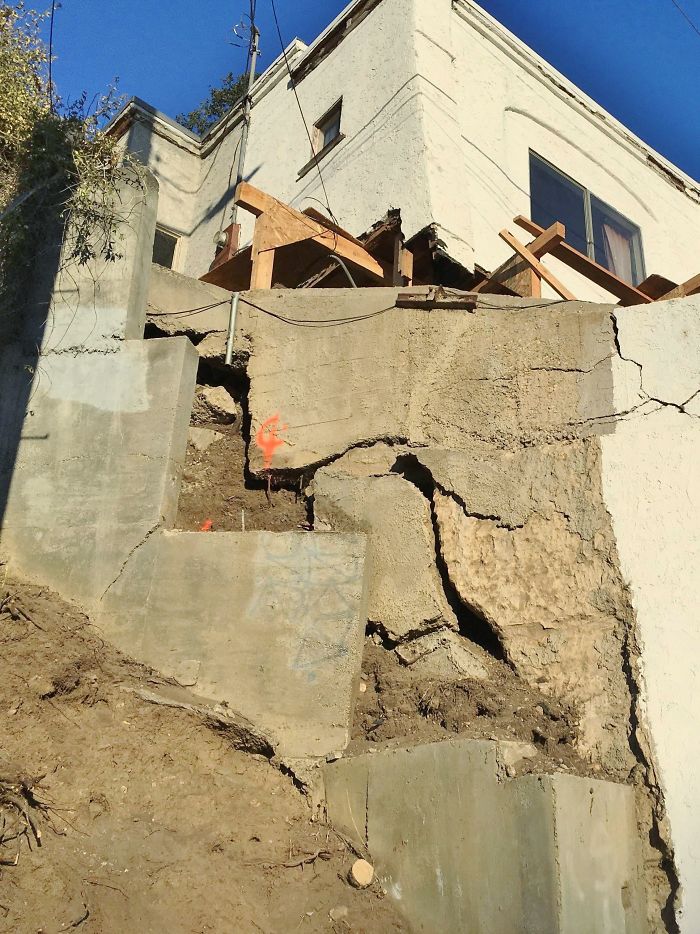
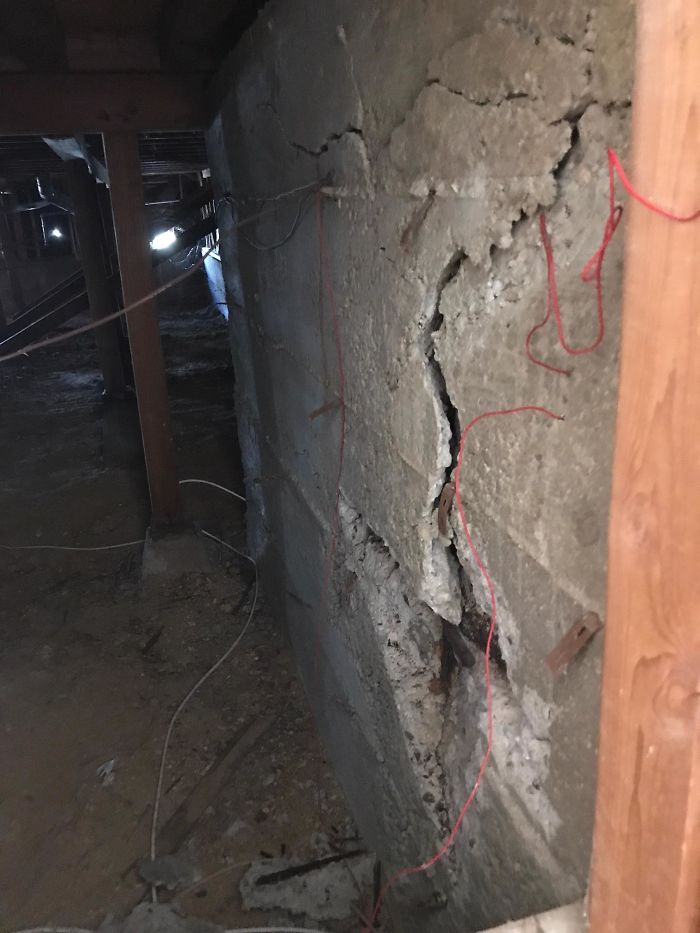
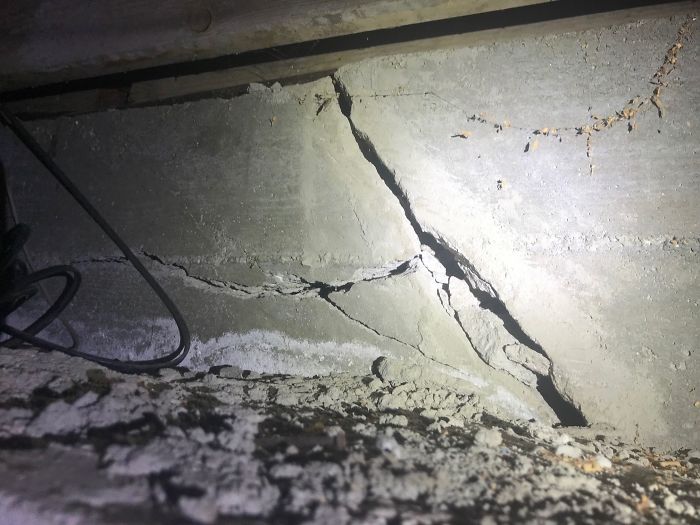
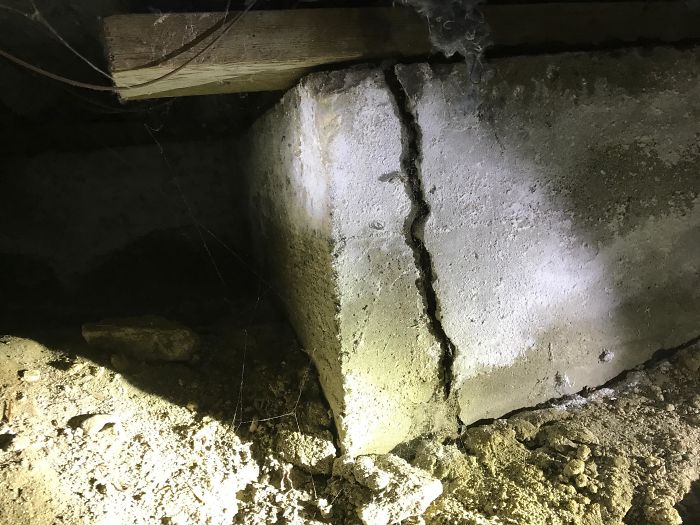
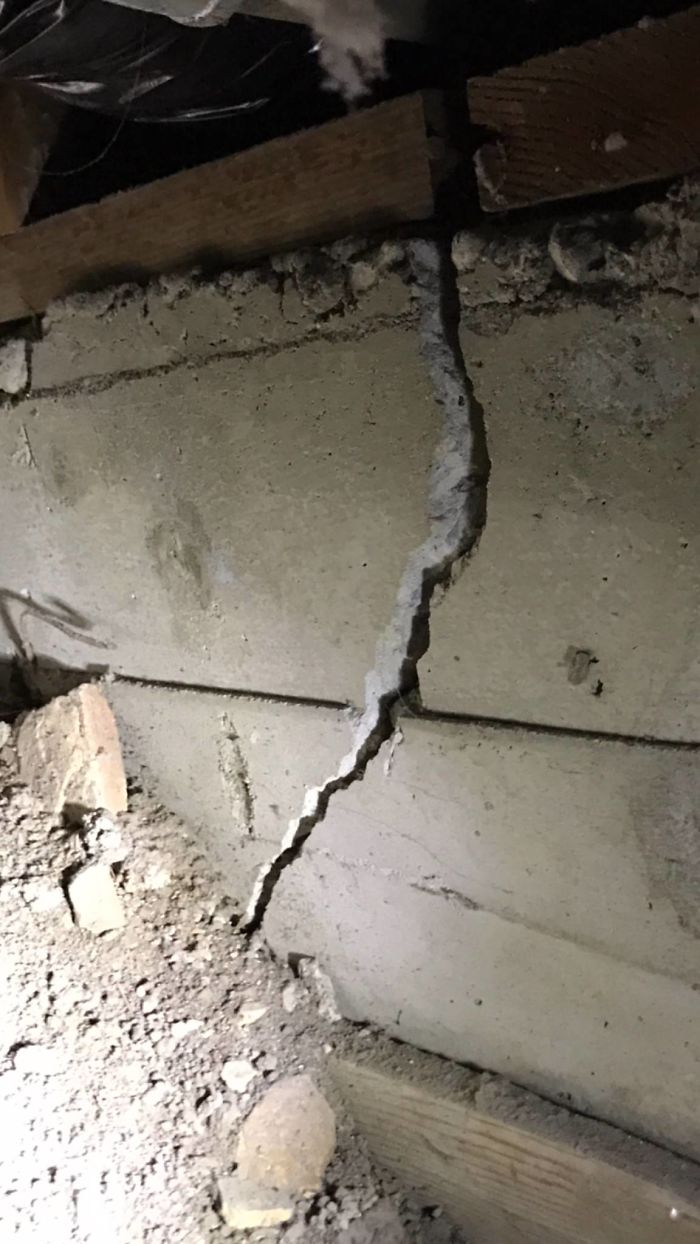
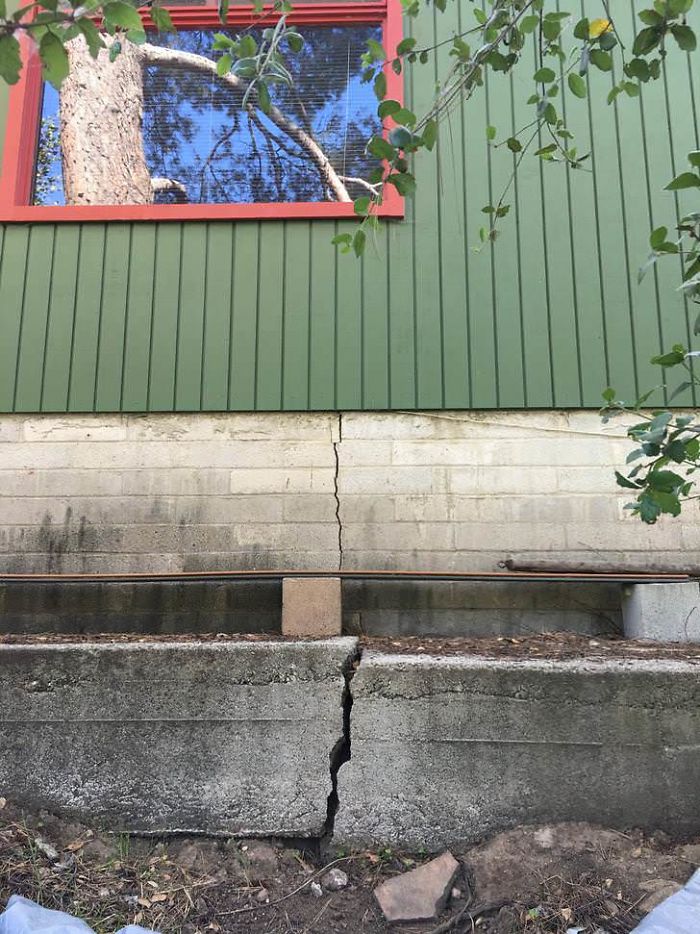
This is a pretty severe crack in the concrete foundation of a hillside home. Metal strapping is one solution to this, though it's never recommended because the problems will persist and show up again in a few years. Replacing this section would be the correct action.
You don't have to be an expert to see there's an issue here. The foundation and framing connection (cripple wall) is buckling out toward the driveway. This is causing sloping floors, interior and exterior cracking and sticking doors.
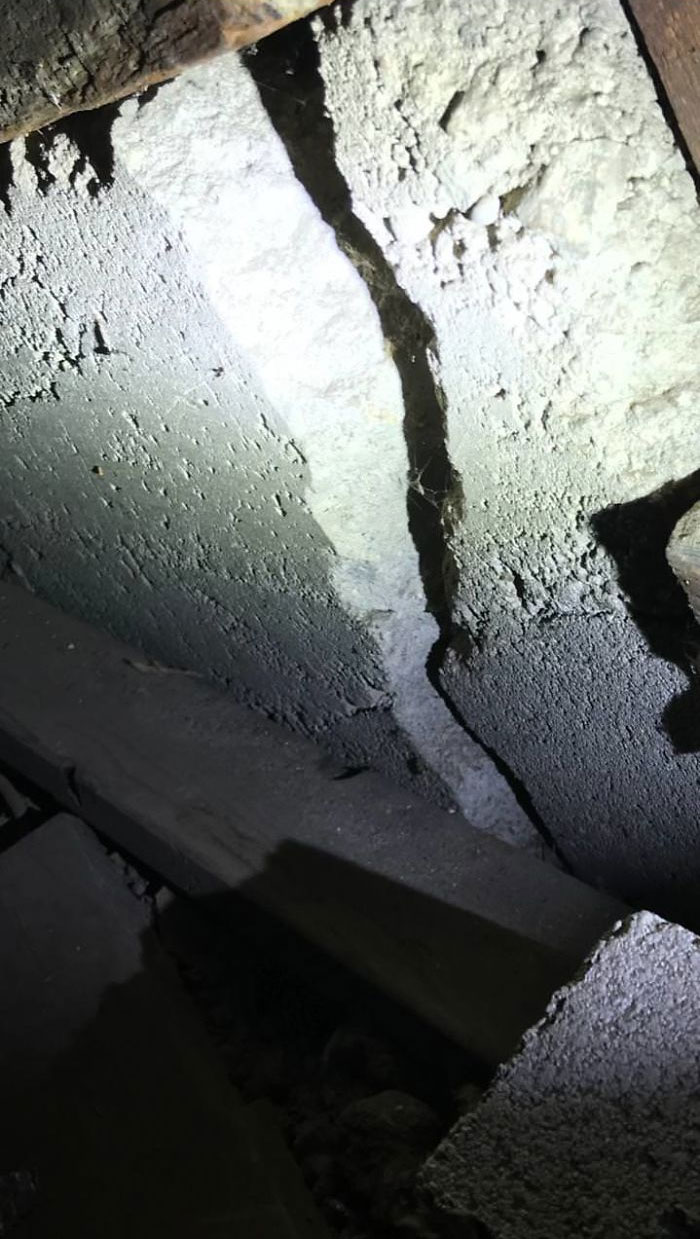
A spider made this crack it's home and now we can't do the work. We don't want to tear a spider family apart like that.
This is more of an art piece that was built into the foundation. There's rock, a cinder block, 2x4's and a metal plate, all tied into the foundation. Beautiful, elegant, illegal.
This is actually a project that we took on and it's almost done. This is a VERY steep hillside up in Hollywood that was collapsing and continuously falling and creating more damage to the hillside. We drilled piles down about 30 feet to bedrock for stabilization and added a new retaining wall system for the upper tier.
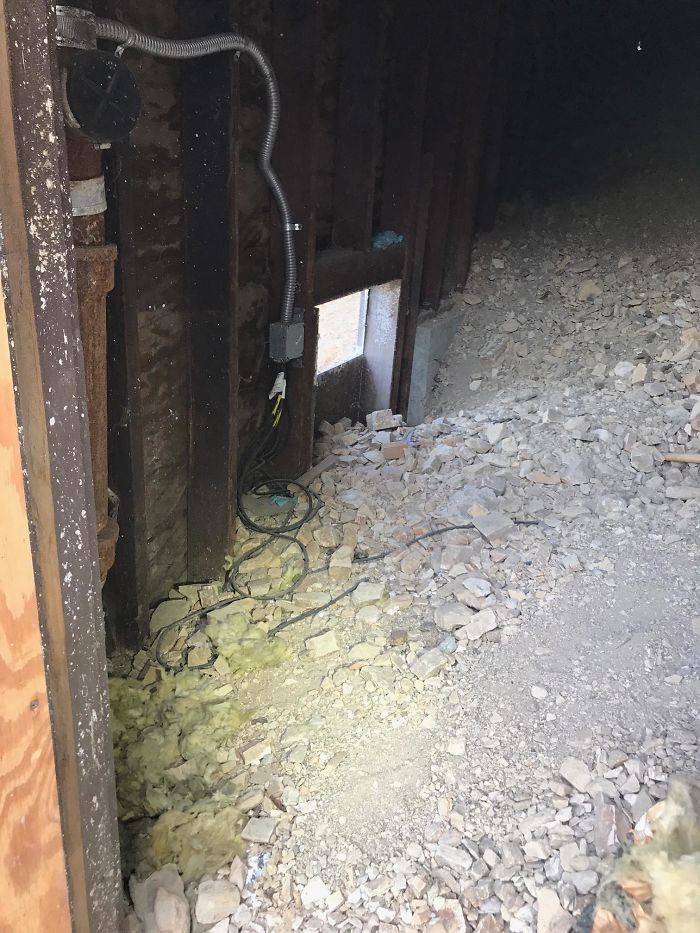
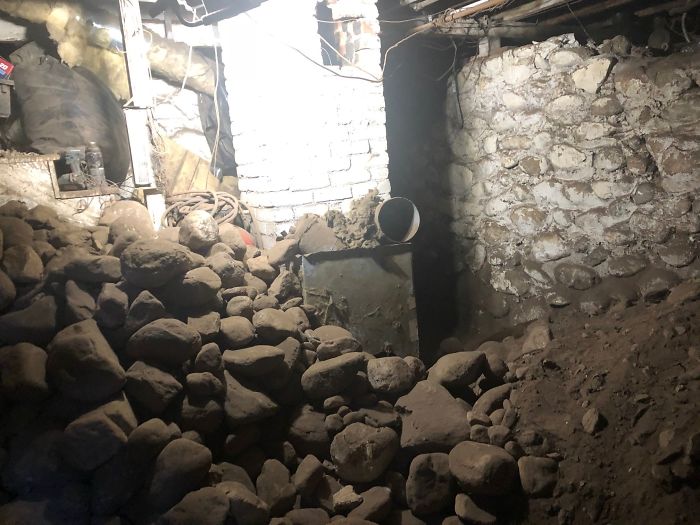
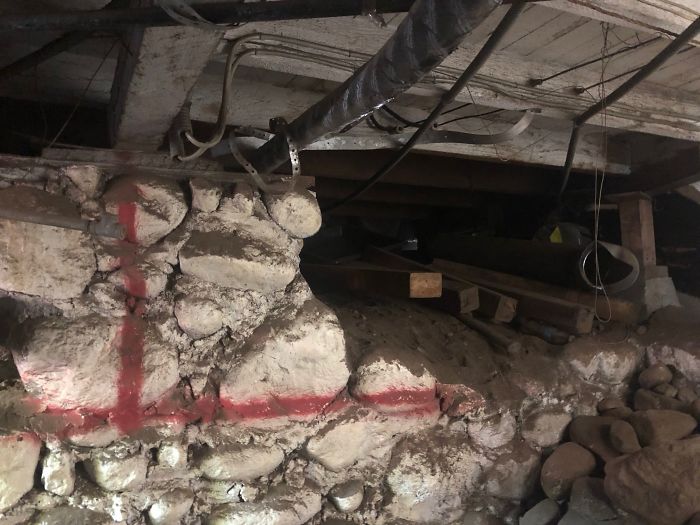
This was the "foundation" of an old school built in the early 1900's. Completely made up of rock and rubble, this would in no way survive an earthquake. We're redoing the entire foundation.
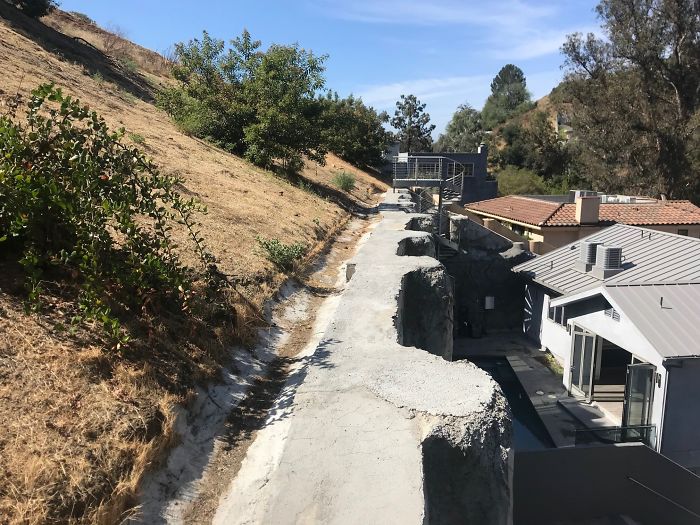
This was a massive 30' retaining wall in the back of a few properties. There's nothing really "wrong" with it, other than it's clearly uneven at most points and it seems to have been un-permitted. A pool at the bottom right clearly indicates the real reason the wall is there; cliff diving practice.
A post that's barely resting upon a concrete pier.
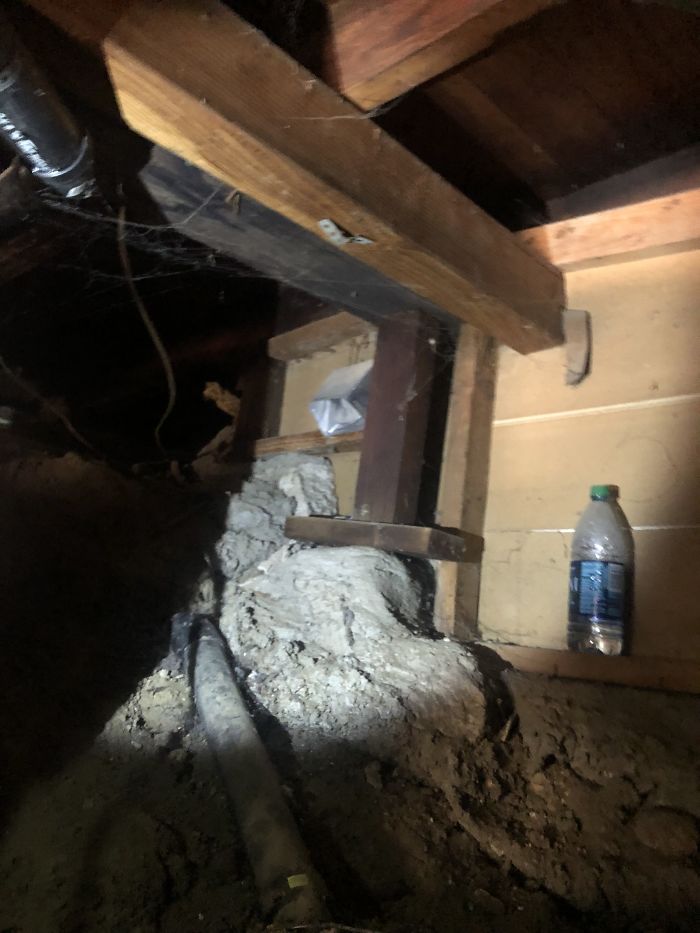
This one really makes me chuckle because it looks like the feds are using a spotlight to catch a felon (Dasani bottle) on the ledge of a skyscraper.
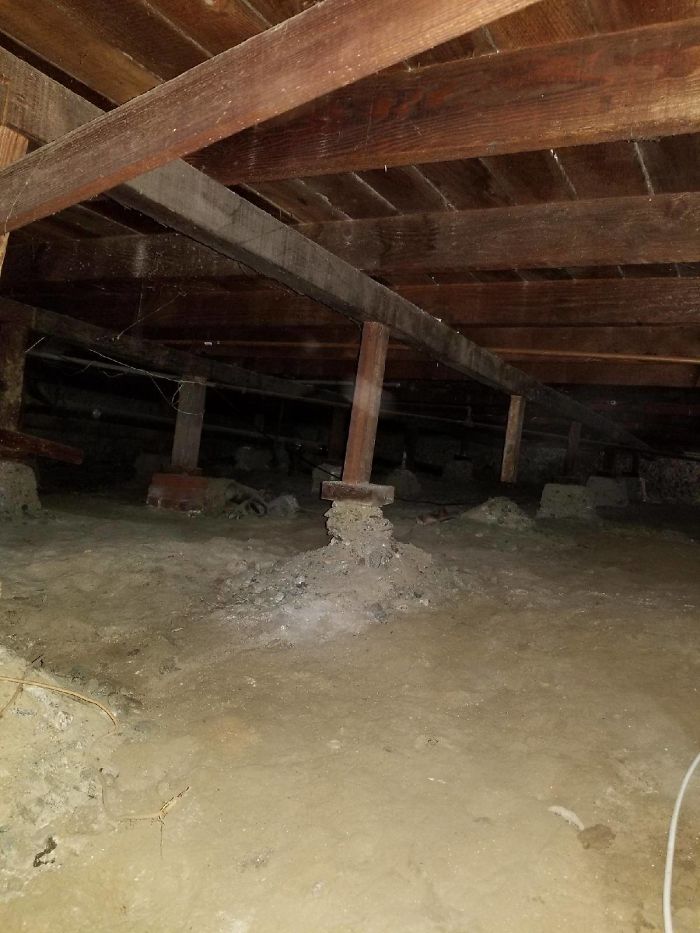
This pier has simply given up in life and is allowing the process of earth decomposition to take place.
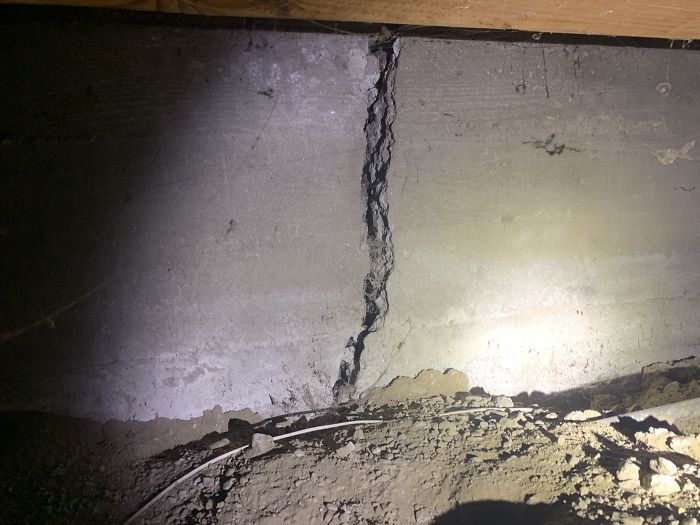
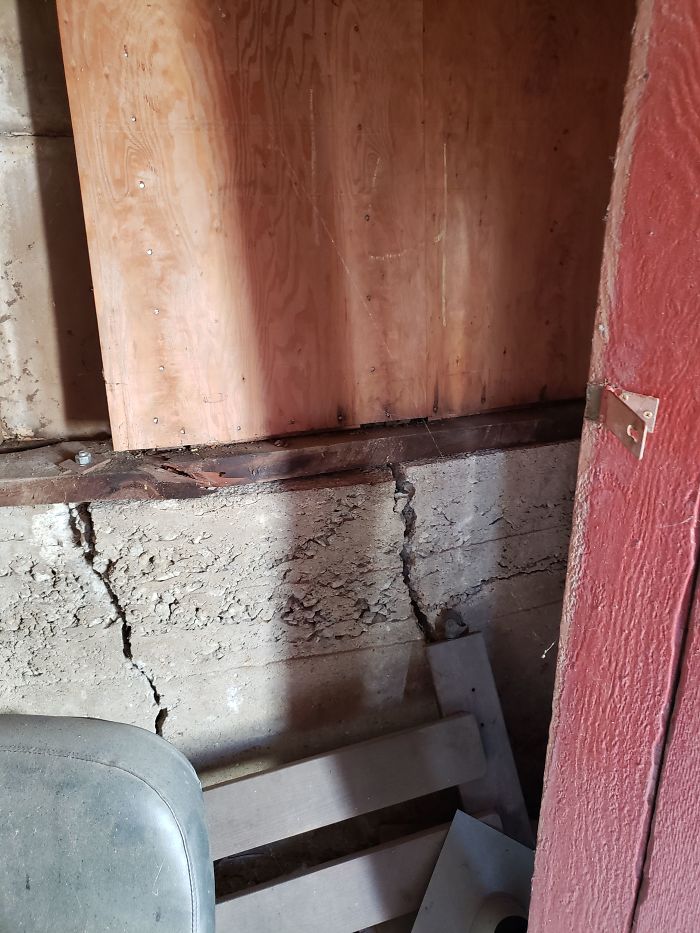
Another large, vertical crack that is displaced. Though it is a newer looking foundation, there was no reinforcement bar and a small earthquake hit the area. Snap.
Here's the real damage. A rotating concrete foundation with a complete absence of re-bar (reinforcement steel). Not only is the concrete rotating; it's sinking, cracked on both ends and could easily cause the house to fall at any time.
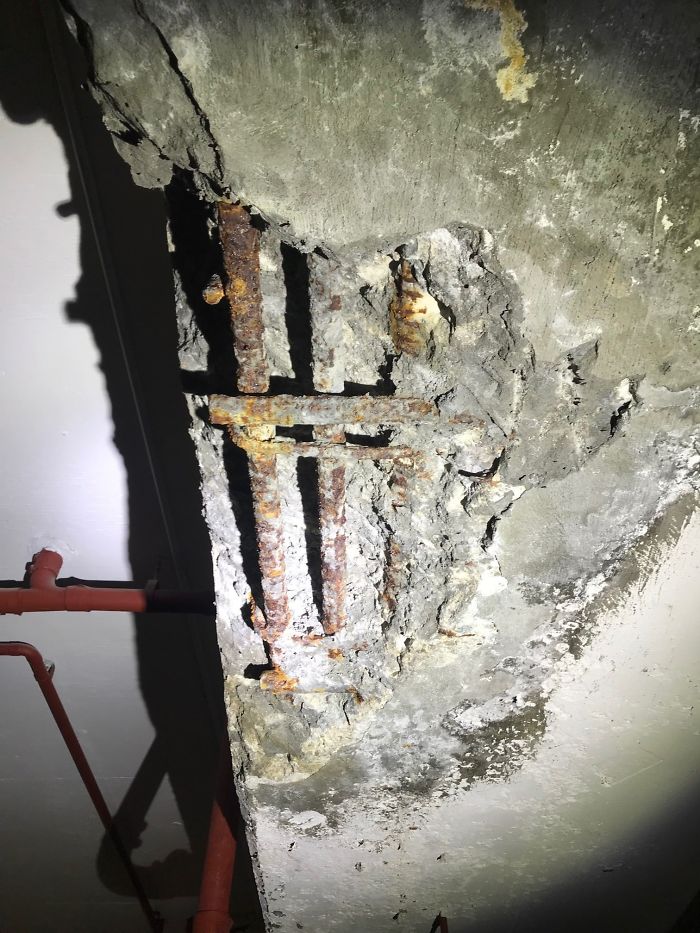
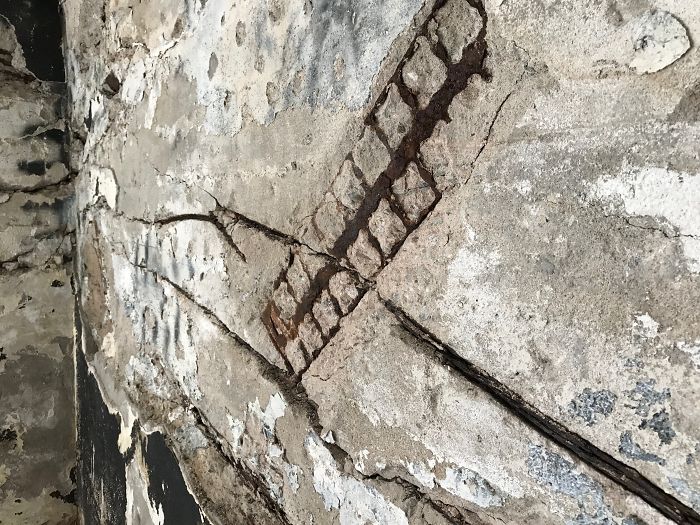
This is a ridiculous spalling issue. It's as if they threw in small pieces of re-bar while the concrete was hardening.
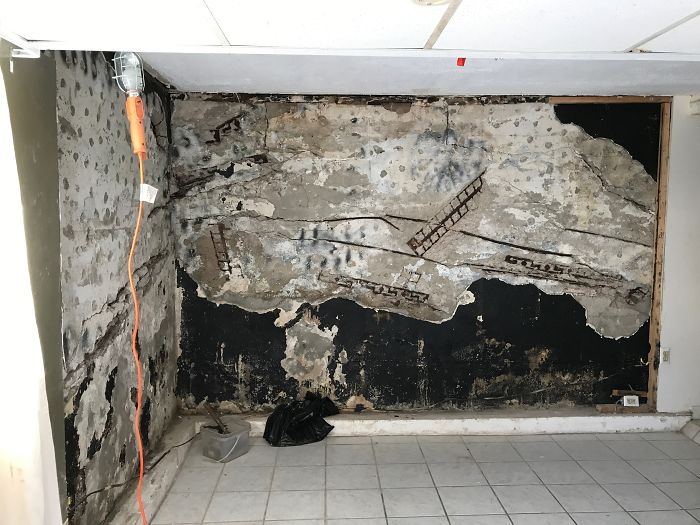
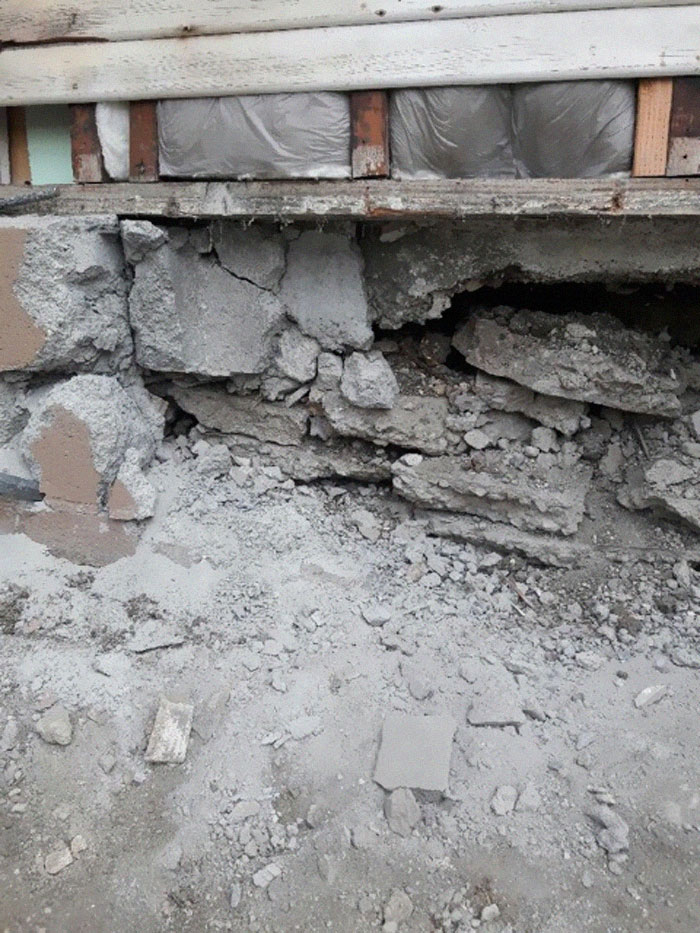
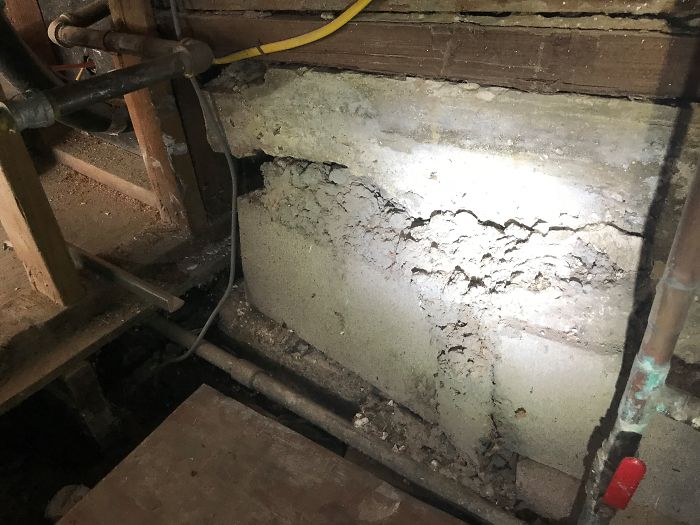
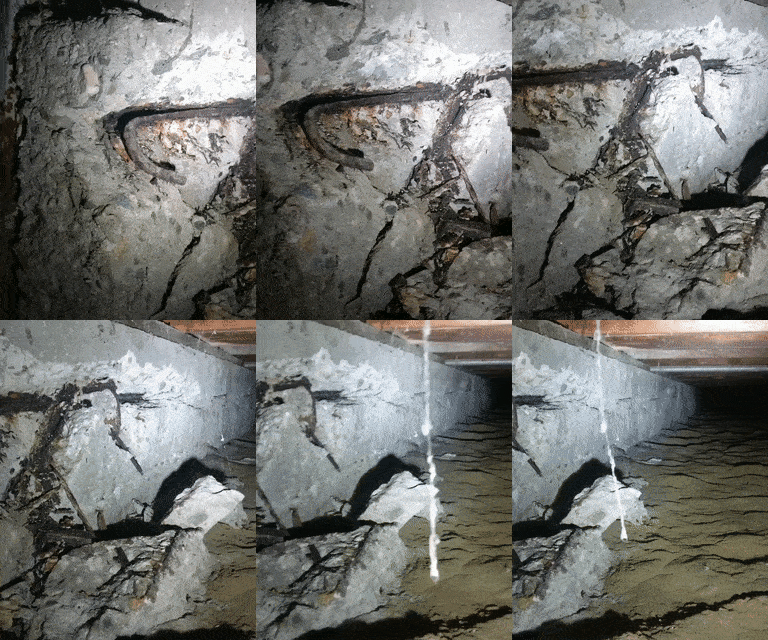
If you open up a wall and the concrete crumbles out like this...you might have some foundation issues.
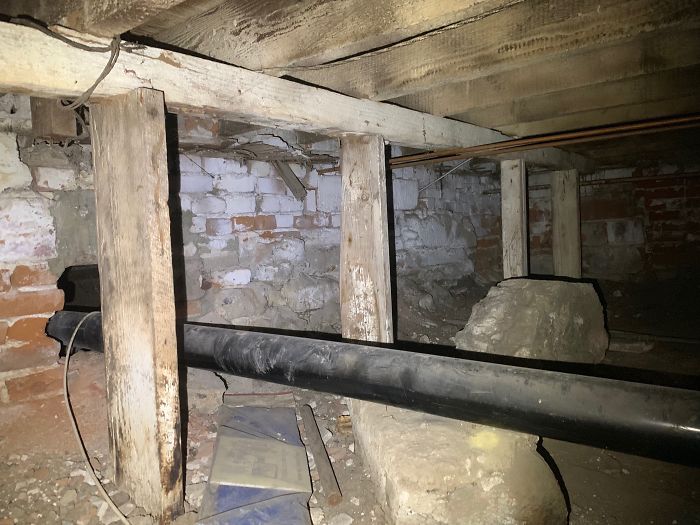
This is a look at an 1885 home in Los Angeles. The "posts" are 2x8s with little to no concrete pier to rest on. The brick foundation is crumbling and falling apart more and more every year and needs to be entirely replaced. It's lasted this long, but it wont last for much longer.
A deteriorating river rock foundation in Pasadena. There's a bunch of those out there and almost all of them need work!
Being serious, this is a bad slope issues, mainly due to poor drainage and downspouts pouring right out near the base of the foundation. Caused a lot of wood rot and joists to start bowing.
This is my favorite of today's post. This is a brick foundation that completely toppled over in the night. We were called out to do emergency shoring (Support lumber) to keep the house from collapsing down. We're adding brand new concrete foundations to both side's of the home. CLOSE CALL!
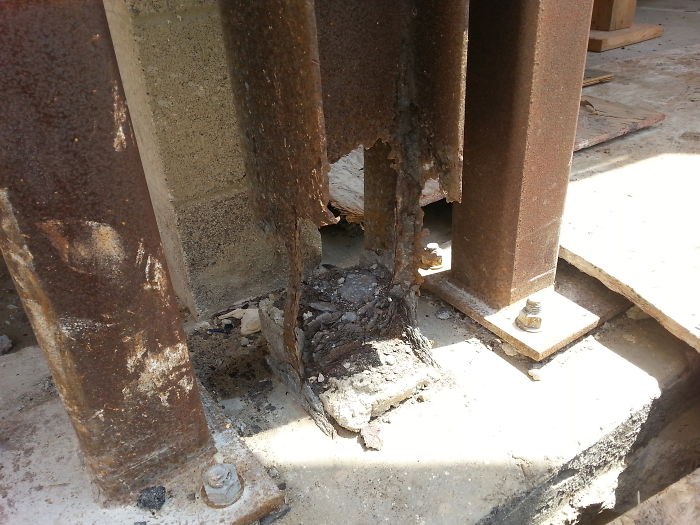
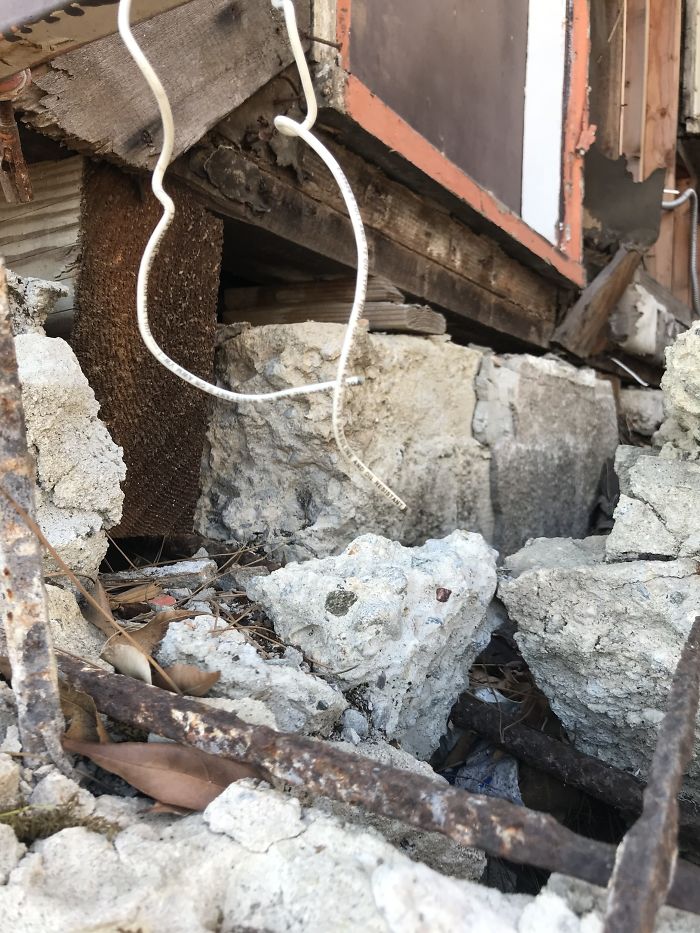
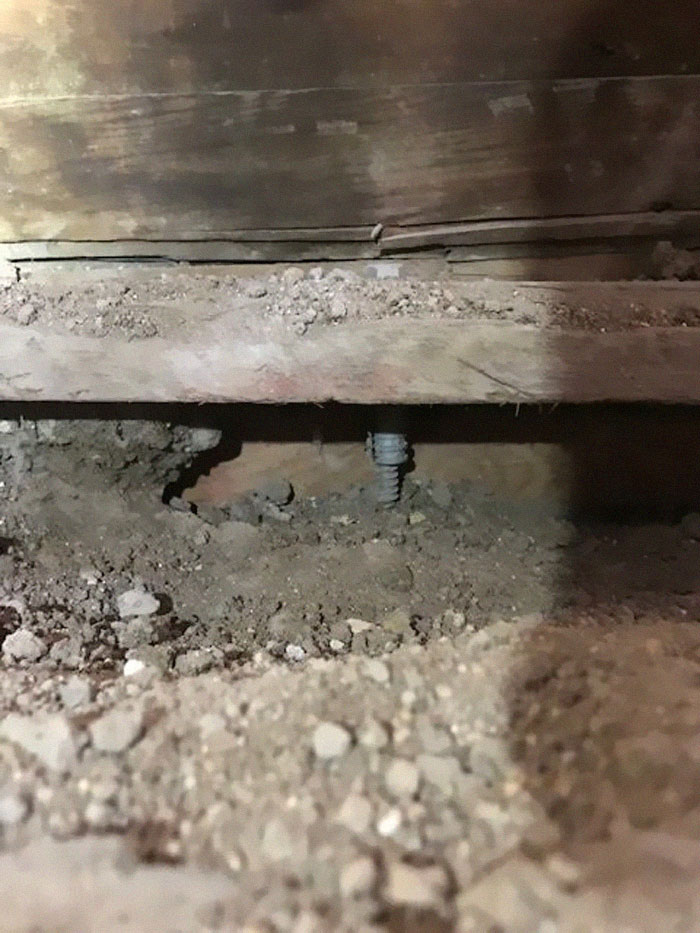
That bolt/screw you see is supposed to be holding down the framing into concrete. The concrete foundation has eroded almost completely.
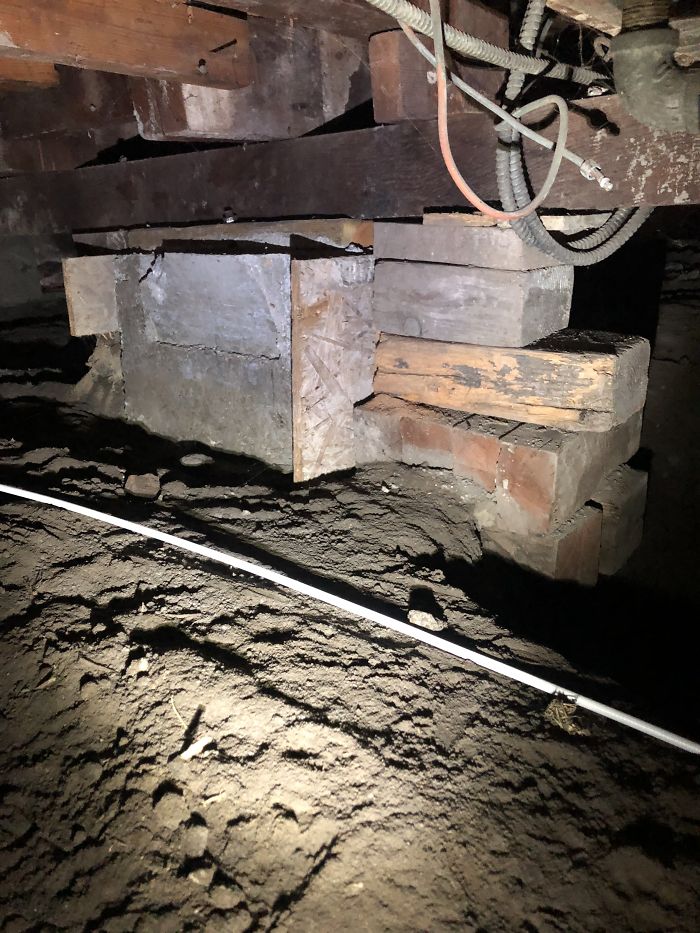
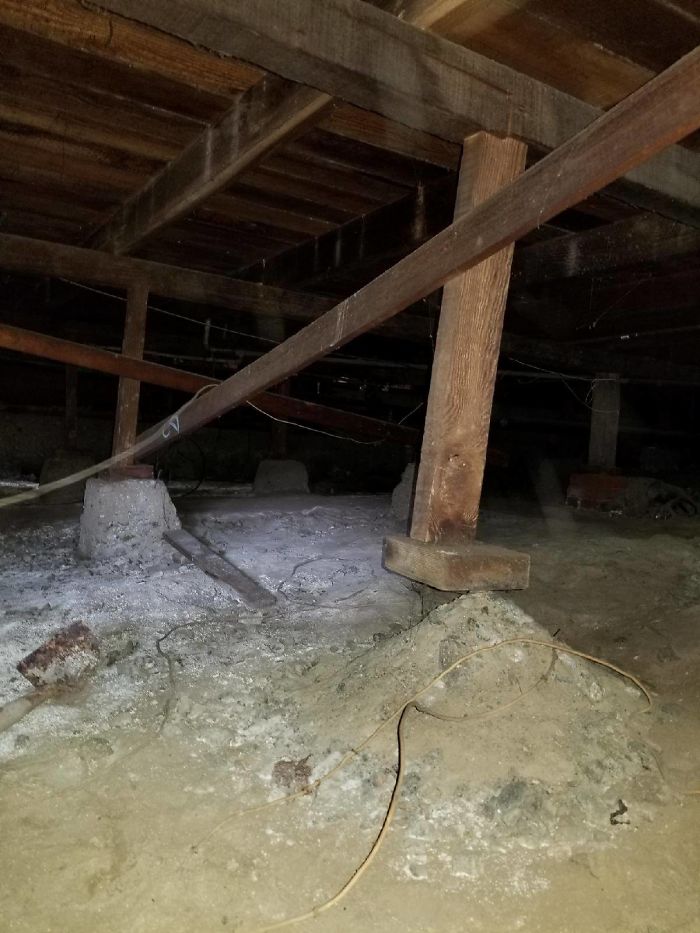
There were about 7 of these DIY posts under the home. The owners were wondering why the property was sloping so much. This is why!
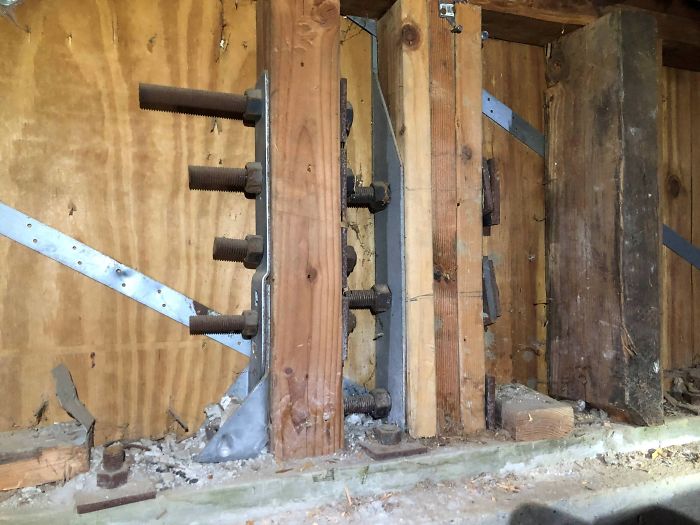
This was an inspection of a soft story building in Los Angeles. These buildings are under a mandatory ordinance for earthquake retrofitting. While on the "discovery period" for this project, it was discovered that there was awful wood-rot and rusting of the bolts and straps.
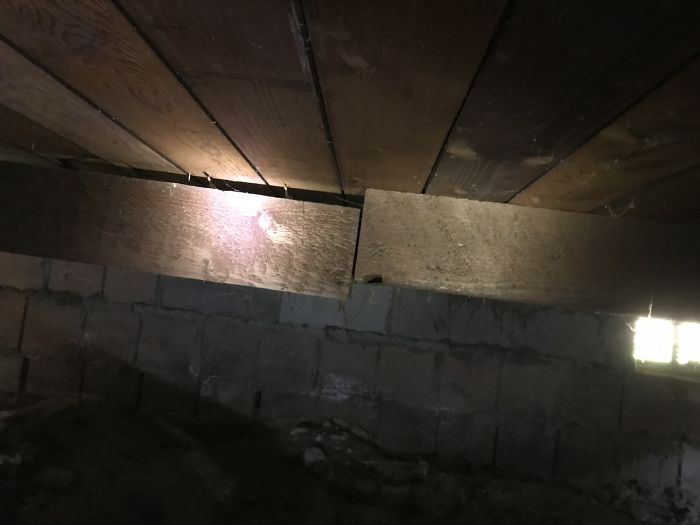
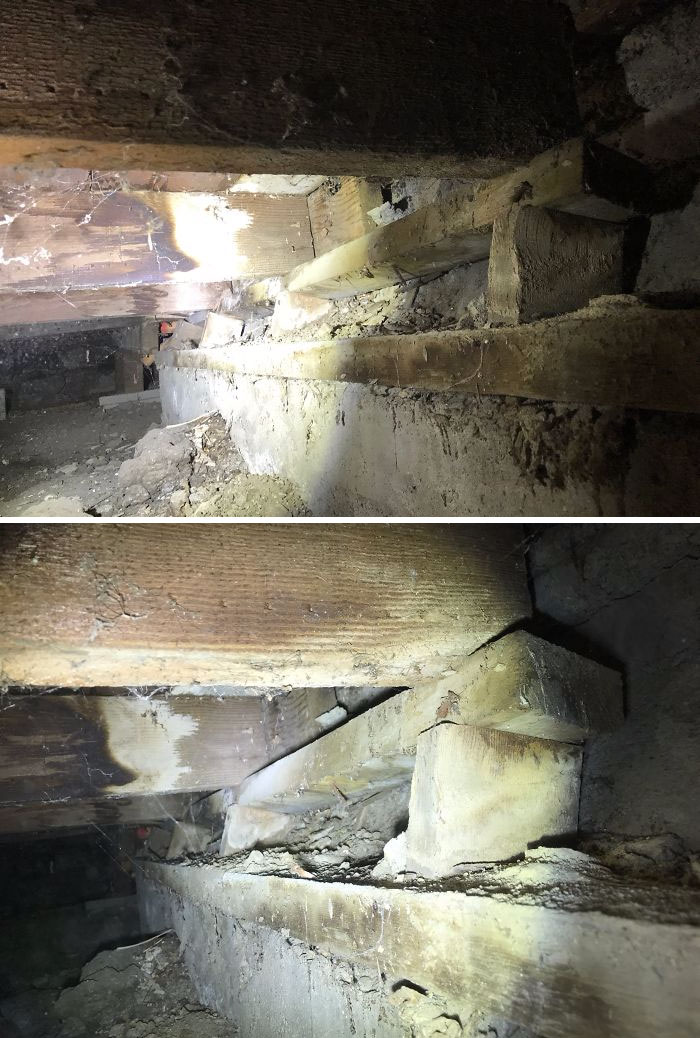
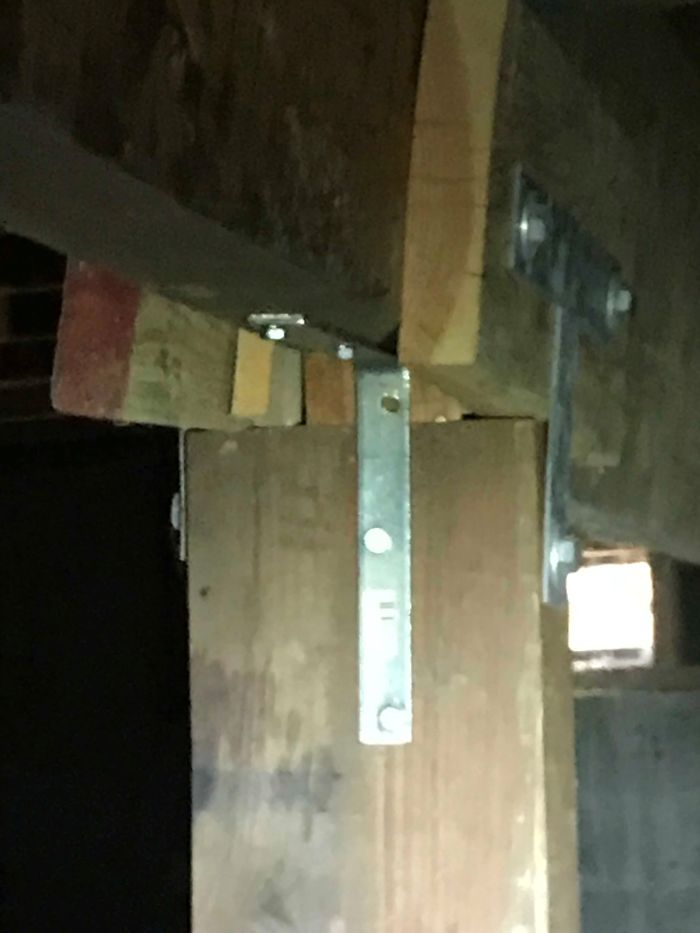
It's cracked on both ends. The mud sill was doubled as a part of a lifting process. It basically did nothing but cause more pressure down.
A full foundation replacement + Caissons is in order. (Caissons are just steel reinforced concrete shafts going deep into bearing soil)
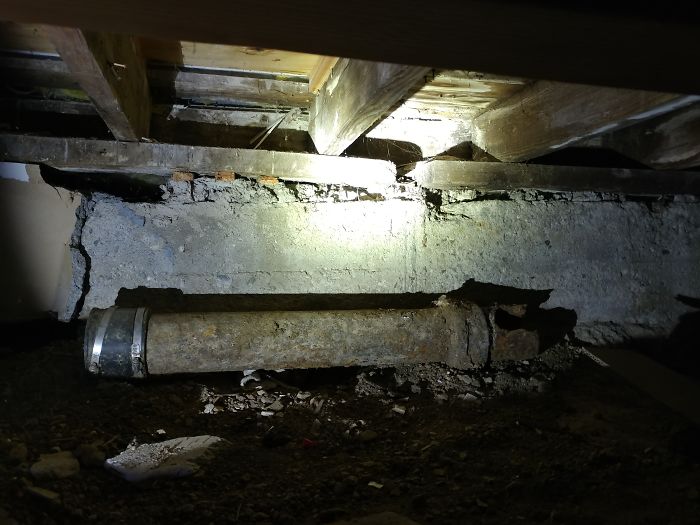
It may look somewhat stable..but touching it with a hammer would turn it to dust. Also, the pipe on the ground broke in half when we moved it.
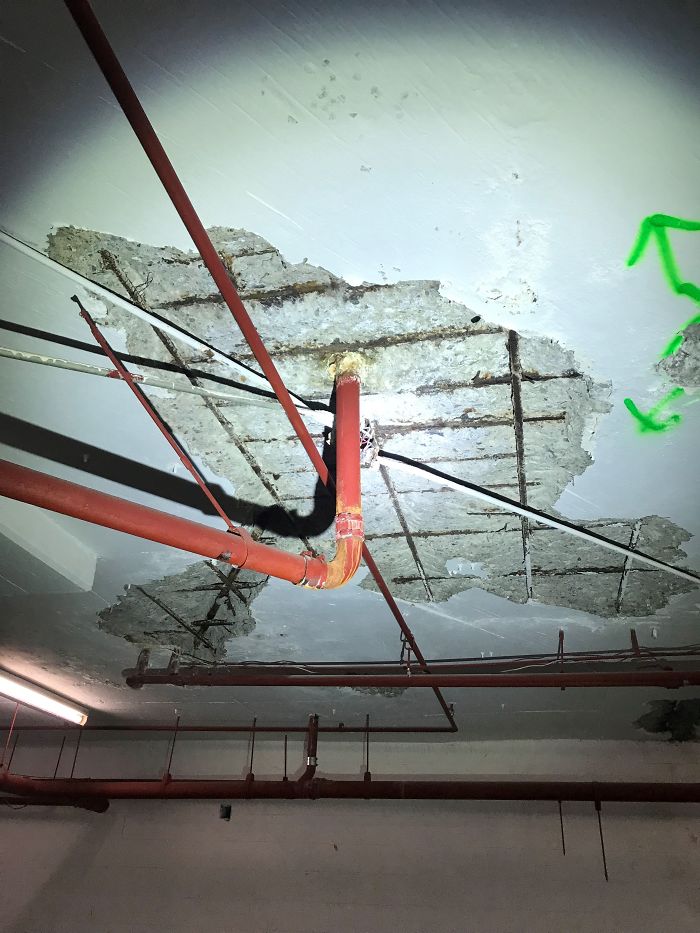
Water intrusion causing some spalling (when water seeps into concrete and oxidizes the re-bar and causes the concrete to break) *breath*
A poor excuse for a solid foundation. I think you should be concerned when you can fit your arm in the crack..... Don't make jokes, I'm serious.
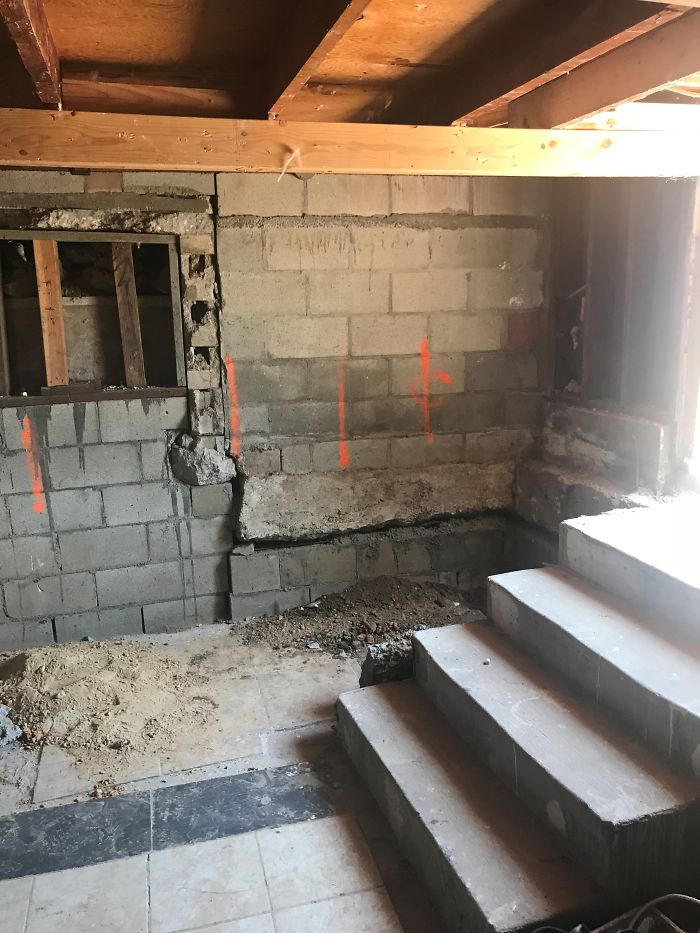
This homeowner thought it was a good idea to undermine the foundation and put in a few masonry blocks underneath. This was discovered by the city somehow. Tisk tisk. We are doing an entire sister foundation (built-in foundation right next to the existing) and I will be sure to share when we are done.
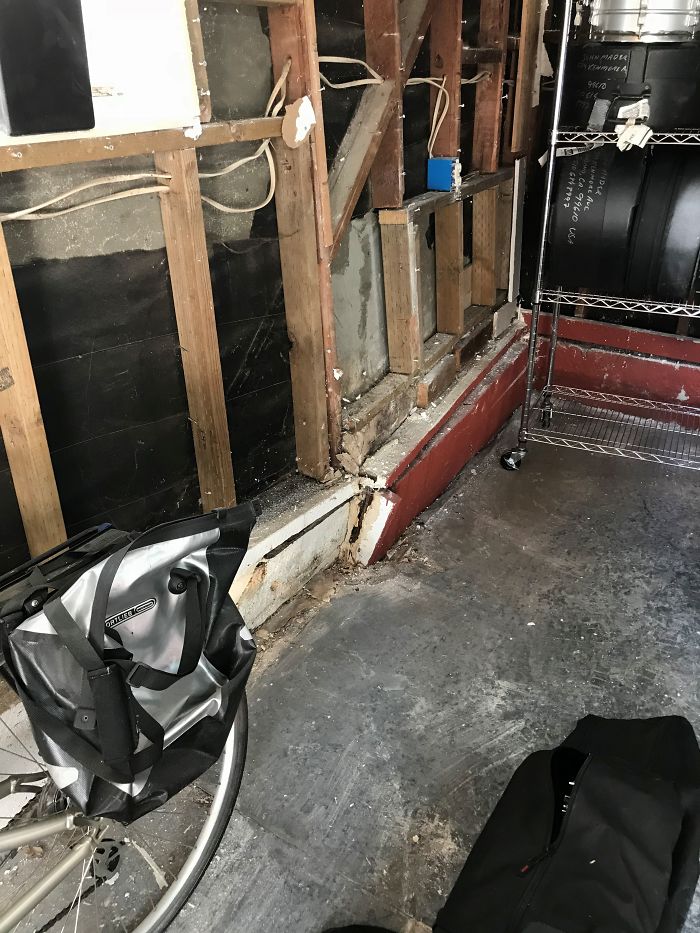
Here's a better angle on the photos above. You can see how the mudsil (2x4 bolted to concrete foundation) is cracked in half and coming inward. No good.
A crack from hell. This is a displaced and sinking foundation. This crack was probably the result of years and years of seismic movement in the area. (1909 home)
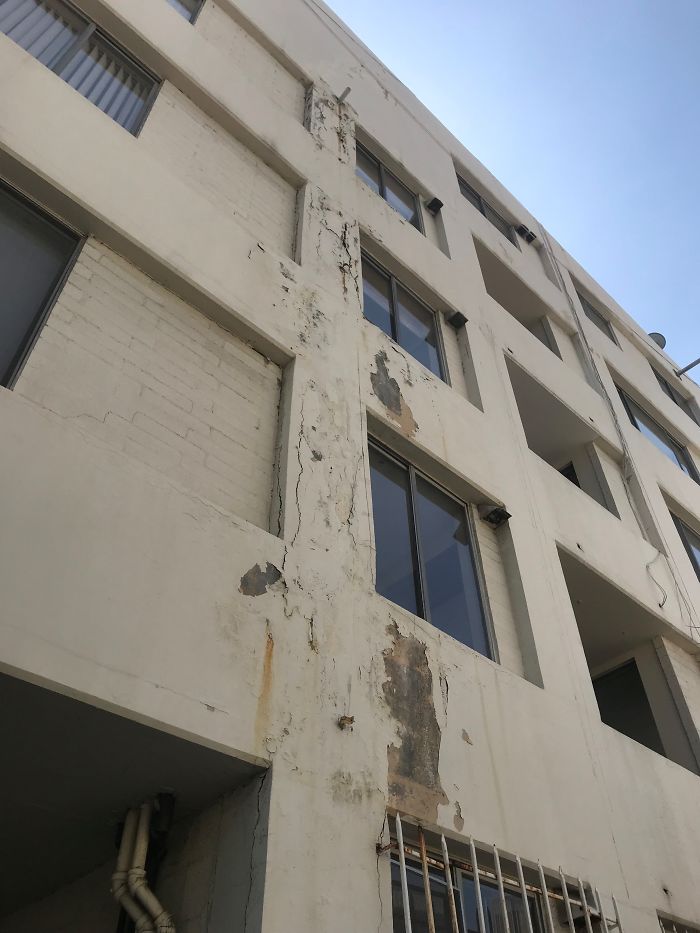
Industrial concrete building with some bad water intrusion. Caused the steel inside the concrete to rust and break off.
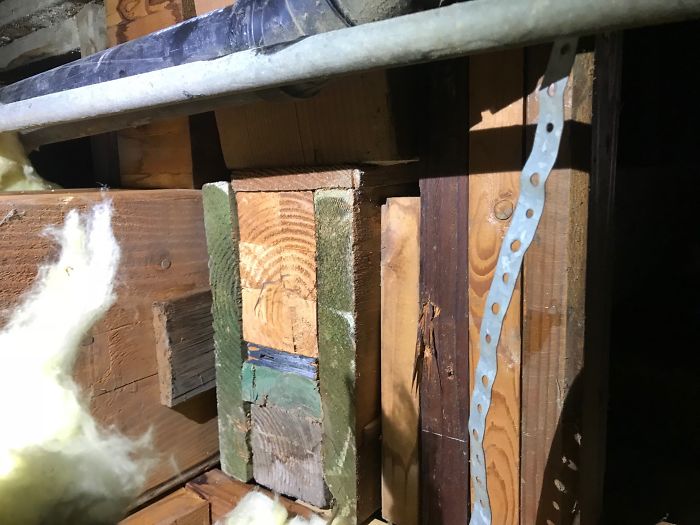
This is a beam. A DIY glulam beam. A glulam beam is laminated peace of wood made up of other layers that are glued together. There's 8 different pieces of lumber all glued together here. Not very stable and definitely not safe.
This is a brick retaining wall that has been failing over the past 20 years. It leads right up to the house and would surely turn to dust in the case of an earthquake.
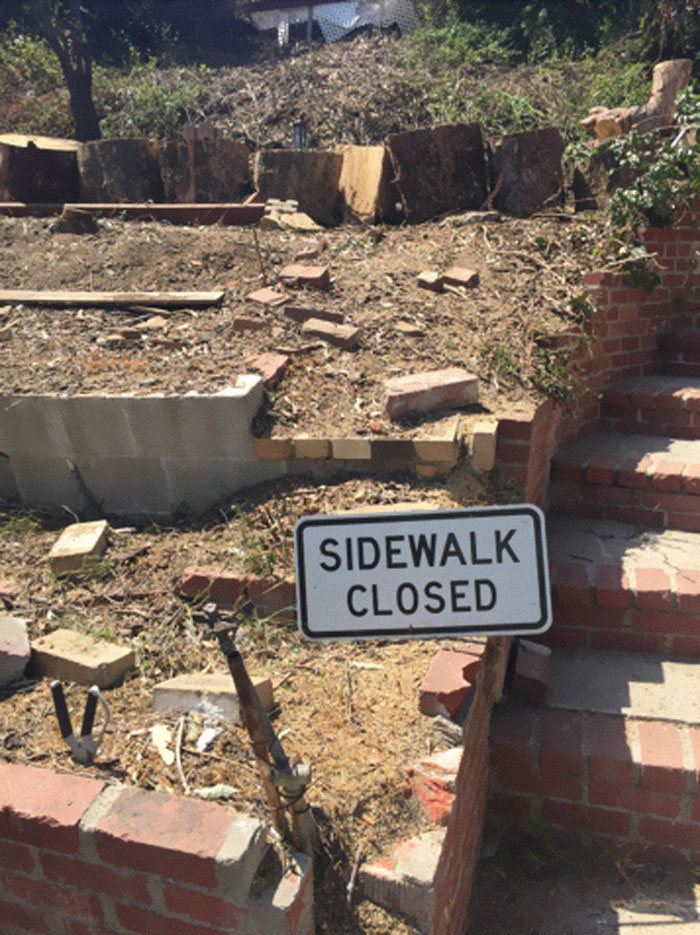
Same property except somehow it has gotten worse. It's quite obvious this is a non-permitted area will multiple issues. Brick garden wall is failing, brick and masonry wall is failing, material strewn around the yard, broken irrigation, and a sign that really helps people only in the back yard.
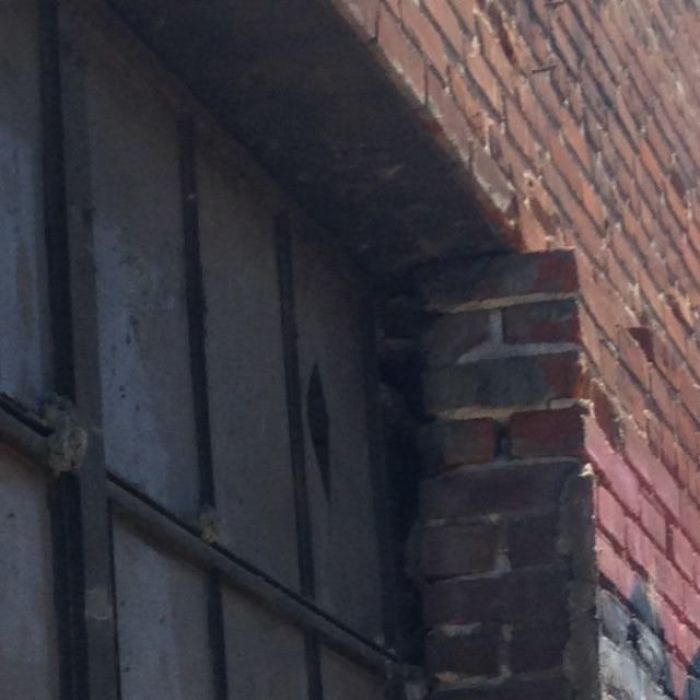
Sorry for the bad quality photo, but this is a one-story brick warehouse from 1947. The lower half of the brick wall is completely tilted and days away from falling apart.
This is the house equivalent of breaking your femur bone. This is a very large crack in the foundation that is causing some settling, displacement and bowing of the wall above.
I posted this a while back but recently disappeared from the page. In short, the wall to the left is bowing very badly. Working in that garage would be a dance with the devil. #fails
A foundation made of rock and an old chimney made of un-reinforced masonry brick. A collapse just waiting to happen.
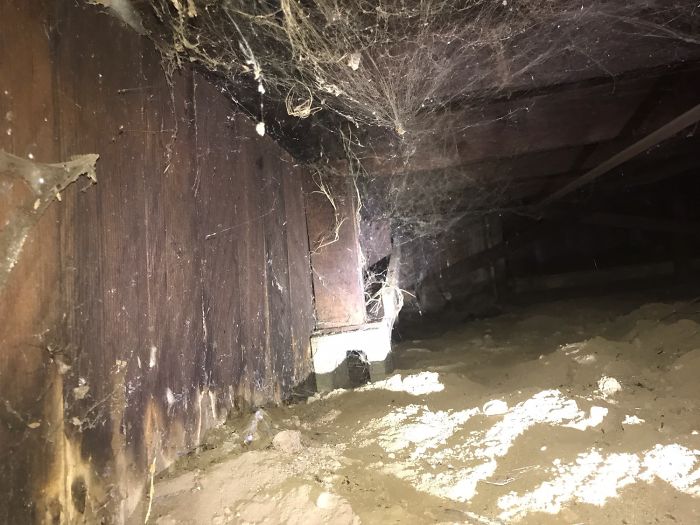
This was underneath a 1920's home in East Los Angeles. A black widow's paradise. There was some pretty bad wood rot from an ongoing leak and the property was not seismically retrofitted.
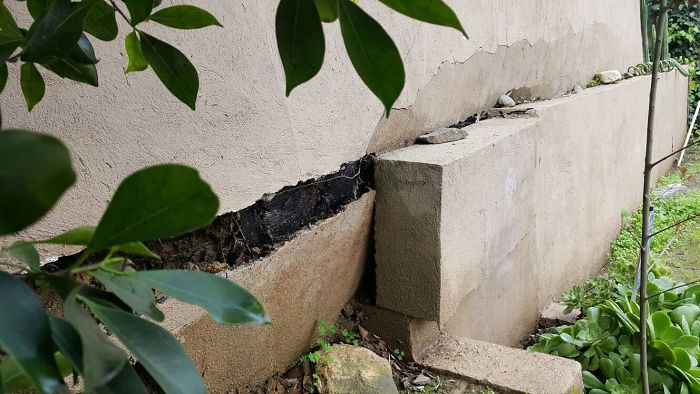
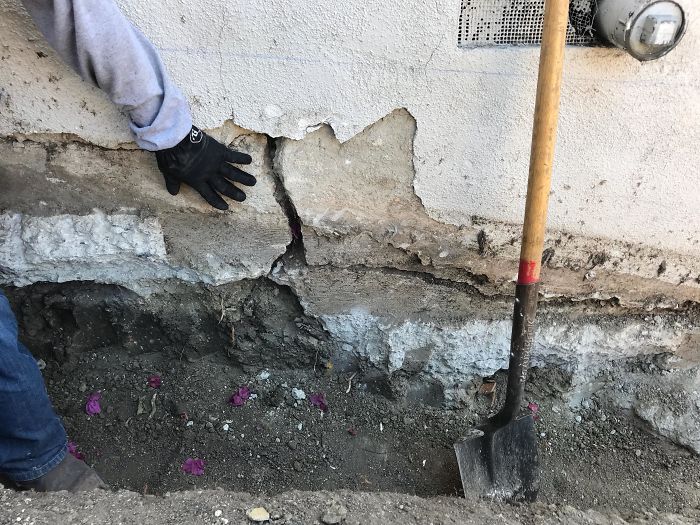
Occasionally, we go out to a property before we do the work for a 'discovery period" where it is known what is happening but we must find it and expose it for repairs. That was the case with this massive foundation crack. The stucco on the outside was fine, but once it was removed, we found our problem. And for those who I know are going to ask, the crawlspace was inaccessible due to asbestos and minimal working space, that's why it was done from the exterior!
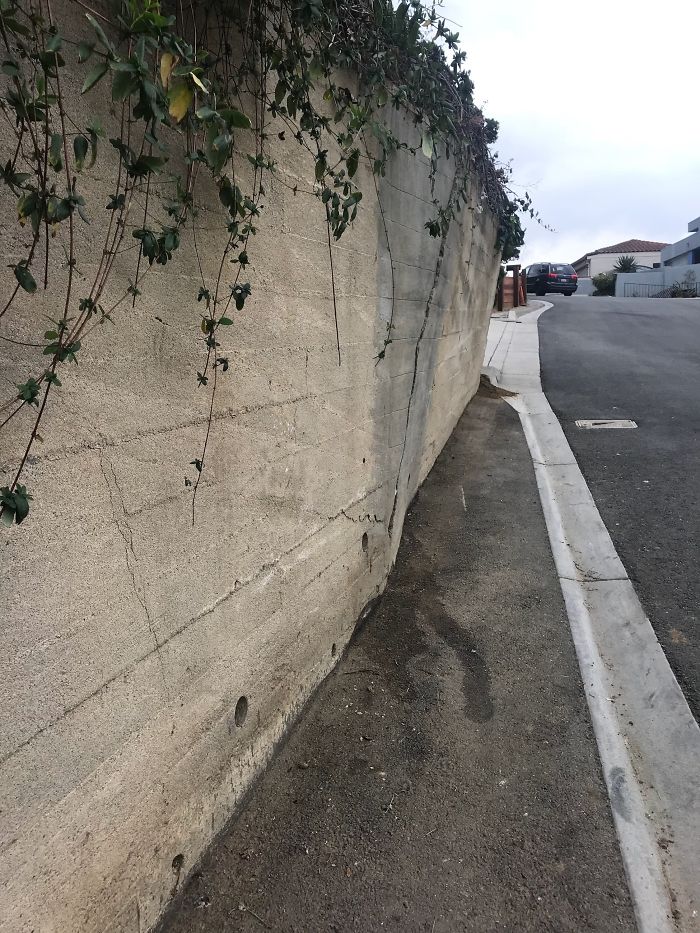
This was a retaining wall that was leaning roughly 20%. About anything under 10% can be fixed in most cases, but something like this would need to be replaced.
As you can see at the bottom, the concrete walkway is beginning to displace and sink near the footing of the wall. This causes the weight from above to choose a side to put it's weight down onto. Since there is dirt on the other side, of course the wall starts leaning in, causing this potential wall collapse over the walkway.
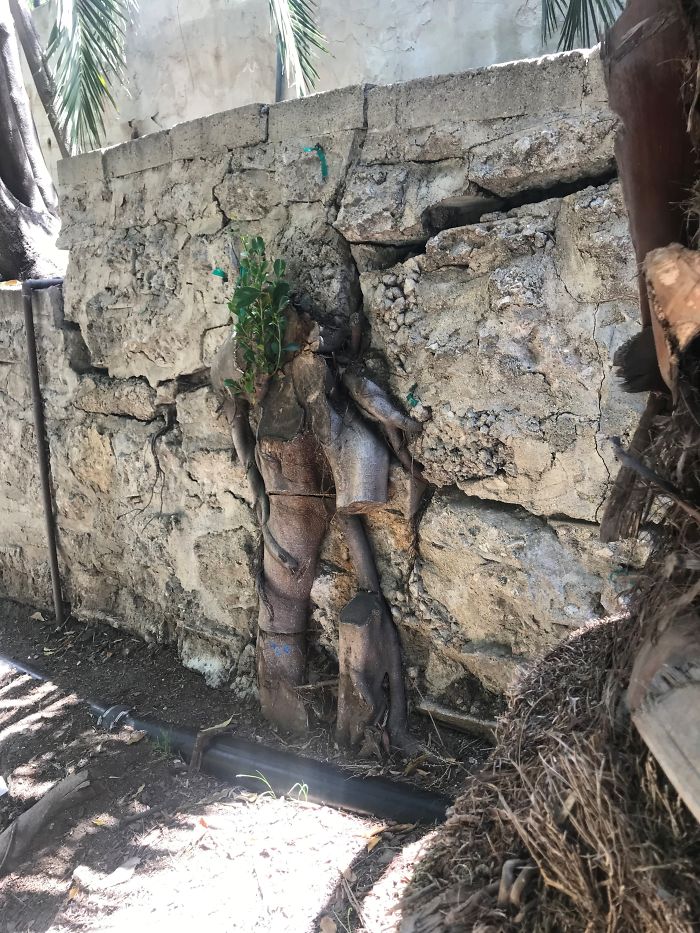
This is the result of an overgrown oak tree that was way too close the structure. It ended up breaking through the wall and foundation of the garage.
Not sure if you can see this one that well but the piece of wood on the left is horizontal. It's suppose to be upright and attached to that support beam. The floor was sinking a good foot.
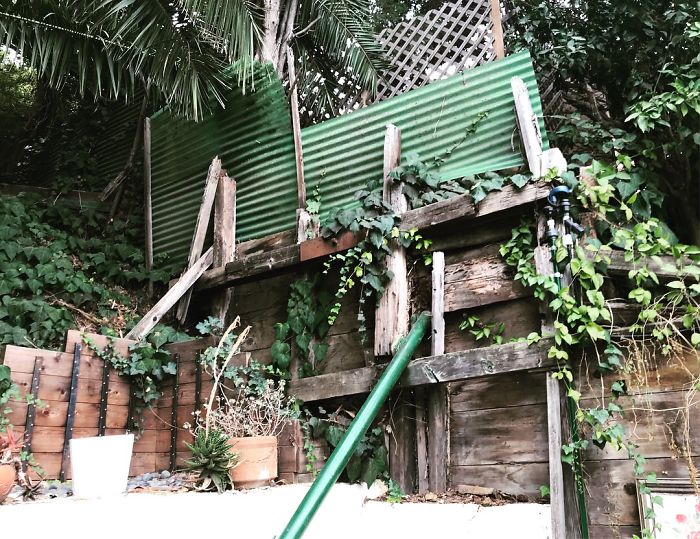
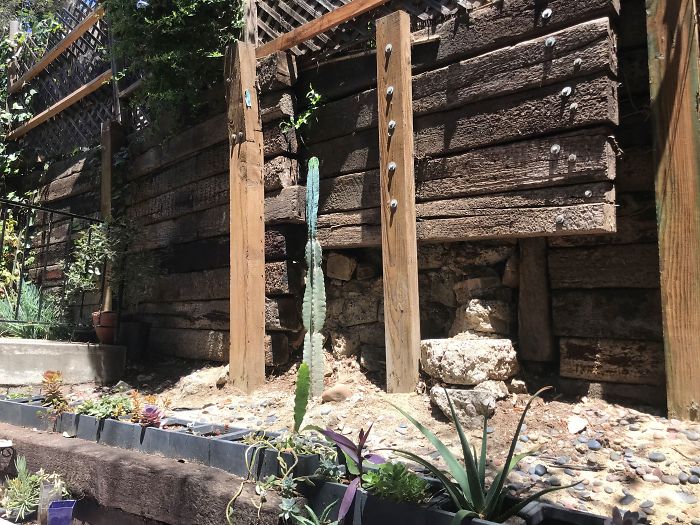
A railroad-tie retaining wall that was simply not holding up. Efforts were made to "retrofit" the wall but it was only months, if not weeks from failing.
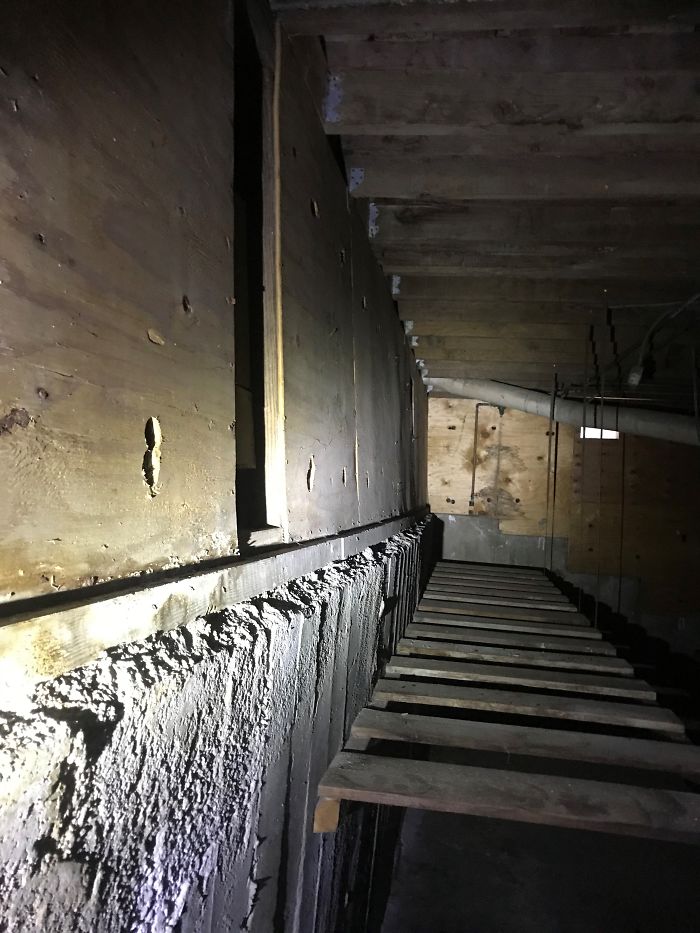
You can't really see it much in the photo, but the wall to the left is completely bowing inward. It was not bolted and the concrete foundation was sinking in.
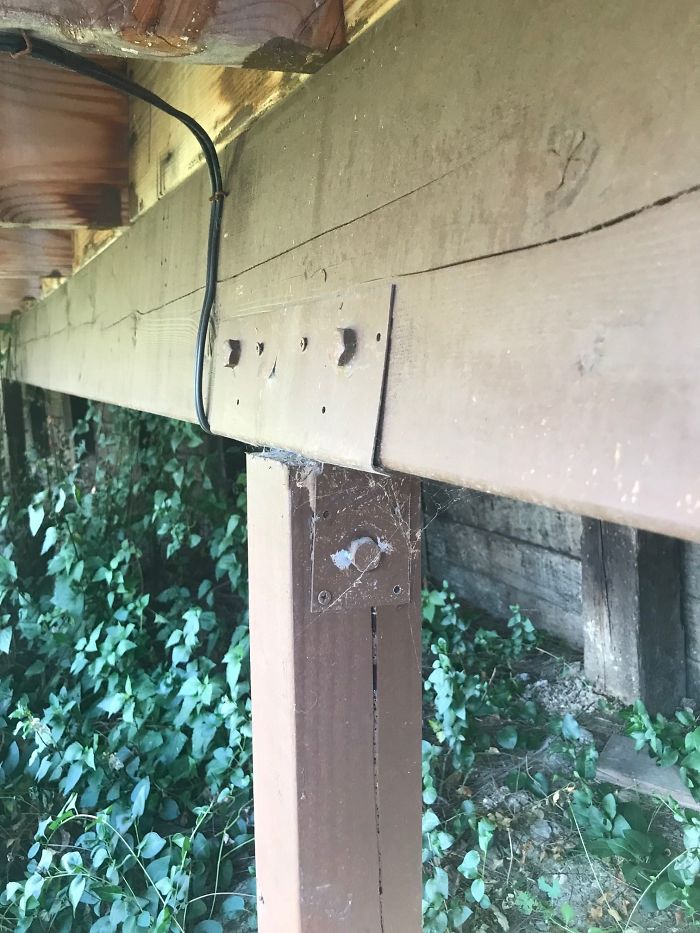
This photo doesn't do it justice but that wooden support girder is tilting a good 2 inches toward the slope. The post it's resting on is leaning outward and sinking back. Replacing that post and re-securing the connections is the way to go. No imminent danger, but that deck could have fallen over time.
Also posted this about a month ago but was randomly deleted last week and thought I would share it again. This is an exposed, exterior footing on an old 1910 property in LA. The house is basically tilting downward, away from the rest of the property. Displacement with a crack like this is a big problem.
Don't let the paint fool you, those stones are as unstable as the 1940's stock market. I will be sure to share some undated photos when the job is completed!
In addition to the knee-high rubble piles, DIY post like this one never suffice for earthquake protection.
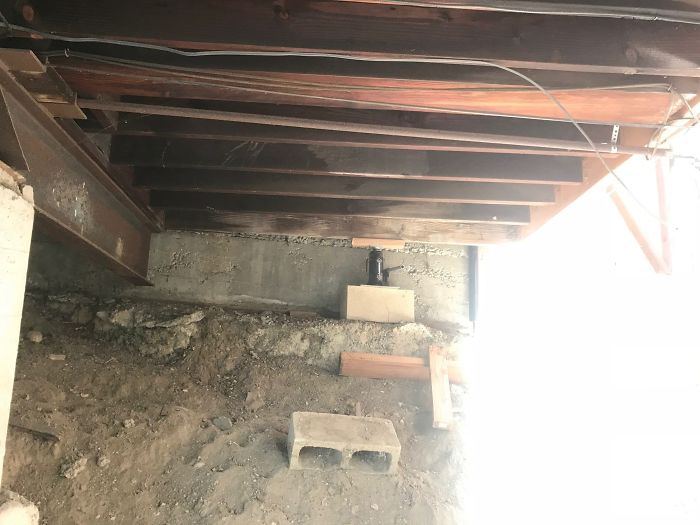
Though the I-beam on the left seems stable, all that is holding up that right side is that little car jack. It seems to be holding up fine but..for how long?
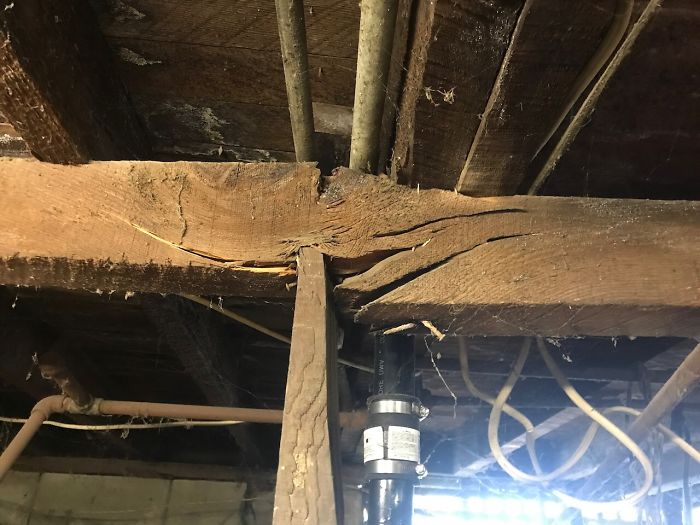
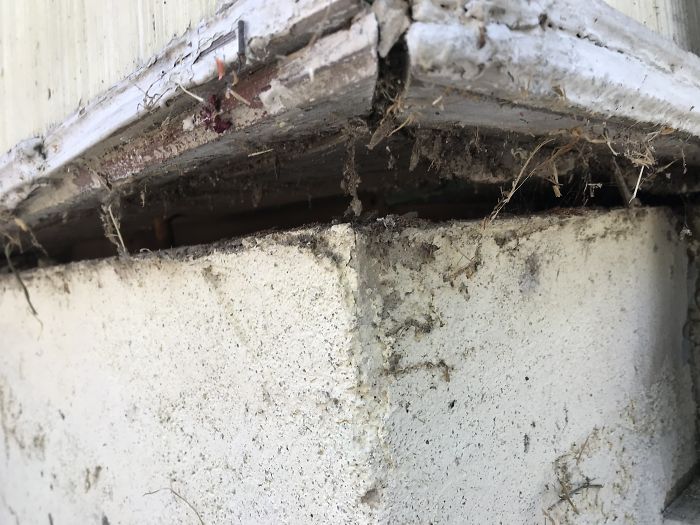
Here, you can see how badly decayed this wood member is. The bolts are rusting and pretty close to ripping away from the wood.
Those two bolts in the middle-left of the screen are the only thing securing the walkway/stairs to the bottom structure.
Luckily the concrete at the top of the stair set is doweled together, but that doesn't make the situation any safer.
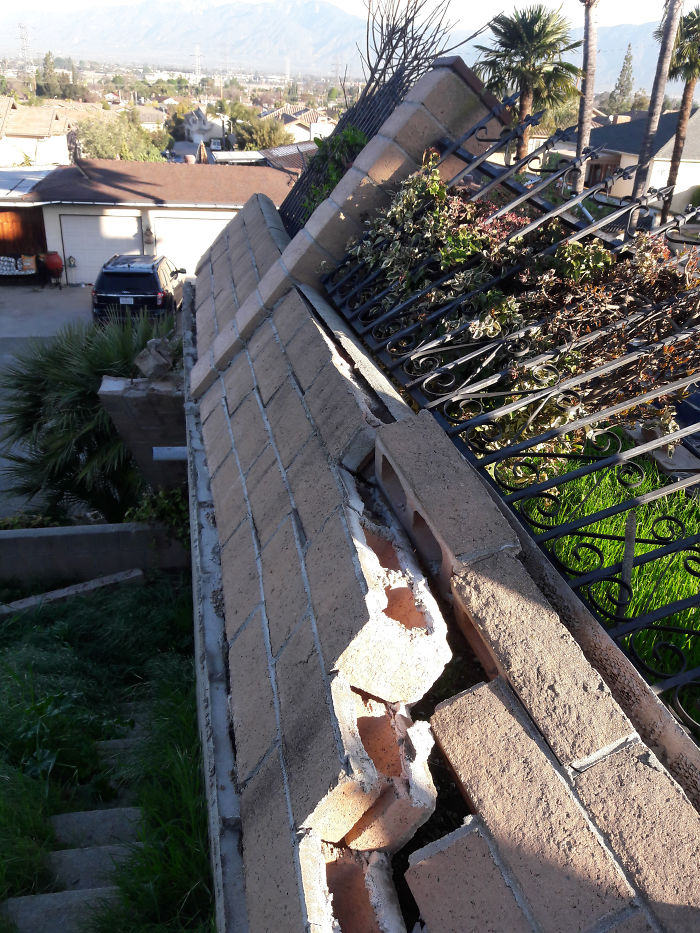
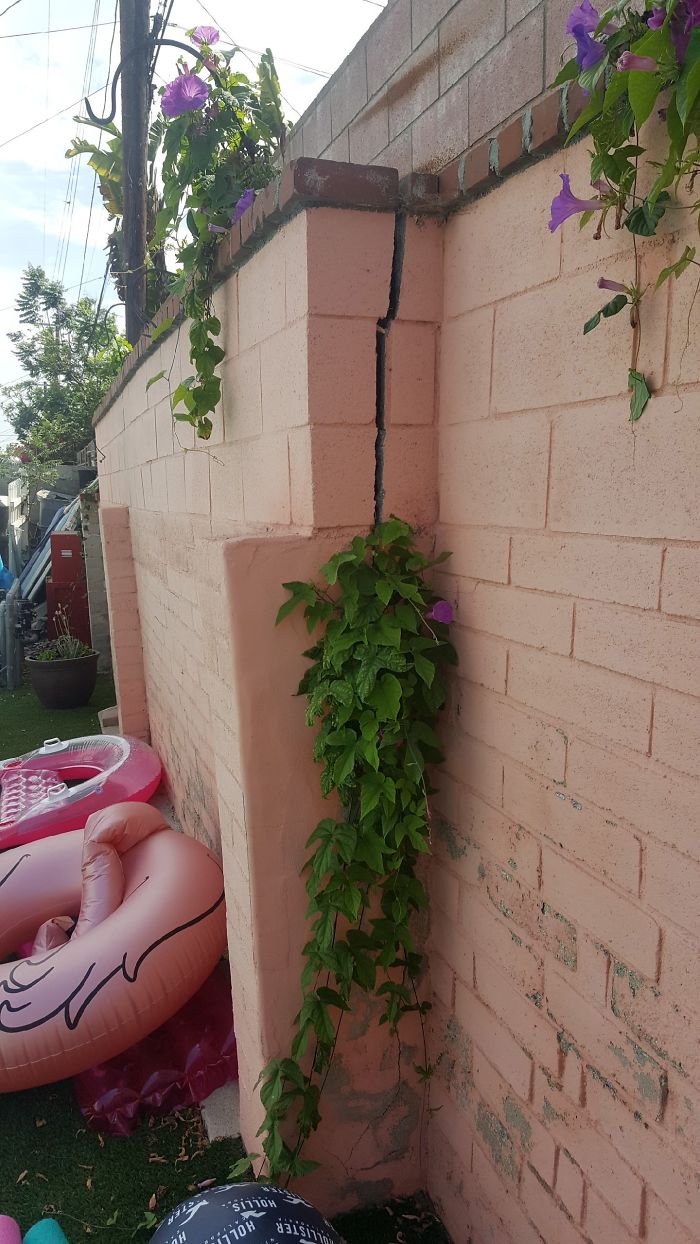
This is a retaining wall that has a very odd crack going straight through the center of the masonry blocks. it seems nature has won this battle against man.
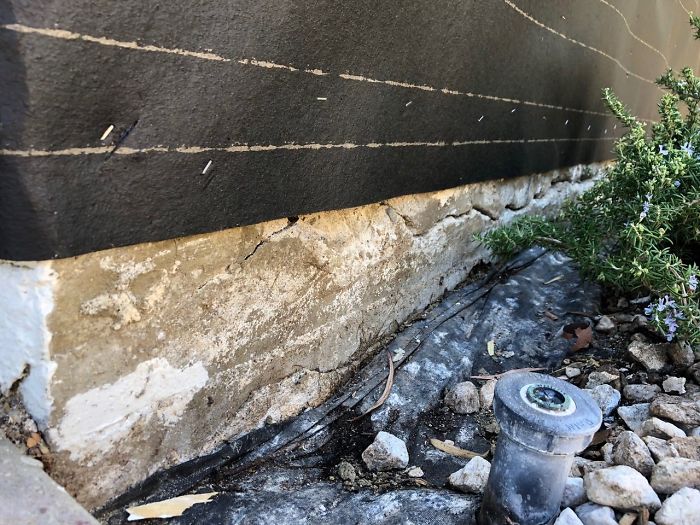
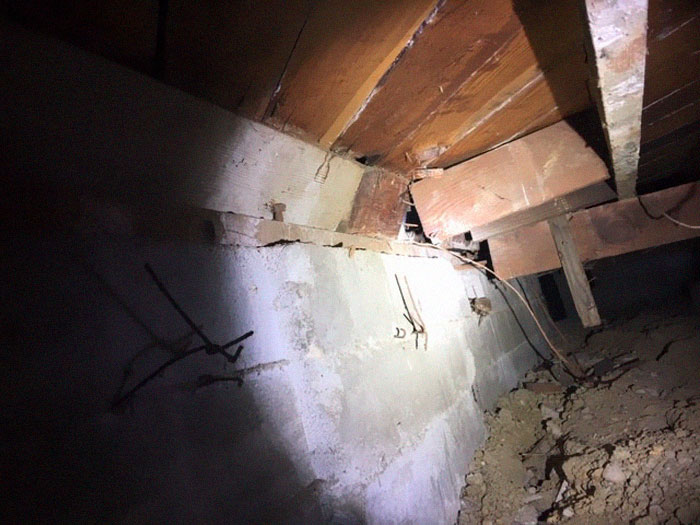
Large horizontal crack in the foundation. It goes all the way through to the crawlspace area...
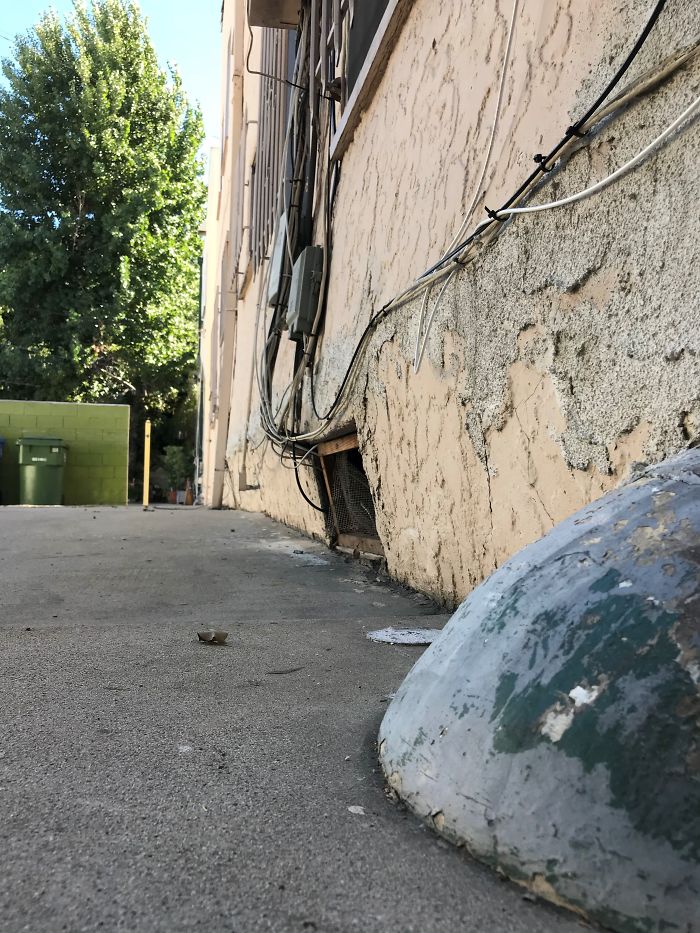
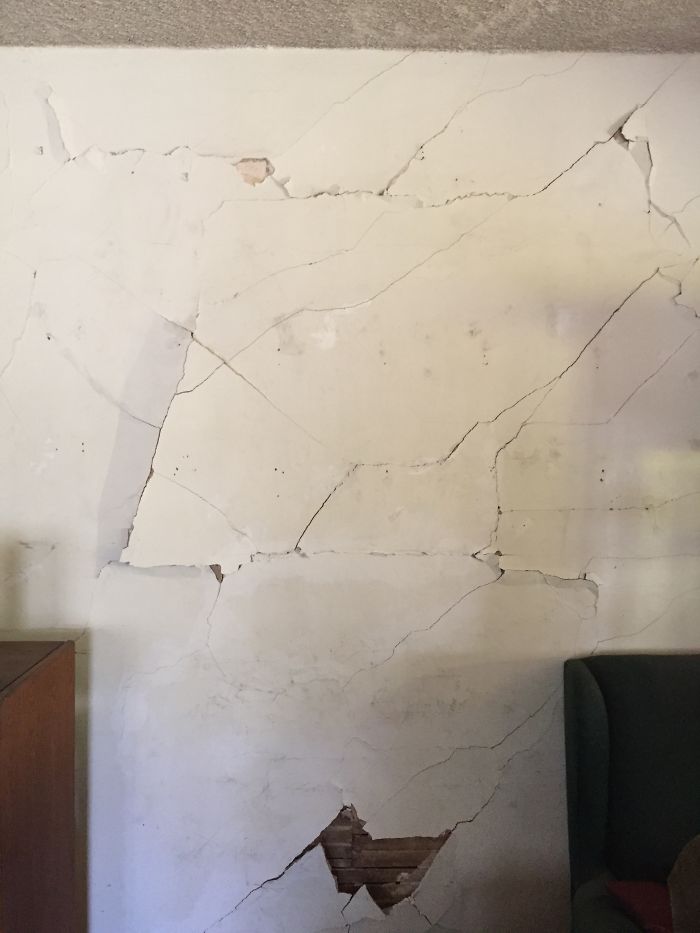
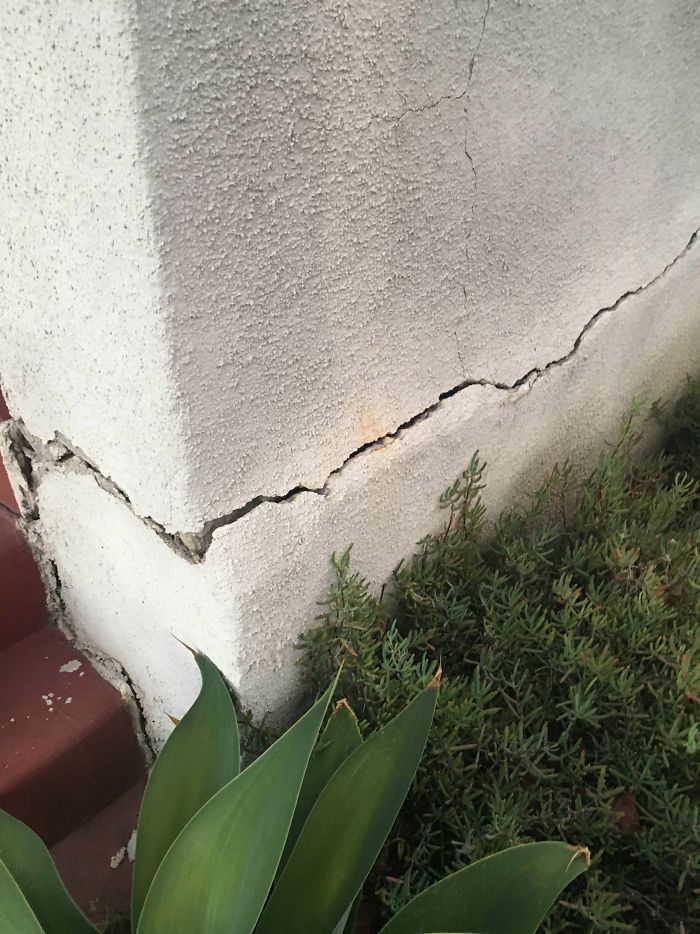
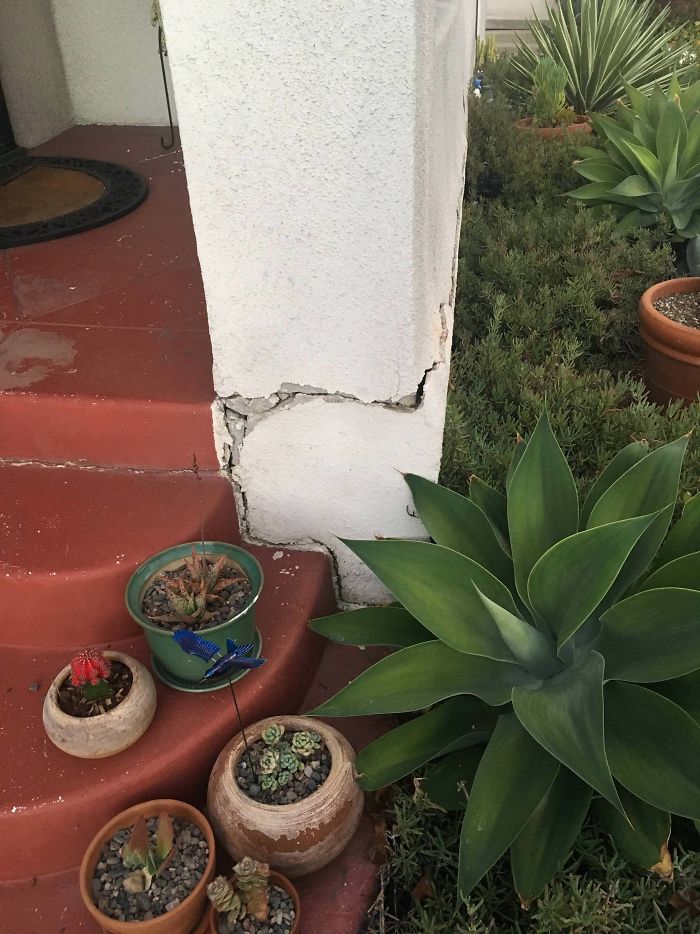
At first glance it just looks like some cracking stucco, but further evaluation shows the entire porch is basically cracked in half and sloping a few inches to the exterior...
There's almost too much to explain...
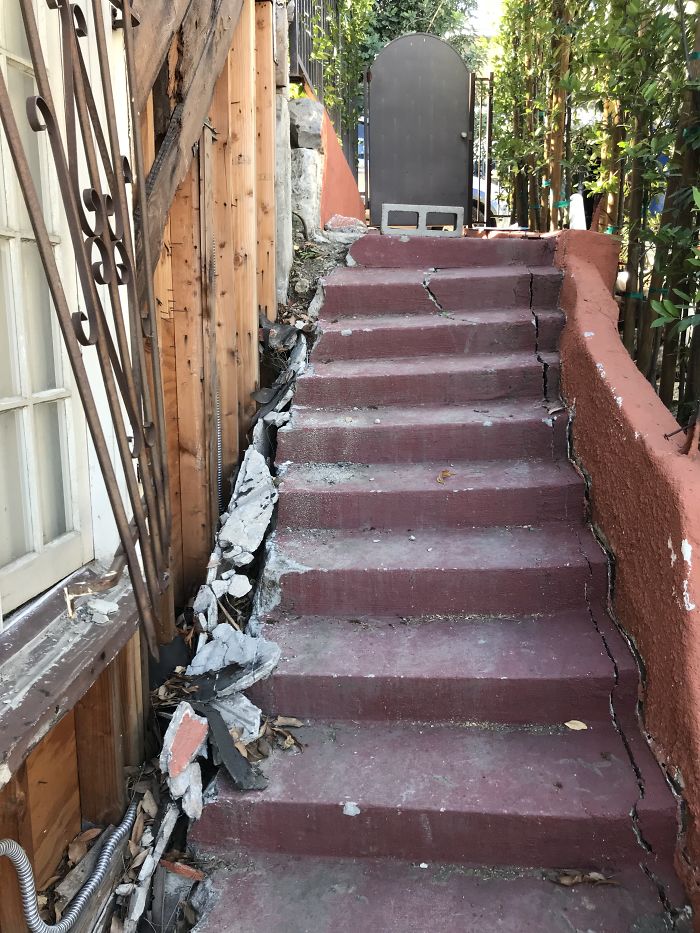
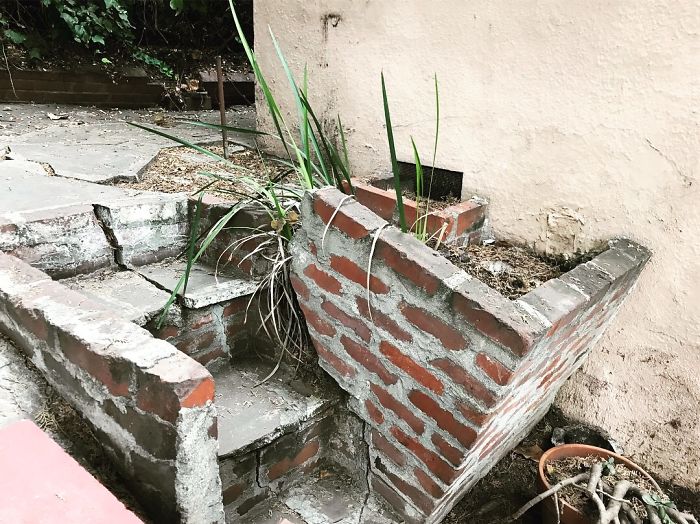
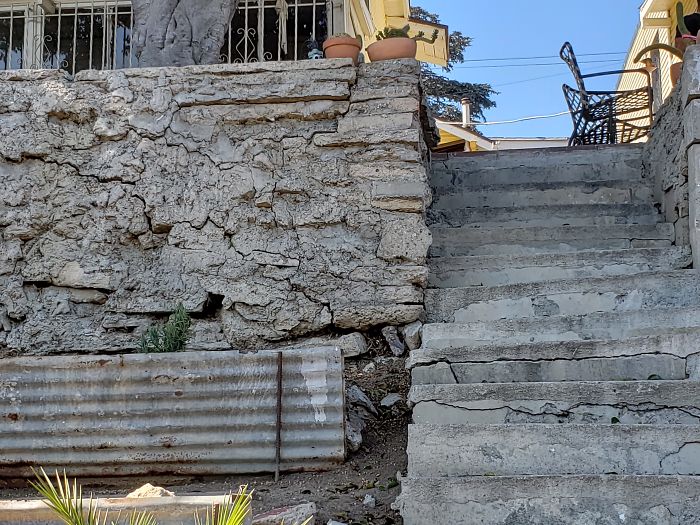
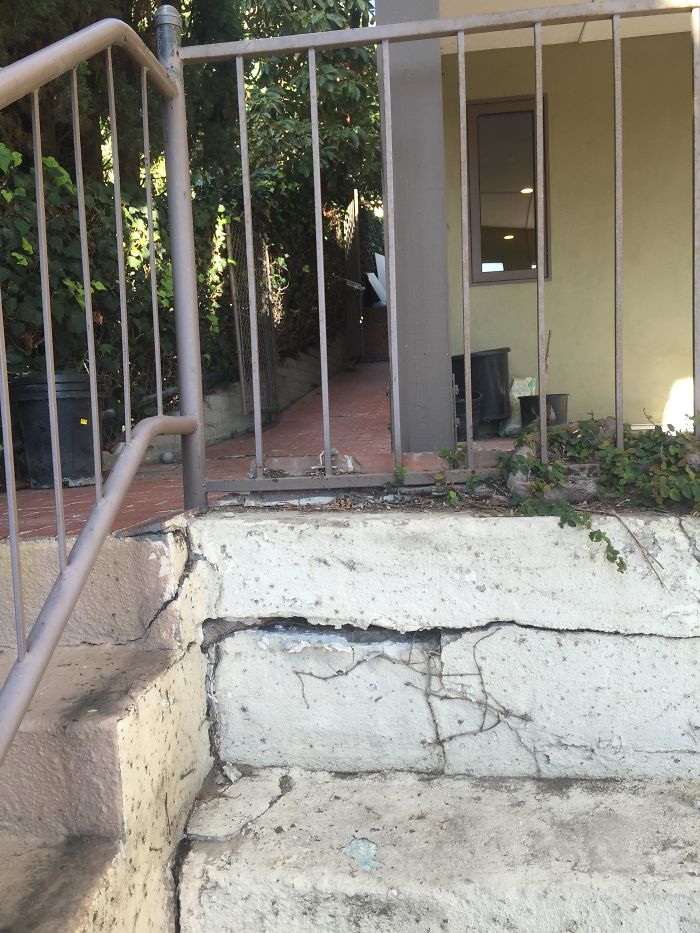
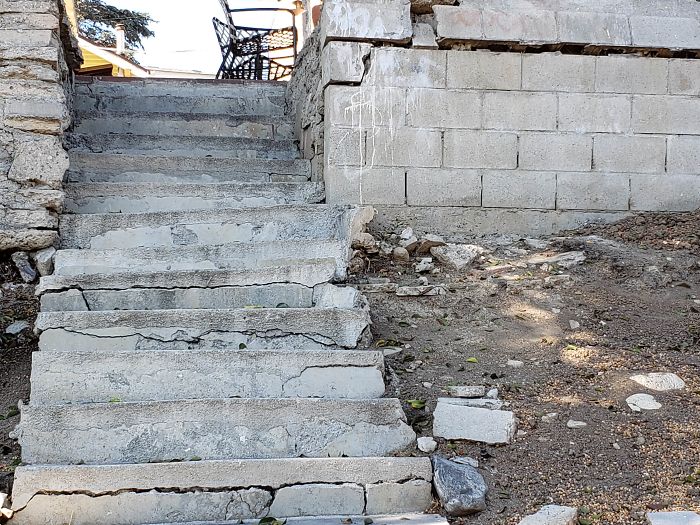
The stairs are crumbling to bits, the wall to the right is, well, not doing so well and it's sinking.
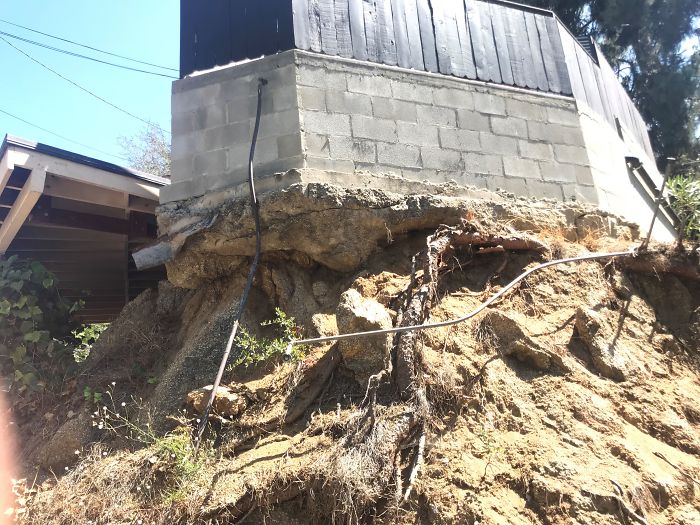
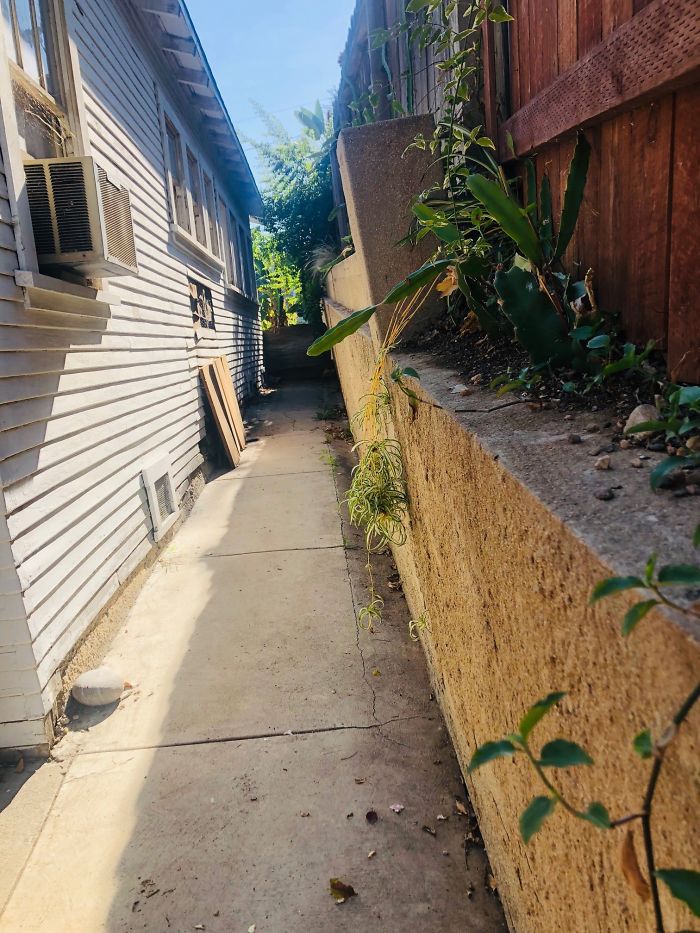
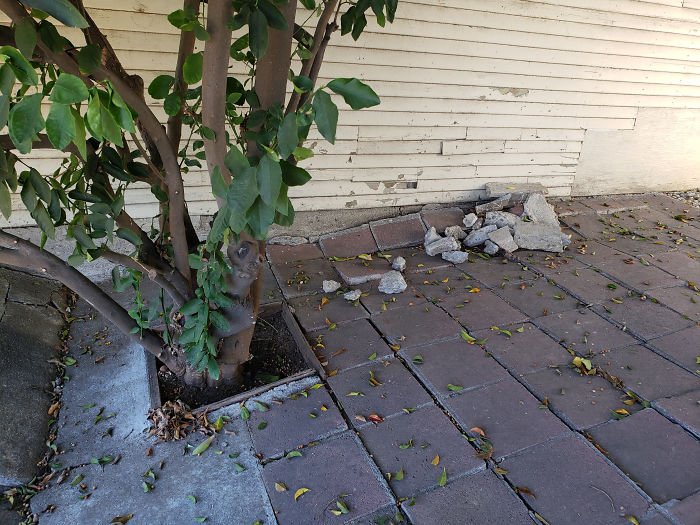
The wall is being pushed out from the weight of the home. This is commonly referred to as surcharge. Surcharge is basically when the vertical pressure or load of the property over the ground surface causes the earth to be pushed outwards. This has caused the flat-work around the home to bubble and come up. The tree roots don't help.
This was a home in the hills of Hollywood that was unfortunately at the top of a landslide. The foundation of the home couldn't take the tension that was being created while the hillside went down. This caused the framing/sub-flooring to almost completely collapse.
You might also like: 50 People Who Tried To Be Creative With Their Homes And Failed (New Pics)






































 No fees, cancel anytime