Get Premium
Dark mode theme is available exclusively for premium users. Learn more about the benefits of subscribing.
No fees, cancel anytime.

 Dark Mode Ad-Free Browsing Unlimited Content
 Ad-Free Browsing Unlimited Content Dark Mode
Join 1.2 million Panda readers who get the best art, memes, and fun stories every week!

When we picture a car crash, we usually think of shattered glass, broken bones, or cuts and bruises. But not every accident comes with a visible trail of evidence.
Some leave hidden damage — internal injuries that might not show up for days, or even weeks, after the fateful day.
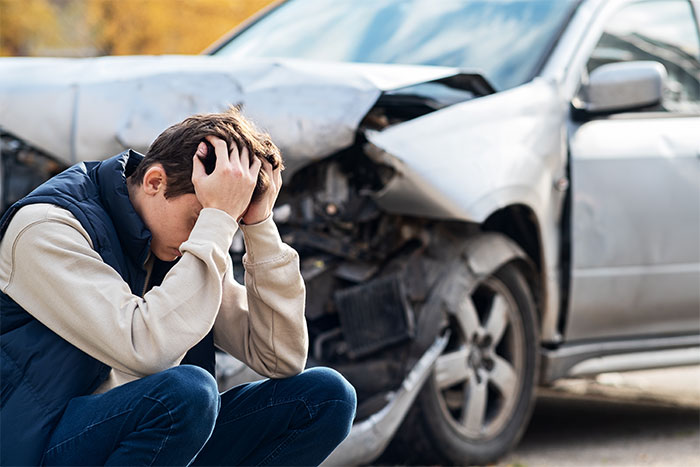
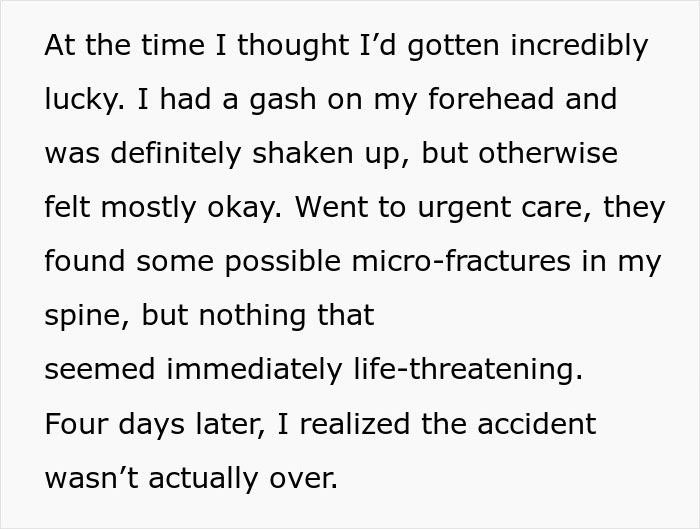
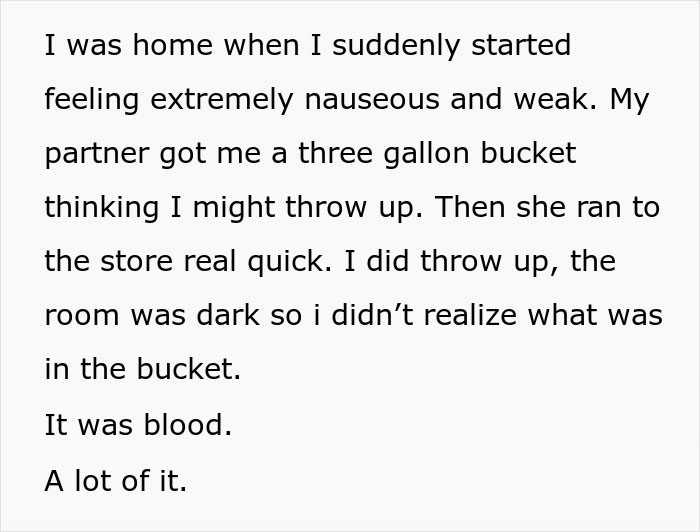
A man shared his story online, revealing how “incredibly lucky” he felt to escape a serious crash with nothing more than a gash on his forehead, only to find out four days later that he had severe internal bleeding… and the worst was yet to come.
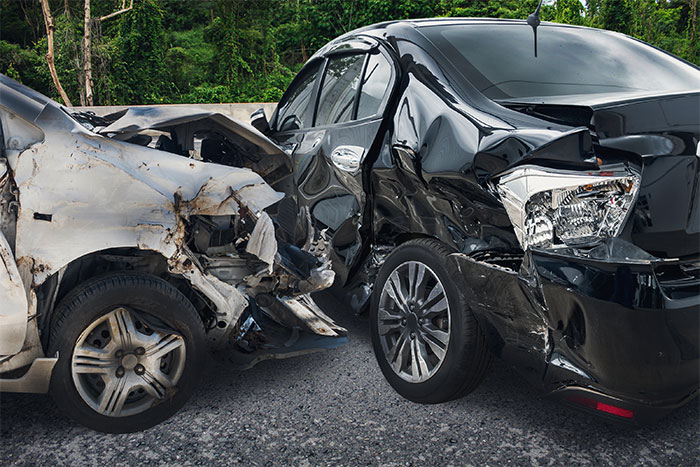
Image credits: drinkins / Freepik (not the actual photo)
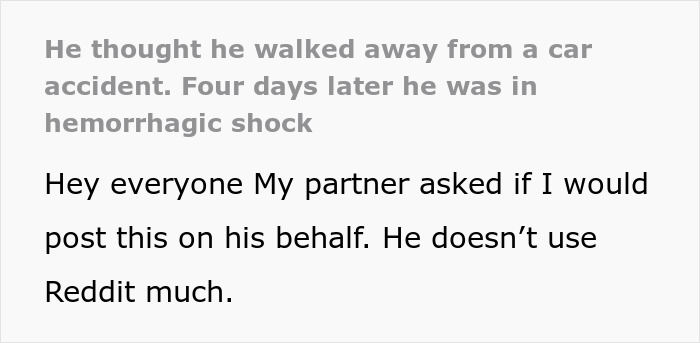
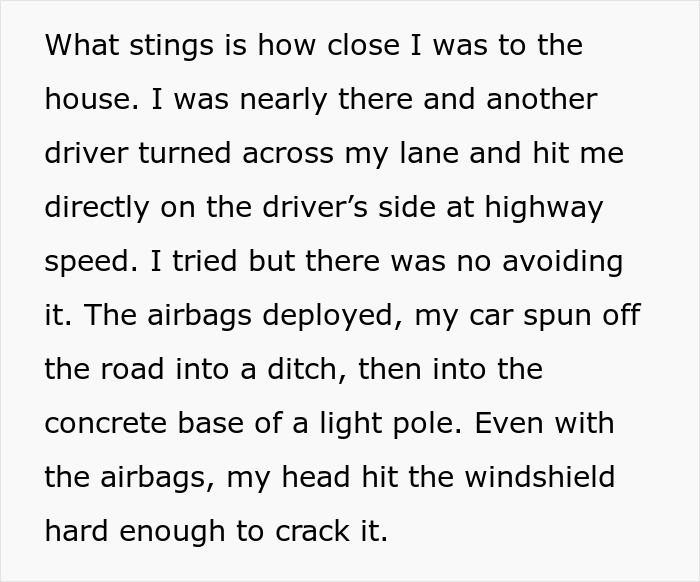
Image credits: kwangmoop / Freepik (not the actual photo)
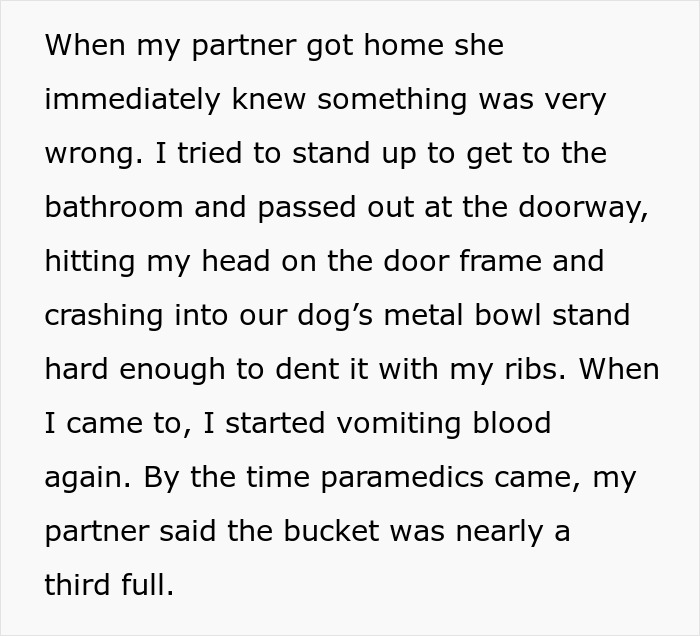
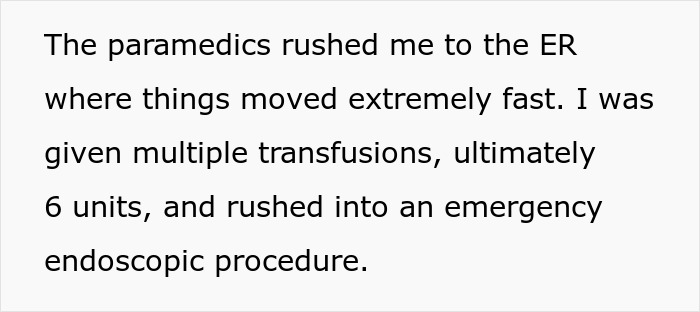
Image credits: freepik / Freepik (not the actual photo)
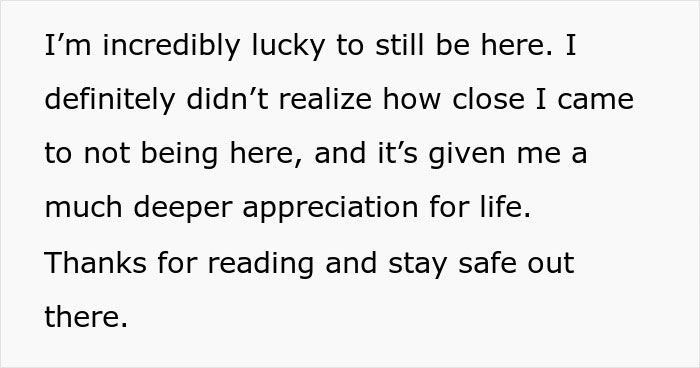
Image credits: RaynieDays
Many types of internal trauma don’t show symptoms immediately because your body’s natural responses can mask them at first.
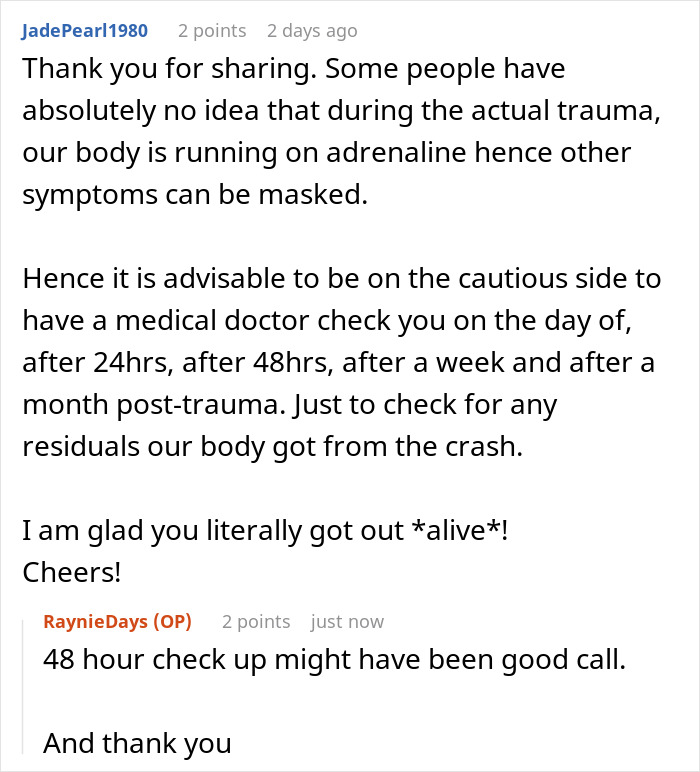
During and right after a crash, adrenaline and shock flood your system, dulling your pain and blocking warning signals. Even if organs or blood vessels are injured, the adrenaline might even help you stay a bit “functional” in the moment.
One of the most common forms of internal trauma after a crash is internal bleeding, say experts.
Other common injuries that don’t manifest until hours or days after the crash include whiplash, concussions, and even fractures.
“Internal bleeding, soft tissue injuries, or mild traumatic brain injuries may not show signs until hours or days later. Neck pain, shoulder pain, or abdominal pain can signal more serious injuries under the surface,” writes Dr. Erik Bendiks, an orthopedic surgeon and founder of Georgia Spine & Orthopedics.
Internal bleeding happens when your blood vessels burst or break and blood collects inside your body. The worst part is that it can happen almost anywhere inside your body.
Hemorrhagic shock occurs when severe blood loss keeps your organs from getting enough oxygen, which can be life-threatening.
In this story, the man had Class IV hemorrhagic shock, which is the most severe stage of blood loss. It happens when more than about 40% of a person’s total blood volume has been lost.
Car accident statistics show just how common collisions are on US roadways.
An estimated 39,345 people lost their lives in motor vehicle crashes in 2024, which means five fatalities every hour.
Since official 2024 injury data isn’t yet available, 2023 figures show that about 5.1 million people in the US were injured in motor vehicle incidents and sought medical attention.
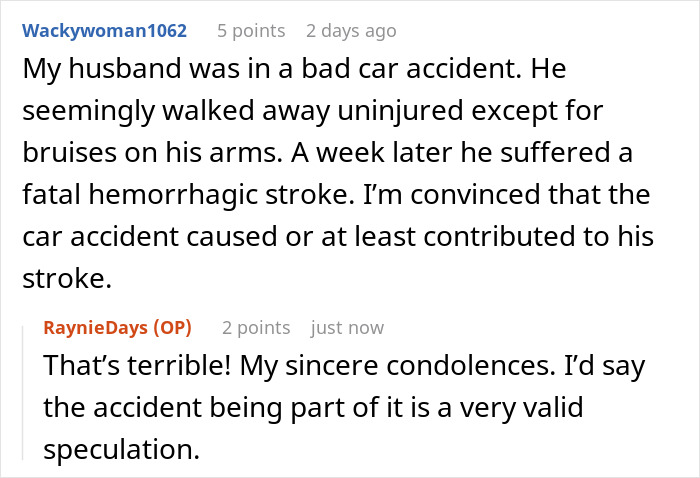
Studies show that about 25% to 33% of car accident survivors experience delayed car crash symptoms, while up to 67% report persistent pain lasting up to two months after the crash.
With millions of crashes happening every year, it’s a reminder that we all need to be aware of the warning signs after an accident.
What starts as mild neck pain or a slight headache may be a sign of spinal injuries or a traumatic brain injury, experts say.
“Ignoring early signs of discomfort can lead to complications. Symptoms such as numbness or tingling, constant headache, or shoulder pain may point to nerve damage or a neck injury caused by the crash,” says Dr. Bendiks.
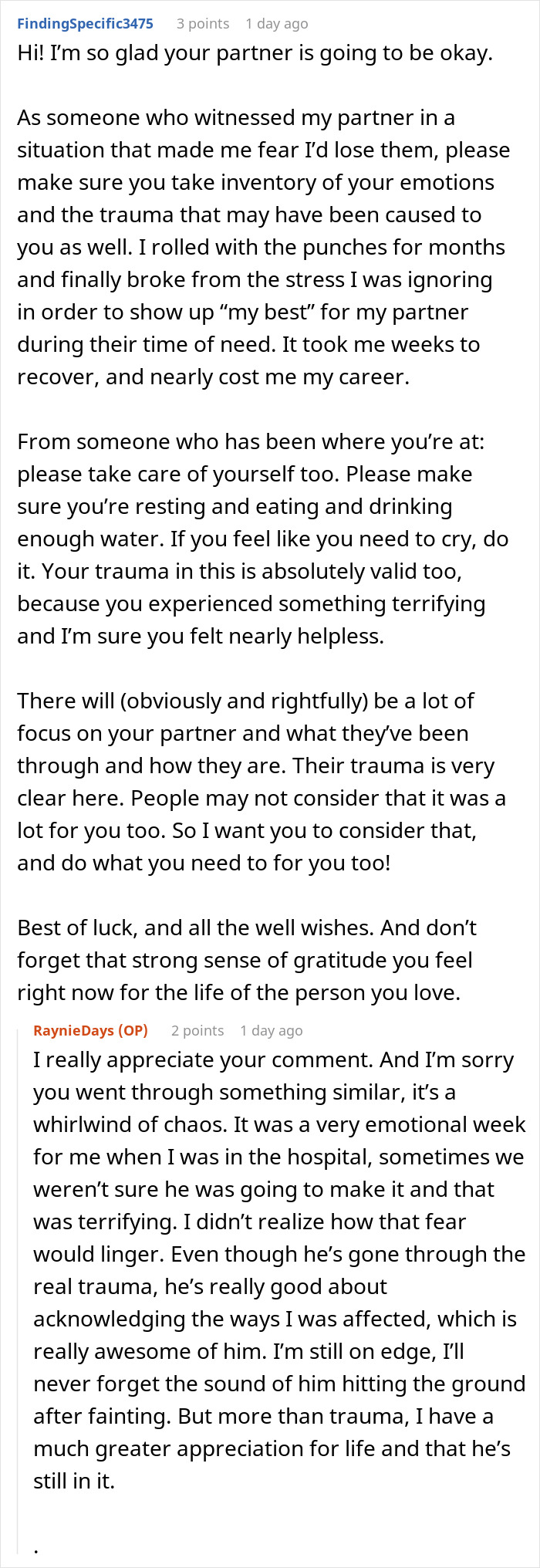
Not all delayed symptoms are physical, though.
Changes in your mind or emotions, like trouble sleeping, mood swings, trouble focusing, or feeling anxious, can appear after a crash. “These could be signs of post-traumatic stress or a mild brain injury,” Dr. Bendiks notes, adding that the longer someone waits to seek medical attention, the higher the chance of long-term damage.
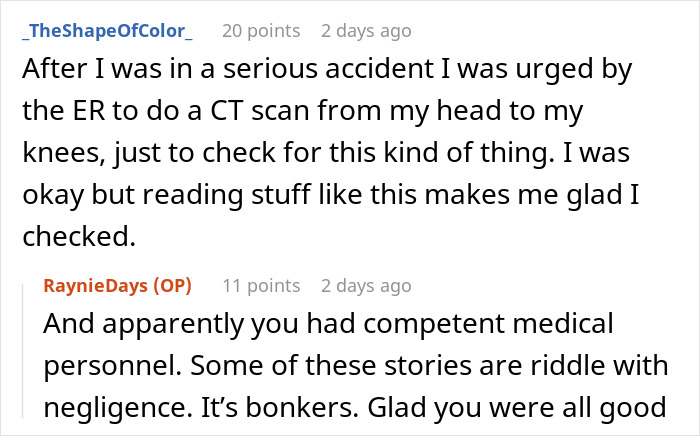
While emergency rooms do check for life-threatening injuries, experts say they often miss delayed injury symptoms.
“Many car accident injuries require follow-up care with a specialist. Neck and shoulder pain, muscle injuries, and spinal trauma need more detailed attention than most ERs provide,” explains Dr. Bendiks.
According to experts, these are some of the delayed car crash symptoms that you should watch out for:
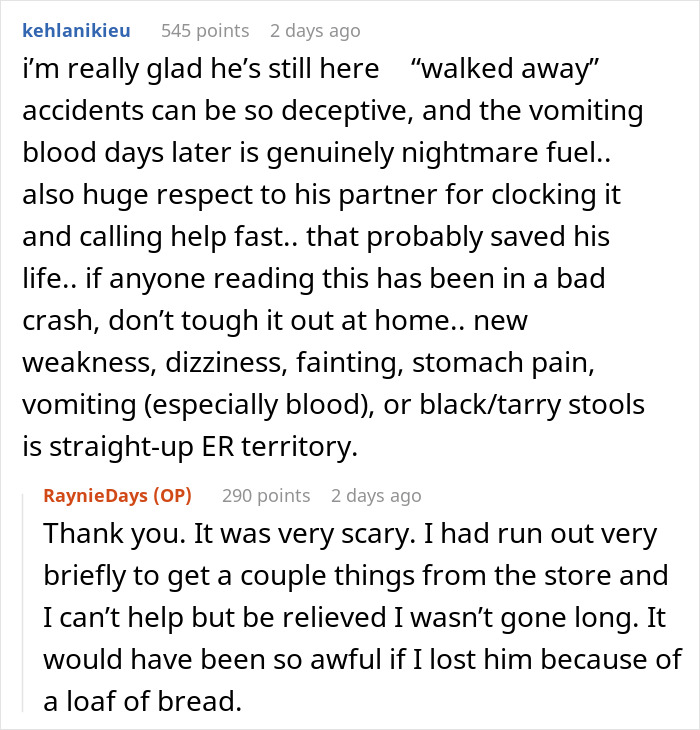
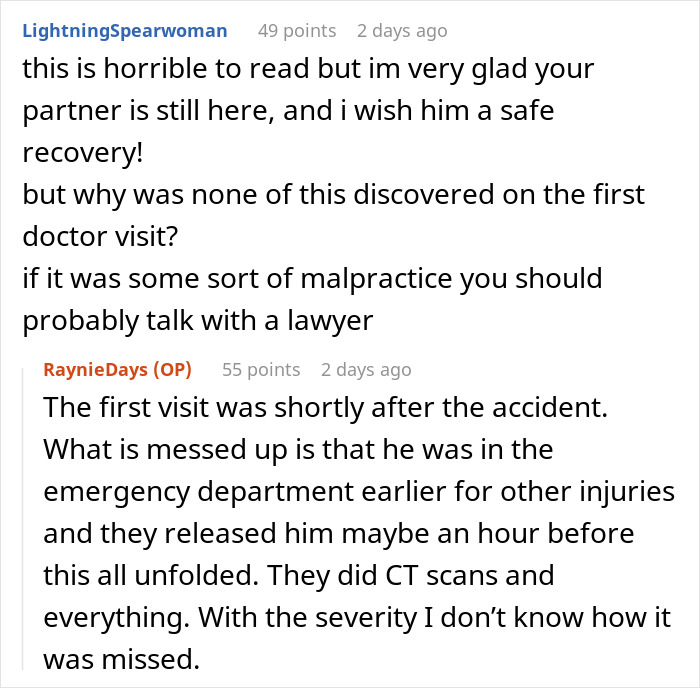
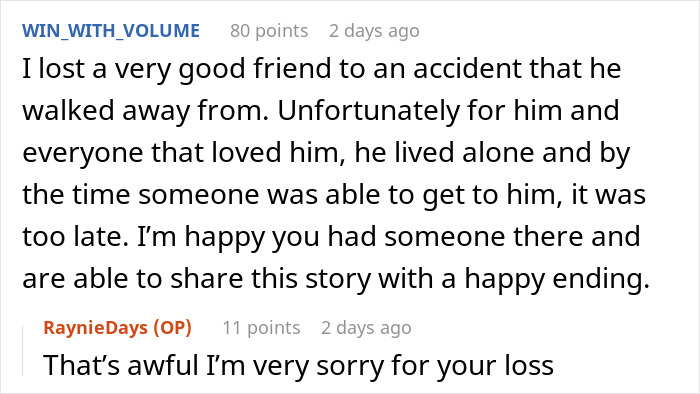
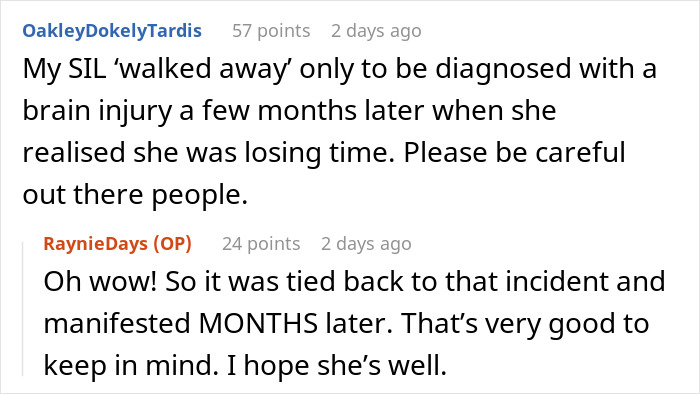

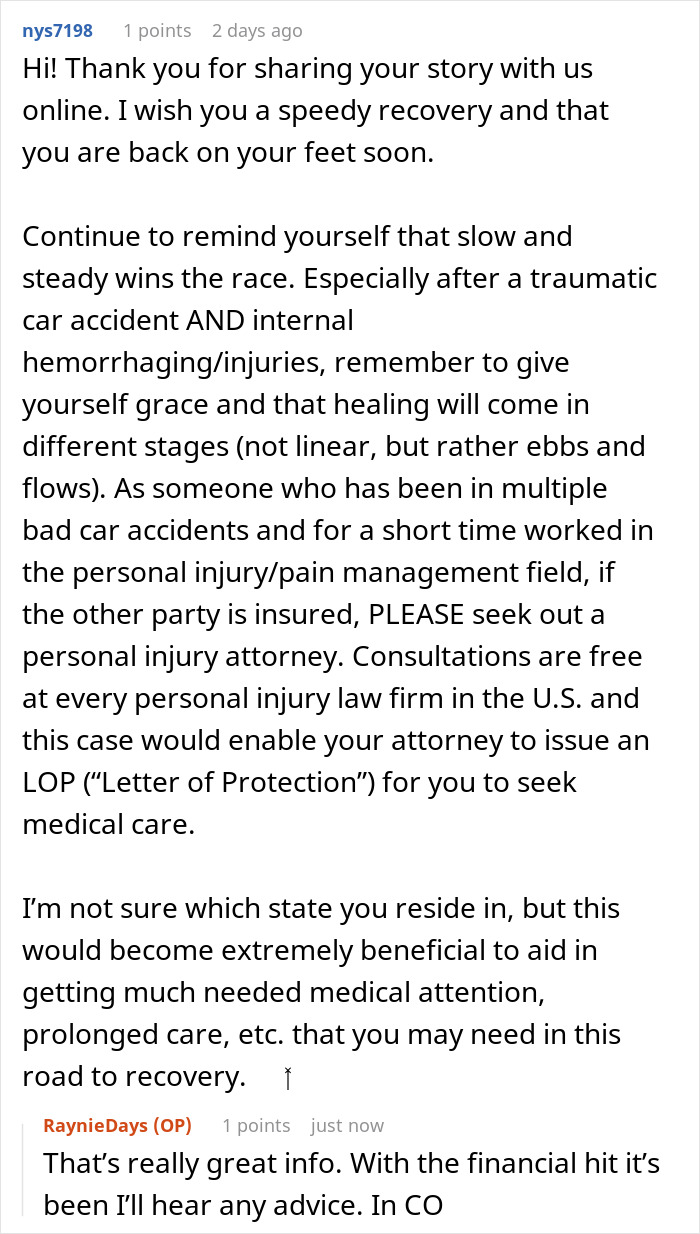
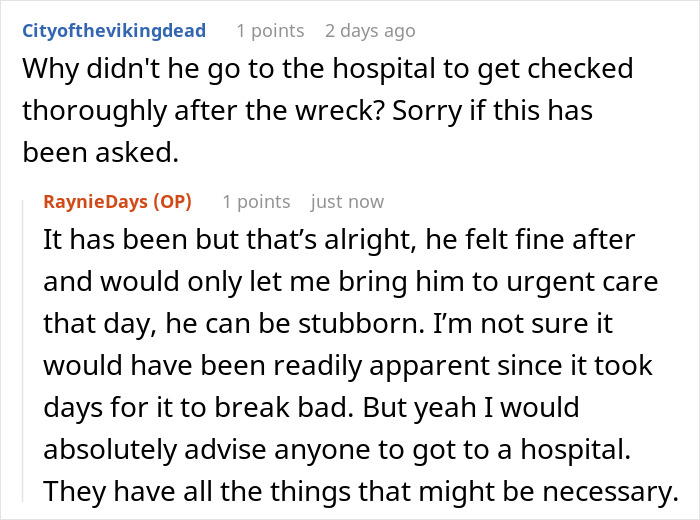
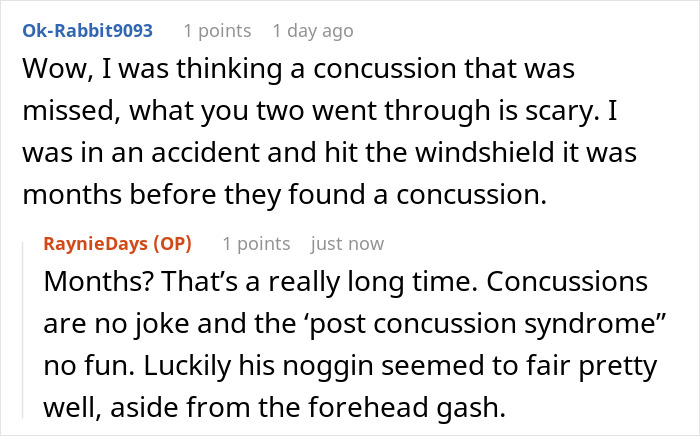

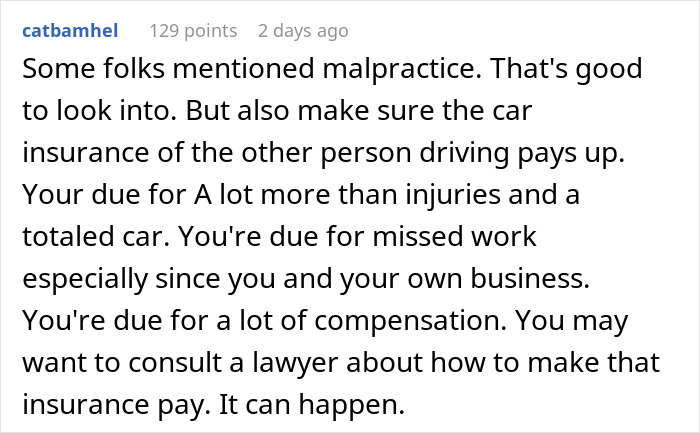






By entering your email and clicking Subscribe, you're agreeing to let us send you customized marketing messages about us and our advertising partners. You are also agreeing to our Privacy Policy.
Thank you! You've successfully subscribed to newsletters!

3 1/2 years ago I was in a horrific crash which many of your readers have probably seen somewhere on the Internet, (google: “Levey motorcycle”), even after all this time they’re still finding new injuries… my accident was at the extreme end of severity (multiple very obvious injuries) but even if you’re in a minor “fender bender” and think you’re fine, you may not be, be smart and go as quickly as possible to be checked as thoroughly as possible…

Holy Sharknado! I looked that crash up. Thank the Lord you are still alive
Load More Replies...
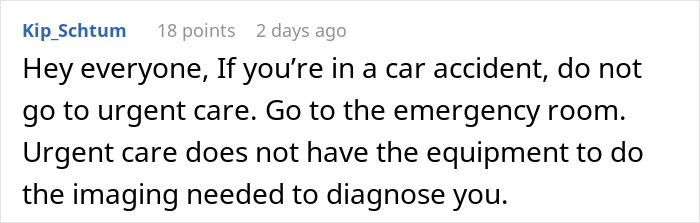
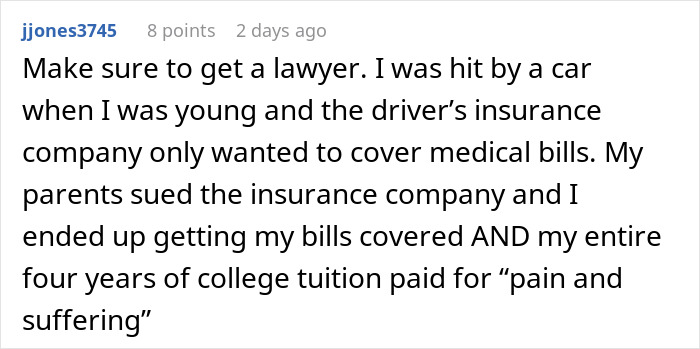
Sounds like the "urgent care" facility he went to completely failed in their duties. "Micro-fractures" of the spine really means crushed vertebrae and should have been immobilised either by pinning it or by an external support and would absolutely be a sign that internal damage was also likely. (I had damage to spleen and liver after a big smash that also crushed 9 vertebrae and broke all my ribs on one side, ICU for a week or so, then a long road to recovery).

Yes if you're in a car accident you really should go get checked out if: airbags deploy, you hit anything, you have any symptoms such as pain, dizziness, nausea, trouble seeing etc. Only time I haven't gone was when someone else clipped my vehicle. Yes I was pushed forward, but I didn't hit another vehicle. After that push I was able to control my car and pulled over. No airbags, my body didn't get moved around, no symptoms etc. If it hadn't been for getting pushed forward (at intersection and light had just turned red so no one was in it) I'm not sure I would have realized I'd been hit. I was vigilant for anything happening and would have gone to the urgent care just down the street if I'd felt anything, no matter how minor. For what this guy experienced it should have been an automatic visit.
3 1/2 years ago I was in a horrific crash which many of your readers have probably seen somewhere on the Internet, (google: “Levey motorcycle”), even after all this time they’re still finding new injuries… my accident was at the extreme end of severity (multiple very obvious injuries) but even if you’re in a minor “fender bender” and think you’re fine, you may not be, be smart and go as quickly as possible to be checked as thoroughly as possible…
Holy Sharknado! I looked that crash up. Thank the Lord you are still alive
Load More Replies... Sounds like the "urgent care" facility he went to completely failed in their duties. "Micro-fractures" of the spine really means crushed vertebrae and should have been immobilised either by pinning it or by an external support and would absolutely be a sign that internal damage was also likely. (I had damage to spleen and liver after a big smash that also crushed 9 vertebrae and broke all my ribs on one side, ICU for a week or so, then a long road to recovery).
Yes if you're in a car accident you really should go get checked out if: airbags deploy, you hit anything, you have any symptoms such as pain, dizziness, nausea, trouble seeing etc. Only time I haven't gone was when someone else clipped my vehicle. Yes I was pushed forward, but I didn't hit another vehicle. After that push I was able to control my car and pulled over. No airbags, my body didn't get moved around, no symptoms etc. If it hadn't been for getting pushed forward (at intersection and light had just turned red so no one was in it) I'm not sure I would have realized I'd been hit. I was vigilant for anything happening and would have gone to the urgent care just down the street if I'd felt anything, no matter how minor. For what this guy experienced it should have been an automatic visit.

































 No fees, cancel anytime







36
5