Get Premium
Dark mode theme is available exclusively for premium users. Learn more about the benefits of subscribing.
No fees, cancel anytime.

 Dark Mode Ad-Free Browsing Unlimited Content
 Ad-Free Browsing Unlimited Content Dark Mode
Join 1.2 million Panda readers who get the best art, memes, and fun stories every week!
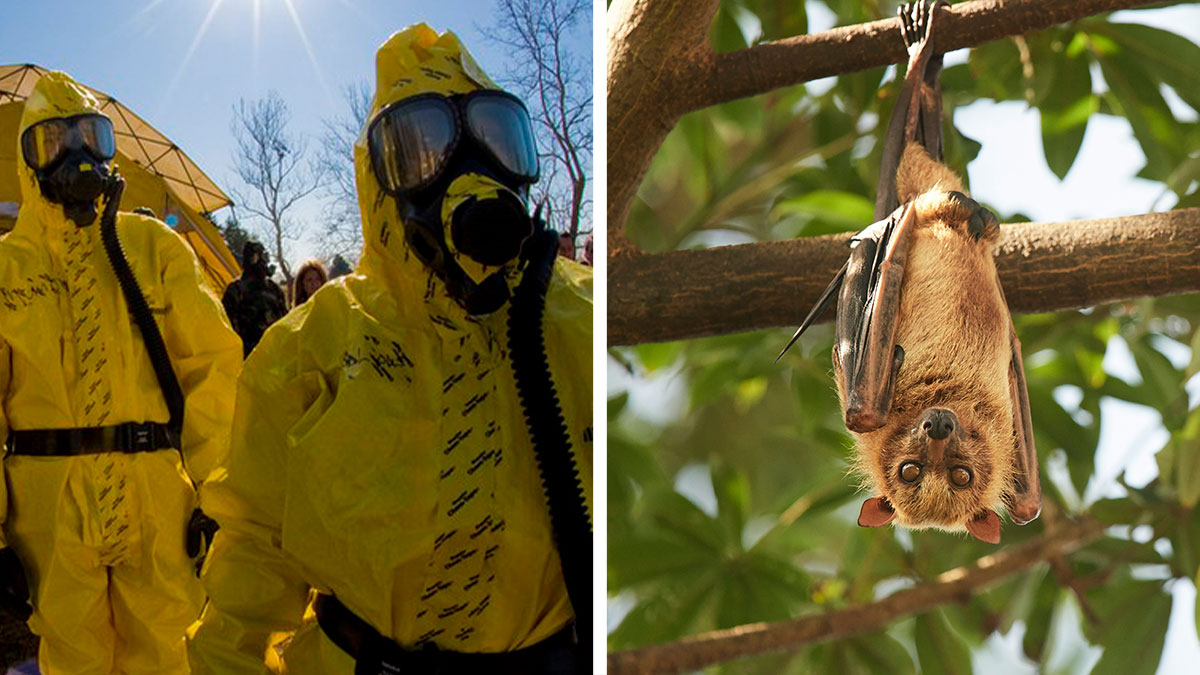
An unknown lethal illness has claimed the lives of over 50 people in the Democratic Republic of the Congo, the World Health Organization (WHO) announced on Monday (February 24).
In most cases, the time between the onset of symptoms and the fatalities has been 48 hours. Serge Ngalebato, the medical director at Bikoro Hospital, a regional monitoring center, described the short interval as “really worrying.”
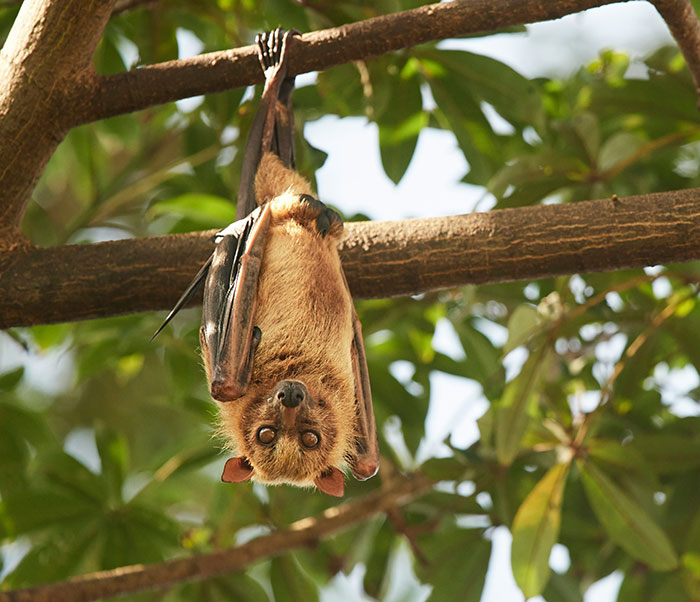
According to the WHO, the first outbreak began on January 21 in the northwestern town of Boloko after three children ate a bat and succumbed to the disease within 48 hours, exhibiting hemorrhagic fever symptoms.
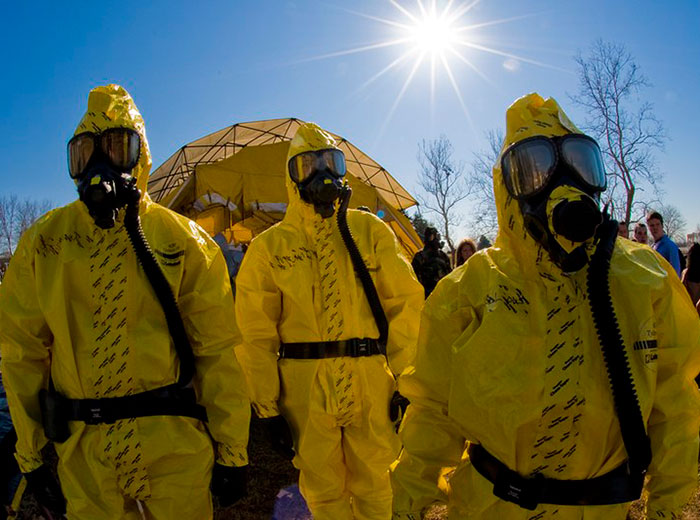
Image credits: US Air Force (not the actual photo)
The second outbreak was recorded in the town of Bomate on February 9.
A total of 419 cases have been recorded, with 53 people losing their lives to the mysterious disease.
On February 9, samples from 13 cases were sent to the National Institute for Biomedical Research in Congo’s capital, Kinshasa, for testing, the WHO stated.
All samples tested negative for Ebola or other common hemorrhagic fever diseases like Marburg.
Some tested positive for malaria, a mosquito-borne infectious disease that can be lethal and causes fever, fatigue, vomiting, and headaches.
Image credits: aboodi vesakaran/Pexels (not the actual photo)
The number of outbreaks of diseases that jumped from animals to humans has surged by 60% in the last decade, the WHO said in a 2022 report.
Ebola and other hemorrhagic fevers were responsible for 70% of those outbreaks, in addition to illnesses like monkeypox, dengue, anthrax, and plague.
Zoonotic diseases have affected people in Africa for centuries, especially in regions where consuming wildlife is common.
However, WHO’s Africa director, Dr. Matshidiso Moeti, noted that developments like quicker travel across the continent have exacerbated the rapid spread of these diseases.
Image credits: stock.adobe (not the actual photo)
Additionally, the continent has the world’s fastest-growing population, leading to rising urbanization and reducing the natural habitats of wildlife.
An outbreak that may once have been contained to a rural area can now spread quickly to the continent’s cities and then affect the rest of the world through international travel.
Coronaviruses are also zoonotic, meaning they are transmitted between animals and people. The SARS-CoV-2 that claimed 7 million lives is believed to have originated with infected animals sold at a market in China.
Image credits: Nils Bouillard/Unsplash (not the actual photo)
“We need all hands on deck to prevent and control zoonotic diseases such as Ebola, monkeypox, and even other coronaviruses,” Dr. Moeti noted in the WHO report.
“Zoonotic diseases are caused by spillover events from animals to humans. Only when we break down the walls between disciplines can we tackle all aspects of the response.
“With improved transportation in Africa, there is an increased threat of zoonotic pathogens traveling to large urban centers.
“We must act now to contain zoonotic diseases before they can cause widespread infections and stop Africa from becoming a hotspot for emerging infectious diseases.”
Image credits: stock.adobe (not the actual photo)
In 2013, West Africa’s Ebola epidemic became widespread when it arrived in capital cities, killing over 10,000 people.
The virus is believed to have started when it was transmitted from infected fruit bats to the human population.
The first cases of the epidemic—the most widespread Ebola outbreak in history—were recorded in Guinea in December 2013. Then, the disease spread to Liberia and Sierra Leone.
Secondary infections occurred in the United States and Spain, with isolated cases being recorded in Senegal, the United Kingdom, and Italy.
Image credits: stock.adobe (not the actual photo)
The number of cases peaked in October 2014. They began to decline through a combination of vaccines, public health measures, and international cooperation.
The Ebola outbreak was declared over in June 2016.
In addition to the Ebola virus, the Sudan virus and the Bundibugyo virus are the three viruses responsible for the largest outbreaks in Africa, as per the CDC.
The Ebola virus remains the deadliest, with up to 90% of cases being fatal. The Sudan virus is fatal for about 50% of those who get sick with the disease, and the Bundibugyo virus has a 30% fatality rate.
Image credits: stock.adobe (not the actual photo)
Last year, another mysterious flu-like illness that claimed dozens of lives in southwest Congo was determined to be very likely malaria, said the head of the World Health Organization, Tedros Adhanom Ghebreyesus.
There were 416 reported cases of the unknown illness, with 31 people succumbing to it in hospitals.

By entering your email and clicking Subscribe, you're agreeing to let us send you customized marketing messages about us and our advertising partners. You are also agreeing to our Privacy Policy.
Thank you! You've successfully subscribed to newsletters!
72Kviews
Share on Facebook
Did we learn nothing in the last 5 years??? Don't eat the damn bats!!

It's not about eating the bats. In many instances, humans are encroaching on what was once the bats' domain.
Load More Replies...



Yep! I seem to recall they even made a MOVIE in the 90s about a similar hemorrhagic fever illness: Outbreak. And just because this one didn't test positive for Ebola doesn't mean it isn't one of the dozens of other viral hemorrhagic fevers (like hantavirus or even a rhabdovirus.) Honestly, ebolaviruses (and most viruses) can mutate at the drop of a hat; I wouldn't be surprised if this simply is eventually shown to be a new form of Ebola, Marburg, or Hantavirus pulmonary syndrome.
Load More Replies...

Thank goodness Trump pulled out the WHO. I bet Trump thinks he know more about disease than the WHO.


Sucks only smart Americans will think to look up WHO info to stay alert on potential and ongoing outbreaks to stay/get prepared. Our "president" and his anti vax, just as deadly kennedy are going to have millions of usa citizens deaths on their hands. Breaks my heart how the States of America is falling to pitiful pieces fast. Every super power fails though. Just wish it was happening under competent leaders who were honestly trying their best to save it than us crumbling due to vengeful, unknowlegeble, ego driven, narcissistic, racist, hateful dictators who want to destroy the States of America. Such a heartbreaking time. At least the 1% will continue to get the best. Sigh.
Load More Replies...
Guess which country won't implement any sort of quarantine no matter what? Mine, that is. When everyone already had flight restrictions in place during COVID we were still *debating* whether it was really necessary. So we'll welcome them with open arms again, because why not. Only 100000 people died last time 🙄

Wait for all of the people to freak out that there's a travel ban. Shut it DOWN, no one in or out. Period.


I guess now we know why Trump wants Greenland
Load More Replies...
These various diseases are endemic to the equatorial zone - that is, really warm, moist places. Yellow fever is already on the uptick; there is a case of malaria that was transmitted human-to-human here in the US. Global warming will expand the areas where parasites and various locally sourced virii will be able to live


as far as I read, it fits the timing, but there is no proof
Load More Replies...
Not really a new story. There have been variants of various haemorrhagic fevers in central Africa for many years. Ebola and CCHF outbreaks occur regularly with the last major outbreak in 2014. Unlike COVID 19 and other coronaviruses like flu; Ebola, CCHF and other similar haemorrhagic fevers are not as easy to transmit, as transmission requires prolonged contact with contaminated body fluids. It is not spread through the air and it can be easily controlled using basic contamination control procedures.
"Most victims succumbed to the illness within 48 hours of exhibiting symptoms" - I know it sounds morbid, but seems like a problem that will solve itself due to a quick lethality rate.
No. Not in the slightest. It clearly spread from the original outbreak to another village, two weeks after the initial outbreak. The dual issues are contagiousness/transmission rate (which is usually incredibly high in hemorrhagic fever viruses) and the fact that not EVERYONE dies within those 48 hours. Some people may even be (relatively) asymptomatic carriers. And sterilization and medical isolation may not be perfect in these countries. If what you said were true, then we would not have had the many, MANY Ebola outbreaks that have occurred. The worst was in 2013-2016, and there were 28,600 cases. Ebola can kill very quickly, but clearly it still spreads well, despite that.
Load More Replies...
So the DRC are dealing with g with this and being invaded by Rwanda?



Did we learn nothing in the last 5 years??? Don't eat the damn bats!!
It's not about eating the bats. In many instances, humans are encroaching on what was once the bats' domain.
Load More Replies... Yep! I seem to recall they even made a MOVIE in the 90s about a similar hemorrhagic fever illness: Outbreak. And just because this one didn't test positive for Ebola doesn't mean it isn't one of the dozens of other viral hemorrhagic fevers (like hantavirus or even a rhabdovirus.) Honestly, ebolaviruses (and most viruses) can mutate at the drop of a hat; I wouldn't be surprised if this simply is eventually shown to be a new form of Ebola, Marburg, or Hantavirus pulmonary syndrome.
Load More Replies... Thank goodness Trump pulled out the WHO. I bet Trump thinks he know more about disease than the WHO.
Sucks only smart Americans will think to look up WHO info to stay alert on potential and ongoing outbreaks to stay/get prepared. Our "president" and his anti vax, just as deadly kennedy are going to have millions of usa citizens deaths on their hands. Breaks my heart how the States of America is falling to pitiful pieces fast. Every super power fails though. Just wish it was happening under competent leaders who were honestly trying their best to save it than us crumbling due to vengeful, unknowlegeble, ego driven, narcissistic, racist, hateful dictators who want to destroy the States of America. Such a heartbreaking time. At least the 1% will continue to get the best. Sigh.
Load More Replies... Guess which country won't implement any sort of quarantine no matter what? Mine, that is. When everyone already had flight restrictions in place during COVID we were still *debating* whether it was really necessary. So we'll welcome them with open arms again, because why not. Only 100000 people died last time 🙄
Wait for all of the people to freak out that there's a travel ban. Shut it DOWN, no one in or out. Period.
I guess now we know why Trump wants Greenland
Load More Replies... These various diseases are endemic to the equatorial zone - that is, really warm, moist places. Yellow fever is already on the uptick; there is a case of malaria that was transmitted human-to-human here in the US. Global warming will expand the areas where parasites and various locally sourced virii will be able to live
as far as I read, it fits the timing, but there is no proof
Load More Replies... Not really a new story. There have been variants of various haemorrhagic fevers in central Africa for many years. Ebola and CCHF outbreaks occur regularly with the last major outbreak in 2014. Unlike COVID 19 and other coronaviruses like flu; Ebola, CCHF and other similar haemorrhagic fevers are not as easy to transmit, as transmission requires prolonged contact with contaminated body fluids. It is not spread through the air and it can be easily controlled using basic contamination control procedures.
"Most victims succumbed to the illness within 48 hours of exhibiting symptoms" - I know it sounds morbid, but seems like a problem that will solve itself due to a quick lethality rate.
No. Not in the slightest. It clearly spread from the original outbreak to another village, two weeks after the initial outbreak. The dual issues are contagiousness/transmission rate (which is usually incredibly high in hemorrhagic fever viruses) and the fact that not EVERYONE dies within those 48 hours. Some people may even be (relatively) asymptomatic carriers. And sterilization and medical isolation may not be perfect in these countries. If what you said were true, then we would not have had the many, MANY Ebola outbreaks that have occurred. The worst was in 2013-2016, and there were 28,600 cases. Ebola can kill very quickly, but clearly it still spreads well, despite that.
Load More Replies... So the DRC are dealing with g with this and being invaded by Rwanda?







































 No fees, cancel anytime


























39
44