Get Premium
Dark mode theme is available exclusively for premium users. Learn more about the benefits of subscribing.
No fees, cancel anytime.

 Dark Mode Ad-Free Browsing Unlimited Content
 Ad-Free Browsing Unlimited Content Dark Mode
Join 1.2 million Panda readers who get the best art, memes, and fun stories every week!

A recent study, published by researchers at University College London (UCL) on May 11, 2026, in the journal Innovation in Aging, has found a new way to slow the pace of aging.
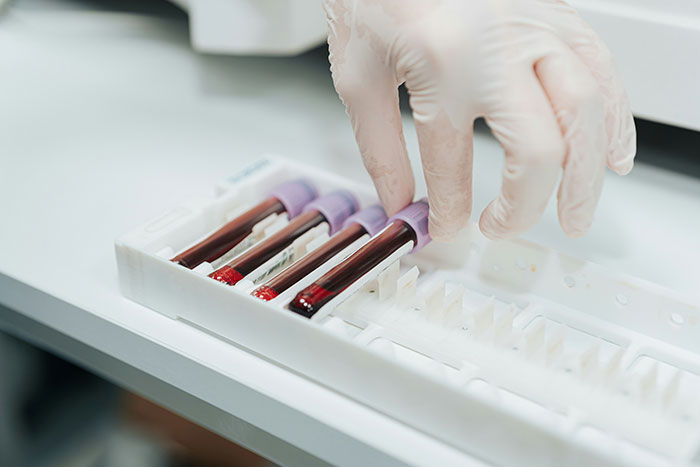
The researchers studied the impact of arts and cultural engagement on blood samples of 3,556 participating adults.
The scientists emphasized that these human activities have rarely been studied as potential biomarkers of health and longevity.
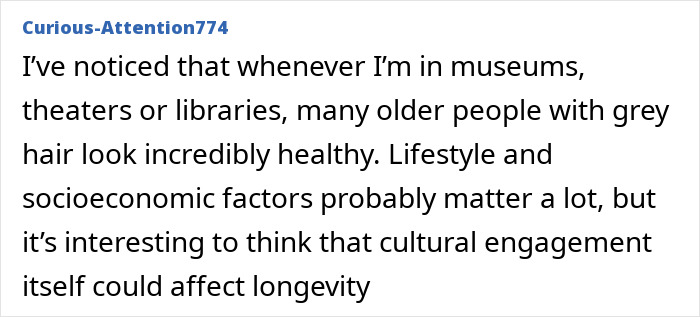
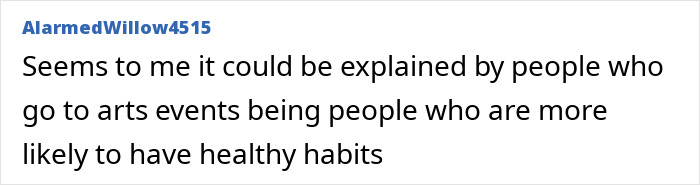
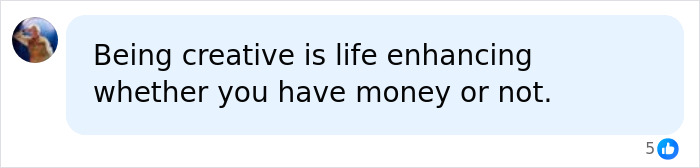
“Being creative is life-enhancing, whether you have money or not,” one netizen chimed in about the finding.
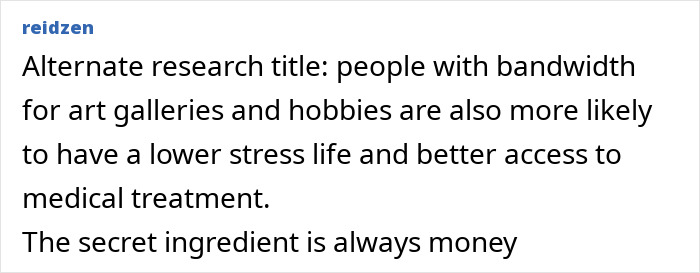
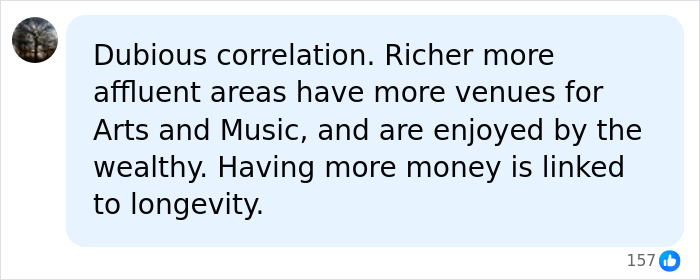
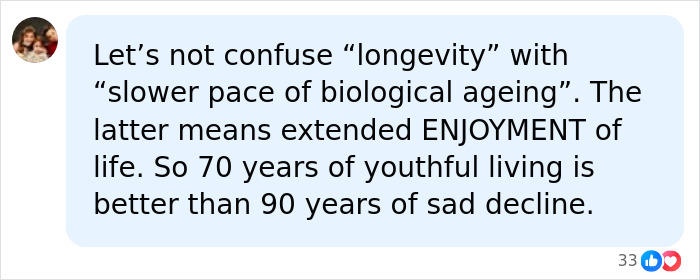
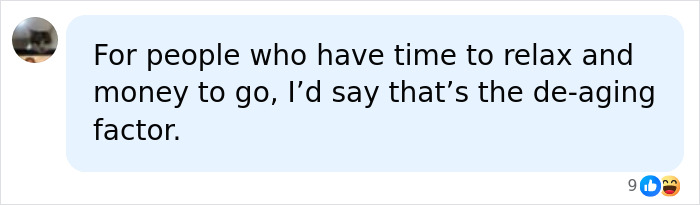
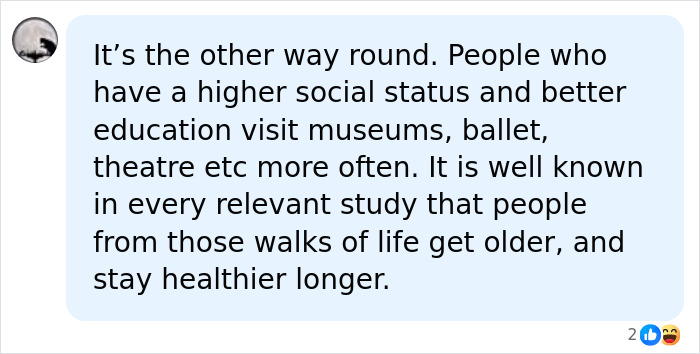
Some netizens, on the other hand, believed the results had more to do with the person’s status.
“The secret ingredient is always money.”
Image credits: Getty Images/Unsplash (Not the actual photo)
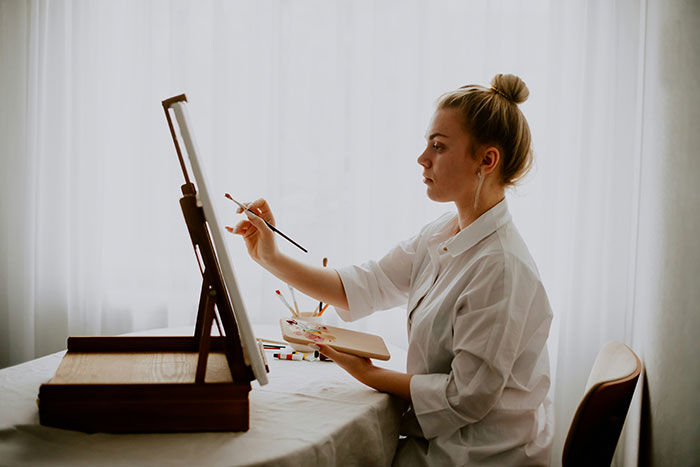
The UCL research team found that participating in arts and creativity, such as reading, listening to music, or visiting a museum, led to DNA chemical changes known to impact biological aging in beneficial ways.
Those who engaged in these activities at least once a week seemed to age 4% more slowly than those who rarely did so, while monthly engagement slowed aging by 3%. The percentage remained the same for those who exercised compared to those who didn’t.
Image credits: Getty Images/Unsplash (Not the actual photo)
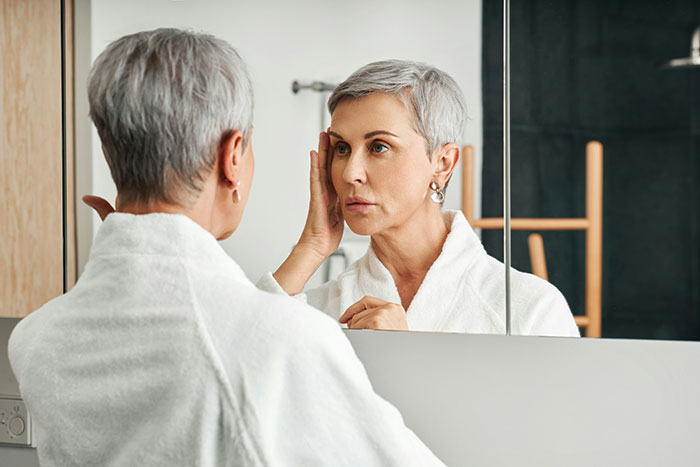
It also found that people who engage in art were, on average and biologically speaking, at least a year younger than those who don’t.
The signs of longevity were stronger among men aged 40 or older, and persisted after accounting for factors such as BMI, substance habits, income, and other health-related variables.
Image credits: Victor Freitas/Unsplash (Not the actual photo)
“These results demonstrate the health impact of the arts at a biological level,” said lead author Professor Daisy Fancourt of UCL Institute of Epidemiology and Healthcare. “They provide evidence for arts and cultural engagement to be recognized as a health-promoting behavior in a similar way to exercise.”
“Our study also suggests that engaging in a variety of arts activities may be helpful. This may be because each activity has different ‘ingredients’ that help health, such as physical, cognitive, emotional, or social stimulation.”
Image credits: Yunus Tuğ/Unsplash (Not the actual photo)
The study was conducted using seven epigenetic clocks — analytical tools that estimate a person’s biological age by analyzing changes in their DNA over time.
Unlike chronological age, which simply counts the years since someone was born, biological age reflects how old the body actually appears at a cellular level.
Image credits: Ardian Lumi/Unsplash (Not the actual photo)
Most of these clocks work by measuring patterns of DNA methylation, a natural chemical process that affects how genes are switched on or off without changing the genetic code itself. Some new-age epigenetic clocks have been developed based on the histone code, chromatin accessibility, and nucleosome positioning.
In recent years, epigenetic clocks have become an important tool in anti-aging and longevity research.
Image credits: Ben Iwara/Unsplash (Not the actual photo)
In some of the newer clocks used by the UCL study, DunedinPoAm, DunedinPACE, and PhenoAge, frequency and diversity of arts engagement and physical activity were found to be linked to slower aging.
However, the older epigenetic clocks did not find any benefit for either arts and cultural engagement or physical activity. The researchers cited the outcome to the older clocks’ limited sensitivity to predicting age-related decline.
Image credits: Andrej Lišakov/Unsplash (Not the actual photo)
This new study significantly built on existing evidence, which has previously shown that engaging with art can “reduce stress, lower inflammation, and improve cardiovascular disease risk just as exercise is known to do,” according to senior author Dr. Feifei Bu.
Image credits: Getty Images/Unsplash (Not the actual photo)
A 2023 APA poll reported that among all the American adults (77%) who reported their mental health as good or better than before, 71%% engaged in creative activities more frequently than those who reported fair or poor (46%).
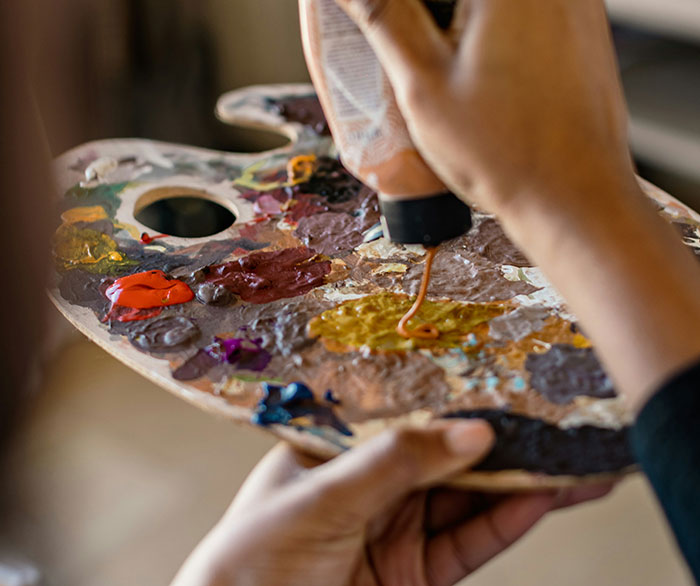
About 46% of Americans said they use creative activities, such as listening to music (77%), solving puzzles (39%), singing or dancing (25%), drawing or painting (24%), and creative writing (16%), to relieve stress or anxiety. Several also attend concerts, visit art museums, cook, garden, and play musical instruments for the same purpose.
Image credits: Getty Images/Unsplash (Not the actual photo)
In 2019, the World Health Organization published a report by Daisy Fancourt and Saoirse Finn that emphasized the positive influence of art on both mental and physical health, including patients with dementia and Parkinson’s disease. It also urged countries to develop policies enabling the use of art to support health and well-being.
In September 2023, the WHO and the Jameel Arts & Health Lab announced a Lancet Global Series to further studies on the intersectional collaboration between arts and health.
Image credits: Kateryna Hliznitsova/Unsplash (Not the actual photo)
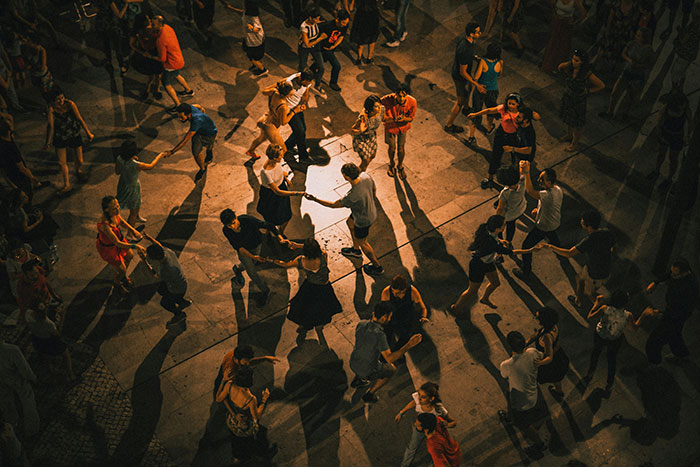
The concept has been championed by cultural establishments, especially in the wake of the COVID-19 pandemic, where balcony performances, TikTok dance videos, and home decor exhibits inspired hope and optimism.
However, it has also faced scrutiny from some viewers, who claim that the anti-aging factor is not art itself but the time, means, and access to it that are primarily available to “healthier, richer people.”

By entering your email and clicking Subscribe, you're agreeing to let us send you customized marketing messages about us and our advertising partners. You are also agreeing to our Privacy Policy.
Thank you! You've successfully subscribed to newsletters!
1k+views
Share on Facebook

I still prefer the Italian and French work a bit, enjoy life a bit, retire properly. US model is suffer a lot, pay a fortune for ill health, d*e too young.
Load More Replies...
I do bead "painting", I write lousy fiction, I read loads, and I listen to music a lot - quite a bit of symphonic metal, which is quite intricate and complex. Is that artistic enough? I still feel exactly like the grumpy middle aged fart that I am. Hmmm... 🤔
Stop, you'll be a grumpy 90 year old and might start a company at 92.
Load More Replies... I still prefer the Italian and French work a bit, enjoy life a bit, retire properly. US model is suffer a lot, pay a fortune for ill health, d*e too young.
Load More Replies... I do bead "painting", I write lousy fiction, I read loads, and I listen to music a lot - quite a bit of symphonic metal, which is quite intricate and complex. Is that artistic enough? I still feel exactly like the grumpy middle aged fart that I am. Hmmm... 🤔
Stop, you'll be a grumpy 90 year old and might start a company at 92.
Load More Replies...






 No fees, cancel anytime











30
9