Get Premium
Dark mode theme is available exclusively for premium users. Learn more about the benefits of subscribing.
No fees, cancel anytime.

 Dark Mode Ad-Free Browsing Unlimited Content
 Ad-Free Browsing Unlimited Content Dark Mode
Join 1.2 million Panda readers who get the best art, memes, and fun stories every week!
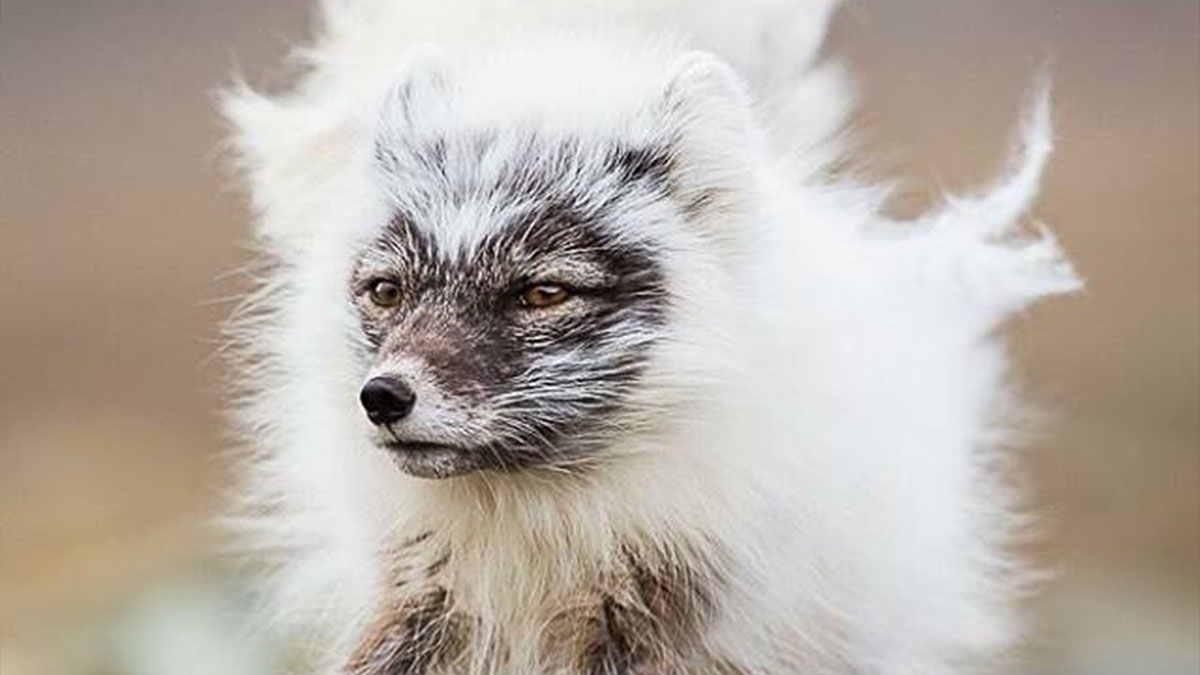
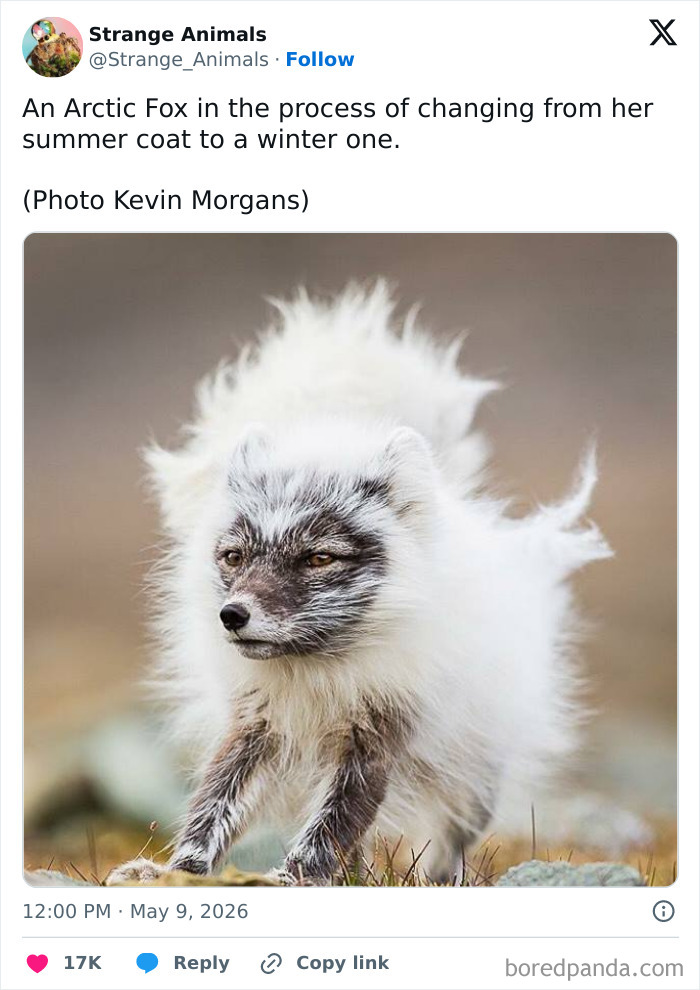
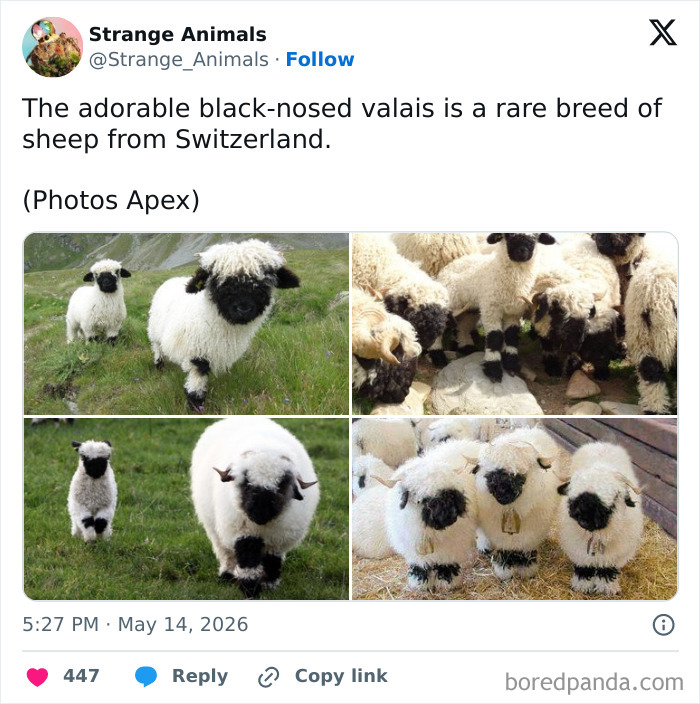
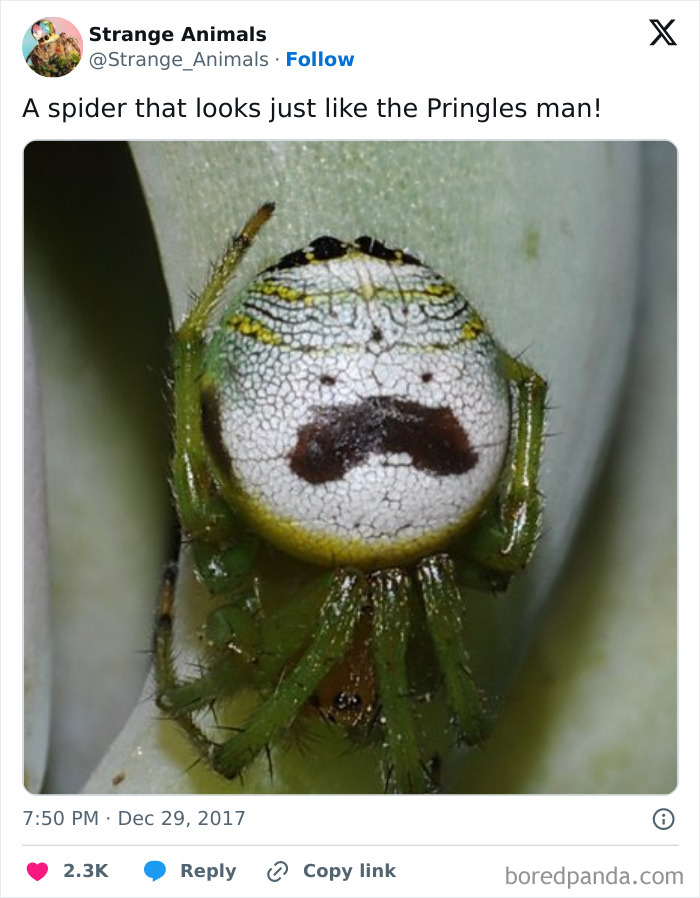
The arctic fox completely swaps its dark summer coat for a snow-white one when winter is coming. The kidney garden spider looks just like the Pringles man. And the world’s cutest sheep can be found in Switzerland.
These are the kinds of animals you will find in this list today — slightly strange, rare, weird… but truly adorable.
We’ve rounded up the best photos of the most unconventional animals from this online page that highlights the wonders of evolution and the incredible diversity of life.
Read on to see how some of these animals are also actively helping scientists unlock medical breakthroughs and predict climate shifts.
This post may include affiliate links.
You know that basic-looking bird outside your window, or that standard fish at the local aquarium? Don’t let them fool you. Nature loves a good disguise. Scientists call these “cryptic species” — animals that look completely identical on the outside but are totally different genetic creatures under the hood.
A recent study found that for almost every known backboned animal we’ve logged, there are actually two hidden, genetically distinct species masquerading right next to it.
For instance, scientists recently discovered that a massive Atlantic manta ray was an entirely separate species. For generations, marine biologists thought it was just a regular old manta ray because it looked exactly the same. It wasn’t until they ran a DNA test that they realized they were looking at a completely different evolutionary branch.
This means our planet’s biodiversity might actually be double what we thought. It also means that the most bizarre secrets might be locked away in the DNA of animals we see every day.

Imagine your entire reason for existence is to be adorable. 1000%
The ocean is home to some of the strangest life forms on Earth. Its pitch-black depths, murky waters, crushing pressure, and icy temperatures mean there are always new and extraordinary species lurking somewhere.
As of early 2025, around 247,418 valid marine species have been identified and named.
Yet, the known count represents only a fraction of the ocean’s biodiversity. Scientists estimate there are anywhere between a few hundred thousand and more than ten million species still waiting to be discovered.
Finding these strange or rare creatures actually matters for our own survival. When scientists track down a rare animal, they are often unlocking a brand-new manual for biology and medicine.
A report by the World Economic Forum shows that a massive portion of modern medicines are derived from nature. Over $75 billion in global pharmaceutical sales and up to 40% of modern prescription formulations are taken from plants, microorganisms, and animals.
Researchers get a closer look at unique evolutionary adaptations every time a rare species is documented. It helps them understand how certain organisms survive extreme environments or fight off diseases.
For example, cone snails helped create powerful painkillers, and sea sponges inspired cancer treatments.
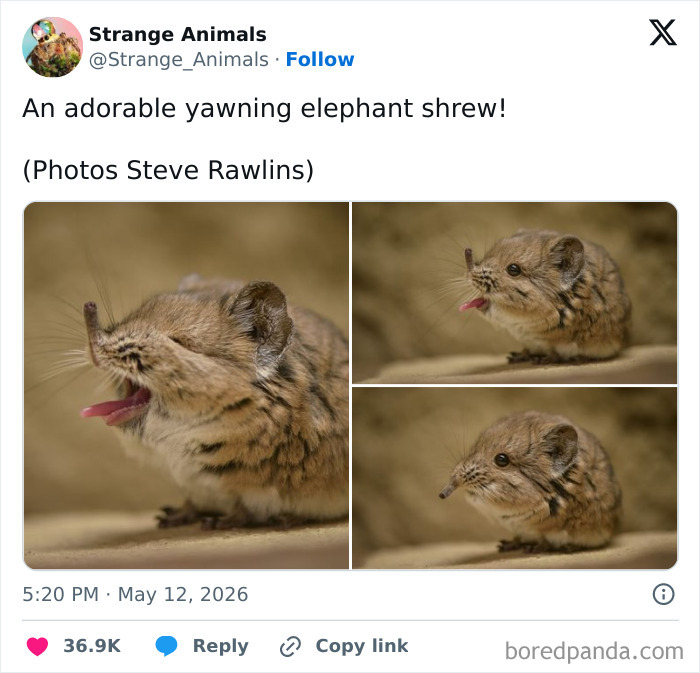
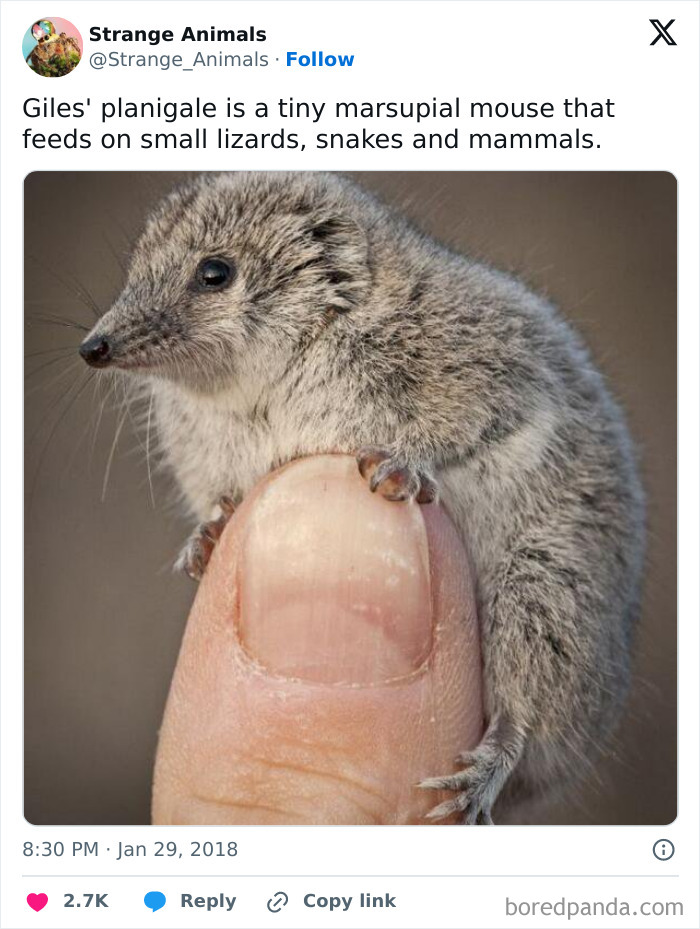
Somehow, this image of a tiny sweet little mouse just doesn't scream "carnivore" but here we are.
These animals also give us a realistic map of how our world actually functions. They allow scientists to predict how ecosystems will react to climate shifts before it is too late.
For example, in mountain regions, heat-loving tropical lizards are suddenly moving up into higher and cooler alpine forests because their old homes are getting too hot and dry. Experts believe that a clear sign that the local climate is shifting is when a species shows up where it has never been seen before.
“We can literally turn animals into flying, swimming, and walking weather stations. Animals equipped with modern sensors could be seen as the 21st-century version of the canary in the coal mine,” said Diego Ellis Soto, a Ph.D. student at Yale’s Faculty of Arts and Sciences.

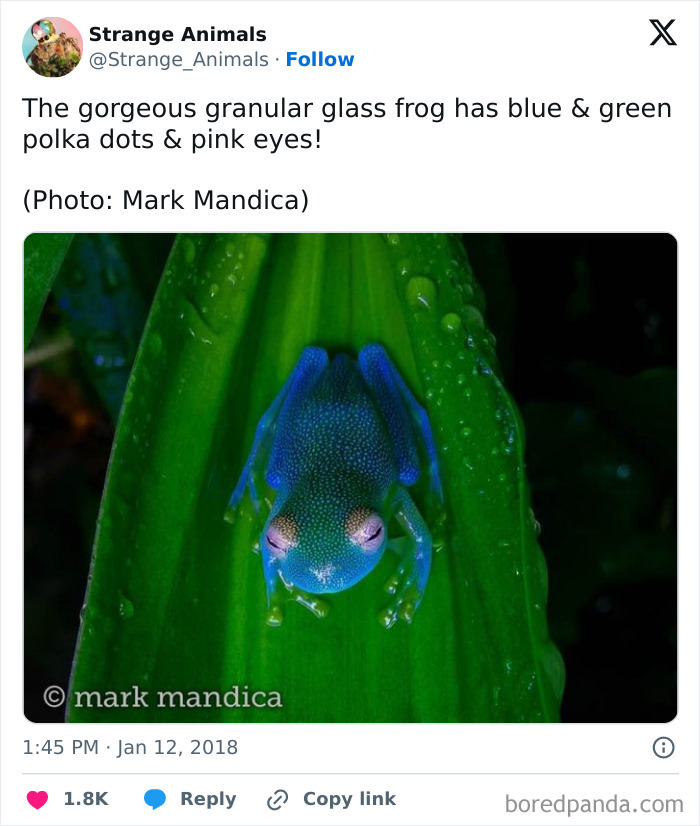
"… a species of frog … found in Costa Rica, Honduras, Nicaragua, and Panama." (Granular Glass Frog, iNaturalist)

Looks like she just told you she wants to talk to your manager... Standing there with her big hair, hands on her hips, tapping her foot in her shiny shoes, carrying her little purse.... edit: spelling
With approximately 1 million species at risk of extinction, experts believe that we are in a race against time to understand and protect animal life.
Recent research shows that this rapid biodiversity loss also threatens global economic stability.
“All businesses depend on nature to some degree, sometimes indirectly, many very directly, and all businesses also have impacts on biodiversity,” says Dr. David Obura, marine ecologist and Intergovernmental Platform on Biodiversity and Ecosystem Services chair.
“What we’re now seeing is that supply chains themselves are at risk due to climate change, pollution, water loss and more. We are at planetary limits now, so understanding the systemic risks — and also the systemic opportunities that nature provides for businesses — is essential.”
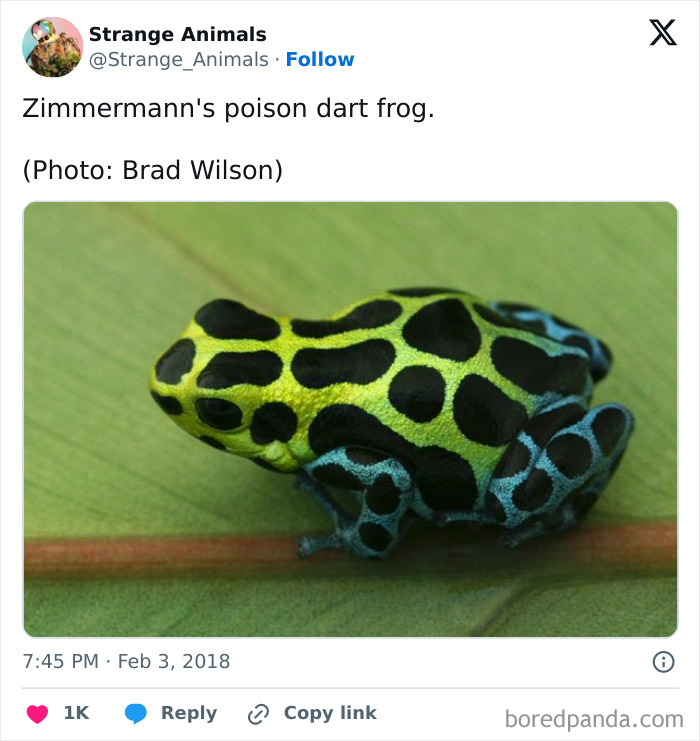
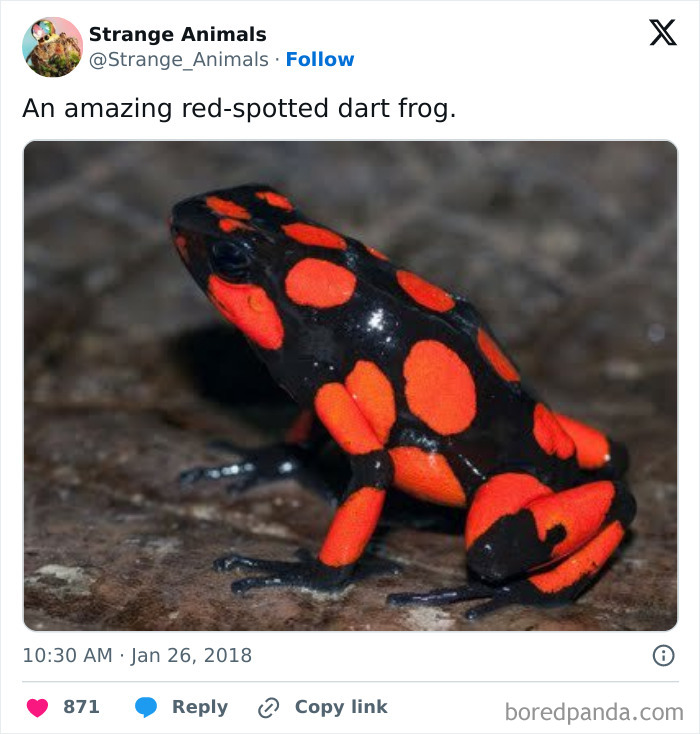
Recently learned this: "… poison dart frogs are completely non-toxic when captive bred. Even wild-caught frogs gradually lose their poisons in captivity". "In order to create their toxins, poison dart frogs need certain chemicals, which are present in the insects they eat in the wild." ( Poison Dart Frog Care Sheet, Reptiles Magazine )
A study found that human activities like cutting down habitats, overfishing, polluting, and climate change are wiping out wildlife across the planet.
In a lot of places graced by us, there are almost 20% fewer species than in untouched areas.
You can see it in the Amazon, where logging is shrinking habitats for jaguars and macaws. Or in coral reefs, where rising water temperatures are bleaching reefs and destroying fish species.

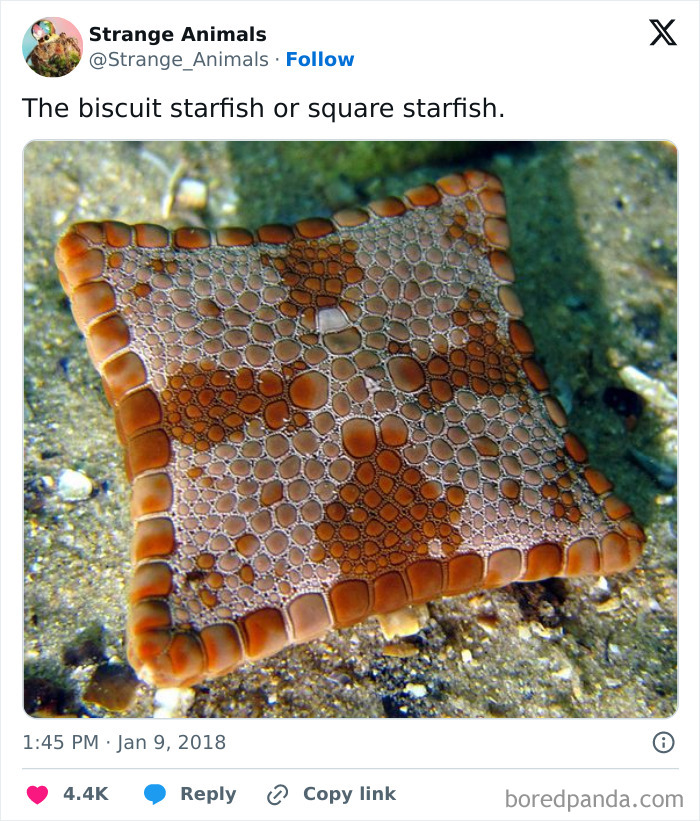
The biscuit starfish has five arms. This is a rare genetic mutation.
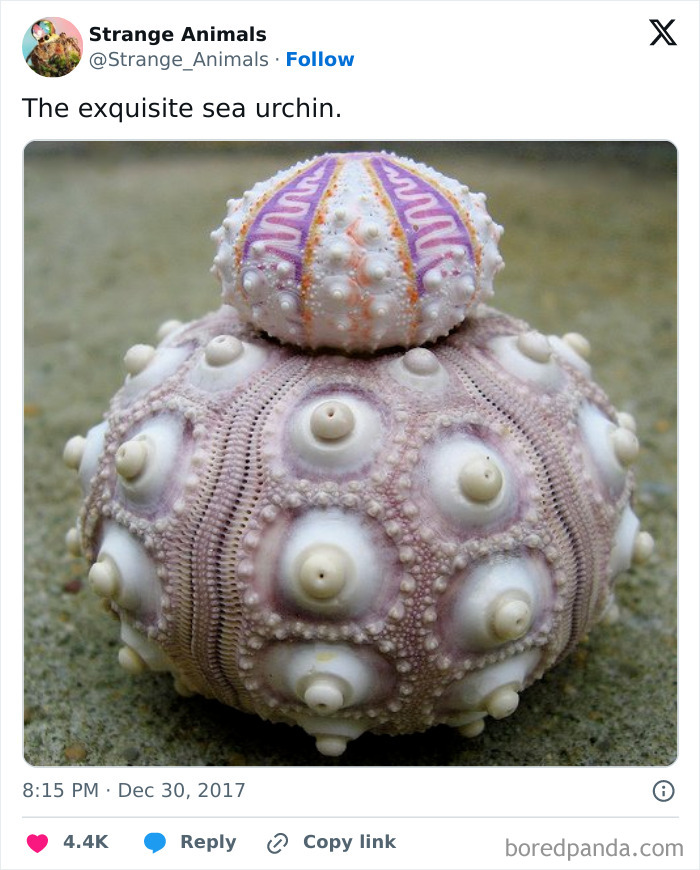
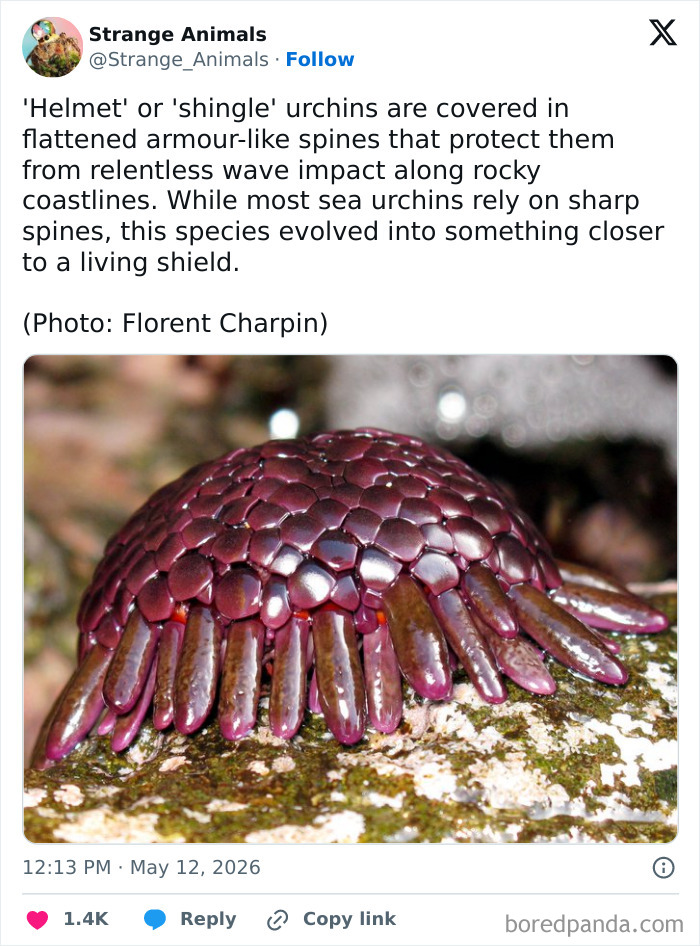
Not convinced. For one thing this is two sea urchins. For another it is only like this after its spines have been removed?
Mapping and documenting animals then becomes the ultimate tool for conservation. When you look at pictures of the strange creatures on this list, it becomes clear how high the stakes really are.
They’re a reminder that we’re not just mute spectators in nature’s story — we’re active participants. At the end of the day, it is our choices that decide whether these strange and adorable creatures get to survive or not.

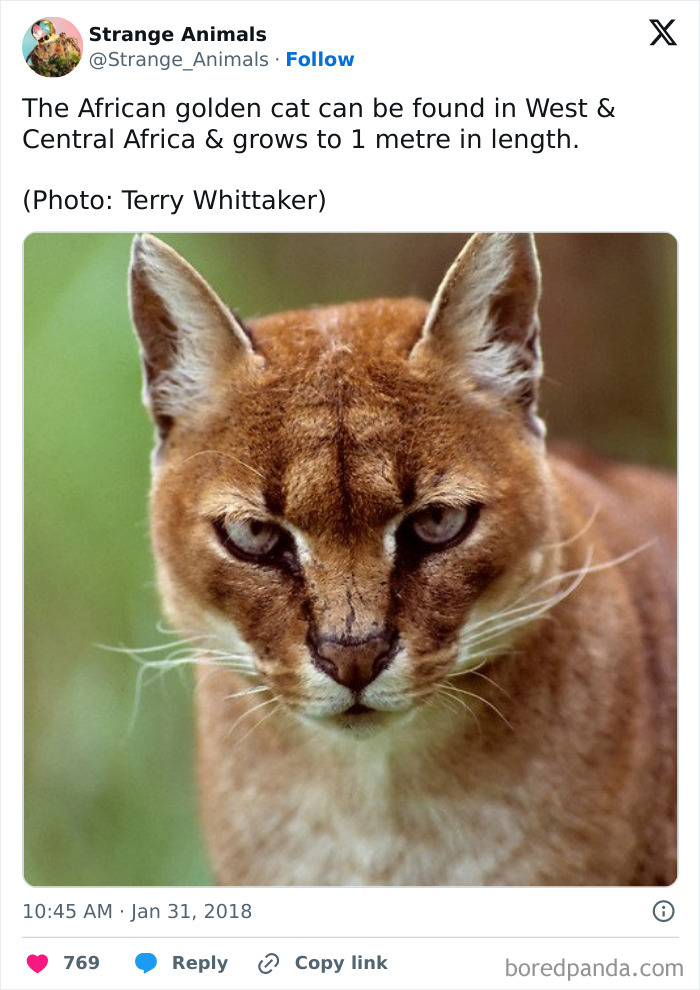
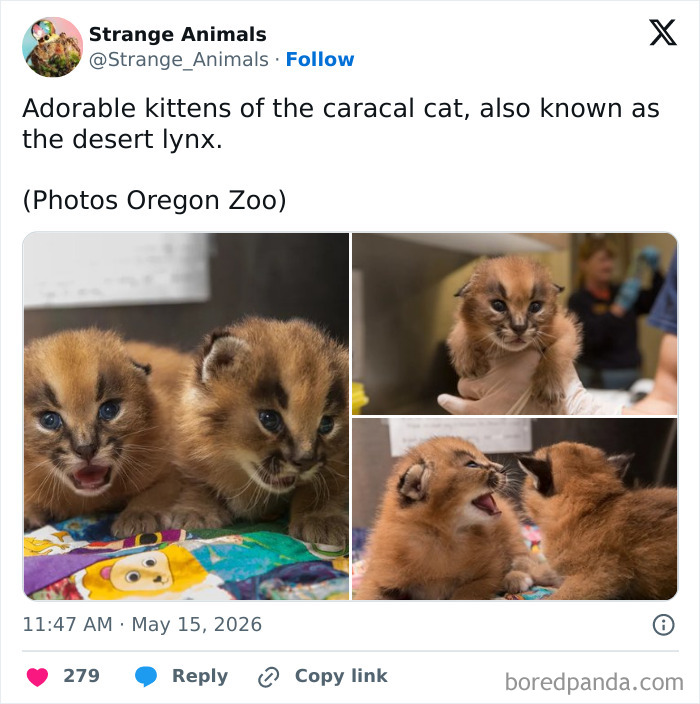
Wild cats like caracals and servals were not meant to be kept as pets OR bred to the domestic feline. Wild hybridized "pet" cat breeds such as the Caracat, Savannah Cat, and yes, even the Bengal Cat are not always suitable housepets. Plus supporting these breeds adds to the trapping and exploitation of wild caracals and servals in order to produce these hybrids. Servals and caracals like the kittens above are adorable... in the wild, where they should be.
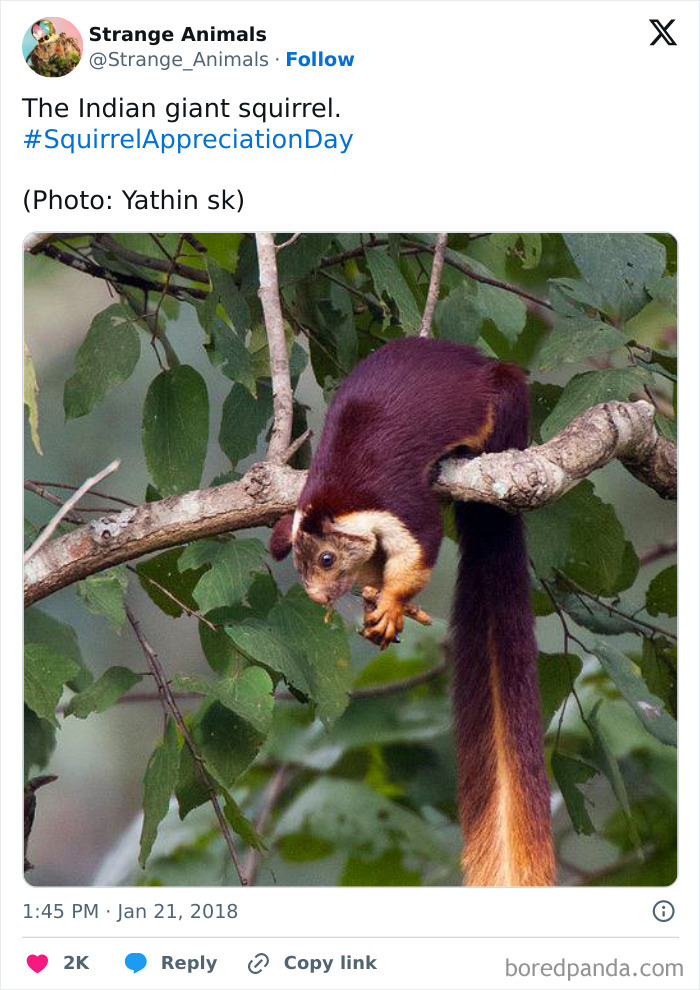
"The Indian giant squirrel is one of the largest squirrels, with a head–and–body length of 25–50 cm (10–20 in), a tail that is about the same or somewhat longer, and a weight of 1.5–2 kg (3–4 lb), although rarely up to 3 kg (7 lb). Average for both sexes is about 36 cm (1 ft 2 in) in head–and–body length, 45 cm (1 ft 6 in) in tail length and 1.7–1.8 kg (3.7–4.0 lb) in weight." (Indian giant squirrel, Wikipedia)
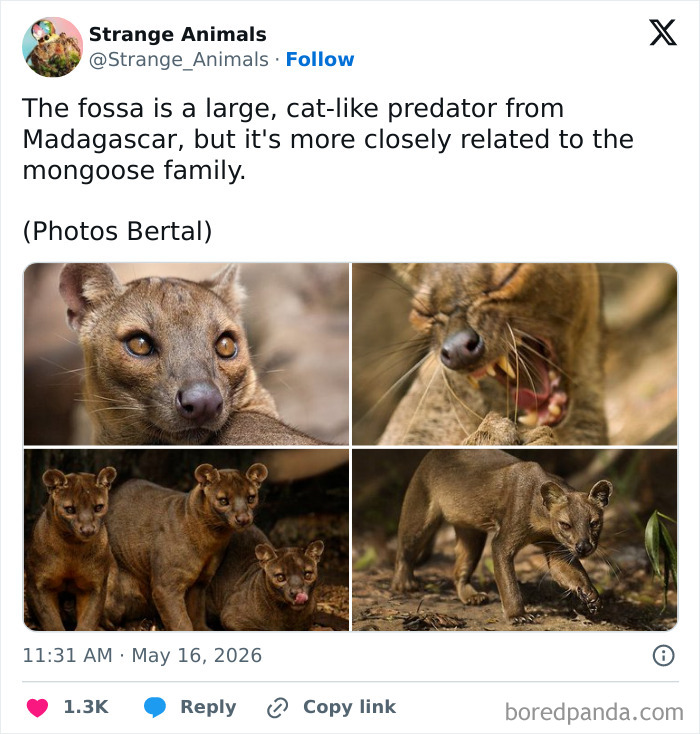
They belong to the superfamily Herpestoidea (below Order but above Family.) This superfamily also includes hyenas and mongooses!
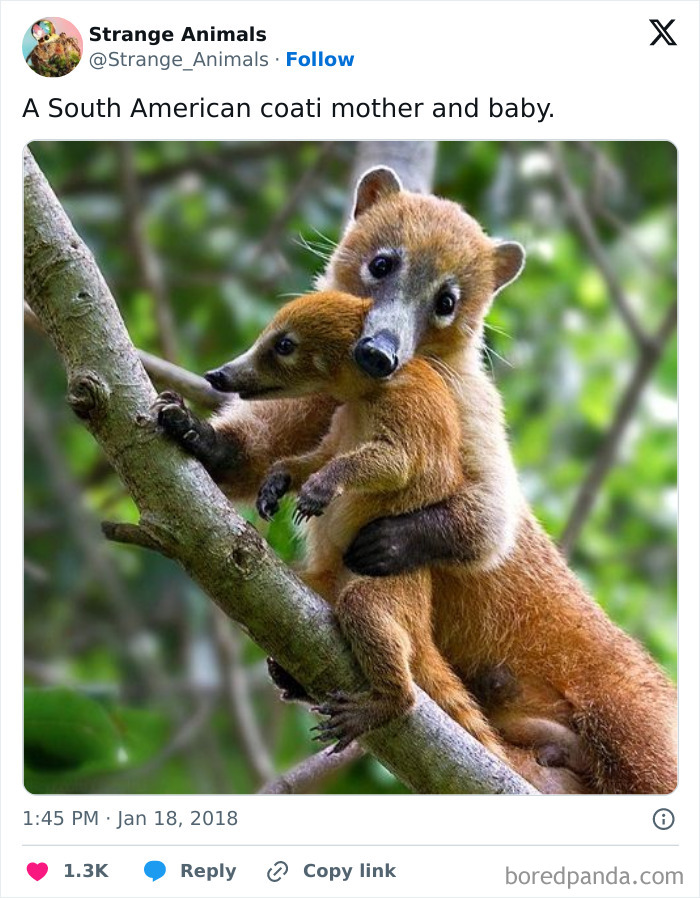
They are a member of the Procyonidae family - which includes raccoons!
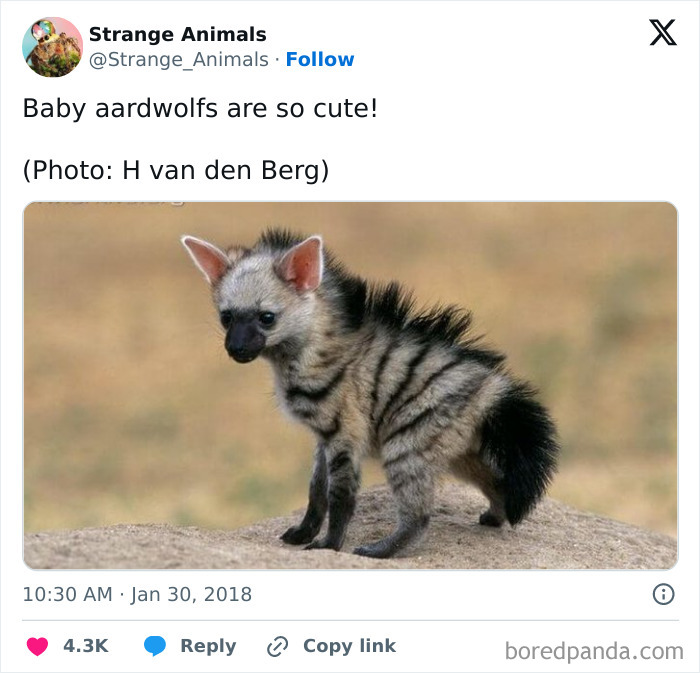
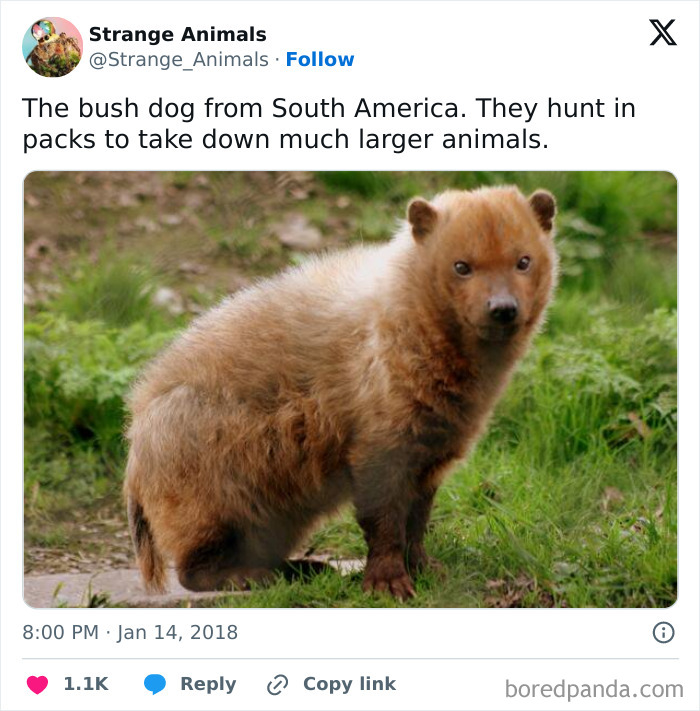
This one actually IS a dog! Well, so to speak XD Not really a dog, per se (its closest relatives are the maned wolf and the African wild dog) but it IS a canid! XD

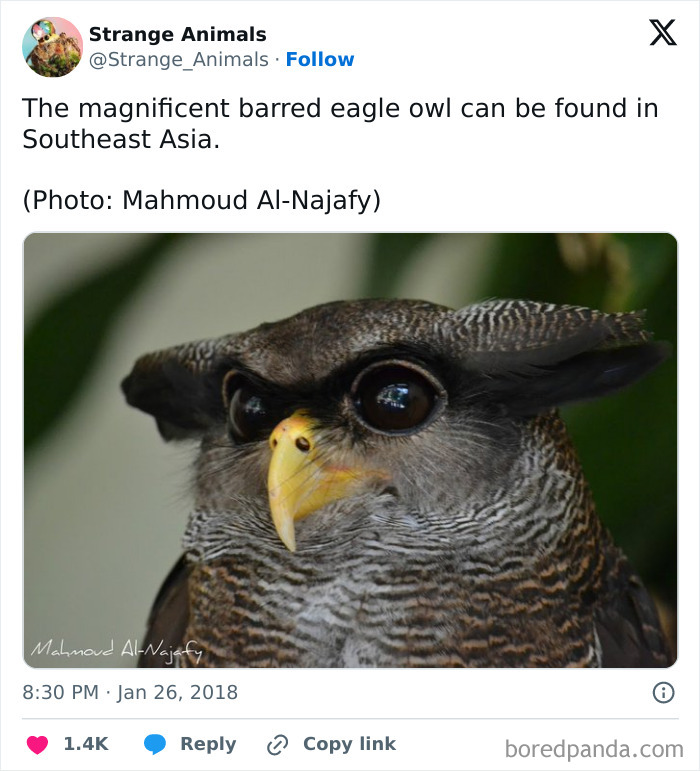
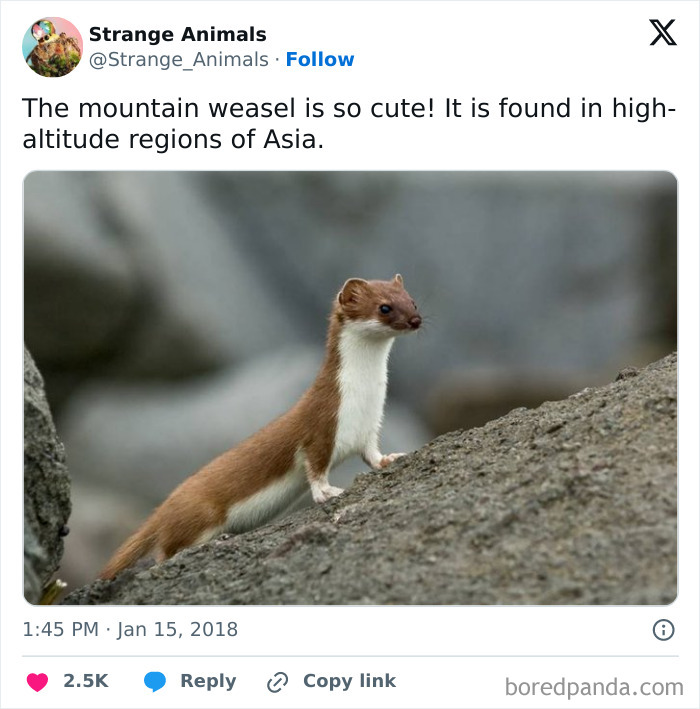
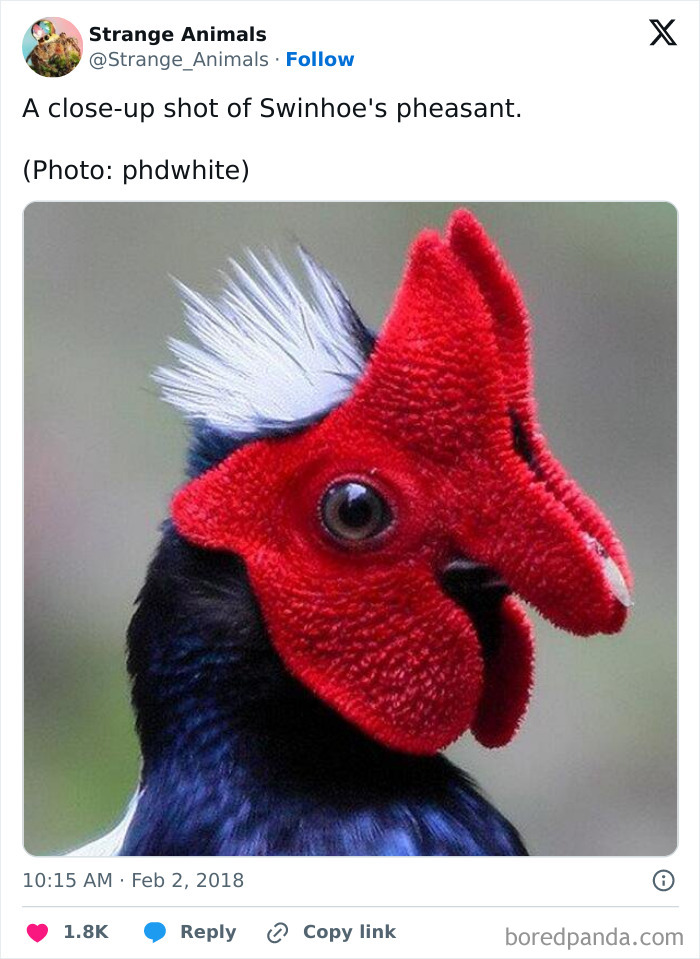
OK, now I gotta look up this Swinhoe person, because I am currently hearing the flock of Swinhoe's White-Eyes that hang out in our tree... Oooh, interesting, it's a guy named Robert Swinhoe and more than 15 different animals are named after him. Gonna put a link in a reply to myself so this one doesn't get hidden.

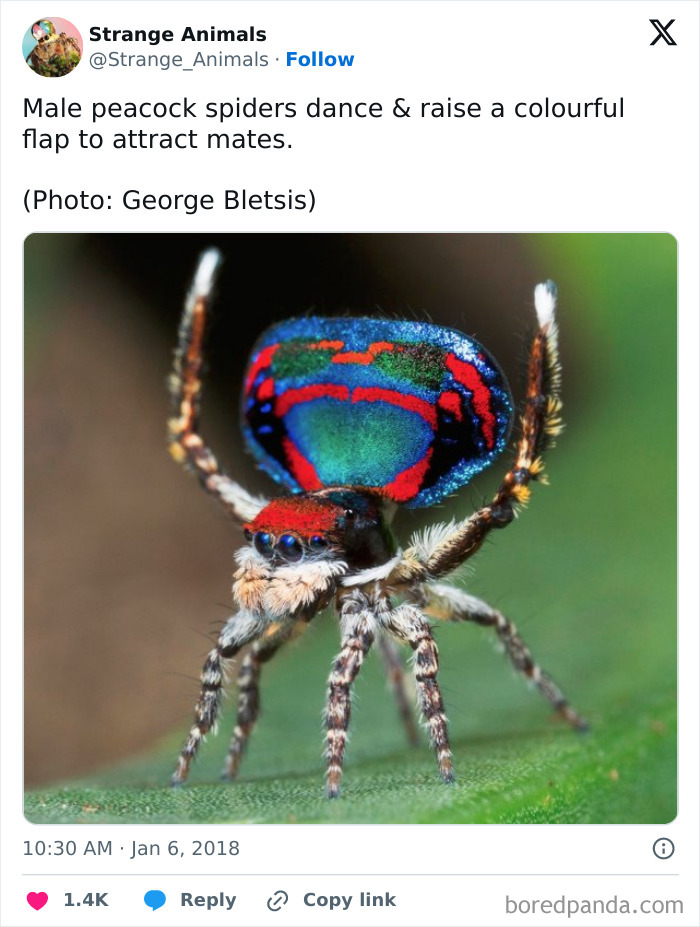
For some odd reason, I find jumping spiders so cute and fuzzy. Even the way they move is cute.
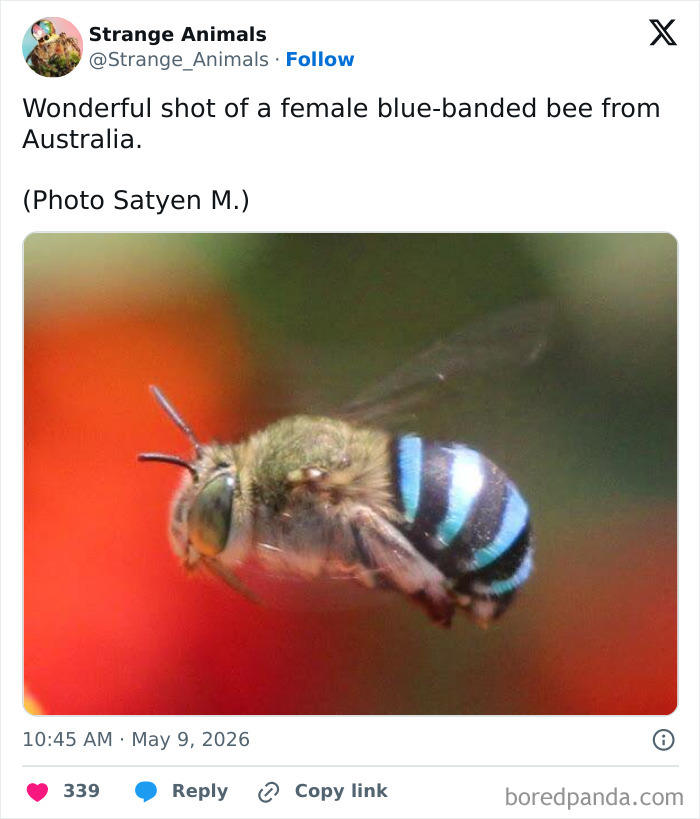
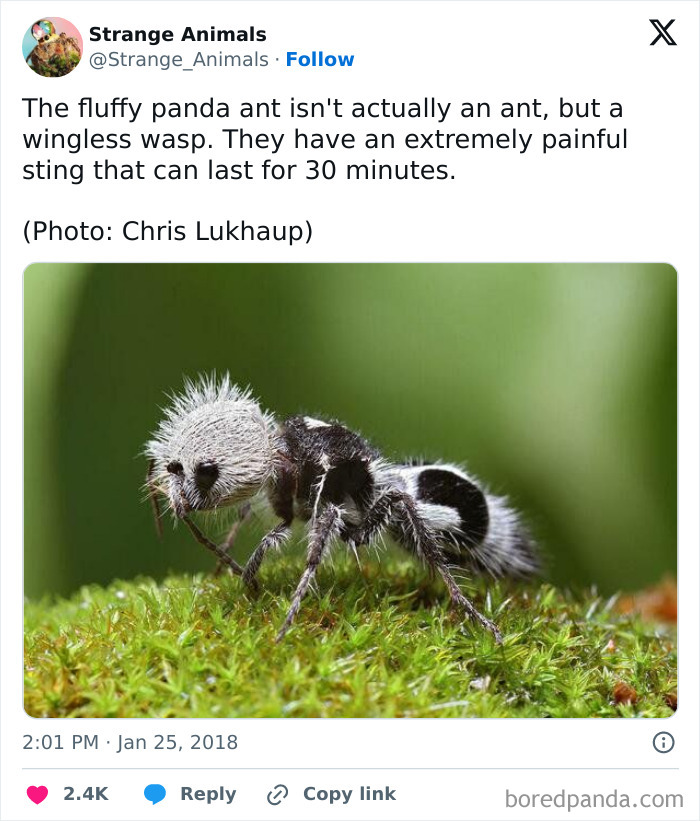
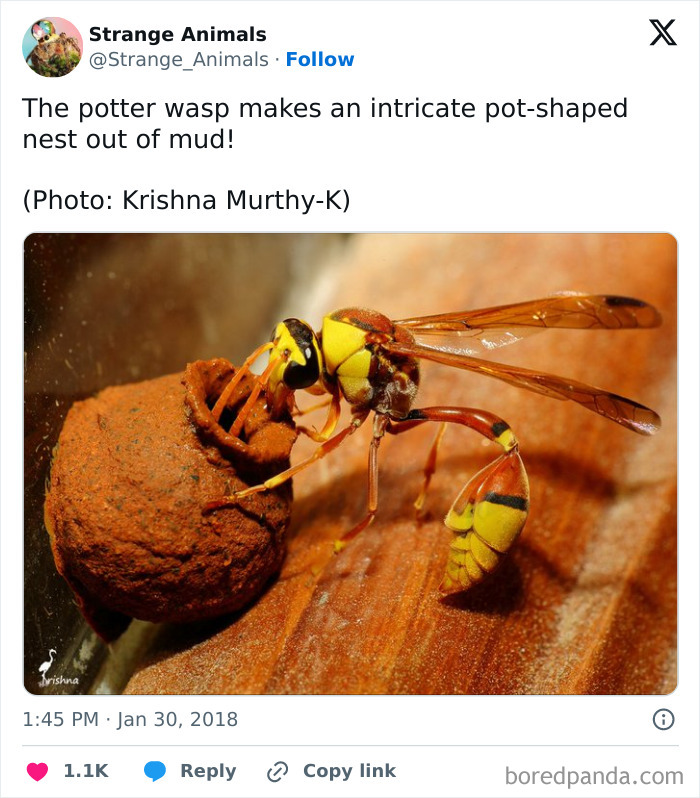
This is a female wasp. The males of the species have wings :)
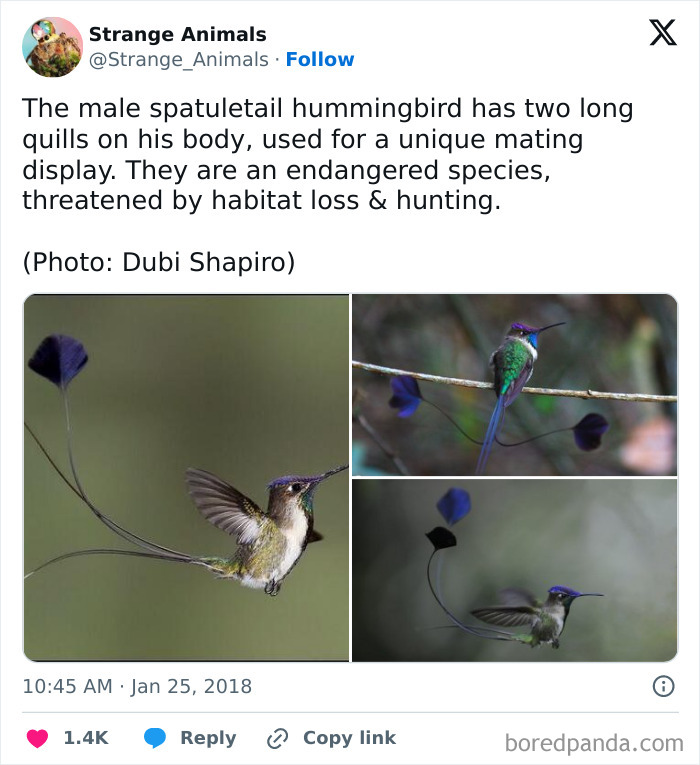
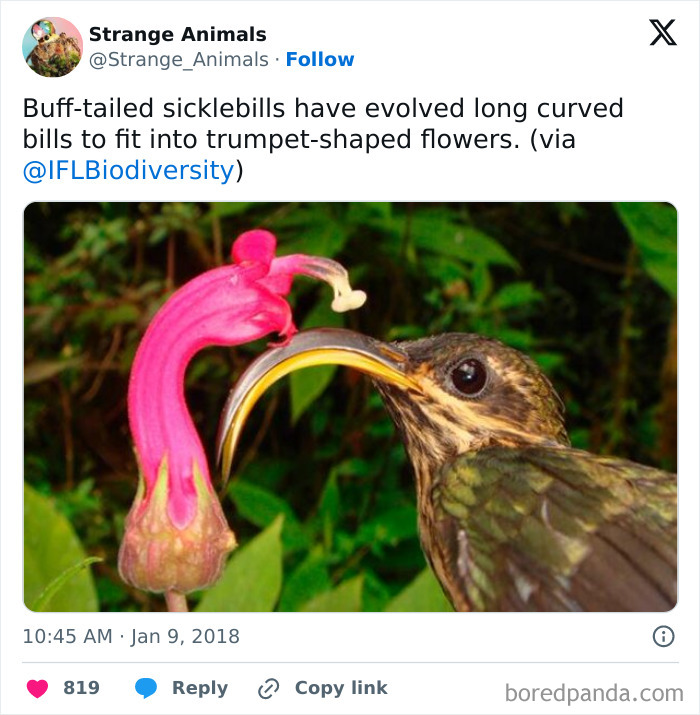
"… from the lower Andes and adjacent west Amazonian lowlands". "With a total length of 5–6 in (13–15 cm) and weighing 0.28–0.44 oz (7.9–12.5 g), it is a relatively large hummingbird". (Buff-tailed sicklebill, Wikipedia)
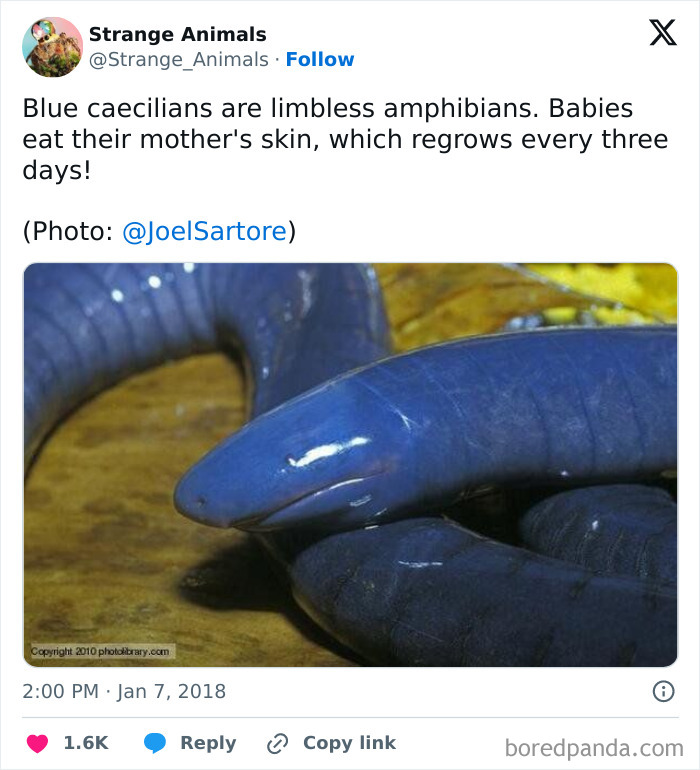
In some species of caecilians, the mothers actually produce a substance that is rich in fats and carbohydrates from their ventral opening that the young "nurse" on, which is as close to mammalian milk as an amphibian is going to get XD
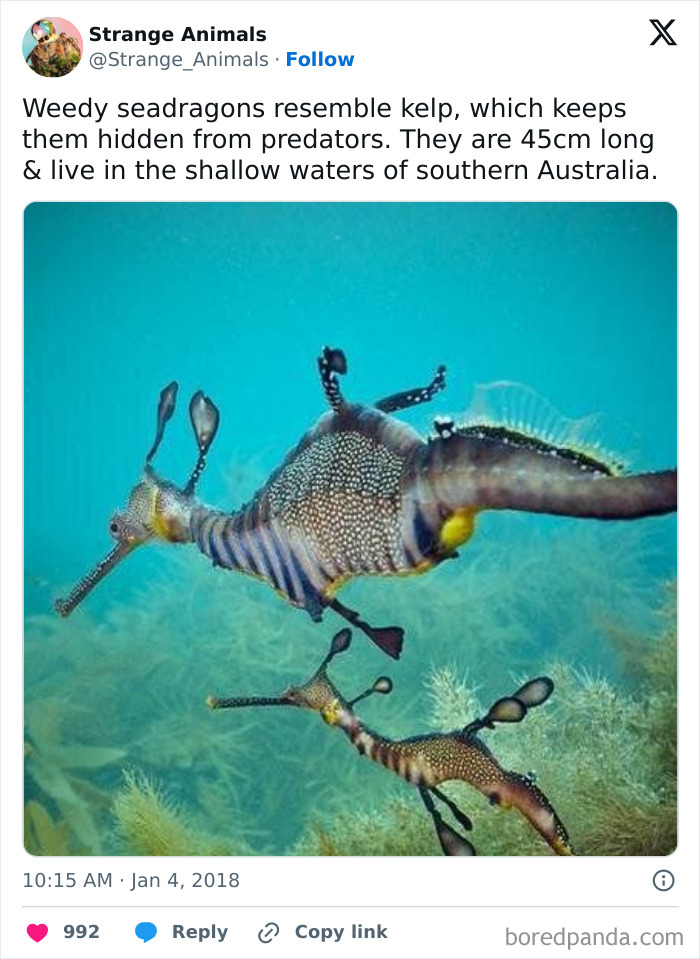
Sea dragons are the lesser-known group of the seahorse family: lifespan around 3 years; very slow, up to 17 m/hr (56 ft/hr) (Sea Dragons Facts, Fact Animal)
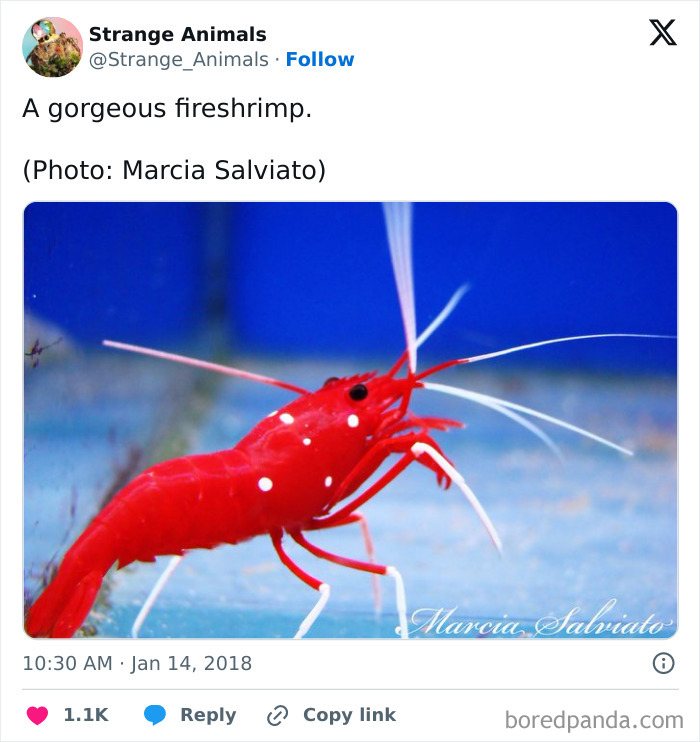
"Lysmata debelius is a species of cleaner shrimp indigenous to the Indo-Pacific. It is popular in the aquarium trade, where it is known as the fire shrimp, blood shrimp or scarlet cleaner shrimp." (Lysmata debelius, Wikipedia)
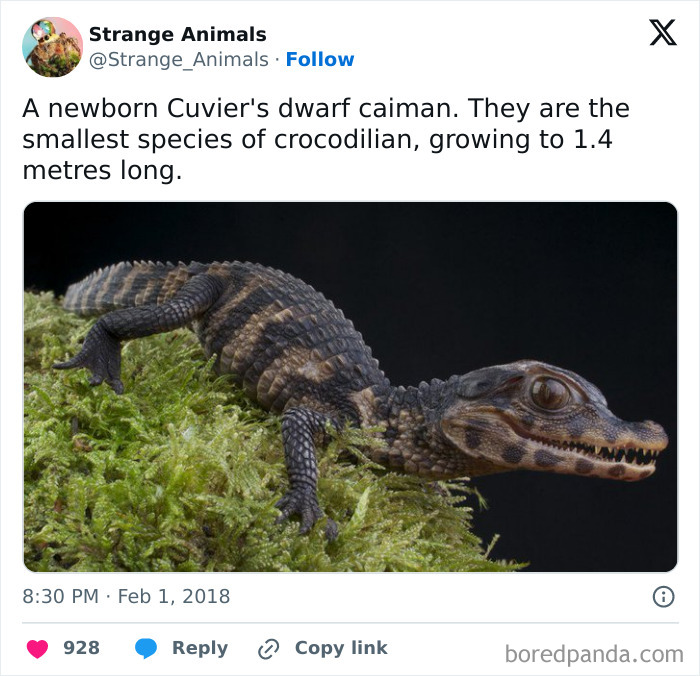
"With a total length averaging 1.4 m (4.6 ft) for males and up to 1.2 m (3.9 ft) for females, Cuvier's dwarf caiman is not only the smallest extant species in the alligator and caiman family, but also the smallest of all crocodilians". "An adult weighs around 5 to 7 kg (11 to 15 lb)." (Cuvier's dwarf caiman, Wikipedia)
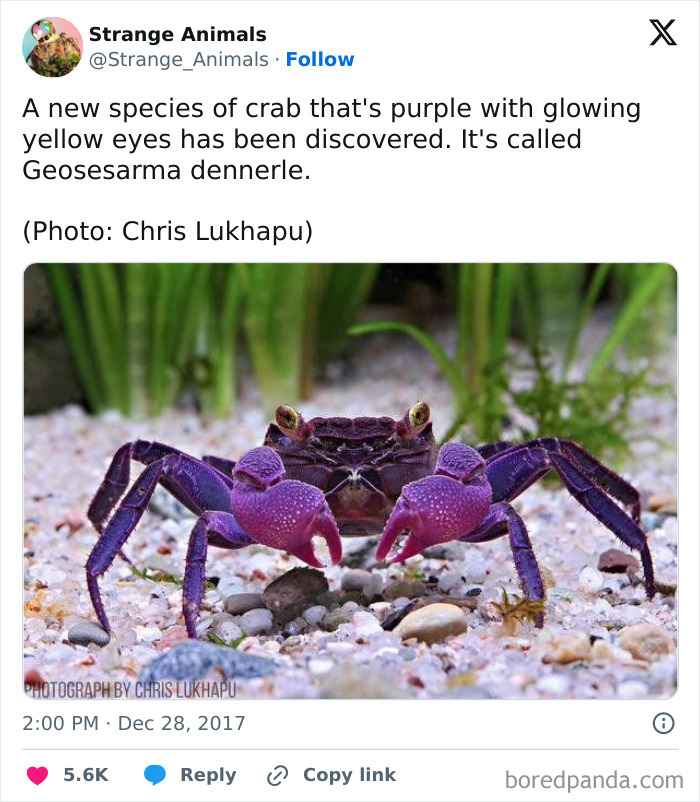
"Geosesarma dennerle is a species of small terrestrial crab found in Java, Indonesia. It is popular in the aquarium trade, where G. dennerle is one of the species referred to as the vampire crab." (Geosesarma dennerle, Wikipedia)

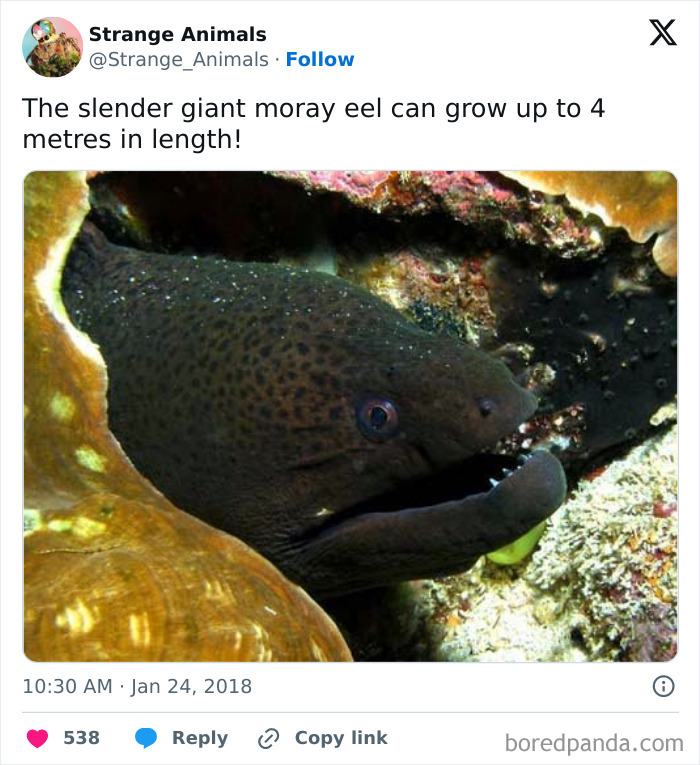
🎶 when you're down by the sea, and an eel bites your knee, that's a ...🎶
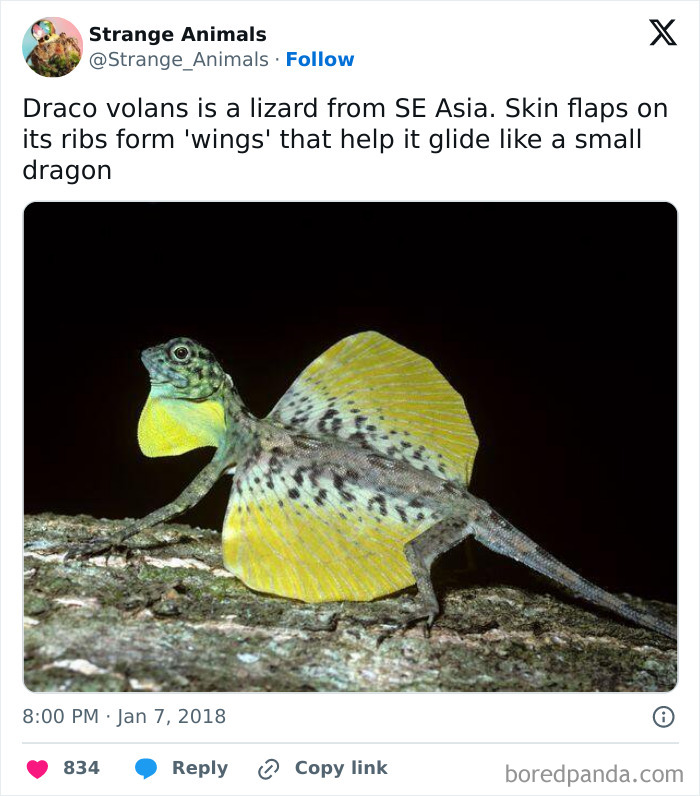
Found a minute long video of it gliding. (Draco Volans A Real-Life Flying Dragon!, 1 Minute Animals YouTube)
Wow. Even though I'm familiar with many crazy animals, more than half of these are new to me. And even for those that I do know, the photos are extraordinarily good.
Huh, kinda surprised that Nightjars (a.k.a the "baby dragon" birds) aren't on this list, they usually are ime.
Wow. Even though I'm familiar with many crazy animals, more than half of these are new to me. And even for those that I do know, the photos are extraordinarily good.
Huh, kinda surprised that Nightjars (a.k.a the "baby dragon" birds) aren't on this list, they usually are ime.






























 No fees, cancel anytime