Get Premium
Dark mode theme is available exclusively for premium users. Learn more about the benefits of subscribing.
No fees, cancel anytime.

 Dark Mode Ad-Free Browsing Unlimited Content
 Ad-Free Browsing Unlimited Content Dark Mode
Join 1.2 million Panda readers who get the best art, memes, and fun stories every week!

Losing your soulmate, the love of your life, is one of the most devastating things you’ll ever experience. Even though everyone grieves differently, having your family and friends’ support is invaluable during this tough time. And yet, even as you support someone in need, they still need to respect your boundaries.
A woman asked the AITA community for advice after sharing how her grieving sister-in-law tried to guilt-trip her. The entitled widow wanted to go on a romantic Paris getaway along with her SIL, instead of her husband, but she was quickly told ‘no,’ something that she really didn’t like. You’ll find the full dramatic story below.
Image credits: karlyukav/Freepik (not the actual photo)
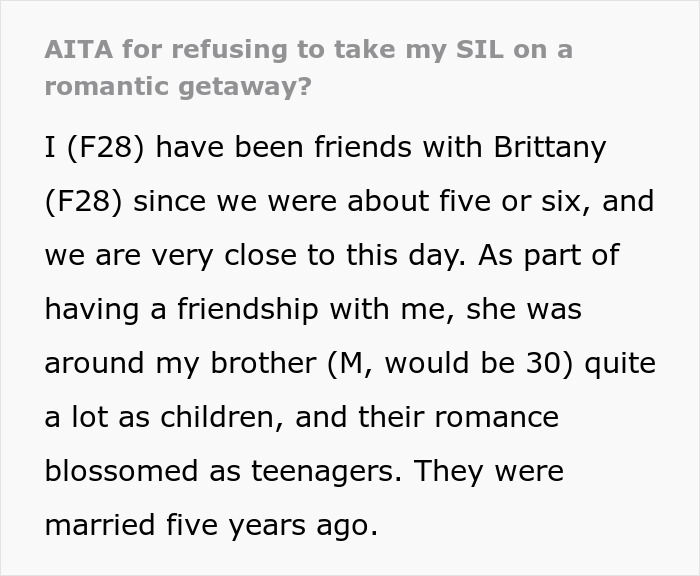
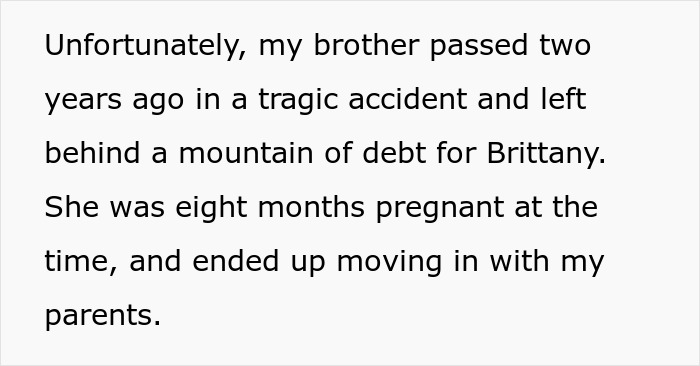


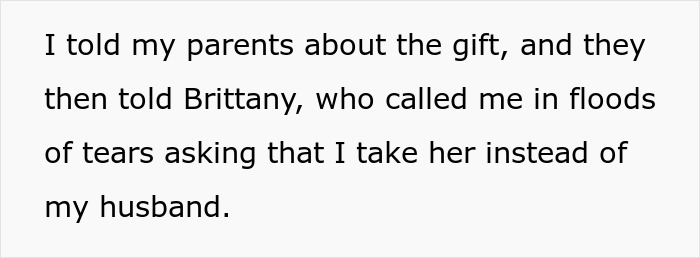

Image credits: Drazen Zigic/Freepik (not the actual photo)


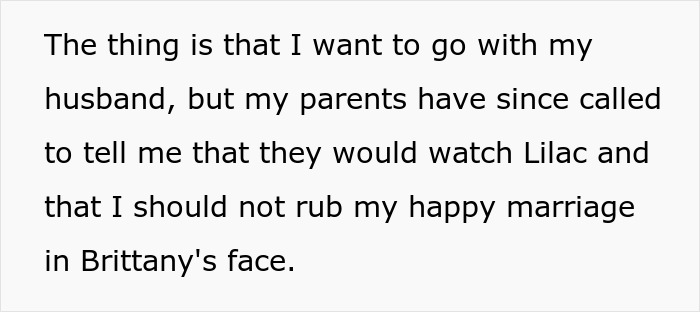

Image credits: Ice-Ice-Revolution
Image credits: cottonbro studio/Pexels (not the actual photo)
To be clear, you can and should be accommodating and supportive of any loved one who is grieving. However, this does not give them a blank check to do whatever they like, undermine your interests, take advantage of you, or harm your relationships.
In this specific case, demanding to go on a gift getaway in one of the most romantic destinations on Earth, Paris, is bold and entitled enough as it is. But asking to take the place of the man who bought the gift in the first place is even worse.
It speaks volumes about the grieving woman’s inability to understand healthy boundaries or to accept that she can be told ‘no.’ Being told ‘no’ doesn’t mean that someone doesn’t love you or care about your interests. It’s a very basic, healthy way of protecting your wants and needs.
If you constantly put these things on the back burner for someone else’s sake, you’ll eventually grow resentful and frustrated, and it’ll negatively affect your emotional and mental well-being. And if you’re burnt-out and exhausted, who’s going to support your loved ones in need then?
You can make sacrifices to help a loved one or friend, of course, but there are common-sense limits to how much you should suffer just to make someone else happy. And, yes, as harsh as it sounds, you can support someone who is grieving without undermining all of your own wants and needs.
Image credits: Danika Adderley/Pexels (not the actual photo)
The NHS stresses the fact that grief, loss, and bereavement can affect people in different ways, and there is no ‘right’ or ‘wrong’ way to feel. This loss can affect you not just when someone passes away, but also when you lose your job, home, or relationships.
Though your symptoms of grief can be unique, some of the most common ones include the following:
It’s important that you try to talk about what you’re feeling with your family and friends or even a health professional or therapist. Alternatively, you can reach out to organizations that specialize in supporting grieving individuals.
In the meantime, during the grieving period, it can help to take things slow and understand your limits. Try to set small everyday targets that are easy for you to achieve instead of trying to do everything at once.
What’s more, try to focus your time and energy on helping yourself feel better, instead of focusing on all of the things that you can’t change. And it’s vital that you don’t rely on misusing substances to try to relieve the pain of grief, as this will harm your mental health further.
Moreover, it’s important to remind yourself that you likely have people in your life whom you can rely on for support: your relatives, friends, colleagues, neighbors, community members, local organizations, etc.
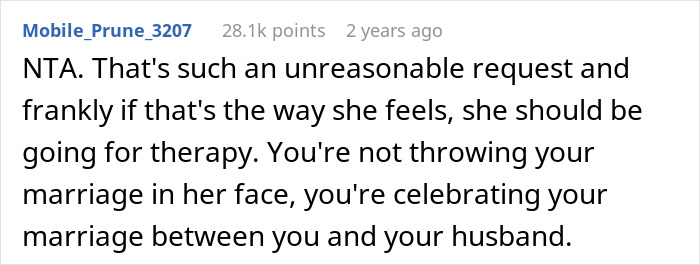
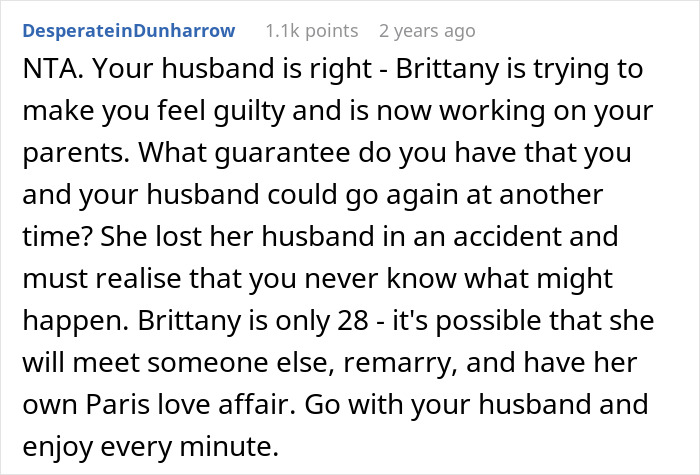
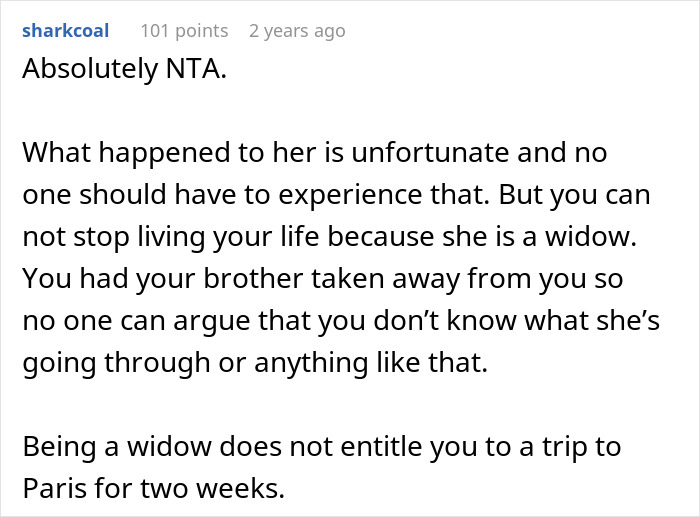
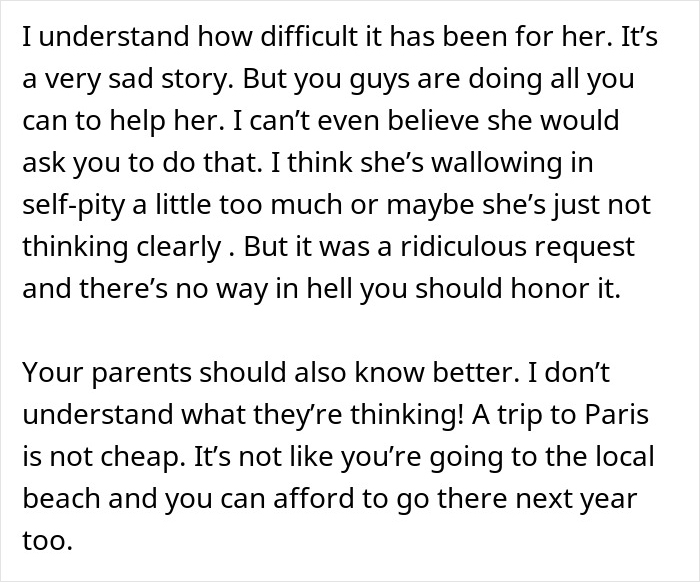
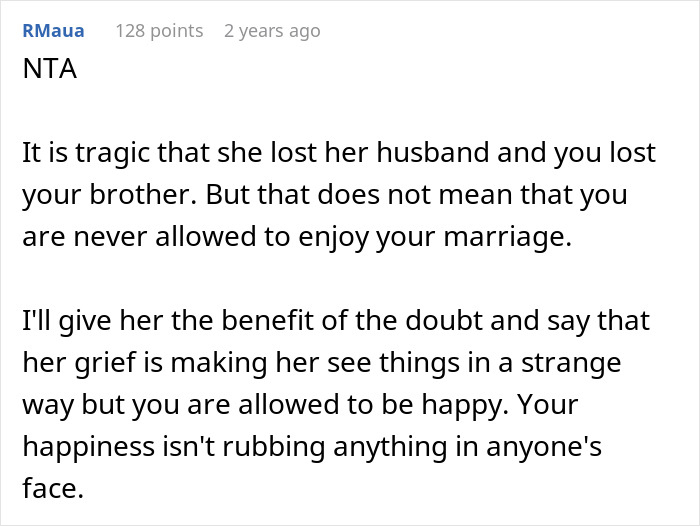
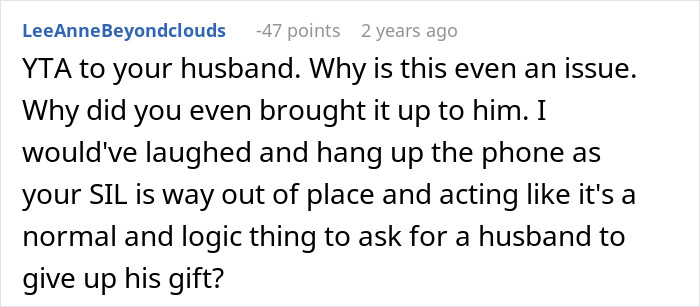
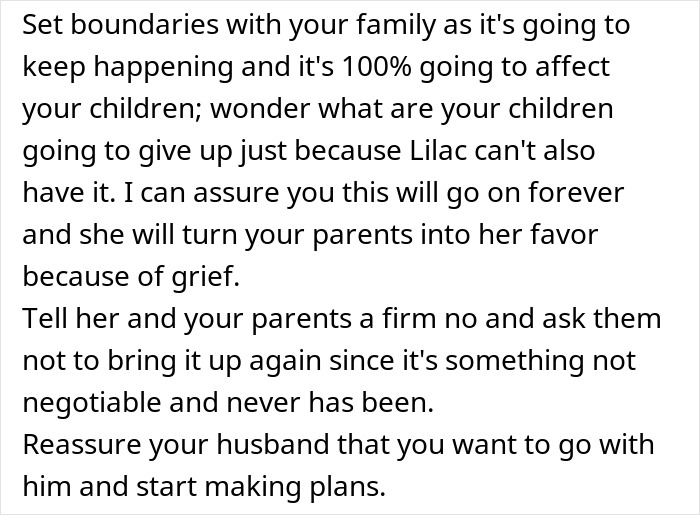
What do you think, dear readers? Do you think the woman was right to refuse to give in to her sister-in-law’s entitled demands, or do you think she should have been more accommodating and understanding? How would you have handled the tense situation? If you feel like sharing your perspective, you can do so in the comments down below.









By entering your email and clicking Subscribe, you're agreeing to let us send you customized marketing messages about us and our advertising partners. You are also agreeing to our Privacy Policy.
Thank you! You've successfully subscribed to newsletters!

The idea of kicking the person paying for it off the trip is mind blowing.


The idea of kicking the person paying for it off the trip is mind blowing.


 No fees, cancel anytime
 then open in external browser


 and click "Open in External Browser"














30
17