Get Premium
Dark mode theme is available exclusively for premium users. Learn more about the benefits of subscribing.
No fees, cancel anytime.

 Dark Mode Ad-Free Browsing Unlimited Content
 Ad-Free Browsing Unlimited Content Dark Mode
Join 1.2 million Panda readers who get the best art, memes, and fun stories every week!
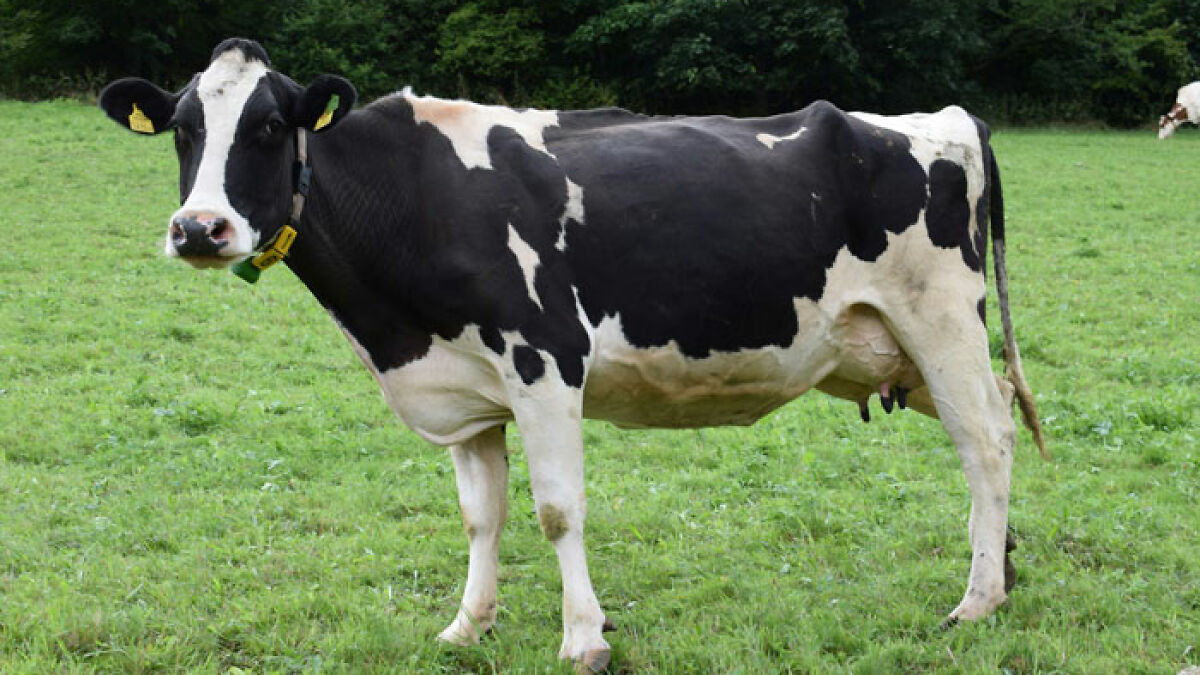
An experiment that hoped to simulate what happens when a whale carcass falls to the ocean floor by a team of marine researchers from China was hijacked when a group of non-native animals appeared and ate the bait before it could be studied.
Conducted by Sun Yat-sen University and the Southern Marine Science and Engineering Guangdong Laboratory in China, the test was to observe how scavengers in one of Earth’s least accessible environments would react to a sudden influx of biomass.
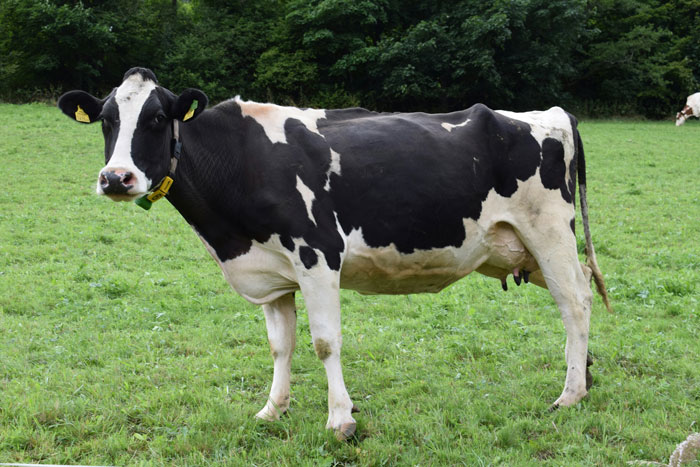
Video footage captured by deep-sea monitoring equipment revealed a procession of eight large, slow-moving creatures gliding silently through the gloom to investigate the cow carcass. For a moment, even the researchers were stunned.
These were not animals known to frequent that part of the world.
Image credits: Sarah Lee/Unsplash (Not the actual photo)
While the experiment ultimately failed to achieve its intended purpose, it nevertheless produced interesting findings.
The footage marked the first confirmed sighting of Pacific sleeper sharks (Somniosus pacificus) in the South China Sea, who have been known to prefer colder northern waters.
Image credits: NOAA/Unsplash (Not the actual photo)
Their appearance both marveled and worried researchers, who are now asking questions about animal distribution and the domino effect of shifting oceanic conditions.
“Although Pacific sleeper sharks have also been found in the deep waters of their typical distribution range in the North Pacific,” said lead researcher Han Tian.
“Their frequent occurrence in the southwestern region of the South China Sea suggests that our understanding of this population remains significantly limited.”
Image credits: Screenroad/Unsplash (Not the actual photo)
But online, viewers fixated less on the ecological implications and more on the creepy appearance of the sharks themselves, with one flashing a mischievous smirk in anticipation of the banquet it was about to have.
“Is the shark smiling?” asked one commenter, while others joked about the implications of a shark getting to eat that type of meat. “Beef’s back on the menu, boys.”
Image credits: Han Tian, Ocean-Land-Atmosphere Research/IFLS
Despite their reputation as solitary deep-sea dwellers, the eight sleeper sharks didn’t simply descend on the carcass in a feeding frenzy.
“They’re gonna be chasing that beef taste for the rest of their lives,” one viewer joked.
What scientists observed instead was an unexpectedly civil display. Footage showed the animals approaching in sequence, with some sharks yielding their spot to others that arrived later.
According to the scientists, this is an apparent queuing system that hints at a form of silent negotiation between them.
Image credits: Han Tian, Ocean-Land-Atmosphere Research/IFLS
“This behavior suggests that feeding priority is determined by individual competitive intensity, even in deep-water environments,” Tian said. “It reflects a survival strategy suitable for non-solitary foraging among Pacific sleeper sharks.”
Image credits: Han Tian, Ocean-Land-Atmosphere Research/IFLS
Some of the larger individuals, measuring nearly 9 feet in length, were more assertive, pushing in with force to tear into the cow’s flesh. Smaller sharks were noticeably more cautious, circling the carcass deliberately before making their move.
The incident fascinated viewers, as the footage captured in detail the sharks’ faces, anatomy, and pearly-white teeth.
“That’s how I smile too when I get all the beef at Texas De Brazil,” another added.
“That shark has better dental health than I do!”
The sharks’ behavior wasn’t the only detail that caught scientists’ attention. As the animals fed, researchers noticed a peculiar motion: the sharks seemed to retract their eyes in what’s believed to be an adaptation meant to protect them while consuming large, struggling prey.
Unlike other species such as cats or some reptiles, Pacific sleeper sharks don’t have a nictitating membrane (the third eyelid that covers the eyes of sleepy felines), so this retraction may be a vital defense mechanism during feeding.
Image credits: Ahmet Kurt/Unsplash (Not the actual photo)
All of these details flew over the heads of netizens, however, who continued to be mesmerized by the sharks’ supposed “smiles.”
“‘I told you humans keep bringing a buffet!’” one commenter wrote.
“He must’ve got dental implants!” another joked. “I never thought I’d see a smiling shark.”



It's pretty hard to come back from secretively smiling sharks.
Load More Replies...

It's pretty hard to come back from secretively smiling sharks.
Load More Replies... 




































 No fees, cancel anytime























26
6