Get Premium
Dark mode theme is available exclusively for premium users. Learn more about the benefits of subscribing.
No fees, cancel anytime.

 Dark Mode Ad-Free Browsing Unlimited Content
 Ad-Free Browsing Unlimited Content Dark Mode
Join 1.2 million Panda readers who get the best art, memes, and fun stories every week!

Workplace perks can be a tricky thing. One person’s reasonable accommodation can look like someone else’s unfair advantage and, let’s be honest, nothing stirs office tension like someone getting extra paid breaks.
One employee found themselves in exactly that situation after noticing a pattern among coworkers of a shared faith. What started out as quiet resentment turned into an HR storm, so they asked an online community for opinions.
More info: Reddit
Image credits: splitov27 / Freepik (not the actual photo)
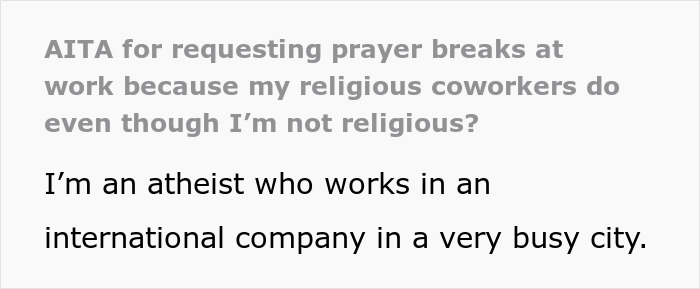
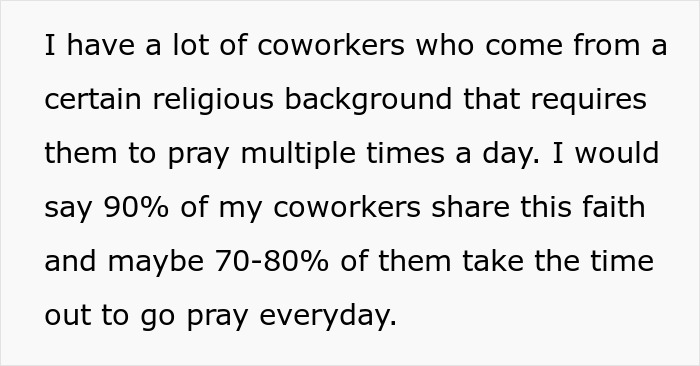
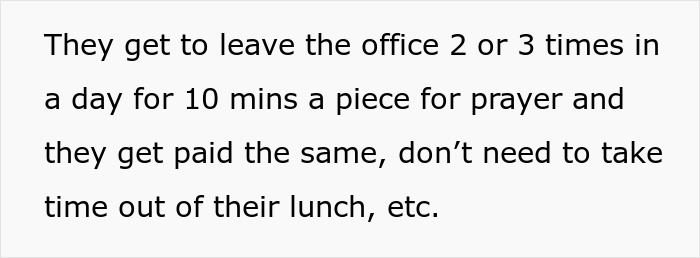
Image credits: freepik / Freepik (not the actual photo)
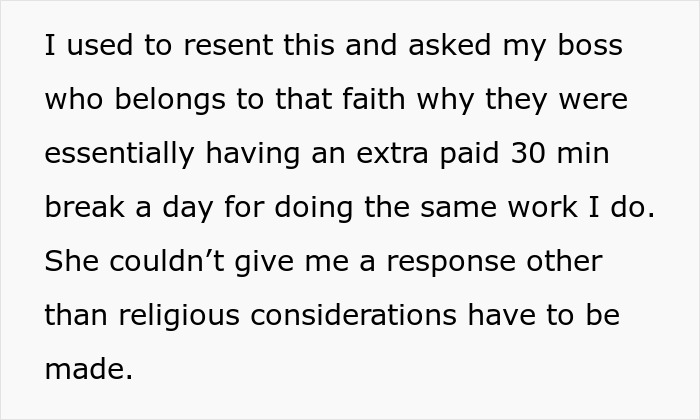
Image credits: dusanpetkovic / freepik (not the actual photo)
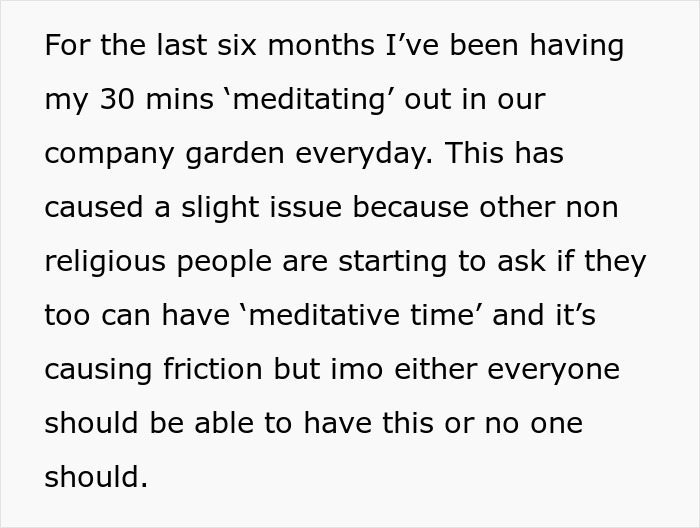
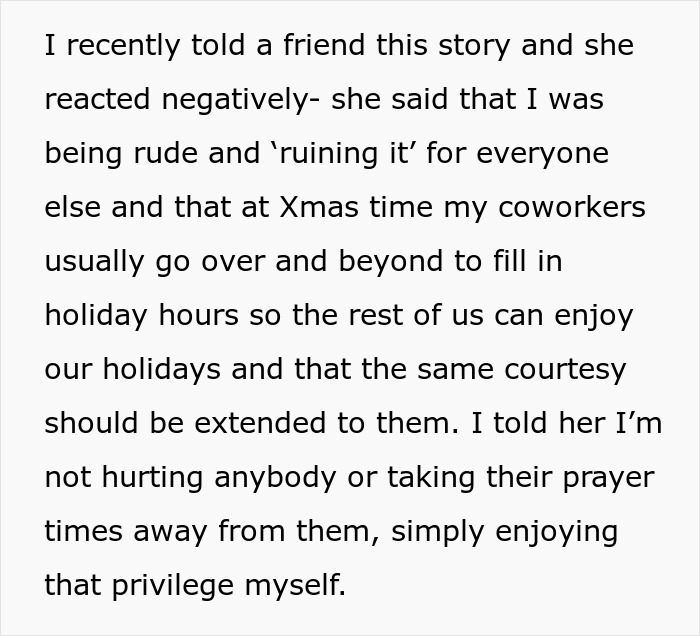
Image credits: grandpaiscrazybutcoo
The original poster (OP), an atheist working in a busy international company, noticed that a large portion of their coworkers shared the same religious background. Many of them would step away from work two or three times a day for short prayer sessions, all while remaining fully paid, and without sacrificing their lunch breaks.
Over time, this started to bother OP. From their perspective, it looked like coworkers were getting an extra half hour of paid break time daily, all while doing the same job. When they asked their boss about it, the explanation was simple: religious accommodations had to be respected.
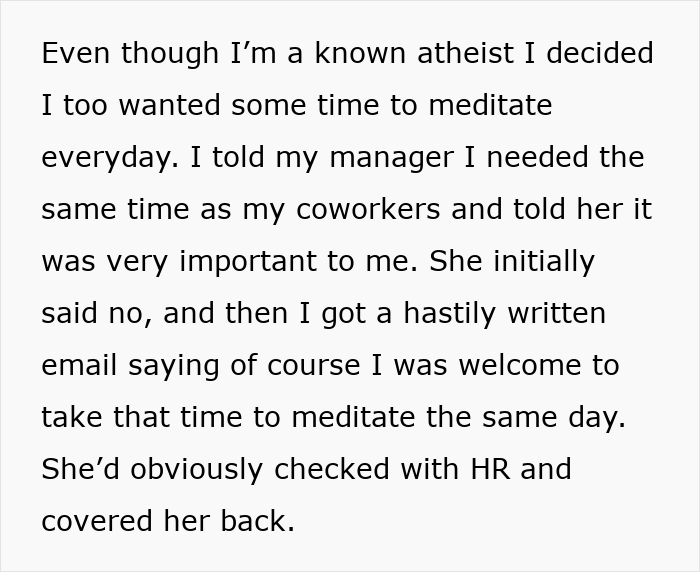
Instead of pushing back directly, OP decided to play it differently. Even as a known atheist, they approached their manager and requested the same amount of time each day for “meditation”, framing it as something personally important to them. The request was initially denied, but that decision didn’t last long.
That same day, OP received a follow-up email. It seemed clear HR had shifted the rules, so OP has been spending 30 minutes each day “meditating” in the company garden. The only hitch? Other non-religious colleagues are now demanding the same, forcing OP to ask netizens if they made a jerk move.
OP insists they’re not taking anything away from their coworkers, just making use of the same opportunity; but with tensions rising and more employees wanting in, the situation raises a bigger question: where should companies draw the line between accommodation and equality?
Image credits: freepik / Freepik (not the actual photo)
Workplace accommodations for religion aren’t just optional goodwill gestures; in many countries, they’re legally protected. Employers are often required to make “reasonable accommodations” for religious practices, as long as it doesn’t create undue hardship for the business. That’s why OP’s coworkers were able to step away without a worry in the world.
However, fairness in the workplace isn’t always about identical treatment; it’s about equitable treatment. Experts in organizational psychology often point out that when employees perceive imbalance (whether real or perceived) it can lead to resentment, decreased morale, and even reduced productivity across teams.
There’s also the growing conversation around mental wellness at work. Meditation breaks, mindfulness time, and mental health pauses are becoming more normalized, with some companies actively encouraging them. In that sense, OP’s request might not be as unreasonable as it initially sounded.
Still, once a policy expands beyond its original intent, things can get messy. When more employees start requesting similar accommodations, companies are forced to rethink boundaries. What begins as a religious consideration can quickly evolve into a broader workplace benefit… or a logistical headache.
When it comes down to it, OP didn’t break the system; they simply exposed it. Whether you see it as fairness or a loophole depends on your perspective, but one thing’s clear: once a workplace perk starts feeling uneven, corporate chaos isn’t far off.
What’s your take? Should companies offer equal break time to everyone if religious accommodations exist, or is this a case of OP pushing a loophole too far? Drop your thoughts in the comments!
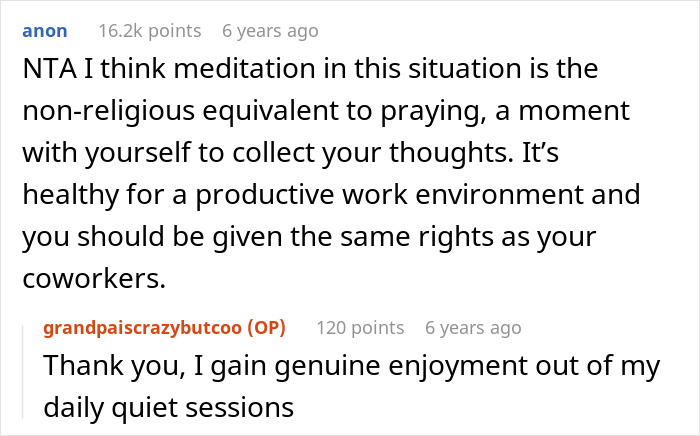
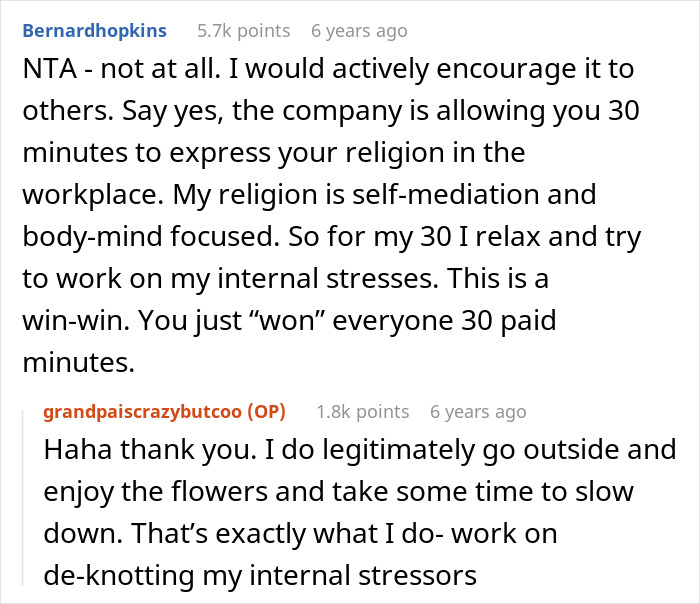
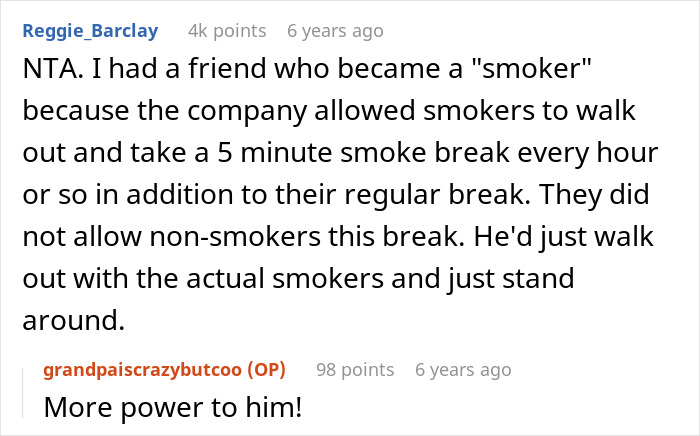
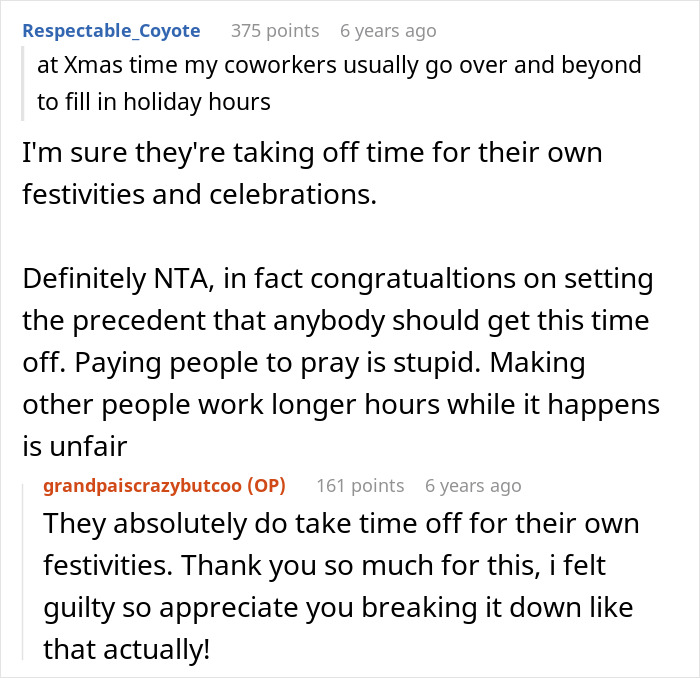
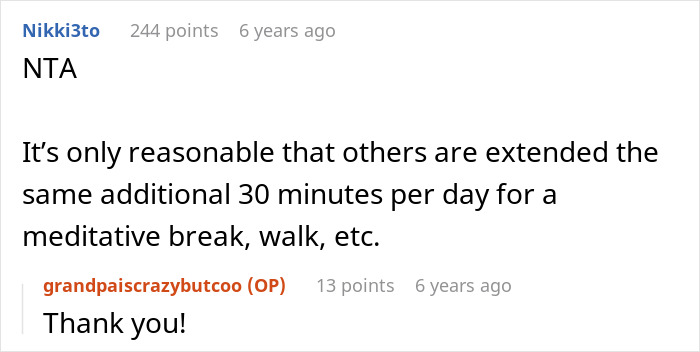
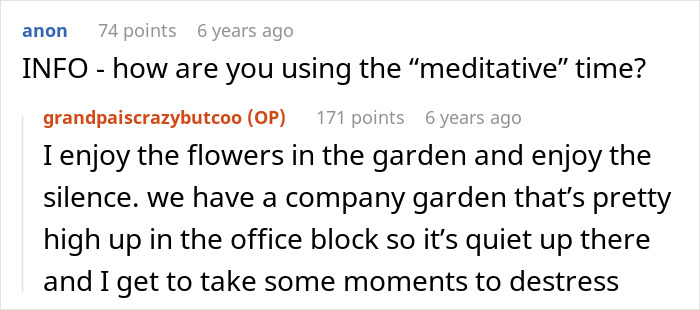
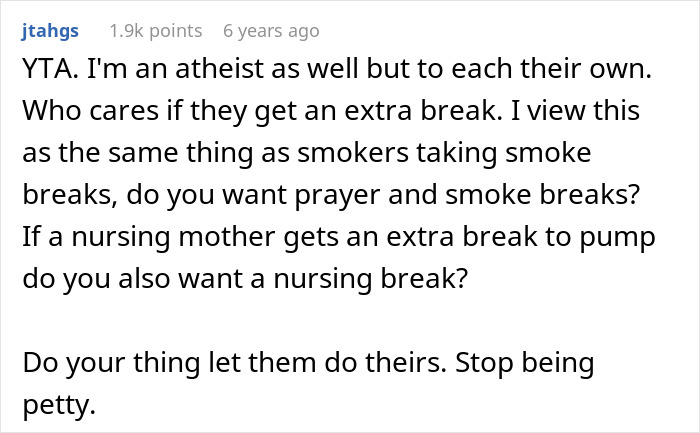

Not sure what country this is but in US and UK you have to offer the same amount of official break time to everyone. You can't give smokers extra breaks etc. it's the same for praying. If the breaks are paid, you have to offer them to all. Don't let them tell you otherwise.
Not sure what country this is but in US and UK you have to offer the same amount of official break time to everyone. You can't give smokers extra breaks etc. it's the same for praying. If the breaks are paid, you have to offer them to all. Don't let them tell you otherwise.

























 No fees, cancel anytime








21
2