Get Premium
Dark mode theme is available exclusively for premium users. Learn more about the benefits of subscribing.
No fees, cancel anytime.

 Dark Mode Ad-Free Browsing Unlimited Content
 Ad-Free Browsing Unlimited Content Dark Mode
Join 1.2 million Panda readers who get the best art, memes, and fun stories every week!

A surprise houseguest for a long weekend? That’s one thing. A surprise houseguest whose stay keeps stretching from “just a few days” to “maybe three months” to “who knows?” is the kind of thing that can make even the most generous hosts start eyeing the calendar nervously. After all, there’s a big difference between welcoming family and accidentally becoming someone’s indefinite roommate.
That was the dilemma facing this Original Poster (OP) after her partner’s sister called with exciting news that her 25-year-old daughter had landed a job in their city. And while she started with a seemingly simple request for temporary accommodation, it quickly evolved into an open-ended arrangement with plenty of unanswered questions.
More info: Reddit
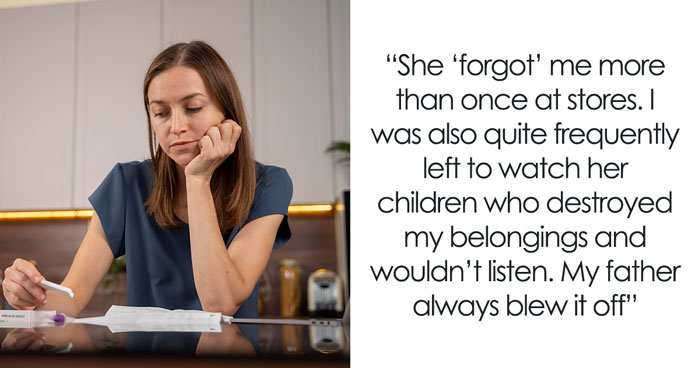
Image credits: stockking / Magnific (not the actual photo)
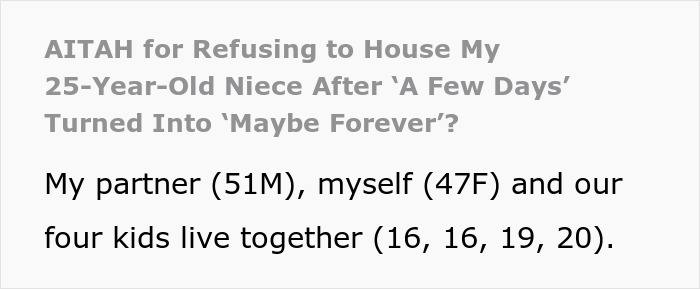
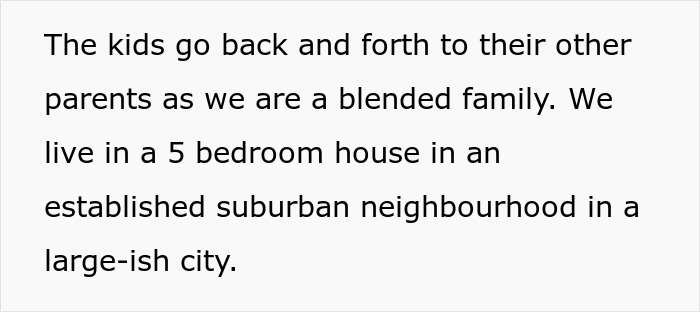


Image credits: magnific / Magnific (not the actual photo)

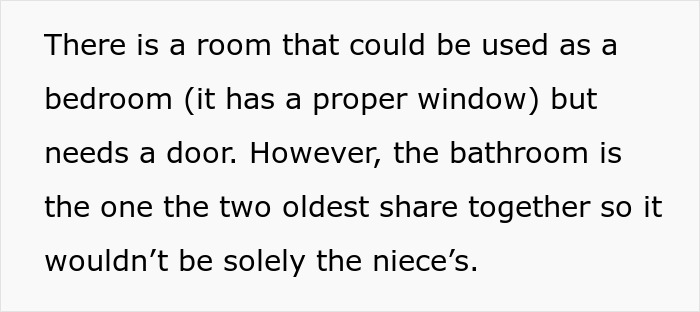

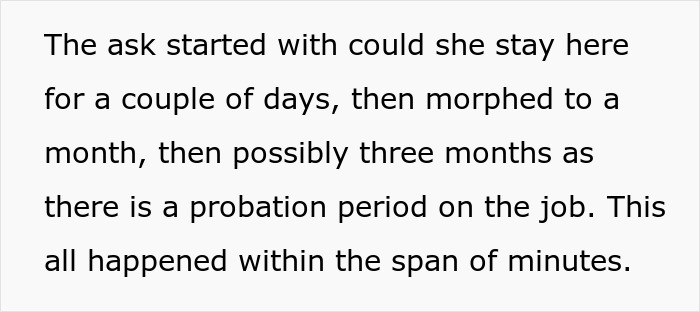
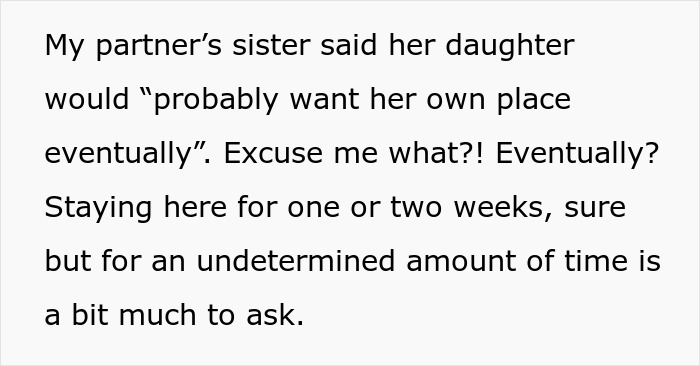
Image credits: magnific / Magnific (not the actual photo)





Image credits: senivpetro / Magnific (not the actual photo)


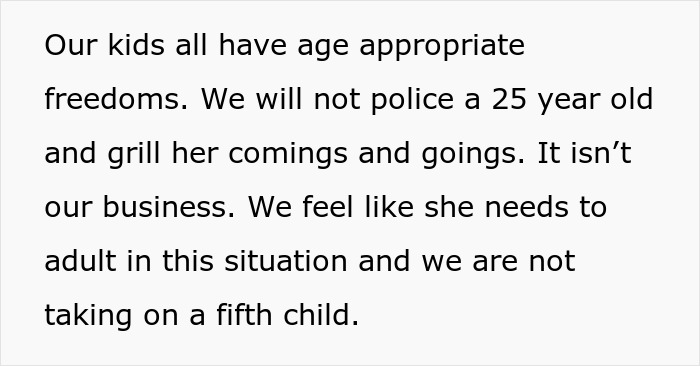


Image credits: Dangerous-Owl-1771
The OP explained that she and her partner live in a five-bedroom home with their four children, who split time between their blended family and their other parents. While the house has plenty of room for visiting relatives, they have always viewed guest stays as temporary rather than long-term arrangements.
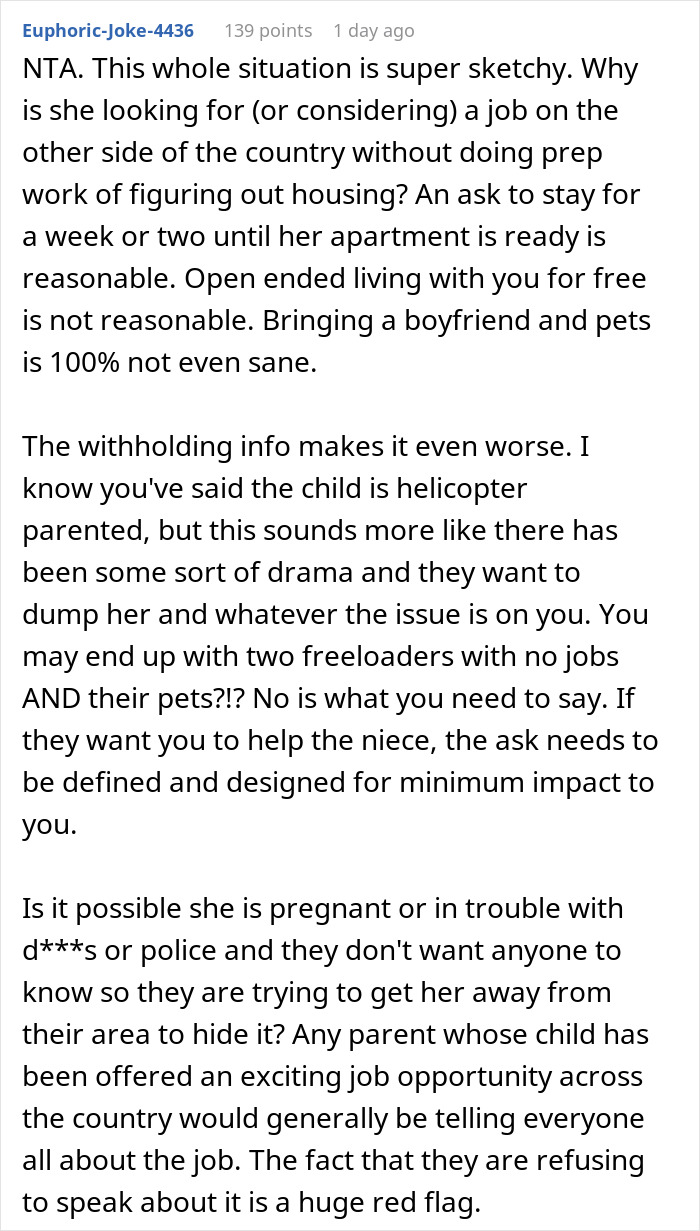
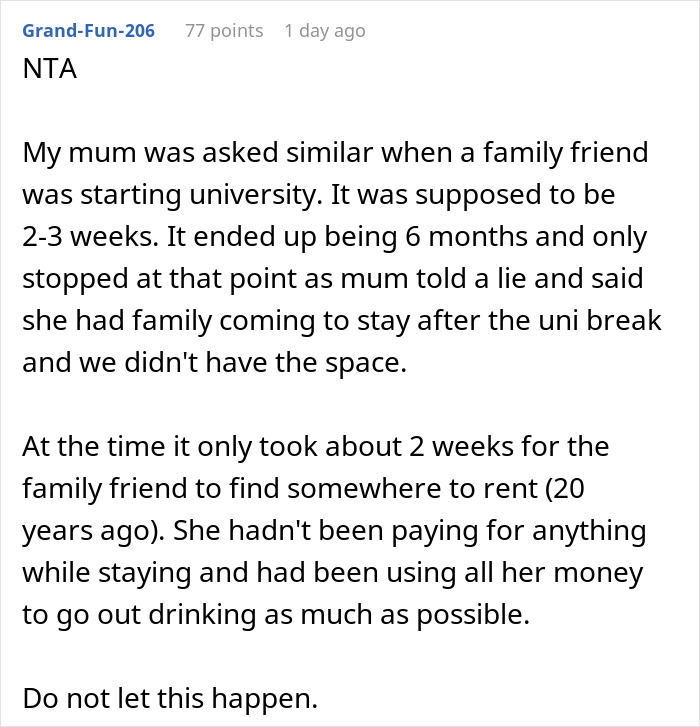
When her partner’s sister called, she first asked whether her daughter could stay with them for a few days after relocating for a new job. But within minutes, that timeline expanded to a month and then possibly three months while the niece completed her probationary period. The uncertainty didn’t stop there, as the sister casually added that her daughter would “probably want her own place eventually.”
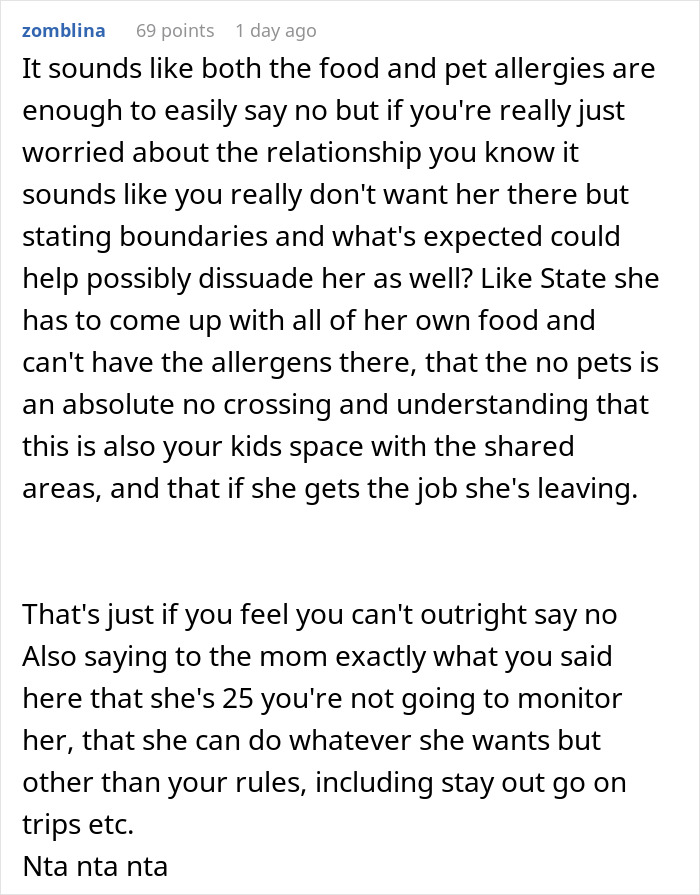
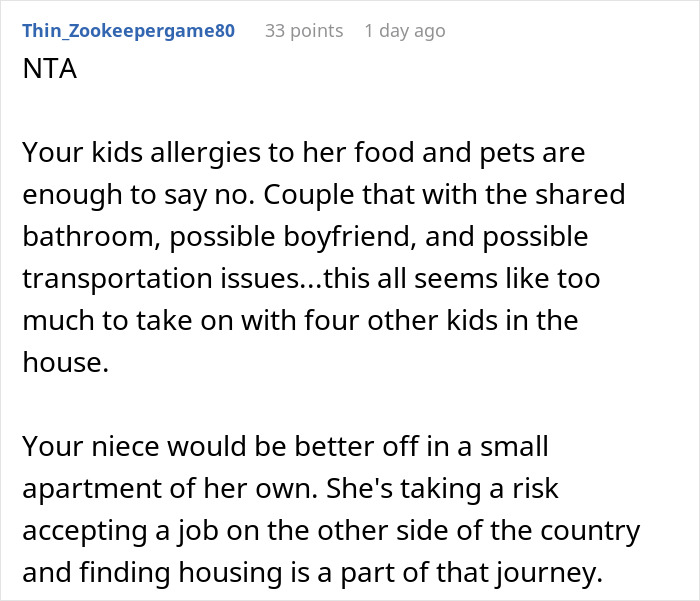
That immediately raised red flags for the couple, who weren’t comfortable agreeing to an arrangement with no clear end date. Although the home has a finished basement with a room that could be converted into a bedroom, the OP stressed that physical space wasn’t really the issue. Her issue was that the niece was picky with food, and that her kids were also allergic to the niece’s pets.
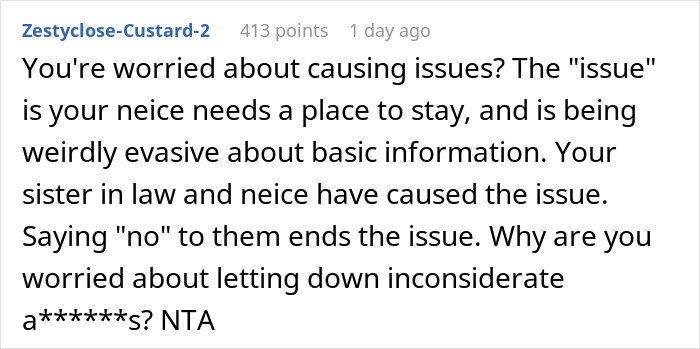
What made the situation more uncomfortable was the family’s reluctance to share basic information. The niece’s arrival date reportedly kept changing, and the OP also believed the niece should experience living independently as an adult rather than relying on relatives indefinitely. However, the couple feared that refusing the request would upset the extended family.
Image credits: user25451090 / Magnific (not the actual photo)
Having an extra bedroom does not automatically mean a family can comfortably accommodate another person. Wan Bridge highlights that shared homes often depend on factors beyond physical space, including communication, privacy, compatibility, and clear expectations.
The OP’s concerns also connect to the importance of setting boundaries before relatives move in. Psychology Today explains that family members may assume living together will be easier because of their existing relationship, but unclear expectations can create tension. They recommend discussing important details in advance, including how long someone will stay, household responsibilities, privacy, and future plans.
This situation also raises questions about adult independence. According to Movers Corp, moving out and learning to manage responsibilities independently are important parts of adulthood. While family support can be helpful during major transitions, young adults also need opportunities to develop confidence, decision-making skills, and independence.
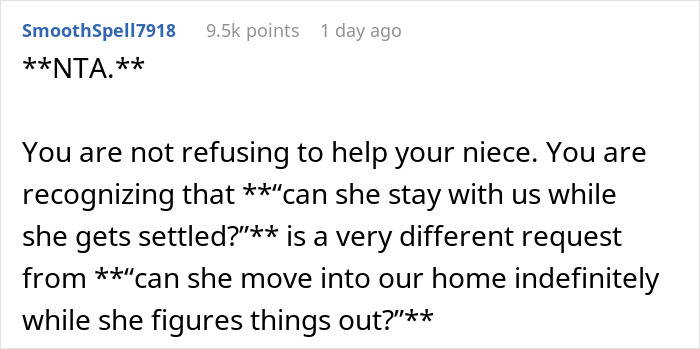
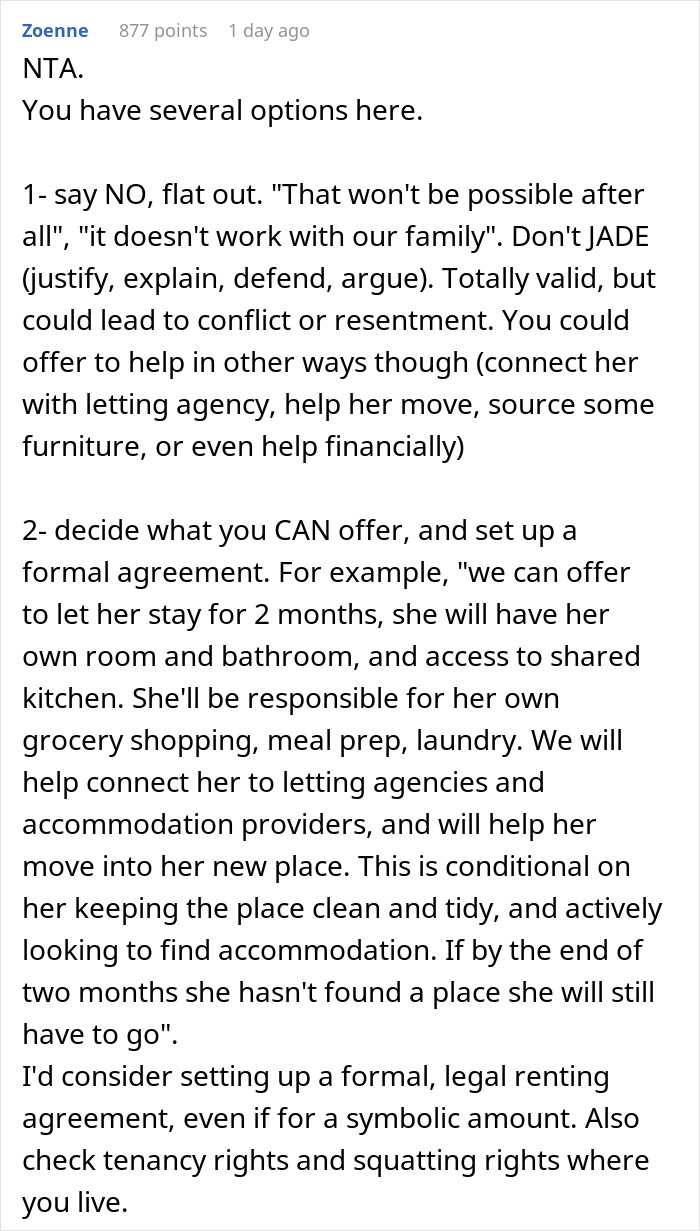
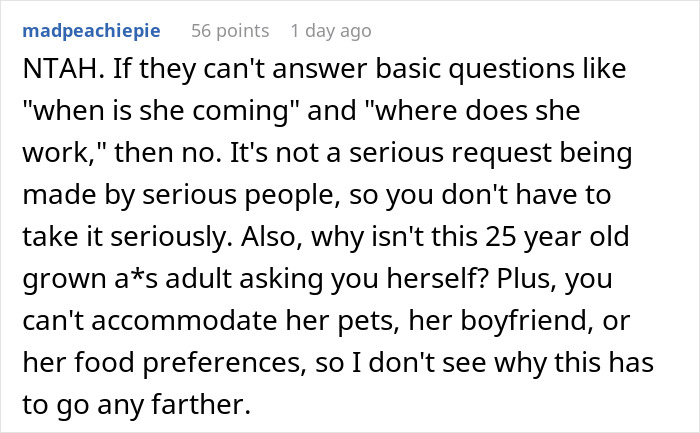
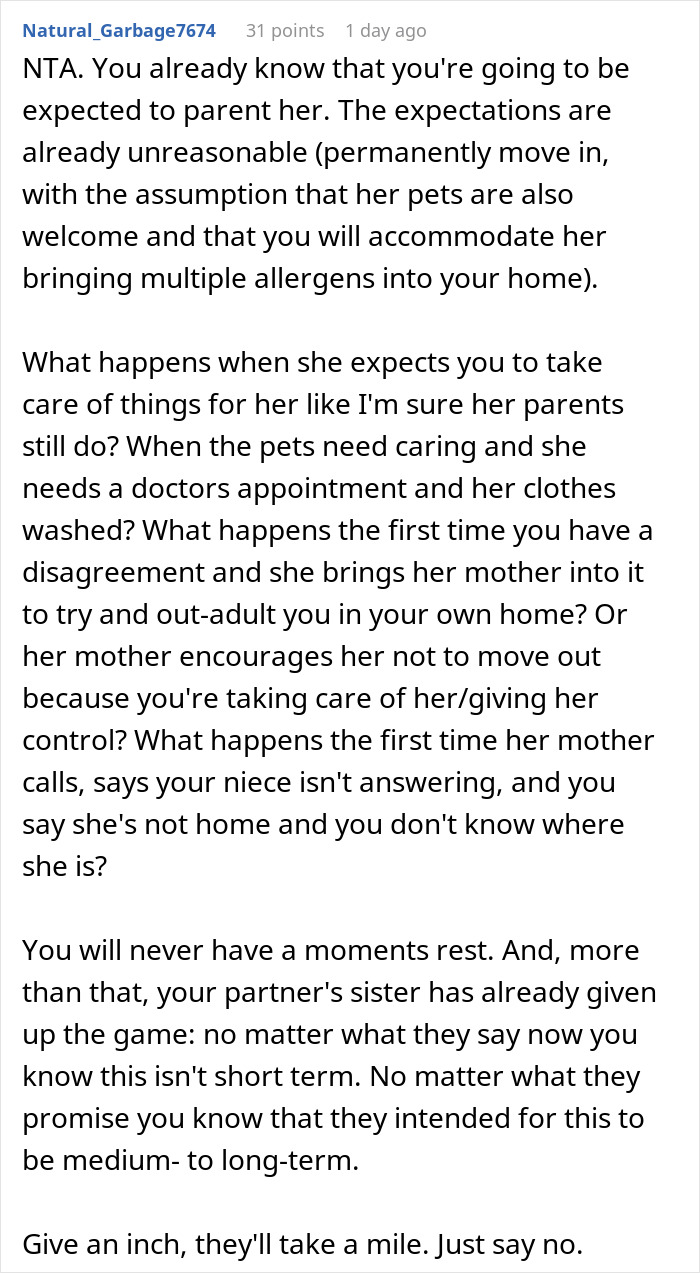
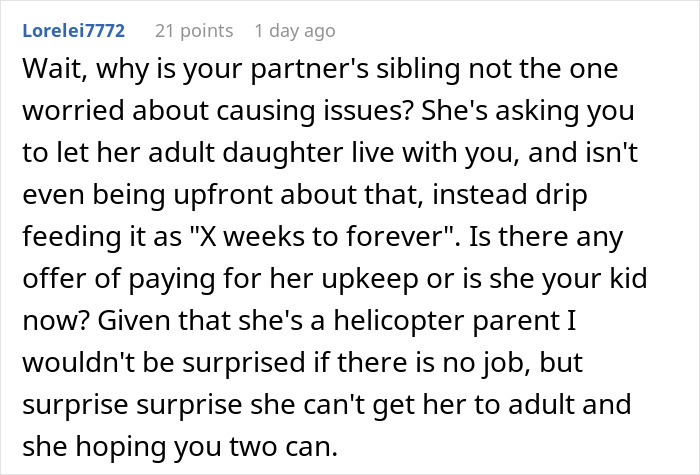
Netizens felt the changing timeline, lack of communication, and unanswered questions were warning signs, especially since the niece herself was not directly involved in making the request. Does this situation feel familiar? Have you ever had a family member move in “temporarily” and stay longer than expected? How did it turn out? We would love to hear from you!











By entering your email and clicking Subscribe, you're agreeing to let us send you customized marketing messages about us and our advertising partners. You are also agreeing to our Privacy Policy.
Thank you! You've successfully subscribed to newsletters!

the moment the dates and length started changing is the moment of "no" being a complete answer.

Big red flags here. Not answering any questions shows that there is more to this than they want to admit. They obviously have other plans and hope that when they " have a foot in the door " it will be difficult to evict them.

Since the daughter isn't the one asking, and the mom is a super helicopter mom with an adult child, it sounds like the mom and daughter got into some heated arguments. The mom decides fine, she's not able to handle a "defiant" 25 year old, so she takes it upon herself to "help" her daughter by "offering" to set her daughter up with family across the country, so she's able to monitor her daughter through the aunt (OP). It's not the daughter's idea. It's her mom's.
Load More Replies...
Just say "no". No one has the right to expect you to house their offspring indefinitely.
the moment the dates and length started changing is the moment of "no" being a complete answer.
Big red flags here. Not answering any questions shows that there is more to this than they want to admit. They obviously have other plans and hope that when they " have a foot in the door " it will be difficult to evict them.
Since the daughter isn't the one asking, and the mom is a super helicopter mom with an adult child, it sounds like the mom and daughter got into some heated arguments. The mom decides fine, she's not able to handle a "defiant" 25 year old, so she takes it upon herself to "help" her daughter by "offering" to set her daughter up with family across the country, so she's able to monitor her daughter through the aunt (OP). It's not the daughter's idea. It's her mom's.
Load More Replies... Just say "no". No one has the right to expect you to house their offspring indefinitely.
































 No fees, cancel anytime










26
10