Get Premium
Dark mode theme is available exclusively for premium users. Learn more about the benefits of subscribing.
No fees, cancel anytime.

 Dark Mode Ad-Free Browsing Unlimited Content
 Ad-Free Browsing Unlimited Content Dark Mode
Join 1.2 million Panda readers who get the best art, memes, and fun stories every week!
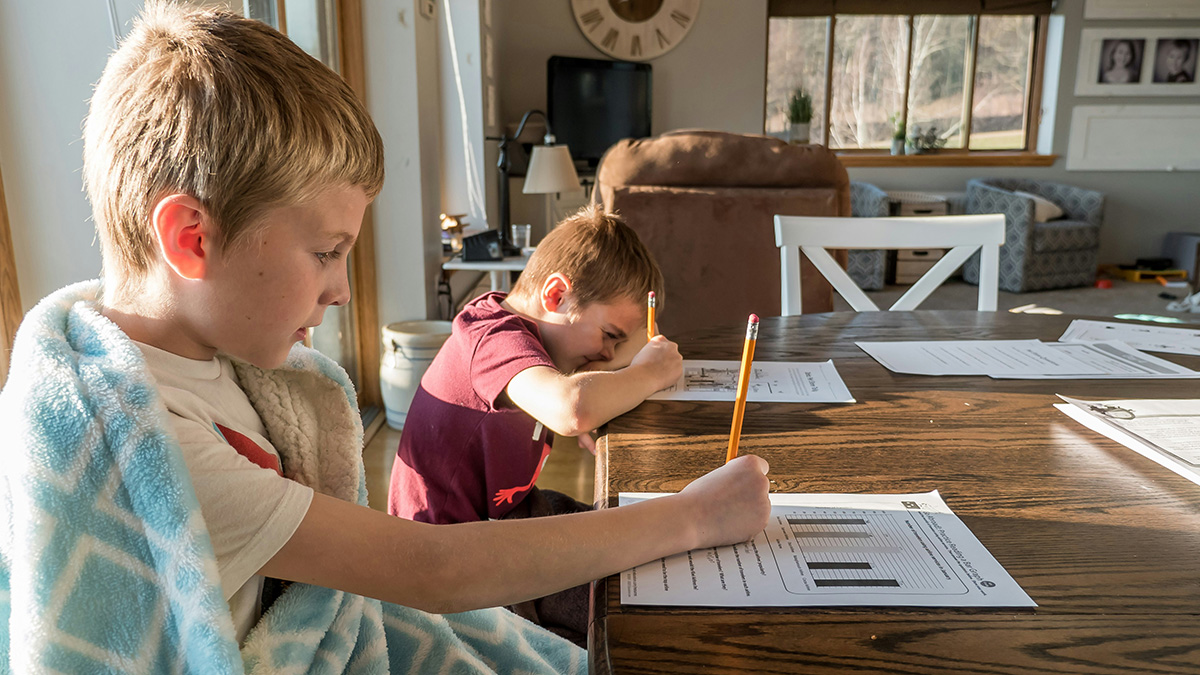
Co-parenting can be tricky at the best of times.
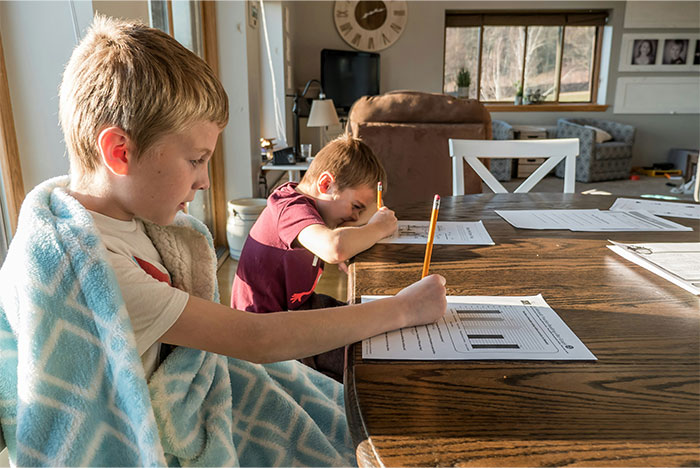
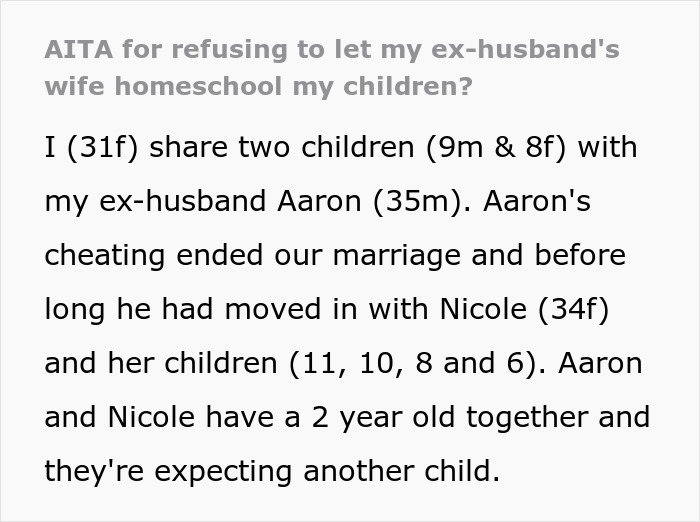
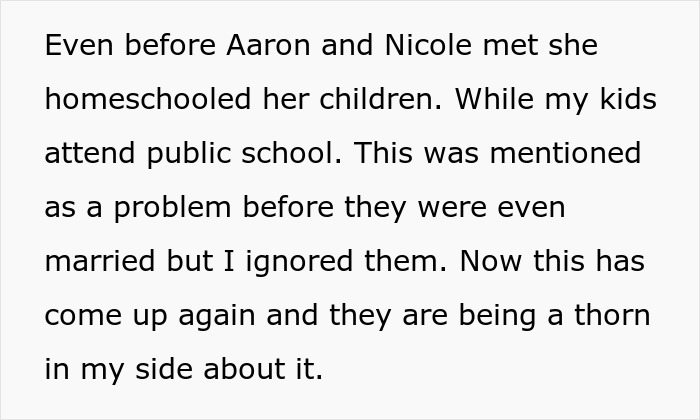
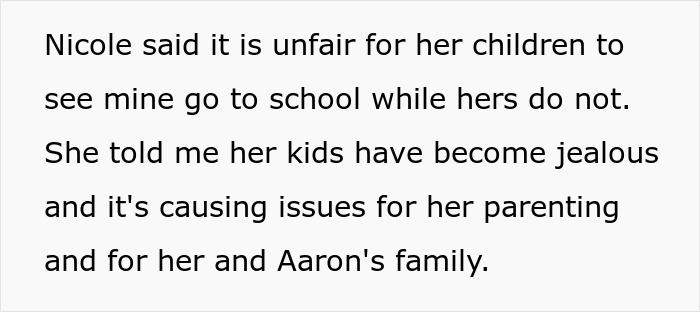
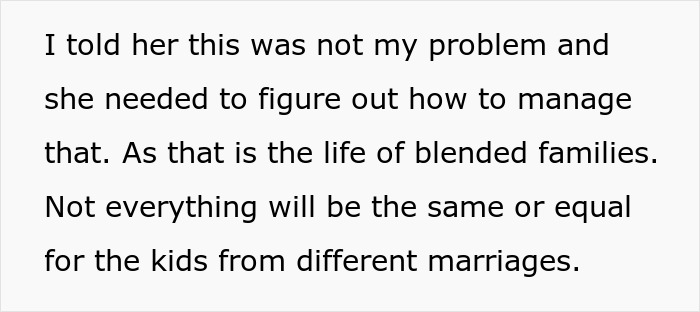
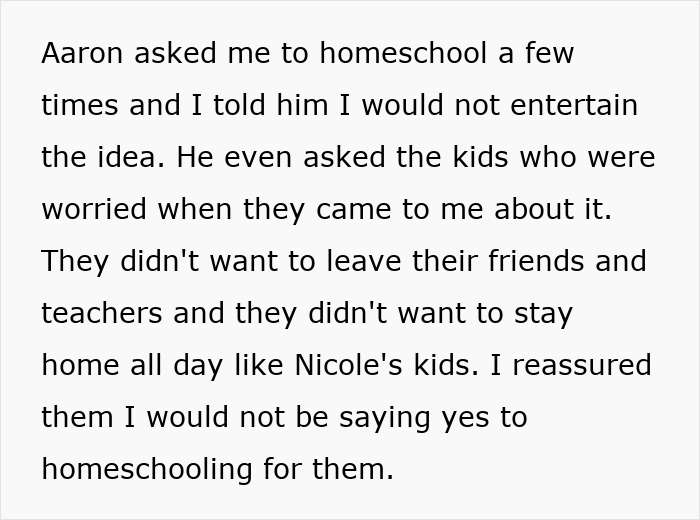
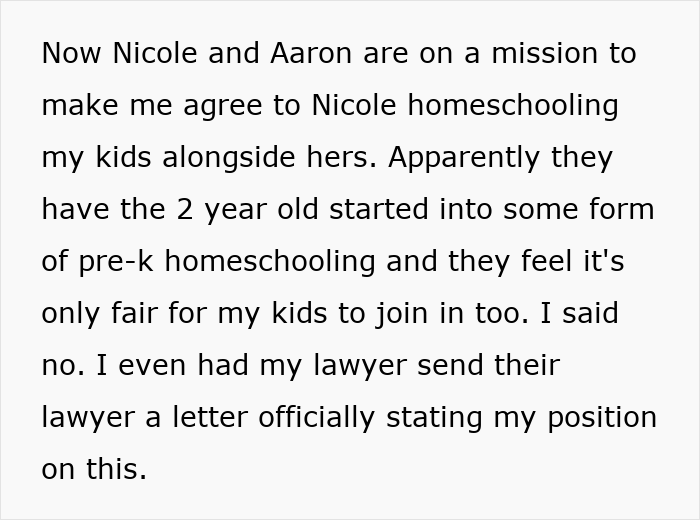
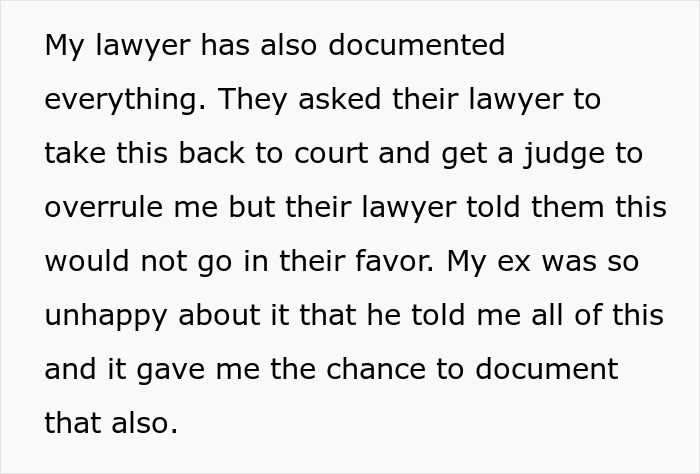
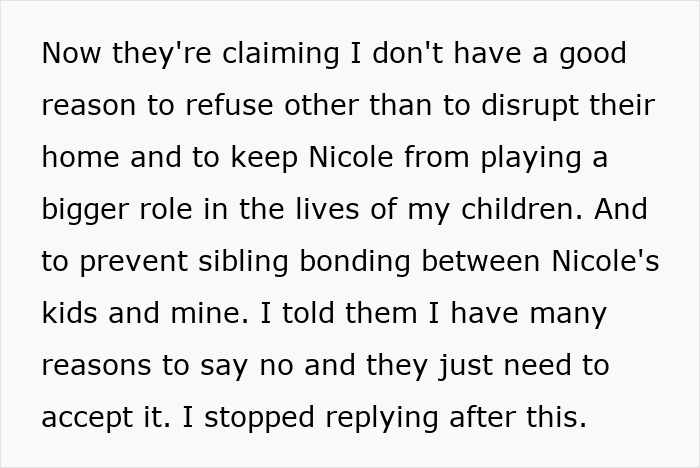
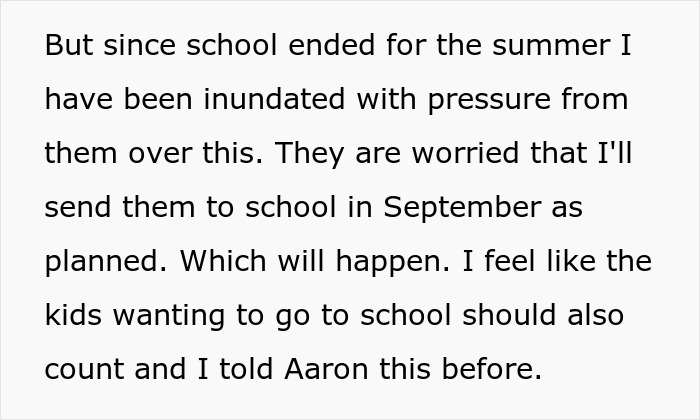
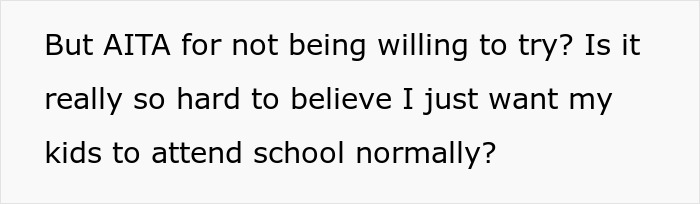
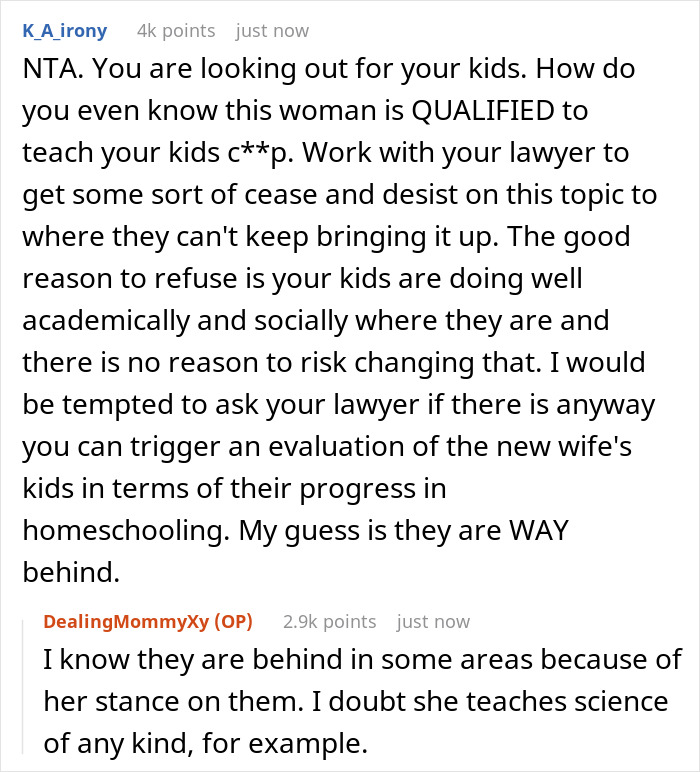
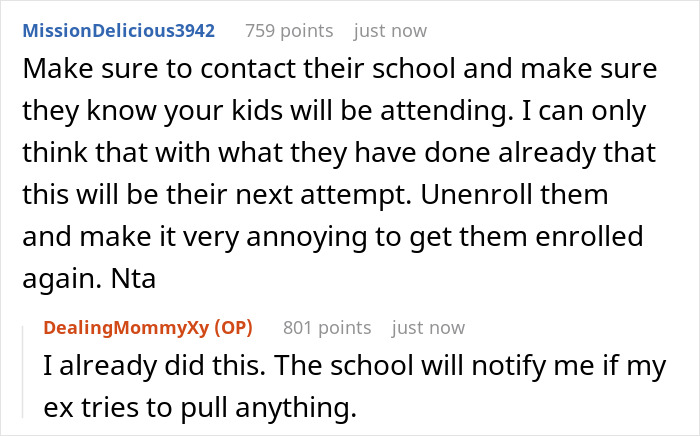
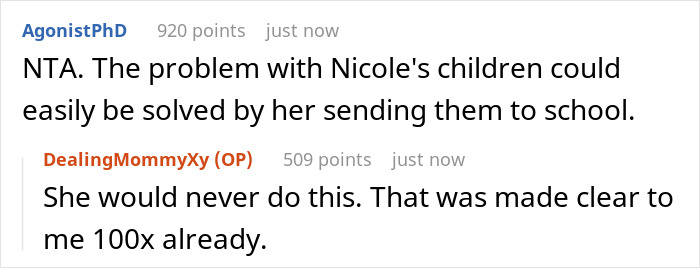
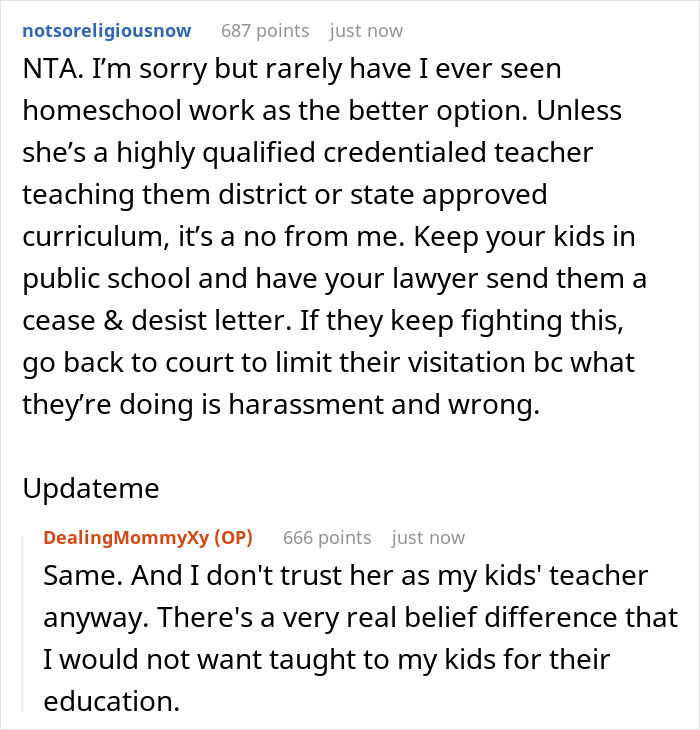
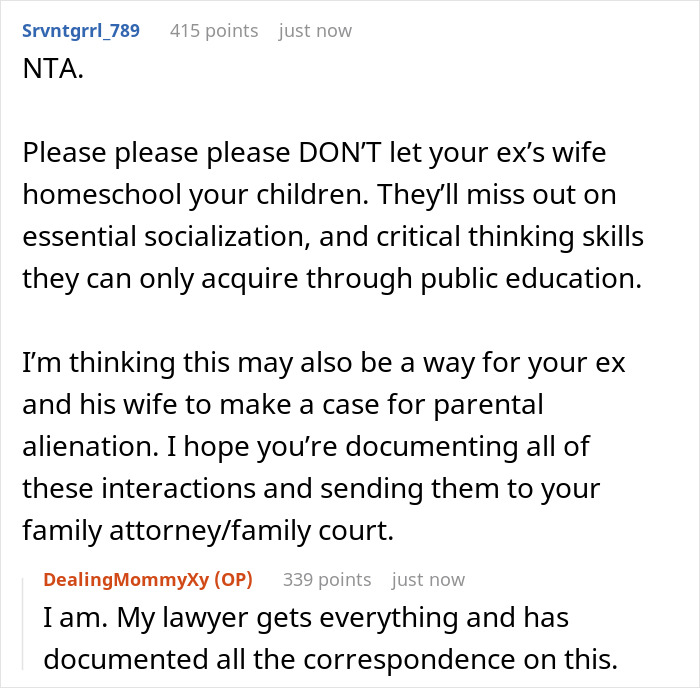
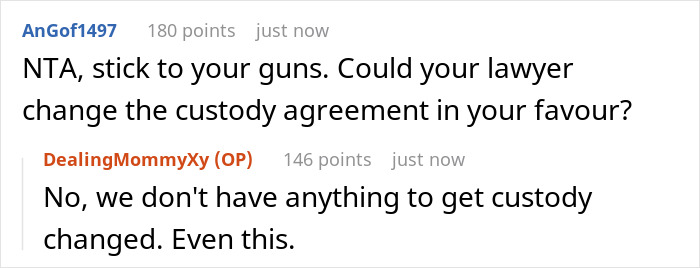
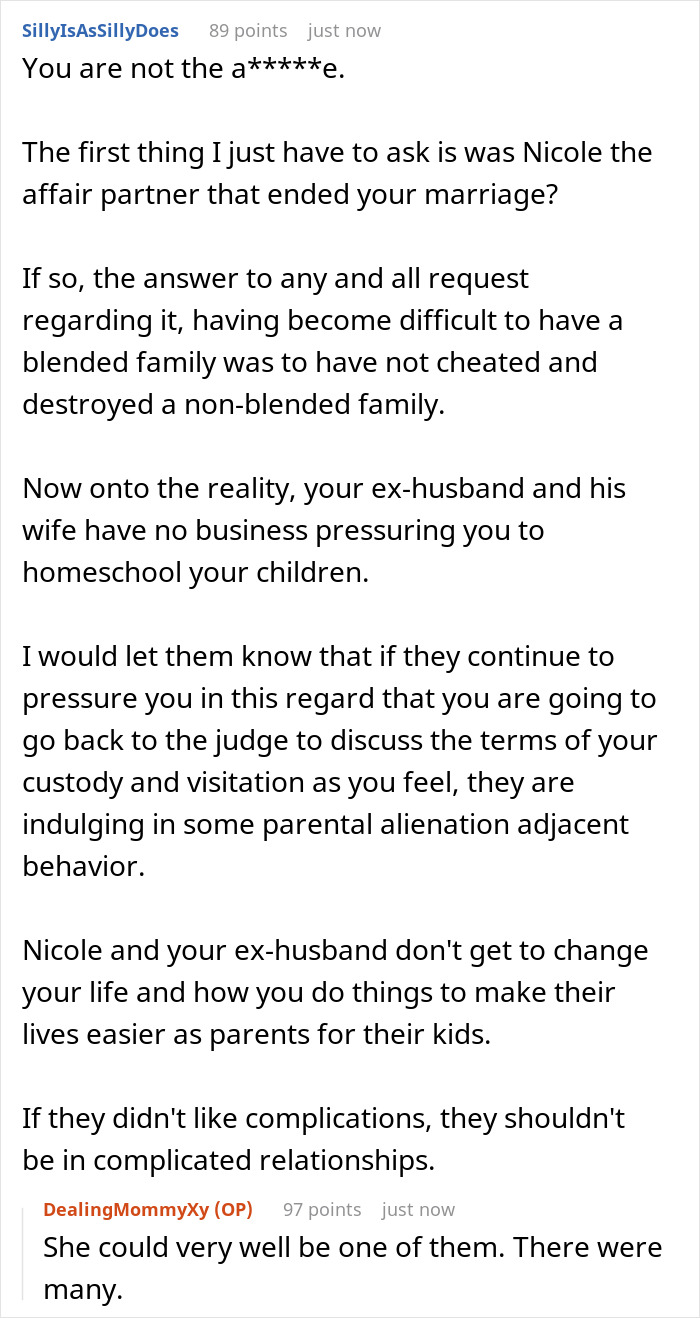
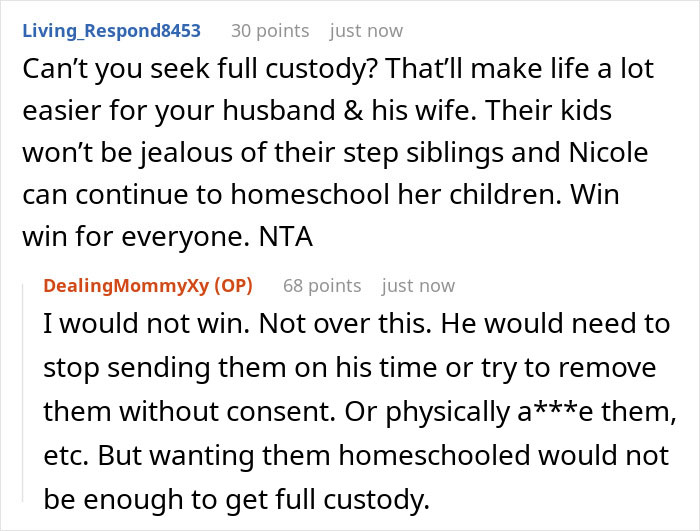
But while some challenges are expected, this Redditor found herself facing a demand she didn’t see coming. Her ex-husband’s new wife told her she should homeschool her kids—just like she does with her own. The problem? Neither the children nor their mother wanted that.
Now, the mom’s firm “no” has sparked a clash between the families. Read on to see how it’s unfolding.
Image credits: unsplash (not the actual photo)
Image credits: unsplash (not the actual photo)
Image credits: DealingMommyXy
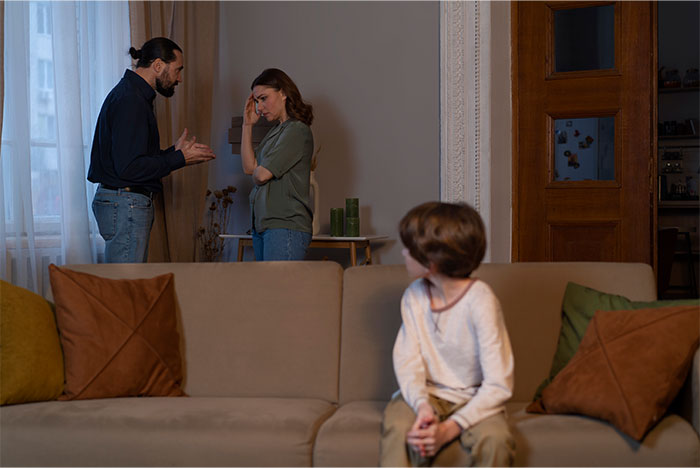
Image credits: freepik (not the actual photo)
Parenting is no small feat—and splitting up doesn’t make it any easier.
According to research by the UK Department for Work and Pensions, only 15% of separated parents say they manage to co-parent without any hiccups.
For many, the sticking point is clashing parenting styles. About a third of co-parents face this challenge, turning everyday decisions into battlegrounds when each believes they know what’s best for their child.
It’s a tough situation, but not a hopeless one. Divorce service Amicable shares practical ways to set boundaries and keep co-parenting from turning into a constant tug-of-war. Here’s what they suggest:
1. Communicate respectfully
Keep conversations focused on your child’s needs, not past conflicts or personal frustrations. Using neutral, collaborative language,like “How can we best support [child’s name]?”—can help you work together without unnecessary tension.
2. Avoid discussing adult issues with your children
Kids shouldn’t feel responsible for their parents’ conflicts or decisions. Sharing details about money, disagreements, or parenting frustrations can leave children anxious or feeling torn between parents. Keep conversations with your kids simple and reassuring, focusing on their security and wellbeing.
3. Don’t speak negatively about the other parent
It can be tempting to vent when emotions run high, but speaking badly about your co-parent in front of your child can cause confusion and guilt. It can also create loyalty conflicts, leaving your child feeling pressured to take sides.
4. Keep each other in the loop
Smooth co-parenting requires staying organized and communicating about your child’s needs, schedules, and any changes to plans. Using a shared calendar or co-parenting app can help keep everything on track and avoid unnecessary stress.
5. Don’t be afraid to ask for help
If disagreements feel impossible to resolve, seeking outside support can help. Mediation or counseling offers a neutral space to work through issues while prioritizing your child’s best interests.
Co-parenting isn’t easy, but it doesn’t mean it can’t work. With clear boundaries, respectful communication, and a willingness to seek help when needed, it’s possible to create a stable, supportive environment for your child, even after a separation.
24Kviews
Share on Facebook
UK so different education system (Scottish system specifically) but both of my parents were qualified and GTCS registered teachers (mum primary, dad secondary chemistry and maths) and both of them decided whilst they liked the idea of living “the good life” in the back end of beyond and homeschooling my and my siblings it was a terrible idea for our education!

What's crazy in the UK is that ANYBODY can home school their children if they want to and they do NOT have to follow the national curriculum. I feel that's total madness! If you're child is in school first and then you want to take them out then you have to get the permission of the head and stuff but if you never enrol them in the first place, you can do what you like within reason.
Load More Replies...
US resident here. I generally see homeschooling being done by religious zealots, usually Evangelical Christians. They don't want to subject their kids to things in the secular world and so keep them isolated from music, pop culture and, god forbid... science. I know that not all homeschooling is by religious nuts, but it seems to be done predominantly by them. What I really hate is the lack of socialization and the isolation of the kids.

The OP said the new partner probably isn't teaching them any science because of 'belief differences; so this is almost certainly another religious idiot. (not saying everyone religious is an idiot, but this one is)
Load More Replies...
Homeschooling should be illegal. There, I've said it. Unless there's a medical need for the child to stay home and not attend school (in which case the teachers should be visiting to teach!), I don't see any reason for the child to be left at home, at the mercy of their parents' belief system and knowledge level. I've seen enough documentaries about this to know that in most states (US) the regulations are so loose that there's practically no verification of the child's progress. And knowledge is everything. One shouldn't be deprived of good education just because they have idiots for parents. I'm writing about the US because I haven't heard of much homeschooling anywhere else, maybe statistical error levels in some countries.
What needs to be reinstated is the testing to make sure homeschool kids are at grade level. Most states had them until early 2000s. There's no reason that one educational model will be the best thing for all students and outlawing homeschooling deprives those kids that are thriving in an alternative setting of their opportunities. Most of the homeschooled HS students I worked with were taking college level courses and were more enthused about learning than the ones who were in public school. They had more internship opportunities because they could participate during regular school hours and they accessed more funding and places at college because of the work they'd done. If a child is happier, healthier and less stressed, why have them sit through public school? What is needed is oversight and accreditation not outlawing education.
Load More Replies... UK so different education system (Scottish system specifically) but both of my parents were qualified and GTCS registered teachers (mum primary, dad secondary chemistry and maths) and both of them decided whilst they liked the idea of living “the good life” in the back end of beyond and homeschooling my and my siblings it was a terrible idea for our education!
What's crazy in the UK is that ANYBODY can home school their children if they want to and they do NOT have to follow the national curriculum. I feel that's total madness! If you're child is in school first and then you want to take them out then you have to get the permission of the head and stuff but if you never enrol them in the first place, you can do what you like within reason.
Load More Replies... US resident here. I generally see homeschooling being done by religious zealots, usually Evangelical Christians. They don't want to subject their kids to things in the secular world and so keep them isolated from music, pop culture and, god forbid... science. I know that not all homeschooling is by religious nuts, but it seems to be done predominantly by them. What I really hate is the lack of socialization and the isolation of the kids.
The OP said the new partner probably isn't teaching them any science because of 'belief differences; so this is almost certainly another religious idiot. (not saying everyone religious is an idiot, but this one is)
Load More Replies... Homeschooling should be illegal. There, I've said it. Unless there's a medical need for the child to stay home and not attend school (in which case the teachers should be visiting to teach!), I don't see any reason for the child to be left at home, at the mercy of their parents' belief system and knowledge level. I've seen enough documentaries about this to know that in most states (US) the regulations are so loose that there's practically no verification of the child's progress. And knowledge is everything. One shouldn't be deprived of good education just because they have idiots for parents. I'm writing about the US because I haven't heard of much homeschooling anywhere else, maybe statistical error levels in some countries.
What needs to be reinstated is the testing to make sure homeschool kids are at grade level. Most states had them until early 2000s. There's no reason that one educational model will be the best thing for all students and outlawing homeschooling deprives those kids that are thriving in an alternative setting of their opportunities. Most of the homeschooled HS students I worked with were taking college level courses and were more enthused about learning than the ones who were in public school. They had more internship opportunities because they could participate during regular school hours and they accessed more funding and places at college because of the work they'd done. If a child is happier, healthier and less stressed, why have them sit through public school? What is needed is oversight and accreditation not outlawing education.
Load More Replies...










 No fees, cancel anytime










49
67