Get Premium
Dark mode theme is available exclusively for premium users. Learn more about the benefits of subscribing.
No fees, cancel anytime.

 Dark Mode Ad-Free Browsing Unlimited Content
 Ad-Free Browsing Unlimited Content Dark Mode
Join 1.2 million Panda readers who get the best art, memes, and fun stories every week!

You can tell a lot about a person by how they react when you gently tell them “no.” Boundaries don’t mean that you don’t love or care about someone. They are simply your way of communicating your needs and protecting your own well-being. Someone who respects you will also respect your boundaries… and the opposite is also true.
One man asked the internet whether he was a jerk for refusing to give his chaotic sister his spare house key. A series of incidents shook the man’s trust in his sibling. However, his sister was unwilling to accept the boundary and had an intense emotional reaction. You’ll find the full story below.
Image credits: Liza Summer/Pexels (not the actual photo)
Image credits: Alex Green/Pexels (not the actual photo)
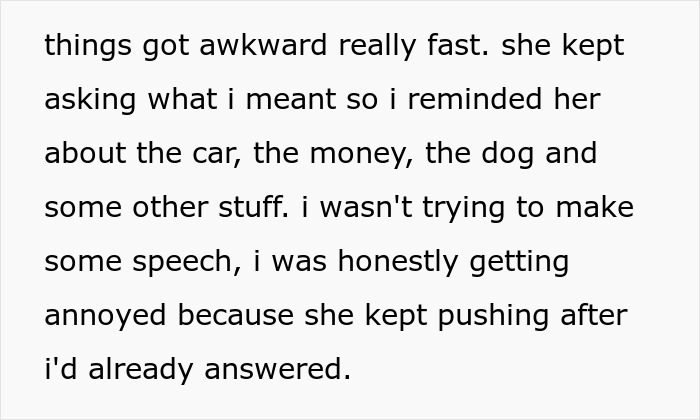
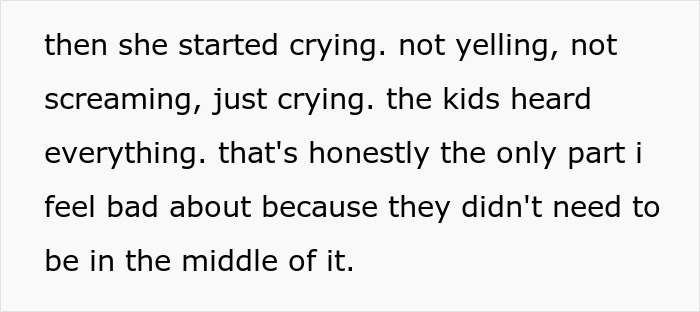
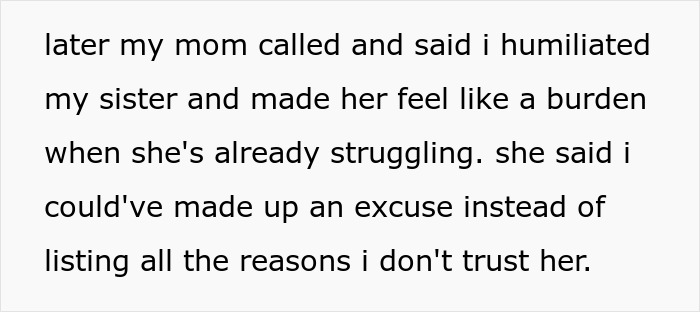
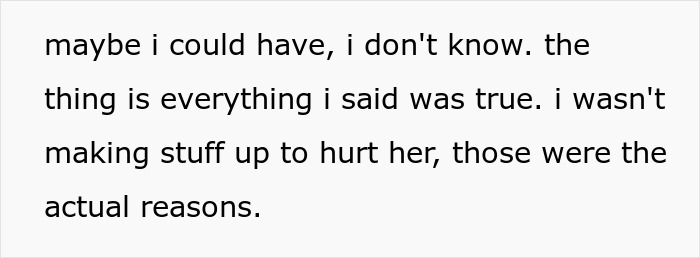
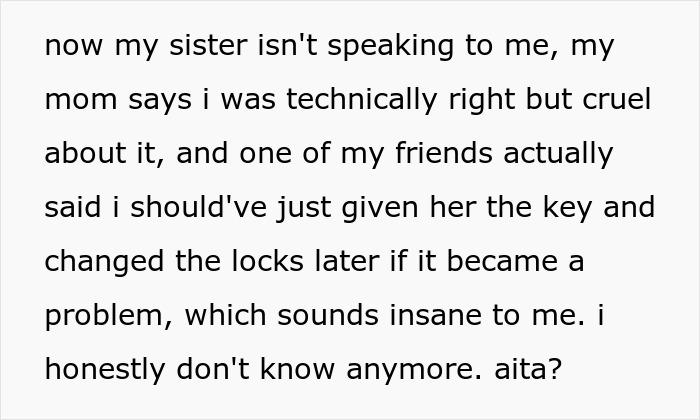
Image credits: JohnnaALee
Image credits: www.kaboompics.com/Pexels (not the actual photo)
Healthy boundaries are actually beneficial not just to you, because they protect your needs, but also to the person on the receiving end. For one, they reduce conflict. What’s more, they can bring family members closer. And they boost self-esteem.
“It really helps develop the kinds of relationships where you can enjoy people’s presence more and be present in the moment with them. A lot of us have these events where we see family—and we either don’t want to or can’t cut them off—so at least we can enjoy it a bit more if we feel in control of the situation,” licensed marriage and family therapist Angela Sitka told Time magazine.
According to Sitka, boundaries are essentially a promise you make to yourself to “take care of your own needs while interacting in your relationships.” When you set boundaries, you are setting a standard to describe how you want to be treated. “You can respect that promise by taking action any time there’s a violation and your well-being is at risk.”
However, your boundaries do not necessarily have to be fair or accommodating. In some cases, they are your way of protecting your needs from emotionally violent, toxic individuals. In those cases, you need firm boundaries. In other situations, you can afford to be a bit more flexible.
Image credits: Liza Summer/Pexels (not the actual photo)
How you communicate your boundaries matters a lot. You need to be as clear and calm as possible. For example, licensed marriage and family therapist Laurie Carmichael suggests using basic templates, such as: “If you say or do X again, I will need to do Y.” This way, you are outlining the consequences of other people’s actions. You are being very direct. This is not a request.
How you respond to someone violating your boundaries depends on you. It’s a very personal decision. There are moments when you have to be tough and unyielding. Other times, a bit of grace might be needed. Sometimes, it’s right to give the other person the chance to correct their behavior. Then, if they continue violating your boundaries, go through with the consequences you previously promised to go through with.
That being said, it’s unlikely that everyone will start respecting your boundaries overnight. Real behavioral change takes longer to solidify. “The whole family system will have to shift. We have to be prepared that it’s likely going to be an ongoing process. It might take several conversations and different strategies, and you might have to adjust the boundary,” Sitka emphasized.
“It’s going to take time to teach others how we want to be treated. At first, it’s kind of exhausting, but it does get easier over time.”
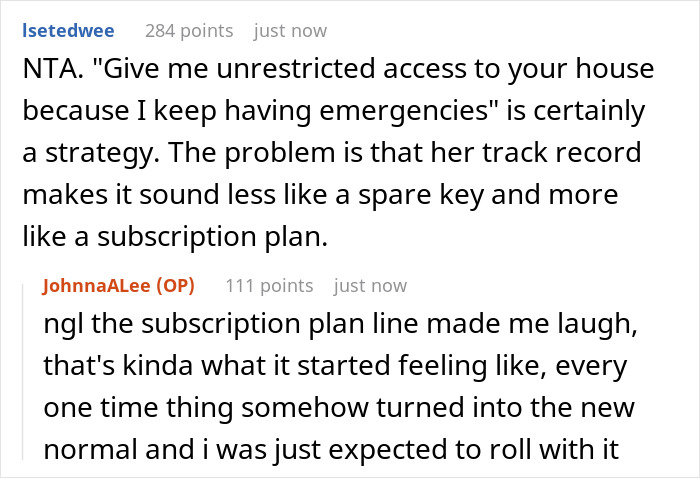
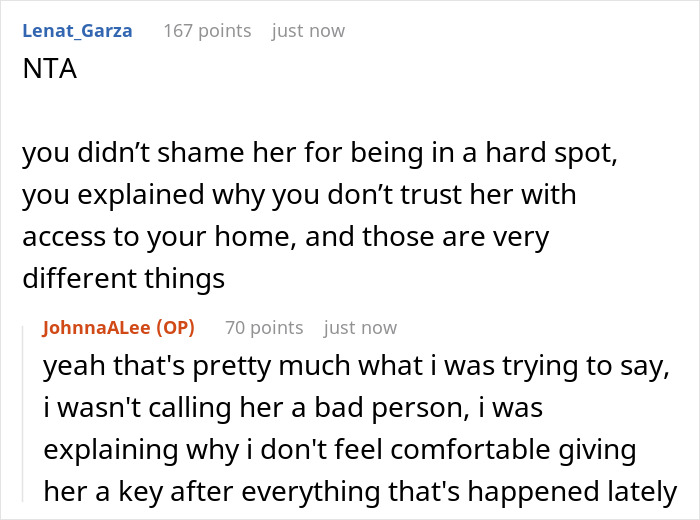
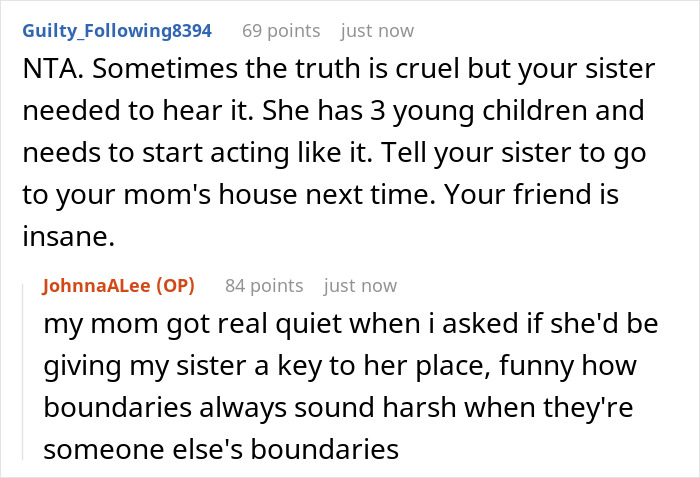
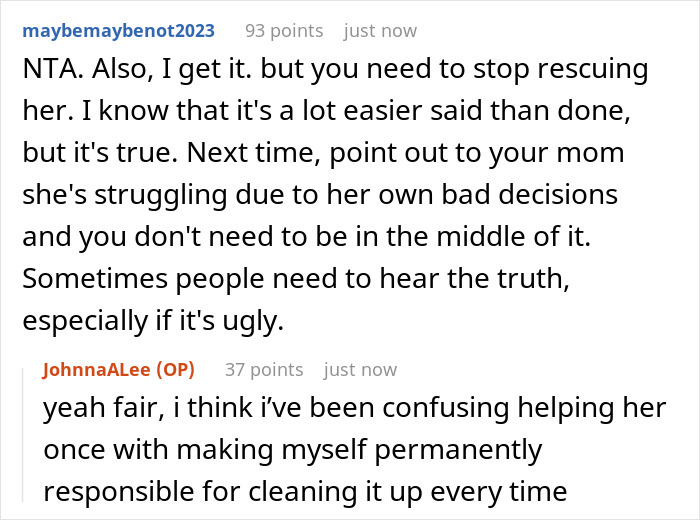
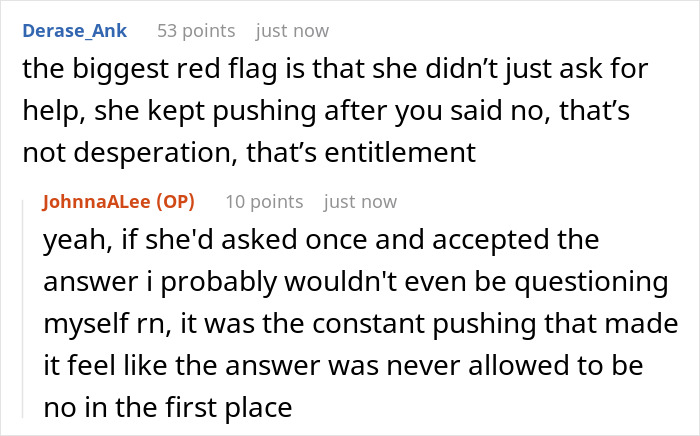
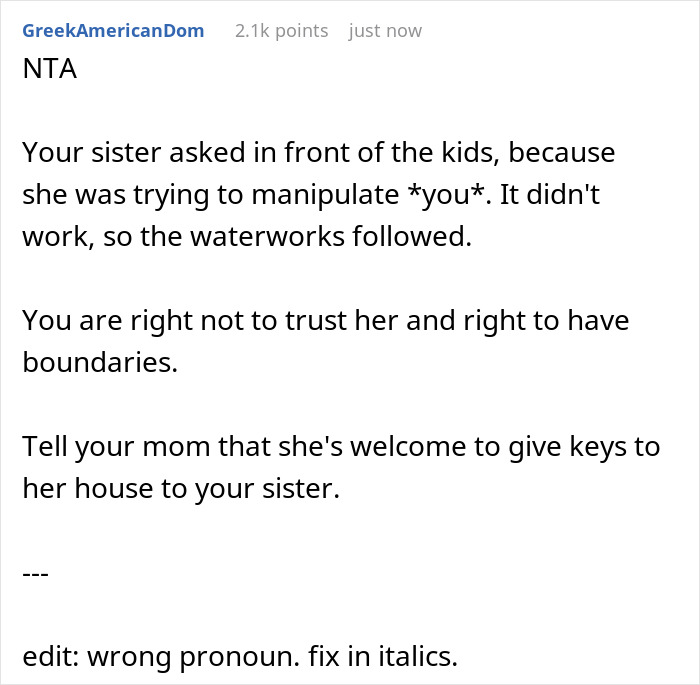
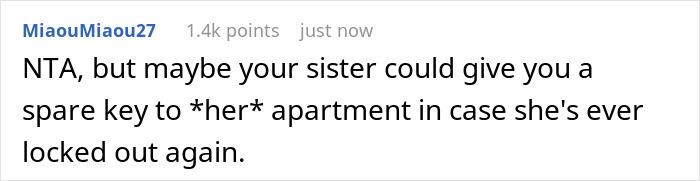
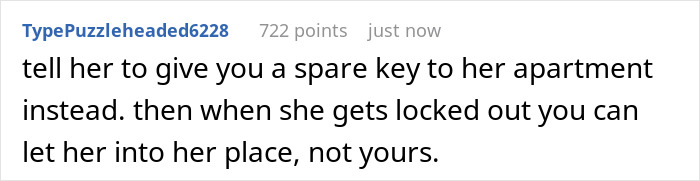
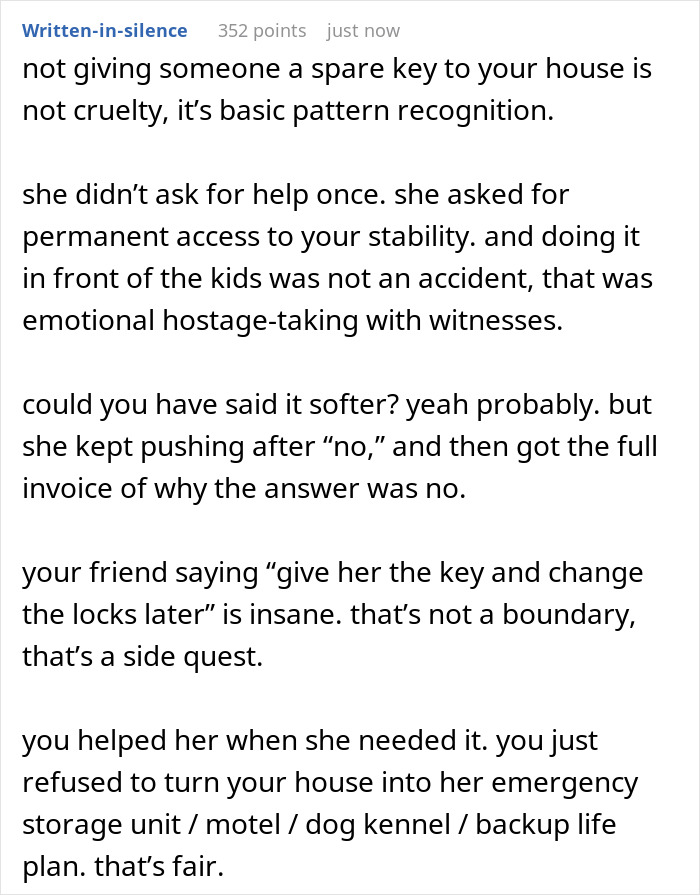
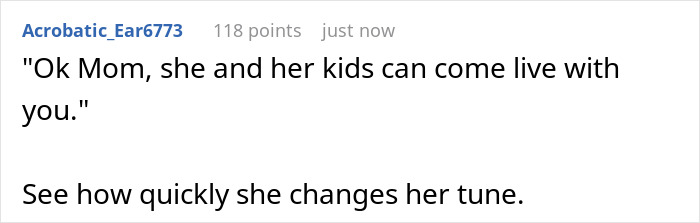
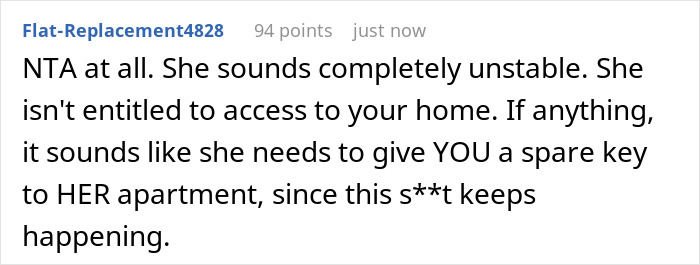
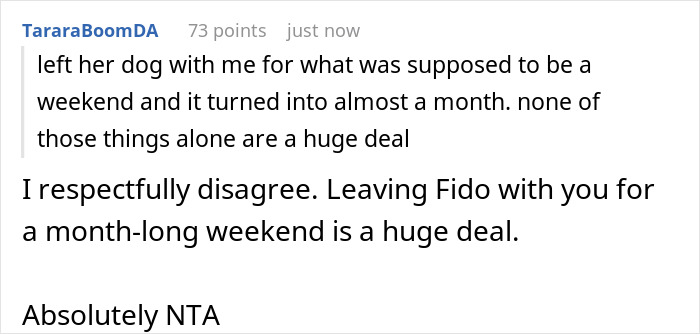
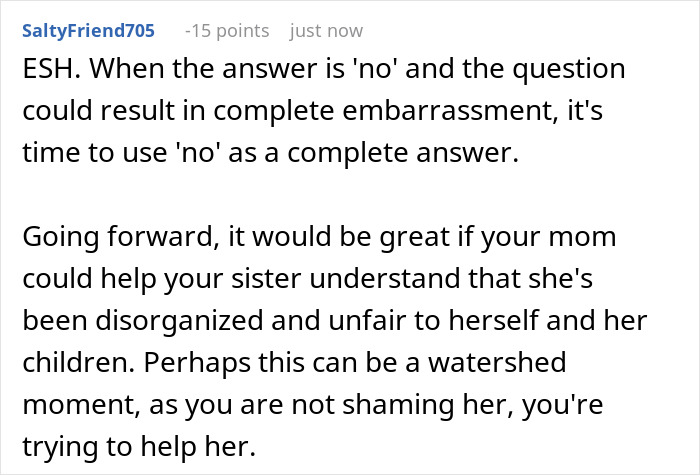
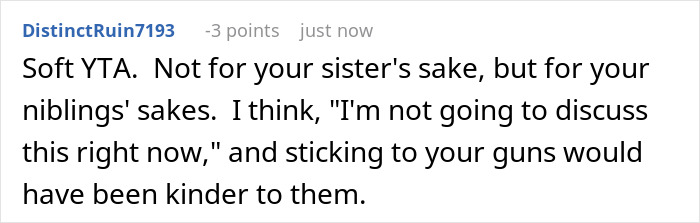
What’s your take, Pandas? Do you think the man was right to refuse to give his sister a spare key to his home, or do you think he was too harsh? How would you have handled the situation? How do you maintain healthy boundaries with your siblings, parents, and other close family members?


By entering your email and clicking Subscribe, you're agreeing to let us send you customized marketing messages about us and our advertising partners. You are also agreeing to our Privacy Policy.
Thank you! You've successfully subscribed to newsletters!


No. 1 Basic rule of life: Don't ask the question if you don't want to hear the answer.

I was going to say exactly that. A very senior manager at a large international bank I worked at (some 30 years ago) told me to never ask a question I didn't know the answer to, as the answer might be something I didn't want said publicly. In the corporate world, they are really valuable words, but they pretty much work for this scenario too.
Load More Replies...
Don’t worry about. Sister will get over her hurt feelings very quickly as soon as she needs OP’s help. That won’t be long.
No. 1 Basic rule of life: Don't ask the question if you don't want to hear the answer.
I was going to say exactly that. A very senior manager at a large international bank I worked at (some 30 years ago) told me to never ask a question I didn't know the answer to, as the answer might be something I didn't want said publicly. In the corporate world, they are really valuable words, but they pretty much work for this scenario too.
Load More Replies... Don’t worry about. Sister will get over her hurt feelings very quickly as soon as she needs OP’s help. That won’t be long.





























 No fees, cancel anytime












39
18