Get Premium
Dark mode theme is available exclusively for premium users. Learn more about the benefits of subscribing.
No fees, cancel anytime.

 Dark Mode Ad-Free Browsing Unlimited Content
 Ad-Free Browsing Unlimited Content Dark Mode
Join 1.2 million Panda readers who get the best art, memes, and fun stories every week!

Not all familial relationships are close-knit and supportive. Many are fraught with bitter indignation and persistent ill will driven by lifelong mistreatment and trauma.
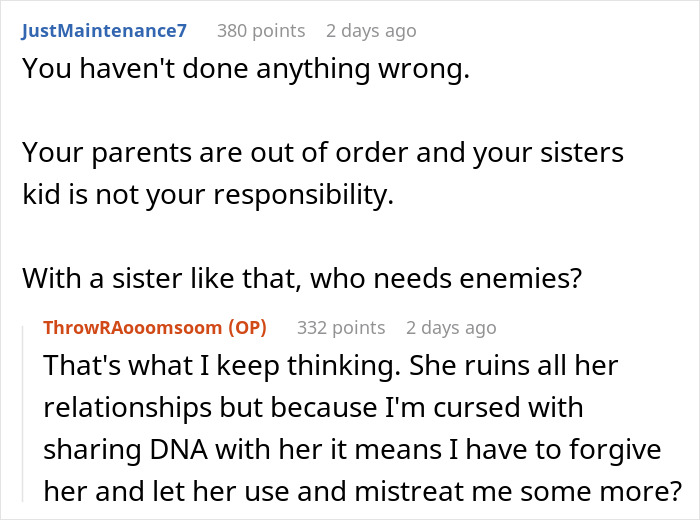
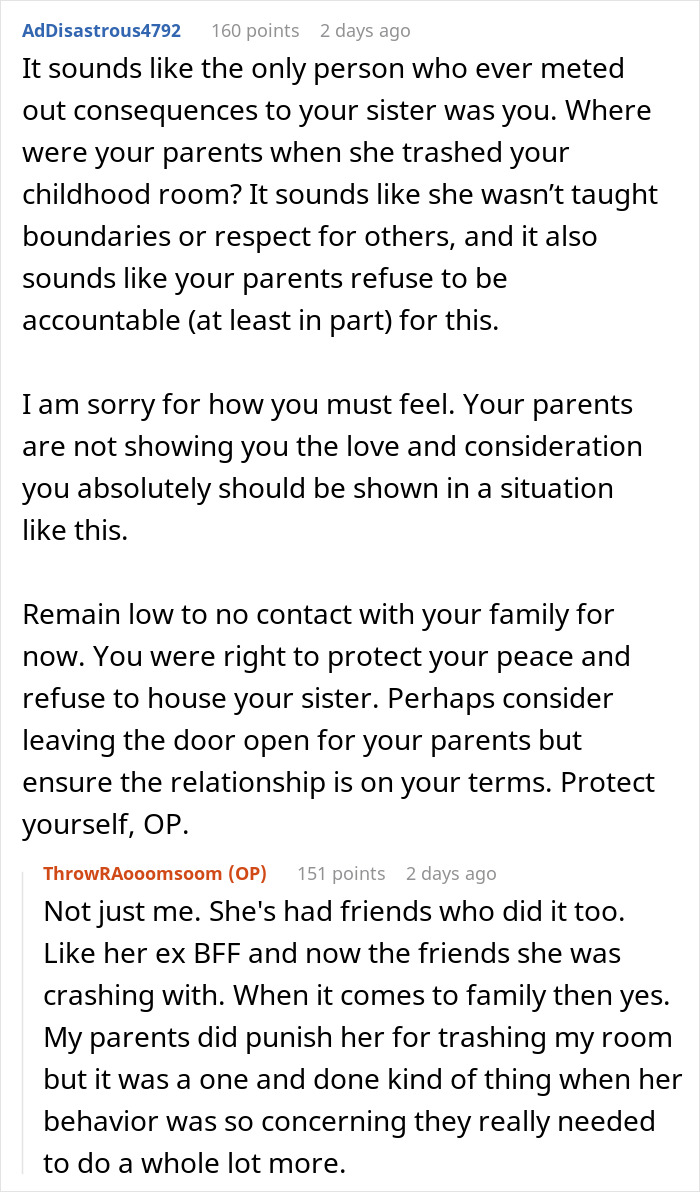
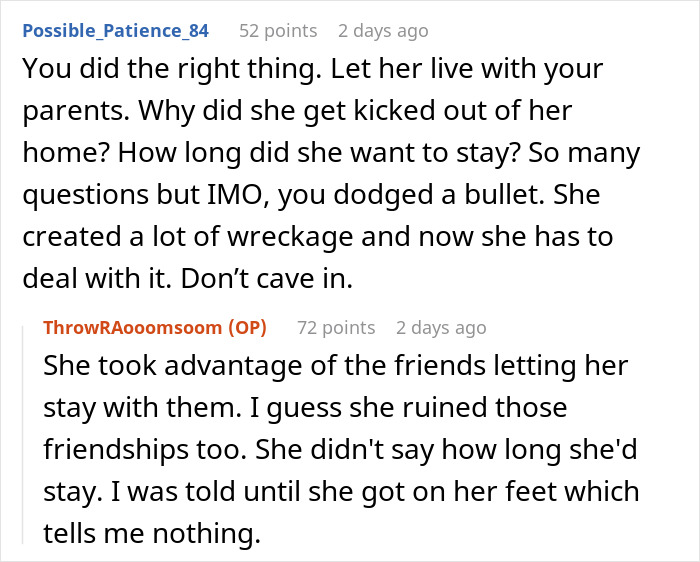
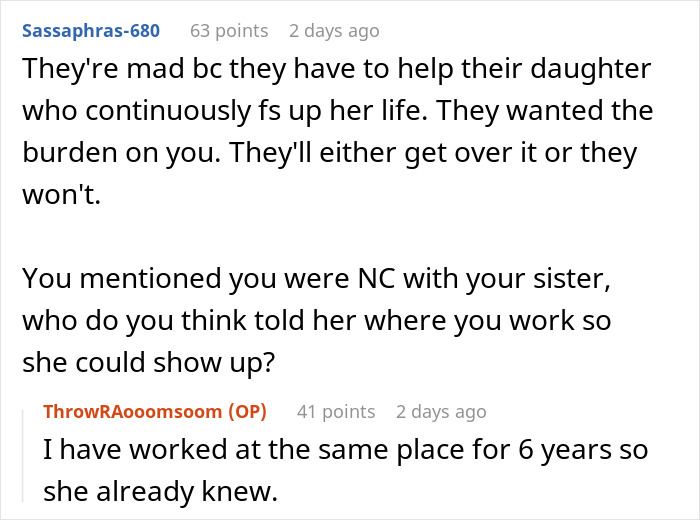
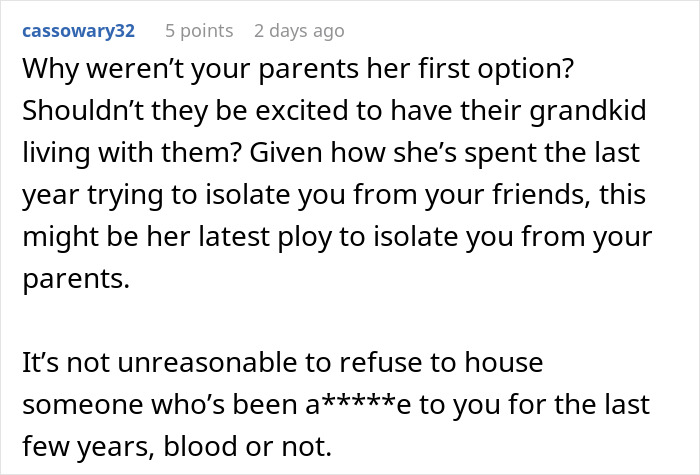
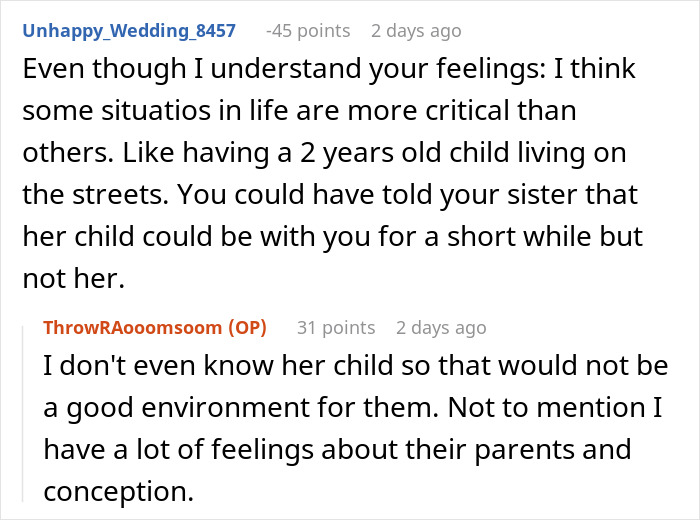
The story you’re about to read is one of them. Here, a woman refused to take in her homeless younger sister and her two-year-old child. Her nonacceptance is fueled by the lifelong torment she suffered, along with a betrayal that became her breaking point.
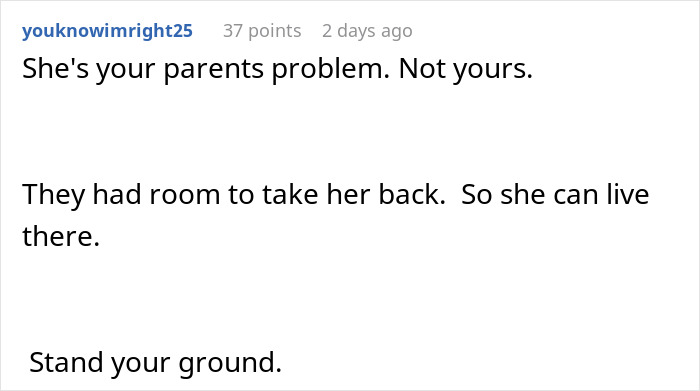
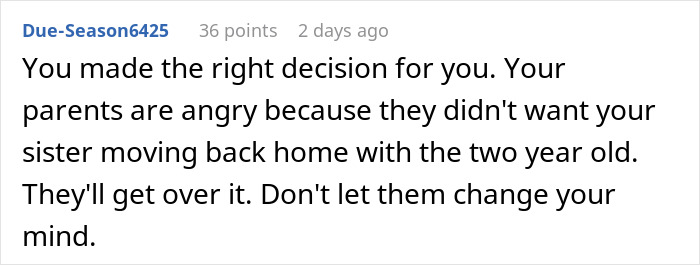
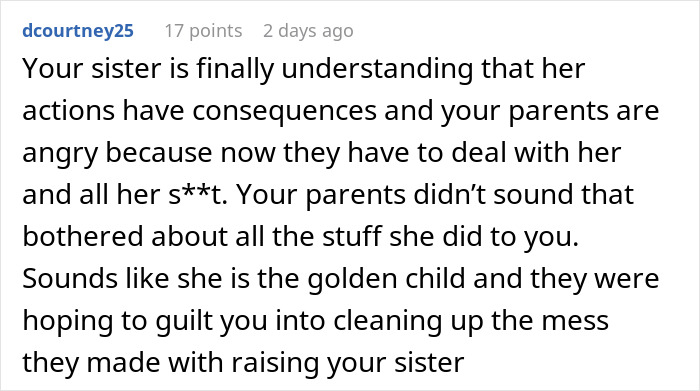
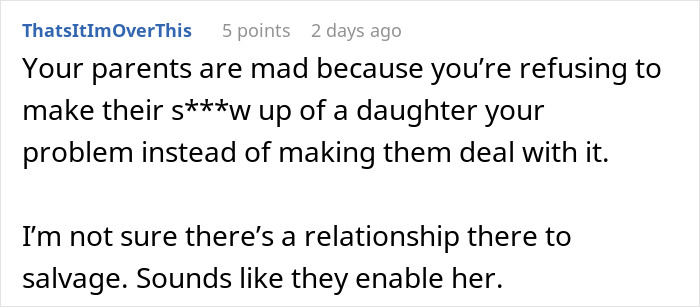
To rub salt in the wound, their parents sided with the reckless, irresponsible younger daughter, completely fracturing what was left of their relationship.
Image credits: The Yuri Arcurs Collection / freepik (not the actual photo)

Image credits: Jakub Kriz / unsplash (not the actual photo)
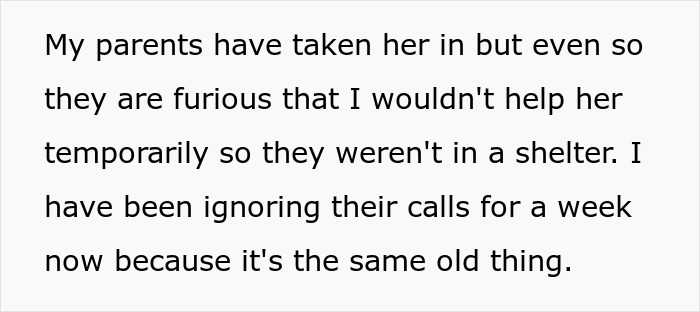
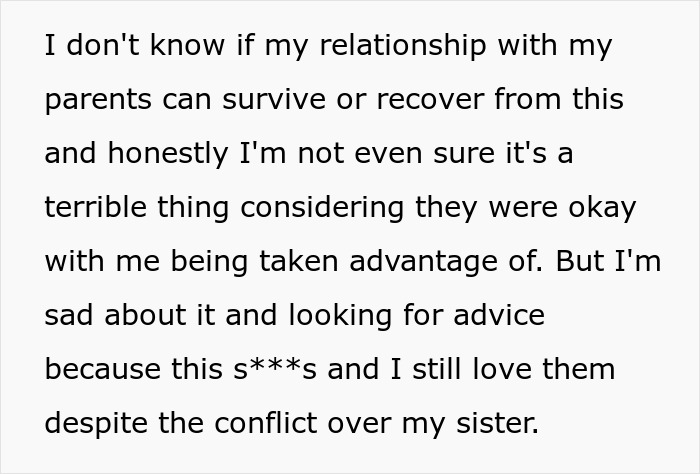
Image credits: ThrowRAooomsoom
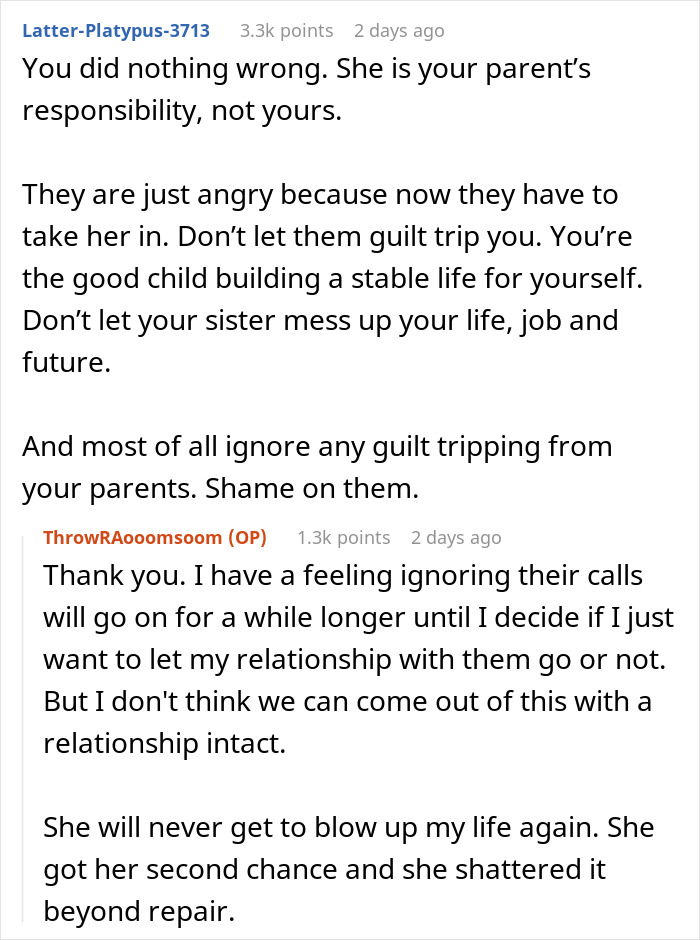
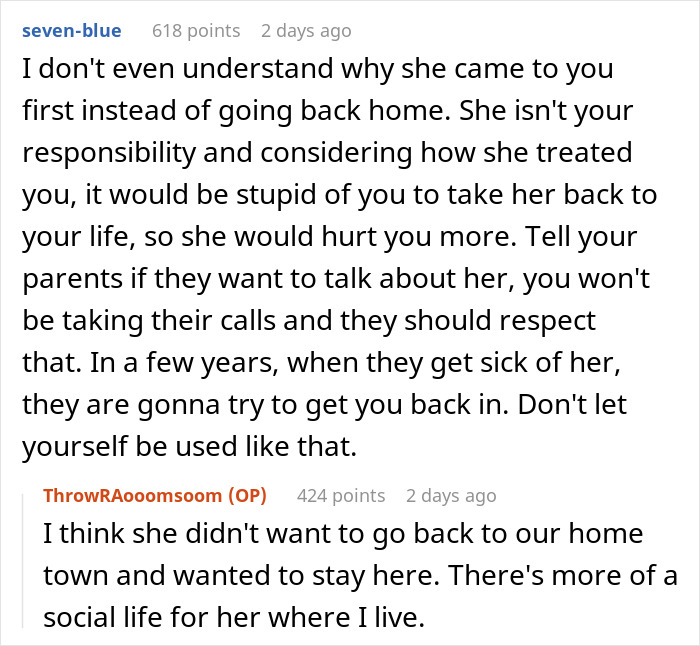
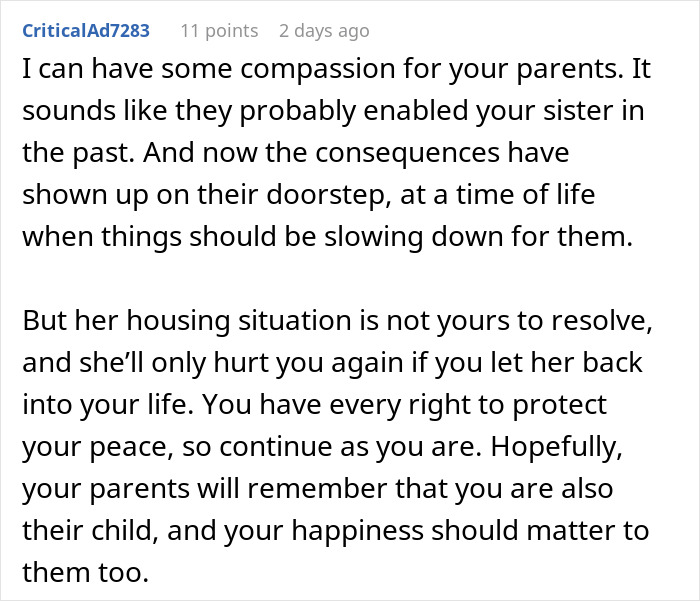
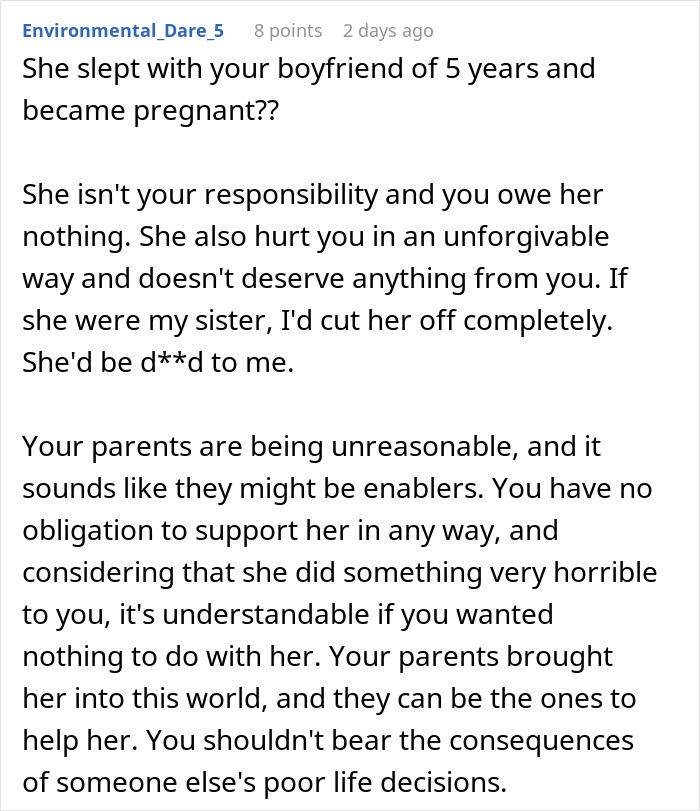
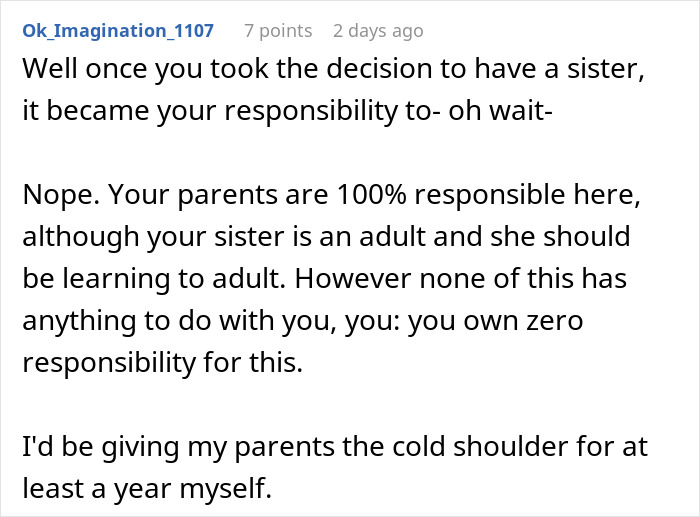
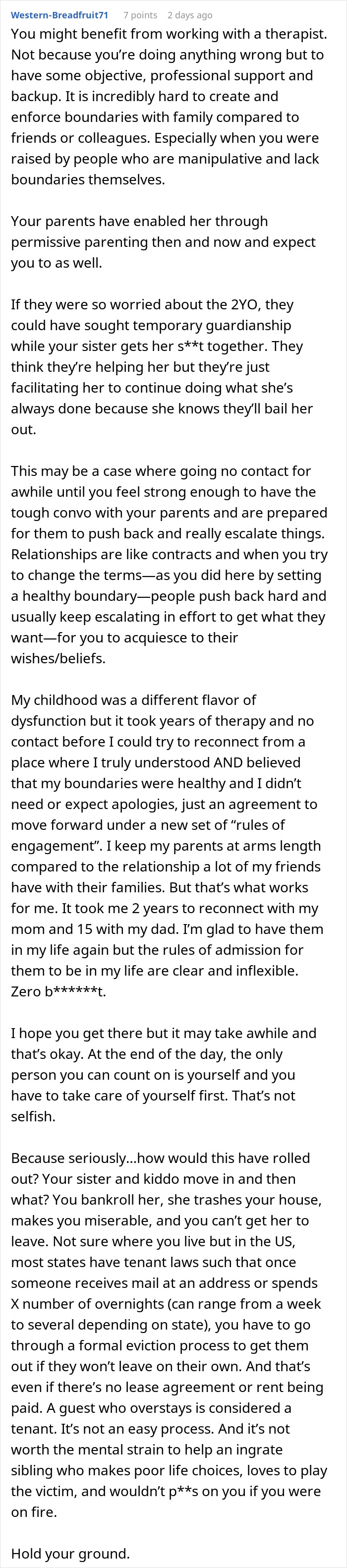
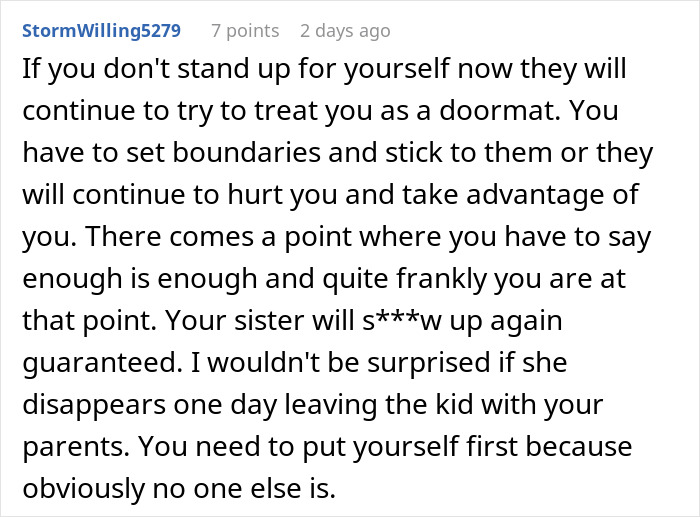
On the surface, the author’s refusal to take her sister in seems cruel. Many could argue that blood ties run deep, and helping out a family in need is pretty much a prerequisite.
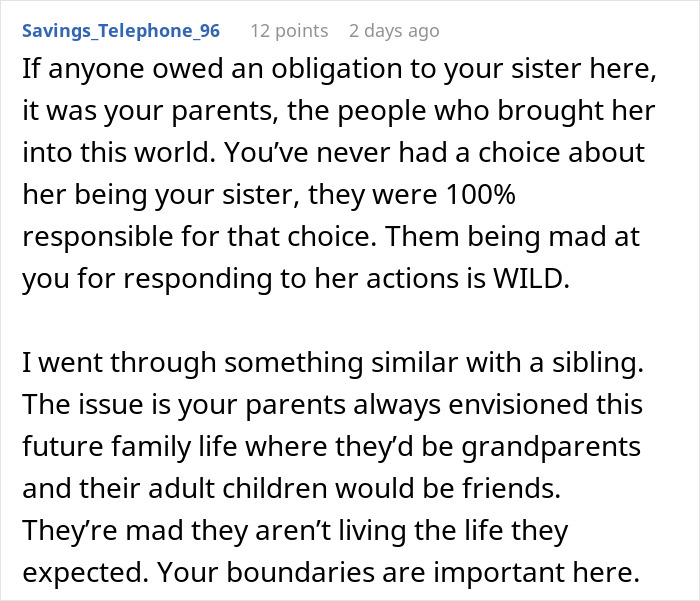
However, she also feels the need to establish boundaries, especially with the pain she went through that her own sister caused. And according to licensed mental health counselor and Woodlands Grove Recovery Campus clinical lead Rebecca Boone, saying no doesn’t necessarily mean you’re withholding care.
“It’s about creating enough space to continue caring in a healthy and consistent way,” she told Bored Panda. “In many cases, setting a boundary is actually an act of love because it allows the relationship to exist without resentment, burnout, or harm.”
Taking her sister in may come off as enabling, which could only worsen her behavior. As Boone states, effective support involves acknowledging a person’s pain, challenges, or circumstances while encouraging them to take responsibility for the changes needed to move forward.
“The most meaningful help often looks like walking alongside someone, offering encouragement and resources, while still allowing them to own their decisions and growth. Allowing someone to try, fail, learn from those mistakes, and then make better choices is the true heart of effective helping and growth,” she said.
Of course, refusing to help a relative can ruffle feathers within the family. What happened in the story is just one of many examples of damaged relationships, as someone turned down a close kin’s plea for assistance.
But as Booone notes, disagreements and conflict are normal. What matters is how you repair those ruptures through honest conversations and the willingness to make changes when needed.
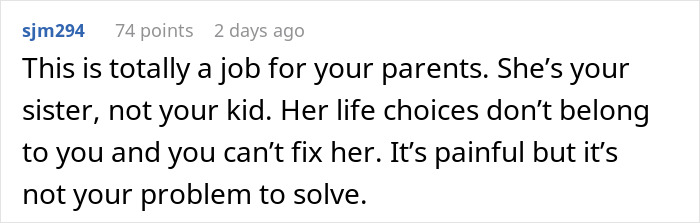
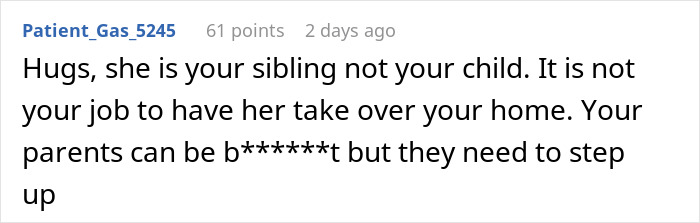
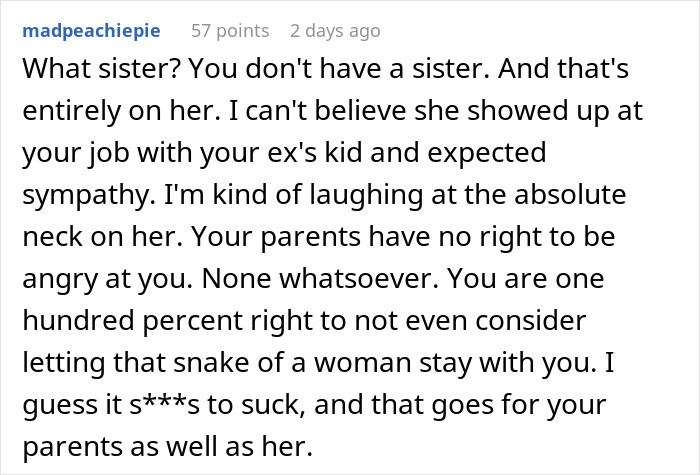
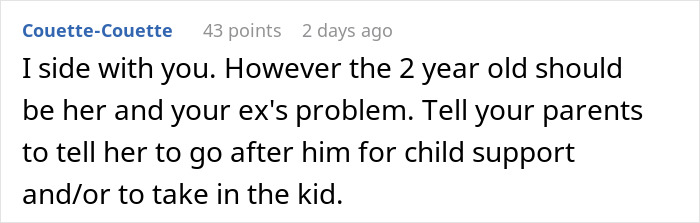
Unfortunately, this does not appear to be the case with the author and her family. Unless her parents and sister have a change of heart and reach out with a sincere apology and show of understanding, she may be better off distancing herself from them.












By entering your email and clicking Subscribe, you're agreeing to let us send you customized marketing messages about us and our advertising partners. You are also agreeing to our Privacy Policy.
Thank you! You've successfully subscribed to newsletters!

























 No fees, cancel anytime









34
1