Get Premium
Dark mode theme is available exclusively for premium users. Learn more about the benefits of subscribing.
No fees, cancel anytime.

 Dark Mode Ad-Free Browsing Unlimited Content
 Ad-Free Browsing Unlimited Content Dark Mode
Join 1.2 million Panda readers who get the best art, memes, and fun stories every week!

Baby bodily fluids may be an unavoidable part of parenting, but long before diaper blowouts enter the picture, many wonder what’s happening when a baby is still tucked safely in the womb.
This month, a pregnant doctor named Lais Coutinho sparked curiosity by sharing an ultrasound that captured the exact moment her son peed inside the womb.
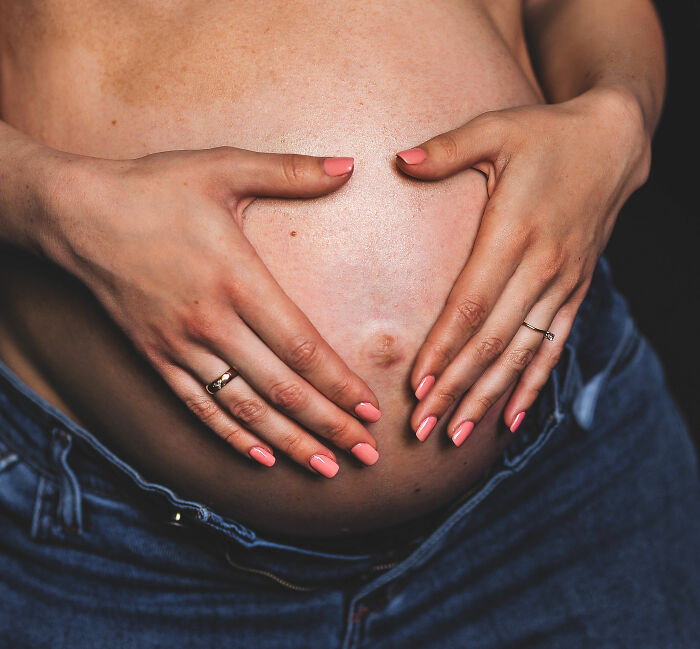
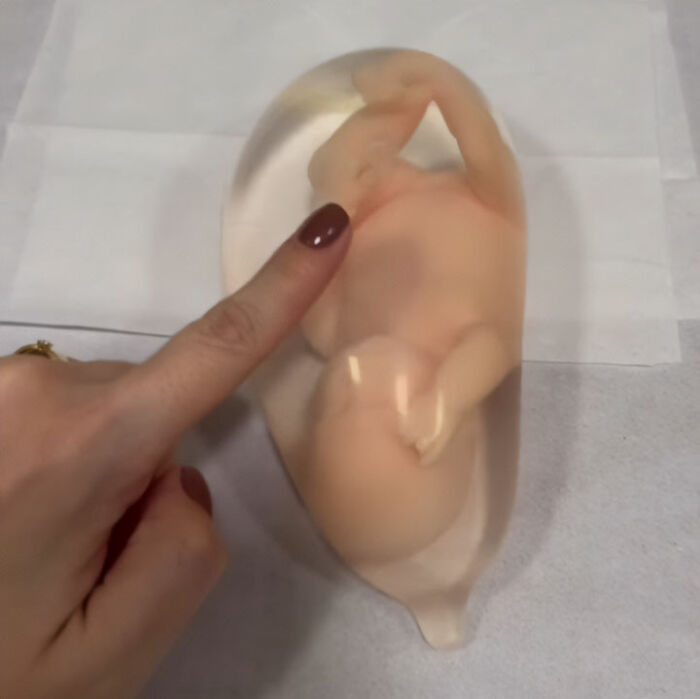
Image credits: 3elenaphotography/freepik (not an actual photo)
The video has amassed millions of views, igniting interest in how bodily functions work before birth.
“I could have left this Earth not knowing this was happening,” admitted one viewer.
“Adorable!” another commented.
Others wondered where the urine goes after babies relieve themselves inside the womb.
Image credits: dralaiscoutinho
As it turns out, babies are already practicing some of the functions they’ll rely on after birth, including urination, while still in the womb.
To learn more about this aspect of fetal development, Bored Panda consulted Asma Khalil, Professor of Obstetrics and Maternal Fetal Medicine at City St George’s, University of London.
“Fetal urine production begins in early pregnancy and becomes more established by the end of the first trimester (around 10–12 weeks),” Khalil explained.
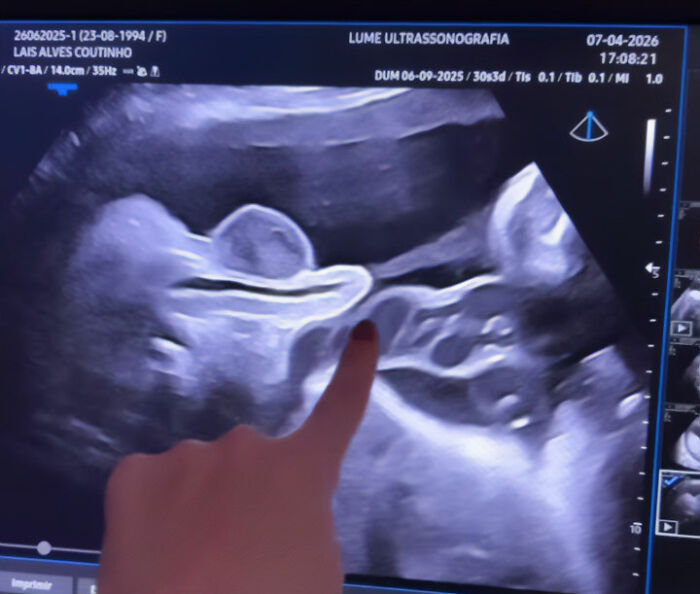
Image credits: dralaiscoutinho
“The urine is released into the amniotic sac and becomes a major component of the amniotic fluid,” she added.
Amniotic fluid is the liquid contained within the amniotic sac, which surrounds and protects the fetus from impact.
“The fetus swallows amniotic fluid and makes breathing-like movements, which are important for normal lung and gastrointestinal development,” Khalil noted.
Image credits: dralaiscoutinho
“In the second half of pregnancy, fetal urine is the primary source of amniotic fluid. The baby continuously swallows the fluid and recycles it.”
The fluid is a dynamic fluid containing water, electrolytes, proteins, hormones, and other biologically active substances.
Levels of amniotic fluid peak at 34 to 36 weeks of pregnancy and then slowly decrease as the due date approaches (around 40 weeks).
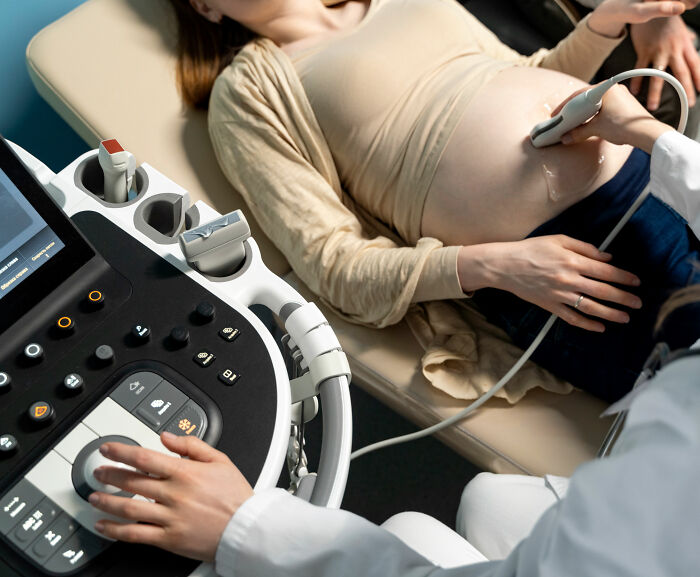
Image credits: freepik (not an actual photo)
And what about passing stool in the womb? As Khalil explained, this does not happen during pregnancy, and the presence of stool before birth is typically a warning sign.
“Babies do not usually pass stool during pregnancy. The first stool, called meconium, is a thick, dark substance made up of materials ingested in utero.”
Most babies pass meconium after birth, sometimes almost immediately, and parents may continue to see it for a few days after delivery. Meconium gradually accumulates in the fetal intestines during pregnancy.
🚨VEJA: Gravida, médica mostra o próprio bebê fazendo xixi ainda dentro do útero.
— CHOQUEI (@choquei) April 9, 2026
In some cases, however, complications can arise, and babies may pass meconium while still in the womb.
“Passage of meconium before birth is uncommon and may be associated with fetal stress, particularly in labour or post-term pregnancy, although it does not always indicate a serious problem,” Khalil shared.
Fetal distress is a broad term used to describe abnormalities in the fetal heart rate. It typically refers to concerns that a fetus isn’t getting enough oxygen during late pregnancy or labor.
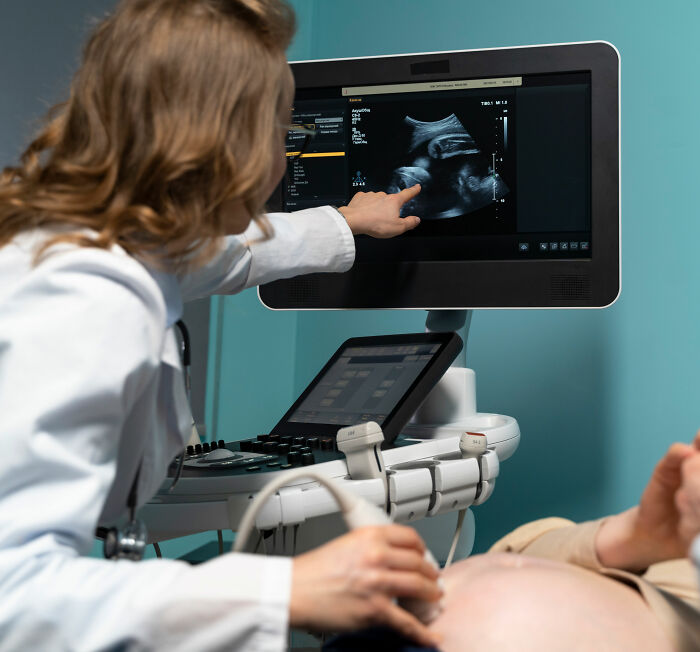
Image credits: freepik (not an actual photo)
The passage of meconium before birth can lead to a condition known as meconium aspiration syndrome (MAS). According to Healthline, MAS occurs when a newborn baby accidentally breathes in meconium-stained amniotic fluids.
The meconium particles can get blocked in the baby’s airways and deprive them of oxygen.
MAS is a serious but treatable syndrome. Doctors can detect it if the baby isn’t breathing normally after delivery and address the issue by providing supplemental oxygen.
Image credits: dralaiscoutinho
Meconium-stained amniotic fluid is fairly common at term, while meconium aspiration syndrome occurs far less frequently.
In addition to urinating inside the womb, fetuses also have sleep–wake cycles, Khalil explained, noting that these do not align with maternal sleep patterns.
“Fetal movements and behaviours (such as swallowing, breathing movements, and even urination) are important markers of normal development,” the professor shared.

Image credits: The Yuri Arcurs Collection/freepik (not an actual photo)
Another interesting behavior that can be observed before birth is thumb-s*cking. While it’s often associated with older infants, fetuses as young as 17 weeks may start this habit.
Additionally, talking (or singing) to your baby is important, as fetuses can respond to sound in later pregnancy.


By entering your email and clicking Subscribe, you're agreeing to let us send you customized marketing messages about us and our advertising partners. You are also agreeing to our Privacy Policy.
Thank you! You've successfully subscribed to newsletters!









































 No fees, cancel anytime

















27
0