Get Premium
Dark mode theme is available exclusively for premium users. Learn more about the benefits of subscribing.
No fees, cancel anytime.

 Dark Mode Ad-Free Browsing Unlimited Content
 Ad-Free Browsing Unlimited Content Dark Mode
Join 1.2 million Panda readers who get the best art, memes, and fun stories every week!

Trust between therapist and client is one of the most important foundations of successful treatment. It takes a lot of courage for someone to admit and share the troubles, grief, or mental health issues they’re facing. Building trust in a therapeutic relationship can take time, but it can also break quickly.
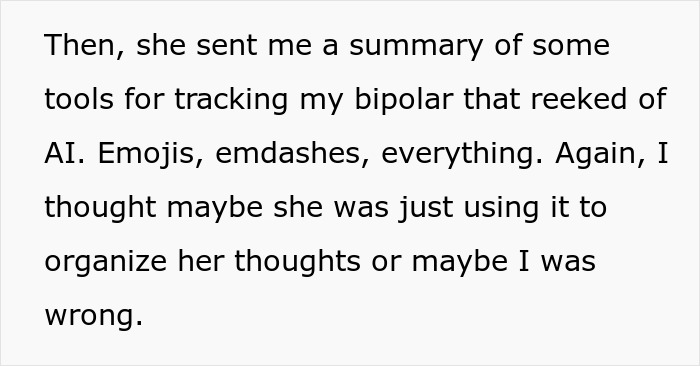
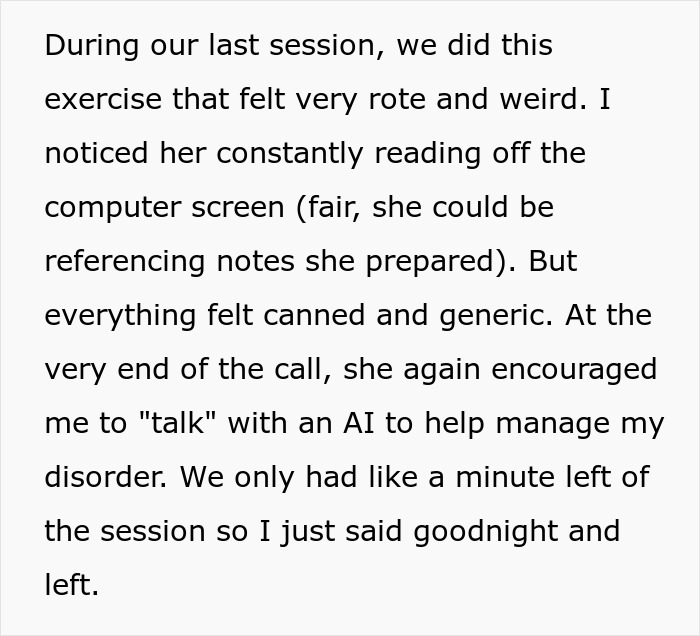
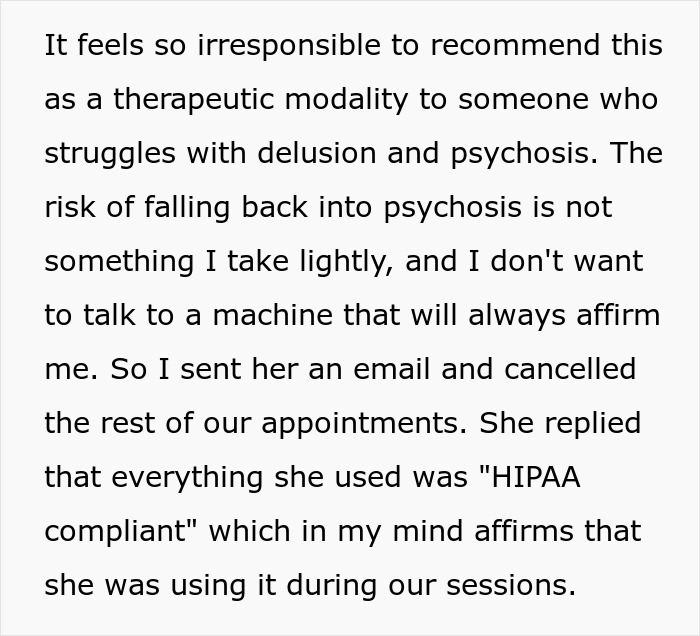
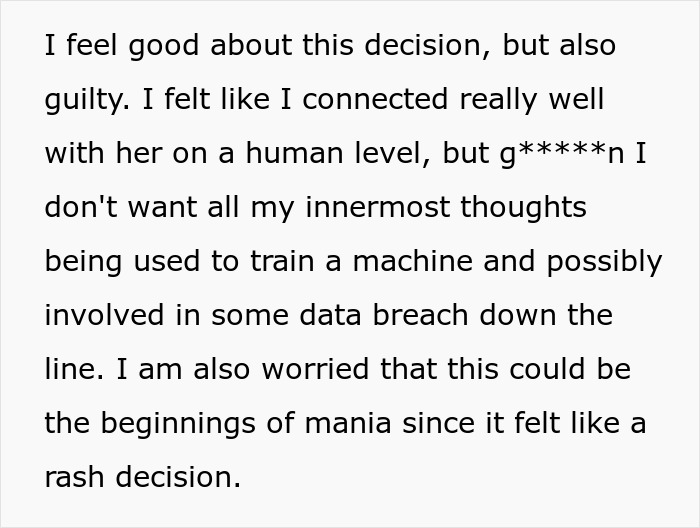
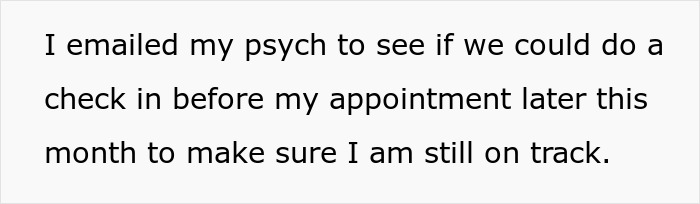
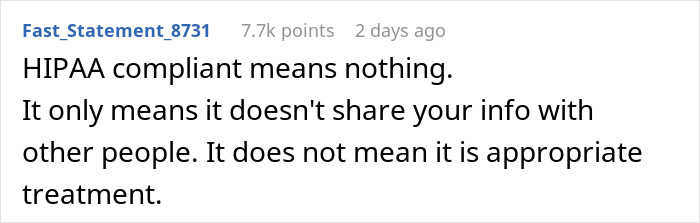
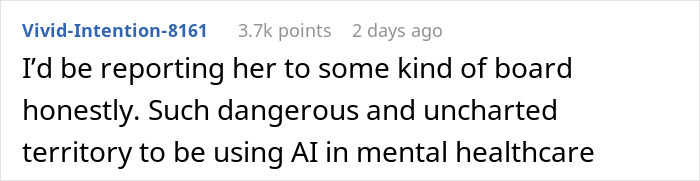
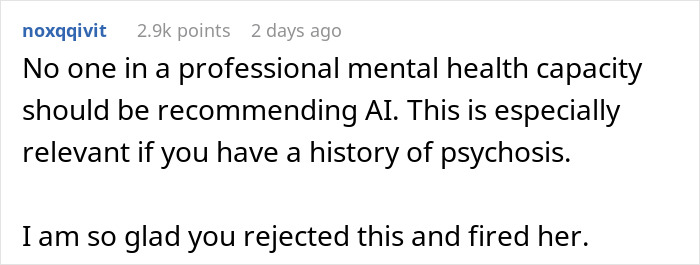
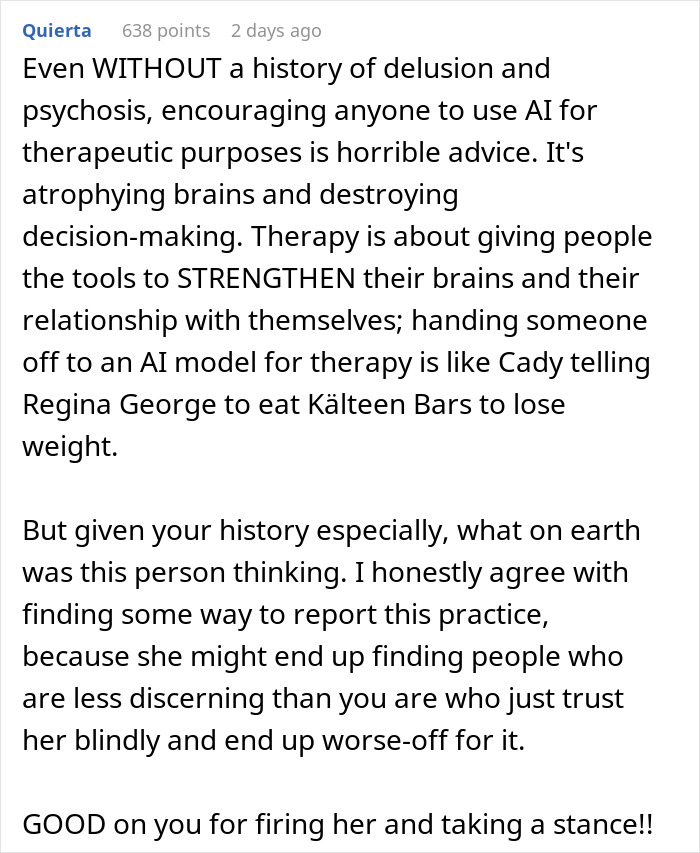
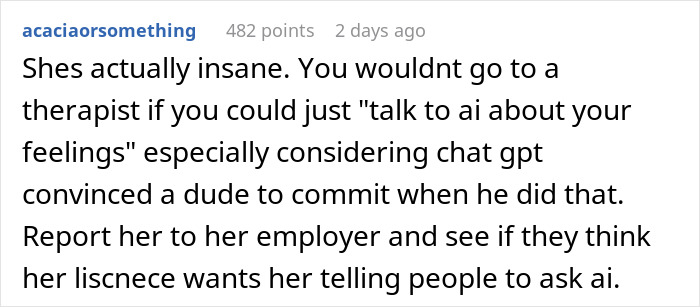
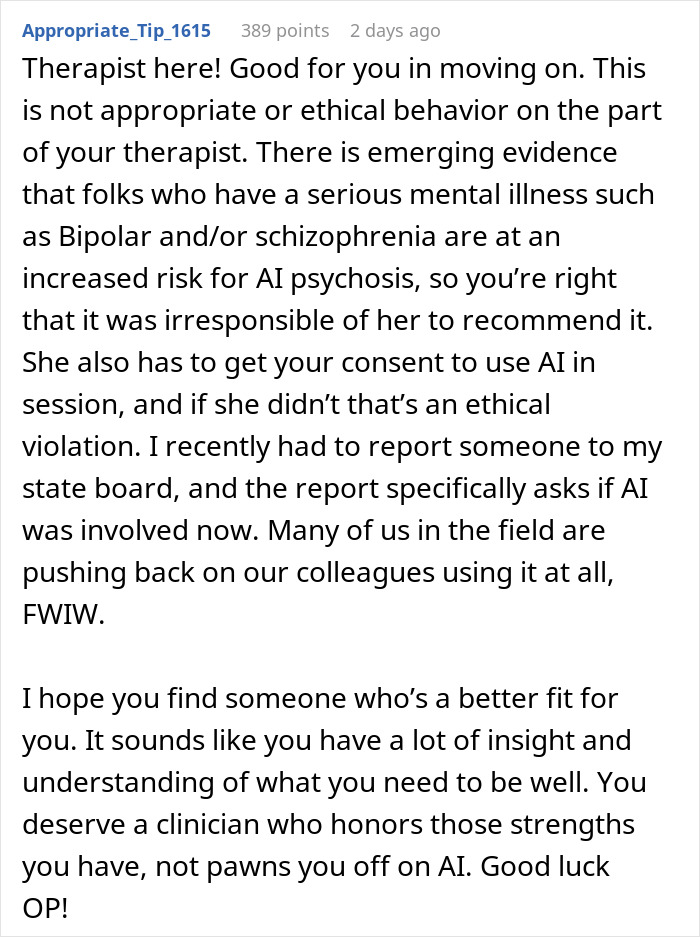
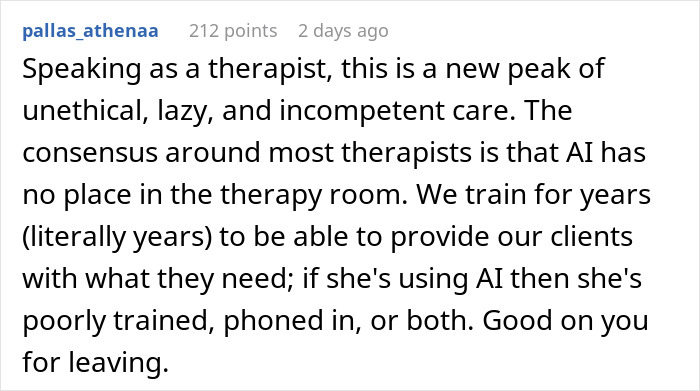
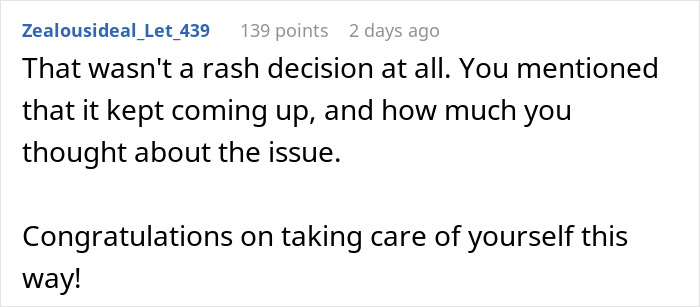
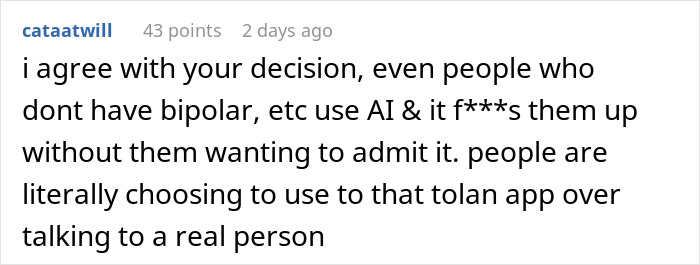
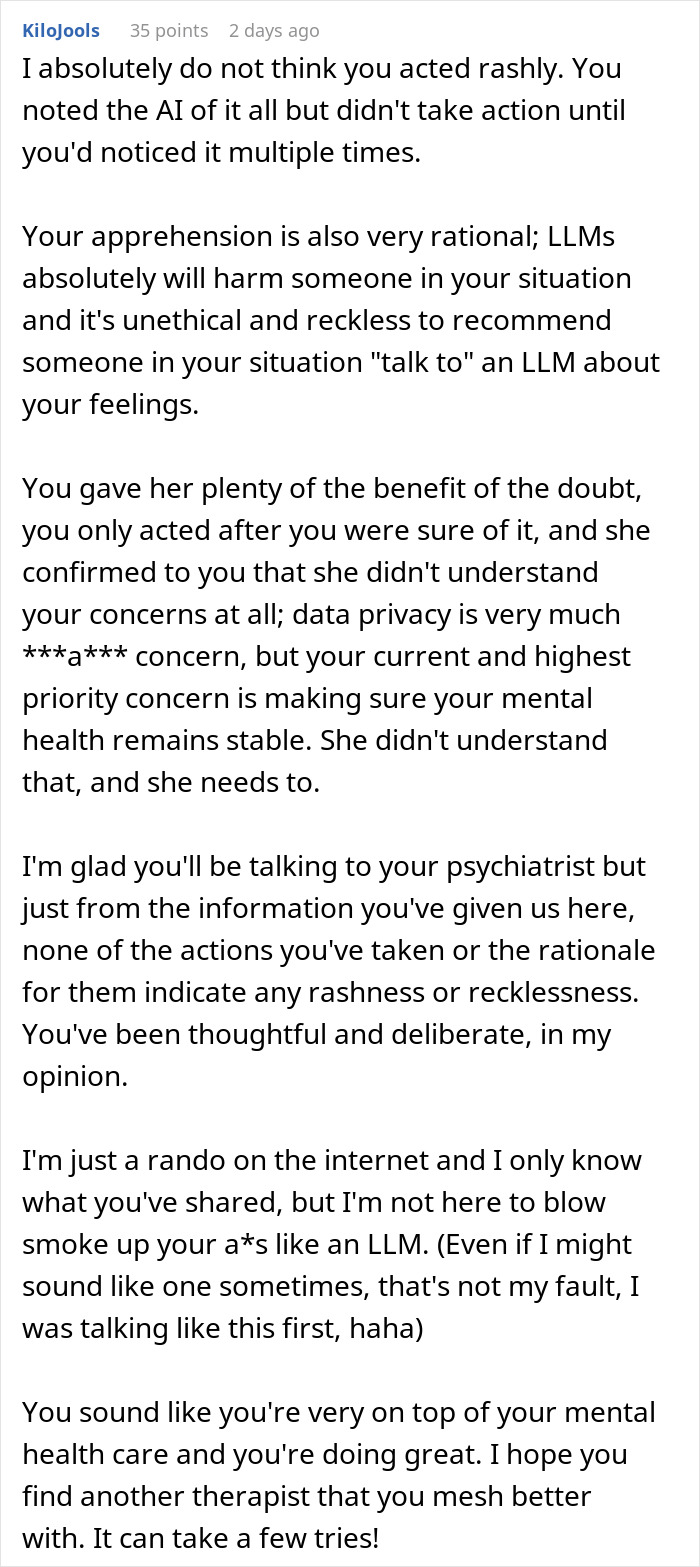
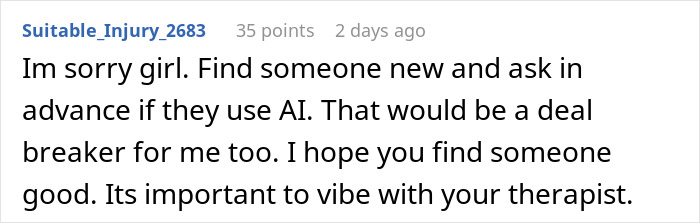
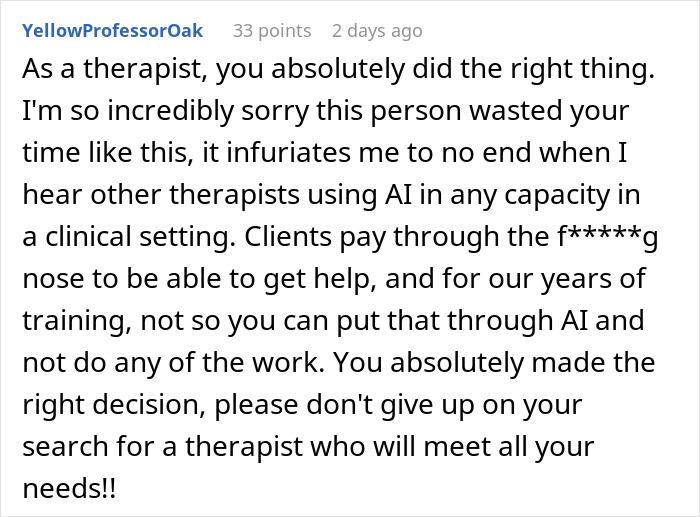
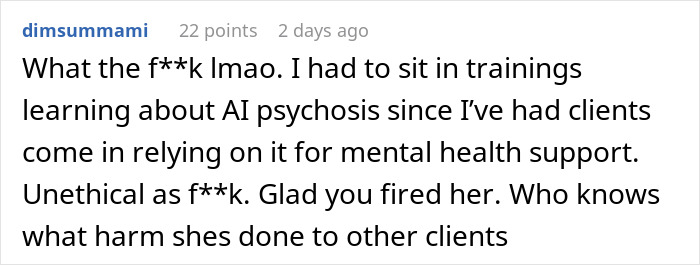
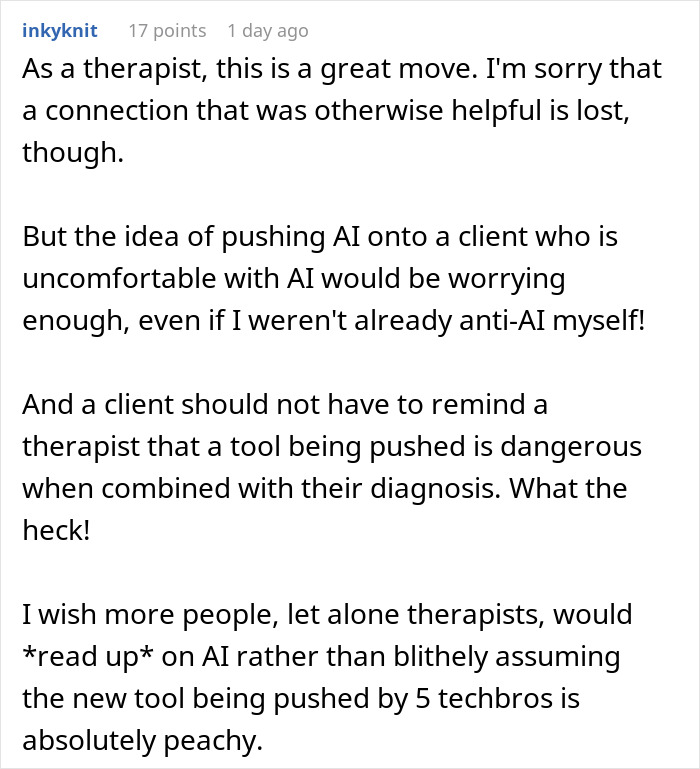
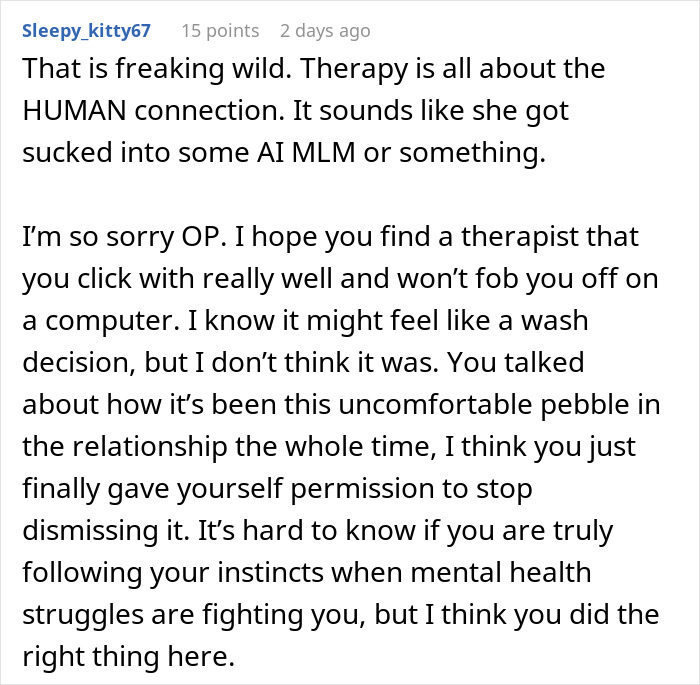
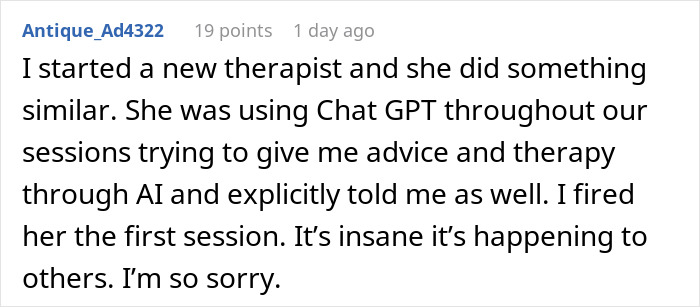
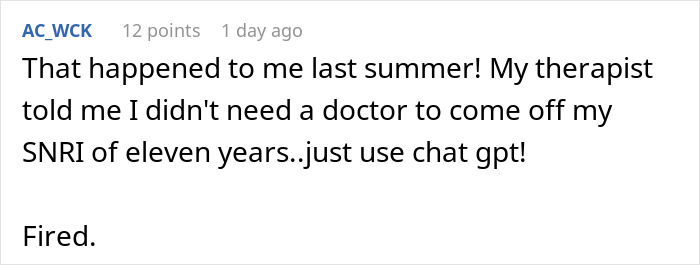
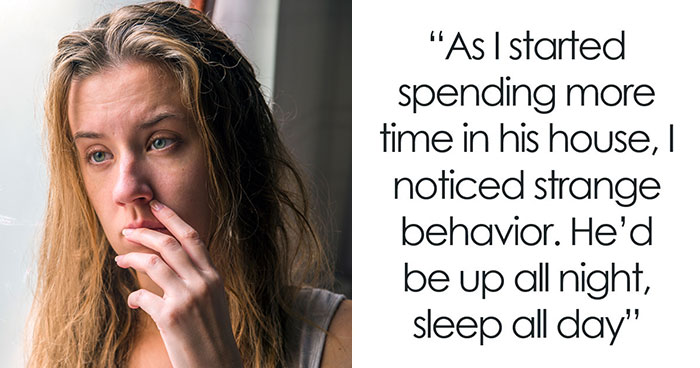
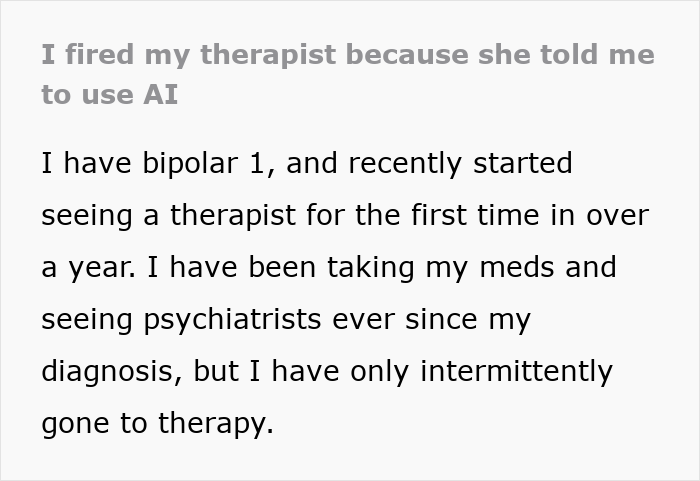
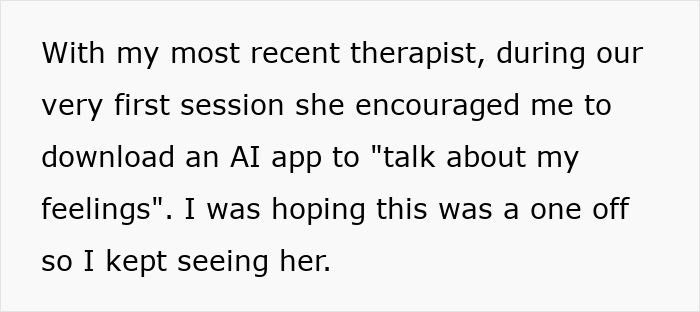
One woman shared her story on Reddit after getting fed up with her therapist’s weird recommendations. Despite having experienced a manic episode before, the therapist kept saying she should try talking about her feelings with an AI app. See how the woman handled it below.
There’s a lot of stigma around therapy, says mental health professional Chris Prange-Morgan, M.A., MSW. Many people could point to a friend or family member who has said something along the lines of “therapy is just a money-making business”, or “I don’t need to pay someone to listen to my problems.”
The misunderstanding might stem from the idea that therapy is only for those who have problems. Grouping therapy-goers under a problematic umbrella is unfair and adds to the stigma. While it certainly helps people with mental health issues, it can also be a helpful self-discovery tool for all. Some upsides include uncovering harmful preconceptions, building accountability, breaking unhealthy habits, receiving encouragement without bias, and a commitment to personal growth.
Another issue some people face comes from trying therapy that doesn’t work for them. It’s easy to assume that if something was unsuccessful, it must be ineffective. The reality is, most therapists just won’t click with everyone. Not every therapist is qualified to handle every single issue that people might face. It’s important not to write off therapy as a whole because a practice didn’t work once or twice.
Therapist F. Michler Bishop, Ph.D., provides helpful insight on picking a professional who might be able to help you. First of all, research. See whether they offer a free consultation, either by phone or in person. A good therapist with a modern approach will often ask more open-ended questions than closed ones, such as asking about your therapy goals. Check their online presence and look for any red flags. Maybe they make frequent writing errors, showing a lack of attention to detail, or claim they can “treat everything.” Scientific research shows that no therapist is good at working with every issue. Some do more harm than good, so it’s reasonable to do your due diligence before starting therapy.
Other things to consider are the therapist’s approach and personality. Do you believe their described approach can help you overcome your issues or reach your goals? There are many kinds of therapy, so finding what helps you may feel confusing at first. A good therapist will explain their preferred systems and help you make an informed decision. Do you like the therapist’s energy and sense of humor? If you intend to change and grow, you’ll likely face challenges and fail a few times. It’s important to be comfortable with how you and your therapist approach your shortcomings, and to be able to chuckle about it once in a while.
Client motivation is one of the most important factors in whether therapy works. Putting in the work to choose the right professional will help people stay motivated and committed to growth.
Clinical psychologist Marianne Brandon, Ph.D., says AI is a disruptive technology. With rapid advances, young professionals fear being replaced by technology, perhaps more than ever before. Many companies across different fields are investing heavily in AI tools, optimization, and automation. This shift has created a crisis of purpose and meaning for people who studied hard to become professionals.
Brandon says this dissatisfaction with AI will shift people’s priorities back toward human connection. The meaning and purpose people placed on personal achievements might transfer to human relationships.
One of the fields where human connection matters most is therapy. Psychotherapist James Barnes, MSc., MA, argues that therapy works best when people meet within the limits of their own understanding and perspective. People have unique fears, hopes, and past experiences they can draw on to form meaning. Barnes says these traits are what allow for healing and growth in therapy.
AI doesn’t possess these human traits. Large language models draw on massive amounts of text to recognize and reproduce statistical correlations between words and phrases. These systems generate responses based on the most probable sequence of words for any given prompt. There is no relating, no drawing on real experiences, just statistically probable outputs. AI models can convincingly imitate therapy, but they cannot provide real and effective therapeutic healing.
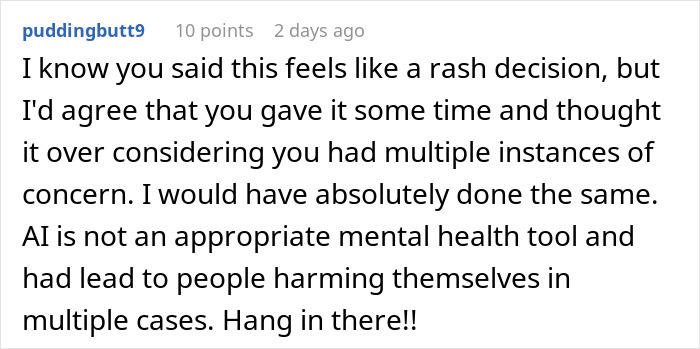
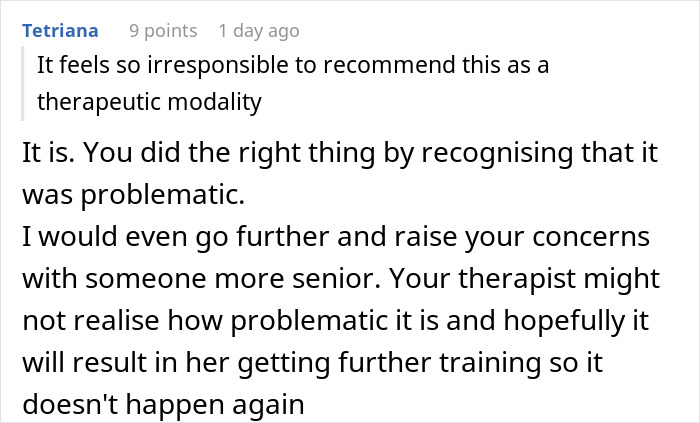
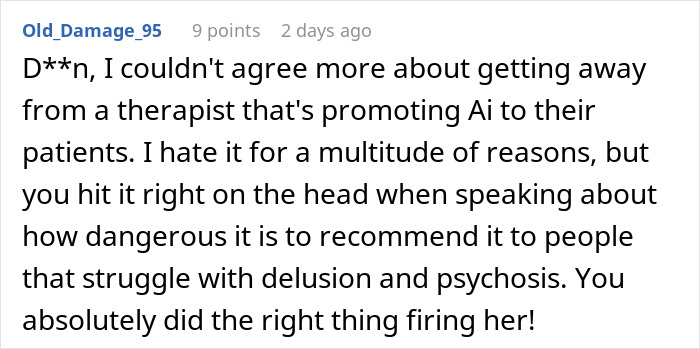
Psychiatrist Marlynn Wei, M.D., J.D., warns that misused AI chatbots can even cause further harm in troubled patients. She explains that many commercial models are programmed to prioritize user satisfaction and engagement above most other concerns. Because of this, large language models can amplify delusions and psychotic symptoms, or cause manic episodes. Where a human expert would intervene, AI apps aim to keep the user glued to the screen.
While AI chatbots can provide useful information on a variety of topics, people should seek medical and mental health help from human professionals.






By entering your email and clicking Subscribe, you're agreeing to let us send you customized marketing messages about us and our advertising partners. You are also agreeing to our Privacy Policy.
Thank you! You've successfully subscribed to newsletters!


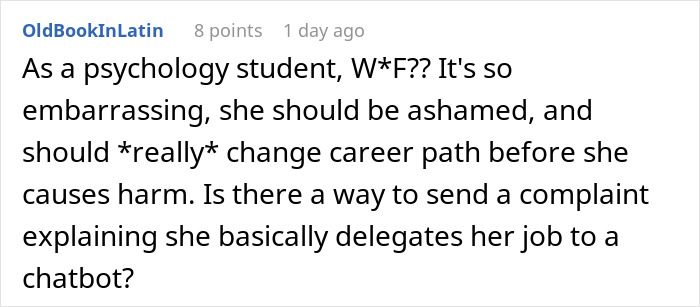
the idea of telling someone at risk of psychosis to use the affirmation machine is crazy

It's medically negligent, and she should be reported
Load More Replies...

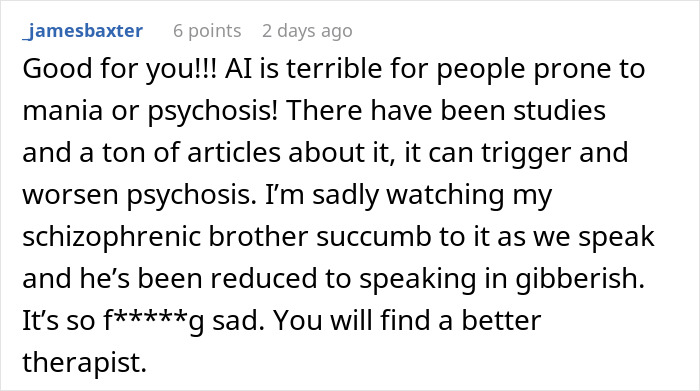
Google & Apple Maps are still leading people off cliffs & into the sea and many are blindly following the directions without an ounce of thought. They don’t realize they’re in the middle of a bay or have slid down a hillside until it’s already happened. AI chats & specifically character/personality-based AIs are doing the same exact thing, with more severe consequences. And again, users aren’t realizing the harm/damage until it’s far too late. Adolescents are ending up in therapy or worse, with criminal charges or hospitalized, because they’ve replaced nearly all social interactions with chat/bot “relationships”. It’s working its way toward epidemic proportions.
the idea of telling someone at risk of psychosis to use the affirmation machine is crazy
It's medically negligent, and she should be reported
Load More Replies... Google & Apple Maps are still leading people off cliffs & into the sea and many are blindly following the directions without an ounce of thought. They don’t realize they’re in the middle of a bay or have slid down a hillside until it’s already happened. AI chats & specifically character/personality-based AIs are doing the same exact thing, with more severe consequences. And again, users aren’t realizing the harm/damage until it’s far too late. Adolescents are ending up in therapy or worse, with criminal charges or hospitalized, because they’ve replaced nearly all social interactions with chat/bot “relationships”. It’s working its way toward epidemic proportions.






















 No fees, cancel anytime





28
8