Get Premium
Dark mode theme is available exclusively for premium users. Learn more about the benefits of subscribing.
No fees, cancel anytime.

 Dark Mode Ad-Free Browsing Unlimited Content
 Ad-Free Browsing Unlimited Content Dark Mode
Join 1.2 million Panda readers who get the best art, memes, and fun stories every week!

Parenting is hard, life is messy, and caring for a severely disabled child can completely change a household overnight. However, as many adults who grew up in these situations will tell you, being their sibling sometimes just means nobody notices when your emotional needs quietly disappear.
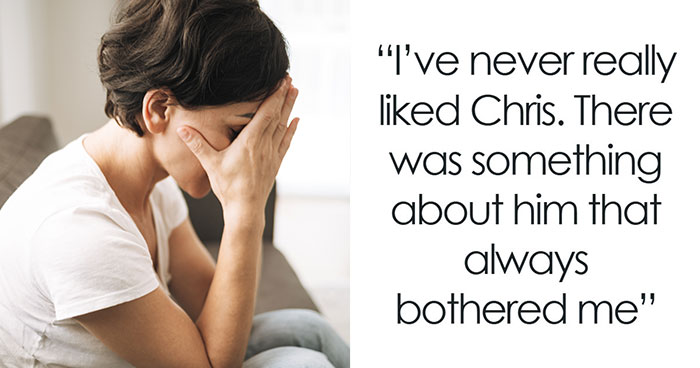
While today’s Original Poster’s (OP) parents dedicated nearly every waking moment to keeping his sister alive and cared for, he says he spent most of his childhood feeling invisible, unwanted, and emotionally abandoned. Now, after years of estrangement, his parents suddenly want a relationship again, but he’s not convinced they deserve one.
More info: Reddit
Image credits: freepik / Magnific (not the actual photo)
Image credits: yaroslav-astakhov- / Magnific (not the actual photo)
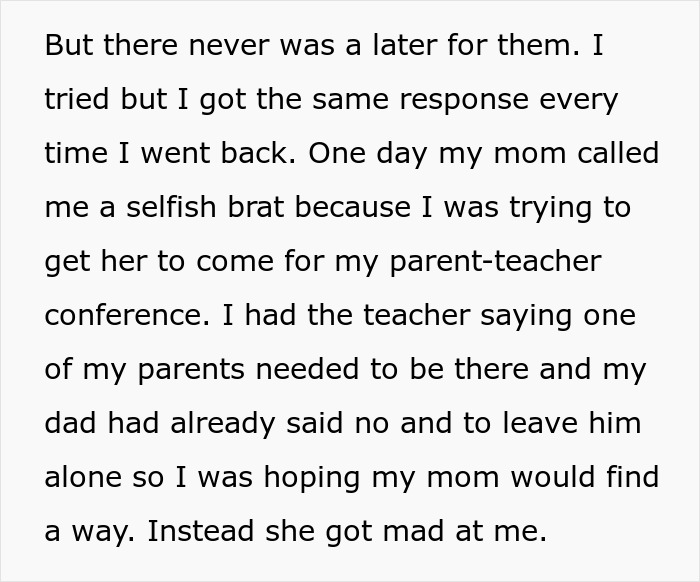

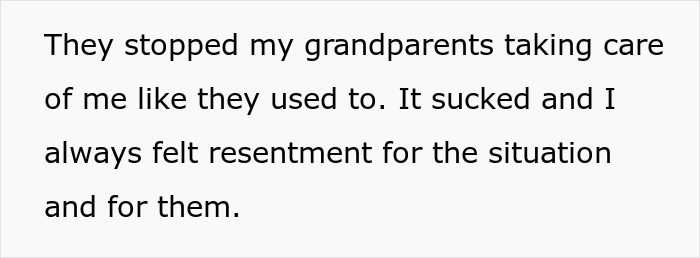
Image credits: freepik / Magnific (not the actual photo)
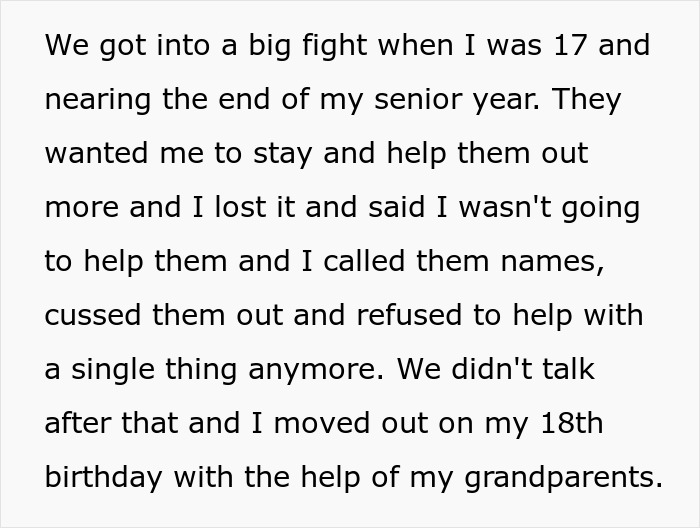
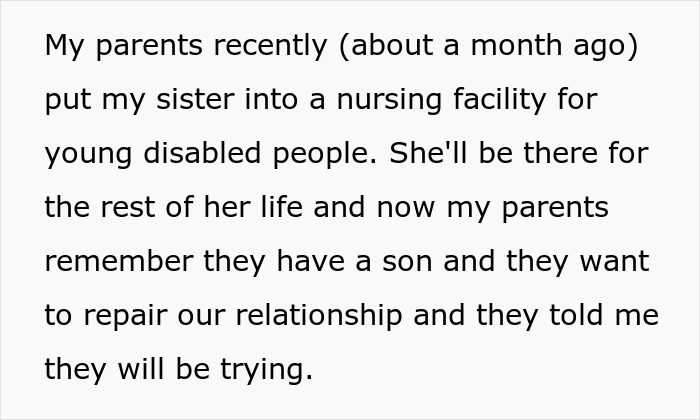
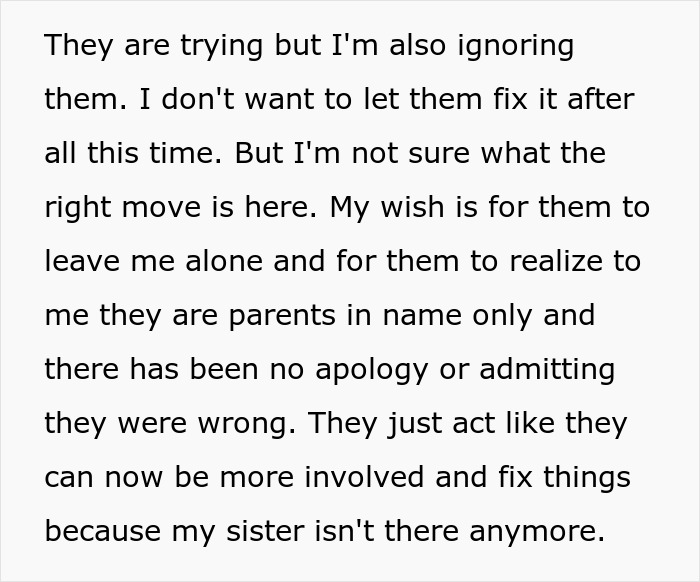
Image credits: ThrowRAStilleth
The OP explained that his older sister suffered a devastating medical episode when he was only a few weeks old, and the aftermath permanently altered her life. She lost the ability to speak, swallow, sit up independently, or care for herself in any way. From that point on, his parents dedicated every part of their lives to keeping her alive and comfortable.
His mother quit her job to become her full-time caregiver, while his father switched careers so he could spend more time helping at home. In fact, they refused respite care or outside assistance, despite being offered support multiple times. The OP, on the other hand, spent most of his childhood with his grandparents, only returning home to sleep. And even then, he rarely felt seen or acknowledged by his parents.
He recalled repeatedly trying to talk to his parents about personal problems, but they were never there. When he was preparing to finish high school, his parents expected him to become even more involved in caregiving responsibilities, but he admitted to yelling at them, and refused to help any longer. After that fight, he moved out on his 18th birthday and built a life separate from them.
Years later, his parents placed his sister into a long-term nursing facility for young disabled adults. They then reached out to reconnect with him so they could repair the relationship and become involved in his life again. The problem, however, is that he no longer desires a relationship with them, especially because he feels as though they simply expect things to move forward now that they suddenly have more time available.
Image credits: Stockbusters / Magnific (not the actual photo)
Psychology Today describes what happened in this story as the “glass child” phenomenon. This describes siblings who grow up alongside a brother or sister with severe disabilities or chronic illness, where most family attention and resources are directed toward the high-needs child. As a result, the sibling can become emotionally invisible.
This dynamic is often intensified in situations requiring long-term care. According to Caregiver Action, sustained intensive caregiving without regular respite can place extreme strain on caregivers and reshape the entire family system. This pressure can result in caregiver burnout, emotional depletion, and reduced coping capacity.
When these patterns persist over years, attempts to reconnect later can be complicated. According to Masters Counselling, reconciliation after emotional harm is significantly harder when there is no acknowledgment of what happened. From a relational psychology perspective, repair typically requires recognition of the harm, validation of the other person’s lived experience, and a sincere apology.
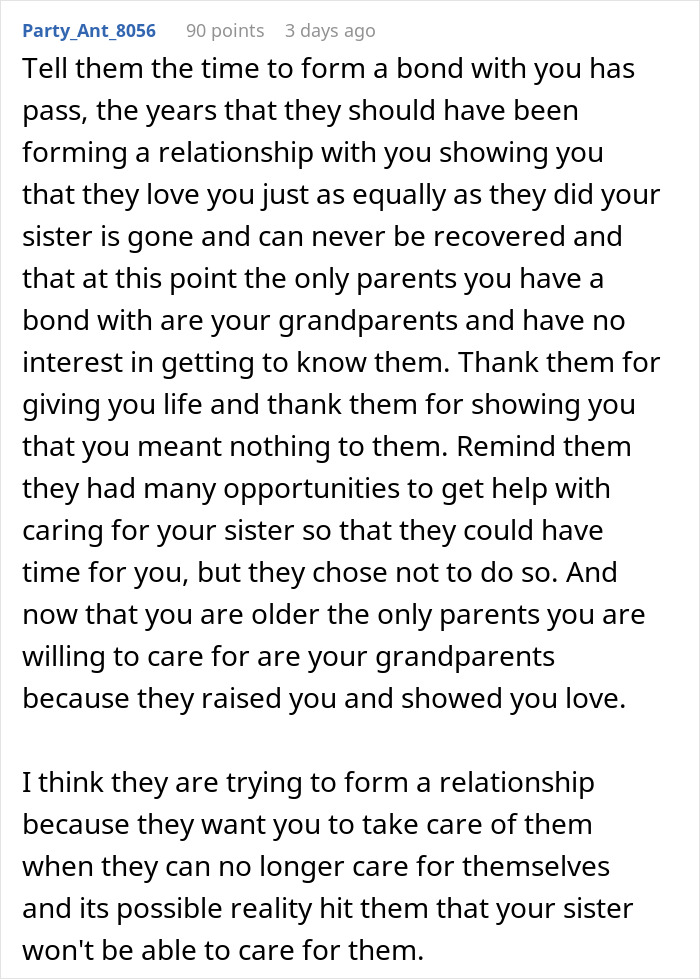
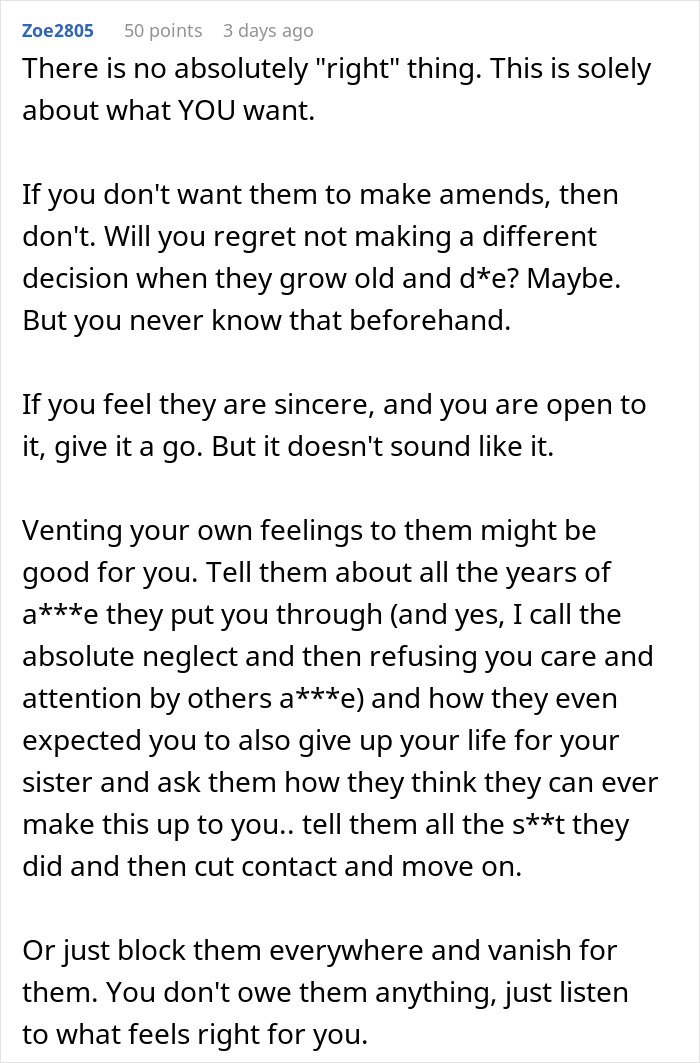
Netizens encouraged the OP to keep his distance, with many emphasizing that the parents had years of opportunity to build a relationship and failed to do so. Others also feel that the parents are now seeking reconnection only after circumstances have changed. If you were in the OP’s position, would you accept their attempt to reconnect or walk away for good? We would love to know your thoughts!








By entering your email and clicking Subscribe, you're agreeing to let us send you customized marketing messages about us and our advertising partners. You are also agreeing to our Privacy Policy.
Thank you! You've successfully subscribed to newsletters!

Every time I read one of these, it hurts my heart to see how the kids with disabled siblings are treated. First, they're ignored while they're growing up. Then the parents try to force them to become the 3rd caregiver when they get old enough. Sometimes, you have to choose your family cuz your family of origin is worthless.

My grandmother started showing signs of ALS when I was around 11, and by the time I was 12, she was living with us. It's kind of an expected cultural thing (I'm adopted, but family is Mexican) but it was rough since I was expected to do a full share of caring for my grandmother. I loved her, but changing her diapers and scrubbing her "leaks" off the carpet is not something I should have been doing at 12. Then when I was 18, my dad's accident happened. (At least I was an "adult" then, I guess?) Again, I loved my dad dearly, but he was completely disabled and we took care of him at home for 21 years. I never moved out, graduated college, had friends, went on vacation, got married etc. in my young adulthood. It's something that absolutely does have lifelong repercussions for the child who has to become a caregiver in any capacity (and because that child is almost always neglected to SOME degree in favor of the disabled person.) My chosen family is my pets now XD
Load More Replies...
Ignore them. Block them. Don't even tell them why. If they are too clueless to understand, that's on them.

I agree but I would send the letter outlining the a***e, lack of care and love, taking him away from the only loving family he had to serve as their house s!ave, complete disregard of his education and future. Then I'd block them, completely and totally.
Load More Replies...
I'd just tell them they have no place in my life and I have no interest in any further contact. I wouldn't bother with explanations, because they know what they did, I'd just shut it down after informing them I'm not interested in any form of relationship with them and then never respond to any further overtures.
Every time I read one of these, it hurts my heart to see how the kids with disabled siblings are treated. First, they're ignored while they're growing up. Then the parents try to force them to become the 3rd caregiver when they get old enough. Sometimes, you have to choose your family cuz your family of origin is worthless.
My grandmother started showing signs of ALS when I was around 11, and by the time I was 12, she was living with us. It's kind of an expected cultural thing (I'm adopted, but family is Mexican) but it was rough since I was expected to do a full share of caring for my grandmother. I loved her, but changing her diapers and scrubbing her "leaks" off the carpet is not something I should have been doing at 12. Then when I was 18, my dad's accident happened. (At least I was an "adult" then, I guess?) Again, I loved my dad dearly, but he was completely disabled and we took care of him at home for 21 years. I never moved out, graduated college, had friends, went on vacation, got married etc. in my young adulthood. It's something that absolutely does have lifelong repercussions for the child who has to become a caregiver in any capacity (and because that child is almost always neglected to SOME degree in favor of the disabled person.) My chosen family is my pets now XD
Load More Replies... Ignore them. Block them. Don't even tell them why. If they are too clueless to understand, that's on them.
I agree but I would send the letter outlining the a***e, lack of care and love, taking him away from the only loving family he had to serve as their house s!ave, complete disregard of his education and future. Then I'd block them, completely and totally.
Load More Replies... I'd just tell them they have no place in my life and I have no interest in any further contact. I wouldn't bother with explanations, because they know what they did, I'd just shut it down after informing them I'm not interested in any form of relationship with them and then never respond to any further overtures.

















 No fees, cancel anytime











40
15