Get Premium
Dark mode theme is available exclusively for premium users. Learn more about the benefits of subscribing.
No fees, cancel anytime.

 Dark Mode Ad-Free Browsing Unlimited Content
 Ad-Free Browsing Unlimited Content Dark Mode
Join 1.2 million Panda readers who get the best art, memes, and fun stories every week!
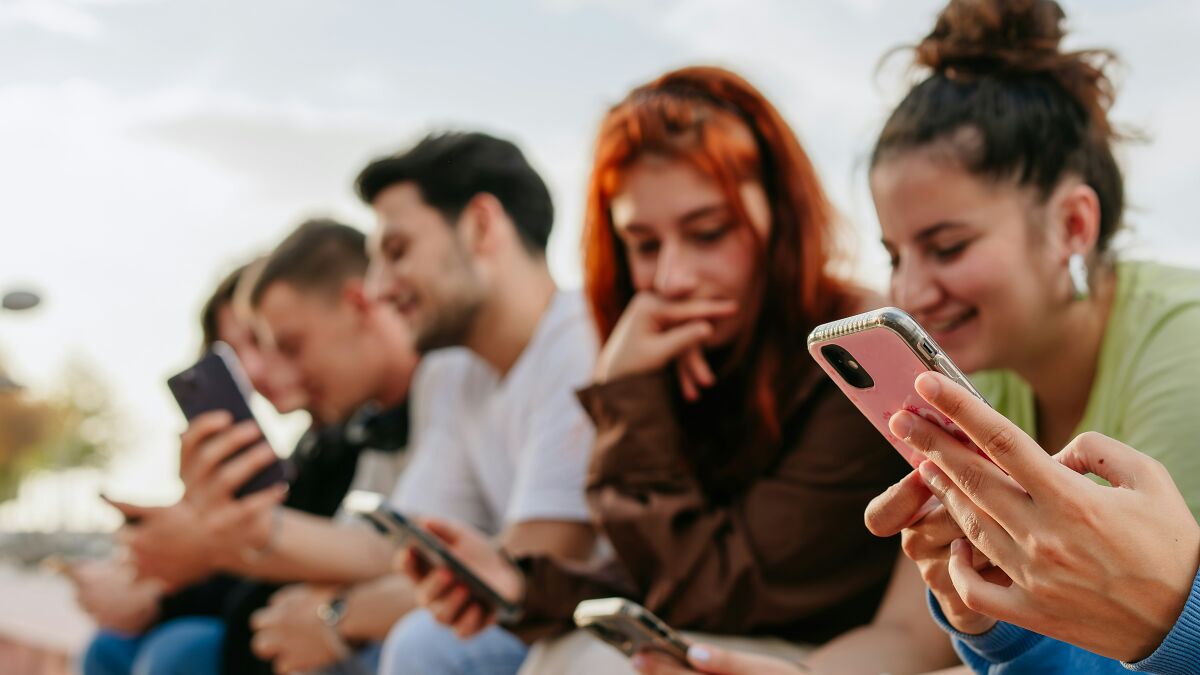
Generation Z, also known as the Zoomers, were dealt a rough hand. Born between 1997 and 2012, they’re now between the ages of 13 and 28, and are statistically one of the loneliest and most unhappy cohorts in recent history.
That’s no surprise, considering how lightning-fast the world changed during their formative years: the total domination of the internet, skyrocketing housing costs, careers that become obsolete before they’re even finished, the COVID-19 pandemic, and now the rise of AI.
It’s no wonder older generations can’t understand them, when Gen Z hasn’t even had the chance to understand themselves.
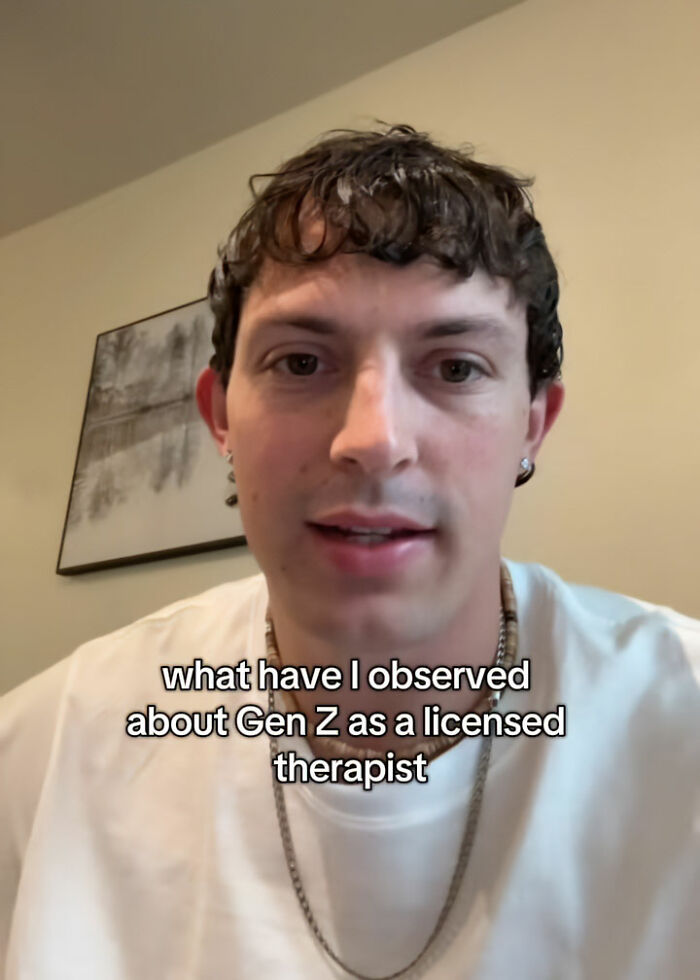
Now, a Texas-based therapist named Austin Calo has come out with an answer, breaking down what he’s seeing in his Gen Z clients and, more importantly, why it should concern us all.
Image credits: TikTok/austincalo
Gen Z has gone beyond simply being depressed, as Calo explained, they are apathetic. Simultaneously aware of what’s going on in the world with more information than any generation before them, but unable to do anything about it.
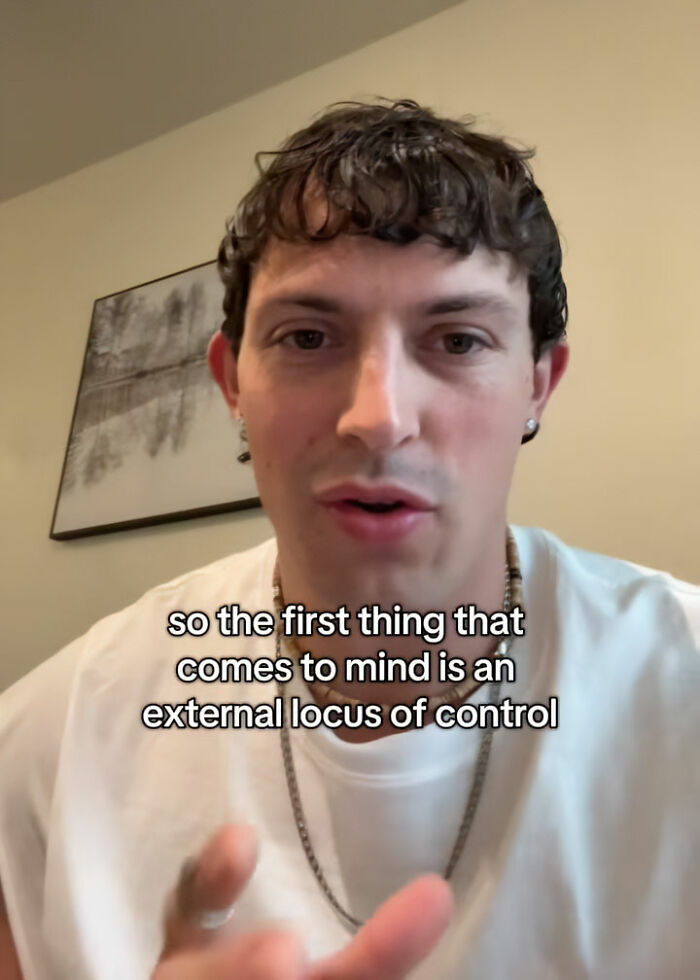
For Calo, this phenomenon is called an “external locus of control.”
“Something is happening to you rather than you impacting it,” he explained. The collective trauma of the COVID-19 pandemic only reinforced this mindset.
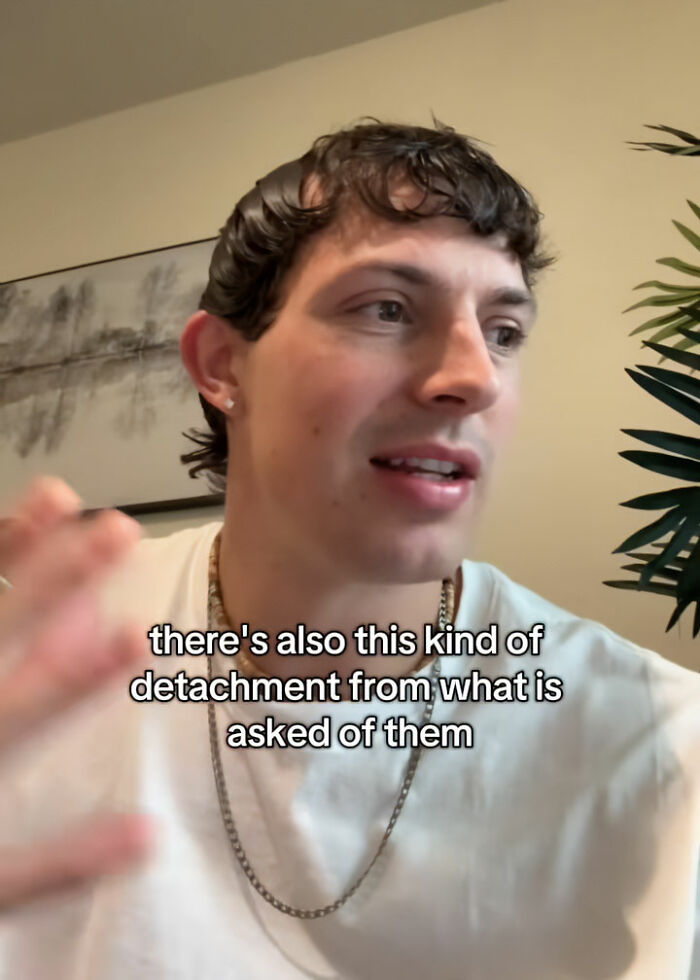
“It would make you feel totally powerless. So naturally, you would detach from the result and view yourself as relatively useless. Which has this nihilistic point of view.”
Image credits: Unsplash/Getty Images
For many Zoomers, their formative years were spent under lockdown, robbed of normal rites of passage which were instead replaced by internet culture, each of them finding refuge in groups that can’t truly operate in real life.
Jokes you can’t share, friends you’ve never seen, and a preoccupation with matters that have little relevance outside the internet.
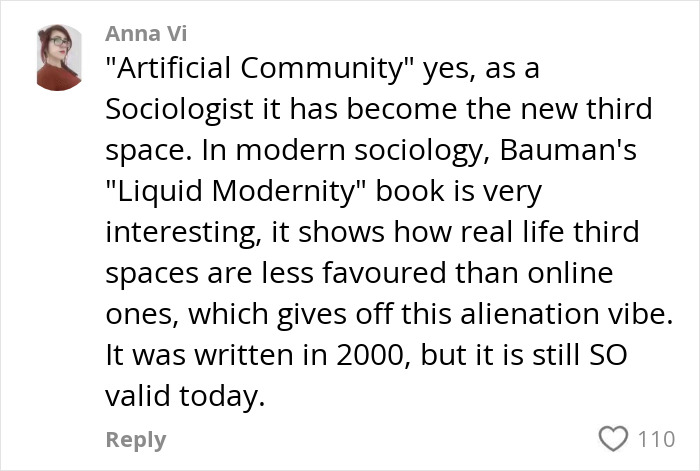
“This can shatter a sense of community,” Calo said. “Which I’ve found is compensated by trying to create this artificial community.”
Image credits: TikTok/austincalo
Instead of sharing hobbies, interests, and passions, Zoomers have instead started identifying by their self-diagnosed mental illnesses, finding belonging in that.
Calo explained how, more than any generation before, Gen Z feels the need to label themselves as soon as possible, be it in terms of identity, politics, or mental health.
Image credits: Unsplash/Waldemar Brandt
For Calo, one of the most ironic aspects of the generation is their high levels of media literacy, combined with relentless manipulation by internet algorithms.
“They know they’re being sold something all the time. But that doesn’t mean the impact of marketing is less… they’re still being worn down by it,” he said.
Image credits: Unsplash/Marcos Paulo Prado
With the way social media advertising works, each platform is designed to maximize retention, which means users get bombarded with a relentless combination of marketing and an echo chamber of content.
This, according to the therapist, has left the generation perpetually exhausted.
Image credits: Unsplash/Yunus Tuğ
Calo made it clear that this isn’t common youthful angst.
“I don’t agree that this is just how young people are,” Calo said. “I see this generation as particularly nihilistic, absurdist, snake-bitten, and cynical. It is not the same.”
He then compared it with how Millennials approached the world. In his opinion, Millennials were overtly optimistic about the future, they wanted to change it for the better. Zoomers, on the other hand, are already disillusioned.
“My fantasy was to right the ship. I think Gen Z’s fantasy is to sink it.”
Image credits: TikTok/austincalo
For the therapist, the root cause is not internal, it’s structural.
“There is very little for this generation to look forward to, which robs them of what is synonymous with being young,” he said.
Image credits: Unsplash/Tim Gouw
Whether it is owning a house or affording education, Gen Z has seen traditional milestones delayed or outright denied.
The cost of essentials has risen, while at the same time frivolous luxuries have become more affordable.
Image credits: Unsplash/Victoria Romulo
Still, despite his stern analysis, Calo believes Zoomers are incredibly resilient, but fail to recognize their own strength.
“It’s like they’re powerlifters at the gym who fail to squat 650 pounds after squatting 500… I reckon they are strong regardless. But they only feel the bitterness of failure.”
@austincalo Empathizing with gen z #genz#mentalhealth#therapy♬ original sound – austincalo
For him, the first step is to reclaim their inner dialogue, and free it from the constant manipulation of the internet and their own defeatist attitude.
“Nobody wants a boss who minimizes every accomplishment or helicopters their every move. Yet, we conduct ourselves this way as the management in our own minds.”
Finally, he called for older generations to be more understanding.
“Yes, previous generations have had it hard. No one is denying that. But this generation is exposed to a catastrophic mix of ego-shattering challenges.”

By entering your email and clicking Subscribe, you're agreeing to let us send you customized marketing messages about us and our advertising partners. You are also agreeing to our Privacy Policy.
Thank you! You've successfully subscribed to newsletters!


It seems like everyone always has something negative to say about the next generation instead of empathizing with them. We've all been young, vulnerable and trying to find our way. They used to call my generation (Gen X) the slacker generation. Kinda ironic when you think about it know seeing as how a lot of us raised ourselves and our siblings.

I feel absolutely awful for all the younger generations. Everything is so bleak :(
Load More Replies...
My grandfather walked 5 miles to school, in the snow, barefoot. then went every day to get water from the well, barefoot. then at 17 joined the war, fought for 5 years. lost most his family, his only brother, during the war he got married twice, had 2 children. so, IDK about struggles for Gen Z or gen Y or my gen, whichever letter it is. people need some proportions to understand things, not look at them in a vacuum.

I would be horrified to find out my therapist was taking my sessions and turning them into low quality tiktok content. I can’t believe 2 million people watched this garbage.

He made generalizations about a cohort/group of people. He didn't call anyone out by name or give specific details that were so definitive that you could identify a specific person by them. Generalizations about groups have been made for centuries, not just in this guy's TikTok. "People who were abúsed as children often have substance abúse issues" is the same type of generalization. It's not identifying individuals ("my therapist was taking my sessions") at all. Plus, while I personally hate TikTok myself, you and I aren't this guy's target audience for his content. Younger people who DO use TikTok are his target audience. It doesn't matter if WE think it's "low quality" if it helps unhappy, confused younger people/GenZ understand why they feel so disaffected.
Load More Replies... It seems like everyone always has something negative to say about the next generation instead of empathizing with them. We've all been young, vulnerable and trying to find our way. They used to call my generation (Gen X) the slacker generation. Kinda ironic when you think about it know seeing as how a lot of us raised ourselves and our siblings.
I feel absolutely awful for all the younger generations. Everything is so bleak :(
Load More Replies... My grandfather walked 5 miles to school, in the snow, barefoot. then went every day to get water from the well, barefoot. then at 17 joined the war, fought for 5 years. lost most his family, his only brother, during the war he got married twice, had 2 children. so, IDK about struggles for Gen Z or gen Y or my gen, whichever letter it is. people need some proportions to understand things, not look at them in a vacuum.
I would be horrified to find out my therapist was taking my sessions and turning them into low quality tiktok content. I can’t believe 2 million people watched this garbage.
He made generalizations about a cohort/group of people. He didn't call anyone out by name or give specific details that were so definitive that you could identify a specific person by them. Generalizations about groups have been made for centuries, not just in this guy's TikTok. "People who were abúsed as children often have substance abúse issues" is the same type of generalization. It's not identifying individuals ("my therapist was taking my sessions") at all. Plus, while I personally hate TikTok myself, you and I aren't this guy's target audience for his content. Younger people who DO use TikTok are his target audience. It doesn't matter if WE think it's "low quality" if it helps unhappy, confused younger people/GenZ understand why they feel so disaffected.
Load More Replies...





 No fees, cancel anytime




22
21