Get Premium
Dark mode theme is available exclusively for premium users. Learn more about the benefits of subscribing.
No fees, cancel anytime.

 Dark Mode Ad-Free Browsing Unlimited Content
 Ad-Free Browsing Unlimited Content Dark Mode
Join 1.2 million Panda readers who get the best art, memes, and fun stories every week!

Every family has its own set of rules and expectations, especially regarding elders in the house. In some Asian households, you’re expected to wait for the eldest to begin eating before you do. In others, there may be unspoken guidelines about how to behave at the dinner table. While it’s understandable to follow these customs out of respect, sometimes it’s necessary to prioritize your own needs.
A woman recently shared her decision to eat before her mother-in-law finished her prayer, igniting outrage and judgment from her family. Although her hunger prompted this bold choice, it sparked a heated debate about respect and family dynamics. Keep reading to discover how this seemingly simple decision escalated into a full-blown family drama.
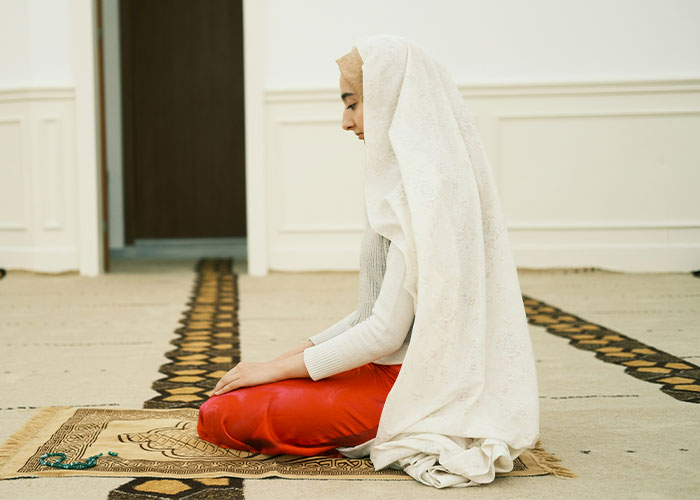
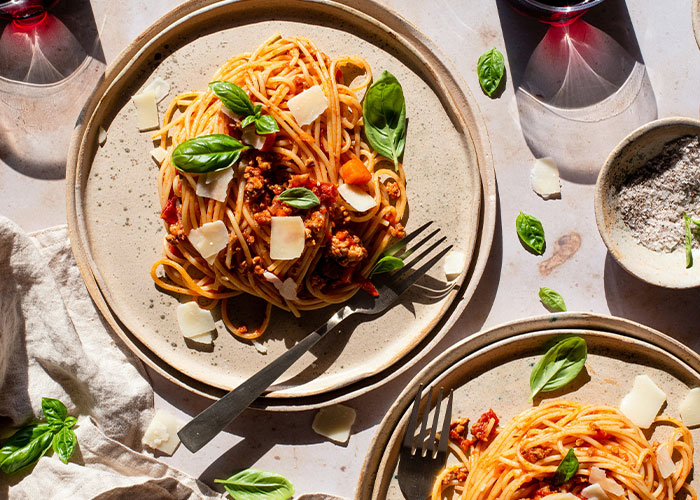
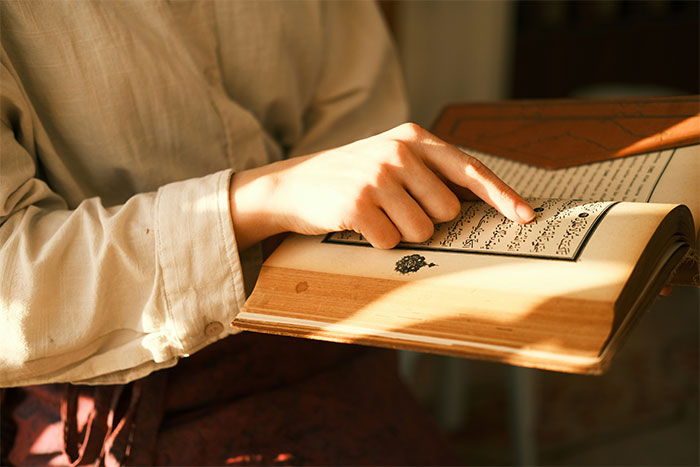
Image credits: Nina Zeynep Güler (not the actual photo)
Image credits: Anna Jakutajc-Wojtalik (not the actual photo)
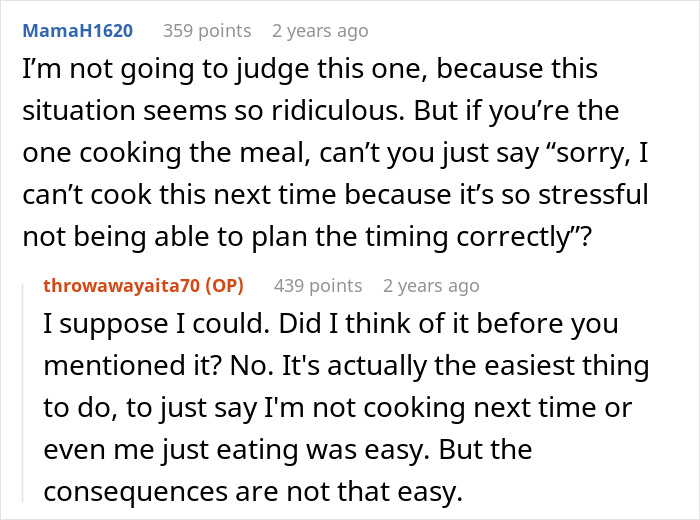
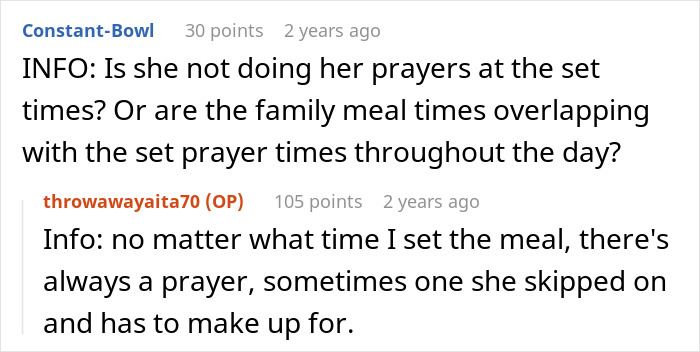
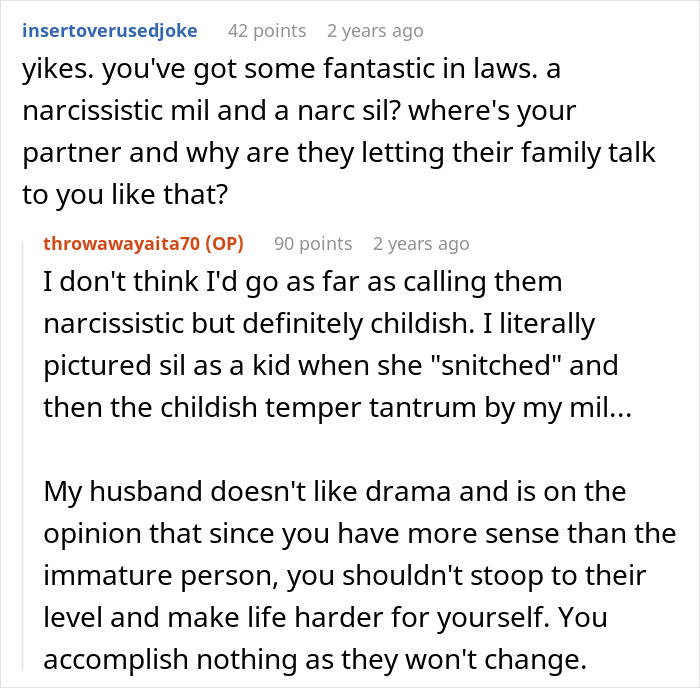
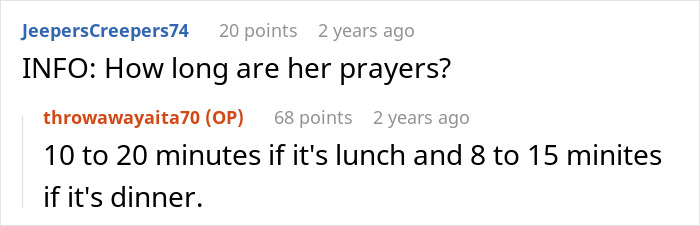
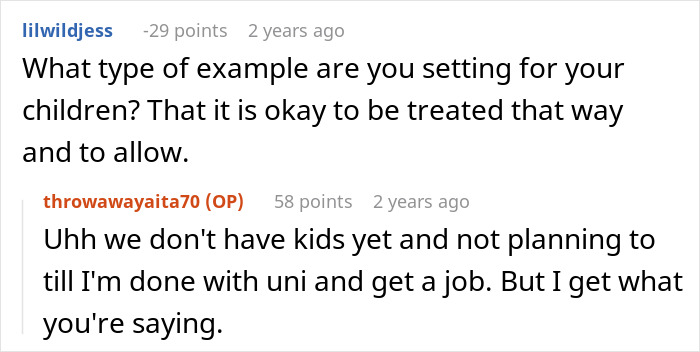
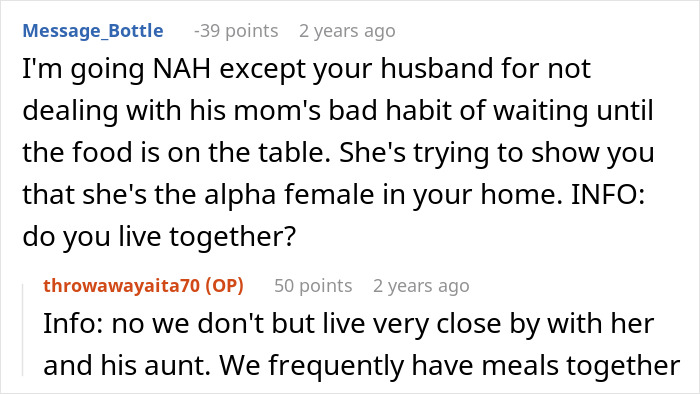
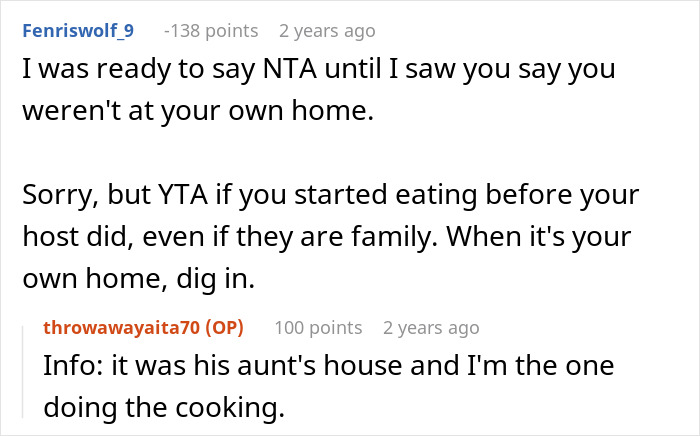
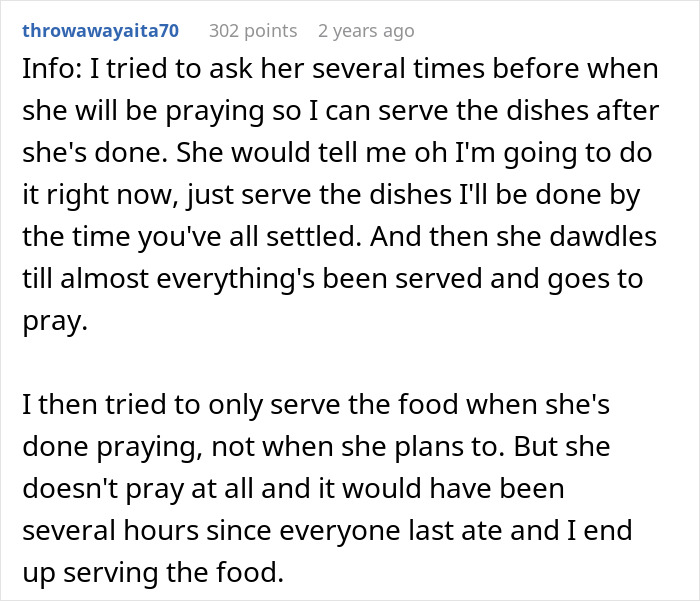
Image credits: throwawayaita70
Image credits: Nina Zeynep Güler / Unsplash (not the actual photo)
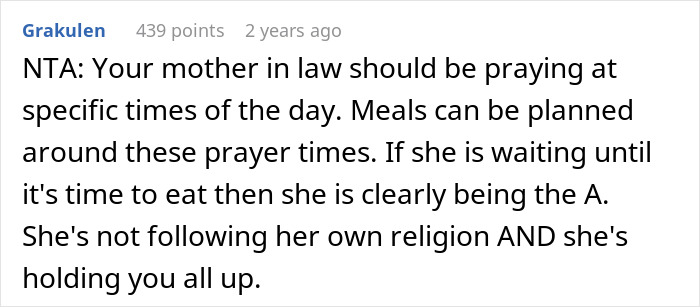
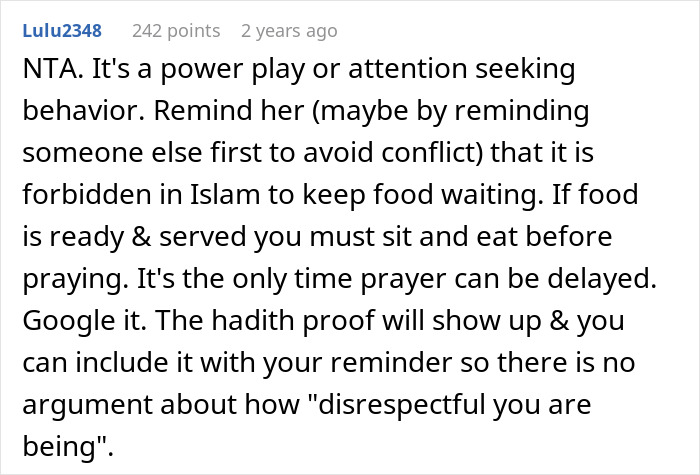
To gain a deeper understanding of the prayer system in Islam, we spoke with an Imam from India. He explained, “A Muslim is obligated to perform five daily prayers, known as Salah, at specific times throughout the day.”
He further mentioned, “While these prayers are important, they are not directly tied to meal times. Instead, they serve as essential moments of spiritual reflection and connection to God, helping to structure the day around faith.” The Imam emphasized that, regardless of mealtimes, these prayers are a vital part of their daily routine, fostering discipline and a sense of community.
In this particular situation, the family chose to wait for the author’s mother-in-law to finish her prayer before they began their meal, honoring the tradition of respect for elders. However, this practice varies greatly around the world, with unique dining etiquettes shaping how families share their meals.
Image credits: Nguyễn Khanh / Pexels (not the actual photo)
For example, in Japan, it’s customary to place your hands together in a prayer-like gesture, bow your head slightly, and say “itadakimasu” before eating. This phrase, which translates to “I humbly receive,” is not just a formality; it embodies a deep sense of gratitude and respect for the food, the effort that went into preparing it, and the natural world that provides it.
In France, dining is more than just a meal; it’s an experience that emphasizes connection and appreciation. French food expert Laura Calder explains, “When you’re dining with people, you’re expected to engage in conversation, appreciate your food and the ambiance, and be present where you are.” She adds, “So keep that mobile phone tucked away.”
While chopsticks are a staple in Chinese dining, there are important etiquette rules to follow. You shouldn’t use chopsticks that have touched your mouth to take any food from a shared plate. It is considered unhygienic. Instead, you should use the utensils specifically provided for this purpose. If these aren’t available, it’s best to look for a clean pair of chopsticks to transfer food from the shared plate to your own.
In many Indian households, it is customary to eat using only your right hand. Using the left hand is typically frowned upon and considered unclean. This practice reflects cultural beliefs about hygiene and respect during meals. Additionally, sharing food from your plate is a cherished tradition, symbolizing friendship and hospitality.
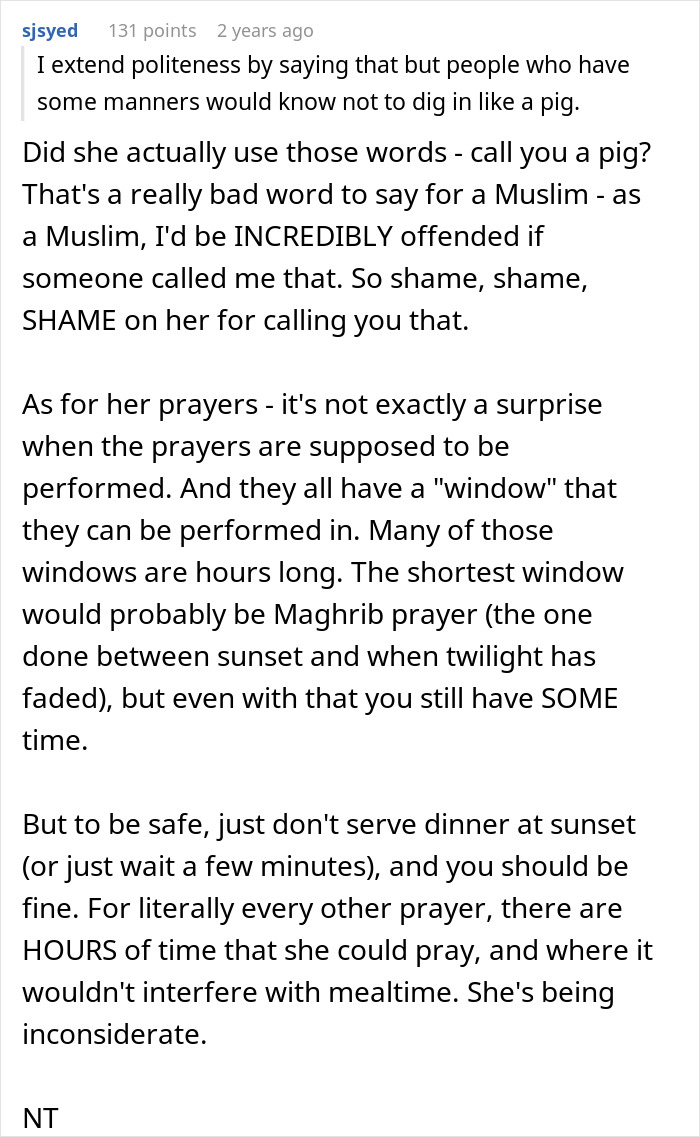
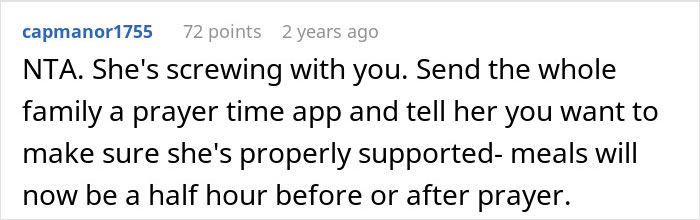
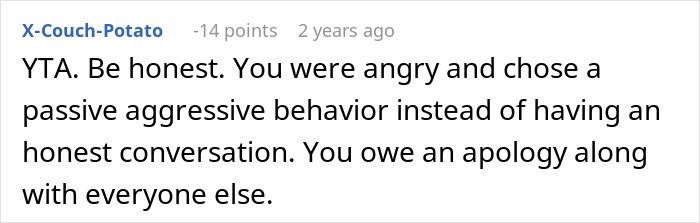
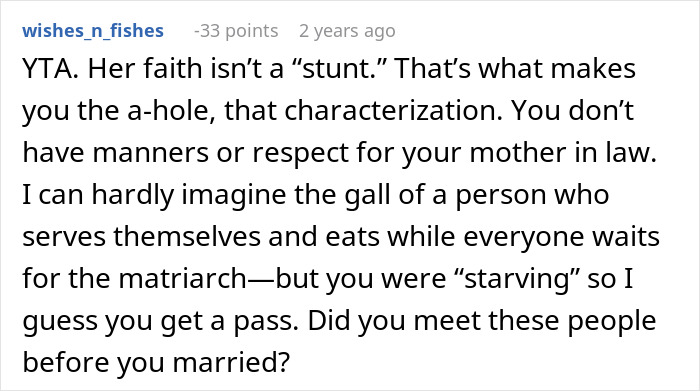
While some of these etiquettes are deeply rooted in cultural traditions, there are certain unwritten meal rules that sometimes don’t seem fair or reasonable. In this case, do you think the daughter-in-law acted appropriately? Was the author’s mother-in-law’s behavior justified?

By entering your email and clicking Subscribe, you're agreeing to let us send you customized marketing messages about us and our advertising partners. You are also agreeing to our Privacy Policy.
Thank you! You've successfully subscribed to newsletters!
56Kviews
Share on Facebook
This is too silly. First, the MIL has said previously to go ahead and eat without her. Second, my Muslim friends say their prayers at certain set times throughout the day, so why does the MIL make the meal to coincide with prayer times ? It's nonsense.

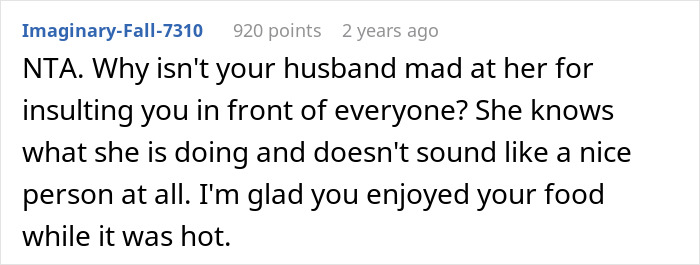
She’s just being controlling and knows exactly what she’s doing.
Load More Replies...
I’m an atheist, honestly your prayers mean absolutely nothing to me, I won’t be held hostage to anything your religion puts upon you. Here’s the kicker, you mean something to me, you should be present when food is served, you are part of the group who are eating together, my manners demand that we wait for everyone to be seated before anyone eats. If you have a prayer to say that’s fine but I expect that you extend the same consideration to me as I do to you. Be on tine, to be anything otherwise is selfish and inconsiderate. You’ll only do it once and after that I’ll be as rude to you as you are to the family being seated for a meal.
My (also adult) brother and I started eating when someone is saying grace at a family dinner. It’s not in an obnoxious way, but after years of just sitting there looking at everyone with their heads bowed, I’m going to eat. I’m an atheist and he’s either an atheist or agnostic (btw I don’t like how those two things are always grouped together because they are incredibly different). Extended family is Catholic.
Load More Replies...
I've said it before, and I'll say it again, religious abuse is real. This womanizing is weaponizing her religion to get all of the attention and be in control. If it was really about the prayers, she would have done them around meal time or indicated what time it should be served to make time for prayers. She's intentionally making them wait for her for, I guess some point of hers. It's childish, and no one should put up with it.
This is too silly. First, the MIL has said previously to go ahead and eat without her. Second, my Muslim friends say their prayers at certain set times throughout the day, so why does the MIL make the meal to coincide with prayer times ? It's nonsense.
She’s just being controlling and knows exactly what she’s doing.
Load More Replies... I’m an atheist, honestly your prayers mean absolutely nothing to me, I won’t be held hostage to anything your religion puts upon you. Here’s the kicker, you mean something to me, you should be present when food is served, you are part of the group who are eating together, my manners demand that we wait for everyone to be seated before anyone eats. If you have a prayer to say that’s fine but I expect that you extend the same consideration to me as I do to you. Be on tine, to be anything otherwise is selfish and inconsiderate. You’ll only do it once and after that I’ll be as rude to you as you are to the family being seated for a meal.
My (also adult) brother and I started eating when someone is saying grace at a family dinner. It’s not in an obnoxious way, but after years of just sitting there looking at everyone with their heads bowed, I’m going to eat. I’m an atheist and he’s either an atheist or agnostic (btw I don’t like how those two things are always grouped together because they are incredibly different). Extended family is Catholic.
Load More Replies... I've said it before, and I'll say it again, religious abuse is real. This womanizing is weaponizing her religion to get all of the attention and be in control. If it was really about the prayers, she would have done them around meal time or indicated what time it should be served to make time for prayers. She's intentionally making them wait for her for, I guess some point of hers. It's childish, and no one should put up with it.


























 No fees, cancel anytime









25
38