Get Premium
Dark mode theme is available exclusively for premium users. Learn more about the benefits of subscribing.
No fees, cancel anytime.

 Dark Mode Ad-Free Browsing Unlimited Content
 Ad-Free Browsing Unlimited Content Dark Mode
Join 1.2 million Panda readers who get the best art, memes, and fun stories every week!
Some in-law relationships start off great, only to unravel the moment someone enters a challenging period in their life. Suddenly, boundaries that seemed natural are tested, and even small disagreements can turn into full-blown confrontations.
Reddit user DearPomegranate1200 shared on r/JUSTNOMIL, a community for venting about your mother-in-law, how her husband’s mom changed after the birth of their child.
She described repeated arguments and the emotional toll of dealing with a relative who refuses to respect her role as a parent—all building up to a dramatic standoff over the phone.
Image credits: Natalia Blauth / Unsplash (not the actual photo)
Image credits: SkelDry / freepik (not the actual photo)
Image credits: SkelDry / freepik (not the actual photo)
Image credits: Wavebreak Media / freepik (not the actual photo)
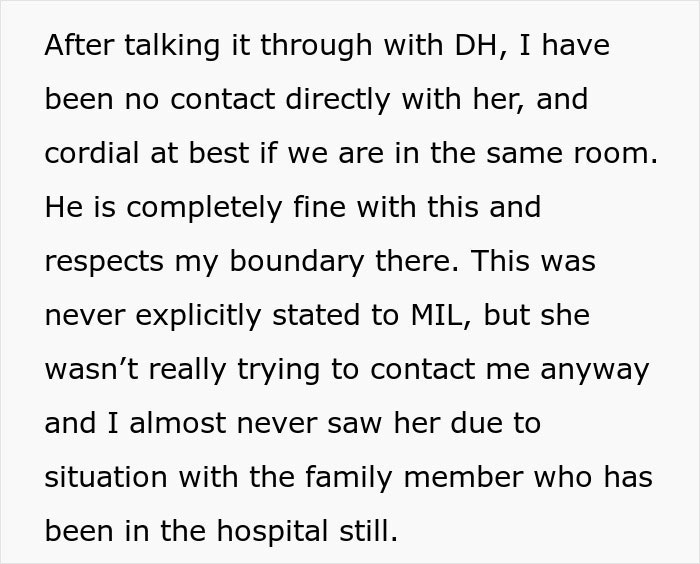
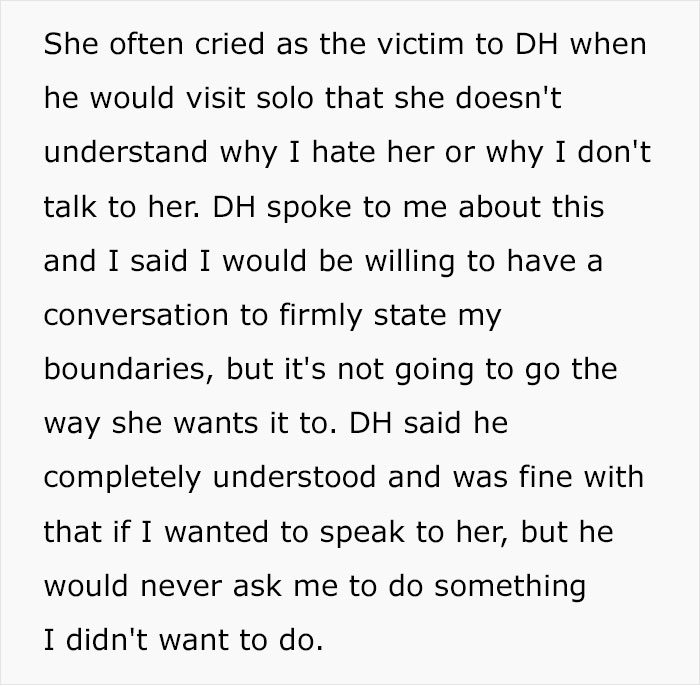
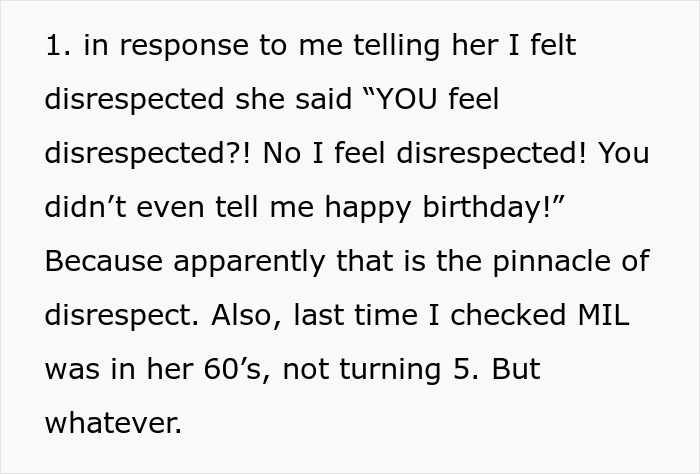
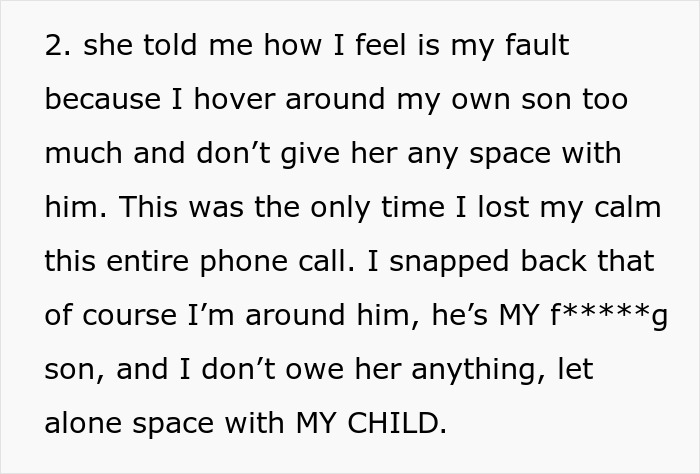
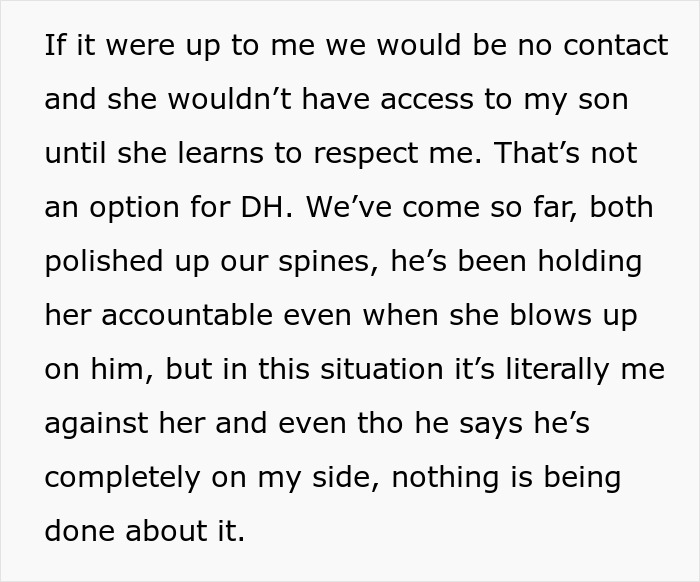
Image credits: DearPomegranate1200
Image credits: prostock-studio / freepik (not the actual photo)
To learn more about conflicts between mothers- and daughters-in-laws, researchers in Taiwan gathered written accounts from more than one hundred women about their experiences. They wanted to identify not only what tends to spark tension, but also how each side typically reacts once conflict begins.
The results showed that the most common trigger was criticism directed from the mother-in-law toward the daughter-in-law, accounting for 42% of cases. These criticisms often focused on parenting, household routines, or personal behavior. The second most frequent cause was mothers-in-law making unreasonable or illegitimate demands, reported in 16% of cases. Conflicts rooted in generational differences or value clashes made up 14% of cases, and criticism moving in the opposite direction, from daughter-in-law to mother-in-law, accounted for another 14% of cases.
When it came to conflict styles, the difference between the two groups was stark. Mothers-in-law overwhelmingly relied on a competing style, which is assertive and focused on winning rather than compromise. This approach appeared in 84.4% of cases. Daughters-in-law used a broader mix of strategies—not just competing (41%), but also accommodating (26.0%), avoiding (18%), and active problem-solving (13%).
The study also revealed patterns in how certain triggers linked to certain responses. For example, as it was for our Redditor, when mothers-in-law criticized or made demands, they almost always followed up with more competing behavior. Daughters-in-law sometimes pushed back, but often resorted to avoiding further conflict or accommodating to keep the peace.
Of course, the numbers might look (a little) different in other cultures, but the underlying trends are clear.
For example, Geoffrey Greif, co-author of In-law Relationships: Mothers, Daughters, Fathers, and Sons, said the research he has done for the book revealed that mothers-in-law rated their relationship with their daughter-in-law much higher than vice versa:
Additionally, more than half of daughters-in-law, 52%, strongly disagreed or disagreed that they had the same parenting philosophy as their mothers-in-law.
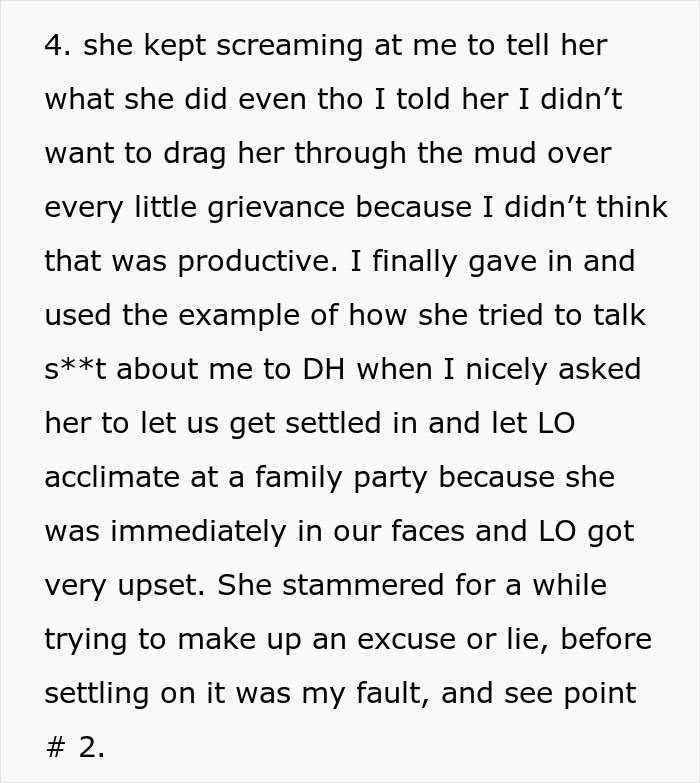
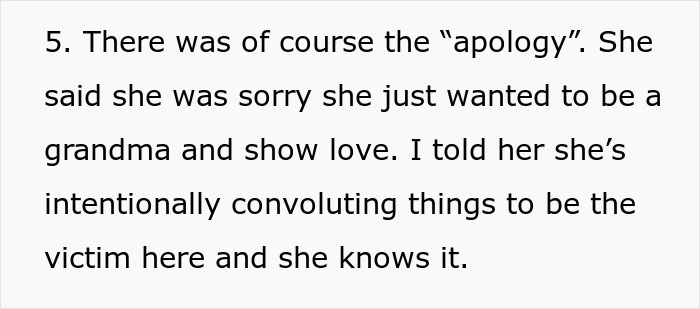
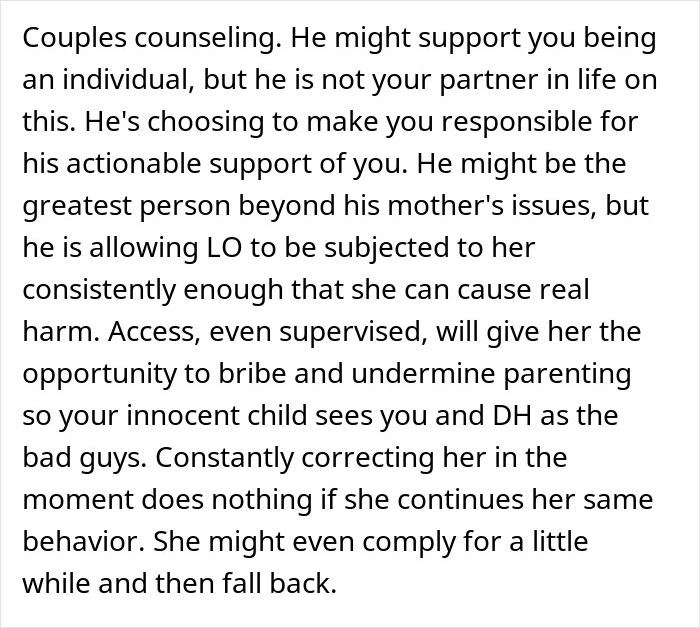
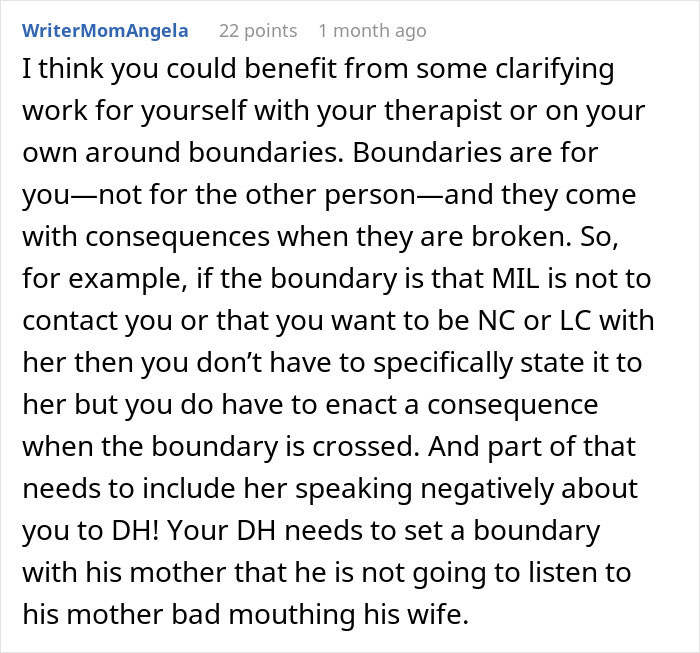
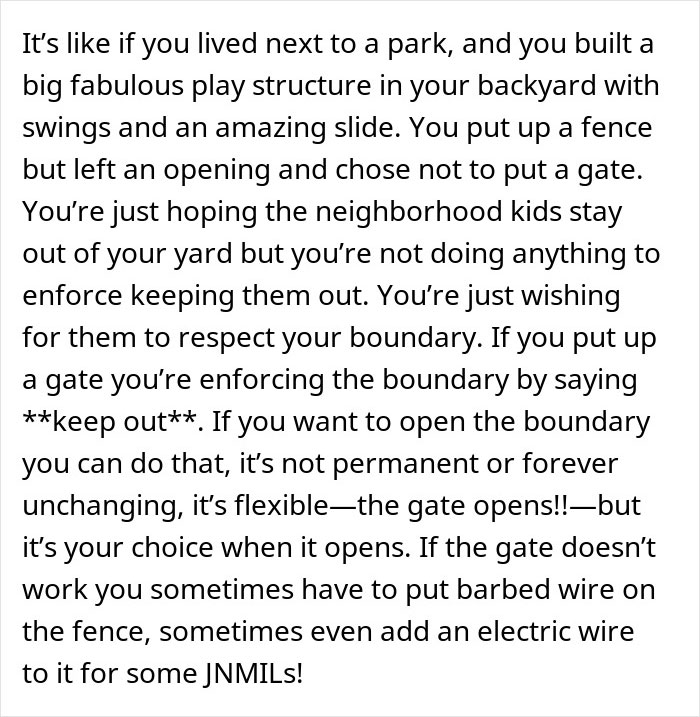
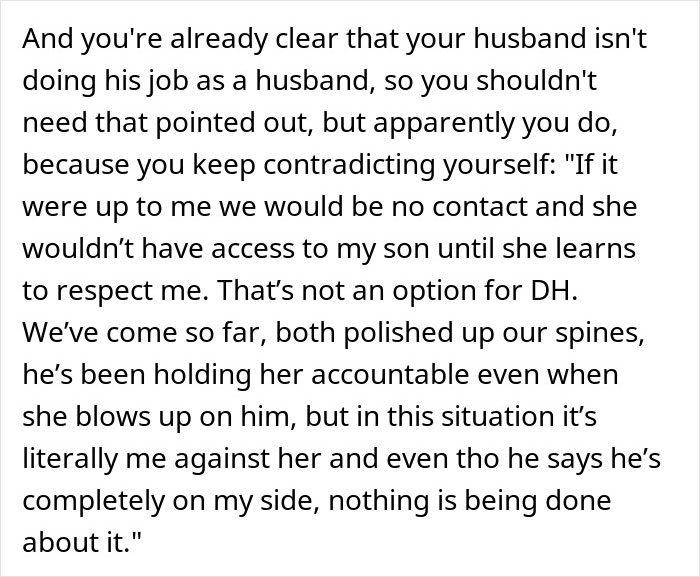 family dynamics.” width=”700″ height=”577″ />
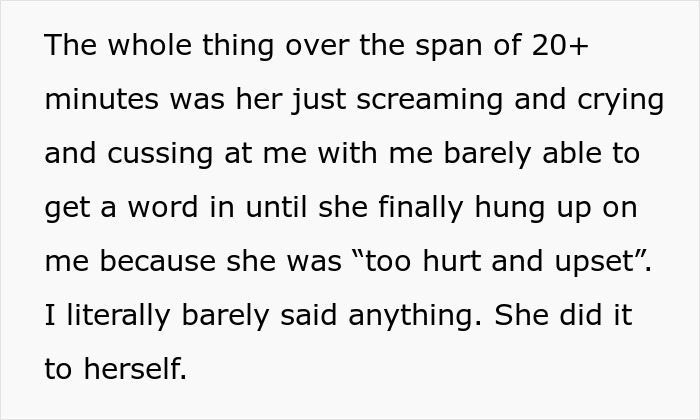
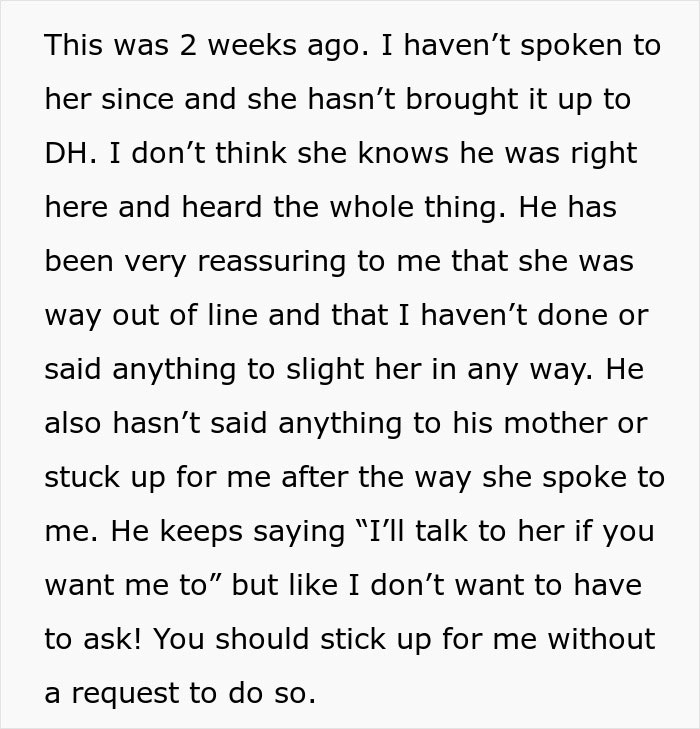
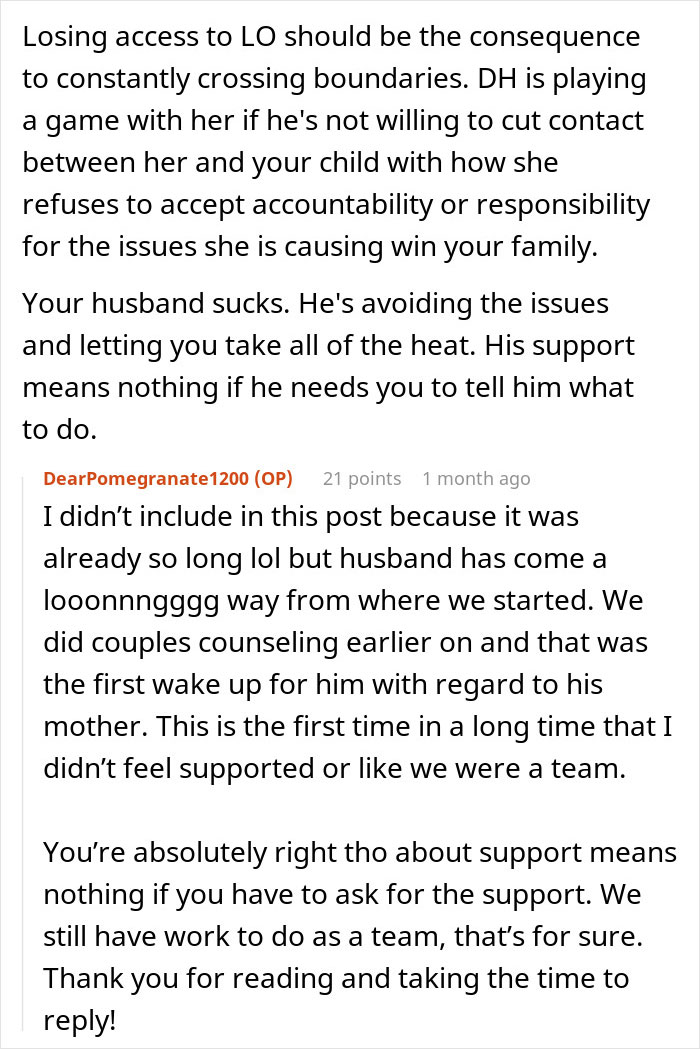
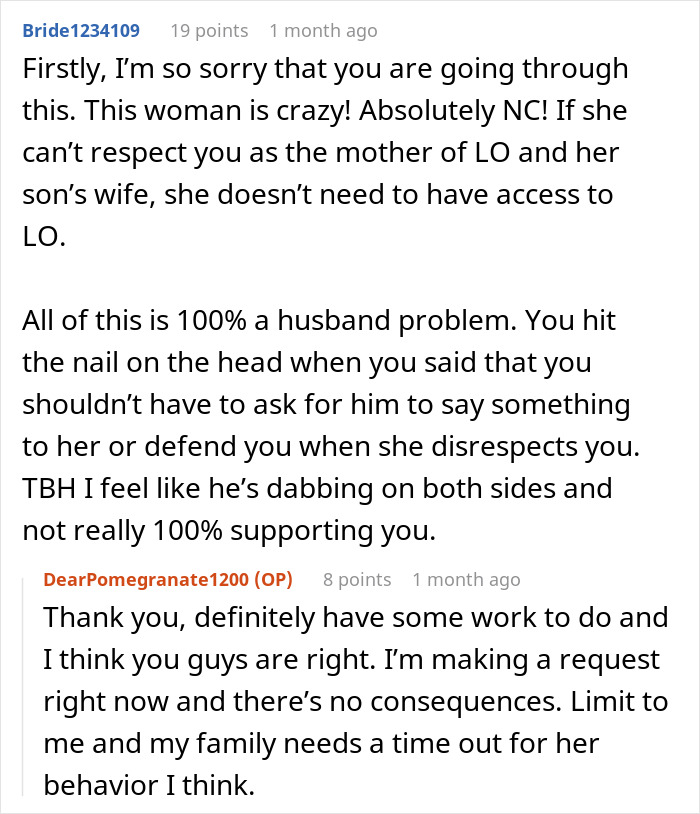
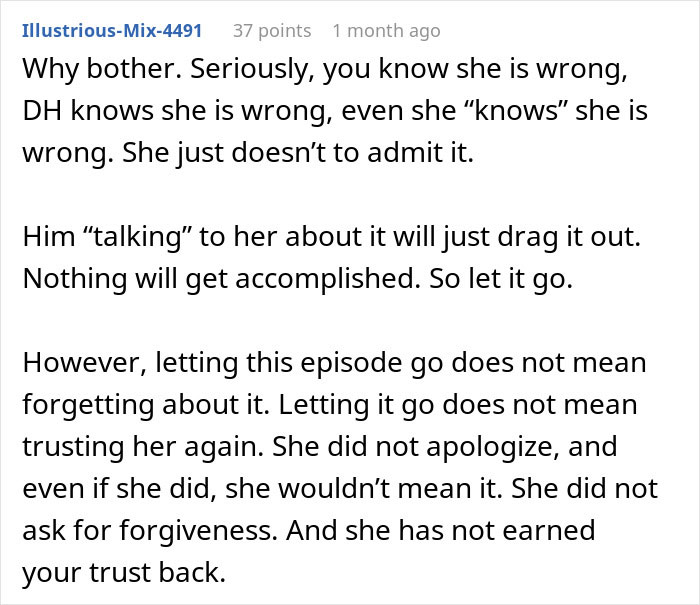
 couples therapy accountability.” width=”700″ height=”739″ />
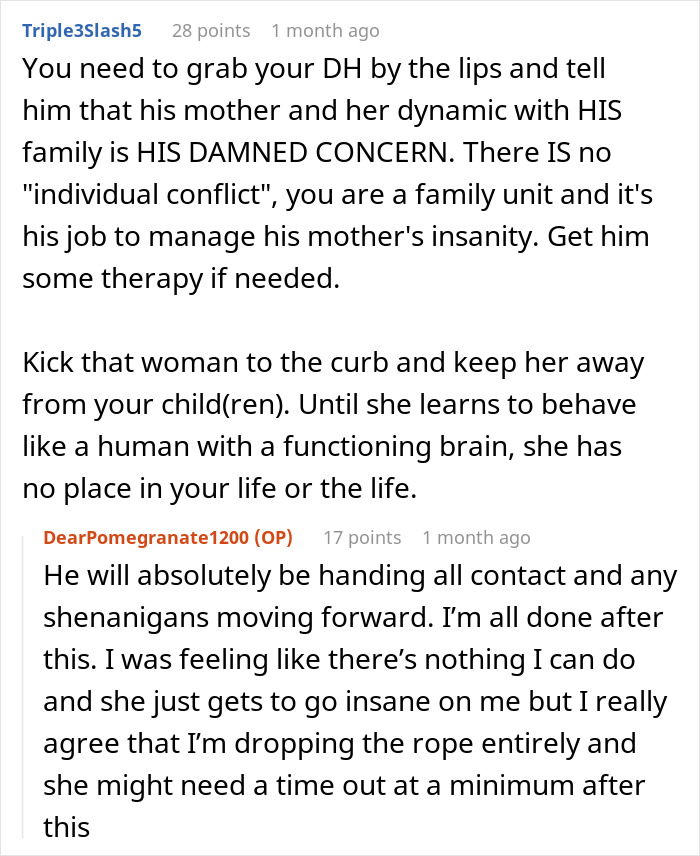
Image credits: DearPomegranate1200

By entering your email and clicking Subscribe, you're agreeing to let us send you customized marketing messages about us and our advertising partners. You are also agreeing to our Privacy Policy.
Thank you! You've successfully subscribed to newsletters!

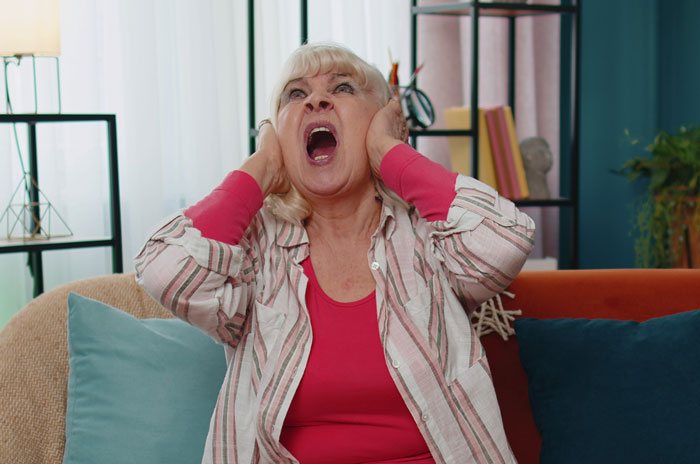
Shouting and screaming have no part of adult conversation. If someone does that, you just hang up or leave the room. It frustrates the hell out of them to be ignored when they want to shout, but keep at it and they learn that indoor voices are the way to go. I eventually learned this after growing up as the rusty child (as opposed to the golden child) and spending far too long "keeping the peace" when everyone else was going bananas. Now my shiny spine forces older relatives to be polite, or be ignored. I have a lot less stress in my life, but I can see it sometimes really stresses them to keep polite when they want to rage.

My MIL used to scream at me (I was the “sugar Na*i” because she was diabetic and I didn’t let her eat garbage foods) and I would just sit there looking at her until she was done…then ask her if she was wanted to talk calmly…it used to drive her nuts but I wasn’t going to stoop to that level. We’re adults and I can’t understand half of the screaming anyway…she lived with us for 16 years before she passed at 82 years old…pretty good long life for a type 1 diabetic! I miss her, it wasn’t all bad, we had our great moments together. She loved to help me cook and taut me to make all the ethnic (Hungarian) dishes so I could still make them for my husband.
Load More Replies...
I think everyone here is misjudging OP's husband. When I read the original post, I saw him doing everything he could to support OP without fighting her battles for her. He told her that she didn't need to talk to his mother, that she didn't need to explain herself, and he defended her when MIL spoke badly to him. What he didn't do was presume to step in and take control of the situation. He was clearly ready to do so, any time she asked, but wouldn't act in such a way that is communicated she is unable to stand up for herself. It sounded like OP had already established boundaries, right? He respected her autonomy.

Well it sounds like Di.ckHead (DH) is being very supportive of wife and the Little Octopus (LO).
I was trying to figure out what LO was…I like your answer better than mine lol :D
Load More Replies... Shouting and screaming have no part of adult conversation. If someone does that, you just hang up or leave the room. It frustrates the hell out of them to be ignored when they want to shout, but keep at it and they learn that indoor voices are the way to go. I eventually learned this after growing up as the rusty child (as opposed to the golden child) and spending far too long "keeping the peace" when everyone else was going bananas. Now my shiny spine forces older relatives to be polite, or be ignored. I have a lot less stress in my life, but I can see it sometimes really stresses them to keep polite when they want to rage.
My MIL used to scream at me (I was the “sugar Na*i” because she was diabetic and I didn’t let her eat garbage foods) and I would just sit there looking at her until she was done…then ask her if she was wanted to talk calmly…it used to drive her nuts but I wasn’t going to stoop to that level. We’re adults and I can’t understand half of the screaming anyway…she lived with us for 16 years before she passed at 82 years old…pretty good long life for a type 1 diabetic! I miss her, it wasn’t all bad, we had our great moments together. She loved to help me cook and taut me to make all the ethnic (Hungarian) dishes so I could still make them for my husband.
Load More Replies... I think everyone here is misjudging OP's husband. When I read the original post, I saw him doing everything he could to support OP without fighting her battles for her. He told her that she didn't need to talk to his mother, that she didn't need to explain herself, and he defended her when MIL spoke badly to him. What he didn't do was presume to step in and take control of the situation. He was clearly ready to do so, any time she asked, but wouldn't act in such a way that is communicated she is unable to stand up for herself. It sounded like OP had already established boundaries, right? He respected her autonomy.
Well it sounds like Di.ckHead (DH) is being very supportive of wife and the Little Octopus (LO).
I was trying to figure out what LO was…I like your answer better than mine lol :D
Load More Replies...


































 No fees, cancel anytime



















































19
30