Get Premium
Dark mode theme is available exclusively for premium users. Learn more about the benefits of subscribing.
No fees, cancel anytime.

 Dark Mode Ad-Free Browsing Unlimited Content
 Ad-Free Browsing Unlimited Content Dark Mode
Join 1.2 million Panda readers who get the best art, memes, and fun stories every week!

The streets are filled with orange flags, stores are selling bright orange tompouce, and everyone is wearing what is undoubtedly one of the coolest-looking kits at the World Cup. Yes, we’re talking about the Netherlands.
Orange and the Dutch are two sides of the same coin — they just love their color and what it represents. But as they continue to play on the football field, more and more people are wondering: why orange? Their flag is blue, white, and red, so surely one of those colors would be more appropriate, right? Well, the answer is a bit more complicated than that.
Image credits: Francois Nel / Getty Images
The colors of a flag typically represent a country’s past, values, and morals, highlighting history and accomplishments — but orange is nowhere to be found in the red, white, and blue Dutch flag. Yet the population, government, monarchy, and the nation have all adopted orange as part of the mix.
The reason this is happening is none other than a 16th-century conflict with Spain, historians explain. It turns out the Western European country had been at odds with Spain for over eighty years over religious differences (Protestants versus Catholics), tax reforms, and centralization. At the time, the Netherlands — then called the Low Countries — was under the rule of the Spanish Habsburg branch.
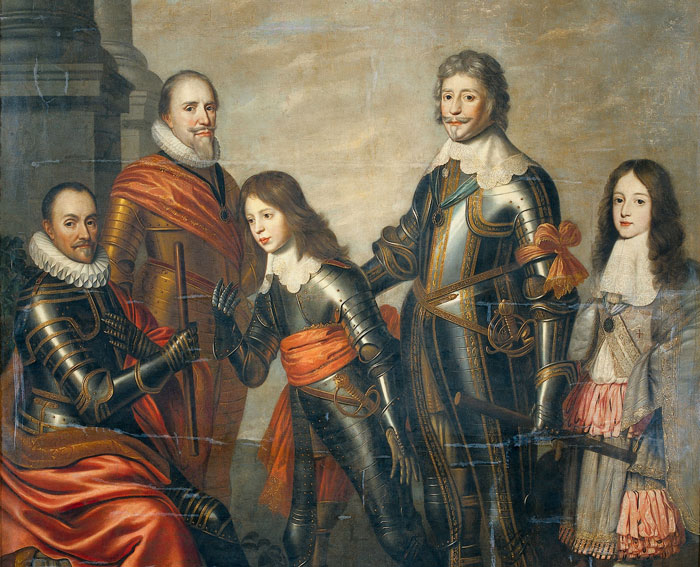
Essentially, a whole lot of monarchic shenanigans were going on. But William the Silent, also known as the Prince of Orange, was the leader of the Dutch revolt against the Spanish rulers. He led the troops into battle and laid the groundwork for the Dutch victory against King Philip II’s Catholic rule. It eventually led to the establishment of the independent Dutch Republic.
Image credits: Maja Hitij / Getty Images
As you can imagine, the Dutch population saw William the Silent as their ruler and savior, and his title, “Prince of Orange,” came from his inheritance of the sovereign Principality of Orange in southern France at the age of 11. After struggling for so long, the Dutch adopted the color as a symbol of their perseverance and resistance against the Spanish.
Image credits: Pieter Nason / Wikipedia
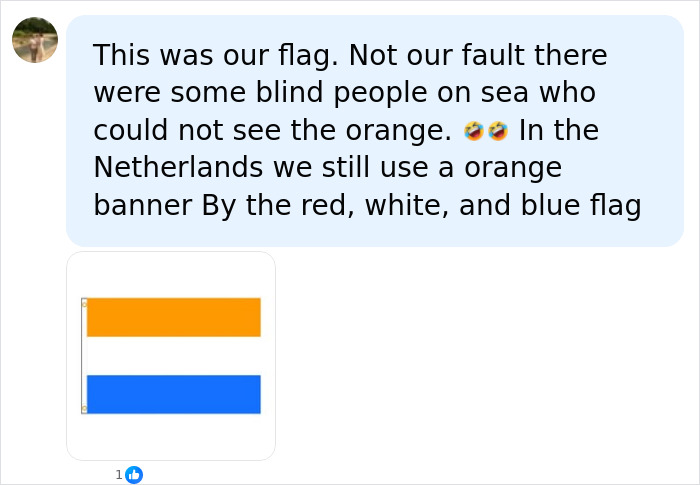
In fact, it was the color of the House of Orange, the dynasty that would later become the Dutch Royal family. But here’s the deal: the Dutch flag actually did have orange in it — for a time, at least. Instead of a horizontal red stripe, the Netherlands‘ flag had an orange one to honor William, and it was known as the “Prince’s Flag.” However, in the 17th century, the orange stripe was replaced with red.
Experts generally point to three possible reasons for the change: the orange dye faded too easily, red was more visible at sea, and the Dutch Republic wanted to distance itself from the House of Orange in favor of a more republican identity in the future. But the change was gradual. And it wasn’t until 1937 that Queen Wilhelmina officially declared the red, white, and blue as the national flag of the Netherlands.
Image credits: Mohamed Ishaq Villan / Pexels (not the actual photo)
But here are a few fun facts: the Dutch are hardly the first ones to stray away from wearing their country’s flag colors in their kit at the World Cup. Sports experts have long noted that Italy plays in blue — rather than the red, white, and green of its flag. And while we now associate Brazil exclusively with their iconic yellow and green, until 1954, they actually played in a white kit with blue trim.
Many other countries have been as steady as ever. Argentina has not once wavered from their blue and white stripes since the first World Cup in 1930, and Sweden has taken the pitch in their flag’s stark yellow and blue since 1908. That said, no one has truly made their mark in the Houston streets quite like the Dutch, and we gotta say, orange is quite a striking color to see, don’t you think?.
Image credits: Dar ius / Pexels (not the actual photo)

Yes, our flag is red, white and blue, but we do sport an orange pennant as well. This pennant is being flown above the national flag on 1 of 4 occasions: King's Day and the birthdays of Queen Maxima, Princess Beatrix and Crown-Princess Amalia. I saw a comment asking why there are less and less Dutchmen in the Dutch national team. All players are Dutch. The misunderstanding is perhaps due to the fact that the Kingdom of the Netherlands consist of more than the Netherlands alone. It also comprises St. Maarten, Curacao and Aruba. If you are born in Curacao for instance, you have the option of playing for either the Netherlands or Curaçao due to it's autonomous status within the Kingdom, but all players within the Dutch team have Dutch passports and therefore are Dutch.

Where does this "being called Prince of Orange is an honour" come from? It is the title of the next in line to the throne. Furthermore it is the name of a boat, a plant and a regiment. An orange pennant is added to the flag on the birthdays of the king/Queen and heir.

I think they meant between ordinary people, not the actual royal family themselves, just as In English we might call someone a prince to acknowledge their kindness or generosity.
Load More Replies... Yes, our flag is red, white and blue, but we do sport an orange pennant as well. This pennant is being flown above the national flag on 1 of 4 occasions: King's Day and the birthdays of Queen Maxima, Princess Beatrix and Crown-Princess Amalia. I saw a comment asking why there are less and less Dutchmen in the Dutch national team. All players are Dutch. The misunderstanding is perhaps due to the fact that the Kingdom of the Netherlands consist of more than the Netherlands alone. It also comprises St. Maarten, Curacao and Aruba. If you are born in Curacao for instance, you have the option of playing for either the Netherlands or Curaçao due to it's autonomous status within the Kingdom, but all players within the Dutch team have Dutch passports and therefore are Dutch.
Where does this "being called Prince of Orange is an honour" come from? It is the title of the next in line to the throne. Furthermore it is the name of a boat, a plant and a regiment. An orange pennant is added to the flag on the birthdays of the king/Queen and heir.
I think they meant between ordinary people, not the actual royal family themselves, just as In English we might call someone a prince to acknowledge their kindness or generosity.
Load More Replies...







































 No fees, cancel anytime




















35
3