Get Premium
Dark mode theme is available exclusively for premium users. Learn more about the benefits of subscribing.
No fees, cancel anytime.

 Dark Mode Ad-Free Browsing Unlimited Content
 Ad-Free Browsing Unlimited Content Dark Mode
Join 1.2 million Panda readers who get the best art, memes, and fun stories every week!

IVF is a saving grace for many couples and families who wish to have children. In the UK alone, the number of IVF patients has tripled in the last 30 years. Since 1978, more than 13 million babies have been born worldwide through IVF and assisted reproductive technology.
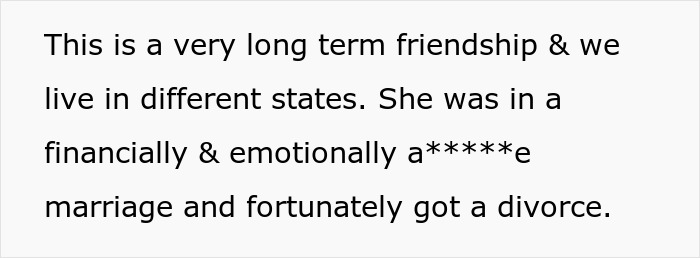
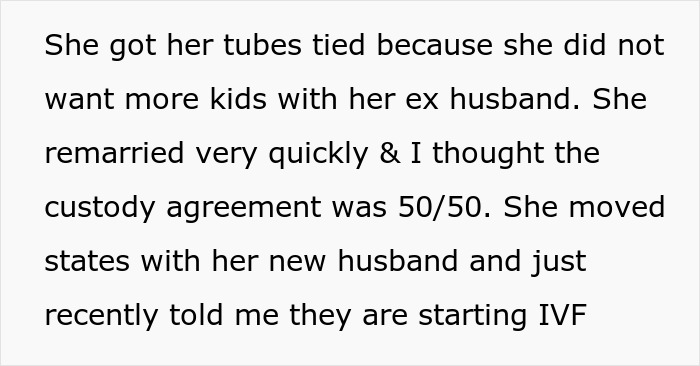
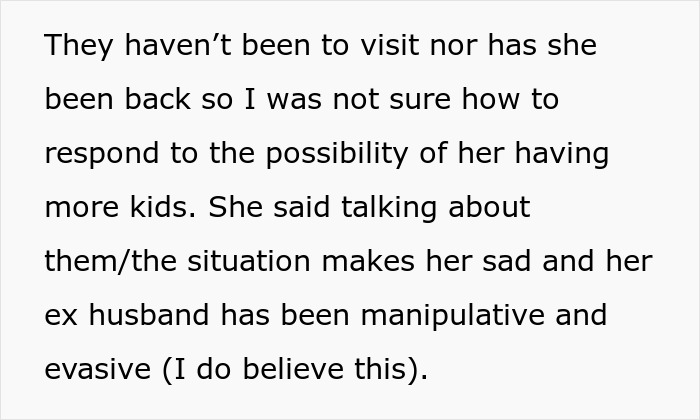
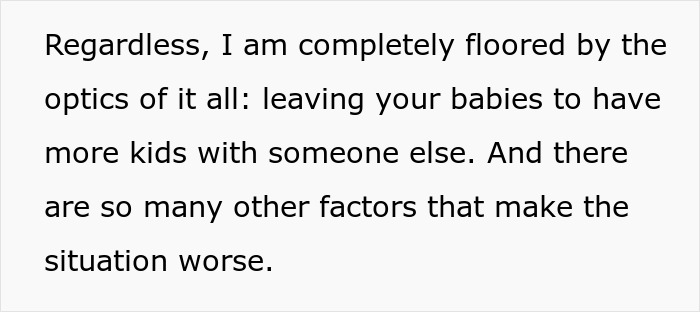
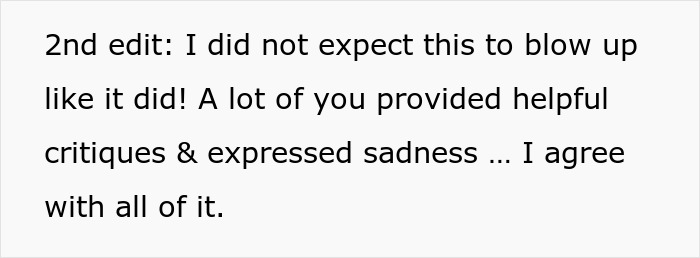
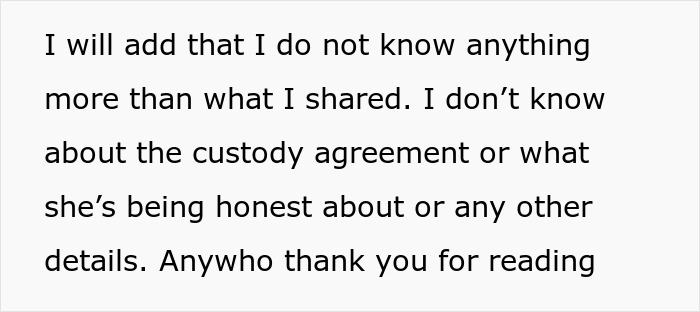
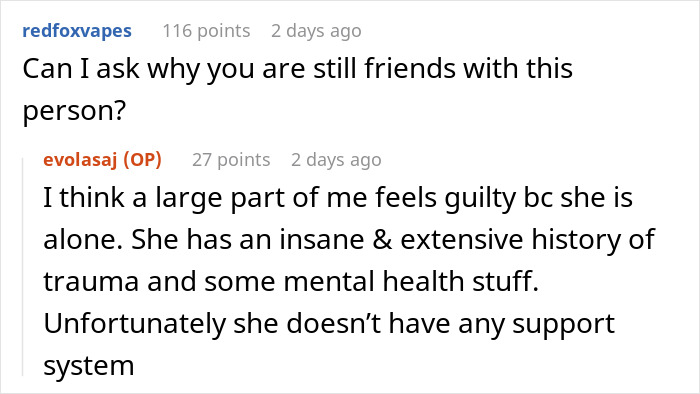
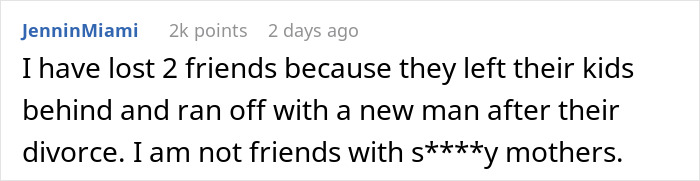
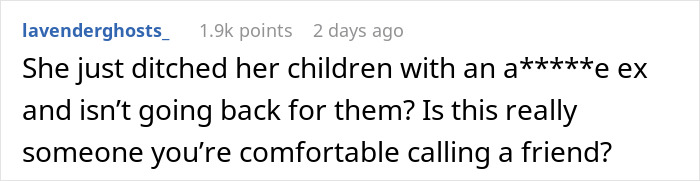
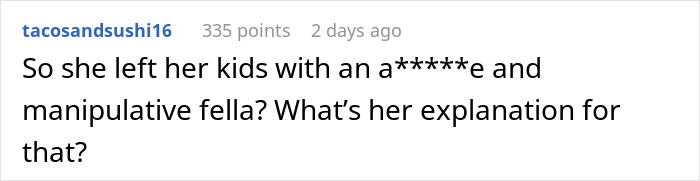
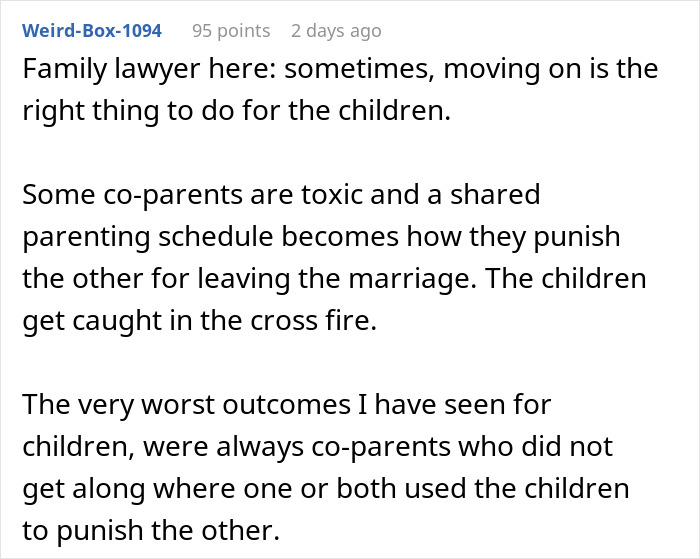
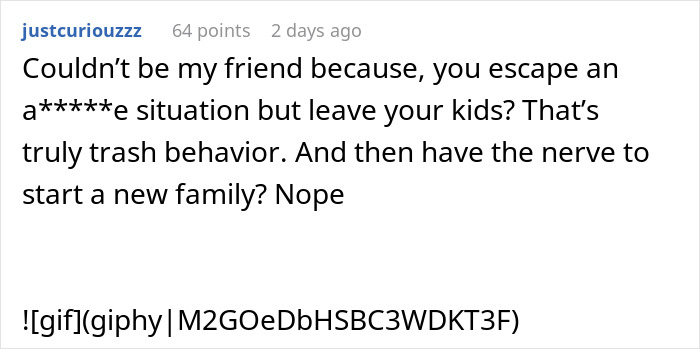
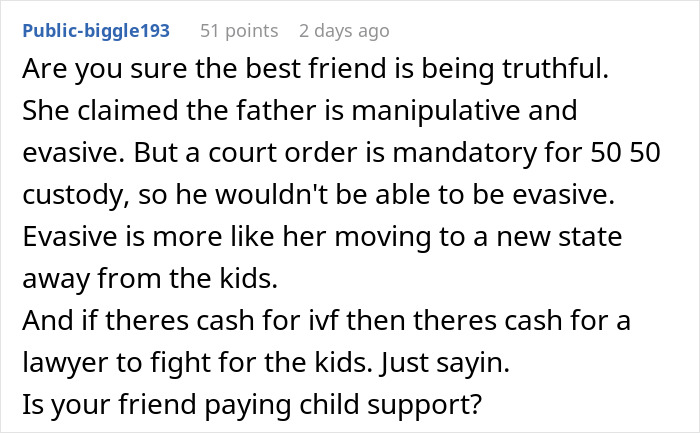
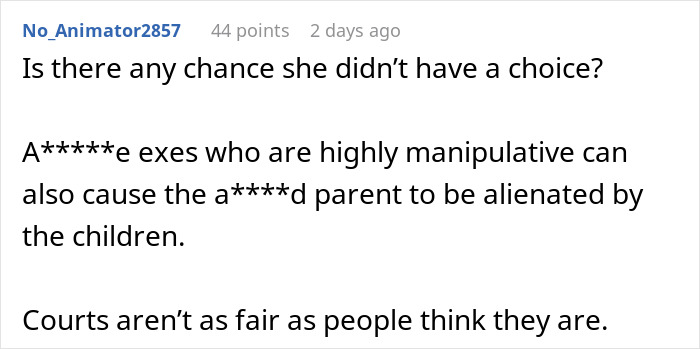
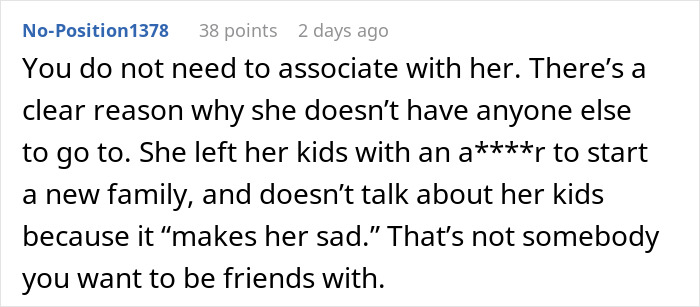
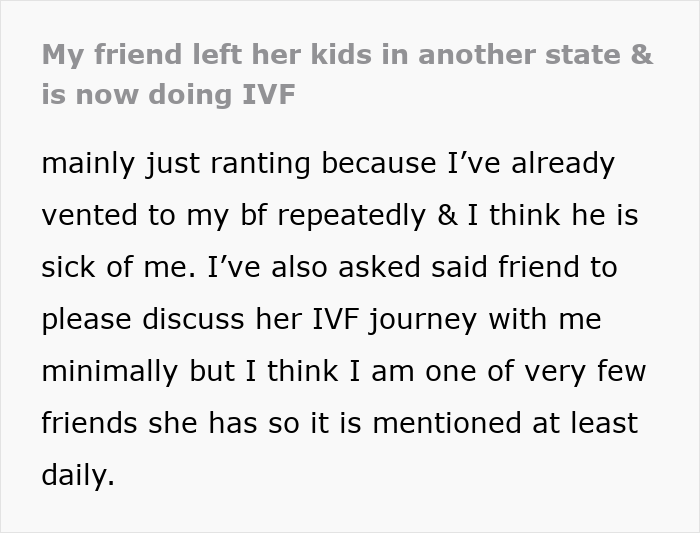
While IVF is a miracle of modern medicine for those unable to conceive naturally, it sometimes raises some concerns. One woman, for example, questioned her friend’s decision to do IVF with her new husband. She claimed she didn’t want any more children with her ex and had her tubes tied, but the friend couldn’t get behind her virtually abandoning her children, moving to another state, and starting a family with her new partner.


Divorce is not uncommon nowadays, even when children are involved. With divorce rates in the U.S. rising to around 40% for first marriages, more and more couples have to deal with custody arrangements, and more and more children might experience parental abandonment.
As of 2025, the U.S. had the highest rate of children living in one-parent households at around 23%. Statistically, fathers are more commonly the absent parent, yet in this story, it’s the mother who left a husband who was mistreating her but, for some reason, decided that her children should stay with him.
Because mothers are seen as the natural caregivers in our society, children internalize their mother’s walking away a lot more and think of themselves as fundamentally unlovable. In her research on maternal abandonment, Peg Streep, the author of Daughter Detox: Recovering from an Unloving Mother, found that for a child, a mother leaving is life-altering. In conversations with abandoned daughters, Streep found out that the children often blame themselves, feel anger, and, even in adulthood, fail to understand why their mother walked out.
“Maternal abandonment evokes a flood of emotions, some contradictory; mixed in with pain and longing, there is often rage and anger, along with guilt and shame,” Streep wrote for Psychology Today in 2021.
The effects of a parent abandoning children continue well into one’s adult years. According to licensed mental health professional Dr. Selk, abandoned children feel rejected, confused, worthless, have low self-esteem, trust issues, and might struggle with codependency. Research shows that even when female migrant workers leave their children for longer periods of time, the children develop depression, anxiety, and find it difficult to form emotional bonds with others.
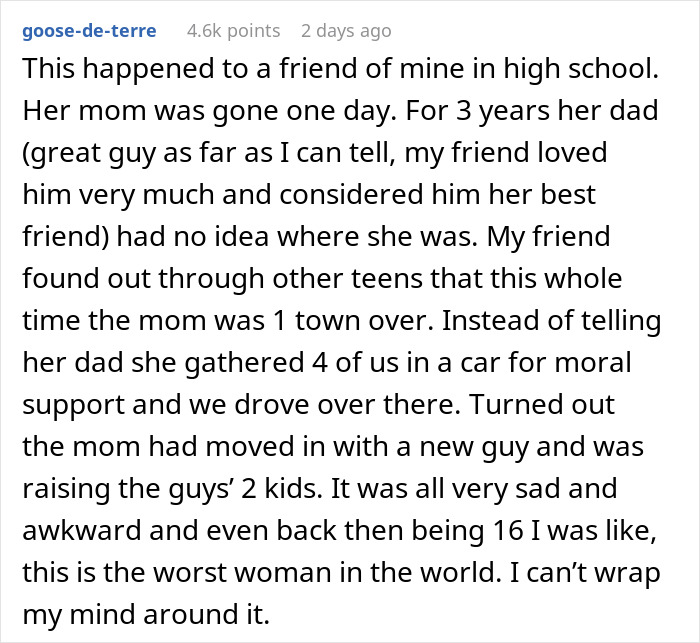
When parents break up, children usually carry their trauma from their separation for the rest of their lives. As one parent walks away and starts a new family, children may feel less valuable, as if the new family is a do-over.
A new step-sibling causes feelings of displacement for older children. Even when a parent and a stepparent bring home an “ours baby,” older stepchildren feel like their parents’ attention is stolen away. The “ours baby” can sometimes be seen as the “real” child of the home, and when one parent creates a new family, children might feel their mother has a stronger biological bond with the new baby and that they are just “the leftovers.”
According to Larry Ganong, an emeritus professor of human development and family science at the University of Missouri, all children fight over resources. Even in typical, healthy families, that looks like who gets the bigger room or a bigger slice of pizza.
In the case of parental abandonment and a mother planning a family with another man, there is a whole other dimension of displacement and abandonment. This doubles the feelings of unworthiness, self-doubt, and insecurities.







By entering your email and clicking Subscribe, you're agreeing to let us send you customized marketing messages about us and our advertising partners. You are also agreeing to our Privacy Policy.
Thank you! You've successfully subscribed to newsletters!




















 No fees, cancel anytime











28
0