Get Premium
Dark mode theme is available exclusively for premium users. Learn more about the benefits of subscribing.
No fees, cancel anytime.

 Dark Mode Ad-Free Browsing Unlimited Content
 Ad-Free Browsing Unlimited Content Dark Mode
Join 1.2 million Panda readers who get the best art, memes, and fun stories every week!

I’m not sure about you, but I am not a big fan of WhatsApp group chats. I belong to more than I can count, and if I’m completely honest, many of them are muted. “Always” and forever. I just cannot handle the constant pinging about (mostly) nonsense and what feels like an intrusion of my personal space and time. Luckily, none of them are work group chats, but trust me, I’ve been there in the past: my phone flooded with messages on weekends and at ungodly hours. Glad to have escaped that…
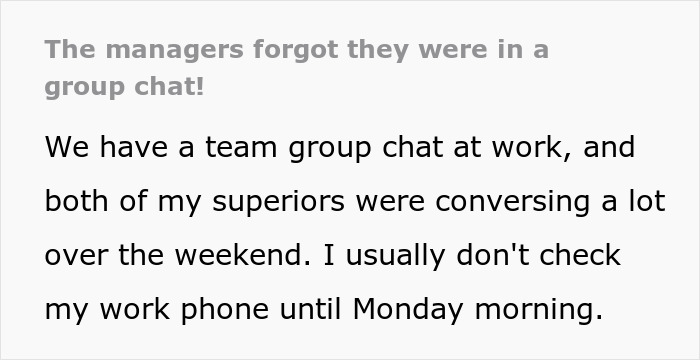
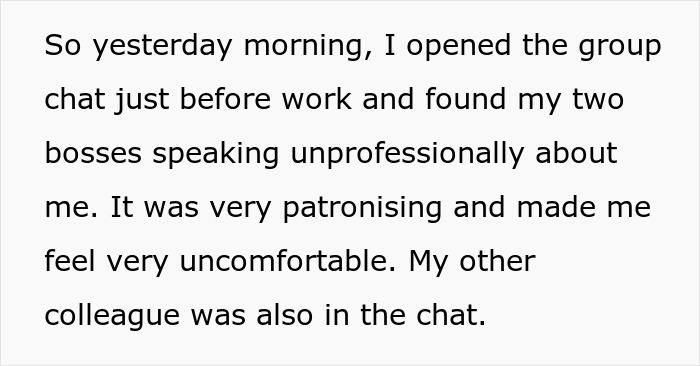
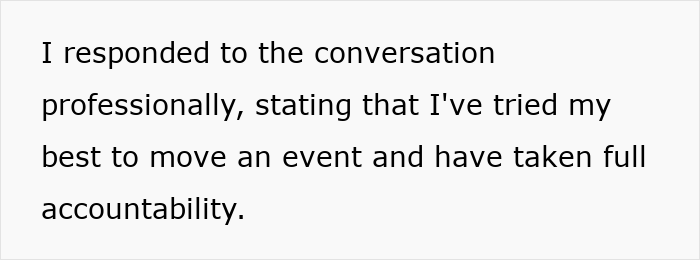
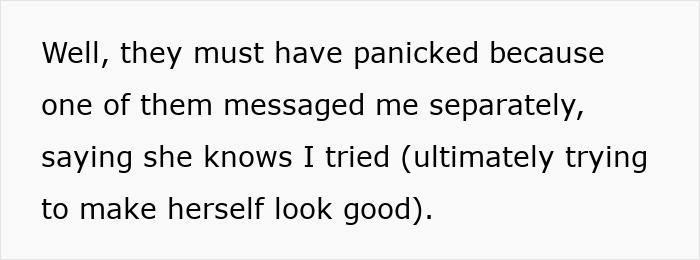
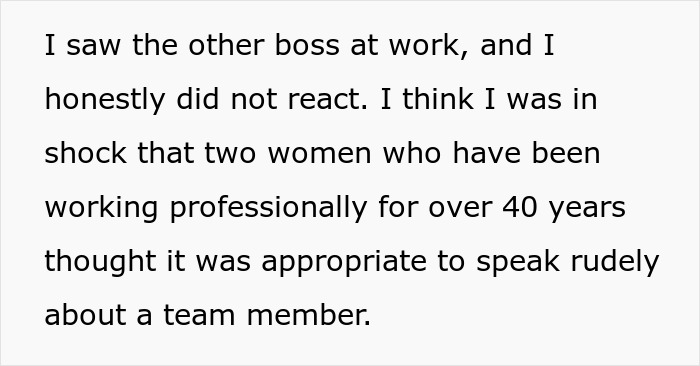
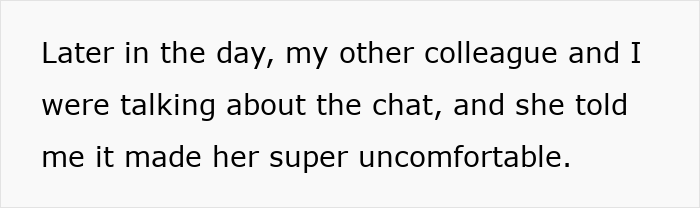
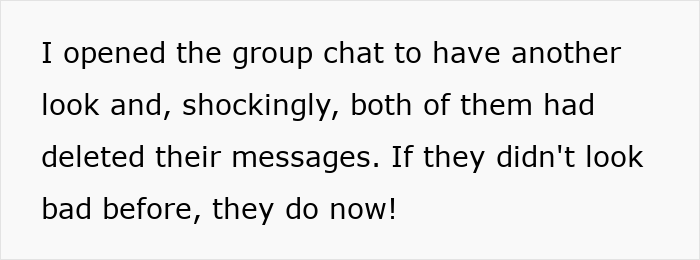
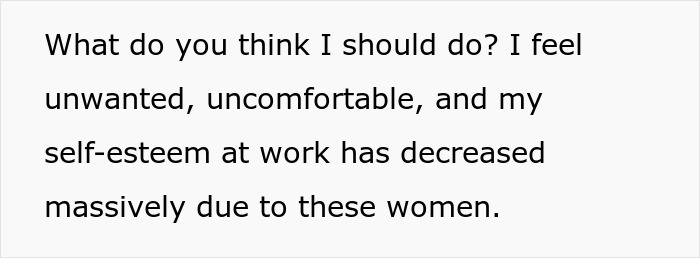
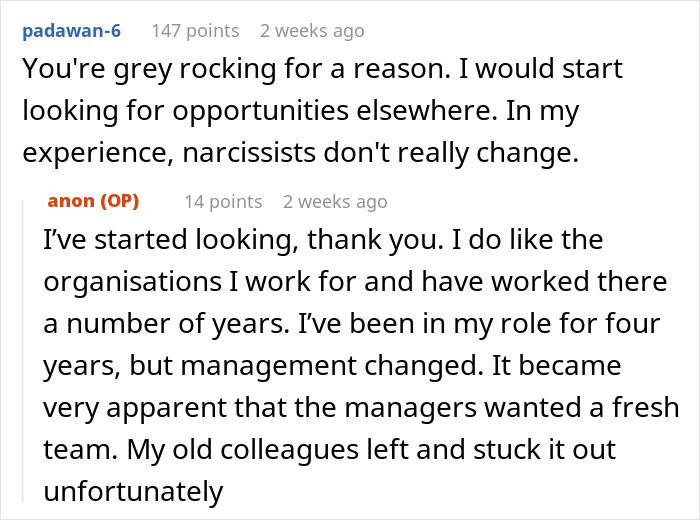
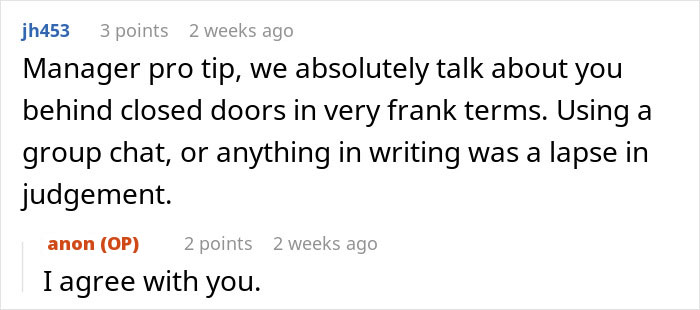
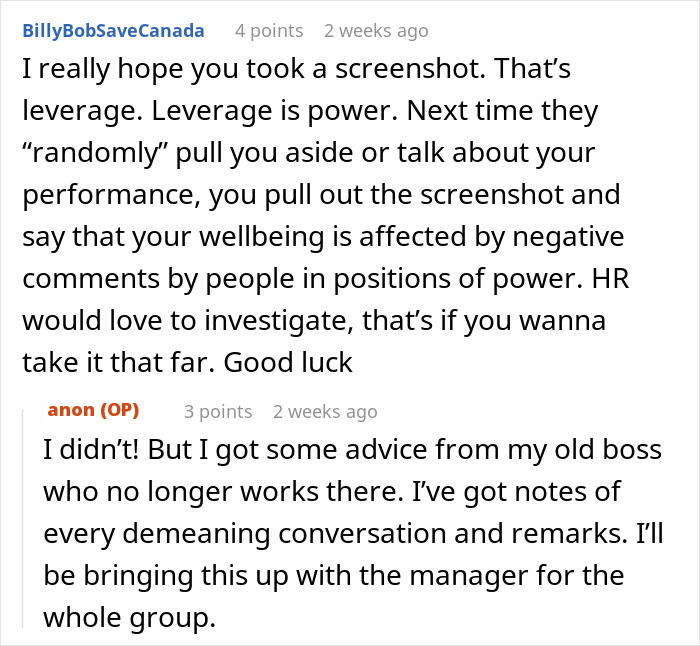
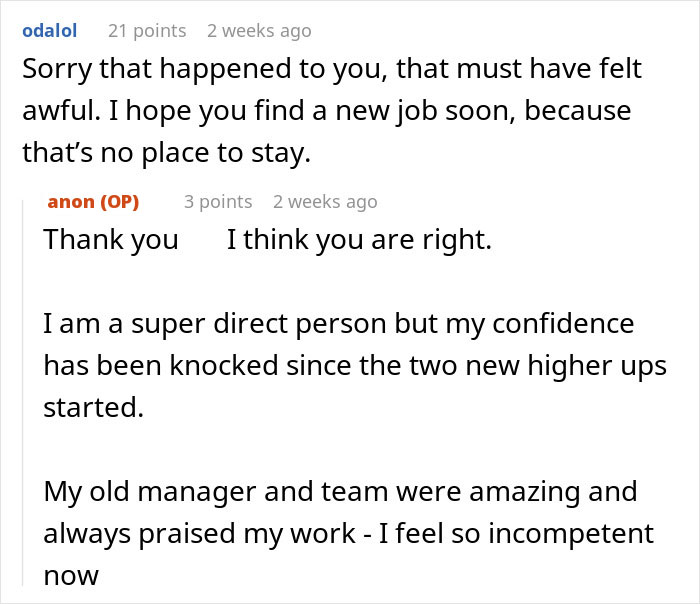
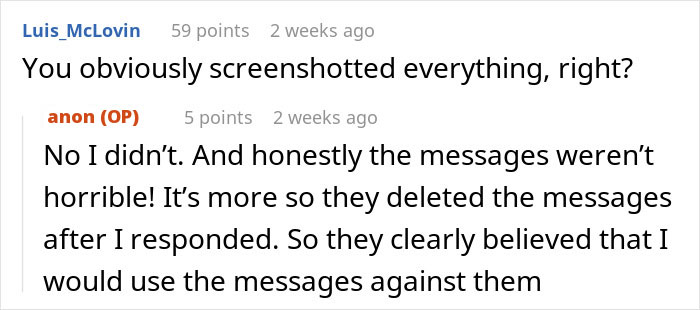
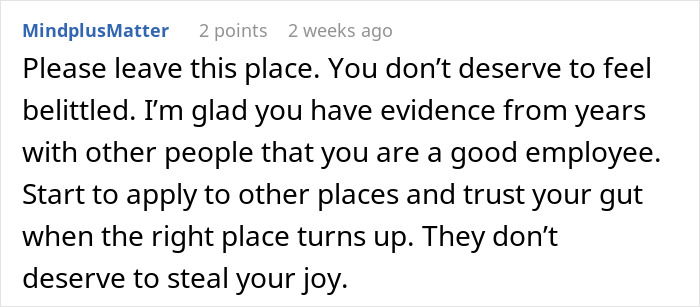
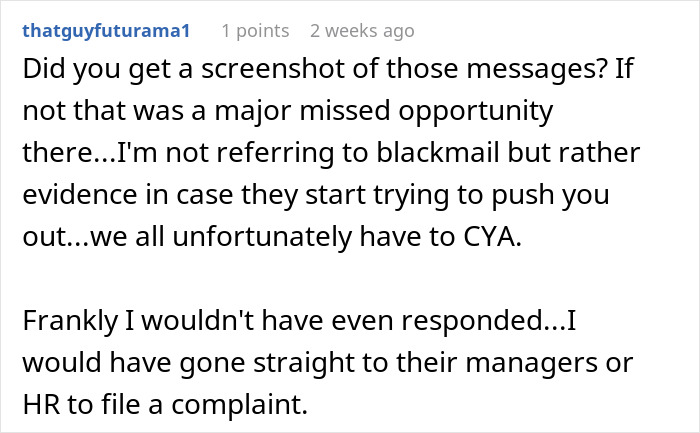
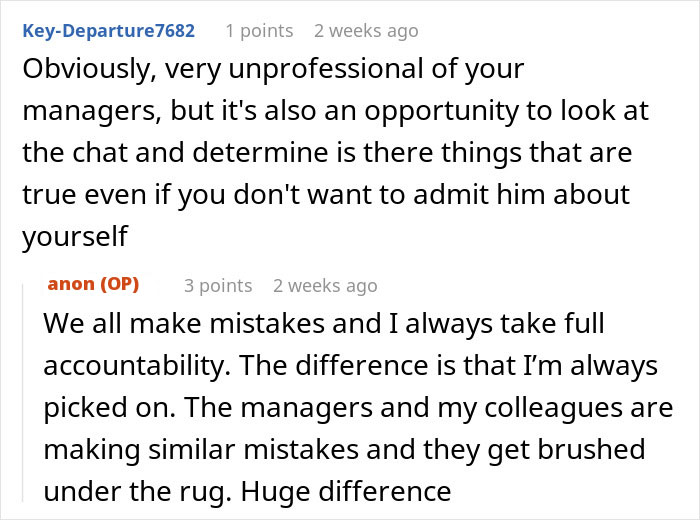
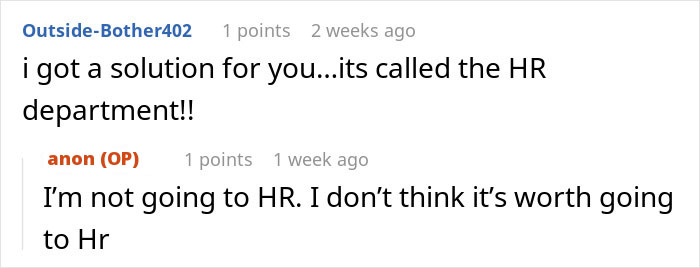
One employee has shared how they aren’t that fortunate. They belong to a team group chat on their work phone. To their dismay, they woke up to a string of messages on a Monday morning, all sent over the weekend. It turned out two managers were having a fat chat about the employee, basically trash-talking them in front of others. The bosses either forgot they were chatting in the group, or they just didn’t give a hoot. The employee is seeking advice and says the entire saga has left them feeling “unwanted and uncomfortable.” Bored Panda reached out to career expert Nathan Soto from CV Genius for his take on work group chats.
Image credits: nateemee (not the actual photo)
Image credits: svitlanah (not the actual photo)
Image credits: anon
“Group chats are an invaluable tool for virtually all office settings, especially with hybrid/remote work environments, but there’s definitely a learning curve to navigating the Whatsapp group etiquette,” Nathan Soto tells us during our chat with him. He’s a career expert for the online CV and cover letter writing platform CV Genius, so he has a fair bit of experience when it comes to HR matters.
Soto says the number of messages, and in essence, the bulk of notifications from work chats, can add up quickly, easily becoming overwhelming. “It’s a good idea to create separate chats for separate teams, projects, or topics,” he suggests. “Then, keep your number of separate messages down by combining greetings and questions into a single message. Reply to messages in threads to keep it clear what you’re talking about.”
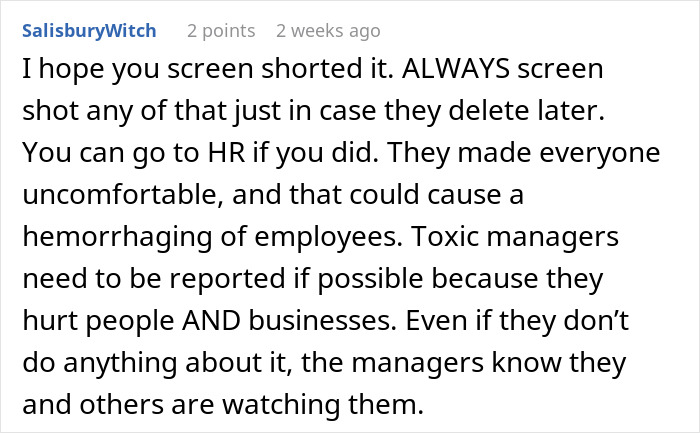
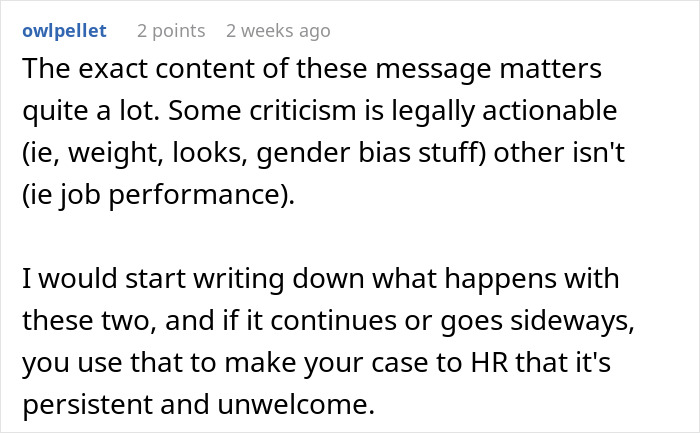
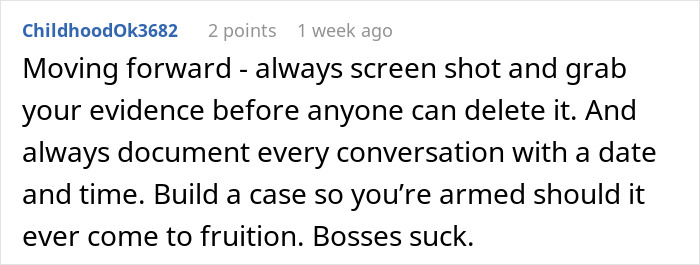
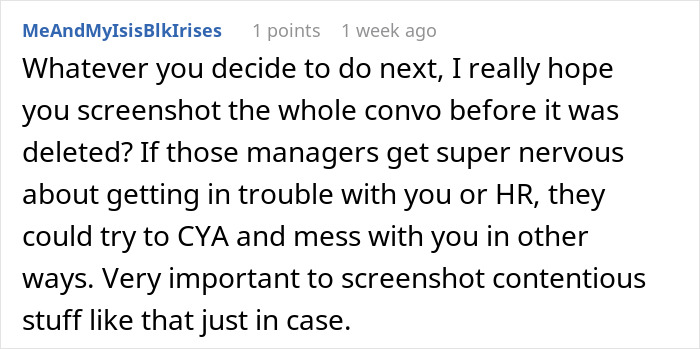
The expert says managers need to keep two things in mind… Employees should know that everything they say over work chat is subject to HR overview, and if issues arise, “private” work chats can be submitted along with complaints.
Managers should also bear in mind that employees should not be compelled to read or reply to work messages after hours. “As far as accidentally trash-talking an employer, this unfortunately is not surprising,” says Soto. “The cliché of the uncareful, underskilled manager is unfortunately rooted in reality. Still, anybody could make the mistake of sending a message to the wrong chat.”
According to Soto, the clear solution is to use separate apps for work and private communication. But if that’s not possible or convenient, always double-check who you’re communicating with before hitting ‘send.’ Or leave your trash-talking to in-person meetings. Or not at all…
Soto says employees can reasonably refuse to be added to group chats on platforms linked to their personal phone numbers or Facebook Messenger, since this could lead to violations of privacy. Companies that require the use of chat groups need to use purpose-built apps like Slack or Teams, he says.
“From a legal standpoint, there is nothing preventing employers from engaging in group chats or texts with their employees,” say the HR experts at Cedr Solutions. But, the company cautions that business owners and managers must make sure that their team is clear on how they are expected to behave in a work chat.
“The simple rule to remember is that if you write and send something less than positive, then there is always the chance that it will be copied and then a possibility that the message will end up being seen by someone other than its intended audience,” adds Steve Herbert, Wellbeing and Benefits Director at Partners&.
Cedr Solutions’ advice to business owners is to train their managers on how to use and monitor group chats and texts compliantly. It goes without saying that they themselves shouldn’t be using group chats to trash-talk employees on weekends. Or ever.
The HR experts also say it’s important to stick to urgent messages after hours. “If the issue can wait until the next day, it probably should. Keep work-related, off-hours chats short, simple, and compliant. If employees stray into a work discussion off hours, ask that they table the discussion until it can be discussed at work,” notes the Cedr Solutions site.
Remember that there are instances an employee can bill for their time if they get dragged into work-related chats and tasks outside of office hours: for example, if you ask them to complete something on the spot, like listening to an audio file or voice note, watching a video, or reading a document/article that relates to their job.
Cedr Solutions says you also might have to pay if you ask employees to “engage in a conversation about anything work-related, such as assigning duties, going over a problem that came up during the day, planning for the day to come, etc.”
The same goes for if you expect staff to wait for a response from you. “If, for instance, you text an employee and ask them to do something for you but they reply requesting more information to complete the task, the time that they spend waiting is considered time spent ‘engaged to wait’ according to the [Department of Labor] and the employee must be paid for that downtime.”
And then there’s the issue of reputation management. “Given the increasingly blurred line between work and social lives, the content of WhatsApp conversations between employees can be a source of legal and reputational risk to employers,” cautions Richard Freedman, Employment Partner at Stephenson Harwood.
Even the most “intelligent” people aren’t immune to getting into trouble around the “digital water cooler.” Just this week, the National Security Agency announced that it would be firing no less than 100 intelligence employees after it emerged they’d been taking part in group chats that allegedly discussed “explicit behavior.” The government-run chat platform was reportedly meant to be used for classified information.
“There are over 100 people from across the intelligence community that contributed to and participated in this — what is really just an egregious violation of trust, what to speak of, like, basic rules and standards around professionalism. I put out a directive today that they all will be terminated and their security clearances will be revoked,” said Director of National Intelligence Tulsi Gabbard in an interview with Fox News.
Image credits: Chris Montgomery (not the actual photo)
When discussing the pitfalls of digital communication, it’s crucial to note the role of workplace dynamics. In situations where bosses might misuse online resources, employees can find themselves trapped in a web of double standards and expectations.
Feelings of discomfort from being critiqued in a group chat could be exacerbated if you are reminded of tales about management antics used to control productivity.

By entering your email and clicking Subscribe, you're agreeing to let us send you customized marketing messages about us and our advertising partners. You are also agreeing to our Privacy Policy.
Thank you! You've successfully subscribed to newsletters!


Had to look it up... The grey rock method is a psychological strategy for dealing with toxic or manipulative people. It involves appearing uninterested or unresponsive to deflect abuse. The goal is to protect yourself without confronting the other person.

Aha! I’ve tried googling it several times and never found a useful, cogent answer … until now! While I doubt I’ll ever use the term myself, at least I’ll know what’s going on when others do. I appreciate it a lot, Pho! 💋
Load More Replies...
Grey Rocking? I've now looked it up, but how about you just speak plain English?
Paul, at my age I’m aware that no matter how much I may loathe new idioms (“cray cray” and “delulu” make me crazy!) complaining about their use doesn’t stop anyone from using ‘em. (Well, it *could* potentially *lessen* their use if you complain to a vast audience, like if you’re a writer for the New York Times, but it certainly won’t stop their use.) The quicker you realize this, too, the better you’ll feel about reading stuff on the net.
Load More Replies...
Why in the hell would you have a group work chat ON YOUR PHONE? It's so slow and cumbersome to type on a phone. People at work have computers. They should only have to chat on their computers. The only exception would be if your jobs was moving from location to location, I guess.
Had to look it up... The grey rock method is a psychological strategy for dealing with toxic or manipulative people. It involves appearing uninterested or unresponsive to deflect abuse. The goal is to protect yourself without confronting the other person.
Aha! I’ve tried googling it several times and never found a useful, cogent answer … until now! While I doubt I’ll ever use the term myself, at least I’ll know what’s going on when others do. I appreciate it a lot, Pho! 💋
Load More Replies... Grey Rocking? I've now looked it up, but how about you just speak plain English?
Paul, at my age I’m aware that no matter how much I may loathe new idioms (“cray cray” and “delulu” make me crazy!) complaining about their use doesn’t stop anyone from using ‘em. (Well, it *could* potentially *lessen* their use if you complain to a vast audience, like if you’re a writer for the New York Times, but it certainly won’t stop their use.) The quicker you realize this, too, the better you’ll feel about reading stuff on the net.
Load More Replies... Why in the hell would you have a group work chat ON YOUR PHONE? It's so slow and cumbersome to type on a phone. People at work have computers. They should only have to chat on their computers. The only exception would be if your jobs was moving from location to location, I guess.



































 No fees, cancel anytime













35
10