Get Premium
Dark mode theme is available exclusively for premium users. Learn more about the benefits of subscribing.
No fees, cancel anytime.

 Dark Mode Ad-Free Browsing Unlimited Content
 Ad-Free Browsing Unlimited Content Dark Mode
Join 1.2 million Panda readers who get the best art, memes, and fun stories every week!

All allergies must be treated seriously at work. A good workplace leader knows to prioritize their staff’s health and safety, and will support them when needed. Toxic bosses, on the other hand, can be so full of themselves that they can literally put your life in danger.
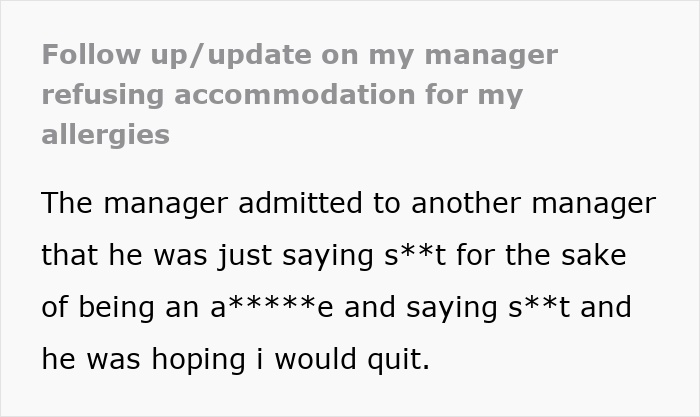
This is what happened to one employee who has an incredibly severe allergy to salmon, but their managers wouldn’t allow “special treatment” when they tried to protect themselves. Later, after the employee went into anaphylactic shock, the toxic supervisors accused them of stealing allergy medication. Let’s get into it.
Image credits: Getty Images / unsplash (not the actual photo)


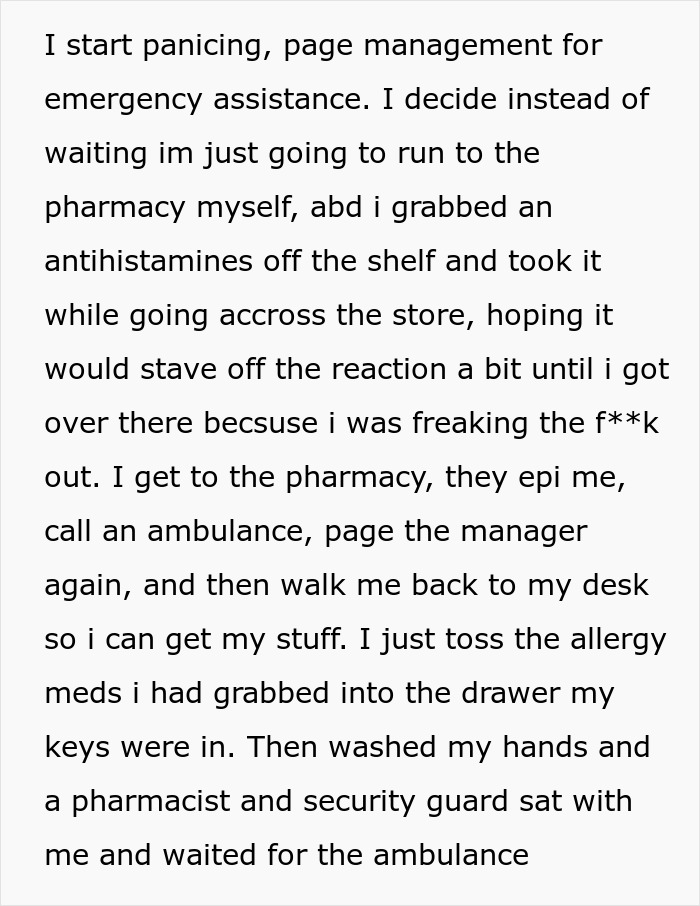
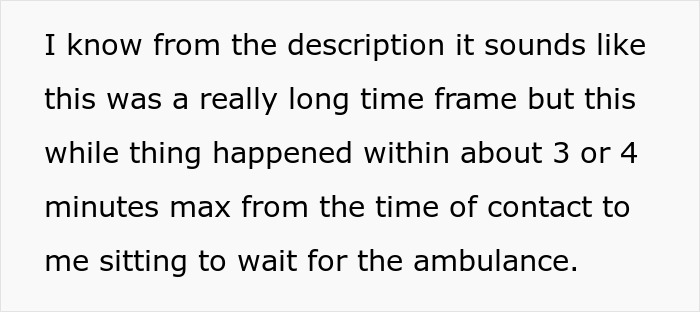
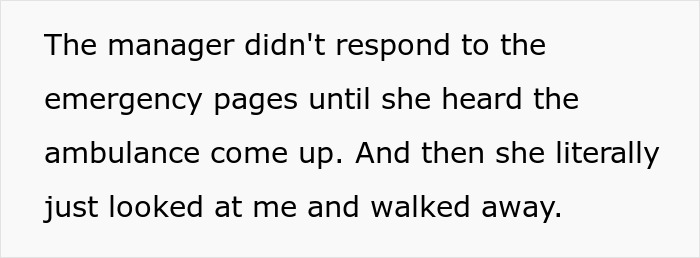
Image credits: Heinrich van Tonder / pexels (not the actual photo)
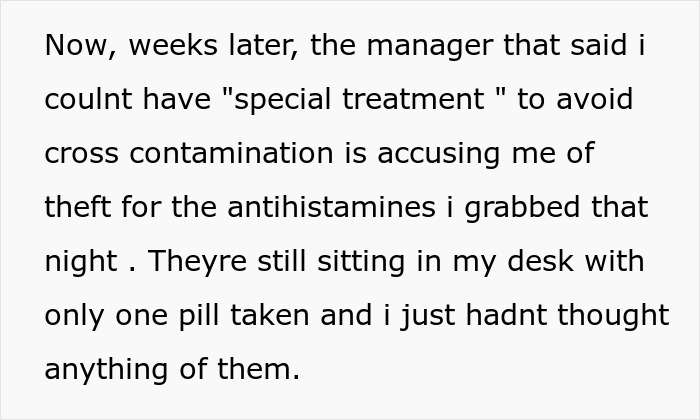
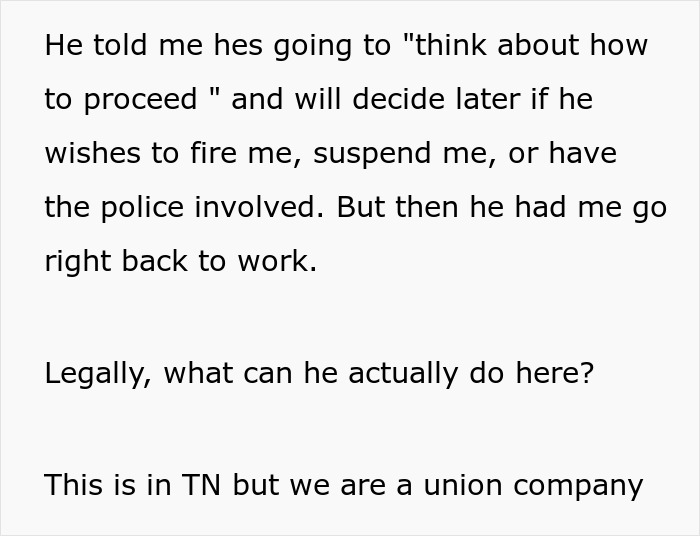
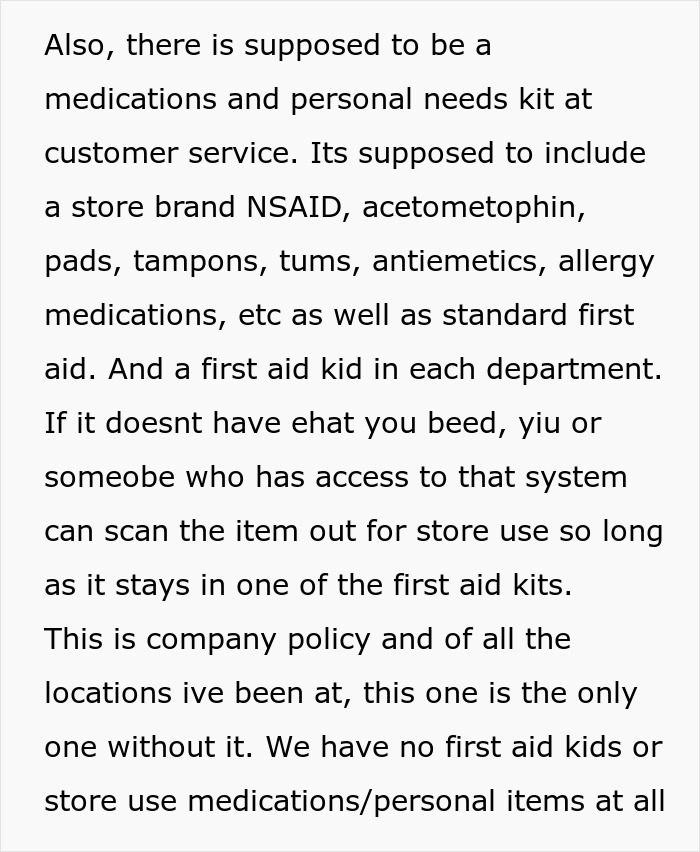
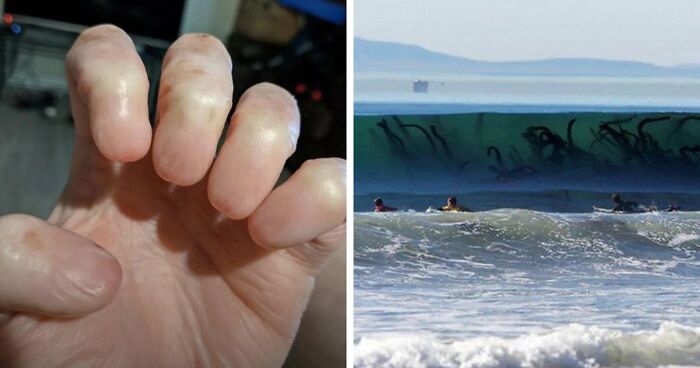
Image credits: Mortuaryfaerie
Everyone deserves to work with managers who have good emotional intelligence, genuinely empathize with you, and support you because they actually care about you. But unfortunately, the real world is full of mediocre and outright toxic workplace ‘leaders’ who can’t look past their own ego.
And if you have severe allergies and your life might be in danger due to the actions of your colleagues, it only makes sense that you want your superiors to be at least semi-competent human beings. Is that too much to ask?
Toxic bosses tend to lack empathy and self-awareness, are incredibly self-interested, behave inconsistently, and take advantage of the power dynamics in the workplace.
They are likely to misuse their authority, micromanage their staff, set unreasonable expectations, and belittle their workers.
What’s more, they are usually overconfident, avoid taking responsibility, and blame others for their own mistakes.
Anaphylaxis or anaphylactic shock is a severe allergic reaction that can threaten your life. The main causes of anaphylaxis are food allergies, while other, less common causes include insect stings, medications, and latex.
Image credits: Getty Images / unsplash (not the actual photo)
The only treatment for anaphylactic shock is epinephrine (adrenaline), which you inject. Even with the treatment, you still need to take the patient to the emergency room ASAP. So, even if you have an epi-pen and inject yourself, you should immediately call an ambulance.
According to the Cleveland Clinic, between 0.05% to 2% of people living in the United States have a chance of experiencing anaphylaxis in their lives.
In a nutshell, being allergic means that your immune system overreacts and releases chemicals such as histamine. The most common symptoms of anaphylactic shock are swelling, wheezing, shortness of breath, and difficulty swallowing.
The shock to your system happens very quickly, and there often isn’t much of a warning period. Most often, symptoms start within 5 to 30 minutes of coming into contact with allergens.
“Symptoms can continue for several hours, even with treatment. It’s important that you not wait to see if anaphylaxis goes away. Time is crucial when someone is experiencing anaphylaxis and a slight delay could cost them their life,” the Cleveland Clinic warns.
Salmon allergies usually arise when you are still a child. However, they can develop in adults, too. Fish allergies tend to remain for life.
Have you ever been in a situation where your supervisor, manager, or boss blatantly refuses to take health and safety risks seriously? Do you have any allergies, and if so, how do you manage them at work? What would you have done if you were in the post author’s shoes? How do you protect your boundaries at work? Let us know in the comments.
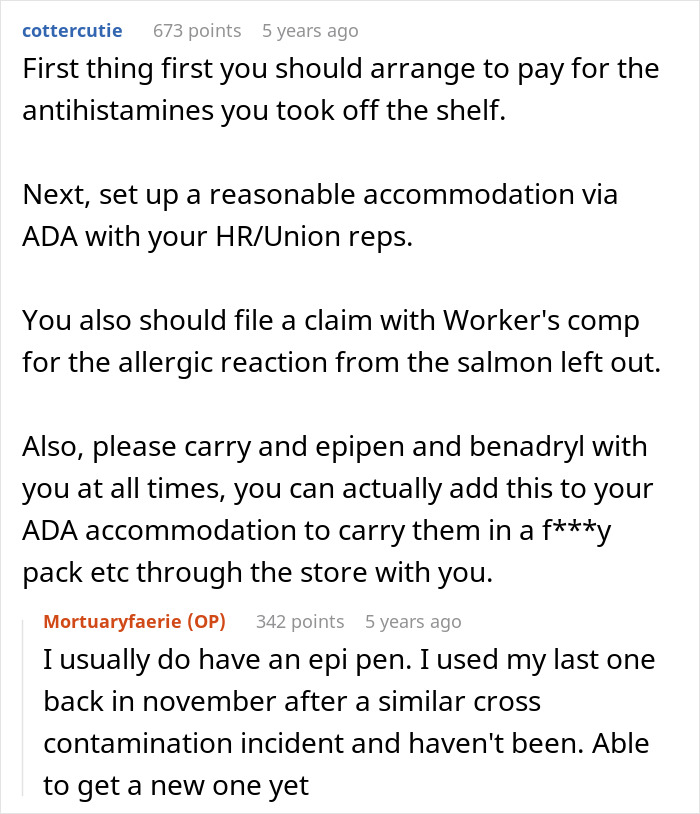


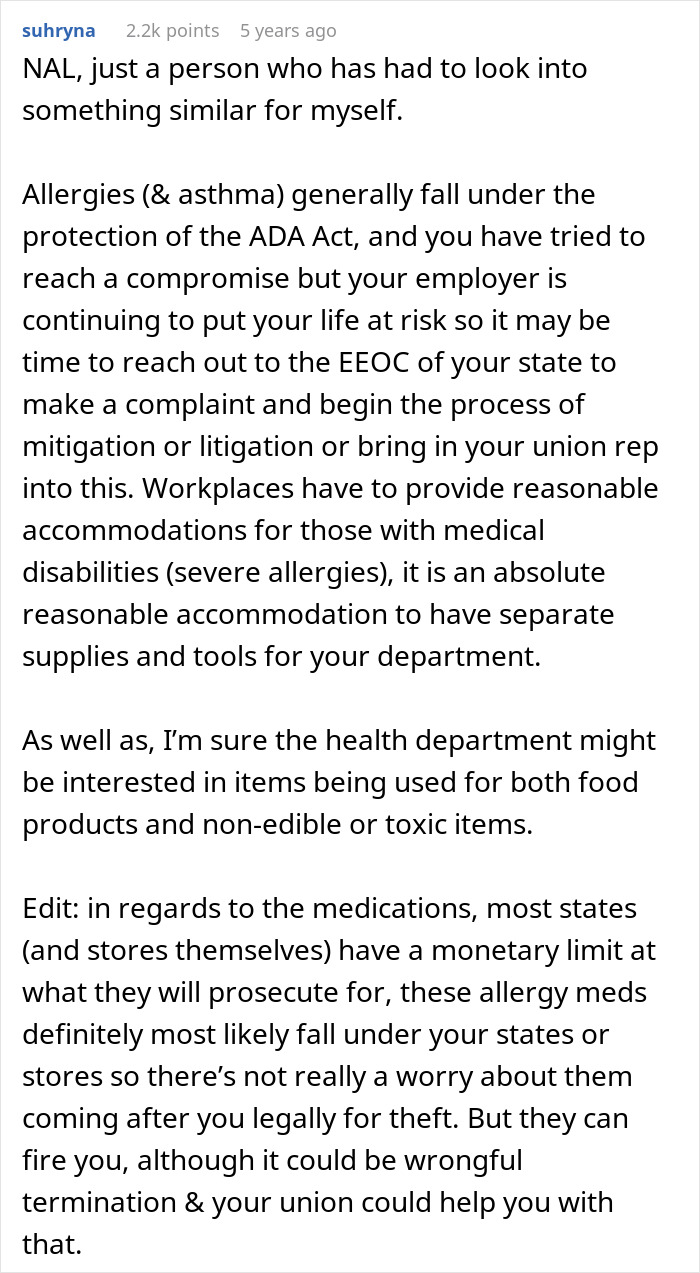
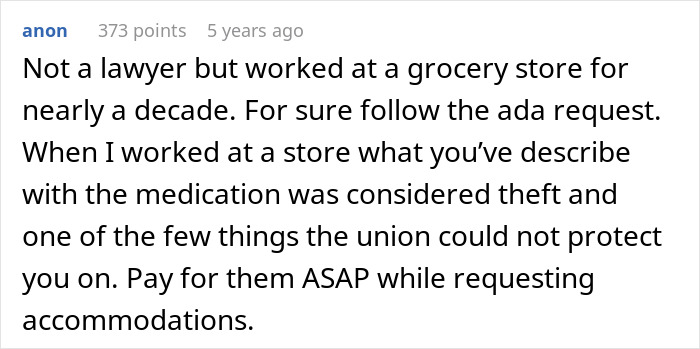
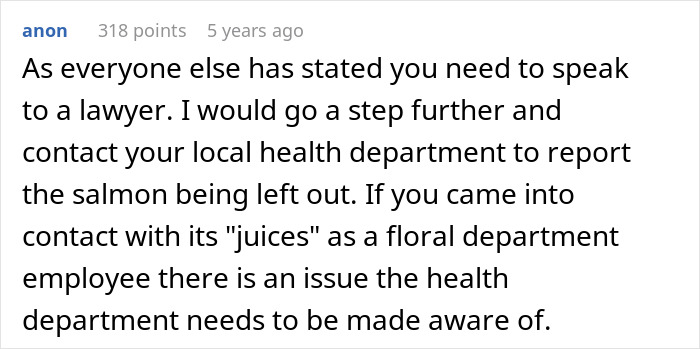
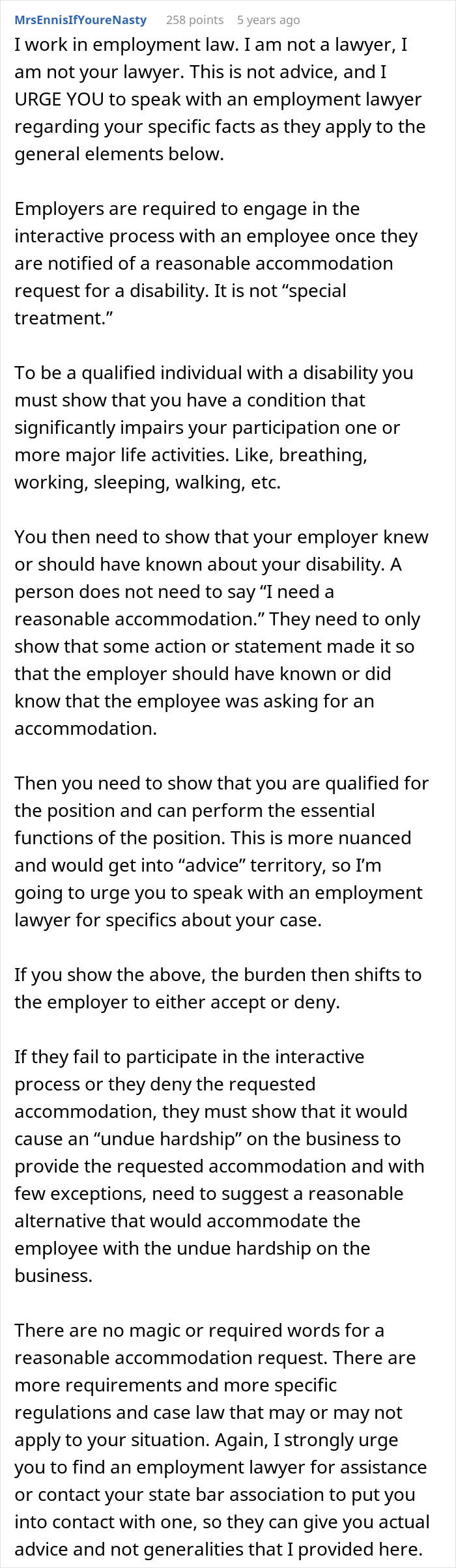
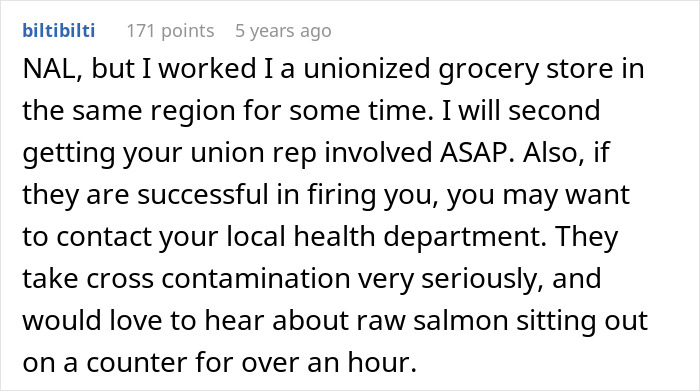
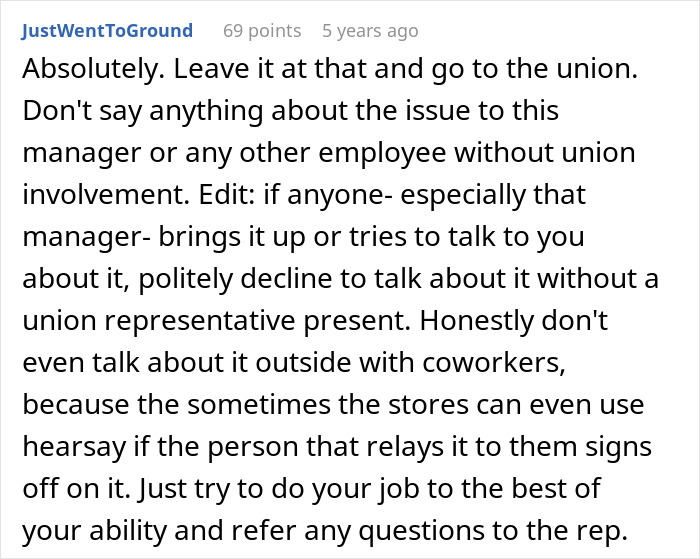
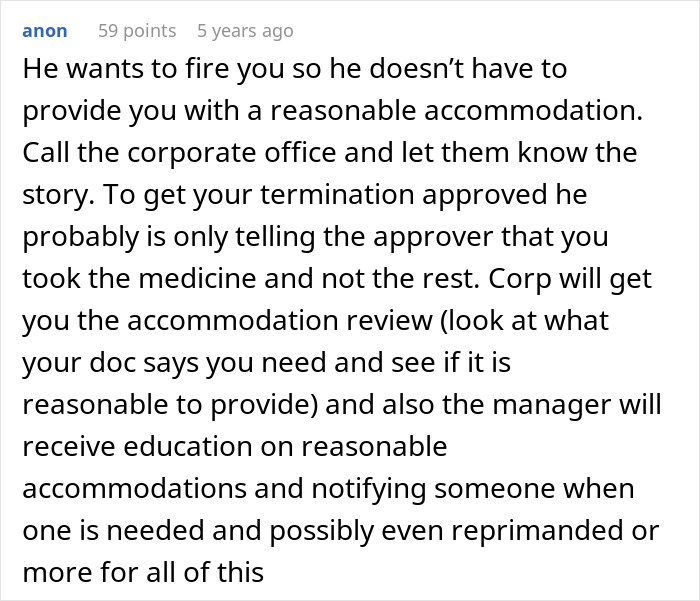
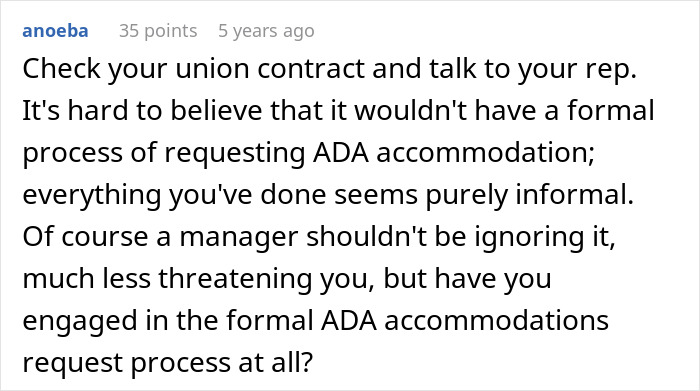
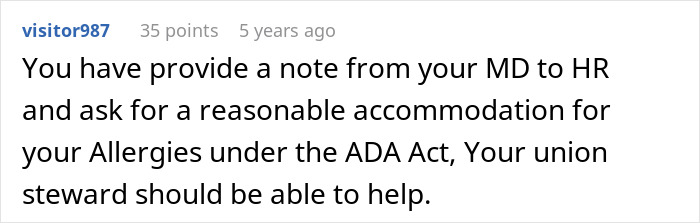
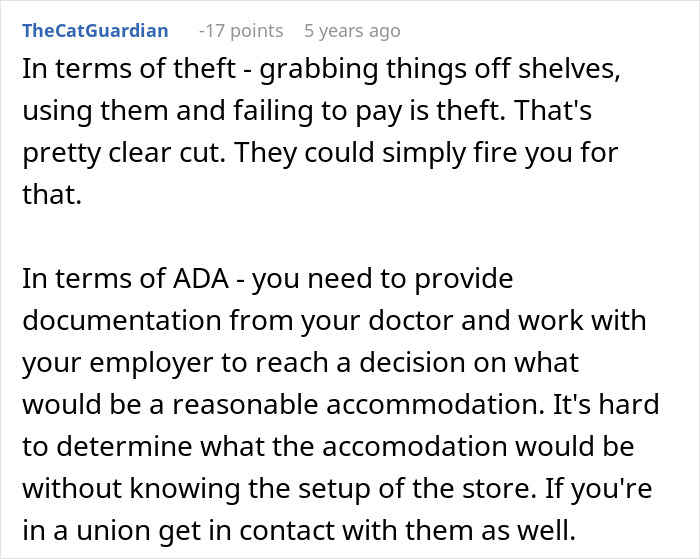
Image credits: Vitaly Gariev / unsplash (not the actual photo)
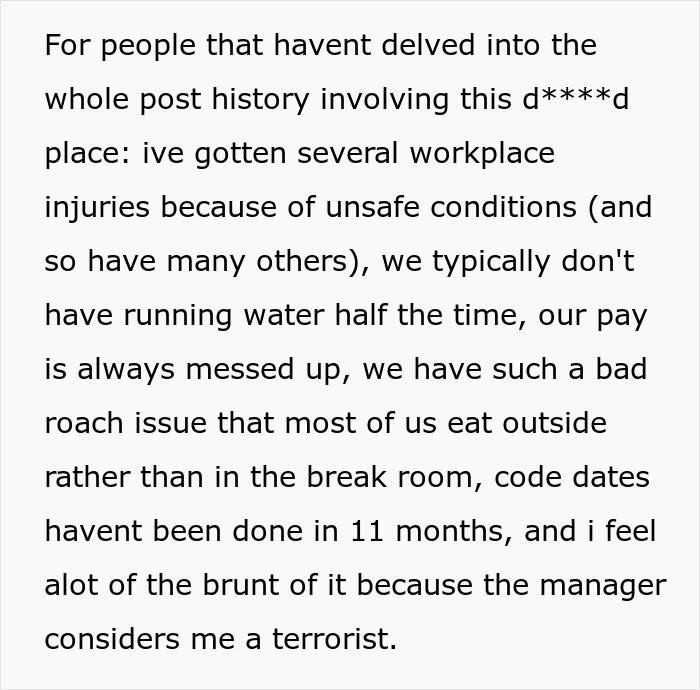


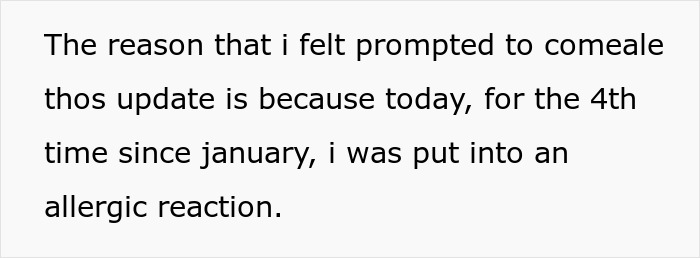
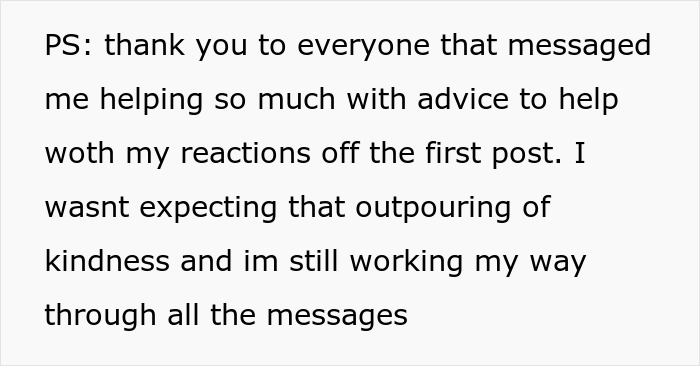
Image credits: Mortuaryfaerie

By entering your email and clicking Subscribe, you're agreeing to let us send you customized marketing messages about us and our advertising partners. You are also agreeing to our Privacy Policy.
Thank you! You've successfully subscribed to newsletters!

When my hubs and I were dating, his roommate had made grilled salmon for our date night (he loves cooking/baking). Now I know I'm allergic to prawns and shellfish, so I stay away from those, but thought salmon would be okay (I can have tuna and cod). Nope! After the first bite I broke out in a rash across my face and chest and started having a hard time breathing. Thankfully it never developed into something more serious. And for those of yous asking "Why didn't you carry an Epi pen or go to the hospital"? In 1996 I was a waitress making $2.52 an hour....no way I could afford either.

I get not being able to afford to buy an Epipen as a precaution (though it was VASTLY cheaper in the 1990s, even accounting for inflation, because the people who own it now raised the price 600% for profiteering purposes), but cost or not, not going to the ER as soon as it started affecting your was incredibly risky. I hope you appreciate how very, very lucky you are to be alive!
Load More Replies...
Thi sounds so weird I'm not sure if it's pure invention or just an elaborate exaggeration of a possibly real incident. What world do they live in that people routinely just leave a piece of salmon lying around (and where? wrapped up? refrigerated?). I mean, if she's walking past the fish counter than sure, but she can just keep away, otherwise it would be breaking all sorts of Health and Safety and/or Food Handling rules, surely? I didn't read much beyond that bit, was it all as fantastical?

Apparently there are people allergic enough to salmon that airborne particles can trigger a reaction. It's not the answer that OP wants but they need to work some place with zero risk of salmon exposure.
A person's allergy doctor can advise them better than you or I can whether it's reasonable to risk airborne exposure in their case. (Of course they should probably check in with their doctor *again* after each reaction to exposure, because multiple exposures may increase their vulnerability. But again, you and I are not qualified to make that judgment, all we can reasonably and responsibly suggest is caution, not what they "need" to do in this case.)
Load More Replies... When my hubs and I were dating, his roommate had made grilled salmon for our date night (he loves cooking/baking). Now I know I'm allergic to prawns and shellfish, so I stay away from those, but thought salmon would be okay (I can have tuna and cod). Nope! After the first bite I broke out in a rash across my face and chest and started having a hard time breathing. Thankfully it never developed into something more serious. And for those of yous asking "Why didn't you carry an Epi pen or go to the hospital"? In 1996 I was a waitress making $2.52 an hour....no way I could afford either.
I get not being able to afford to buy an Epipen as a precaution (though it was VASTLY cheaper in the 1990s, even accounting for inflation, because the people who own it now raised the price 600% for profiteering purposes), but cost or not, not going to the ER as soon as it started affecting your was incredibly risky. I hope you appreciate how very, very lucky you are to be alive!
Load More Replies... Thi sounds so weird I'm not sure if it's pure invention or just an elaborate exaggeration of a possibly real incident. What world do they live in that people routinely just leave a piece of salmon lying around (and where? wrapped up? refrigerated?). I mean, if she's walking past the fish counter than sure, but she can just keep away, otherwise it would be breaking all sorts of Health and Safety and/or Food Handling rules, surely? I didn't read much beyond that bit, was it all as fantastical?
Apparently there are people allergic enough to salmon that airborne particles can trigger a reaction. It's not the answer that OP wants but they need to work some place with zero risk of salmon exposure.
A person's allergy doctor can advise them better than you or I can whether it's reasonable to risk airborne exposure in their case. (Of course they should probably check in with their doctor *again* after each reaction to exposure, because multiple exposures may increase their vulnerability. But again, you and I are not qualified to make that judgment, all we can reasonably and responsibly suggest is caution, not what they "need" to do in this case.)
Load More Replies...




































 No fees, cancel anytime









32
12