Get Premium
Dark mode theme is available exclusively for premium users. Learn more about the benefits of subscribing.
No fees, cancel anytime.

 Dark Mode Ad-Free Browsing Unlimited Content
 Ad-Free Browsing Unlimited Content Dark Mode
Join 1.2 million Panda readers who get the best art, memes, and fun stories every week!

Have you ever traveled in an RV or lived in a trailer park? It’s supposed to be relaxed and fun, right? Well, when it comes to neighbors, it’s pretty much the same. But imagine having a troublesome neighbor constantly annoying you when your walls are thin as paper. And when pets become part of the dispute, even a minor conflict can quickly become much harder to contain.
Our Original Poster (OP) today tells such a story, involving a deranged neighbor and a major threat to his cats. After the nearby trailer park resident began targeting his pets and placing traps around their RV, the narrator decided to document everything and let the situation unfold with a very harsh consequence for his neighbor.
More info: Reddit
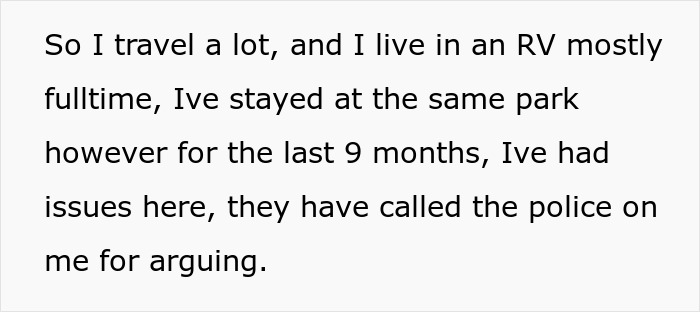
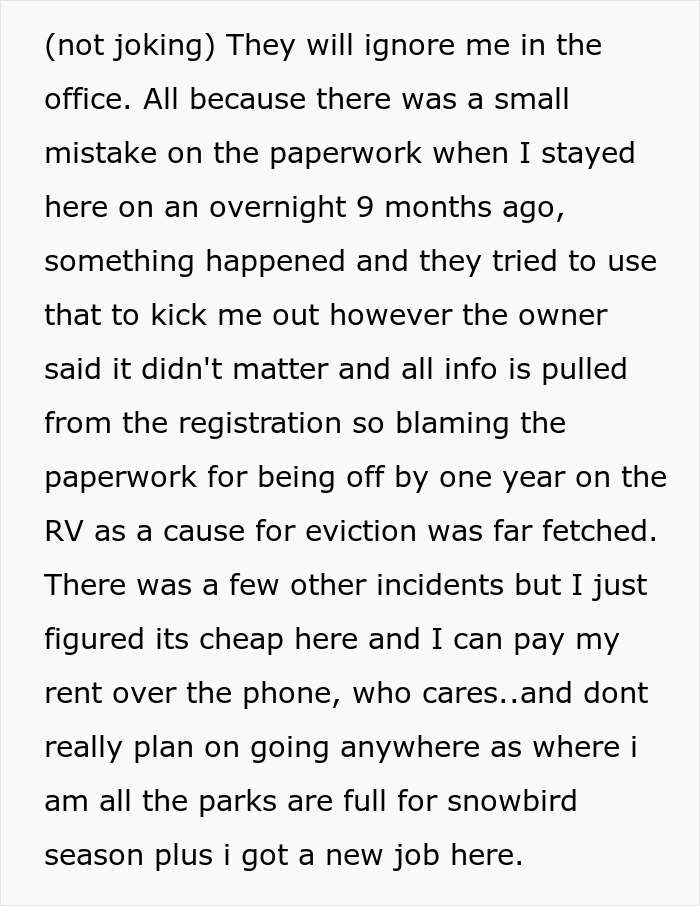
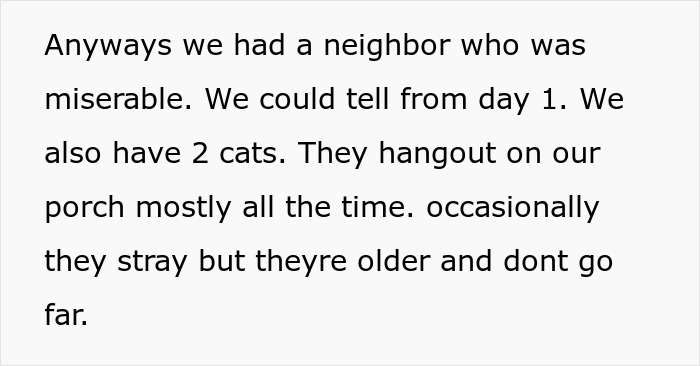
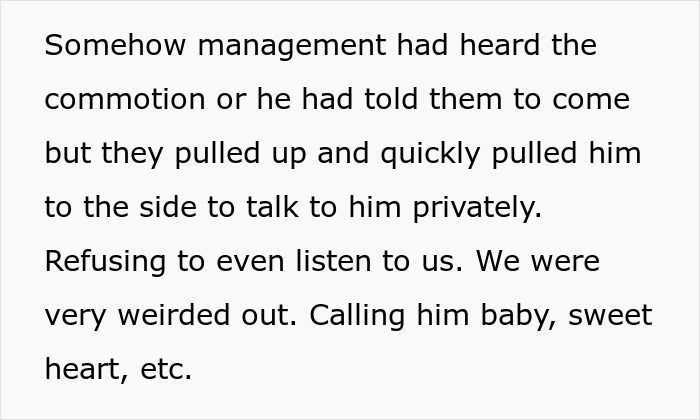
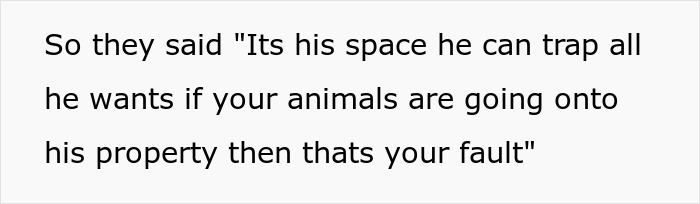
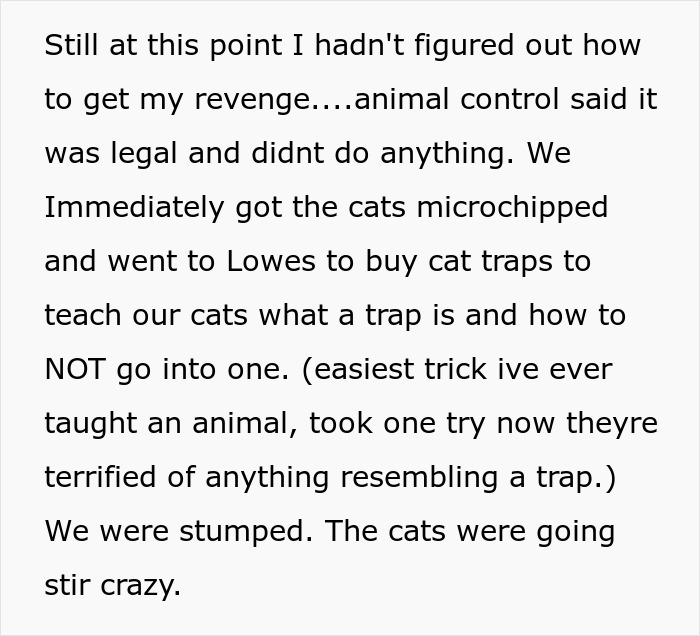
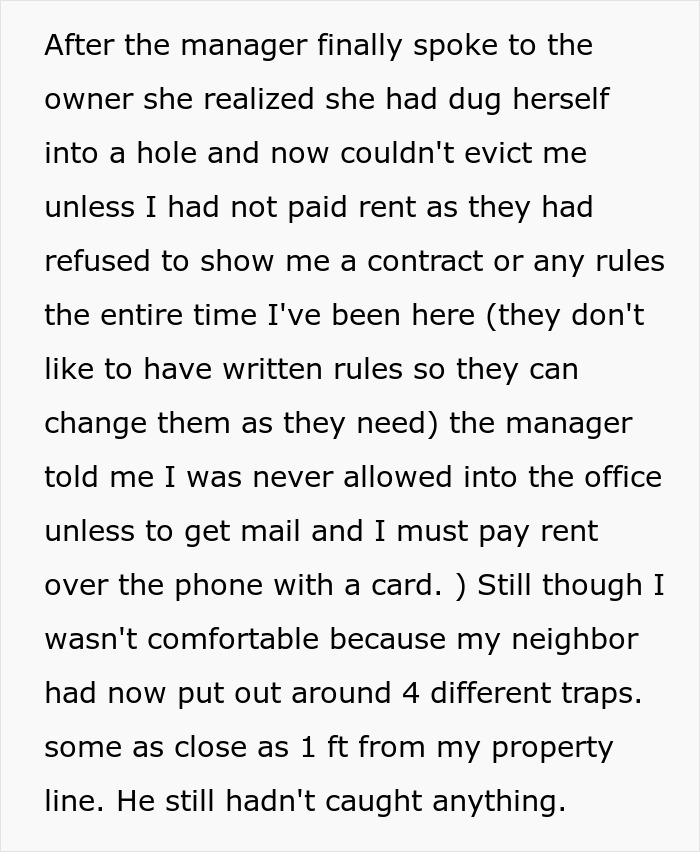
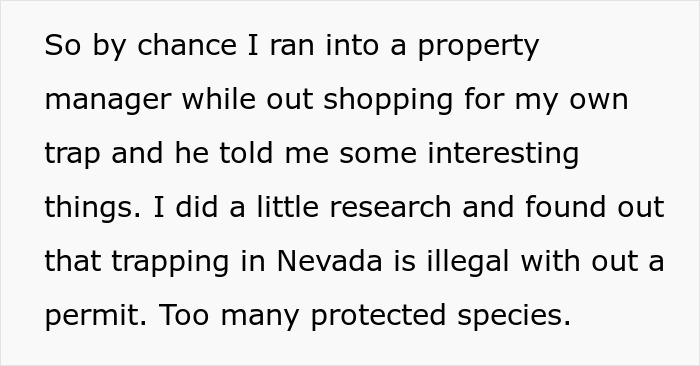
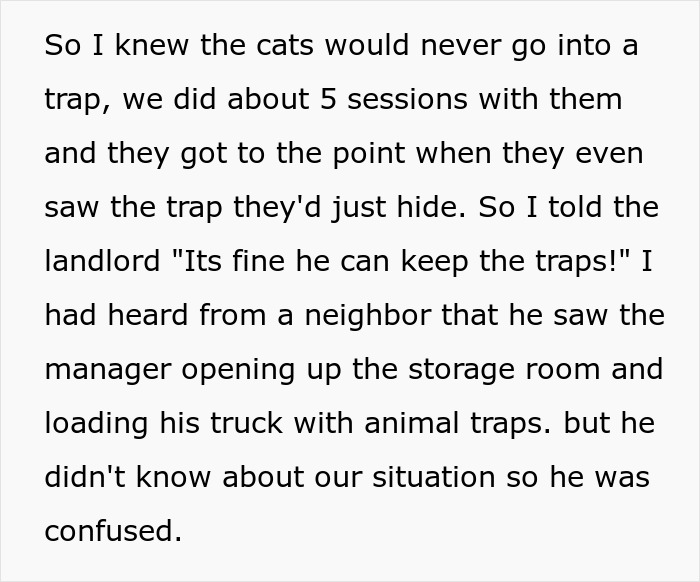
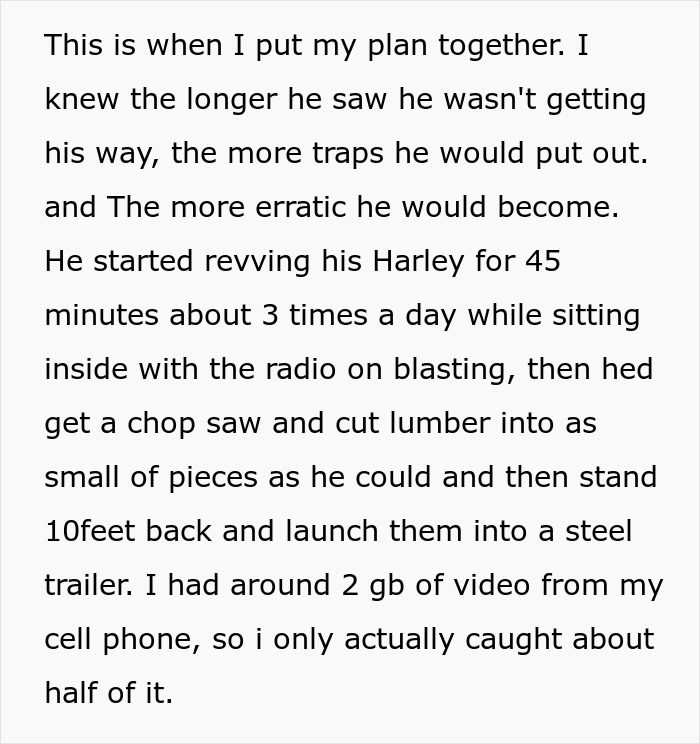
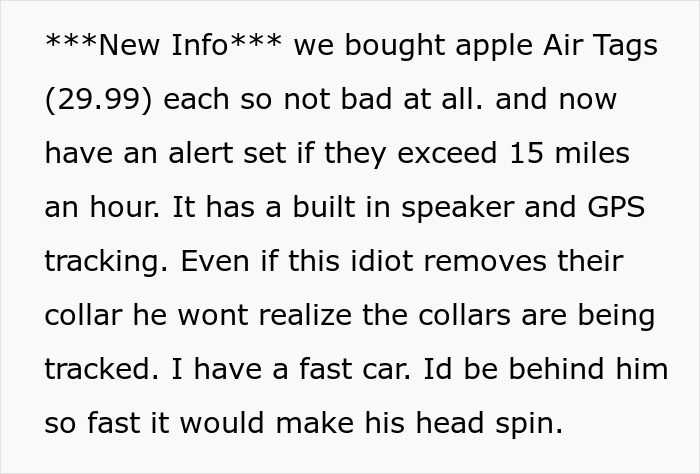
After months at an RV park in Nevada, the OP began facing growing tension with a neighbor and the park’s management. The neighbor, a man who acted erratically, suddenly confronted the narrator’s wife over their two cats, claiming they had left waste near his property. He threatened to use traps, while management dismissed the concern and supported his actions.
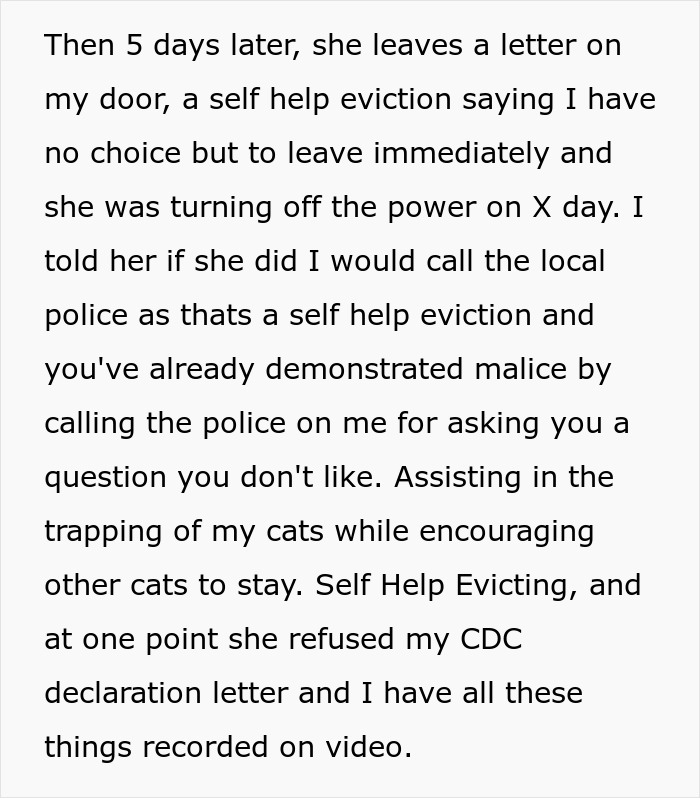
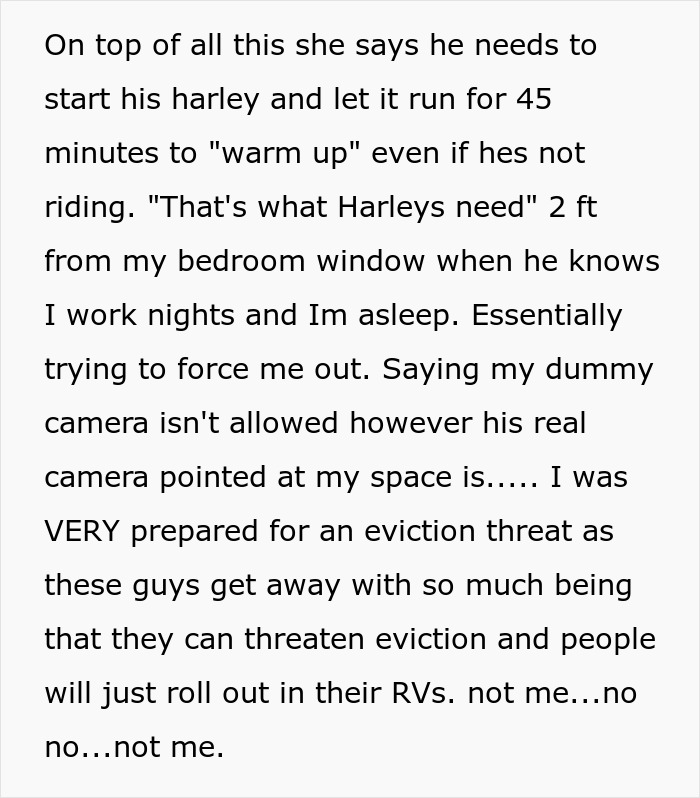
The OP then reported the threat and began documenting every incident. Days later, management delivered an eviction notice and threatened to cut the narrator’s power. The narrator challenged the move, pointing out several irregularities and keeping records of every interaction. Meanwhile, the neighbor started placing his promised traps and making noises to force the OP to leave.
Instead of confronting him directly, the poster waited and kept documenting everything. A dummy camera eventually captured the neighbor getting too close and pushing the narrator’s wife. This, along with 14 traps now surrounding the neighbor’s small space, was enough evidence. The OP contacted Nevada Fish and Wildlife and filed a report with photographs and video.
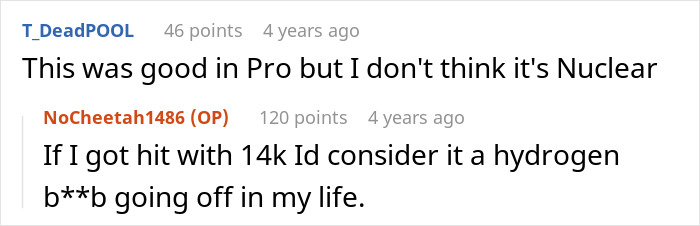
Officials arrived soon enough, discovered all 14 traps, confiscated them, and issued a $1k fine for each trap, for a total of $14k. Management later questioned the OP’s decision, but the man stated that the situation was not over. Soon afterward, management offered a much better RV spot, despite previously claiming no spaces were available for months.
The first issue that calls attention to this story concerns the fake eviction attempts. Professionals explain that mobile-home residents generally cannot simply be told to leave: management needs a valid reason, proper notice, and a court process. This shows why a manager’s letter alone does not automatically make an eviction valid. It needs proper support.
That matters here because the manager allegedly threatened immediate removal and a power shutoff without following a formal process. At the same time, the neighbor escalated matters by acting aggressively and placing not 1, not 2, but 14 traps around his space. Instead of ending the dispute, all this escalated into real evidence for the OP to make his stand.
Of course, animal cruelty isn’t an isolated case. This article exposes situations where trapping violations have resulted in fines reaching $1,5k for trapping without a license, another $1k for setting leg-hold traps, and an additional $1k for falsifying reports. Those violations show how quickly penalties can add up when multiple trapping rules are broken.
Which takes us to trapping regulations, which are taken very seriously even worldwide. EU regulations prohibit leg-hold traps and require trapping methods to meet “humane standards.” These rules are aimed at wildlife, not pets, but reflect a broader principle: trapping is a regulated affair, and ignoring those rules can lead to significant consequences.
Did the narrator take things too far? Would you have handled the situation differently? Share your thoughts in the comments!



By entering your email and clicking Subscribe, you're agreeing to let us send you customized marketing messages about us and our advertising partners. You are also agreeing to our Privacy Policy.
Thank you! You've successfully subscribed to newsletters!

I'm glad OP won a moral victory, but I wouldn't want to stay there in that RV park, period. I don't care how nice of a parking spot my RV got upgraded to. That neighbor and/or the management person WILL find a way to harm, kíll, or kidnap OP's cats if OP lets them wander around outside. Maybe he'd run them over and call it an accident. Unfortunately people like the neighbor will only get angrier due to being "defeated" (e.g., being forced to remove the traps and being fined) and will blame OP for all of it. OP needs to make sure their cats never go outside until they can move to a new RV park.

Yeah, I would have moved on quite soon after the harassment started - this is not a hill my cats could d*e on.
Load More Replies...
I wouldn't stay in that park feuding and putting my partner and pets in danger.

"Toxic man" did not trespass or leave his personal property or contagions such as feces on his neighbor's property. He responded to being harassed in a very tight neighborhood situation to the trespassing and waste on his small property and it seems was rightly angry about it. "Toxic man" did not adopt or welcome his neighbors pets and should not have to have them inflicted upon him.

toxic man lied about the situation repeatedly (and harleys don't need to be warmed up for 45 minutes) can't understand why you're so desperate to defend him
Load More Replies... I'm glad OP won a moral victory, but I wouldn't want to stay there in that RV park, period. I don't care how nice of a parking spot my RV got upgraded to. That neighbor and/or the management person WILL find a way to harm, kíll, or kidnap OP's cats if OP lets them wander around outside. Maybe he'd run them over and call it an accident. Unfortunately people like the neighbor will only get angrier due to being "defeated" (e.g., being forced to remove the traps and being fined) and will blame OP for all of it. OP needs to make sure their cats never go outside until they can move to a new RV park.
Yeah, I would have moved on quite soon after the harassment started - this is not a hill my cats could d*e on.
Load More Replies... I wouldn't stay in that park feuding and putting my partner and pets in danger.
"Toxic man" did not trespass or leave his personal property or contagions such as feces on his neighbor's property. He responded to being harassed in a very tight neighborhood situation to the trespassing and waste on his small property and it seems was rightly angry about it. "Toxic man" did not adopt or welcome his neighbors pets and should not have to have them inflicted upon him.
toxic man lied about the situation repeatedly (and harleys don't need to be warmed up for 45 minutes) can't understand why you're so desperate to defend him
Load More Replies...


























 No fees, cancel anytime











34
11